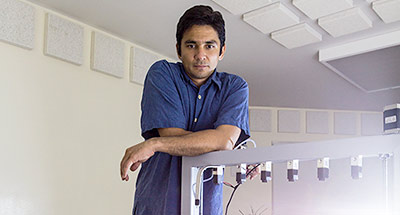
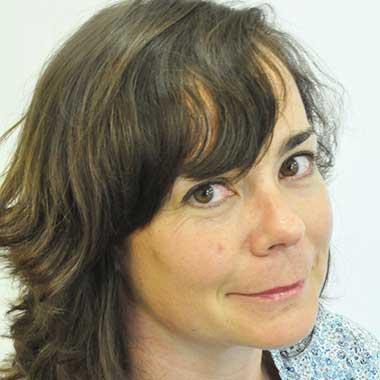
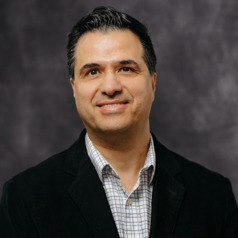
Uros Kovac is a Marie Skłodowska-Curie Postdoctoral Fellow at the University of Groningen's Faculty of Religion, Culture and Society. He holds a PhD and specializes in social anthropology with a focus on youth, gender, migration, and religion, particularly through the lens of sports in Africa. His current research investigates the intersection of football, migration, and religious hope among African migrants in Europe. Kovac has conducted extensive fieldwork in Cameroon and Kenya, examining themes like masculinity, Pentecostalism, and neoliberalism's impact on sport and society. Education: PhD in Anthropology (not explicitly stated, inferred from title and publications). Research Interests: Anthropology of sport and migration Gender and religion in Africa Neoliberalism and transnational aspirations Ruination and future-making in postcolonial contexts Grants/Fellowships: Marie Skłodowska-Curie Postdoctoral Fellowship (2023-2025). Publications: Author of the monograph *The Precarity of Masculinity* (2022) and over 15 peer-reviewed articles in journals like *Ethnos*, *Africa*, and *Journal of the Royal Anthropological Institute*. Editor of a special issue on 'Living with ruins' in *Journal of Eastern African Studies* (2023).
Dr. Suresh Radhakrishnan is a Constantine Konstans Distinguished Professor of Accounting and Director of Research at the Institute for Excellence in Corporate Governance within the Naveen Jindal School of Management at The University of Texas at Dallas. His research focuses on valuation of intangible assets, corporate governance, and the impact of social responsibility initiatives on business performance. He has authored numerous articles in top-tier journals across accounting, finance, and information systems. Radhakrishnan holds a PhD from New York University (1991), an MS from NYU (1989), and a BCom from the University of Madras (1980), with certifications from The Institute of Chartered Accountants of India. His teaching excellence has been recognized through awards from Rutgers University and NYU, as well as the Naveen Jindal School’s Outstanding Graduate Teacher of the Year Award (2001, 2007). Over his career, he has mentored nearly 20 PhD students and contributed to groundbreaking studies, including the 2006 paper linking corporate charitable giving to revenue growth in consumer industries. His current work explores macroeconomic outlooks, M&A quality, and the sustainability of decentralized systems like Bitcoin. Education: PhD in Accounting, New York University, 1991 MS in Accounting, New York University, 1989 Bachelor of Commerce, University of Madras, India, 1980 Awards: Herman E. Krooss Award for Best Dissertation, NYU (1992) Multiple teaching awards including the NJ SOM’s top honor Research Themes: Corporate governance mechanisms Earnings management and financial reporting Social capital’s role in disclosure practices
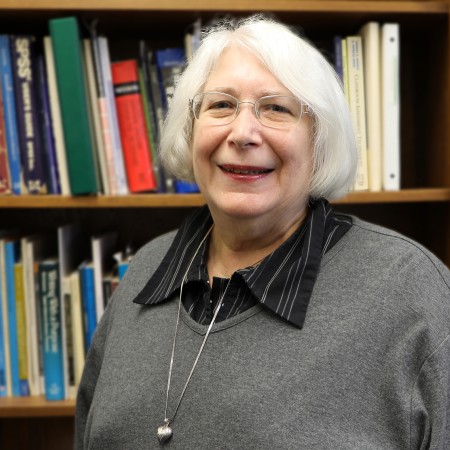
Susan Chizeck is an emerita Lecturer I and Director of the IS Internship Program at the School of Interdisciplinary Studies, University of Texas at Dallas. She specializes in experiential education, internships, medical sociology, and child welfare issues. Her work bridges academic programs with real-world applications, particularly in healthcare and social work contexts. Education: Ph.D. in Social Work, Rutgers University (1983) MA in Sociology, Princeton University (1975) MA in East Asian Studies, Stanford University (1972) BA in History, Douglass College (1969) Research focuses on experiential learning frameworks, chronic illness management, and foster care systems. Her publications emphasize internship program design, evaluation methodologies, and interdisciplinary approaches to healthcare education. Notable works include chapters in The Internship Handbook and editorship of the NSEE Quarterly (2003–2011). Awards include the NIH Training Grant and multiple fellowships in language and social work. Her career spans decades of leadership in experiential education, with presentations at NSEE conferences since the 1990s. Professional contributions extend to wellness initiatives and editorial roles in key journals. She has advised on numerous internship programs and collaborated with organizations like Wellness Councils of America.
Andreu Casas Salleras is a Lecturer in Political Communication at Royal Holloway University of London, within the Department of Politics, International Relations and Philosophy. He is also a Faculty Associate at the Center for Social Media and Politics at New York University. He holds a PhD in Political Science from the University of Washington (2018). Prior roles include Assistant Professor at VU Amsterdam and Moore Sloan Research Fellowships at NYU's Center for Data Science. His research focuses on computational political science, examining social media's impact on collective action, policy-making, polarization, and content moderation by platforms. Key research areas include political communication dynamics, legislative politics (e.g., amendment processes), and computational methods (text-as-data, images-as-data). His work has been published in outlets like Science Advances and American Political Science Review , and he authored a book with Cambridge University Press. Funding sources include the European Research Council, NWO, and NSF. Current projects include a NWO-VENI grant on political biases in content moderation and a Horizon Europe-funded project on simulating media information environments. Dr. Casas has delivered invited talks on topics such as YouTube content moderation during the 2024 U.S. election and the geopolitics of social media deplatforming. His research contributes to UN Sustainable Development Goals related to education and societal resilience. He has no listed advisees but leads multiple research initiatives as Principal Investigator.
Dr. Frances Nolan is an SFI-IRC Pathway Fellow at the School of History, University College Dublin. She holds a PhD from UCD and is Principal Investigator on the interdisciplinary project 'Law versus Practice', which investigates women's property ownership in early modern Ireland. She previously held an IRC Postdoctoral Fellowship at Maynooth University and has extensive teaching and research experience in gender and legal history. Education: BA, University College Dublin MA, University College Dublin PhD, University College Dublin Her research focuses on women's and gender history , particularly in early modern Britain and Ireland, with strong emphasis on legal history , Jacobitism , and social history . She explores female agency in property claims, political representation, and religious identity during periods of upheaval, especially the Williamite confiscations. Her work bridges archival research with interdisciplinary methodologies. Her recent publications reveal a consistent focus on women’s legal and economic agency in early modern Ireland. The articles and monograph analyze how Catholic and Jacobite women navigated legal systems, asserted property rights, and influenced political discourse. Themes include gendered interpretations of loyalty, the impact of religious conflict on women’s lives, and the recovery of marginalized female voices through historical documentation. Scientific Awards: Women’s History Association of Ireland - IHS Publication Prize Frances Nolan has supervised PhD students, including Eoghan Fitzgerald, and has secured significant research grants, notably the SFI-IRC Pathway Fellowship and a prior IRC grant on Jacobite women. She has contributed to public and collaborative scholarship through freelance consultancy for RTÉ, the Royal Irish Academy, and the Irish Dental Association, co-authoring a centenary history. Her work demonstrates a strong commitment to both academic and public history. She is involved in leading research teams through her current project and has co-edited special journal issues. She has also contributed to digital history initiatives such as the Century Ireland project and the Sources for Irish Women’s History Project.
Camilo Mora is a Professor in the Department of Geography at the University of Hawaii at Manoa, where he maintains an active research laboratory and teaches courses on environmental issues, biogeography, and data analysis. His academic journey began with a BSc in Marine Biology from Universidad del Valle in Colombia (1999), followed by a PhD in Biology from the University of Windsor, Canada (2005). He completed postdoctoral fellowships at the University of Auckland (2005), Scripps Institution of Oceanography (2006-2008), and Dalhousie University (2008-2010). BSc, Marine Biology, Universidad del Valle, Colombia (1999) PhD, Biology, University of Windsor, Canada (2005) Postdoctoral Fellow, University of Auckland (2005) Postdoctoral Fellow, Scripps Institution of Oceanography (2006-2008) Postdoctoral Fellow, Dalhousie University (2008-2010) Mora's research spans interconnected lines focused on understanding biodiversity patterns and their modification by human activities, with particular emphasis on climate change impacts. His lab specializes in big data analytics applied to diverse environmental challenges including heatwaves, disease transmission, marine ecosystems, and even unconventional topics like Bitcoin's environmental footprint. The Mora Lab operates on a 'divide and conquer' approach to tackle large research questions by breaking data gathering into individual parts that can be concatenated into central databases. Mora has received the CSS Excellence in Research award (2014) for his significant contributions to environmental science. His influential publications include groundbreaking work on the global risk of deadly heat (2017), the projected timing of climate departure from historical variability (2013), and the finding that over half of known human pathogenic diseases can be aggravated by climate change (2022). CSS Excellence in Research (2014) Highly cited publications in Nature and Nature Climate Change Research featured in major international media outlets Development of innovative research methodologies for large-scale analyses Mora leads an active research group that engages students in the full scientific process from idea generation to publication. His approach to mentoring involves creating yearly classes where graduate students, professors, and international advisors collaborate to tackle significant research questions, with papers typically completed within a single semester. His Carbon Neutrality Challenge project, spearheaded by his daughter Asryelle Mora, provides a practical mechanism for individuals to offset carbon emissions through tree planting. The Mora Lab maintains a distinctive approach to environmental research, working on seemingly diverse topics from reef fishes to Bitcoin, united by their reliance on big data analytics. This interdisciplinary methodology has produced impactful research across multiple domains of environmental science and climate change impacts, establishing Mora as a significant contributor to our understanding of humanity's environmental challenges.
Bobby Lee Townsend Sturm JR is an Associate Professor at KTH Royal Institute of Technology, leading the MUSAiC project (ERC-2019-COG). He holds a PhD in Electrical and Computer Engineering from UC Santa Barbara (2009), followed by postdoctoral research at LAM, Paris 6, and academic roles at Aalborg University and Queen Mary University of London. His research focuses on AI ethics in music, generative AI for music, and folk music preservation. Current roles at KTH include teaching and supervising in Machine Learning, Music Informatics, and AI Ethics. He has pioneered AI music generation challenges (e.g., 2020 Double Jigs Challenge) and investigates societal impacts of AI on traditional music cultures. His work bridges technical innovation with cultural and ethical considerations, addressing issues like data colonialism, algorithmic bias, and human-AI collaboration in creative contexts. Education: PhD (UCSB, 2009), Postdoc (Paris 6), Academic appointments at Aalborg University (2010–2014) and Queen Mary University (2014–2018) Key Projects: MUSAiC (ERC), Virtual Session System for Irish Music, Traditional Music Dataset Analysis Teaching: Courses in Machine Learning, Music Acoustics, and ICT Innovation Publications span peer-reviewed journals and conferences, emphasizing ethical AI, music generation, and interdisciplinary research in MIR (Music Information Retrieval). He actively collaborates with musicians, anthropologists, and technologists to ensure culturally informed AI development.
Jonathan J. O'Brien is a Professor in the Department of Educational Leadership within the College of Education at California State University, Long Beach (CSULB). He teaches in both the master’s and doctoral programs, offering courses in law and ethics, leadership and management, counseling the adult learner, research methodologies, and professional development seminars. He guides graduate students in exploring complex issues in higher education and student affairs. Education: Ed.D. in Educational Leadership, UC Irvine & CSU Long Beach MS in College Student Personnel Administration, Central Missouri State University BA in English, California State University, Long Beach Dr. O'Brien’s research centers on moral development , ethical leadership , and dispositional competencies in student affairs, particularly under conditions of political polarization. His work explores how educational leaders navigate ethical dilemmas, develop moral orientations, and build credibility in contested environments. He is deeply engaged in understanding the ethical preparation of student affairs professionals and the emotional toll of moral suffering in the field. His recent publications and presentations reveal a strong focus on ethical frameworks, ACPA/NASPA competencies, and the development of practitioner-focused ethical codes. The articles span themes such as moral positionality, ethical mindfulness, and the integration of personal values in leadership. His research often employs qualitative and mixed-methods approaches, contributing to both theoretical and applied knowledge in higher education. Professional Leadership and Awards: Co-Director, President & Provost’s Leadership Fellows Program, CSULB (2024–present) Chair, ACPA Ethics Task Force (2024–present) Secretary-Treasurer, Moral Development and Education SIG, AERA (2021–2024) Senator, College of Education Academic Senate (2020–2023) Board Member, ACPA Commission for Professional Preparation (2019–2021) Coordinator, Student Development in Higher Education M.S. Program (2009–2016) Dr. O'Brien advises graduate students and contributes to program evaluation, curriculum development, and national professional associations. He has led initiatives to revise ethical standards in student affairs and develop self-assessment tools for moral orientation. His work bridges scholarship and practice, aiming to foster human flourishing in higher education. He is actively involved in committees at the department, college, and university levels. Labs and Research Teams: While no formal lab is mentioned, Dr. O'Brien leads research projects on moral orientation assessment and ethical leadership in polarized environments. He collaborates with national teams through ACPA and AERA, and supervises graduate research in the Educational Leadership and Student Development in Higher Education programs.
Robert J. Smith serves as Executive Director & Senior Research Fellow at the Fair Punishment Project, a joint initiative of the Charles Hamilton Houston Institute & Criminal Justice Institute at Harvard Law School. His professional focus centers on criminal justice reform with particular emphasis on racial disparities in capital punishment systems, implicit racial bias in legal proceedings, and constitutional challenges to excessive sentencing practices. Smith's scholarly contributions have significantly advanced understanding of how systemic biases operate within ostensibly race-neutral legal frameworks, particularly in death penalty cases across multiple jurisdictions. Smith's research program systematically examines the intersection of race, implicit cognition, and criminal justice outcomes. His empirical studies document patterns of implicit white favoritism and the 'race of victim effect' in capital sentencing determinations. His constitutional scholarship analyzes Eighth Amendment challenges to excessive punishment, exploring evolving standards of decency in American jurisprudence. A recurring theme throughout his work is how cognitive biases influence prosecutorial discretion, jury decision-making, and sentencing outcomes despite formal legal safeguards against racial discrimination. Smith's publication record demonstrates consistent scholarly engagement with systemic issues in American criminal justice, particularly regarding racial disparities in capital punishment. His research combines rigorous legal analysis with social science methodologies to document how implicit biases operate across various stages of criminal proceedings. His work reveals that ostensibly neutral legal processes frequently produce racially disparate outcomes, suggesting the need for structural reforms to ensure equal justice under law. The interdisciplinary nature of his scholarship bridges legal theory, empirical psychology, and constitutional doctrine. Smith's leadership of the Fair Punishment Project has facilitated collaborative research initiatives examining excessive punishment practices nationwide. His work has influenced legal scholarship and practice by highlighting previously under-recognized mechanisms through which racial bias operates within the criminal justice system. Through his publications and institutional leadership, Smith has contributed significantly to contemporary debates about racial justice, constitutional rights, and the future of capital punishment in America.
Maarten Coëgnarts is an Assistant Professor in Film Studies at the University of Antwerp and a Fellow of the Society of the Cognitive Studies of the Moving Image (SCSMI) . His research focuses on embodied cognition , conceptual metaphor theory , and non-verbal meaning-making in cinema , with a particular emphasis on Stanley Kubrick’s work. University of Antwerp, Film Studies, Faculty Member Research Interests Coëgnarts explores how embodied mental schemas shape cinematic perception and creation. His work bridges cognitive linguistics, neuroscience, and film theory to analyze abstract concepts in films through visual, auditory, and editing techniques . Key areas include sensory-motor grounding of emotions , spatio-temporal dynamics in art cinema , and subjectivity in narrative . Recent Publications His 2023–2022 articles examine sound analysis via container schemas , motion vectors , and temporal logic in films , while 2016–2020 works address emotional causality and metaphorical perception . He co-edited the 2023 Baltic Screen Media Review special issue on "Cinematic Minds in the Making" . Scientific Recognition Fellow, SCSMI Books He authored Film as Embodied Art: Bodily Meaning in the Cinema of Stanley Kubrick (2019) and co-edited Embodied Cognition and Cinema (2015). His work highlights filmmakers as "conceptual artists" who leverage non-verbal cinematic tools to convey abstract ideas.
Jeffrey A. Lee is a Professor in the Department of Geosciences at Texas Tech University, specializing in aeolian geomorphology and environmental processes. With academic appointments since 1988, his work focuses on wind-driven sediment transport and dune dynamics across multiple continents. Education: B.A. in Geography (1979), University of California, Los Angeles M.A. in Geography (1984), University of California, Los Angeles Ph.D. in Geography (1990), Arizona State University Research interests center on aeolian processes, particularly dust emission dynamics and wind erosion patterns. His work examines temporal trends in blowing dust across Texas and the American Southwest, while also investigating long-term shifts in wind climate patterns. Professor Lee teaches foundational physical geography courses including Global Environmental Science and advanced topics in arid land geomorphology. Recent publications demonstrate interdisciplinary focus across aeolian geomorphology, environmental monitoring, and climate science. Key themes include dust source characterization using satellite data, drought legacy effects on erosion, and historical analysis of environmental disasters like the Dust Bowl. Contact: jeff.lee@ttu.edu | 213 Holden Hall, Texas Tech University | (806) 834-8228
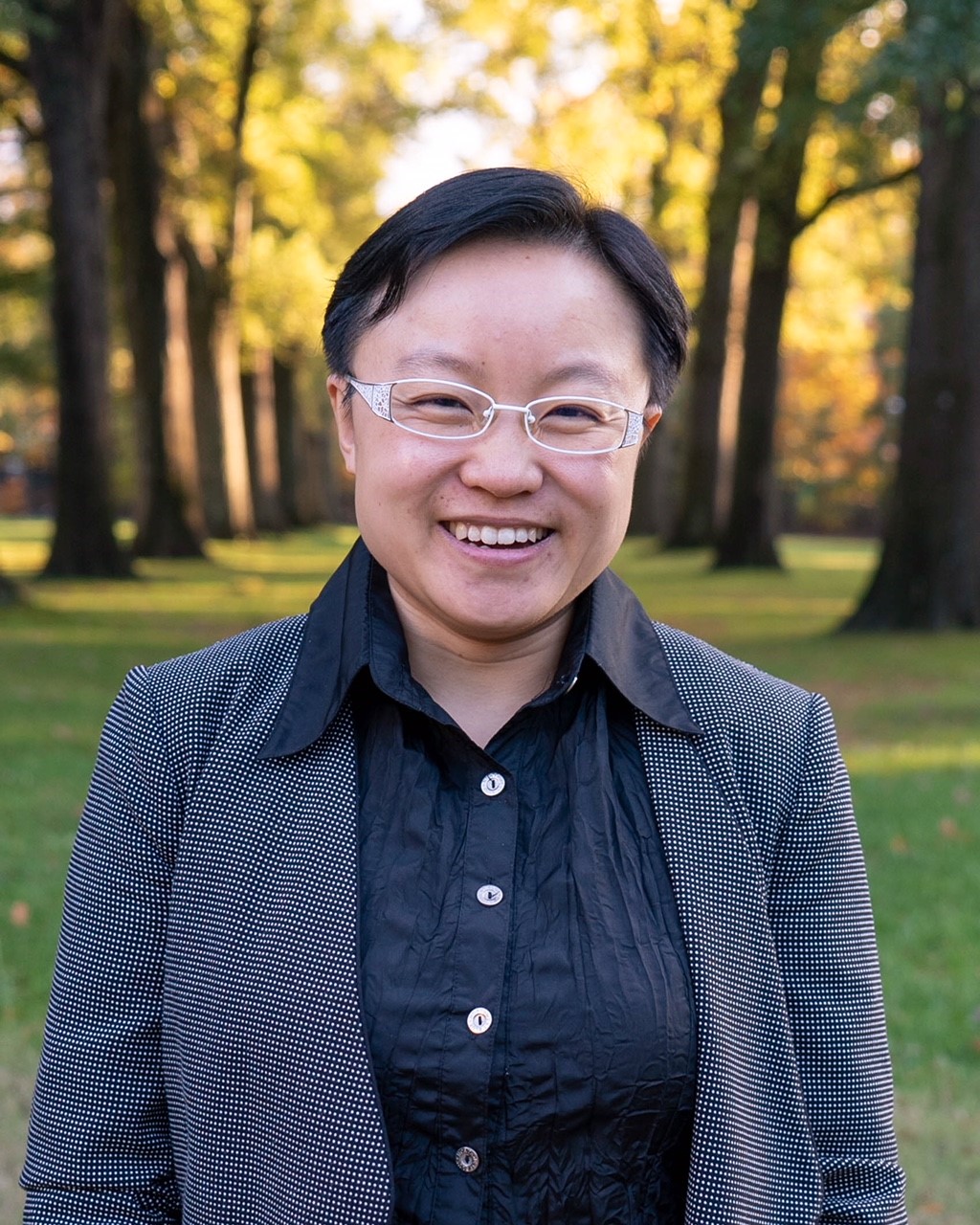
Dr. Shaolu Yu serves as Associate Professor of Urban Studies and Chair of Asian and Asian American Studies at Rhodes College, leveraging an interdisciplinary background developed through urban studies projects across China, the U.S., and Canada to advance comparative geographic research. Her academic foundation includes: B.S. in Resources, Environment, Urban Planning and Management from Qufu Normal University, China M.S. in Urban Geography from Beijing Normal University, China Ph.D. in Geography from the University of Connecticut, U.S.A. Dr. Yu's research centers on Urban Space and Place-making , Migration and Mobility , Race and Ethnicity , and Asian Urbanism , employing mixed methods and GIS for spatial analysis. Current projects investigate Chinese communities in the American South ( Triangulated Between White and Black ) and LGBTQ+ spatial dynamics ( Urban Queer Space in the South ), while examining globalization's impact on Asian cities. Her teaching portfolio spans Urban Planning, GIS applications, Transportation Geography, and Queering Cities. Recent publications reveal a consistent focus on racial triangulation, ethnic entrepreneurship, and transnational migration patterns across American and Asian urban contexts, demonstrating methodological versatility through cartographic analysis and qualitative fieldwork. This body of work bridges cultural geography, critical race studies, and urban planning. No scientific awards were documented in available materials. Dr. Yu's academic leadership as Chair of Asian and Asian American Studies complements her research mentorship and course development in Urban Studies. While specific grant details are unreported, her sustained publication record in top geography journals indicates active research funding. Her Rhodes College affiliation includes collaborative work with the Media Studies and Chinese Studies programs. Information regarding dedicated research laboratories or formal research teams was not present in source materials.
Kirsty Ogg is a Lecturer in Curating within the Art Department at Goldsmiths, University of London. She serves as Interim Director of Mimosa House, a space dedicated to promoting diversity and access in the arts. Previously, she was Director of New Contemporaries (2013-2023), where she expanded support for emerging artists, and held curatorial positions at Whitechapel Gallery (2009-2013) and The Showroom (1998-2008). Kirsty's research focuses on the intersection of emerging art practice, arts education, and access. Her work is informed by her background in grassroots, DIY artist-led organizations, with particular interest in understanding and overcoming socio-economic and cultural barriers that prevent artistic emergence. She is currently exploring parallels between artist-led cultures and pre-18th century egalitarian pirate communities, investigating how radical democratic principles from the Golden Age of Piracy might inform contemporary curatorial and institutional practices. Her recent publications reveal a strong focus on emerging artists, digital curation platforms, and the evolving landscape of contemporary art institutions. Ogg has produced numerous exhibition catalogs for the Bloomberg New Contemporaries series and has organized conferences addressing critical issues in curatorial practice, artist development, and the relationship between art schools, museums, and the academy. Kirsty serves as External Examiner for the MLitt Curatorial Practice Contemporary Art program at Glasgow School of Art (2022-2025) and previously for the Curating Contemporary Art MA at Royal College of Art (2018-2020). Her professional activities demonstrate significant engagement with artist development, institutional critique, and creating pathways for emerging talent in the contemporary art world.
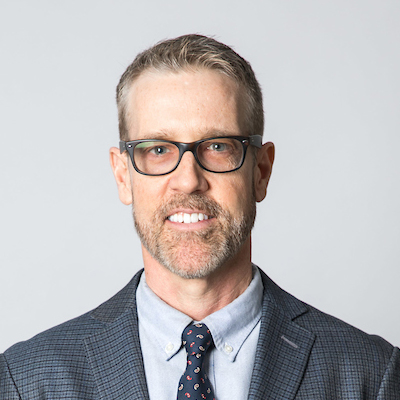
Nicolás de Roux is an Associate Professor in the Department of Economics at Universidad de los Andes in Bogotá, Colombia. He holds a PhD in Economics from Columbia University and an MA from Universidad de los Andes. His academic work focuses on applied microeconomics with a specialization in development economics, particularly examining firm behavior, financial inclusion, agricultural economics, and labor markets in developing countries. He actively contributes to the academic community as a co-organizer of the biweekly Virtual Development Seminar (VDEV/CEPR/BREAD). De Roux's research interests center on understanding economic development challenges in the Global South, with particular emphasis on how weather shocks affect agricultural productivity, labor market power in developing economies, and the impacts of trade disruptions on firm performance. His interdisciplinary approach combines rigorous econometric methods with theoretical insights to address pressing development issues. His work demonstrates how microeconomic analysis can inform policy decisions that improve economic outcomes for vulnerable populations in developing countries. His publications span multiple high-impact journals including the Journal of Labor Economics, The Review of Financial Studies, and Journal of Public Economics. De Roux's research demonstrates consistent focus on labor markets, agricultural productivity, and financial inclusion, with recent work examining how weather risk affects small farms, the extent of employer power in developing country labor markets, and how firms adapt to trade partner collapse. His research methodology typically combines detailed administrative data with innovative econometric approaches to establish causal relationships. Featured Economist Interview, International Economic Association (IEA), July 2025 De Roux has mentored numerous students through his teaching at Universidad de los Andes, where he teaches courses including Introduction to Mediation, Econometrics 1, and Haciendo Economía 1. His research collaborations extend across multiple institutions, working with economists from around the world including Giacomo De Giorgi, Garance Genicot, Gianmarco León-Ciliotta, and Eric Verhoogen. His work on academic tracking revealed the counterintuitive finding that students perform better when they're at the top of a lower-ability group rather than at the bottom of a higher-ability group, challenging conventional wisdom about educational tracking. His research team includes collaborators working on projects examining internet access and banking competition in rural credit markets, as well as quality upgrading in the Colombian coffee sector. De Roux maintains an active presence in policy discussions through media outlets like VoxDev, World Bank blogs, and Colombian publications including Foco Económico and La República.
Ali Shiri is a Professor of Information Science and Vice Dean at the University of Alberta's Faculty of Graduate & Postdoctoral Studies. His work focuses on digital information interaction, AI literacy, and ethical use of generative AI in academic research. He has led university-wide initiatives on AI policies and contributed to national frameworks for responsible AI integration in scholarship. Current role: Vice Dean (Graduate & Postdoctoral Studies), University of Alberta Education: PhD in Information Science from University of Strathclyde Research Interests: Dr. Shiri specializes in digital libraries, data analytics, and the transformative impact of large language models on research workflows. His recent work emphasizes AI literacy education, interdisciplinary collaboration, and ethical frameworks for generative AI use in academia. Article Trends: His publications analyze how LLMs are reshaping literature reviews, hypothesis generation, and data analysis while raising critical issues around data privacy, citation accuracy, and intellectual property. He advocates for discipline-specific AI policy development.