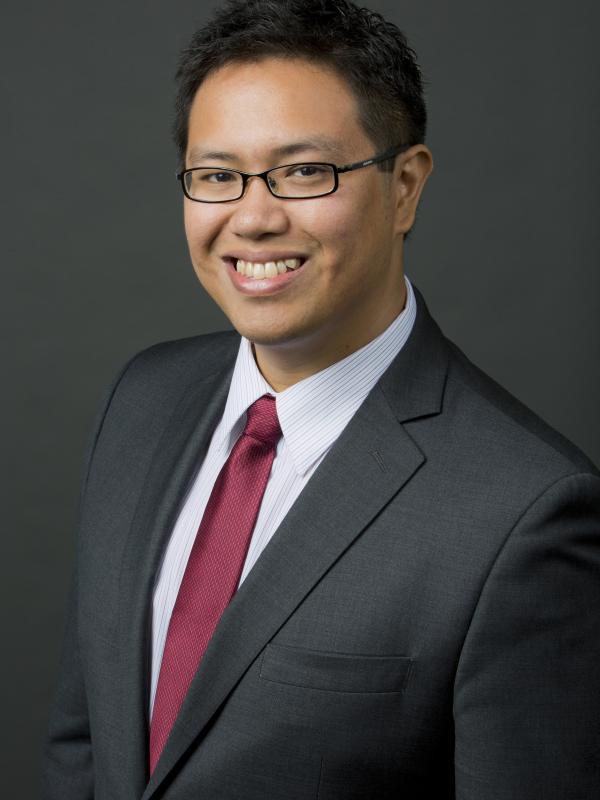
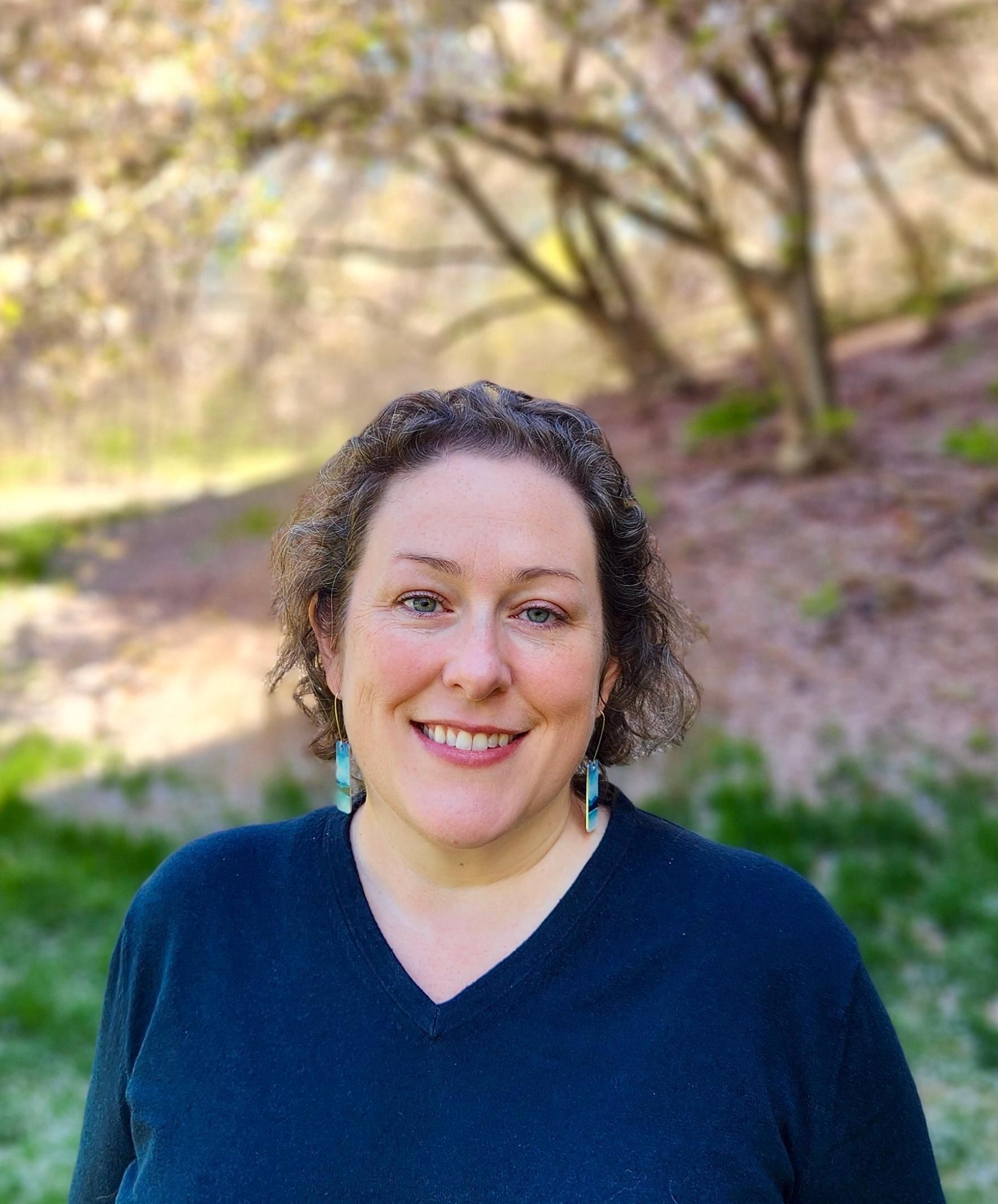
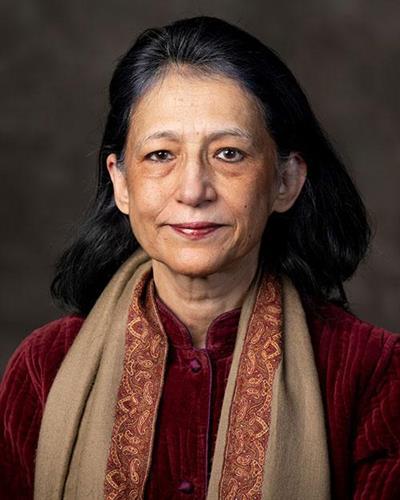
Jose Miguel Abito ("Mike") is an Associate Professor in the Department of Economics at The Ohio State University (OSU), serving as Director of Undergraduate Studies. He holds a PhD from Northwestern University, with prior roles including Assistant Professor at the Wharton School, University of Pennsylvania, where he won a teaching award. His research focuses on applied microeconomics, particularly industrial organization, regulation, and environmental economics. He examines topics such as regulatory incentives, consumer misinformation effects, and antitrust methodologies in sectors like electricity, extended warranties, and infant formula. Education: PhD in Economics from Northwestern University (Evanston, IL), graduate studies in Econometrics and Mathematical Economics at Toulouse, France, and undergraduate studies in Singapore. Research Interests: Mike explores how regulatory frameworks impact market efficiency, consumer welfare, and firm behavior. Recent work analyzes renewable energy market design, electricity procurement dynamics, and demand spillovers in welfare programs like WIC. His methodologies bridge theoretical models and empirical analysis to address complex policy questions. Professional Activities: Currently serves as a University Senator (2023-2026), member of the Salmon P. Chase Center Academic Advisory Committee, and faculty advisor for the Quantitative Finance Club at OSU. Previously involved in inclusive teaching initiatives at Wharton. Awards: Recognized with a teaching award during his tenure at Wharton School. Grants & Advising: Advises on projects related to infant formula markets, wage dynamics, and environmental policy. Engaged in collaborative research on green jobs, regulatory auditing frameworks, and productivity analysis.
Mallory Elizabeth SoRelle serves as the Tony & Teddie Brown Associate Professor at Duke University's Sanford School of Public Policy. Her research examines how public policies both stem from and perpetuate socioeconomic and political inequality in the U.S., with a focus on consumer financial protection and civil justice—issues critical to marginalized communities yet often neglected by welfare state scholars. Her academic credentials include: Ph.D. in Government, Cornell University (2016) M.A. in Government, Cornell University (2014) Master of Public Policy, Harvard University (2010) B.A. in Government, Smith College (2006) SoRelle's scholarly work centers on policy feedback effects, investigating how existing policies shape political behavior and future policy design. She analyzes consumer finance regulation, student debt relief, voting access reforms, and preemption politics, highlighting their disparate impacts on vulnerable populations and implications for democratic health. Her recent publications demonstrate a cohesive research agenda applying policy feedback theory across diverse policy domains. Key themes include the political consequences of financial regulation, the dynamics of student debt politics, and the erosion of voting rights, all examined through the lens of inequality and democratic participation. Dr. SoRelle holds the distinguished Tony & Teddie Brown Associate Professorship at Duke University. She is an active educator teaching courses such as The Political Economy of Policymaking and Public Policy, Political Power, and Social Change. Her research is supported by an NSF CAREER grant (2024-2029) investigating the political economy of fringe financial technologies and their impact on economic inequality.
Raphaël Fischler is a Full Professor and former Dean of the Faculty of Urban Planning and Landscape Architecture at the University of Montreal. He holds dual expertise in urban planning theory, history, and practice, with a focus on North American urban development, land-use regulation, and governance. His academic roles include teaching at McGill University and serving as Dean from 2018–2023, during which he led strategic initiatives like the Quartier de l’Innovation and addressed urban challenges such as housing affordability and metropolitan governance. **Education:** PhD in Urban Planning, UC Berkeley (1993) Master of City Planning, MIT (1987) Master of Science in Architecture, MIT (1987) Bachelor of Engineering, Eindhoven University of Technology (1984) **Research Interests:** Fischler’s work explores urban planning’s historical foundations, particularly zoning’s evolution, and integrates reflective practice into pedagogy. He advises on municipal projects and contributes to policy debates on density, public participation, and sustainable urbanism. His research bridges academia and practice, emphasizing ethical planning and community engagement. **Articles Trends:** His recent publications analyze zoning’s historical role, social justice in urban redevelopment, and governance challenges in Montréal. He critiques systemic issues like housing affordability and advocates for equitable urban policies. **Awards & Recognition:** Fellow of the Canadian Institute of Planners (2020) Émérite Member, Order of Quebec Urban Planners (2014) McGill Principal’s Excellence in Teaching Award (2013) **Grants & Teams:** He collaborates with institutions like the Centre de recherche interdisciplinaire en études montréalaises (CRIEM) and advises public agencies on metropolitan development. His work spans academic leadership, professional practice, and public advocacy, addressing urban challenges through interdisciplinary approaches. **Labs/Teams:** Affiliated with the CRIEM , focusing on Montréal’s urban history and contemporary planning issues. He mentors students in urban policy and design through studio courses and thesis supervision.
Lucien Castaing-Taylor is the John Cowles Professor of Art and Anthropology at Harvard University and Director of the Sensory Ethnography Lab (SEL), currently on leave for Fall 2025. His work bridges anthropology and artistic practice through sensory ethnography, engaging critically with ecological crises and political challenges while maintaining an ethnographic commitment to lived experience. His research spans sensory ethnography, phenomenology, media anthropology, and post-human/multi-species relations, with deep engagement in cultural and political ecology across the Franco-Creole Caribbean, Europe, and American West. Castaing-Taylor interrogates intellectual history and reason while developing methodologies that merge artistic negative capability with ethnographic rigor to capture life's flux without imposing conventional narrative structures. Castaing-Taylor's creative output demonstrates a consistent trajectory from early works like In and Out of Africa (1992) to recent projects such as De Humani Corporis Fabrica (2022), evolving from representational ethnography toward immersive sensory experiences. His filmography and installations increasingly address the Anthropocene, human-animal relations, and embodied knowledge through experimental audiovisual techniques that challenge documentary conventions and expand ethnographic possibilities. His major awards include: Alpert Award in the Arts (2013) True Vision Award (2013) Los Angeles Film Critics' Circle Douglas Edwards Independent and Experimental Film Award (2012) FIPRESCI Award (2012) As Director of the SEL, Castaing-Taylor cultivates a collaborative environment where anthropology converges with experimental filmmaking and installation art. The lab functions as an incubator for boundary-pushing audiovisual research that engages with urgent planetary issues through sensory immersion, fostering new modes of ethnographic inquiry that transcend traditional academic publishing.
Stephen Billings is an Associate Professor of Finance at the Leeds School of Business, University of Colorado Boulder, where he holds the Global Real Estate Capital Markets Chair position. He serves as the faculty director of the MS in Real Estate program and research director for the CU Real Estate Center. His work spans multiple research centers including the Center for Research on Consumer Financial Decision Making and the Michael A. Klump Center for Real Estate. Billings received his PhD in Economics from the University of Colorado, a MS in urban planning from the University of North Carolina, and a BS in economics from Georgetown University. Prior to joining CU Boulder in 2016, he was faculty at the University of North Carolina Charlotte with appointments in both economics and public policy, where he also served as faculty director for the real estate center. His research focuses on the intersection of housing, schools, neighborhoods and crime, addressing critical policy issues including the impact of public investment in light-rail transit on neighborhoods, school segregation's influence on academic achievement and crime, neighborhood gentrification causes, lead-based paint in low-income housing, and the effects of sea level rise and natural disasters on neighborhood sorting and household finances. Billings employs sophisticated analysis of large micro-datasets with studies based on data and policies in Charlotte, NC and Denver, CO. His work connects urban economics with public policy, demonstrating how neighborhood environments shape individual outcomes across multiple dimensions. Billings' recent publication record demonstrates a consistent focus on neighborhood effects, school choice impacts, crime economics, and housing market dynamics. His work frequently examines the intersection of race, housing, and economic outcomes, with particular attention to policy implications. He has developed innovative methodological approaches to studying residential amenities and neighborhood spillovers, with increasing attention to climate change impacts on housing markets. His research appears in top journals including The Quarterly Journal of Economics, American Economic Review: Insights, and Journal of Urban Economics. As an educator, Billings teaches undergraduate and masters classes in real estate finance and economics, as well as doctoral and masters level courses on cost-benefit analysis and statistical methods. He has extensive consulting experience conducting economic impact studies, including assessments of North Carolina's public higher education system, affordable housing needs in Colorado communities, and the economic effects of marijuana legalization on property markets. His practical policy work complements his academic research, creating a bridge between theoretical insights and real-world applications. Billings leads significant research initiatives through the CU Real Estate Center, where he directs studies examining the impact of business improvement districts and other urban development policies. His work bridges academic research with practical policy applications, making substantial contributions to our understanding of how housing, education, and neighborhood environments shape individual outcomes and community development. His December 2023 memo on the HUD Officer Next Door Program exemplifies his engagement with current housing policy issues.
Nadia E. Brown is a Professor of Government and Director of the Women's and Gender Studies Program at Georgetown University's College of Arts and Sciences. She holds a Ph.D. in Political Science from Rutgers University and specializes in intersectional analyses of Black women’s politics, legislative studies, and identity politics. Her work emphasizes holistic approaches to understanding race, gender, and their intersections in political systems. Dr. Brown leads the #MeTooPoliSci Collective, focusing on eradicating sexual harassment in political science, and co-PIs a million-dollar NSF grant addressing systemic issues in the discipline. She is editor of Politics, Groups and Identities and contributes to The Monkey Cage blog. Her research spans Black women’s legislative representation, digital activism, and feminist methodologies, with award-winning books including Sisters in the Statehouse and Sister Style . Education: Ph.D. in Political Science, Rutgers University Key Affiliations: African American Studies Program, #MeTooPoliSci Collective Research Methods: Case studies, ethnography, interviews Her advocacy extends beyond academia, influencing public discourse on racial justice and gender equity through media engagement and policy-focused scholarship.
Frauke Albersmeier is a Lecturer at the University of Cologne's Faculty of Philosophy. Formerly a Research and Teaching Fellow at Heinrich Heine University Düsseldorf (HHU), she specializes in ethics, animal rights theory, and conceptual analysis. She holds a PhD in Philosophy from HHU (2020) with a dissertation on 'The Concept of Moral Progress.' Her work bridges metaphilosophy, moral theory, and applied ethics, particularly focusing on speciesism, animal rights, and conceptual engineering. Education: PhD in Philosophy, Heinrich Heine University Düsseldorf (2020) Master of Arts in Philosophy, HHU (2013) Bachelor of Arts in Cultural Sciences, FernUniversität Hagen (2011) Research Interests: Her work emphasizes ethical frameworks for nonhuman animals, the nature of moral progress, and the role of language in shaping moral concepts. Key areas include speciesism critiques, solidarity theories, and the methodology of conceptual analysis in philosophy. Recent Work Trends: Recent publications explore animal rights within human rights frameworks, science denialism, and ethical challenges in animal-free research. She frequently addresses interdisciplinary questions at the intersection of ethics and scientific practice. Awards and Grants: Recipient of DFG-funded research projects, including the Collaborative Research Center 991 (2016–2020) and a current project on 'Presuppositions of Frame Theory in the History of Philosophy.' Teaching and Outreach: Leads courses on animal ethics, moral progress, and conceptual theories. Active in popularizing philosophy through workshops and podcasts (e.g., Knowing Animals Podcast, 2022). Key Collaborations: Co-edited special issues on conceptual explication and analysis. Collaborates with institutions like the Centre de recherche en éthique (Montréal) and the University of Pennsylvania.
Deval Desai serves as Reader in International Economic Law at the University of Edinburgh's Edinburgh Law School, a position he has held since 2020 after serving as Lecturer from 2020-2023. His academic career includes research positions at Harvard Law School and the Geneva Graduate Institute. Dr. Desai also brings extensive practical experience from a decade working with the World Bank on rule of law and governance in sub-Saharan Africa, as well as advising the United Nations on rule of law issues. Dr. Desai's educational background includes an MA in History and French Literature from Oxford University, followed by legal training at City University/BPP Law School (PGDipL and PGDipLP), and advanced law degrees (LLM and SJD) from Harvard Law School. At Harvard, he held prestigious fellowships including the Byse Fellowship, Program on Negotiation Next Generation Fellowship, and Institute for Global Law and Policy Fellowship. MA (Oxon), History and French Literature PGDipL, PGDipLP, City University/BPP Law School LLM, Harvard Law School SJD, Harvard Law School Dr. Desai's research centers on law and development, administrative law and regulation, theories of the state, and patterns of knowledge and authority across the Global North and South. His work examines institutional reform processes, particularly how expertise and knowledge operate within rule of law initiatives. His interdisciplinary approach draws from legal and social theory, development studies, international relations, and performance studies, as evidenced in his monograph Expert Ignorance (Cambridge University Press). His recent work focuses on fiscal sociology, administrative law in the Global South, and the politics of social welfare provision. Dr. Desai's publications span leading journals in law, political science, and development studies, revealing a consistent focus on the intersections between legal institutions, governance, and development. His work demonstrates increasing engagement with comparative methodologies and critical perspectives on knowledge production in global governance. Recent articles show particular attention to fiscal policy, welfare systems, and responses to global crises like the Covid-19 pandemic, with comparative studies between India and European contexts. Dame Muriel Spark Medal (2024, Royal Society of Edinburgh) Chancellor's 'Rising Star' Award (2023, University of Edinburgh) Member of the Young Academy of Scotland Fellow of the Royal Society of Arts Fellow of the Young Academy of Europe Dr. Desai has secured significant research funding from diverse international sources, including a £2.1 million Swiss National Science Foundation Sinergia grant titled 'Reversing the Gaze: Towards Post-Comparative Area Studies' where he serves as PI. He also leads projects funded by the British Academy, University of Edinburgh's Big Ideas Accelerator, Scottish Funding Council, and Foreign, Commonwealth, and Development Office. His commitment to mentoring is evident through his recognition with the Susan Manning Award for Inspiring Mentor and his leadership in establishing programs like the Global Scholars' Academy at the Geneva Graduate Institute and the Global Justice summer school at CEU. As editor-in-chief of the Cambridge University Press book series 'Elements in Legal Theory and the Global South' and serving on multiple editorial boards, Dr. Desai plays a significant role in shaping scholarly discourse. His current research projects examine 'loss' in legal institutions guiding transitional processes, constitutional implications of fiscal arrangements in fragile contexts, and social welfare provision in India and Italy.
Rashmi Varma is a Professor at the University of Warwick, affiliated with the Faculty of Arts. She has previously taught at the University of North Carolina, Chapel Hill, and Jesus and Mary College, University of Delhi. Education: BA in English (Honours) from Lady Shri Ram College, University of Delhi MA in English Literature from University of Delhi PhD in English and Women’s Studies from University of Illinois at Chicago Research interests: Varma specializes in the postcolonial city, postcolonial Indian and African theory, global feminism, representations of indigeneity, and world literature theory. Her work interrogates urban political ecologies, feminist pedagogy, and subaltern politics. Scientific awards: British Academy Mid-Career Fellowship (2011-2012) for Modern Tribal: Representing Indigeneity in Postcolonial India Supervision: She currently supervises PhD students Angel Maria Varghese, Shavena Malvika Nair (Chancellor's International Scholar), Ragesree Roy, and Archana Vinod (Chancellor's International Scholar). Collaborations: Varma co-edited journals like Feminist Dissent and special issues on transnational feminism, urban political ecologies, and postcolonial theory. She was involved in the Tate Exchange workshop on 'Production, Truth and Justice' (2021).
Richard Jochelson serves as Dean of Law at the Faculty of Law, University of Manitoba (Robson Hall), a position he has held since July 1, 2016. Previously, he taught criminal law for 10 years at the University of Winnipeg. Dr. Jochelson holds a Ph.D. in Law from Osgoode Hall Law School at York University, an LLM from the University of Toronto Faculty of Law, an LL.B. with Gold Medal from the University of Calgary Faculty of Law, and a B.Sc. in Zoology with Distinction from the same institution. He completed his legal training as a clerk at the Alberta Court of Appeal and Court of Queen's Bench before working at a major Canadian law firm. Dr. Jochelson's research program centers on critical issues in criminal justice and constitutional law, with primary interests in police powers jurisprudence, sexual regulation (particularly obscenity and indecency law), jury systems and representativeness, and legal pedagogy. His interdisciplinary approach bridges law with sociology and psychology, bringing empirical and theoretical rigor to legal scholarship. His work consistently addresses social justice concerns, examining how vulnerable populations interact with the justice system and how concepts like risk, precaution, and visibility shape legal decision-making. He has developed a distinctive methodology combining doctrinal analysis with empirical research on judicial behavior and jury decision-making. His recent publications reveal evolving scholarly priorities that respond to contemporary legal challenges. The 2025 article "Morbid Matters" addresses medical assistance in dying within federal corrections, while his 2024 works on youth terrorism cases and agnotology demonstrate expansion into new interdisciplinary territories. His longstanding commitment to police powers scholarship continues with "Ancillary Police Powers in Canada" (2024). The pandemic period saw significant contributions to understanding digital justice, mental health in legal education, and remote court proceedings. His criminal law scholarship maintains focus on jury representativeness, particularly regarding Indigenous inclusion following Bill C-75's elimination of peremptory challenges. Students' Teacher Recognition Award (CATL) - 2018 Dr. Jochelson has secured multiple SSHRC Insight Grants as both Principal and Co-investigator, demonstrating his ability to lead interdisciplinary research teams. His mentorship extends to junior academics and students, with several publications co-authored with emerging scholars. He has built significant research infrastructure, notably assembling nearly 40 interdisciplinary scholars across Canada for Robsoncrim.com, which has elevated the Criminal Law Edition of the Manitoba Law Journal to prominence as one of Canada's preeminent criminal law publications. As Dean of Law, Dr. Jochelson provides leadership in academic governance and legal education innovation. His service includes extensive committee work on academic affairs, workload policy, and hiring/tenure committees. His commitment to universal design principles informs both his teaching approach and administrative leadership, emphasizing accessibility and student-centered pedagogy that allows flexible evaluation methods tailored to individual learning preferences.
Ayesha Jalal is a distinguished Professor of History at Tufts University's School of Arts and Sciences and holds a joint appointment at The Fletcher School of Law and Diplomacy. She currently serves as the Mary Richardson Professor and directs the Center for South Asian and Indian Ocean Studies. With a career spanning over three decades, Professor Jalal has established herself as a leading scholar in South Asian history, particularly focusing on Pakistan studies, the partition of India, and Muslim political thought in the region. Professor Jalal's academic journey began with a double major in History and Political Science from Wellesley College in 1978. She then pursued doctoral studies at the University of Cambridge, earning her PhD in History in 1983. Her early career included prestigious fellowships at Trinity College, Cambridge (1980-84), the Centre of South Asian Studies (1984-87), the Woodrow Wilson Center for International Scholars (1985-86), and the Harvard Academy for International and Area Studies (1988-90). Professor Jalal's research primarily centers on South Asian history with special emphasis on Pakistan, the partition of India, and Muslim political thought. Her work explores the complex interplay between religious identity, nationalism, and state formation in the region. She has made significant contributions to understanding democratic development in Pakistan, sectarian dynamics in South Asia, and the historical connections between the Indian subcontinent and the wider Indian Ocean world. Her recent scholarship has focused on 'Oceanic Islam,' examining transregional Muslim networks and universalist aspirations that transcended colonial boundaries. Professor Jalal's extensive publication record demonstrates a consistent focus on South Asian political history, with particular attention to Pakistan's formation and development. Her recent works show a progression from studies of partition and state formation toward broader examinations of Muslim intellectual history and transregional connections. The 2020-2024 publications reveal a sophisticated engagement with themes of democratic erosion, sectarianism, and the historical roots of contemporary political challenges in South Asia, while also exploring more cultural and religious dimensions through works on Muslim enlightened thought and oceanic connections. Patrus Bukhari Award for the best English language book, The Pity of Partition , Academy of Letters, Government of Pakistan (2015) Britannica Book of the Year recognition (2015) MacArthur Fellowship (1998-2003) As an educator, Professor Jalal has mentored numerous graduate students through thesis supervision and directed research projects. Her teaching portfolio includes courses on Modern South Asia, Contemporary South Asia, Islam and the West, and specialized seminars on South Asian history. She has taught at several prestigious institutions including the University of Wisconsin-Madison, Columbia University, and Harvard University before joining Tufts in 1999. In her role as Director of the Center for South Asian and Indian Ocean Studies, she has fostered interdisciplinary research and provided guidance to emerging scholars in the field. Professor Jalal directs the Center for South Asian and Indian Ocean Studies at Tufts University, which serves as a hub for interdisciplinary research on South Asia and its connections to the wider Indian Ocean world. The center facilitates collaborative projects, hosts visiting scholars, and organizes events that bridge historical, political, and cultural perspectives on the region. Under her leadership, the center has become a prominent institution for South Asian studies, promoting dialogue between academic research and contemporary policy issues.
Clio Andris is an Associate Professor at Georgia Tech, jointly appointed in the School of City and Regional Planning and the School of Interactive Computing. She directs the Friendly Cities Lab, focusing on mathematical models of social networks applied to urban planning, transportation, and geography. Her work integrates spatial analysis with visualization, emphasizing interdisciplinary collaboration. Education and Career: Andris earned a PhD in Urban Information Systems from MIT (2011), where she was an NDSEG Fellow. She held postdoctoral positions at Singapore-MIT Alliance for Research and Technology and the Santa Fe Institute. Prior to Georgia Tech, she was a faculty member at Penn State’s Department of Geography, affiliated with the GeoVISTA Center. Research Focus: Her research bridges social networks, geovisualization, and urban informatics. Key areas include spatial social network analysis, GIS applications for urban policy, and the impact of digital tools on civic engagement. She has developed innovative visual analytics tools like SNoMaN and ROBIN to democratize spatial data exploration. Awards: She received the NSF CAREER Award (2021) and NDSEG Fellowship (2011). Her lab is affiliated with the Center for Spatial Planning Analytics and Visualization (CSPAV) and the Information Visualization Lab. Labs and Collaborations: The Friendly Cities Lab focuses on socially just urban design through computational methods. Her work addresses issues like food security networks, pandemic impacts on biodiversity, and community mapping for activism. Grants and Outreach: Her NSF-funded projects emphasize public good applications, such as real-time pandemic risk communication and educational tools for migration data. She actively collaborates with non-profits and policymakers to translate research into actionable urban strategies.
Karin Allor Pfeiffer is a Professor in the Department of Kinesiology at Michigan State University (MSU) and Director of the Institute for the Study of Youth Sports. She holds additional membership in the Center for Physical Activity and Health. With a Ph.D. from MSU, her research focuses on physical activity measurement methodologies and population health interventions, particularly among children and adolescents. Her work addresses obesity prevention, environmental design impacts on activity levels, and sociocultural factors influencing youth sport participation. Education: Ph.D. in Kinesiology from Michigan State University Her research interests emphasize: - Quantitative methods for physical activity assessment - Schoolyard redesign strategies and their health impacts - Cardiometabolic risk factors in pediatric populations - Longitudinal tracking of physical fitness and health outcomes Recent work explores accelerometer fragmentation metrics, GPS-linked activity tracking, and disparities in sedentary behavior across demographic groups. She has pioneered interdisciplinary approaches integrating spatial analysis, wearable technology, and policy evaluation. Key contributions include developing the Observational System for Recording Physical Activity in Children and advancing consensus methods for accelerometer data interpretation. Her studies frequently highlight socioeconomic and environmental determinants of health behaviors. Dr. Pfeiffer collaborates with public health agencies and urban planners to translate research into actionable policies. Her lab focuses on scalable interventions for underserved communities, leveraging community-engaged methods to address greenspace accessibility and safety concerns.
Subhashis Ghoshal is a Goodnight Distinguished Professor in the Department of Statistics at North Carolina State University (NCSU). He holds a Ph.D. in Statistics from the Indian Statistical Institute (1995). His research focuses on Bayesian nonparametrics, high-dimensional models, asymptotic theory, and functional data analysis. He has authored influential books like *Fundamentals of Nonparametric Bayesian Inference* (2017) and contributed to methodologies in image processing and statistical inference. Key awards include the Goodnight Distinguished Professorship (2021), Dr. Cavell Brownie Mentoring Award (2014-15), and the De Groot Prize (2019). He has held editorial roles in journals like *Statistical Science* and *Annals of Statistics*. His work bridges theory and applications, addressing challenges in modern statistical problems such as uncertainty quantification and causal inference. He advises on graduate programs and actively contributes to academic leadership at NCSU.
Ludo Waltman serves as Scientific Director and Professor of Quantitative Science Studies at the Centre for Science and Technology Studies (CWTS) within Leiden University's Faculty of Social and Behavioural Sciences. He holds multiple influential positions including Co-chair of the Research on Research Institute (RoRI), President of ASAPbio, and Editor-in-Chief of MetaROR (MetaResearch Open Review). As an Open Science Ambassador for Leiden University, he actively promotes transparency and innovation in scholarly communication. Waltman's research spans Quantitative Science Studies, Bibliometrics, and Metascience, with particular focus on university rankings, preprint ecosystems, open access publishing models, and research evaluation frameworks. His work critically examines the infrastructure of scholarly communication, advocating for more transparent and efficient systems that better serve the research community. He has been instrumental in developing initiatives like the Barcelona Declaration on Open Research Information and advancing publish-then-review models as alternatives to traditional peer review. His recent publications reveal a consistent emphasis on systemic issues in scholarly communication, with particular attention to preprint adoption across Europe, the relationship between assessment reform and publishing reform, and the methodological transparency of university rankings. These works collectively demonstrate his commitment to evidence-based approaches for improving research infrastructure and evaluation practices. Waltman actively engages in advising and shaping research policy through his leadership roles. As Co-chair of RoRI, he helps guide metascience research that examines the research system itself. His work with MetaROR promotes innovative peer review models, while his presidency at ASAPbio advances preprint culture in life sciences. He frequently collaborates with major research funders, publishers, and infrastructure organizations to implement practical reforms in scholarly communication. Through CWTS at Leiden University, Waltman leads a research environment focused on quantitative analysis of science and technology systems. His work connects with broader initiatives like the Research on Research Institute and the Barcelona Declaration movement, creating networks that bridge researchers, funders, and infrastructure providers committed to improving research practices.