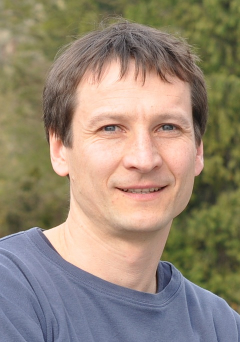
Denny Yu is an Associate Professor at the Edwardson School of Industrial Engineering, Purdue University. His work bridges human factors, neuroergonomics, and healthcare safety through advanced sensor systems and AI. Primary Affiliation : Edwardson School of Industrial Engineering, Purdue University Research Themes : Surgical ergonomics, autonomous vehicle human factors, cognitive workload assessment, multimodal physiological sensing Dr. Yu's research focuses on neuroergonomics and human-robot interaction , particularly in surgical and transportation contexts. His team develops sensor-based systems for workload monitoring, including: EEG-eye tracking fusion for situation awareness Wearable exoskeletons for surgical posture support Computer vision tools for lifting task risk analysis Smart infusion pump usability frameworks AI-driven surgical coaching systems Recent publications emphasize deep learning applications in soft tissue deformation estimation and real-time adaptive systems for robotic surgery augmentation. His work spans both occupational health (veterinary surgeons, airport workers) and medical device innovation domains.
Dirk Thierens is an Associate Professor in the Department of Computer Science at Utrecht University's Faculty of Science, specializing in Intelligent Systems within AI & Data Science. His academic career spans over 25 years, with continuous publications from 1996 through 2025, demonstrating sustained research activity and leadership in his field. He maintains an active research program with numerous collaborations, most notably with Peter A.N. Bosman, indicating a long-standing productive research partnership. Thierens' research focuses on evolutionary computation, particularly model-based evolutionary algorithms, genetic algorithms, and optimization techniques. His work has evolved from foundational genetic algorithm research in the late 1990s and early 2000s to more specialized model-based approaches in recent years, including significant contributions to Gene-pool Optimal Mixing Evolutionary Algorithms (GOMEA). His expertise spans single-objective and multi-objective optimization, permutation problems, mixed-integer problems, and real-valued optimization. In recent years, his research has expanded into applications in machine learning, particularly semi-supervised learning and neural network optimization. His publication record shows a consistent output of high-quality research, with numerous papers in top conferences like GECCO and journals in evolutionary computation. His most recent work (2023-2025) demonstrates continued innovation in synthetic data generation, neural network combination techniques, and parameterless evolutionary algorithms. The breadth of his work spans theoretical algorithm development, benchmarking methodologies, and practical applications in healthcare and other domains. While no specific scientific awards are mentioned in the available information, his extensive publication record, tutorial contributions at major conferences, and sustained research productivity over multiple decades indicate recognition within the evolutionary computation community. His tutorial work at GECCO conferences suggests he is considered an authority on model-based evolutionary algorithms. Thierens maintains an active research laboratory focused on evolutionary algorithms and their applications, with recent work exploring the intersection of evolutionary computation and deep learning. His research continues to advance both theoretical understanding and practical applications of optimization techniques in complex problem domains.
Marianna Cavada is a Senior Lecturer at the Manchester School of Architecture (MSA), where she leads the MA Architecture & Urbanism program as the Prototype Urbanism Lab Lead and serves as the Department International Lead. Her research focuses on AI-driven urbanism, smart and liveable cities, and policy design for sustainable urban transformation. Education: PhD in Civil Engineering (2019, University of Birmingham) PG Dip Architecture (International) RIBA II (2008, Huddersfield University) BA Hons Architecture RIBA I (2005, Huddersfield University) BA Hons Interior Design (2001, De Montfort University) Marianna bridges theoretical and practical urbanism through collaborations with local policymakers (Lancaster City Council, Karystos Municipality) and international bodies like the WHO. Her work addresses inequality, climate emergency, and global health within the UN Sustainable Development Goals framework. She contributed to the British Academy-funded 'Caring-with Cities' project and EPSRC initiatives including Liveable Cities and the Green Infrastructure Corridors program. Her research outputs include the book The Little Book of Smart Cities and publications on topics ranging from CO2 emissions in smart cities to gamification in post-pandemic urban evaluation. Marianna has presented at institutions such as the University of Birmingham, Donghua University, and Xi’an Jiaotong University, and has led workshops like the Smart Cities Alliance in Birmingham. Key Scientific Awards: First Prize – Peter Stead Award (2008) Higher Commendation in PG Dip Architecture (2008) Marianna supervises PhD projects in AI Urbanism, Smart Cities, Liveable Cities, and Urban Engineering. Her professional background includes architectural practice in the UK (ATKINS), UAE (Al Falah project), and China (GDG Ltd, Twin Cities), alongside academic roles at the University of Birmingham and Lancaster School of Architecture. She operates from the Manchester Technology Centre and maintains memberships in the International Society for Urban Health and the Royal Institution of Chartered Surveyors (RICS).
Todd Gabe is a Professor of Economics at the University of Maine, affiliated with the School of Economics within the College of Natural Sciences, Forestry and Agriculture. His work focuses on state and local economic development, human capital, public finance, and the knowledge economy. He is supported by the Maine Agricultural and Forest Experiment Station and contributes to the Hatch project ME022307. Dr. Gabe holds a Ph.D. in Agricultural Economics from The Ohio State University and an M.S. in Applied Economics from the University of Minnesota. He teaches courses such as Principles of Microeconomics, Applied Economic Data Analysis, Economics of Sports, and Regional Economics – Policy & Practice. His research spans regional and community economic development, rural workforce dynamics, tourism economics, and the impacts of climate change and pandemics on regional economies. Recent work examines the creative economy, minimum wage effects, urban influence metrics, and post-COVID recovery patterns. Dr. Gabe’s publications include analyses of social media as economic indicators, labor market spillovers, and tourism spending dynamics. His work frequently leverages econometric and spatial methods to address urban-rural economic linkages and workforce skill disparities. University of Maine Presidential Public Service Award (2004) College of Natural Sciences, Forestry and Agriculture Outstanding Public Service Award (2005) He has published in journals such as the Journal of Economic Geography , Journal of Regional Science , and Urban Studies , with a focus on applied regional economics and policy evaluation.
Dr. Mark Peterson is a Professor of Marketing and Sustainable Business Practices at the University of Wyoming's College of Business, Department of Management & Marketing. With a Ph.D. in marketing from Georgia Institute of Technology (1994) and over 60 refereed journal publications, he specializes in sustainability integration into business decisions and consumer behavior. Affiliation: University of Wyoming since Fall 2007 Previous: University of Texas at Arlington International experience: Germany, South Korea, Turkey, France, Canada Research Interests focus on environmental-social business integration, international marketing dynamics, and macromarketing frameworks. His work bridges academic theory with practical applications for sustainable enterprise. Notable Publications include Sustainable Marketing: A Holistic Approach (2021) and editorship of the Journal of Macromarketing (2016-2019). Articles span sustainability theories, consumer vulnerability analysis, and global prosperity modeling. Scientific Awards : Alpha Kappa Psi Award (1995) Charles C. Slater Award for Lebanon market analysis (2024) Advising & Grants : Mentors Ph.D. students in sustainability research and consumer behavior. Secured funding for macromarketing studies and international projects.
Dr. Henry Prunckun is an Adjunct Associate Research Professor at Charles Sturt University's Australian Graduate School of Policing and Security. With a PhD, MPhil, MSocSc, and BSc, he brings extensive academic credentials to his role as a methodologist specializing in transnational crime, including espionage, terrorism, drugs and arms trafficking, and cyber-crime. His research interests focus on intelligence analysis methodology, counterterrorism strategies, and the theoretical foundations of intelligence work. Prunckun has developed expertise in applying scientific methods to intelligence gathering and analysis, with particular emphasis on the historical and contemporary roles of intelligence in national security and law enforcement contexts. His recent publications demonstrate a strong focus on foundational intelligence concepts, with his "Espionage Black Book" series covering topics from basic intelligence to spy radio communications. These works bridge theoretical knowledge with practical applications for students and practitioners in the field. Two literature awards Professional service award from the International Association of Law Enforcement Intelligence Analysts With a 28-year operational career in the criminal justice system, including five years as a senior counterterrorism policy analyst, Prunckun brings practical experience to his academic work. He has supervised numerous doctoral students across policing, security, and public policy disciplines, with research topics spanning citizen journalism in policing, terrorism investigation strategies, and police efficiency indicators. His work often examines the intersection of intelligence analysis, law enforcement practice, and security policy development.
Hans-Joachim Linke is a Professor of Land Management at the Technical University of Darmstadt (TU Darmstadt) in the Department of Civil Engineering and Geodesy. Since 2002, he has led research on urban development, land management, and sustainability. He concurrently serves as Academic Director of the MSc program in Sustainable Urban Development at the Vietnamese-German University in Ho Chi Minh City (since 2013). Previously, he was a project leader at LEG Landesentwicklungsgesellschaft NRW GmbH (1997–2002) and a researcher at the University of Bonn (1990–1997). His education includes a degree in Surveying Engineering from the University of Bonn (1982–1988) and preparatory service for higher surveying administration in North Rhine-Westphalia (1988–1990). Research Focus: Linke investigates demographic shifts, climate adaptation in cities, infrastructure for rapidly urbanizing areas (especially Southeast Asia), land management tools, real estate determinants, and GIS applications. His work emphasizes participatory approaches, sustainable resource use, and policy integration across environmental and urban systems. Publication Trends: Recent articles (2020–2025) reveal a strong emphasis on sustainable land and water management, digital tools for urban planning, and climate resilience. Key themes include water reuse systems, AI/remote sensing in land assessment, participatory disaster resilience, and institutional analyses of land policies. Cross-disciplinary approaches integrate environmental engineering, geospatial tech, and socio-economic factors. Leadership & Service: He has held multiple university leadership roles, including Dean (2007–2011) and Vice Dean (2011–present) of Civil Engineering and Geodesy. External commitments include editorial roles for Flächenmanagement und Bodenordnung , committee memberships in geodesy and infrastructure organizations, and advisory positions for rural planning academies.
Dr. Agnieszka Gruszczyńska is a researcher specializing in paleoenvironmental studies at an academic institution in Poland, working within the Department of Dynamics of Past Landscapes. She completed her PhD in 2023 after conducting extensive research on the paleogeographic development of the Great Sertei Lake Basin in the Vitebsk Lake District, using paleoecological analyses as her primary methodology. Education: 2016-2023: PhD studies on Paleogeographic development of the Great Sertei Lake Basin in the Vitebsk Lake District in the light of paleoecological studies 2014-2016: Master's degree in Environmental Protection, Faculty of Biology and Environmental Protection, University of Lodz, specialization in ecology and water protection 2012-2014: Master's degree in Pedagogy with physical and health education, Faculty of Geographical Sciences, University of Lodz Dr. Gruszczyńska's research centers on ecosystem responses to violent and extreme events throughout geological history, with particular expertise in Chironomidae ecology where she investigates non-temperature factors influencing population dynamics and community quality. Her work spans paleoecological analysis of aquatic invertebrate remains and examines climate change patterns throughout the Pleistocene and Holocene epochs. She frequently employs multi-proxy approaches to reconstruct past environmental conditions, with fieldwork concentrated in Eastern Europe, particularly Western Russia's Serteya region and various Polish lake districts. Her extensive publication record demonstrates a methodological focus on paleolimnology and paleoenvironmental reconstruction using lake sediments, peat bogs, and other natural archives. Recent work shows increasing emphasis on human-environment interactions throughout history, particularly regarding historical land use practices like charcoal production and their long-term ecological impacts. Her collaborative research bridges Quaternary science, archaeology, and modern environmental concerns, often examining how past environmental changes can inform contemporary ecological challenges. Dr. Gruszczyńska actively participates in international research collaborations, particularly with institutions in Russia and other European countries, contributing to our understanding of long-term environmental changes and human adaptation to these changes across the East European Plain.
Prof. Dr. Aleksa Božičković serves as Full Professor at the Department of Nutrition, Physiology and Anatomy of Domestic and Farmed Animals within the Faculty of Agriculture at the University of Belgrade. With extensive experience in animal nutrition science, he teaches numerous courses including Ruminant Nutrition, Applied Nutrition of Domestic and Farmed Animals, and Modern Concepts of Nutrition of Domestic and Farmed Animals. His academic position is supported by a robust publication record spanning over a decade. Professor Božičković's research focuses on critical aspects of animal nutrition with particular emphasis on: Ruminant nutrition systems and their impact on dairy production Forage quality assessment and management strategies Silage technology and preservation methods Feed particle size and physical effectiveness in ruminant diets Nutritional management during critical physiological periods Protein degradability in various forage systems His scholarly work demonstrates a consistent trajectory toward improving precision feeding techniques and understanding the relationship between feed physical structure and animal performance. Recent publications highlight innovative methodologies for assessing forage maturity and nutritional value, particularly in alfalfa and pasture systems. Professor Božičković has made significant contributions to understanding how different feeding strategies affect animal metabolism, chewing activity, and production parameters. Professor Božičković actively contributes to the academic community through teaching, research supervision, and scholarly publications. His work bridges theoretical knowledge with practical applications in animal husbandry, benefiting both students and industry professionals.
Diana Valencia is an Associate Professor in the Department of Physical and Environmental Sciences at the University of Toronto, with cross-appointments in the Department of Astronomy. She holds positions at both the University of Toronto Scarborough (UTSC) and the St. George campus, focusing her research on the characterization of low-mass exoplanets, particularly super-Earths and mini-Neptunes. Her work aims to determine whether planets with masses between 1-15 Earth masses are scaled-up versions of Earth or scaled-down versions of Neptune in terms of composition, evolution, and physical properties. Ph.D. from Harvard University, Department of Earth and Planetary Sciences (2008) M.Sc. from University of Toronto, Physics Department (2002) B.Sc. (Honours) from University of Toronto, Physics Department (2001) Dr. Valencia's research interests center on the chemical composition and interior structure of super-Earths and mini-Neptunes, formation processes and chemistry of rocky planets, thermal evolution and interior dynamics of rocky and icy planets, and planetary habitability. Her work combines theoretical modeling with observational constraints to understand how planets form, evolve, and develop the properties we observe. She particularly focuses on connecting stellar composition to planetary characteristics and using statistical approaches to infer interior structures from mass-radius relationships. Analysis of her recent publications shows a strong focus on connecting stellar composition to planetary characteristics, with increasing use of advanced statistical methods and machine learning techniques to infer interior structures. Her research spans theoretical modeling of planetary interiors, observational constraints from missions like JWST, and development of instrumentation for exoplanet characterization. The trend shows growing emphasis on understanding the diversity of rocky exoplanets and their formation pathways. Paolo Farinella 2021 Prize awarded by the European Planetary Society (shared with Lena Noack) Dr. Valencia actively mentors PhD students, currently supervising Nathan Winsor (Habitability of M-Dwarf Stars), Jen Scora (Compositional Outcome of Rocky Planet Formation), Bo Peng (Volatile Acquisition of Rocky Planetary Bodies), and Mykhaylo Plotnykov (Statistical Inferences of the Interior Structure and Composition of Exoplanets). Her research group spans a wide variety of topics related to planetary formation and evolution, with particular emphasis on understanding how planets develop their observed properties. She has secured significant research funding, including NASA Sagan Postdoctoral Fellowship and Henri Poincare Postdoctoral Fellowship. Dr. Valencia leads a research group focused on understanding planetary formation and evolution, with projects ranging from statistical inferences of interior structure to thermo-chemical evolution of planetesimals. She has also created the Astro4Kids initiative, providing free astronomy education to children worldwide, demonstrating her commitment to public outreach and science communication.
Felicia Castro-Villarreal serves as a Professor of School Psychology within the Department of Educational Psychology at the University of Texas at San Antonio (UTSA), part of the College of Education and Human Development. She holds licensure as a Licensed Specialist in School Psychology (LSSP) and is actively pursuing Licensed Psychologist status, demonstrating her dual commitment to academic rigor and clinical practice in educational settings. Her educational trajectory includes a Bachelor’s degree in Psychology from UTSA, a Master of Science in Clinical Psychology from St. Mary’s University, and a Ph.D. in School Psychology from Oklahoma State University. She completed her doctoral internship at the APA-accredited Cypress-Fairbanks ISD Psychological Services Department, establishing foundational expertise in school-based psychological services. Dr. Castro-Villarreal’s research program centers on multicultural assessment and culturally responsive consultation practices, directly addressing systemic inequities in educational psychology. Her work examines how cultural identity influences assessment validity, develops consultation frameworks for diverse educators, and investigates barriers to mental health services for marginalized student populations—particularly focusing on autism spectrum disorders and high-stakes testing implications. Analysis of her recent publications reveals a cohesive research trajectory emphasizing social justice in school psychology. Her work consistently bridges theory and practice through mental health screening innovations, autism intervention adaptations, and critical examinations of labeling practices. Notably, her 2025 study on autistic women’s care experiences and 2023 meta-analysis on mental health screening demonstrate methodological diversity while maintaining focus on underserved populations. While specific grant details and student advisees aren't publicly documented, her extensive publication record—including systematic reviews, qualitative explorations, and intervention studies—indicates active research leadership. Her contributions to yearbook introductions and special issues reflect scholarly service to advance equity-focused discourse within educational psychology.
Dr. Sarah Wolf serves as Head of the Junior Research Group 'Mathematics for Sustainability Transitions' at Free University of Berlin's Department of Mathematics and Computer Science and as a Senior Researcher and Board Member at the Global Climate Forum (GCF). Her dual affiliation bridges rigorous mathematical modeling with real-world sustainability policy, focusing on complex socio-ecological systems through an interdisciplinary lens since joining GCF's Green Growth initiative in 2012. Wolf earned her PhD in Mathematics from Freie Universität Berlin in 2010 with the thesis 'From Vulnerability Formalization to Finitely Additive Probability Monads,' developed during interdisciplinary work at the Potsdam Institute for Climate Impact Research. Her academic foundation combines pure mathematics with applied climate impact research, establishing her unique approach to formalizing sustainability concepts. Her research centers on agent-based modeling of socio-technical systems, with core expertise in sustainability transitions , green growth mechanics , and sustainable mobility . She develops mathematical frameworks to clarify vulnerability concepts while embedding simulations in stakeholder dialogues through innovations like the 'Decision Theatre Triangle.' This work uniquely positions mathematics as both analytical tool and communication medium for climate policy. Analysis of her 15 most recent publications reveals an evolutionary trajectory from foundational vulnerability formalization (2009-2012) toward applied stakeholder-integrated modeling (2021-2023). Her work consistently bridges mathematical rigor with policy relevance, showing increasing emphasis on participatory approaches while maintaining computational sophistication in agent-based systems. No scientific awards are documented in the source material, though her leadership in the MATH+ junior research group indicates competitive funding attainment. As group head, she directs research strategy and likely mentors junior researchers, though no formal student advisees are listed. Wolf leads the 'Mathematics for Sustainability Transitions' junior research group within FU Berlin's Biocomputing Group, collaborating with institutions like the Potsdam Institute. Her team develops computational frameworks for green growth transitions, emphasizing stakeholder co-creation through platforms like the Decision Theatre while maintaining strong ties to GCF's global policy networks.
Peter Bofinger is Professor for Monetary Policy and International Economics at the University of Würzburg and Research Fellow at the Center for Economic Policy Research (CEPR), London. His career includes positions as Economist at the Deutsche Bundesbank, Visiting Scholar at the Federal Reserve Bank of St. Louis and the IMF, and professorships at the Universities of Kaiserslautern and Konstanz. From 2004 to 2019 he served as a member of the German Council of Economic Experts. Research Focus Monetary policy theory and practice, including the concept of the natural rate of interest (r*) International macroeconomics and exchange-rate regimes Digital currencies, stablecoins, and central-bank digital currencies (CBDC) Finance–growth nexus through a Schumpeterian lens, emphasizing banks’ role in liquidity creation Financial stability and the macroeconomic consequences of banking regulation Recent publications (2020-2025) reveal a consistent emphasis on how modern monetary systems—especially private digital monies and CBDC—affect macroeconomic stability and growth. Collaborative work with Thomas Haas, Fabian Mayer, and Lisa Geißendörfer applies both theoretical and empirical methods to test Schumpeterian hypotheses, reassess the finance–growth relationship, and evaluate policy implications of new monetary technologies. Scientific Contributions Textbooks: Monetary Policy: Goals, Institutions, Strategies, and Instruments Policy columns on VoxEU addressing central-bank independence, bank capital regulation, and European recovery strategies CEPR Discussion Papers spanning stablecoins, r* estimation, cryptocurrency competition, and Schumpeterian finance theory Advising & Grants During his 15-year tenure on the German Council of Economic Experts, Bofinger shaped national and European macroeconomic policy debates. No specific doctoral students or funded projects are named in the supplied material.
Wendy P. Robinson is a Professor in the Department of Medical Genetics at the University of British Columbia Faculty of Medicine , and a Senior Scientist at the BC Children’s Hospital Research Institute . She holds the CIHR Sex and Gender Science Chair . Research Interests: Genetics and epigenetics of early human development, placental function in pregnancy complications (fetal growth restriction, preterm birth), DNA methylation, non-coding RNA, sex differences, and polymorphisms. Her lab employs genomic and bioinformatic tools to study placental health and its impact on newborn outcomes. Recent Publications (2025-2024) focus on X-chromosome inactivation patterns in placenta, cell-type specific DNA methylation, maternal socioeconomic effects on placental epigenetics, and modeling placental development with organoids. Key themes include sex-specific epigenetic regulation , maternal-fetal interactions , and human placental methylome . Awards: UBC Faculty of Medicine Distinguished Achievement Award (2018), with trainees receiving the James Miller Memorial Prize and Mary-Jane Carroll Trainee Award. Students & Collaborations: Supervised PhD/MSc students include Li Qing Wang, Icíar Fernández Boyano, Giulia Del Gobbo, Victor Yuan, and Magda Price. Collaborators span the Alex Beristain Lab and University of Toronto institutions. Laboratory Activities: Regular team-building events like mountain hikes, climbing outings, and kayaking trips, alongside providing open access to epigenetic tools (e.g., Bisearch, SeqDoc) for the research community.
Daniel Baum is a Research Professor and Head of the Visual Data Analysis research group at the Zuse Institute Berlin (ZIB), which is affiliated with Freie Universität Berlin. His work spans across scientific visualization, computational biology, and image analysis, with a particular focus on developing methods for analyzing complex biological structures and neural circuits. He is actively involved in multiple interdisciplinary research projects including HFSP Chitons, Geometric Learning for Single-Cell RNA Velocity Modeling, and RobustCircuit. Dr. Baum's research interests center on visual and data-centric computing approaches to solve complex problems in biology and medicine. His work bridges the gap between computational methods and biological applications, with significant contributions to cryo-electron tomography analysis, neural circuit mapping, and geometric morphometrics. He develops innovative algorithms for 3D reconstruction, image segmentation, and visualization of biological structures, from molecular to organismal scales. His publication record demonstrates consistent contributions to visualization techniques applied to biological problems, with recent work focusing on neural circuit analysis in zebrafish and Drosophila, biomechanical studies of animal structures, and advanced methods for analyzing ancient artifacts. The research shows a clear trajectory toward increasingly sophisticated multimodal data integration and machine learning approaches. Dr. Baum leads a productive research group with several key collaborators who frequently appear as co-authors on his publications, indicating a strong mentoring relationship. His projects involve substantial funding from various sources supporting interdisciplinary collaborations across biology, computer science, and engineering. His laboratory at ZIB focuses on visual data analysis for complex biological systems, with particular strength in developing computational methods for neuroscience applications and biomaterial analysis. The group maintains strong collaborations with multiple institutions working on cutting-edge imaging technologies and biological model systems.