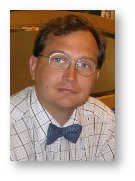
Vladimír Kopecký is an Assistant Professor at the Institute of Physics , Charles University, with a focus on biophysics and optical spectroscopy . He earned his PhD in Biophysics from the Faculty of Mathematics and Physics, Charles University, and has been affiliated with the Institute of Physics since 2004. Education : MSc in Physics of Molecular and Biological Systems (1993–1998), PhD in Biophysics (1998–2004) His research centers on applying Raman spectroscopy , infrared spectroscopy , and circular dichroism to study protein structures , glycoproteins , and modified nucleotides , with applications in medical diagnosis and quantum-chemical modeling . Recent publications highlight interdisciplinary work in materials science , neurobiology , and saccharide analysis . Scientific awards include the Young Scientist Award (2004) and the Bernard Bolzano Foundation Prize (2003) . He is also the Director-in-chief of Astropis , a science popularization journal, and has co-edited conference proceedings such as the 9th European Conference on the Spectroscopy of Biological Molecules .
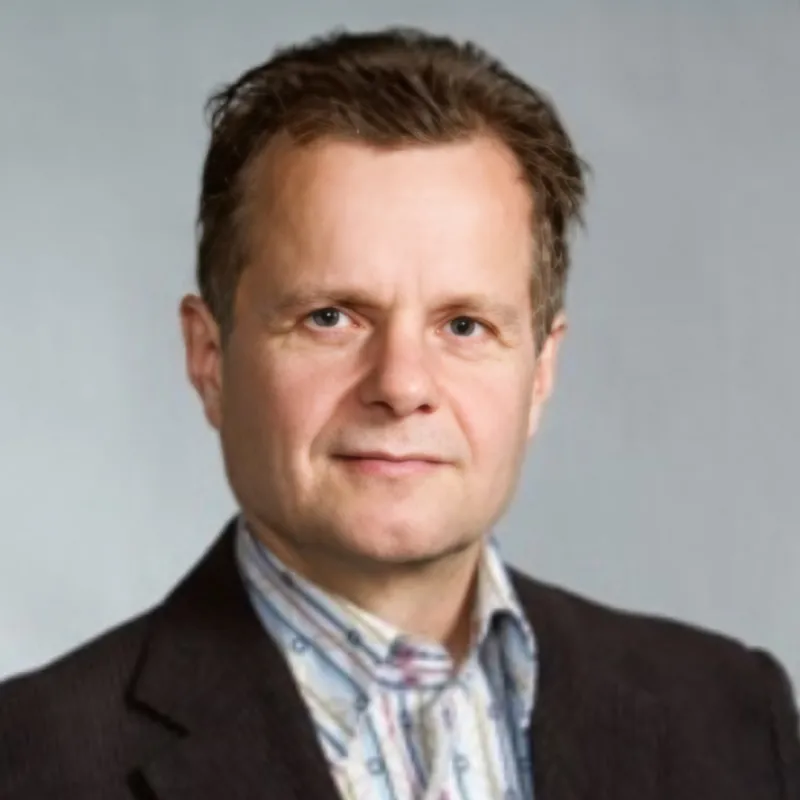
Kari Ullakko serves as a Professor in the Department of Physics at LUT School of Engineering Sciences, LUT University, Lappeenranta, Finland. His research focuses on advanced materials engineering with particular emphasis on magnetic shape memory alloys (MSMAs) and additive manufacturing technologies. He maintains active research operations including laboratory facilities for laser-based material processing and microdevice fabrication, with direct applications in microelectromechanical systems and biomedical engineering. Professor Ullakko's research program centers on Ni-Mn-Ga based magnetic shape memory alloys, investigating fundamental phenomena including twin boundary dynamics, phase transformations, and magnetostructural coupling. His work integrates additive manufacturing techniques such as laser powder bed fusion and directed energy deposition with micromachining processes like femtosecond laser ablation to develop functional microdevices. Key application areas include contact-free micropumps for microfluidics, microactuators for precision positioning, and hydrophobic metasurfaces for specialized surface engineering. His methodology combines experimental characterization with computational modeling to optimize material properties and device performance. Analysis of his recent publications (2024-2025) reveals three dominant research thrusts: (1) process optimization of additive manufacturing for Ni-Mn-Ga alloys including in-situ alloying and substrate engineering, (2) fundamental studies of twin boundary mobility and phase stability under thermal and mechanical stimuli, and (3) development of hybrid microdevices integrating MSMAs with silicon-based components. His work demonstrates consistent innovation in overcoming material processing challenges while expanding the application envelope of magnetic shape memory technology into biomedical and microfluidic domains.
Mark Brongersma is a Professor of Materials Science and Engineering at Stanford University and serves as the Director of the Geballe Laboratory for Advanced Materials (GLAM). He also holds a courtesy appointment in Applied Physics. As the Stephen Harris Professor, he leads cutting-edge research in nanophotonics and plasmonics at the intersection of materials science, electrical engineering, and physics. Brongersma received his PhD in Materials Science from the FOM Institute in Amsterdam, The Netherlands, in 1998, followed by postdoctoral research at Caltech from 1998-2001. His academic journey demonstrates a strong foundation in both European and American research institutions, positioning him at the forefront of nanoscale optical research. His research interests span plasmonics (a field he coined during his postdoc), nanophotonics, metasurfaces, and the development of nanostructured materials for electronic and photonic applications. Brongersma's work focuses on manipulating light at the nanoscale to create novel optical devices with applications in communications, sensing, and computing. His group develops innovative approaches to control light-matter interactions through engineered nanostructures, pushing the boundaries of what's possible in optical science. Analysis of his recent publications reveals a strong focus on metasurface technologies, excitonics in 2D materials, dynamic optical control systems, and novel approaches to optical modulation. His work increasingly integrates multiple physical phenomena (acoustic, electronic, optical) to create multifunctional nanoscale devices with unprecedented capabilities. National Science Foundation Career Award Walter J. Gores Award for Excellence in Teaching International Raymond and Beverly Sackler Prize in the Physical Sciences Fellow of the Optical Society of America Fellow of SPIE Fellow of the American Physical Society MRS Fellow (2023) Brongersma leads an active research group working on the MURI project focused on integrated hybrid nanophotonic circuits. His team collaborates with leading researchers across multiple institutions including Stanford, Caltech, Harvard, and Berkeley. The Geballe Laboratory for Advanced Materials under his direction serves as a hub for interdisciplinary materials research at Stanford, fostering collaboration between physicists, engineers, and materials scientists.
Nicholas Melosh is a Professor of Materials Science and Engineering at Stanford University, affiliated with the School of Engineering. His research focuses on bio-inorganic interfaces, molecular materials at interfaces, and self-assembly/nucleation processes. PhD in Materials Science and Engineering (2001) from University of California, Santa Barbara BS in Chemistry (1996) from Harvey Mudd College Research interests center on: Designing inorganic structures for seamless integration with biological systems Developing nanostraw-based platforms for cell transfection and neural interfaces Quantum nanophotonics with diamond color centers Thermionic energy conversion and bioelectronic device engineering Recent publications (2023-2025) reveal a focus on: Quantum photonics and diamond color center integration Advanced neural interfaces using 3D electrode arrays Bio-inspired materials for biomedical applications Surface engineering for energy conversion devices Electrochemical control of soft materials Molecular imprinting for sensing applications
Iyemeh Uchendu is a Senior Research Fellow in the Electromagnetic Fields Group at the University of Colorado Boulder, affiliated with the Department of Electrical, Computer & Energy Engineering. His work focuses on traceable measurement systems for wide bandwidth modulated signals, synthetic aperture techniques, and over-the-air (OTA) characterization of 5G/6G beam-steering phased array systems. Research interests include millimeter wave RF measurements , antenna metrology , and field strength characterization . He develops test environments for advanced wireless systems using precision signal sources and the NIST Microwave Uncertainty Framework for uncertainty analysis. Recent publications highlight expertise in metasurface design , dynamic frequency reuse , and beam steering techniques , with applications in 5G/6G communications and ultra-wideband systems. Key collaborations include work on network monitoring, facial recognition datasets, and hybrid antenna architectures. Email: iyemeh.uchendu@colorado.edu
Daniel Sjöberg is a Professor at the Department of Electrical and Information Technology at Lund University, specializing in Electromagnetics and Nanoelectronics . He also serves as the Director of Third Cycle Studies and contributes to the LTH Profile Area: AI and Digitalization and the ELLIIT initiative . Research Focus: Electromagnetic field interactions with materials, antennas, microwave applications, homogenization, periodic structures, and inverse scattering problems. Collaborations: Active partnerships with industry (aerospace sector) and institutions like Linköping University through ELLIIT. Projects: Leads initiatives such as EKAS-3D (3D-printed electromagnetic characterization) and FE2MS (fast electromagnetic solvers). His work aligns with UN Sustainable Development Goals (SDGs) in technology and communications. Recently, he has published on topics including 2D periodic dielectrics, water-based reconfigurable devices, and nonreciprocal systems, with technical reports and peer-reviewed articles.
Harry A. Atwater, Jr. holds the Otis Booth Leadership Chair of the Division of Engineering and Applied Science and serves as the Howard Hughes Professor of Applied Physics and Materials Science at the California Institute of Technology. He directs the Department of Energy-funded Liquid Sunlight Alliance, a multi-institutional initiative advancing solar fuel technologies. His academic journey includes a B.S. (1982), M.S. (1983), and Ph.D. (1987) in Physics from the Massachusetts Institute of Technology. Career progression at Caltech spans Assistant Professor (1988-94), Associate Professor (1994-99), full Professor (1999), and Howard Hughes Professor (2002-present), with leadership roles including Director of the Resnick Sustainability Institute (2009-15) and Joint Center for Artificial Photosynthesis (2014-21). Research spans the light-energy-nanoscale nexus with critical focus areas: Quantum nanophotonics and plasmonic light manipulation Metamaterials for solar spectrum engineering Artificial photosynthesis and carbon-neutral fuel production Space-based solar power systems and lightsail propulsion Two-dimensional materials for ultra-thin optoelectronics Carbon capture membrane technologies Recent publications (2024-2025) reveal accelerating innovation in photonic climate solutions, featuring breakthroughs in nonreciprocal thermal emitters, dynamically tunable metasurfaces, and experimental lightsail validation. Key trends include space-based solar power demonstration, atomically thin optical devices, and quantum emitter characterization for next-generation photonic circuits. Major initiatives include the Liquid Sunlight Alliance (DOE Energy Innovation Hub), Caltech Space Solar Power Project (successful 2024 in-space wireless power transmission), and leadership in the NSF Quantum Virtual Laboratory. His group has secured transformative funding for lightsail propulsion research and carbon capture startups like Captura (XPRIZE winner). The Atwater Research Group operates cutting-edge laboratories for nanofabrication and optical characterization, currently advancing deployable space solar arrays, high-efficiency photoelectrochemical cells, and metasurface-based wireless communication systems with applications in secure satellite networks.
Muhammad Alam is an Assistant Professor of Electrical and Computer Engineering at Queen's University. He holds a PhD and is a licensed Professional Engineer (P.Eng) with extensive research contributions in nanophotonics and related fields. His work has led to over 50 publications and three issued/pending patents. BASc from Bangladesh University of Engineering and Technology (2000) MASc from the University of Victoria (2003) PhD from the University of Toronto (2012) Dr. Alam specializes in nanophotonics , focusing on metasurface design, plasmonics, silicon photonics, and optoelectronics. His PhD research introduced the hybrid plasmonic waveguide, a breakthrough that sparked global research activity. He has also conducted postdoctoral work at the University of Toronto and Caltech, with visiting roles at Jet Propulsion Laboratory and Lawrence Berkeley National Laboratory. Douglas R. Colton Medal for Research He holds three issued/pending patents for his innovations in photonics and has advised numerous graduate students. His research bridges theoretical exploration with practical applications in advanced optical systems and nanoscale device engineering.
Victor Brar is the Van Vleck Associate Professor of Physics at the University of Wisconsin, Madison, where he leads the Brar Lab focused on atomic-scale investigation of materials. His research bridges condensed matter physics, nanotechnology, and optical engineering, with emphasis on discovering new phenomena in quantum and low-dimensional materials that have both fundamental and technological significance. Dr. Brar's research explores the electronic, magnetic, and optical behavior of materials at the atomic scale. His lab investigates phenomena such as highly localized plasmonic modes, long-range magnetic interactions, and deep impurity states, with particular focus on 2D materials, graphene, magnetic materials, and optical metasurfaces. The Brar Lab employs scanning tunneling microscopy and large-scale lithographic methods to characterize and structure materials for novel device applications. Analysis of Dr. Brar's publication record reveals a consistent research trajectory in graphene-based plasmonics, quantum transport, and optical phenomena across the infrared spectrum. His work spans from fundamental investigations of electron behavior in novel materials to applied research on optical devices and metasurfaces, with increasing focus on practical applications of atomic-scale phenomena in macroscopic devices. The Brar Lab at the University of Wisconsin-Madison utilizes advanced scanning probe microscopy techniques to investigate materials at the atomic scale. The lab combines experimental characterization with nanofabrication to create structured materials that manifest quantum phenomena at macroscopic scales for practical applications in electronics and photonics. Their research approach integrates theoretical understanding with experimental validation to develop new material systems with tailored electronic and optical properties.
Dr. John Bartholomew is a researcher at the University of Sydney's Faculty of Science, leading the Quantum Integration Laboratory. His work focuses on quantum internet technologies using rare-earth ions in integrated systems. He holds a PhD in Physics from the Australian National University (2014), with postdoctoral experience at Chimie Paristech (2015) and Caltech (2016-2019). His research aligns with the University of Sydney's Quantum Frontiers initiative. Education PhD in Physics, Australian National University (2014) Research Focus Quantum networking with photon-spin interactions Rare-earth ion integration for quantum memory Coherent microwave-optical transduction Nanophotonic quantum interfaces Optical linewidth and coherence time optimization Scientific Recognition American Australian Association Northrop Grumman Fellowship (2015) Grants 2024 Er:SiC integrated photonics grant 2023 ARC Training Centre for Future Leaders in Quantum Computing grant 2022 SOAR Prize 2021 Atomic Scale Control over Quantum Materials grant Teaching Quantum nanoscience (PHYS4126/PHYS5126) Interdisciplinary Physics (PHYS3888) experimental coordination Labs Director of Sydney Nanoscience Hub's Quantum Integration Laboratory
Dr. Yan Kei Chiang is a Lecturer at the School of Engineering and Information Technology, UNSW Canberra, specializing in acoustic metamaterials research. He is an active member of the Advanced Electromagnetics group and has established himself as a prominent researcher in wave engineering through metamaterials. His research focuses on acoustic and elastic wave metamaterials , with particular expertise in designing structures that manipulate sound waves in unprecedented ways. Dr. Chiang's work spans theoretical modeling, experimental design, and practical applications including noise control, structural health monitoring, and energy harvesting. His research interests specifically include tunable and reconfigurable metamaterials, nonlinear acoustic systems, and the application of machine learning for acoustic structure optimization. His expertise extends from micro-electro-mechanical systems to medical science applications. Dr. Chiang actively supervises PhD candidates in acoustic metamaterials research, requiring applicants to have a solid background in acoustic or electromagnetic waves. His supervision areas include acoustic wave metamaterials, tunable metamaterials, acoustic resonator modeling for energy harvesting, and machine learning optimization of acoustic structures. His laboratory work involves both theoretical and experimental approaches to acoustic metamaterial design, with recent emphasis on origami-inspired metasurfaces, microacoustic metagratings, and systems for energy harvesting from acoustic waves. His research team collaborates extensively on projects involving wave manipulation, resonance phenomena, and practical applications of metamaterials for engineering solutions.
David Powell is an Associate Professor at the School of Engineering and Information Technology, UNSW Canberra. He specializes in electromagnetic and acoustic metamaterials, with expertise spanning microwave, terahertz, and acoustic experimentation. His research focuses on nonlinear and tunable metamaterials, particularly structures combining electromagnetic and mechanical degrees of freedom. He obtained his PhD from RMIT University (2006) in surface acoustic wave biosensors. From 2006-2017, he was a Researcher at the Nonlinear Physics Centre, Australian National University, before joining UNSW Canberra as Senior Lecturer and advancing to Associate Professor. He maintains membership in the Advanced Electromagnetics research group. Powell's research explores: Novel nonlinear metamaterials and reconfigurable structures Coupled electromagnetic-acoustic dynamics in metamaterials Theoretical frameworks for bianisotropy and chirality Open resonant systems modeling (developer of OpenModes software) Acoustic/electromagnetic wave control via metasurfaces His publications demonstrate consistent focus on wave manipulation through engineered materials, with recent emphasis on acoustic metasurfaces for energy harvesting, noise insulation, and beam control applications.
Dr. Khalil As'Ham is a Research/Lecturer Associate at the School of Engineering & Technology, University of New South Wales (UNSW), Canberra. With a PhD in Engineering (2022) from UNSW and prior degrees from the University of Malaya (M.Sc. 2017) and Taiz University (B.Sc. 2013), his expertise lies in nanophotonics and optoelectronic device optimization , particularly using advanced simulation tools. PhD in Engineering (UNSW, 2022) M.Sc. Eng. with Distinction (University of Malaya, 2017) B.Sc. Eng. with First Class Honors (Taiz University, 2013) His research spans strong light-matter coupling , self-powered photodetectors , and machine learning for optoelectronic design . Recent work focuses on ternary chalcogenides, graphene-based infrared sensors, and hybrid perovskite-TMDC systems. As a mentor, he supports HDR students and teaches courses like Radar Techniques , Communication Systems , and Digital Electronics . Key awards include the UNSW Postgraduate Scholarship (2018-2022), OSHC for RTPs, and the Yemeni Embassy's recognition (2017). His publications highlight trends in 2D material integration , thermal rectification , and UV photodetection with applications in eco-friendly electronics and on-chip sensing. University International Postgraduate Scholarship (2018-2022) OSHC for RTPs University College PG TopUP (2018-2022) Award of Honouring Graduates and Excellent Yemeni Students (2017) M.Sc. Scholarship Programme in Science and Technology (2016-2017)
Willie Padilla is the Dr. Paul Wang Distinguished Professor in the Department of Electrical and Computer Engineering at Duke University's Pratt School of Engineering. He has established himself as a leading researcher in the field of electromagnetic metamaterials and related technologies across multiple frequency regimes. Padilla earned his Ph.D. from the University of California, San Diego in 2004. His educational background provided the foundation for his subsequent groundbreaking work in metamaterials and electromagnetic theory. Dr. Padilla's research focuses on the theoretical, computational, and experimental investigation of electromagnetic metamaterials and metasurfaces, with particular emphasis on artificial intelligence and deep/machine learning applications. His work spans microwave, terahertz, and infrared frequencies, with applications in spectroscopy, computational imaging, and sensing. His lab specializes in the THz, infrared, optical and magneto-optic properties of novel materials utilizing various spectroscopic methods, including Fourier transform spectroscopy and ellipsometry. A significant portion of his recent work involves tailoring the emissivity of objects with metamaterial coatings and developing active metamaterial arrays for imaging systems. Analysis of his recent publications reveals a strong trend toward integrating artificial intelligence with electromagnetic materials research. His work increasingly focuses on physics-informed machine learning for metamaterial design, inverse problems in electromagnetic theory, and the application of deep learning techniques to accelerate metamaterial simulation and design processes. This represents a significant shift from purely experimental work to a more computational and AI-driven approach to metamaterial research. IEEE Fellow (2025) Optica Fellow (2013) Presidential Early Career Awards for Scientists and Engineers (2009) Dr. Padilla has mentored numerous students, including Yang Deng who passed a milestone examination in the Ph.D. program in 2021. His research has been supported by significant grants that have enabled the development of tunable metamaterials, metamaterial absorbers, and energy harvesting applications using metamaterial technology. His work on metamaterial thermal emission and high-temperature metamaterials demonstrates a strong focus on practical applications of fundamental research. The Padilla Lab at Duke University is a multidisciplinary research environment focusing on metamaterials for various applications. The lab has several major research thrusts including tunable metamaterials using semiconductors, graphene, MEMS/NEMS, and liquid crystals; metamaterial absorbers; energy harvesting applications; and advanced spectroscopy techniques. The lab has made significant contributions to the field of metamaterials, particularly in the terahertz frequency range, and continues to push the boundaries of what's possible with engineered electromagnetic materials.
Miguel Camacho Aguiar serves as an Associate Professor in the Department of Electronics and Electromagnetism at the Faculty of Physics, University of Seville, with cross-affiliations in Mathematics, Chemistry, and Pharmacy faculties. His academic career centers on advancing electromagnetic theory through innovative applications of metamaterials and computational methods. His research portfolio spans Metamaterials, Electromagnetic Theory, Antenna Design, Microwave Engineering, Computational Electromagnetics, and Plasmonics. As a core member of the MICROONDAS (GMUS) research group, he investigates wave propagation phenomena in periodic structures and metasurfaces. Current projects focus on extraordinary optical transmission mechanisms and surface wave engineering for next-generation antenna systems. Analysis of his 15 most recent publications reveals a dominant research trajectory in metamaterial applications for analog computing (2021-2023) and Casimir effect engineering using epsilon-near-zero materials (2022-2023). His work consistently bridges theoretical modeling with experimental validation, particularly in THz transmission phenomena and polarization conversion techniques. Camacho leads the MICROONDAS research group specializing in microwave engineering and electromagnetic applications, where his team develops advanced simulation frameworks for periodic structures while maintaining strong collaborations with international institutions including University of Pennsylvania and MIT.