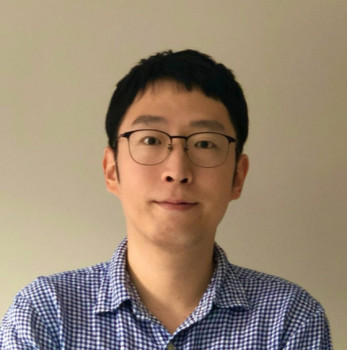
SaeJune Park is a Senior Lecturer (Associate Professor) in Terahertz Electronics and Head of the Terahertz Laboratory at Queen Mary University of London (QMUL). He holds a courtesy professorship in the Department of Physics at Ajou University. His research focuses on terahertz (THz) spectroscopy, photonics, sensors, and environmental applications. Key roles include leading the Terahertz Lab, overseeing the EECS Academic Laser Safety program, and managing a research group involving PhD student Chi Him Liu. Education: Completed a PhD in South Korea focusing on THz-based dielectric and biological sensors using THz time-domain spectroscopy. Notable achievements include pioneering microbial sensing with THz metasurfaces and studying perovskite crystallization kinetics via THz techniques. Research Interests : Development of on-chip THz devices for ultra-sensitive sensing (e.g., colorectal cancer detection via meta-atom probes, microplastic sensing in water). Integrates free-space and on-chip THz technologies for applications in environmental monitoring and telecommunications. Active in metamaterial design and THz-based biomedical diagnostics. Grants : Secured £449,855 from EPSRC (2024-2027) for microplastic sensors using THz metasurfaces. Lab & Teams : Directs the interdisciplinary Park Lab, collaborating with the Centre for Biodiversity and Sustainability. Research staff include Dr. Hwansik Kim. Ongoing projects include THz metamaterial-prism hybrid sensors and THz microfluidic systems for environmental analysis.
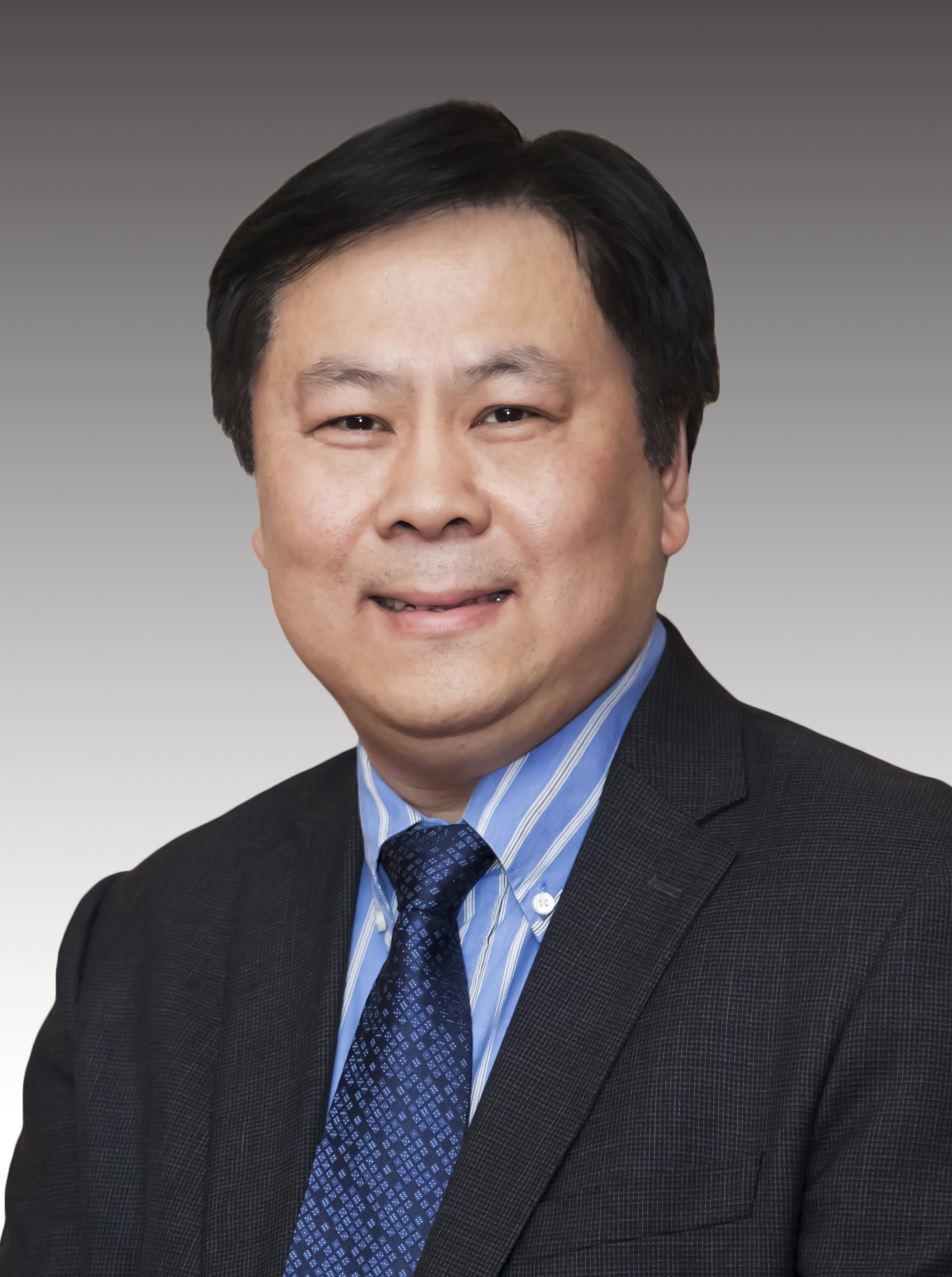
Dr. Lucy Lillian Hale is a Professor at ETH Zürich, holding the Professorship for Experimental Physics within the Institute for Quantum Electronics. Her research focuses on advanced terahertz (THz) technologies, including metamaterials, nano-optics, and near-field spectroscopy. She pioneers innovations in photoconductive metasurfaces for THz detection and generation, with applications in quantum electronics and condensed matter physics. Her work emphasizes the development of high-resolution imaging techniques for subwavelength structures and the study of plasmonic phenomena in materials like Bi₂Se₃. Recent studies explore the interplay of cyclotron resonance and intersubband polaritons under magnetic fields, advancing fundamental understanding of light-matter interactions at nanoscales. Publications highlight advancements in THz near-field spectroscopy of metamaterial resonators, surface current imaging, and low-power photoconductive detectors. These contributions bridge theoretical insights with practical applications in optoelectronics and telecommunications.
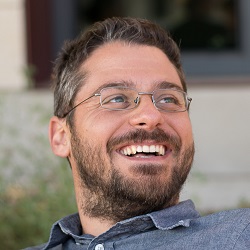
Mark Brongersma is a Professor in the Department of Materials Science and Engineering at Stanford University. He earned his PhD from the FOM Institute in Amsterdam (1998) and was a postdoctoral fellow at Caltech (1998-2001). His research focuses on nanostructured materials for electronic and photonic devices, with contributions to plasmonics, metamaterials, and solar energy conversion. He leads the Light-Matter Interaction (LMI) EFRC team, developing nanostructures for solar energy applications and advanced photonic materials. Research Interests: Brongersma's work spans nanophotonics, plasmonic devices, and optoelectronic metamaterials. His group explores light-matter interactions at the nanoscale, with applications in energy, imaging, and sensing. Key projects include 3D printing at microscale, plasmon-enhanced upconversion, and metasurface-based optical devices. Publications: His recent work highlights innovations in ultrathin optical devices, quantum innovation principles, and optical transparency in biological systems. Publications span high-impact journals like Science , Nano Letters , and Nature Photonics , reflecting a focus on transformative optical technologies. Awards: Recipient of the NSF Career Award, Gores Teaching Award, and Sackler Prize for plasmonics. He is a Fellow of OSA, SPIE, and the American Physical Society. Students & Labs: Advises a dynamic group of PhD/Master’s students and postdocs, including alumni like Nayeun Lee (PhD 2023) and Jiho Hong. The LMI EFRC team collaborates across institutions to advance solar energy conversion and nanophotonic systems.
Haoran Ren is a DECRA Fellow and Research Fellow at the School of Physics and Astronomy, Monash University, leading the Structured Nanophotonics Group. His research focuses on nanophotonics, exploring light-matter interactions at the nanoscale, with applications in structured light, metasurfaces, and quantum photonics. Ren holds a PhD in Optics from Swinburne University of Technology (2017). External roles include Secretary of the Australia and New Zealand Optical Society (2025-2026), Chair of Optica's Photonic Metamaterials Technical Group (2024-2026), and Honorary Research Fellow at Macquarie University. Research emphasizes optical physics and applications in areas like integrated photonics, holographic displays, and fiber optics. Key awards include the Humboldt Research Fellowship (2019), Macquarie University Research Fellowship (2020), and the Geoff Opat Early Career Prize (2022). He has secured grants for projects such as 'All-on-chip twisted light modulator' and '3D metafibre optics for advanced imaging.' His work contributes to UN Sustainable Development Goals, particularly in advancing optical technologies for societal impact.
Dr. Ying-Lung Daniel Ho is an Associate Professor of Nanophotonics and Electrical Engineering at Northumbria University, where he leads the Nanophotonic Engineering Laboratory (NEL). His work focuses on artificially structured materials for applications in nanophotonics, quantum technologies, energy storage, and smart medical devices. He joined Northumbria in 2019 and has secured significant grants, including EPSRC funding for projects like 3D Nanophotonics in Chalcogenide Materials and Hyperuniform Disordered Metasurfaces. His research integrates additive manufacturing, optoelectronics, and IoT for real-time monitoring systems. Education: PhD in Electrical and Electronic Engineering (University of Bristol, 2007); BSc in Electrical Engineering (National Taipei University of Technology, 1999). Research interests include nanophotonics, quantum optics, and medical/energy applications. Key projects include smart stents for cardiovascular monitoring and solar-thermal absorbers. Awards include the EPSRC New Investigator Award and Healthy Longevity Grand Challenge Competition funding. Advising: Active in mentoring PhD students like Mr. Owen Bell and Miss Nadira Hameed. Collaborations span universities in the UK, Taiwan, and beyond. NEL’s work is featured in journals like ACS Photonics and Nature Communications .
Mikko Huttunen is a Lecturer in the Department of Physics at Tampere University, within the Faculty of Engineering and Natural Sciences. His research focuses on photonics, nonlinear optics, and plasmonic metasurfaces, with particular emphasis on nanocavities, surface lattice resonances, and biomedical imaging applications. He is affiliated with the NLO Group and has contributed to advancing optical materials characterization and super-resolution imaging techniques. His work spans theoretical and applied photonics, including studies on enhancing nonlinear optical effects in nanostructured materials. Key contributions include exploring structural disorder effects in perovskite-inspired materials, developing methods for fiber-reinforced implants, and advancing label-free super-resolution microscopy through nonlinear optics. He has collaborated on projects involving high-Q plasmonic metasurfaces and epsilon-near-zero microcavities, contributing to fields such as sensing, imaging, and nanolasing technologies. No scientific awards are explicitly mentioned in the provided texts. His research group (NLO Group) is active in both fundamental and translational research, with applications in biomedical diagnostics and nanophotonic device engineering.
Mikko Johannes Huttunen is a University Instructor in Physics at Tampere University's Faculty of Engineering and Natural Sciences. He holds a Doctor of Science (2013) and Master of Science (2009) from Tampere University. His research focuses on advanced photonics, including metasurfaces, plasmonics, and nonlinear optical phenomena. Research explores collective effects in nanostructures, with emphasis on surface lattice resonances, second-harmonic generation, and waveguide-coupled systems. Recent publications demonstrate innovations in Q-factor enhancement, plasmonic array miniaturization, and nonlinear material characterization. Work frequently involves international collaborations.
Professor Yuan Xiao-Cong is a Chair Professor and Director of the Nanophotonics Research Centre at Shenzhen University, China, leading an internationally recognized research group in nanophotonics. He holds adjunct roles at Zhejiang Lab and has held distinguished positions at Nankai University and Nanyang Technological University. His work spans optical singularities, plasmonics, and high-capacity optical communication systems. \n\n Research interests include orbital angular momentum (OAM) multiplexing, photonic skyrmions, and advanced optical communication technologies. Notable achievements include pioneering OAM-based free-space communication systems with Huawei, achieving 160 Tbit/s speeds, and developing plasmonic optical tweezers for nanoscale metrology. \n\n He has published over 500 papers in top journals like Nature Physics , Science Advances , and Physical Review Letters , and has received honors such as Fellowships from the Optical Society of America and Chinese Optical Society. His contributions include the design of metasurface-based multiplexers and spin-momentum frameworks for nanoscale dynamics. \n\n His lab, the Nanophotonics Research Centre, is central to Shenzhen’s research ecosystem, focusing on topological optics, chiral matter interactions, and integrated photonics. Current efforts explore applications in high-performance computing and subwavelength imaging.
Kevin Mitchell is a Professor in the Department of Physics at the University of California Merced. His research focuses on the dynamics of active nematics, fluid mechanics, and the behavior of microswimmers in complex flows. He employs methods from nonlinear dynamics, topological analysis, and computational modeling to study systems ranging from biological soft corals to chaotic fluid systems. Key research areas include: Active matter and nematic fluids Chaotic advection and transport barriers Swimmer dynamics in laminar and vortex flows Interdisciplinary applications in biophysics and marine biology His recent work explores optimal mixing mechanisms in confined active systems, topological entropy in three-dimensional flows, and the interplay between noise and deterministic motion in microbial swarming. Notable contributions include studies on pulsating soft corals, fractal dynamics in BECs, and the development of ensemble-based entropy calculation methods for fluid systems. No scientific awards are explicitly mentioned in the provided texts. His research has been supported by collaborations in experimental biophysics and computational fluid dynamics, with a focus on real-world applications in marine ecology and material science.
Konstantinos Lagoudakis is an Associate Professor in the Department of Physics at the University of Strathclyde. He received his B.Sc. in Physics (Solid State Physics) from National Kapodistrian University of Athens (2005), M.Sc. in Optics and Photonics from Imperial College London (2006), and Ph.D. on exciton-polariton condensates from EPFL (2010) under Benoit Deveaud. His groundbreaking work earned multiple awards, including the Swiss Physical Society General Physics Prize (2010), EPFL Doctorate Award (2012), and two SNSF fellowships. As head of the Hybrid Quantum Technologies group, he focuses on quantum nanosystems and polariton condensates. Doctor of Science (Physics), EPFL (2010) Master of Science (Optics and Photonics), Imperial College London (2006) Bachelor of Science (Physics), National Kapodistrian University of Athens (2005) His research spans quantum nanophotonics, including: Exciton-polariton condensation in semiconductor microcavities All-optical control of polariton fluids Topological quantum computing with polaritons Hybrid quantum systems combining polaritons and quantum dots Coherent qubit control with site-controlled quantum emitters Light-matter interactions at the single-quantum level Recent publications highlight his contributions to quantum dots, silicon vacancies, and coherent control systems. Awards include multiple Swiss National Science Foundation fellowships and prestigious EPFL prizes. He supervises research students and leads EPSRC-funded projects on scalable quantum technologies. Swiss Physical Society General Physics Prize (2010) 6th EPFL Press Distinction Prize (2012) EPFL Doctorate Award (2012) SNSF Advanced Mobility Fellowship (2013) SNSF Early Mobility Fellowship (2012) Lagoudakis directs the Hybrid Quantum Technologies group, working on scalable quantum hardware and nanophotonic integration with quantum emitters.
Dr. Sarah Walden is an Adjunct Lecturer in the School of Chemistry & Physics at Queensland University of Technology (QUT). She holds a Doctor of Philosophy from QUT and specializes in nanotechnology, photochemistry, and polymerization. Her research focuses on light-induced chemical reactions, material synthesis, and the development of responsive materials. Her work integrates chemistry and physics to advance nanotechnology applications. Her research interests include photochemical reactivity, polymerization processes, and the design of materials with tunable properties through light and environmental stimuli. She has published extensively in journals such as Advanced Science , Chemical Science , and ACS Macro Letters , exploring topics like near-infrared light-induced reactions, multi-photon processes, and light-gated polymer systems. Publications highlight her contributions to understanding photochemical mechanisms in polymers, responsive copolymers, and the role of wavelength in material synthesis. Her recent work investigates applications in 3D laser printing, dielectric metasurfaces, and light-activated bond formation. Dr. Walden collaborates with leading researchers in nanotechnology and polymer science, contributing to advancements in materials science and chemical engineering.
Martin Schultze is a Professor at the Institute of Experimental Physics at Graz University of Technology. His research focuses on ultrafast phenomena in condensed matter and light-matter interactions, particularly in the domains of attosecond spectroscopy, spin dynamics, and metaoptics. He also explores applications in optics, nanophotonics, and marine litter monitoring. His work bridges fundamental physics with advanced experimental techniques, including the development of attosecond-scale measurement tools. Education details are not explicitly provided in the text. However, his professional qualifications include Dipl.-Phys. (Diploma in Physics) and Dr.rer.nat.habil. (Habilitation in Natural Sciences). Research interests span ultrafast spin dynamics, attosecond current measurements, and the control of light fields for nanoscale applications. Notable areas include the study of conduction band dynamics in semiconductors, surface plasmon polaritons, and the design of advanced optical materials like metalenses. He also contributed to collaborative projects in marine litter monitoring, though this appears to be a secondary focus. His publications emphasize methodological advancements in ultrafast laser technology and spectroscopy, with contributions to understanding light-induced magnetic effects and spintronics applications. No scientific awards are explicitly mentioned in the provided data. Consultation hours are held weekly at TU Graz, and his lab is situated at the Institute of Experimental Physics in Graz. He actively engages in teaching experimental physics, specializing in optics and light physics fundamentals.
Shaolin Allen Liao is an Adjunct Professor in the Department of Electrical and Computer Engineering at Illinois Institute of Technology’s Armour College of Engineering. His research focuses on interdisciplinary areas including millimeter-wave/THz techniques, AI-driven 5G/6G systems, nano photonics, and computational electromagnetics. Education: Ph.D. in Electrical Engineering, University of Wisconsin, Madison (2008) M.S. in Electrical and Computer Engineering, University of Wisconsin, Madison (2005) M.S. in Materials Science, University of Wisconsin, Madison (2003) B.S. in Materials Science and Engineering, Tsinghua University (2000) Research Interests: Prof. Liao’s work bridges theory and application in cutting-edge fields such as high-frequency wireless communication, AI for big data analysis, and advanced photonics. He has pioneered techniques in millimeter-wave image transmission, deconvolutional neural networks for non-destructive evaluation, and novel sensor designs. Publications: His recent work spans applications in 5G/6G systems, fiber-optic sensors, and computational electromagnetics. Notable contributions include optimizing millimeter-wave image transmission via AI and developing high-Q microring resonators for optical systems. Affiliations: IEEE Senior Member Associate Editor, IEEE Access Academic Editor, PeerJ Computer Science Grants & Advising: While specific grant details are not listed, his research aligns with federal and industry priorities in telecommunications and sensor development. He actively advises on interdisciplinary projects at the intersection of materials science and electrical engineering. Labs/Teams: Collaborates with teams in nanophotonics and 5G system design at Illinois Tech, emphasizing translational research from theory to practical applications.
Anil Atalay Appak is a Doctoral Researcher specializing in Physics, affiliated with the Doctoral Programme in Plenoptic Imaging. His research focuses on advanced optical systems, particularly in microscopic imaging and flat optics design. He has contributed to peer-reviewed publications in the field of nanophotonics. Research Interests: Extended Depth of Field in Microscopy Flat Optics and Metasurface Applications Optimization Frameworks for Optical Systems Biomedical Imaging Techniques Collaborations: His work involves collaboration with researchers such as Emre Sahin, Caroline Guillemot, and Hamdi Caglayan. The 2023 publication highlights innovations in flat optics design for microscopy, addressing challenges like conventional system limitations. No scientific awards, grants, or lab affiliations are explicitly mentioned in the provided texts.
Professor Richard Palmer is a distinguished academic at Swansea University's Faculty of Science and Engineering, where he serves as Head of the Nanomaterials Lab within the Department of Engineering. He also holds a professorship at Nanjing University's School of Physics in China. With extensive experience in nanoscience research, Professor Palmer has established himself as a leading figure in nanomaterials and nanotechnology. Professor, Department of Engineering, Swansea University (2017-present) Head, Nanomaterials Lab, Swansea University (2017-present) Professor, School of Physics, Nanjing University, China (2015-present) Editor-in-Chief, Advances in Physics: X (2014-present) Professor Palmer earned his PhD in Physics from Cambridge University's Cavendish Laboratory and completed his undergraduate studies with First Class honors in Natural Sciences (Physics and Theoretical Physics) at Trinity Hall, Cambridge. His academic journey includes prestigious fellowships from the Royal Society and the 1851 Royal Commission. Professor Palmer's research focuses on nanoscience and nanotechnology , with particular expertise in nanomaterials, nanoclusters, nanocatalysts, nanosensors, and nanophotonics. His work explores neuromorphic systems for information processing, surface science including atomic manipulation, and innovations in instrumentation. The Nanomaterials Lab investigates nanoclusters (nanoparticles) using aberration-corrected electron microscopy, studying their atomic structure, metastability, and dynamics, with applications spanning catalysis, biomedicine, sensors, photonics, energy generation and storage, environmental applications, and semiconductor materials and devices. His extensive publication record shows consistent research output in nanomaterials characterization and applications, with recent work focusing on structural analysis of nanoclusters, plasmonic metasurfaces, environmental applications of nanomaterials, and neuromorphic computing systems. Professor Palmer's research demonstrates a strong interdisciplinary approach combining physics, materials science, and engineering. IOP Boys Medal dr. h.c. Hasselt University BVC Yarwood Medal EPSRC Fellowship Fellow of the Institute of Physics (IOP) Fellow of the Royal Society of Chemistry (RSC) Fellow of the Learned Society of Wales (LSW) Professor Palmer leads the Nanomaterials Lab, which comprises 3 faculty members (including himself), 3 postdocs, 8 graduate students, and 6 honorary staff members. His research has resulted in over 400 publications with more than 13,000 citations and an h-index of 58. He has developed 18 families of patent applications and founded three spin-out companies: Inanovate, Irresistible Materials, and Grove Nanomaterials. His research has been supported by numerous grants, including an EPSRC Fellowship. The Nanomaterials Lab is equipped with state-of-the-art facilities including 4 nanoparticle beam sources, STEM, XPS, SEM, AFM, and 4-probe UHV STM. The lab operates across two locations: the Department of Engineering at Swansea University's Bay Campus and the Centre for Nanohealth at Singleton Campus. Professor Palmer's team actively investigates nanocluster formation, stability, and applications, with a strong emphasis on translating fundamental research into practical technologies.