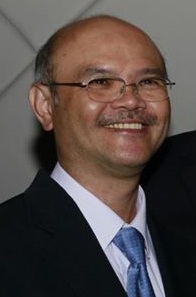
Siau-Cheng Khoo is an Associate Professor at the Department of Computer Science, School of Computing, National University of Singapore (NUS). He serves as Co-Director of the Master of Science (Business Analytics) programme at the NUS Business Analytics Centre. His research focuses on program analysis, specification mining, software verification, and aspect-oriented programming. Education: PhD in Computer Science from Yale University (1992). Research Interests: His work spans scalable code analysis, bug signature mining, neural network verification, and software specification discovery. Key methodologies include static/dynamic program analysis, vector abstraction, and discriminative pattern mining for software dependability. Recent Research Trends: Publications emphasize automated verification techniques (especially for neural networks), scalable refactoring detection, and mining-based bug diagnosis. Earlier work pioneered parameterized partial evaluation and functional aspect-oriented programming. Grants & Supervision: vSCA: Scalable Code Analysis (AcRF Tier 1, 2014–2017, $130,000) Bug Signature Discovery (AcRF Tier 1, 2012–2015) Supervised 7 PhD and 6 MSc graduates; currently advising 1 PhD candidate.
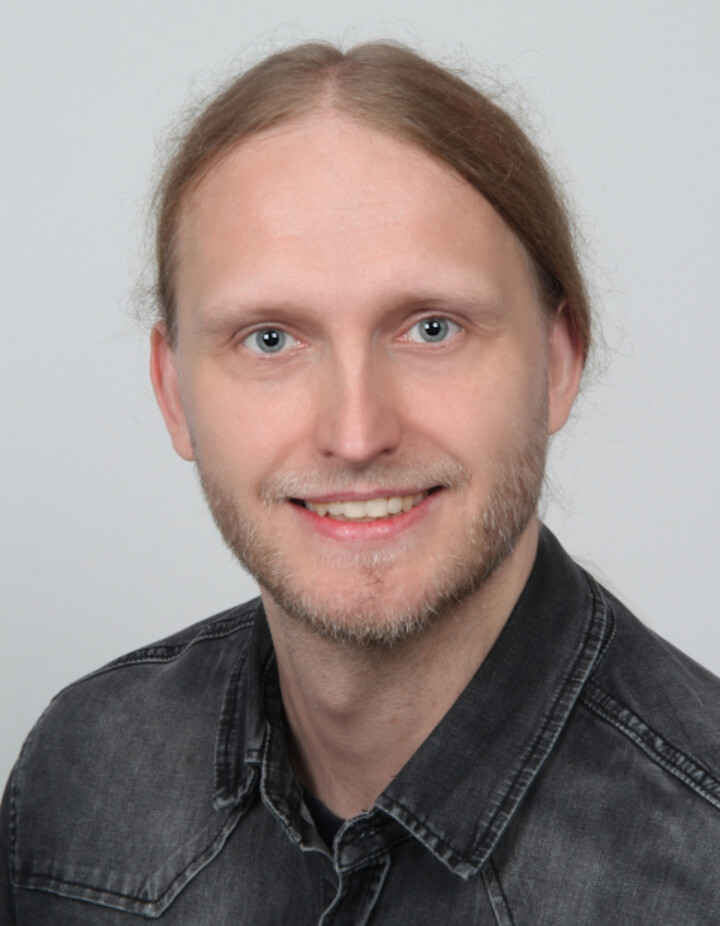
Roland Leißa is an Assistant Professor in the School of Business Informatics and Mathematics at the University of Mannheim, Germany. His research focuses on programming languages, compilers, and domain-specific languages (DSLs) for high-performance computing across heterogeneous architectures. He teaches courses on parallel programming, compiler construction, and advanced programming topics. His work emphasizes automatic parallelization, intermediate representations, and program optimizations, particularly through partial evaluation techniques. He has contributed to tools like MimIR, AnyDSL, and FLOWER, which address challenges in GPU programming, FPGA synthesis, and ray tracing. Roland leads research on abstracting industrial and scientific application problems into reusable, theoretically sound compiler solutions. His projects span sequence alignment accelerations, dataflow compilation, and vectorization strategies, targeting modern hardware including GPUs and SIMD architectures. Contact: leissa@uni-mannheim.de | Personal Website | ORCID: 0000-0002-2444-6782
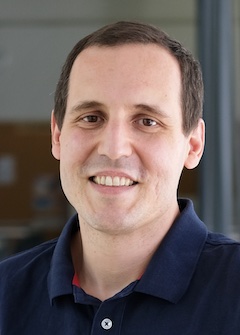
Sebastian Hack is a Professor of Computer Science at Saarland University since 2010. He previously served as an assistant professor at the same university (2008-2010), a Post-Doc at EPFL in the LAMP lab, and a Post-Doc with INRIA at ENS Lyon. His research focuses on compiler construction, domain-specific languages, program analysis and synthesis, code generation, and vectorization. Recent publications highlight advancements in program synthesis (Sorting Kernels), memory safety instrumentations, automatic differentiation frameworks (MimIrADe), microarchitectural analysis (AnICA), and GPU acceleration for bioinformatics (Anyseq/gpu). His work bridges theoretical compiler design with practical applications in high-performance computing and security. He has held administrative roles as Dean of Study Affairs (2012-2014) and Dean of the Department of Mathematics and Computer Science (2018-2020). His software contributions include libFirm and GrGen , and he maintains active involvement in projects like AnyDSL and UniAna.
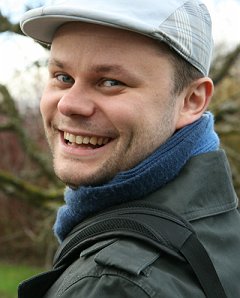
Cătălin Hrițcu is a tenured faculty member and head of the Formally Verified Security group at the Max Planck Institute for Security and Privacy (MPI-SP) in Bochum, Germany, and an Adjunct Professor at Ruhr University Bochum's Faculty of Computer Science. He is involved in the CASA Cluster of Excellence and HGI at RUB. PhD in Computer Science from Saarland University Habilitation in Computer Science from École Normale Supérieure (ENS) Paris Former Tenured Researcher at Inria Paris Postdoctoral Research Associate at University of Pennsylvania Visiting Researcher at Microsoft Research Redmond His research spans formal methods for security , focusing on secure compilation, memory safety, compartmentalization, information flow control, and security protocols. In programming languages , he explores program verification, proof assistants like F*, dependent types, formal semantics, and mechanized metatheory. He also works on verifying security-critical systems such as reference monitors, compilation chains, and tagged architectures. His recent publications (2015–2025) emphasize secure compilation techniques, relational program logics, memory safety, and proof automation in F*. Key trends include formal verification of IO programs, high-speed cryptography, and cross-component security analysis. Scientific Awards : ERC Starting Grant on Formally Secure Compilation Distinguished Paper Awards at CSF Symposium (2019, 2021, 2025) Hrițcu has advised numerous PhD students and collaborated on F* verification system development. He has served on program committees for CPP, POPL, PriSC, and ICFP, and organized artifact evaluation committees. He leads the Formally Verified Security group at MPI-SP and contributes to the CASA Cluster of Excellence, focusing on formal verification of security-critical systems and advancing secure compilation frameworks.
Peter Thiemann is a Professor of Computer Science at the Institute of Computer Science, Faculty of Technology, University of Freiburg, Germany. He leads the Programming Languages research group and serves as a member of the examination committee. His extensive academic service includes chairing the steering committee of the European Symposium on Programming (ESOP) since 2017, having previously served as program chair for ESOP 2016 and general chair for ICFP'12. Thiemann's research spans multiple areas within programming languages, with particular focus on partial evaluation, program transformation, functional programming, type systems, and web programming. His work on the WASH (Web Authoring System Haskell) demonstrates his contributions to server-side web scripting with strong type safety guarantees. He has developed techniques for higher-order redundancy elimination, binding-time analysis, and adaptive programming. His research shows a consistent thread of connecting theoretical foundations with practical implementation concerns, particularly in the areas of program analysis and transformation. Thiemann has been deeply involved in the programming languages community, serving as vice chair of ACM SIGPLAN (2015-2018) and tutorial editor of the Journal of Functional Programming (2017-2020). His extensive program committee service across major conferences like POPL, ICFP, ESOP, and ECOOP demonstrates his standing in the field. He has also contributed to IFIP Working Group 2.8 on Functional Programming and chaired the steering committee for the ACM symposium on Partial Evaluation and Semantics Based Program Generation (2003-2005). His publications reveal a research trajectory focused on bridging theoretical concepts with practical implementation, particularly in the areas of partial evaluation, type systems, and program transformation. His work shows consistent contributions to both the theoretical foundations and practical applications of programming language techniques, with numerous publications in top-tier conferences and journals spanning over two decades.
Robert Y. Lewis is a Lecturer in the Department of Computer Science at Brown University. His work focuses on formal methods and verification, logic, and the foundations of mathematics, as well as their applications in computer science and mathematics education. Prior to joining Brown, he was a postdoc at the Vrije Universiteit Amsterdam and earned his PhD in Pure and Applied Logic at Carnegie Mellon University. Earlier, he taught high school mathematics at St. Agnes Academy in Houston. Research Interests: Lewis specializes in interactive theorem proving, automated reasoning, and type theory. His research bridges formal mathematics with computational tools, emphasizing proof assistants like Lean and their integration with other systems such as Mathematica. He is also involved in mathematics education, particularly through open-source course development. Publications: His recent work includes formalizing mathematical structures (e.g., Witt vectors, p-adic integers), developing proof assistant interfaces, and advancing automated reasoning techniques. Projects span both foundational mathematics and practical tools for formal verification.
Jonathan Immanuel Brachthäuser is a researcher at the University of Tübingen in Germany. He serves as a program committee member across multiple conferences including IWACO, ICFP, POPL, and SPLASH, and has held organizing roles such as Hybridisation Co-Chair and Sponsorship Chair . His research focuses on algebraic effects , effect handlers , and continuation-passing style in programming language design and compilation. Conference Contributions : 15+ peer-reviewed papers on effect systems, type inference, and compilation techniques. Advising & Mentorship : No formal student advising roles listed, but active participation in academic community building. Technical Leadership : Co-chair for workshops and artifact evaluation committees, reflecting his influence in effect-driven language design.
Tiark Rompf is the Kevin C. and Susanne L. Kahn New Frontiers Associate Professor at Purdue University, with a scientific focus on programming languages, compilers, and systems research. He co-directs the Purdue Center for Programming Principles and Software Systems (PurPL) and serves as a Scientific Advisor at SambaNova Systems. His research spans Reachability Types (integrating Rust-style lifetime tracking with higher-order abstractions), Rhyme (query languages for nested data), and formal verification using Coq and logical relations. Key techniques include Graph IRs , Mechanized Proofs , and E-Graphs . Scientific Awards : GPCE Test of Time Award (2020) ACM SIGPLAN PL Software Award (2019) NSF CAREER Award (2016) Google Faculty Research Award (2017, 2018) DOE Early Career Research Award (2017) He teaches graduate courses on compilers (CS 502, CS 590) and software foundations. His lab actively recruits PhD students for projects involving type systems, compiler design, and metaprogramming.
Jonathan Protzenko is a Principal Researcher at Microsoft Azure Research, focusing on advancing software verification through formal methods and programming language design. His work bridges theoretical rigor with practical impact, particularly in cryptography, Rust verification, and computational law. He has contributed to verified cryptographic libraries like HACL* and EverCrypt, which are integrated into major systems such as Python, Firefox, and Linux. His projects include Aeneas , a Rust verification tool, and Eurydice , which compiles Rust to C for legacy compatibility. Prior to Microsoft Azure, he spent nine years at Microsoft Research and was part of the Gallium team at INRIA Paris, where he developed Mezzo for his PhD. His research interests span Type Systems and Programming Languages Software Verification and Formal Methods Security Protocols and Cryptographic Libraries Computational Law and Legal Code Modeling Rust Verification and Compiler Design Low-Level Programming and Memory Safety Recent projects highlight his commitment to transitioning verified codebases to Rust while ensuring backward compatibility with legacy systems. He co-authored the ICFP 2023 paper on modularity and zero-cost abstractions , and his work on Catala explores formal methods in computational law, featured in Communications of the ACM. Jonathan's scientific awards include the Internet Defense Prize and SIGPLAN Research Highlight . He mentors students like Théophile Wallez, Son Ho, and Denis Merigoux, and advises the startup Cryspen. His verified cryptographic libraries power critical infrastructure, with code in BoringSSL, Linux, Python, and Firefox. He maintains open-source projects, including a Thunderbird add-on with 200k users.
Jeremy Yallop is a researcher at the University of Cambridge specializing in programming languages, type systems, and compiler design. He actively contributes to academic conferences such as PLDI, POPL, ICFP, and GPCE, focusing on staged computation, generic programming, and language design. Key Research Areas: Functional Programming, Generative Programming, Type Systems, Partial Evaluation Conference Roles: PC Co-Chair (PEPM 2017), Steering Committee Chair (PEPM 2019), Session Chair (OCaml 2023, PEPM 2022), Tutorial Presenter Notable Contributions: Verified Scheme compiler via CakeML, Macros in OCaml (MacoCaml), Dependent Types in Defunctionalization, Algebraic Simplification (Frex) Recent Trends: 2026 work on TEAL (Verified Assembly Language), 2025 developments in Dependently Typed Algebraic Simplification Awards: No explicit honors mentioned in provided data
Danel Ahman is an Associate Professor of Programming Languages at the Institute of Computer Science, University of Tartu, Estonia. He is a member of the Chair of Programming Languages and the Laboratory for Software Science (SWS). His academic journey includes postdoctoral positions at the University of Ljubljana and Inria Paris, as well as research internships at Microsoft Research. Education: PhD in Theoretical Computer Science, University of Edinburgh (2012-2017), thesis: "Fibred Computational Effects" MPhil in Advanced Computer Science, University of Cambridge (2011-2012), thesis: "Computational effects, algebraic theories and normalization by evaluation" BSc in Informatics, Tallinn University of Technology (2007-2010), Cum Laude Danel Ahman's research focuses on programming languages, their design and semantics. He is particularly interested in dependent and refinement types, computational effects (especially algebraic effects, effect handlers, and runners), modal types for verifying temporal resource usage, and category-theoretic denotational and operational semantics. His work bridges theoretical foundations with practical applications in verified software development, exploring how programming language features can ensure correctness while maintaining expressiveness and efficiency. His recent publications demonstrate a consistent focus on computational effects, modal types, and verified programming. The trajectory shows increasing sophistication in handling temporal resources and asynchronous effects, with several papers published in top programming languages conferences (POPL, ICFP) and journals. His work often combines theoretical category-theoretic foundations with practical implementations, particularly using the F* verification language. Scientific Awards: 2025: Estonian Research Council grant on "Explainable Verification" (co-investigator) 2024: EuroProofNet COST Action Short-Term Scientific Missions to University of Ljubljana 2019: Horizon 2020 Marie Skłodowska-Curie Individual Fellowship 2018: 1st prize at the Estonian Ministry of Education and Research dissertations competition 2012: Google prize and Citrix prize for best research dissertation at University of Cambridge Ahman actively supervises graduate students and has served on numerous program committees for programming languages conferences. His grant portfolio includes significant funding for research on programming language foundations and verification. He collaborates extensively with researchers across Europe and the US, particularly in the F* verification ecosystem and effect handler communities. He is a key member of the Laboratory for Software Science at the University of Tartu, contributing to research on programming language theory and verified software development. His work intersects with several research groups focusing on formal methods, programming language design, and software verification.
Thomas Degueule is a researcher at CNRS (Centre National de la Recherche Scientifique) in France, actively contributing to software engineering research since 2015. He serves on program committees for major conferences including ASE, ICSE, and SLE, with primary research interests in Software Evolution, Empirical Software Engineering, and Domain-Specific Languages. His work focuses on breaking change analysis in APIs and libraries, client-library compatibility testing, and dependency management. He develops practical tools like Roseau for source-based breaking change detection and investigates semantic versioning impacts in ecosystems like Maven Central. His empirical approach leverages large-scale repository analysis to address real-world software maintenance challenges, particularly in Java ecosystems. Recent publications (2023-2025) show consistent contributions to breaking change analysis and compatibility testing, appearing in top venues like ASE, ICSE, and ISSTA. His research bridges theoretical insights with practical tooling for software evolution challenges, demonstrating strong empirical methodology and tool-oriented contributions. No scientific awards are documented in the available information. Degueule has advised no publicly listed students and holds no mentioned research grants. His organizational roles include Program Co-Chair for SLE 2023 and committee positions across multiple conferences, reflecting significant service to the software engineering community.