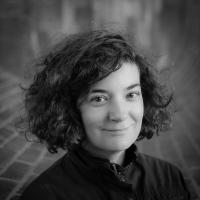
Oona Hilkamo is a Doctoral Student and Part-time Teacher at the School of Business, specializing in knowledge creation processes within emerging technological markets. Her research examines how consultants and market actors use analogies and metaphors to construct understanding of novel categories like quantum computing. Her work combines organizational theory with science and technology studies to analyze temporal aspects of market formation. Publications explore mechanisms of sense-making during early-stage technology commercialization and the role of discursive strategies in establishing new market categories.
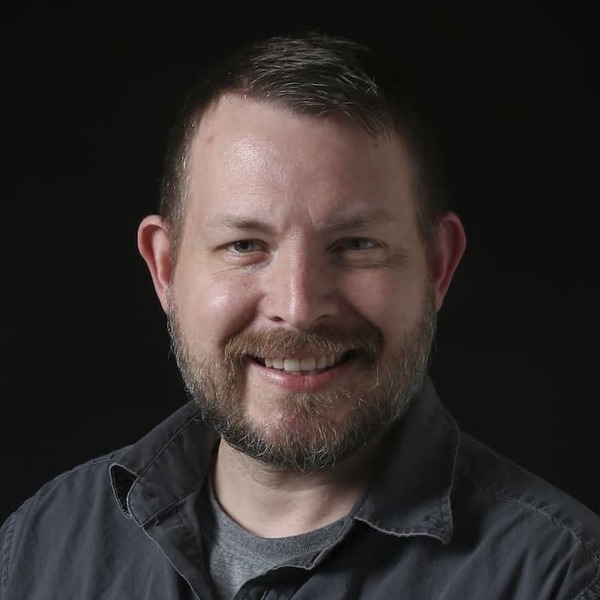
Kee Howe Yong is an Associate Professor of Anthropology at McMaster University. His research focuses on political conflicts, ethnic relations, and the interplay between state power and minority communities in Southeast Asia. He is particularly known for his work on separatist movements in Thailand's far south and the historical silencing of Cold War narratives in Sarawak, Borneo. Currently, he is investigating the geopolitical and economic impacts of China's Belt and Road Initiative (BRI) in Malaysia's Kuantan region, emphasizing the interplay between nation-building and environmental concerns. Yong holds a PhD in Social Anthropology from the City University of New York. His teaching spans cultural politics, the anthropology of food, and critical studies of desire. Recent courses include ANTHROP 4CP3 (Cultural Politics of Food and Eating) and ANTHROP 720 (The Politics of Desire). His research combines ethnographic fieldwork with historical analysis, examining topics such as regimes of fear, minority identity construction, and the transformation of nation-states under global economic shifts. His recent book Thailand's Far South: Engaging the Difficult Realities in a Recurring Conflict (2024) explores the complex dynamics of violence, memory, and governance in the region. Key Projects: BRI impact in Malaysia, Thailand's southern conflict, Hakka Cold War history Fieldwork Sites: Malaysia China Kuantan Industrial Park (MCKIP), Thailand's Patani region Yong collaborates with environmental NGOs and local communities, emphasizing interdisciplinary approaches to state ethnography and the critique of neoliberal globalization.
Dr. Rosa Vidal Doval is an Associate Professor of Medieval Iberian Literature at the University of Oxford’s Faculty of Medieval and Modern Languages, affiliated with Magdalen College. Her research focuses on late medieval and Renaissance Iberian culture, particularly religious conversion processes and textual mechanisms of religious intolerance targeting Jewish converts (conversos). She is currently leading a Leverhulme Trust-funded project on limpieza de sangre (blood purity) as a racialized exclusion system and co-editing Alonso de Espina’s Fortalitium fidei . Teaching responsibilities include Spanish Prelims courses for Magdalen and St Edmund Hall students, and Final Honours School modules on medieval literature and culture. She supervises graduate students in medieval/Renaissance Iberian studies. Recent publications address converso identity, Visigothic legal impacts on discrimination, and Pauline theology in Spanish polemics. Her work bridges textual analysis with social history, examining how medieval texts shaped religious and ethnic hierarchies. Key themes include religious polemics, racialized genealogy, and the interplay between spirituality and power structures.
Peter Kenttä is a Part-Time Lecturer at Aalto University's Department of Industrial Engineering and Management, within the School of Science. His research focuses on wellbeing, organizational behavior, and pedagogical strategies in engineering education. He holds a Diplomi-insinööri (Master of Science) and Tekniikan kandidaatti (Bachelor of Engineering) from Aalto University, specializing in mechanical engineering materials technology. Research Interests: Kenttä's work explores conceptual pluralism in wellbeing frameworks, leadership pedagogy in engineering, ethics in organizational settings, and self-management techniques. His doctoral thesis, A Grammar of Interactional Wellbeing in Organizational Settings , analyzes relational dynamics influencing workplace well-being. He also investigates metaphors and metalanguages shaping organizational change processes. Publications: His recent work includes developing leadership courses for engineering students (2024) and advancing conceptual pluralism in wellbeing research (2023). Earlier contributions span organizational change theory (2015) and philosophical biographies of influential thinkers (2013). His research bridges psychology, education, and management disciplines. Awards & Grants: No specific honors or grants are listed in the profile. His academic contributions are primarily through peer-reviewed publications and conference presentations. Labs & Collaborations: Collaborations include work with the European Society for Engineering Education (SEFI) and the Academy of Management (AOM). His research networks span organizational behavior, engineering education, and wellbeing studies communities.
Dr. Ann Cleare is an Assistant Professor of Music and Media Technologies at Trinity College Dublin. She holds a PhD from Harvard University and an Honorary Doctorate from the National University of Ireland, recognizing her contributions to contemporary music. Her work spans concert music, opera, experimental sound installations, and hybrid instrument design, focusing on timbre, texture, and the psychological impact of sound. She is an artist-in-residence with the Crash Ensemble and a member of Young Academy Ireland. Her research explores intersections between sound and visual dimensions, exemplified by projects like rinn (a time-travel chamber opera) and TERRARIUM (a multimedia collaboration with Crash Ensemble). Key collaborations include works with Ensemble SurPlus, BBC Scottish Symphony Orchestra, and the National Symphony Orchestra of Ireland. Awards include the 2019 Ernst von Siemens Composer Prize and fellowships at Villa Concordia (2024) and Civitella Ranieri (2023). Her recent projects include MIDHE , a large-scale work commissioned by RTÉ for Ireland’s National Concert Hall, and The Little Lives , an opera addressing propaganda’s societal impact. Educational affiliations include Trinity College Dublin, IRCAM, and University College Cork. Education: PhD Harvard University, Studies at IRCAM, University College Cork Affiliations: Young Academy Ireland, Artist-in-Residence (Crash Ensemble) Notable Works: eyam series, eöl , Meridians , gravity dreams
Charlotte Biltekoff is a Professor of American Studies and Food Science & Technology at the University of California, Davis, and holds the Darrell Corti Endowed Professorship in Food, Wine, and Culture. Her work bridges scientific and cultural perspectives on food, health, and societal dynamics. She earned her Ph.D. in American Civilization from Brown University (2006). Her research focuses on the cultural politics of food, including processed food discourse, science communication, and agri-food technology. Notable works include Real Food, Real Facts (2024) and Eating Right in America (2013). She has collaborated on interdisciplinary projects like the NSF-funded UC AFTeR Project, examining agri-food tech innovation. Biltekoff’s recent articles explore topics such as protein narratives in food systems, alternative protein technologies, and the intersection of public perception and scientific discourse. She actively engages with media and podcasts to communicate her research. In 2024, she received the Bob & Roger Trinchero Award for her contributions to food, wine, and culture studies. She teaches courses on food in American culture, science, and society, emphasizing interdisciplinary approaches.
Lisa Dickson serves as Head of Kent Law School and Reader in Law at the University of Kent, specializing in cybercrime, privacy, and forensic evidence in criminal trials. Her teaching spans Privacy, Data Protection, Cybersecurity Law, and Criminal Law modules. She holds an LLB, LLM, and PGCHE from the University of Southampton, establishing her foundation in legal theory and pedagogy. Dickson's research interrogates privacy through cultural and technological lenses, examining legal objects like the Mashrabiya screen and blockchain systems. Her work bridges law with cybersecurity, emphasizing GDPR compliance and privacy-aware design in digital ecosystems. As a Kent Centre for Cyber Security member (GCHQ-recognised Academic Centre of Excellence), she integrates technical and legal perspectives to address evolving cyber threats. Her publication trajectory reveals sustained focus on privacy-law intersections, particularly in blockchain communications (2020), cultural privacy metaphors (2017), and forensic evidence admissibility (2013). These works collectively critique procedural gaps in regulating emerging technologies while advocating for culturally responsive privacy frameworks. Dickson actively supervises research in privacy, data protection, and cybercrime contexts. She contributes to the EPSRC-funded PriVELT project developing privacy-aware data management for leisure travellers, demonstrating commitment to applied, interdisciplinary solutions. She operates within the Kent Centre for Cyber Security and NeCS CESTN Cyber Security Training Network, collaborating on national cybersecurity initiatives that shape policy and practitioner training through GCHQ-recognised research excellence.
Nicole MacLaughlin serves as Director of Writing and Rhetoric and Associate Professor in the University Writing Program at the University of Notre Dame, where she has been full-time faculty since 2007. Her work centers on leveraging writing education for individual empowerment and social justice through innovative pedagogical approaches. Her academic credentials include: B.A. in Teaching of English, University of Illinois at Urbana-Champaign M.A. in Writing Studies, University of Illinois at Urbana-Champaign Ph.D. candidate in Educational Studies, Purdue University MacLaughlin's research investigates self-efficacy and emotion in writing processes, with concentrated focus on first-generation student success. She pioneers third-space pedagogies that reframe academic reading and writing as accessible, hands-on crafts, bridging theoretical frameworks with practical applications to advance economic and social equity. Her community-engaged scholarship emphasizes writing as a vehicle for social transformation. Her scholarly trajectory from 1997-2023 reveals sustained commitment to writing program administration, community partnerships, and performance-based social justice initiatives. Recent work demonstrates innovative support structures for student-athletes through The Writing and Rhetoric Tutorial and amplifies marginalized narratives via the Show Some Skin project, highlighting intersections of writing, identity, and activism. Her distinguished contributions include: Provost’s Award for Academic Support of Student-Athletes (2020) for developing The Writing and Rhetoric Tutorial, an individualized coaching program supporting students across the curriculum As faculty advisor to Show Some Skin since 2012, MacLaughlin mentors students in creating cross-disciplinary performances that explore identity and marginalization. She actively partners with South Bend community organizations including the Robinson Community Learning Center and Robinson Shakespeare Company, co-developing initiatives that document local history and examine arts-based educational interventions. Her community-based pedagogy has produced tangible outcomes including historical documentation projects, sustainability-focused writing for community organizations, and performance pieces that foster critical dialogue on difference and belonging.
Justin Barfield is an Associate Professor of the Practice in Studio Art at the University of Notre Dame, located in Riley Hall of Art and Design. His work focuses on environmental concerns through printmaking and sculpture, addressing climate change, industrialization, and human impact on landscapes. Born in Louisiana, his experiences with Hurricane Katrina and the BP oil spill inform his exploration of environmental decay and societal resilience. Education: MFA (University of Notre Dame), B.A. (Southeastern Louisiana University) Research interests include the intersection of natural disasters and human activity, material degradation as a metaphor for societal progress, and the visual representation of ecological scars. His creative works investigate themes of reconstruction, abandonment, and the cyclical nature of destruction and renewal through mixed media installations and prints. Recent works explore material transformation (e.g., rusted paper, ceramics) to symbolize environmental decay. Key exhibitions include the South Bend Museum of Art and Urban Institute of Contemporary Art. His practice bridges traditional printmaking techniques with contemporary environmental critique.
Samir Younés is the Associate Dean of Faculty Affairs and Curriculum, and a Professor at the School of Architecture, University of Notre Dame. He specializes in architectural theory, urban design, and classical architecture, with a focus on traditional urbanism and sustainability. His career includes roles as Director of Graduate Studies (1993–1999), Director of the Rome Studies Program (1999–2008), and Rooney Director of Rome Studies (2006–2008). He has taught at institutions such as the Catholic University of America and lectured globally, including at the Universities of Bologna, Portsmouth, and Yale. Younés holds a B.Sc. in Architecture (1981) and M.Arch (1984) from the University of Texas. His research explores architectural judgment, mimetic rivalry, and the intersection of technology and symbolic thought. He has authored/co-edited influential works like The Imperfect City (2012) and The Intellectual Life of the Architect (2018). His projects include the Georgetown master-plan in Romania (2009) and the Pantelleria waterfront design (2006). He has been honored with an Honorable Mention from the Congress of New Urbanism (2011) and serves on the Board of the International Jacques Ellul Society. His expertise spans architectural illustration, civic design, and Italian art history, with notable contributions to sustainable urbanism and classical revivalism. Younés advises on urban projects and has collaborated with institutions like the Prince of Wales Urban Task Force. He leads courses in architectural theory, urban history, and design studios, emphasizing historical precedents and their contemporary relevance.
Simon Biggs is an Adjunct Research Professor at UniSA Creative, University of South Australia, focusing on interdisciplinary art and technology. Previously, he served as Professor of Art and Director of the South Australian School of Art (2014–2023). His work spans interactive environments, electronic literature, and machine-learning augmented performances. Collaborations include projects with dance, music, and software engineering experts. Key roles include Honorary Professor at the University of Edinburgh (2014–2019) and Visiting Professor at Arizona State University (2013–2014). Education: Expertise in new media art and critical theory. Research Interests: Art and technology intersections, electronic literature, and posthumanist themes. Recent works explore big data’s cultural implications and generative ontologies. His installations like Dark Matter and Autography blend technology with human interaction. Awards and recognitions are not explicitly listed, but his contributions to electronic literature and digital art are internationally acknowledged through exhibitions and peer-reviewed outputs. Teaching and supervision emphasize site-specific intermedia, interaction design, and socially engaged practices. He leads research in cross-disciplinary initiatives such as the Australian Research Centre for Interactive and Virtual Environments.
Dr. Vittoria Di Stefano is a Lecturer at the School of Art, RMIT University (Melbourne, Australia), specializing in contemporary installation art and cultural narratives. Her practice explores materiality, spatial storytelling, and the intersection of art with architectural and environmental contexts. Her creative works include installations such as Pears on a Willow (2024), The Dusking Room (2023), and The Palace at 4pm (2022), exhibited in venues like Gertrude Contemporary and Blindside. She is open to supervising Masters and PhD students in research-based art projects, such as the 2025 project Jindgo Story: Korean Shamanism and the Art of Displacement . Di Stefano’s research focuses on material exploration, site-specific art, and conceptual frameworks in contemporary visual practice. Her work often interrogates themes of memory, transformation, and cultural symbolism through sculptural and immersive installations.
Donald Glowinski is a Senior Lecturer and Senior Researcher at the Swiss Center for Affective Sciences (University of Geneva), where he coordinates the Music & Science team and leads a consortium investigating the cognitive and emotional impact of DEMOS orchestras on children. His work bridges neuropsychology, music performance, and applied research to enhance team coordination and resilience in professional settings. He holds an MSc in Cognitive Science (EHESS), Music and Acoustics (CNSMDP), and Philosophy (Sorbonne-Paris IV), with a PhD in Computing Engineering from the University of Genoa. His research focuses on music’s role in emotions, group creativity, and translational science, including developing immersive virtual environments and curricula for interdisciplinary training. He is also involved in public engagement through initiatives like culturehack.art and collaborations with festivals such as Montreux Jazz and NIFFF. Key research interests include the interplay between music, emotion, and social dynamics. He explores how music ensemble performances can model adaptive teamwork, leveraging technologies like virtual reality to simulate real-world scenarios. His projects emphasize practical applications, such as improving safety training for workers and fostering resilience in high-pressure environments. Awards include the Prix pour la Vocation (Bleustein-Blanchet Foundation) and the Declic Award (Fondation de France). He actively contributes to scientific dissemination through public talks and cultural partnerships, advocating for science that directly informs tangible, accessible tools for diverse communities. His advisory roles include coordinating the Music & Science team and leading the DEMOS consortium with the Philharmonie de Paris. He also spearheads a new psychology curriculum using high-fidelity simulations, reflecting his commitment to bridging academic and applied domains.
Marco Caratozzolo is a faculty member at the University of Bergamo, affiliated with the Department of Languages, Literatures and Foreign Cultures. He specializes in Slavic Studies and Literary Criticism, with a focus on Russian literature, Dostoevsky, religious discourse, and literary theory. He teaches courses such as 'Cultura Russa' and 'Lingua Russa I–III'. His research interests include Slavic Studies Russian Literature Literary Criticism and Comparative Literature Religious Discourse in Literature Verisimilitude in Literary Theory 1980s Soviet Culture Folklore and Hagiography in Slavic Traditions Recent publications highlight his engagement with Dostoevsky’s use of saints, the boundaries of narrative believability, and religious seduction in literature. His work appears in journals such as Dostoevsky Studies , Argos , and Enthymema , as well as in edited volumes on literary themes. He has no listed scientific awards or student advisees in the provided data. His editorial and curatorial roles suggest active participation in academic discourse, particularly around religious and literary themes in Slavic contexts. Marco Caratozzolo maintains regular office hours and is reachable via email, indicating active academic engagement. There is no indication of part-time status, retirement, or emeritus position.
Sarah Kessler is an Assistant Professor of English at the University of Southern California , with additional affiliations in Comparative Literature at University of California, Irvine and Humanities and Sciences at Art Center College of Design. Her research spans 20th and 21st Century Transatlantic Media and Culture , with specialized focus on Sound Studies , Queer Theory , and Voice Technologies . Education includes a PhD in Comparative Literature (2016) and MA in English (Modern Studies) from University of Wisconsin-Milwaukee (2008), and a BA in Art-Semiotics from Brown University (2003). Her publications examine intersections of political discourse and media representation , including analyses of reality TV's 'process' rhetoric, Star Trek's environmental messaging, and ventriloquism as metaphor for presidential communication. Key article trends reveal interdisciplinary focus across: 2024: Television & New Media on political reassurance narratives 2023: Music in Star Trek on cetacean vocalization 2021: Media Ventriloquism book chapter on voice technology 2019: Film Quarterly on Russian Doll's trauma loops Her work also addresses queer cultural production through comedy specials and music analysis.