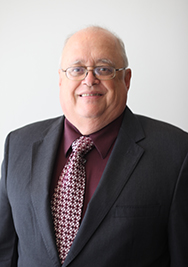
Hans Ahrendt serves as an academic advisor for doctoral theses at a German university. He advised Wolfgang Küstner's doctoral dissertation titled 'K-Ar-Datierungen an detritischen Muskoviten und Sm-Nd-Modellalter prä- und synorogener schwach metamorpher Sedimente im Rhenoherzynikum - Grundlegende Daten zur Quantifizierung orogener Prozesse am Beispiel der Varisziden' completed on July 6, 2001. Dr. Ahrendt's research expertise centers on geological dating methodologies, particularly K-Ar dating of detrital muscovites and Sm-Nd model ages for pre- and syn-orogenic weakly metamorphosed sediments in the Rhenohercynian zone. His work contributes to the quantification of orogenic processes, with specific application to the Variscan orogeny. Based on his role as doctoral advisor, Dr. Ahrendt holds a senior academic position with expertise in geochronology and tectonic processes, though specific institutional affiliation details are not provided in the available records.
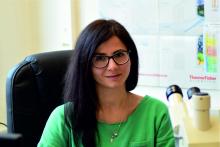
Dr. Lisa Eberhard serves as a Researcher in the Department of Earth Sciences at Utrecht University's Faculty of Geosciences, holding a prestigious Dutch Research Council (NWO) Vidi grant for her project 'RELEASE' (2021-2026). An experimental petrologist specializing in fluid-rock interactions, she investigates (de-)hydration and (de-)carbonation processes in ultramafic rocks through high-pressure/high-temperature experimentation. Her academic foundation includes a PhD from University of Bayreuth (2020) on serpentinite phase relations in subduction zones, preceded by Master's and Bachelor's degrees from Swiss institutions. She maintains active international research networks across Europe and Japan. Dr. Eberhard's work centers on experimental characterization of fluid migration mechanisms in subduction zones, with critical implications for earthquake triggering, carbon cycling, and energy resources. She employs advanced techniques including in-situ 4D synchrotron microtomography at facilities like SOLEIL and Swiss Light Source to observe real-time fluid-rock reactions. Her leadership of the 'SerpentineDays' webinar series demonstrates community engagement. As Principal Investigator for the €800,000 NWO Vidi project, she directs research integrating geological observations, experiments, and numerical modeling to resolve carbon cycling uncertainties in subduction zones. Her collaborative portfolio includes Spanish Ministry-funded projects (RUSTED), H2020 EXCITE transnational access, and partnerships with NIOZ and Japanese institutions. Her research group provides specialized training in high-pressure experimentation and synchrotron data analysis, with opportunities for Master's students and future PhD candidates. Current projects focus on brucite dehydration networks and carbonated ultramafic lithology behavior, leveraging transnational facility access across three continents.
Dr. Pete Maurer is a Professor in the Department of Computer Science at Baylor University. He holds a Ph.D. from Iowa State University (1982) and has academic specializations in operating systems and software testing, with broader research interests spanning metamorphic programming, GPS applications, and VLSI design automation. Education: Ph.D., Iowa State University (1982) MS, Iowa State University (1979) BA, College of St. Benedict (1969) His research focuses on innovative approaches to software design and testing, including metamorphic programming and parallel processing. He has contributed to the field through publications such as Metamorphosis, State Machines, and Object Oriented Design , which reflects his work in component-level software engineering.
Adam Włodek, Ph.D., is an Assistant Professor at the Department of Mineralogy, Petrography and Geochemistry, Faculty of Geology, Geophysics and Environmental Protection, AGH University of Science and Technology in Kraków. His research focuses on mineralogy, metamorphic petrology, and geochemistry, with emphasis on high-pressure processes, tin mineralization, and rare earth element occurrences. Academic Rank: Assistant Professor Department: Mineralogy, Petrography, and Geochemistry University: AGH University of Science and Technology Key research themes include: Metamorphic processes in eclogites and garnet-bearing rocks Thermobarometry and geochronology of Scandinavian Caledonides and Western Gneiss Region Tin mineralization in hydrothermal and pegmatitic systems Characterization of new mineral species and phosphate pegmatites His recent publications highlight multidisciplinary approaches combining crystallography, geochemical analysis, and tectonic reconstructions across diverse geological settings (Poland, Norway, Rwanda, Dominican Republic). Articles span topics such as magnetite Verwey transitions, garnet inclusion studies, and cassiterite petrography.
apl. Prof. Dr. habil. Bernhard Schulz is an Associate Professor for Petrology at the Chair of Mineral Deposits and Petrology, Institute of Mineralogy, Faculty of Geosciences, Geotechnology and Mining at Freiberg University of Mining and Technology (TU Bergakademie Freiberg) in Germany. He has held this position since 2005, following previous academic roles at the Universities of Würzburg, Erlangen-Nuremberg, and earlier appointments as a lecturer and research fellow. His scholarly work spans metamorphic petrology, geochronology, and mineral deposit studies with particular expertise in electron microprobe monazite dating and SEM-based automated mineralogy techniques. Professor Schulz's research focuses on metamorphic rocks and petrochronology, employing methods including geothermobarometry, EPMA-Th-U-Pb-monazite dating, microstructure analysis, and geochemistry to reconstruct geodynamic processes and mineral deposit formation. His work covers regions including the Eastern Alps, Saxony, Armorican Massif, and South America. He also investigates ores and processed ores using SEM-based automated mineralogy methods (MLA) for characterizing metal ores, technical mineral processing, and recycling processes. His analytical expertise includes SEM automated mineralogy with MLA and EPMA electron probe microanalysis for silicates and Th-U-Pb-CHIME dating of monazite. Analysis of his recent publications reveals strong trends in metamorphic petrology, geochronology (particularly monazite dating), ore deposit geology, and SEM-based mineralogy applications. His work spans diverse geological settings from the Variscan orogeny in Europe to Precambrian terranes in Africa and South America. The research demonstrates consistent methodological innovation, particularly in electron microprobe techniques for dating and characterizing metamorphic events and ore formation processes across different geological timescales. Hermann-Credner-Preis 1990 der Deutschen Geologischen Gesellschaft (1990) Korrespondent der Geologischen Bundesanstalt in Wien (2001) Ernennung zum Professor apl. an der Universität Erlangen-Nürnberg (2003) Professor Schulz has served on multiple review committees including the Scientific Priority Program (SPP) 1144 'From Mantle to Ocean: Energy, Material and Life Cycles at Spreading Axes' and SPP 1158 'Antarctica Research' (both Deutsche Forschungsgemeinschaft). He has received research fellowships from the German Research Foundation (DFG) and maintains active international collaborations, particularly with institutions in France, Switzerland, Austria, and the United States. His current research involves extensive fieldwork in metamorphic terranes across Europe, Africa, and South America, with a strong emphasis on methodological development in geochronology and mineral characterization. Professor Schulz works within the Institute of Mineralogy at Freiberg University, where he leads research on metamorphic petrology and mineral deposits. His team utilizes state-of-the-art analytical facilities including a Quanta 600 FEG SEM for automated mineralogy and a JEOL electron microprobe for EPMA analysis. He collaborates closely with Dr. Joachim Krause at the Helmholtz Institute Freiberg for Resource Technology, sharing access to advanced JEOL-JXA-8530-FEG instrumentation. His research group maintains strong connections with international laboratories including Géosciences Rennes and Université Paris Jussieu in France.
Dr. Hripsime Gevorgyan is a Research Associate in Magmatic & Metamorphic Petrology at the Institute of Mineralogy within the Faculty of Geosciences, Geotechnics and Mining at Technical University of Freiberg. She has been with the institution since December 2020, contributing to research on volcanic systems and petrology with a focus on both Armenian and German geological contexts. Her work bridges academic research with practical applications for volcanic hazard assessment. Dr. Gevorgyan earned her academic credentials with distinction throughout her career. She completed her Dr. rer. nat. in Volcanology and Igneous Petrology summa cum laude (2016-2020) at TU Bergakademie Freiberg, following an M.Sc. in Geosciences (2009-2011) and B.Sc. in Geology (2005-2009), both with distinction from Yerevan State University in Armenia. Prior to her current position, she served as a Research Assistant at TU Bergakademie Freiberg (2019-2020) and held progressively responsible roles at the Laboratory of Volcanology at Armenia's National Academy of Sciences. Her research spans physical volcanology, magmatic systems, and volcanic hazard assessment. Dr. Gevorgyan specializes in lithofacies architecture, eruption history, petrogenetic modeling of magmatic systems, and petrogeochemical constraints of magma chambers across different tectonic settings. Her work integrates field observations with geochemical and mineralogical analyses to understand pre-eruption dynamics and crystallization conditions. She has made significant contributions to volcanic hazard assessments for critical infrastructure, including Armenia's nuclear power plant. Dr. Gevorgyan's recent publications reveal a strong interdisciplinary approach spanning volcanology, petrology, and geochemistry across diverse geological settings. Her work connects Armenian volcanic provinces with European volcanic fields, examining systems from the Paleozoic to recent Quaternary periods. She frequently collaborates with international teams to address questions of volcanic processes, magma evolution, and hazard assessment using advanced analytical techniques. Bernhard-von-Cotta-Preis-2021 for outstanding dissertation Doctoral scholarship from TU Bergakademie Freiberg (09/2018-07/2019) DAAD scholarship holder (09/2016-08/2018) Dr. Gevorgyan actively participates in multiple international research collaborations including 'Tephrochronology and Volcanic Hazard Assessment, Armenia' (with University of Leeds and Armenian NAS), 'Continental Facies in the Neoproterozoic of Anti Atlas' (with Moroccan universities through Erasmus+), and studies of Cenozoic volcanicites in Saxony. Her teaching portfolio includes undergraduate and graduate courses in petrology, mineral microscopy, and volcanology across both BSc and MSc programs. As part of the Professorship for Mineral Deposits and Petrology, Dr. Gevorgyan works within a dynamic research environment investigating volcanic systems, magmatic processes, and mineral deposits. Her current projects connect Armenian volcanic history with European geological studies, contributing to broader understanding of volcanic processes and hazards across different tectonic settings.
Emily Catherine Pope is an Assistant Professor at the University of Copenhagen, specializing in stable isotope geochemistry. Her research focuses on understanding the co-evolution of Earth's surficial environments and life through geological processes, particularly high-temperature interactions between rocks and fluids in systems like geothermal environments, ore deposits, and metamorphic alteration. She investigates how geological processes shape biological evolution and vice versa, examining Earth's chemical reservoirs (hydrosphere, biosphere, atmosphere, lithosphere, mantle) and their interdependencies. Her work bridges geochemistry and Earth history to unravel planetary habitability and tectonic influences on life's emergence.
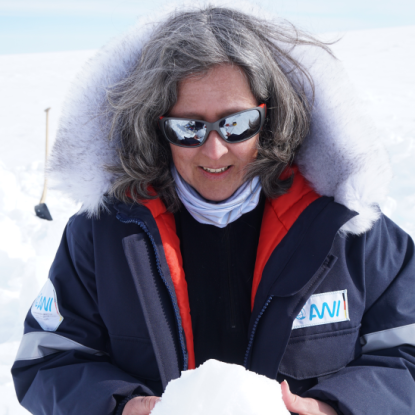
Professor Angelika Humbert is a distinguished glaciologist at the Alfred Wegener Institute (AWI) for Polar and Marine Research in Germany. Her research focuses on ice sheet dynamics, numerical modeling of ice flow, and the impacts of climate change on polar ice sheets. She plays a key role in advancing our understanding of Greenland and Antarctic ice sheet behavior through sophisticated modeling approaches and field observations. Her research interests center on ice sheet modeling, particularly using the Ice-sheet and Sea-level System Model (ISSM), with emphasis on ice shelf dynamics, fracture mechanics, and the response of ice sheets to climate change. She investigates fundamental processes such as firn densification, ice crystal fabric anisotropy, and the mechanics of ice deformation. Her work bridges theoretical modeling with observational data from satellite and airborne platforms to improve projections of sea level rise. Her recent publications demonstrate a consistent focus on improving ice sheet models, understanding ice dynamics in both Greenland and Antarctica, and investigating the physical processes that govern ice flow and stability. Her research spans multiple approaches including numerical modeling, remote sensing analysis, and field observations, with particular attention to the Northeast Greenland Ice Stream and Antarctic ice shelves like Filchner. Professor Humbert has made significant contributions to large international research initiatives including the Ice Sheet Model Intercomparison Project (ISMIP6), where her modeling work helps inform global sea level rise projections. She has published extensively in high-impact journals on topics ranging from ice sheet modeling techniques to specific analyses of polar ice dynamics. Her work is critical for understanding how polar ice sheets will respond to ongoing climate change and for improving projections of future sea level rise, which has direct implications for coastal communities worldwide.
Professor Fred Jourdan is a distinguished geochronologist and geochemist at Curtin University's School of Earth and Planetary Sciences in Australia. He serves as the director of the Western Australian Argon Isotope Facility (part of the John de Laeter Center) and Head of the Geology discipline. With over 200 published papers, his research has established him as a leading expert in 40Ar/39Ar geochronology and isotopic geochemistry. Dr. Jourdan's research primarily focuses on applying and developing the 40Ar/39Ar chronometer to establish temporal constraints on large igneous provinces, volcanic activity, and impact craters on Earth and throughout the solar system. His work spans diverse fields including archaeology, tectonics, volcanology, and planetary sciences. He has made significant methodological contributions to the 40Ar/39Ar dating technique, expanding its applications to unusual geological problems and extraterrestrial materials. His recent publications reveal a strong emphasis on mantle plumes, impact cratering events, and the tectonic evolution of various regions worldwide. His extensive publication record demonstrates expertise across multiple geological eras, from Precambrian tectonics to recent volcanic activity. The articles show particular strength in applying geochronological techniques to solve complex problems in planetary science, large igneous province evolution, and impact crater formation. His collaborative approach is evident through numerous international partnerships across diverse geological disciplines. As an educator, Professor Jourdan serves as unit coordinator for Fundamentals of Geology – 1 (FOG1), where he teaches Earth and Planetary Sciences to large student cohorts. He employs innovative teaching methods including flip and micro-flip pedagogies supported by emerging technologies such as Echo360 real-time online quizzes and Groupmap online brainstorming tools. His commitment to public outreach includes school visits, radio interviews, news articles, museum seminars, and popular magazine articles through CSIRO's Scientist in School initiative. Professor Jourdan also serves as Associate Editor for the journal Geochimica Cosmochimica Acta and as Radiation Safety supervisor for the Geology department. He actively organizes laboratory tours for primary school students and maintains a professional presence on Twitter (@Jourdan_Fred) to share his research and passion for science with broader audiences.
Thomas J. Zega is Professor of Planetary Sciences at the University of Arizona, with joint appointments in the Lunar and Planetary Laboratory and the Department of Materials Science and Engineering. He is a member of the Graduate Faculty and conducts research at the Kuiper Materials Imaging and Characterization Facility. Education: Specific degree details not provided in the text. Research Interests: Professor Zega specializes in the atomic-scale characterization of planetary materials, meteorites , and presolar grains . His work integrates transmission electron microscopy (TEM) , electron energy-loss spectroscopy (EELS) , and focused ion beam (FIB) techniques to unravel the formation and alteration histories of extraterrestrial samples. Key themes include nebular thermodynamics , parent-body hydrothermal alteration , and space weathering . Across his recent publications, Zega has emphasized in-situ analytical techniques applied to asteroidal regolith , calcium-aluminum-rich inclusions (CAIs) , and ordinary and carbonaceous chondrites . Studies of Itokawa particles , Miller Range 07687 , and hibonite thermobarometry highlight an integrated approach combining experimental petrology , isotope cosmochemistry , and quantitative EELS . Awards & Honors: No specific awards listed in the provided text. Advising & Grants: Professor Zega mentors graduate students as part of the UA Graduate Faculty. While individual student names are not listed, he is active in training the next generation of planetary scientists and engineers through hands-on work at the Kuiper facility. Laboratories & Teams: He leads research efforts within the Kuiper Materials Imaging and Characterization Facility , a state-of-the-art laboratory for coordinated electron and ion microscopy of planetary materials.
Félix Gervais is a Full Professor in the Department of Civil, Geological and Mining Engineering at Polytechnique Montréal. He holds a B.Sc. from UQAM, an M.Sc. from INRS, and a Ph.D. from Carleton University. His research focuses on structural geology, metamorphic petrology, tectonic processes, and geochronology, with field studies concentrated on the Grenville Province (Québec), Canadian Cordillera, and Himalayan regions. Research interests include: Tectonic processes and structural evolution of orogenic belts High-temperature metamorphism and thermodynamic modeling Geochronology and petrochronology techniques Exhumation mechanisms of deep crustal rocks Stratigraphic applications to tectonic problems His publications (38+ works) demonstrate consistent focus on Precambrian tectonics, metamorphic processes, and structural analysis, with recent work emphasizing Grenville Province evolution. Gervais has supervised 3 doctoral and 6 master's students to completion. He holds membership in the NSERC Industrial Research Chair in Geothermal Energy Integration and has received research funding from NSERC Discovery programs. Media regularly consult him on critical minerals and sustainable resource development.
Andrew Smye is an Associate Professor in the Department of Geosciences at The Pennsylvania State University , specializing in metamorphic petrology and radiogenic isotope geochemistry. His research focuses on understanding the thermal and chemical evolution of Earth's continental lithosphere through field and theoretical studies. Research Projects Lower crustal and upper mantle xenoliths from the Rio Grande rift : Investigating continental rifting mechanisms. Lawsonite pseudomorphs in garnet crystals : Studying high-pressure metamorphic rock exhumation processes. U-Pb systematics of rutile : Exploring Pb mobility in lower crustal xenoliths. Deep crustal metamorphism and extension : Modeling P-T-t paths during lithospheric deformation. Noble gas systematics in subduction zones : Tracing volatile transport pathways. Fluid transport in eclogites : Analyzing reactive flow under sub-arc conditions. Collaborators include Marco Scambelluri (UNIGE), Brad Hacker (UCSB), Rosie Jones and Chris Ballentine (Oxford), and N. Roberts (NIGL). Advanced analytical techniques like laser ablation ICP-MS and electron microprobe analysis are central to his work.
Nevenka Bihari serves as an Associate Professor in the Department of Geology at the Faculty of Science, University of Zagreb. Her academic work spans the Division of Geology and Paleontology and Division of Mineralogy and Petrology within the department. Her research focuses on core geological disciplines including: Earth's physical structure and historical formation Fossil record analysis and evolutionary paleontology Rock composition and mineral classification systems Igneous and metamorphic petrology processes No scientific awards or student mentoring activities are documented in the source material. Her publications are accessible through Croatia's national scientific database CroRIS, though specific works aren't listed in the provided text.
Boris Antonenko is a doctoral student at the Department of Mineralogy-Petrology , part of the Institute of Geological Sciences at Freie Universität Berlin . His research focuses on geochemical processes in subduction zones and reactive fluid-rock interactions in dehydrating rocks. Research Interests: Boris investigates the mobilization of isotopically heavy sulfur during serpentinite subduction and develops models for reactive fluid–rock interactions in porous media. His work bridges mineralogy, petrology, and computational geochemistry. Recent Research Trends: His publications highlight interdisciplinary approaches combining geochemical analysis with computational modeling of fluid dynamics in metamorphic systems. Topics include sulfur cycling, porous media behavior, and dehydration-driven reactions. Contact: Email: boris.antonenko@fu-berlin.de . Address: Malteserstraße 74-100, Room L 613, 12249 Berlin.
Donna L. Whitney is a Distinguished McKnight University Professor and Head of the School of Earth and Environmental Sciences at the University of Minnesota, where she leads the Structure, Tectonics, and Metamorphic Petrology (STAMP) research group. Her work spans metamorphic petrology, tectonics, and crustal dynamics with field sites across the North American Cordillera, Turkey, France, and Norway. Research focuses on reconstructing chemical and physical processes in metamorphic rocks to understand crustal evolution, including dynamics of partially molten crust through collaborations with Christian Teyssier and Patrice Rey. She directs the CD-CAT project in Turkey investigating mantle-to-surface dynamics in tectonic escape systems and maintains longstanding interests in metamorphic textures like garnet microstructures and deformation-metamorphism interactions. Recent publications (2024-2025) reveal concentrated research on exhumation mechanisms, migmatite dome formation, shear zone dynamics, subduction zone geochemistry, and intracratonic deformation patterns across diverse geological settings. Scientific awards: Distinguished McKnight University Professor Active grants include five National Science Foundation projects as PI or CoI, such as lawsonite as a redox sensor in subduction zones (2024-2027), mafic inclusions in migmatite domes (2020-2025), and Western Gneiss Region exhumation studies in Norway (2018-2024). She accepts undergraduate and graduate research students for projects involving petrography and analytical methods in metamorphic petrology and structural geology. Laboratory leadership includes the STAMP Research Group and CD-CAT project, emphasizing integrated field, microstructural, and geochemical approaches to crustal evolution.