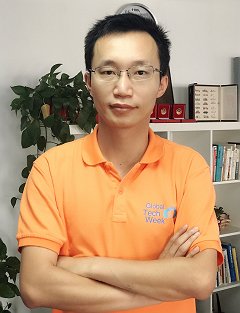
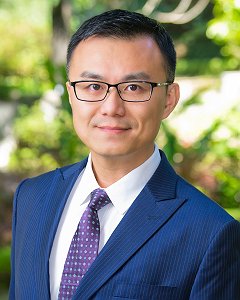
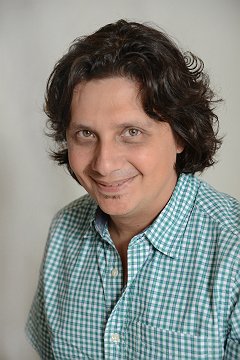
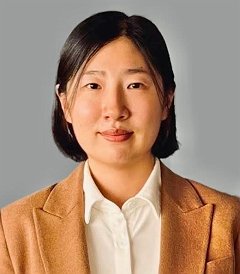
Wilhelm Hasselbring is Professor of Software Engineering at the School of Electronics and Computer Science, University of Southampton. His research focuses on software system quality, architecture design, and distributed systems with emphasis on fault-tolerance and monitoring. Software System Quality Architecture Design and Evaluation Microservices and DevOps Digital Twins and Prototyping Open Science Practices Current research explores digital twin prototypes for smart farming applications, metamorphic testing methodologies, and scalable microservice architectures. His work bridges theoretical frameworks with industrial applications in middleware and cloud systems. Recent awards include the Ernst Denert Award for Software Engineering (2019-2020). Publications span topics from JavaBERT language models to MQTT bridge evaluations, emphasizing software visualization and reverse engineering techniques. Contact: W.Hasselbring@soton.ac.uk
Scott McMurry is a Regents Professor in the Biology Department at Oklahoma State University (2007-present). His research examines how environmental stressors like contaminants, agricultural practices, and habitat changes affect wildlife, particularly amphibians and birds. He works across terrestrial/aquatic systems in North/Central America with dual field-laboratory approaches. Research Themes : Contaminant impacts on amphibian immunity/development Playa wetland conservation and carbon sequestration Avian nest-site selection under multifarious selection pressures Human-wildlife conflict in agricultural landscapes Key Collaborations : US Army Corps of Engineers (juniper habitat management) Syngenta Crop Protection (amphibian mesocosm studies) USDA (CRP policy analysis, carbon algorithm development) His article trends (2025-2020) span ecotoxicology (atrazine, fungicides), wetland ecology (playas, CRP habitats), and conservation biology (bird nesting behavior, crocodile dimorphisms). Notable subfields include developmental toxicity assays, sensory system metal toxicity, and pollinator community dynamics. Grants & Collaborations include: 10+ US Army Corps of Engineers projects (2015-2023) Syngenta-funded atrazine studies (2018-2026) USDA ecosystem service research (2017-2023) He teaches graduate research courses, Animal Behavior (undergraduate), and Population/Community Ecotoxicology (2017-2024), with a focus on field methodologies and contaminant risk assessment.
Dr. Zhiyuan Tan is an Associate Professor in the School of Computing at Edinburgh Napier University (ENU), specializing in cybersecurity research. He holds a PhD in Computer Systems from the University of Technology Sydney (UTS), Australia (2014), an MEng from Beijing University of Technology, China (2008), and a BEng with high distinction from North-eastern University, China (2005). Before joining ENU in 2016, Dr. Tan held research positions at the University of Twente (Netherlands), University of Technology Sydney (Australia), and La Trobe University (Australia). Dr. Tan's research focuses on cybersecurity, machine learning, data analytics, virtualisation, and cyber-physical systems. His work has resulted in over 44 scholarly publications with an H-Index of 13 and more than 830 citations according to Google Scholar. His recent publications demonstrate a continued focus on network security, intrusion detection systems, and the application of machine learning techniques to cybersecurity challenges, with publications spanning from 2022-2025 in top venues including IEEE Transactions and international conferences. Dr. Tan has received significant research funding, including AUD 27,800 from CSIRO and UTS for autonomous network intrusion detection research and £6,987 from ENU for securing future 5G health care systems. His research has been recognized with awards including the National Research Award 2017 from the Research Council of the Sultanate of Oman, a Best Paper Award, and the Kaspersky Lab's Annual Student Cyber Security Conference Finalist Award. National Research Award 2017 from the Research Council of the Sultanate of Oman Best Paper Award Kaspersky Lab's Annual Student Cyber Security Conference Finalist Award Dr. Tan has mentored 9 PhD students over the past 5 years, with 6 successfully completing their studies. His students have produced 12 journal and 10 conference publications. He has also served as an editorial board member for international journals, organized special issues, and participated as a technical program committee member for major international conferences. Dr. Tan is currently recruiting PhD students for research projects on network security, adversarial machine learning for anomaly/malware detection, virtualization security, and IoT security.
Professor Heinrich Schmidt is an Adjunct Professor in the School of Science at RMIT University, Australia. His research focuses on Software Engineering, Distributed Systems, and Cyber-Physical Systems. He specializes in areas such as formal verification, safety-critical systems, and cloud computing. His work emphasizes practical applications in industrial automation, IoT, and HPC environments. Key research interests include spatio-temporal analysis, fault tolerance, and adaptive systems design. He has supervised projects on IoT data contextualization, software fault characterization, and spatial modeling in PRISM. Over 98 publications highlight his contributions to formal methods, distributed systems, and industrial software solutions. Professor Schmidt collaborates on projects like Chiminey (cloud/HPC integration) and VxLab (industrial visualization). His teaching covers parallel systems, trusted components, and model-based monitoring. No specific awards are listed, but his extensive publication record underscores his academic impact.
Jürgen Schönwälder is a Professor at Jacobs University Bremen, Germany, with affiliations at the University of Osnabrück and TU Braunschweig's Department of Computer Science. His research focuses on network management, protocol design, and internet infrastructure. Key research areas include network management protocols (NETCONF, RESTCONF, YANG), IPv6 performance analysis, cybersecurity, and network configuration. He has contributed extensively to standardization efforts through RFCs and collaborations with institutions like the IETF and Dagstuhl Seminars. Recent publications highlight trends in RESTCONF implementation for constrained devices, active malware analysis using Bayesian models, and metamorphic testing for cryptographic protocols. His work intersects network management, internet infrastructure, and security evaluation. Co-authors like Vaibhav Bajpai, Anuj Sehgal, and Abhilash Hota appear frequently in his research, indicating long-term collaborations. He has participated in editorial roles for journals like IEEE Communications Magazine.
Zhenyu Chen is a Full Professor and Director of the iSE Laboratory at Nanjing University, specializing in AI-driven software testing methodologies. His research bridges artificial intelligence and software engineering with dual focus areas: leveraging AI to enhance testing processes ( AI for Testing ) and validating AI/ML systems ( Testing for AI ). His research interests center on deep learning framework testing , crowdsourced testing optimization , and Large Language Model applications in verification . Recent work demonstrates innovative approaches to metamorphic testing of neural networks, LLM-based test report analysis, and security hardening of code models against backdoors. Key contributions include the development of mooctest.com and frameworks like DevMuT for mutation testing of deep learning APIs. His publication trajectory reveals evolving focus from crowdsourced testing (2018-2020) to deep learning system validation (2021-2023) and current emphasis on LLM-powered testing solutions. Major venues include ASE, ICSE, and ISSTA where he serves regularly on program committees.
Jacky Wai Keung is an Associate Professor in the Department of Computer Science at City University of Hong Kong with extensive industry connections across the Asia Pacific region. He leads the Artificial Intelligence and Software Engineering Research Group (AiSE) and serves as Chairman of IEEE Computer Society Hong Kong Chapter and Vice-President of Hong Kong STEM Education Alliance. Prof. Keung received his B.Sc.(Hons) in Computer Science from the University of Sydney and Ph.D. in Software Engineering from the University of New South Wales, Australia, before working as a Research Scientist at NICTA (now DATA61, CSIRO) in Sydney. His research spans software engineering, data science, AI, FinTech, machine learning, blockchain systems, and large language models for code generation and analysis. His recent work focuses on applying large language models to software engineering challenges, with publications examining code translation, anomaly detection, and autonomous driving system testing. The research shows a strong trend toward practical applications of AI in software development processes, particularly in FinTech and autonomous systems domains. Among his numerous accolades, Prof. Keung has been named in Stanford's top 2% most highly cited scientists for both 2022 and 2023, received the President's Teaching Excellence Award in 2020, and earned multiple IEEE best paper awards. His editorial service includes roles as Area Editor for Journal of Systems and Software since 2017 and Associate Editor for Information and Software Technology since 2020. Prof. Keung has successfully secured over HK$20 million in research funding through GRF, ITF, and TDG grants, including major projects like 'Smart Intelligent Process Automation for the Mortgage Lending Industry' (HK$2.62 million) and 'Software Data Analytics and Blockchain Technological Advancements' (HK$6 million). His industry collaborations have significantly enhanced student opportunities, with CS student starting salaries increasing by over 15% year-on-year for the past three years. He currently leads multiple research initiatives including RealisticCodeBench for evaluating LLMs in code generation and FedLAD for federated log anomaly detection, with several active projects focused on AI-enhanced InsurTech systems and deep probabilistic reasoning using deep learning.
Domenico Bianculli is an Associate Professor at the University of Luxembourg's Interdisciplinary Centre for Security, Reliability and Trust (SnT), leading research in the Software Verification and Validation Lab. His work focuses on software engineering, particularly runtime verification, log analysis, GDPR compliance, and AI-driven testing methodologies. Recent publications address GDPR compliance for mobile apps, metamorphic testing for cyber-physical systems, and quantum program analysis using large language models. Research demonstrates strong emphasis on practical software quality assurance and regulatory compliance.
Diego Garbervetsky is an Associate Professor at the Computer Science Department, School of Sciences, University of Buenos Aires, and a Researcher at ICC/CONICET. He also serves as Director of the Institute of Research in Computer Sciences (ICC). His academic career spans software engineering, programming languages, and formal methods with a focus on program analysis and verification. His research interests include: Static and dynamic program analysis Reverse engineering and compiler optimizations Program understanding and validation Testing and verification of programs featuring rich protocols Automatic symbolic resource analysis (gas consumption, dynamic memory, energy, etc.) Garbervetsky's recent work focuses on smart contract analysis and verification, particularly for Solidity on Ethereum blockchain. His research bridges theoretical program analysis with practical applications in security-critical domains. He has developed several tools including Contractor for behavior validation, JConsume2 for heap memory analysis, and BudaPest for automated software verification. His scientific contributions have been presented at top-tier conferences including ICSE, FSE, ISSTA, and PLDI. Garbervetsky has served on numerous program committees for major software engineering conferences and has advised multiple PhD and undergraduate students through their research.
Sergio Segura is a Full Professor of Software Engineering at the University of Seville (Spain), where he leads the research line on Software Engineering within the SCORE Unit of Excellence. He is a member of the Applied Software Engineering research group and affiliated with the SCORE Lab at the I3US Institute. His research focuses on applied and tool-oriented software engineering, with particular emphasis on improving software quality and developers' productivity through automation. He actively collaborates with industry through research contracts and technical training initiatives. Segura's research interests include software testing, AI-driven software engineering, trustworthy AI, and software engineering education. His recent work shows a strong trend toward testing RESTful APIs, safety and fairness testing of large language models, and mutation testing in practice. His publications demonstrate a consistent focus on practical, tool-oriented solutions to real-world software engineering challenges. Docentia Teaching Accreditation - Excellence Mention (2025) Best Application Paper Award at AITest 2022 His student Alberto Martín won the SCIE/BBVA National Young Researcher Award 2023 Segura has supervised numerous PhD students, many of whom have achieved significant recognition including First and Second Place Winners in ACM SRC Grand Finals. He leads the TRUST4AI project focused on trustable AI-driven internet search and maintains close collaboration with industry partners such as Schneider Electric through industrial PhD programs.
Dr. Michael Foster is a Researcher and Research Software Engineer at the School of Computer Science, University of Sheffield. He specializes in software testing methodologies, causal inference, and formal methods for system modeling. His work focuses on developing tools for automated model inference, particularly Extended Finite State Machines (EFSMs), and applying causal reasoning to improve software testing. Education: PhD in Computer Science (2017-2020) from the University of Sheffield, supervised by Prof. John Derrick and Dr. Achim Brucker. His doctoral research addressed EFSM inference from black-box software execution traces, integrating genetic programming and formal verification techniques. Research Projects: Principal contributor to the CITCoM project, applying causal inference to computational model testing. Developed the causal testing framework and EFSM inference tool, which formalizes model merging and data dependency analysis. Explored metamorphic testing, automated verification of trace properties, and active learning techniques for EFSMs. Key Contributions: Published extensively on causal testing, EFSM inference, and algorithmic testing strategies. His work bridges formal methods with practical software engineering challenges, emphasizing automated tools and rigorous validation frameworks.
Yin Pan is a Professor of Cybersecurity at Rochester Institute of Technology (RIT), affiliated with the Golisano College of Computing and Information Sciences. She holds a Ph.D. in Systems Science and M.S. in Computer Science from Binghamton University (SUNY), alongside degrees from Shanghai Normal University. Dr. Pan specializes in digital forensics, malware detection, and adversarial machine learning, with over 45 publications and patents in network quality of service, VoIP, and AI. She actively teaches undergraduate and graduate courses in digital forensics and has secured grants from NSF, U.S. Air Force Research Lab, and RIT. Education Background: Bachelor's and Master's in Shanghai Normal University (China) Second Master's and Ph.D. in State University of New York at Binghamton Research Interests: Her work focuses on game-based approaches to digital forensics education, memory-based malware detection using machine learning, and cybersecurity audit methodologies. She explores adversarial examples in AI systems and has contributed to network protocols and data center routing optimizations. Grants & Awards: Notable funding includes NSF and Air Force grants supporting her research in cybersecurity education and malware analysis. She also holds four U.S. patents in network QoS, VoIP, and AI applications. Advising & Teaching: While no formal advisees are listed, she designs gamified curricula for cybersecurity education and leads courses like CSEC-464 Computer System Forensics and CSEC-730 Advanced Computer Forensics.
Maria Christakis is a Full Professor at TU Wien's Faculty of Informatics where she leads the Rigorous Software Engineering Group. Her research develops methods and tools for building reliable software through formal methods, automated test generation, and program verification. She directs several projects including Sherlock (a framework for testing program analyzers), Minotaur (constraint-based program generator), and SmartACE (compositional verifier for smart contracts). Her group focuses on improving software robustness while enhancing developer productivity. Awards include the Distinguished Paper Award at ICSE 2016 and Best Presentation Award at ESEC/FSE 2020. She currently advises 5 PhD students and teaches courses in Advanced Software Engineering and Software Engineering Research.
Dr. Wenxi Wang is an Assistant Professor in the Department of Computer Science at the University of Virginia, where he leads the Hiprel research group. He completed his PhD at the University of Texas at Austin under the supervision of Sarfraz Khurshid, with close collaborations with Kenneth McMillan and Darko Marinov. His research bridges software engineering, formal methods, and machine learning, focusing on enhancing software security and reliability through innovative techniques. Research Interests: Wang's interdisciplinary work explores: (1) Integration of deep learning (LLMs, GNNs) with automated reasoning tools like SAT/SMT solvers; (2) Enhancement of software verification tools (Verus, Dafny) using LLMs; (3) Improvement of ML model/framework reliability; and (4) Advanced code generation quality through verification. His group develops methods to combine formal methods with machine learning for robust software systems. Recent Publications: Wang's 15 most recent publications (2018-2024) demonstrate consistent focus on ML-formal methods integration, particularly in SAT solving, software verification, and testing. Key trends include GNNs for constraint solving, automated repair of security vulnerabilities, and novel testing methodologies for formal tools. His work appears in top venues including ICLR, ASE, ESEC/FSE, and ICSE. Awards and Honors: George J. Heuer, Jr. Ph.D. Endowed Graduate Fellowship (2023-2024) Rising Stars in EECS (2022) Research Group: Leads the Hiprel Group with 6 members: PhD Students: Zichen Xie (ML for verification), Lize Shao (LLMs for SE) Master's: Chaitanya Shahane (LLMs for testing) Undergraduate: Carter Opperman (SAT solving) Interns: Tianyi Huang (ML for SAT), Mrigank Pawagi (LLMs for protocol verification)
Shin Hwei Tan is an Associate Professor (Gina Cody Research Chair) at the Department of Computer Science and Software Engineering , Concordia University, Montreal, Canada. Previously, she worked as an Assistant Professor at the Southern University of Science and Technology (SUSTech) since June 2018. Her academic journey includes a PhD from the National University of Singapore under Abhik Roychoudhury and MS/BS degrees from the University of Illinois at Urbana-Champaign, co-advised by Darko Marinov and Lin Tan. Education: PhD in Computer Science (National University of Singapore, 2018) MS in Computer Science (University of Illinois at Urbana-Champaign, 2012) BS in Computer Science (University of Illinois at Urbana-Champaign) Her research interests span Automated Program Repair , Software Testing , Open-source Software Development , Genetic Improvement , Program Analysis , and Comment Analysis . She actively applies machine learning and formal methods to improve software reliability. Recent work includes LMDefects (Codex-generated bugs dataset), Droix (Android app repair), and Codeflaws (program repair benchmark). Her research outputs demonstrate expertise in automated patch generation , static analyzer testing , and quantum software verification . Key projects include Concoction (vulnerability prediction), SAScope (static analysis framework testing), and COMFUZZ (compiler fuzzing). She has secured significant grants including a NSERC Discovery Grant (2024–2028) and ECR Young Researcher Fund (2019). Scientific Awards: ACM-W Rising Star Award (2025) ICSE/SANER Distinguished Paper Awards (2023–2025) Google Anita Borg Memorial Scholarship (2015) David J. Kuck Outstanding MS Thesis Award (2013) Multiple Best Reviewer Awards She serves as General Chair for FSE 2026 , Guest Editor-in-Chief for TOSEM , and workshop co-chair for APR@ICSE series. Her teaching focuses on software engineering practices with real-world open-source projects. She also co-founded the ACM-W Montreal Professional Chapter in 2025.