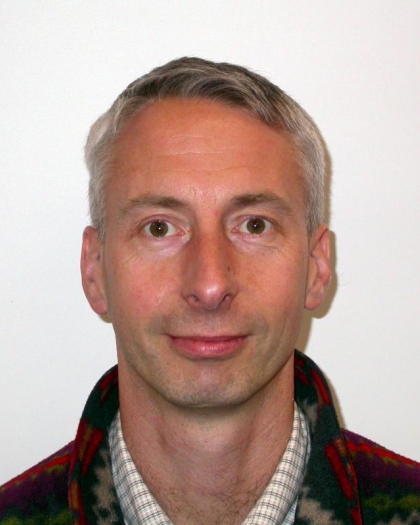
Robert Leslie Gawthorpe is a Professor in the Department of Earth Science at the University of Bergen (UiB). He joined UiB in July 2010 after serving as Professor of Sedimentology and Tectonics at the University of Manchester, where he led the Basin Studies and Petroleum Geoscience Group. His research focuses on integrating geomorphology, sedimentology, stratigraphy, and tectonics to study tectonic landscapes and sedimentary basins, with particular emphasis on rift basins, salt tectonics, and seismic interpretation. He established a 3D seismic and digital outcrop laboratory at UiB, equipped with advanced workstations for interpreting large seismic datasets. Current projects include the Research Council of Norway-funded SynRift Systems project and studies on rift margin dynamics. In 2018, he was appointed VISTA Professor, a prestigious industry-academic collaboration position. Key research themes include syn-rift stratigraphy, fault growth mechanics, carbonate reservoir characterization, and the interplay between tectonics and sedimentation in rifted margins. His work bridges field observations, subsurface data, and numerical modeling to address challenges in petroleum geoscience and basin analysis. Awards: VISTA Professor (2018) Projects: SynRift Systems, DeepRift, ZechTec, and studies on Brazilian and Norwegian margins. Labs: 3D seismic and digital outcrop laboratory at Realfagbygget, UiB.
Dr. Dazhi Jiang is a Professor at Western University's Department of Earth Sciences and a Distinguished Professor at Northwest University, China. His research focuses on linking structural geology with tectonics through microstructural analysis, numerical modeling, and fieldwork. He develops self-consistent micromechanical models to study multi-scale deformation in Earth's lithosphere, with applications to regions like the Canadian Shield and North China Craton. His work integrates field observations, lab experiments, and computational methods to understand large-scale tectonic processes. His research interests include deformation mechanisms, fabric development, and rheological heterogeneity. Key contributions include studies on metamorphic core complexes, quartz flow laws, and viscous inclusion dynamics. Dr. Jiang teaches courses in structural geology, field mapping, and continuum micromechanics at Western and collaborating institutions. Scientific recognition includes his Distinguished Professor title at Northwest University. He actively supervises graduate students and seeks candidates for projects in the Canadian Cordillera and East China, focusing on microstructure evolution and cratonic thinning mechanisms. Publications emphasize numerical modeling, tectonic deformation, and rheological analysis. His lab, the Structural Geology & Tectonics Laboratory, supports advanced research in deformation mechanics and lithospheric dynamics.
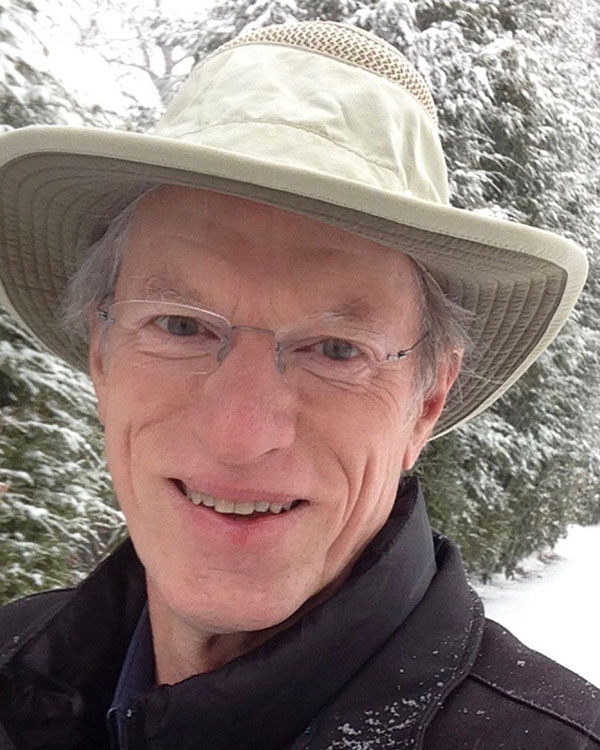
Timothy Byrne is a Professor in the Department of Earth Sciences at the University of Connecticut. He specializes in structural geology and tectonics, focusing on modern and ancient orogenic belts, particularly in Taiwan, Alaska, Japan, Canada, and Australia. His research integrates field studies with geophysical and geochemical analyses to understand mountain-building processes, continental collision, and subduction dynamics. Byrne has participated in ocean-drilling expeditions to the Nankai Trough and collaborates with researchers like Jean Crespi and Will Ouimet on active tectonics in Taiwan. Education: Ph.D. in Earth Sciences from the University of California, Santa Cruz; B.S. in Geology from the University of Washington. Research interests include orogenic belt evolution, metamorphic core zones, fault kinematics, and paleohypsometry. He teaches courses on structural geology, active tectonics, and field geology in Taiwan. His work emphasizes the interplay between tectonics, geomorphology, and surface processes in collision zones. Publications focus on Taiwan’s rapid mountain growth, exhumation mechanisms, stress orientations in subduction zones, and continental collision dynamics. Collaborative projects address fluid dynamics in subduction zones and the role of shear zones in accommodating plate convergence.
Semih Gürsu is a Professor at the Faculty of Engineering of Muğla Sıtkı Koçman University , specializing in Geological Engineering and Mineralogy-Petrography . His research focuses on Precambrian tectonic evolution, geochemical analysis of metamorphic rocks, and Gondwana margin studies. Academic Leadership : Editorial roles in journals like Gondwana Research and Turkish Journal of Earth Sciences . Research Themes : Cadomian/Pan-African crustal evolution, Neoproterozoic arc volcanism, Early Cambrian back-arc rifting, and Late Ordovician glacial sediment provenance. Notable Publications include U-Pb zircon dating of tectonic slices, isotopic provenance studies of diamictites, and tectonic models for peri-Gondwanan terranes. His 2023 Geological Society of America Bulletin article on garnet amphibolites is highly cited. Conference Participation : Presented at events like the Geological Society of America Annual Meeting and European Mineralogical Congress. Book Contributions : Co-authored chapters in Geological Society Special Publications on Middle Eastern Ordovician systems.
Dr. Hamed Gamaleldien is an Assistant Professor at Khalifa University and an Adjunct Research Fellow at Curtin University’s School of Earth and Planetary Sciences (EPS). He holds a Ph.D. in mantle chemical dynamics from Curtin University (2021) and a master’s in geology from Tanta University (2013). His research focuses on Earth evolution, tectonics/geodynamics, mantle petrology, and subduction zone geochemical cycles. Education: Ph.D., Mantle Chemical Dynamics, Curtin University (2021) M.Sc., Geology, Tanta University (2013) B.Sc., Geology, Tanta University (2009) Research Interests: Crustal growth mechanisms in the Arabian-Nubian Shield Mantle plume-supercontinent cycle interactions Subduction zone geochemical cycling Deep mantle recycling processes Application of advanced analytical techniques (e.g., atom probe tomography) Key Projects: Crustal growth history of the Arabian-Nubian Shield Geodynamic links between mantle plumes and supercontinent cycles Fluid-rock interactions in subduction zones Awards: Curtin Graduate Research School Publication Award (2019) CIPRS Research Stipend Scholarship (2017) Lloyd V. Berkner Travel Fellowship (2014) Outstanding Student Poster Award, EGU Annual Meeting (2014) His work bridges micro-scale mineral analysis with global-scale tectonic processes, contributing to understanding Earth’s mantle evolution and continental crust formation. He collaborates internationally, with fieldwork in Egypt, Japan, and Australia.
Kristina Dunkel is an Associate Professor at the Department of Geosciences, University of Oslo , specializing in Earth's crustal processes. She teaches courses in Mineralogy (GEO2110) , Petrology and Geochemistry (GEO2150) , and Petrography and Microstructures (GEO4810) . Education: MSc Geosciences, University of Münster (2013) BSc Geosciences, University of Münster (2011) Research Focus: Her work examines microstructural evolution in rocks, deep crustal earthquakes, deformation-reaction coupling, and ultramafic rock alteration. Current projects include ERC BREAK , CO2Basalt , CONTINENT , NATSORB , and REACTivity during confinement , all aiming to understand crustal dynamics and fluid-rock interactions. Publication Trends: Her recent publications emphasize stress estimation in lower crust, pseudotachylyte formation, feldspar and olivine behavior under extreme conditions, and fluid-driven metamorphism during seismic events. Collaborative work spans topics like IODP Expedition 357 studies of Atlantis Massif and Leka Ophiolite Complex deformation patterns. Research Groups: She contributes to Njord - Center for the Study of Earth Physics and CO2 storage initiatives.
Francesca Rotondo is a Geochemistry Researcher at the University of Southampton. Her work focuses on structural geology, geodynamics, and the role of fluids in oceanic lithosphere systems. She investigates hydrothermal systems at mid-ocean ridges and subduction zones, with implications for global biogeochemical cycles. Her research employs petrology, geochemistry, and isotopic analysis to understand fluid-rock interactions in ophiolite complexes. Her current projects include studying deep fluid flow pathways in the lowermost ocean crust using samples from the Oman Drilling Project. She collaborates on interdisciplinary projects leveraging machine learning for geological core quantification. Francesca's work bridges field observations, laboratory analysis, and computational modeling to advance understanding of Earth's geochemical cycles and crust-mantle dynamics. Publications highlight her contributions to fluid dynamics in oceanic lithosphere, subduction zone geochemistry, and serpentinization processes. She is affiliated with the Geochemistry research group and actively contributes to international drilling initiatives like the Oman Drilling Project. Her research emphasizes the interplay between tectonic processes and geochemical exchanges critical to planetary evolution.
Yvette Kuiper is an Associate Professor in the Department of Geology and Geological Engineering at the Colorado School of Mines. Her research examines structural evolution of mountain belts through integrated field mapping, geochronology, and geophysical analysis. Current projects focus on shear zone kinematics in the New England Appalachians, southern Abitibi Greenstone Belt, and Colorado Front Range. Her research integrates structural analysis with U-Pb geochronology to date deformation events and quantify strain rates in complexly deformed terrains. She investigates linkages between microstructural development, accessory mineral growth, and tectonic processes in collisional orogens. Ore deposit settings in Yukon's Rackla Gold Belt and Colorado's mineral districts provide additional field areas for structural analysis. Recent publications explore Mesoproterozoic tectonics in Colorado (2024), channel flow hypotheses in Massachusetts (2024), and Variscan belt evolution in Northwest Africa (2023). Her work combines geological mapping with advanced geochemical and geophysical techniques to reconstruct orogenic histories.
Donald Penman is an Assistant Professor in the Geosciences Department at the Quinney College of Agriculture & Natural Resources , Utah State University. His research focuses on reconstructing past climate systems, particularly during extreme warming events like the Paleocene-Eocene Thermal Maximum (PETM) and Middle Eocene Climatic Optimum (MECO), using geochemical proxies in marine sediments. Keywords: Paleoclimatology, Geochemistry, Carbon Cycle, Silicate Weathering, Ocean Circulation, Deep Time Climate Recent work examines how variations in seawater chemistry influence elemental incorporation in calcite (2024) and links Earth's orbital rhythms to Deccan trap volcanism (2025). Publications also explore metamorphic CO2 release, ocean acidification during hyperthermals, and seafloor weathering of Large Igneous Provinces. His research contributes to understanding long-term climate regulation mechanisms, including silicate weathering feedbacks and reverse weathering processes, with applications to both deep time climate transitions and modern climate change projections.
Dr. Jan Pleuger is a Researcher at the Department of Earth Sciences, Freie Universität Berlin, specializing in tectonics and sedimentary systems within the Institute of Geological Sciences. His work focuses on the structural evolution of Alpine and peri-Alpine regions, particularly the Eastern Alps, Central Alps, and Rhodope Mountains, with emphasis on subduction dynamics, exhumation mechanisms, and crustal deformation processes. His research interests span tectonics, sedimentary systems, structural geology, and metamorphic processes, with specific expertise in: Alpine orogenic evolution Subduction-to-collision transitions High-pressure rock exhumation Shear zone kinematics Paleogeographic reconstructions Crustal-scale structural analysis Analysis of his 15 most recent publications (2023-2011) reveals consistent focus on Alpine geodynamics, particularly the Eastern Alps' transition zones and Rhodope metamorphic province. His work integrates structural field analysis, geochronology, and geophysical methods to address fundamental questions about slab tearing, crustal-scale folding, rift-related paleogeography, and the timing of metamorphic events. A recurring theme is the interplay between subduction, collision, and extensional processes in orogenic belts. Dr. Pleuger actively collaborates with major research initiatives including the AlpArray Working Group, SWATH-D project, and MB-4D Priority Programme (Mountain Building Processes in Four Dimensions). His research leverages Freie Universität Berlin's analytical facilities such as the Biomarker Lab, Apatite Fission Track dating equipment, and mineral separation laboratories to investigate petrophysical properties and deformation mechanisms in high-pressure rocks.
Thomas Lamont is an Assistant Professor in the Department of Geoscience at the University of Nevada Las Vegas. His research focuses on metamorphic and igneous petrology, particularly the tectonic processes at convergent plate boundaries and their role in mineral deposit formation. He holds an M.S. (2014) and Ph.D. (2019) in Earth Sciences from the University of Oxford. Education: M.S. Earth Sciences, University of Oxford, 2014 Ph.D. Earth Sciences, University of Oxford, 2019 Research Interests: Dr. Lamont investigates mountain-building processes, subduction zone dynamics, and the interplay between tectonic stress and metamorphic dehydration/melting. His work combines field observations, analytical techniques (e.g., electron microprobe analysis, geochronology), and petrological modeling to study orogenic belts in the Southwest USA, Scotland, and Greece. Key themes include subduction geometry’s impact on lithospheric evolution and the mechanisms driving porphyry copper formation during flat-slab subduction. Research Outputs: His recent work highlights the role of water-fluxed crustal melting in ore formation and the thermal evolution of metamorphic core complexes. Collaborations emphasize multi-disciplinary approaches to unravel the timing and mechanics of tectonic processes. Advising & Collaboration: Actively recruiting motivated students and seeking partnerships to advance studies on convergent plate boundaries. His research group emphasizes structural, metamorphic, and igneous investigations to constrain orogenic processes at multiple scales. Labs/Teams: Leads a dynamic research group focusing on field-based and analytical studies of tectonic and metamorphic systems, with ongoing projects in Greece, Myanmar, and the USA.
Valentin Laurent is a Senior Lecturer and Senior Teaching Fellow in Pedagogic Transformation at the Department of Earth Science & Engineering, Faculty of Engineering at Imperial College London. He specializes in structural geology, metamorphic petrology, and pedagogical innovation. He co-leads the ESE Undergraduate Senior Tutor role and participates in the EDIC Committee to advance Equity, Diversity, and Inclusivity in Geosciences. His research spans subduction zone dynamics, lithosphere rheology, and virtual fieldwork pedagogy. He teaches structural geology, metamorphic petrology, and field geology courses, coordinating modules like the Independent Geology Project and Rocks and Structures in the Field. Recent work focuses on virtual fieldtrip efficacy and geoscience education inclusivity. Research contributions include studies on Cycladic Blueschist Unit tectonics, argon isotope systematics in subduction zones, and synextensional granitoid dynamics in the Aegean region. His pedagogical research analyzes virtual field experiences’ impact on student learning during post-pandemic education disruptions. Key roles include course leadership for Geomaterials (40002), Metamorphic Geology (50007), and field-based modules 50005/60006. He actively collaborates with Dominik Weiss on academic governance and student partnership initiatives.
Eduardo Garzanti, a Professor in Stratigraphy and Sedimentology at the University of Milano-Bicocca since 2001, is a leading scholar in Himalayan and Alpine geology. His career spans over three decades, with previous roles as Associate Professor (2000-2001) and Lecturer (1992-2000) at the University of Milano-Città Studi. Specializations: Sedimentary petrology, Himalayan geology, tectonic reconstructions, and sediment flux analysis in major rivers (Indus, Ganga, Brahmaputra, Po, Nile). Key Contributions: Pioneered provenance models through detrital analysis, participated in Himalayan expeditions (1981-2012), and co-proposed the Indus Turbidite Fan project for IODP. Publications: 150+ articles in peer-reviewed journals, with an H-index of 32 and over 3491 citations. His research bridges sedimentology with tectonic evolution, focusing on orogenic systems and their sedimentary records. Scientific Recognition: Giorgio Dal Piaz Award (Italian Geological Society, 1988) Ranked among the top 5 Italian scientists in Earth Sciences (H-index 32, citations 3491)
Professor Michael Searle is a leading geologist in the Department of Earth Sciences at the University of Oxford, holding his professorship since 2008 after progressing from Departmental Lecturer (2006). His career spans over four decades of research in tectonics and structural geology, with continuous NERC funding from 1985-2010 and significant industry support from major oil companies including Shell and BP. His research focuses on continental collision zones , particularly the Himalayas, Karakoram, and Oman Mountains. Key specialties include ophiolite obduction processes, metamorphic core complexes, and major strike-slip fault systems (Karakoram, Sagaing, Red River). His work integrates field geology with advanced geochronological and structural analysis. His publication record includes 220+ peer-reviewed papers (h-index 81), three authoritative books including Colliding Continents (Oxford University Press, 2013), and six co-edited Geological Society Special Publications. His research demonstrates consistent focus on Himalayan tectonic evolution Ophiolite formation mechanisms Strike-slip fault dynamics Metamorphic processes in collision zones Award highlights include the Geological Society's Murchison Medal (2008) and Foreign Fellowship in the Pakistan Academy of Sciences (2014). His supervised students comprise 27 Oxford D.Phils, 19 MRes students, and 2 Leicester PhDs. Major research initiatives include geological mapping projects across Everest, Pakistan, and Myanmar, plus industry-funded work in Oman/Syria. His DeBeers-funded Cape Town fellowship involved diamond mine studies in southern Africa. Current work emphasizes crustal deformation mechanisms in active collision zones.
Prof. AYSEL ŞEREN is a distinguished Professor in the Department of Geophysical Engineering at the Faculty of Engineering, Karadeniz Technical University. With over 98 publications in Web of Science and an impressive H-index of 182, she has established herself as a leading expert in applied geophysics, particularly in ground-penetrating radar applications, karst studies, and archaeological geophysics. Her research spans diverse areas including engineering geophysics, hydrogeology, and mineral exploration. Her educational background includes a Doctorate from Istanbul University (1994-1998), Postgraduate studies at Karadeniz Technical University (1990-1993), and Undergraduate studies at the same institution (1985-1989). Her academic journey reflects a deep commitment to geophysical sciences and engineering applications. Prof. Şeren's research interests primarily focus on Geophysical Engineering , Applied Geophysics , Archeo-geophysical studies, and Gravity applications. Her work demonstrates exceptional integration of multiple geophysical methods for solving complex geological and engineering problems. She has made significant contributions to understanding karst systems, slope stability, archaeological site investigations, and infrastructure assessment. Her approach consistently combines theoretical foundations with practical field applications, advancing both scientific knowledge and engineering solutions. Analysis of her recent publications reveals a strong trend toward integrated geophysical approaches, particularly using Ground-Penetrating Radar (GPR) in combination with other methods. Her research has evolved from fundamental geophysical studies to practical applications addressing real-world challenges in engineering, archaeology, and environmental science. The interdisciplinary nature of her work connects geophysics with civil engineering, hydrology, archaeology, and geological hazards assessment, demonstrating her ability to bridge theoretical concepts with practical implementation. Prof. Şeren has supervised 14 theses and secured numerous research grants, demonstrating her leadership in the field. Her funded projects span archaeological investigations, landslide risk assessment, karst studies, and infrastructure evaluation. She has led significant projects including 'Deprem Tetikli Kütle Hareketlerinin Yer Bilimsel Jeoloji-Jeofizik-Jeomorfoloji Yaklaşımlarla Modellenmesi' (2023-Present) and 'Hidrojeofizik Çalışmalarla Dolinlerin, Karstik Boşlukların ve Yeraltı Su Akış Sisteminin Araştırılması' (2022-2024). These projects highlight her ongoing commitment to addressing contemporary challenges through innovative geophysical approaches. Her research group focuses on advanced geophysical techniques, particularly GPR applications, for solving engineering and archaeological challenges. The team conducts comprehensive field investigations, sophisticated data processing, and detailed interpretation for various geological and engineering problems, with strong connections to cultural heritage preservation and infrastructure safety. Their work consistently demonstrates methodological rigor while maintaining practical relevance to real-world applications.