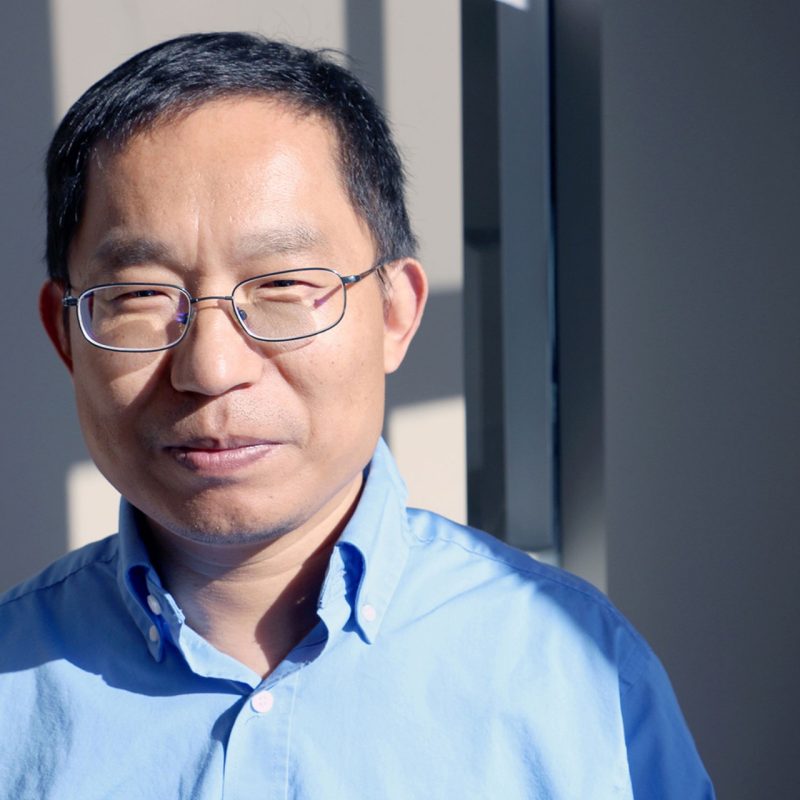
Jinsuo Zhang is a Professor in the Department of Mechanical Engineering at Virginia Tech, leading the Nuclear Materials and Fuel Cycle Center (NMFC). His research focuses on nuclear materials compatibility, fuel cycle technologies, and advanced reactor coolants. He joined Virginia Tech in 2017 to establish the NMFC, bringing expertise from Los Alamos National Laboratory in material degradation studies and pyroprocessing. His work addresses corrosion in molten salts, fuel-cladding interactions, and safeguards for nuclear systems. Education includes a Ph.D. in Engineering Mechanics from Zhejiang University (2001) and a B.S. in Engineering Mechanics (1997). He directs the NMFC, exploring nuclear fuel materials, coolant advancements, and fuel cycle innovations. Research highlights include molten salt reactor technologies, electrochemical separation methods, and corrosion mitigation strategies for extreme reactor environments.
Hamouda Ghonem is a Professor in the Department of Mechanical, Industrial and Systems Engineering at the University of Rhode Island . He established the Mechanics of Materials Research Laboratory (MMRL) in 1981, focusing on experimental and computational studies of deformation and damage in advanced engineering materials under extreme conditions. Education: Ph.D., Mechanical Engineering, McGill University (1978) M.S., Mechanical Engineering, McGill University (1976) B.Sc., Nuclear Engineering, University of Alexandria (1969) Research Interests span high-temperature deformation of metallic alloys, creep-fatigue-environment interactions, dislocation-precipitate interactions, grain boundary mechanics, and ultrafine grain manufacturing. His work quantifies microstructural effects on material failure and develops predictive models for damage evolution in aerospace and nuclear materials. Scientific Awards include: Fellow of ASME Sabbatical appointments at European universities and aerospace research centers Laboratory Facilities at MMRL include: MTS servohydraulic testing machines Creep and high-strain rate (Split Hopkinson Bar, gas gun) systems Computational modeling with Abaqus, MATLAB, and in-house codes Microstructural analysis via SEM and optical microscopy Vacuum and high-temperature (-196°C to 1200°C) testing environments
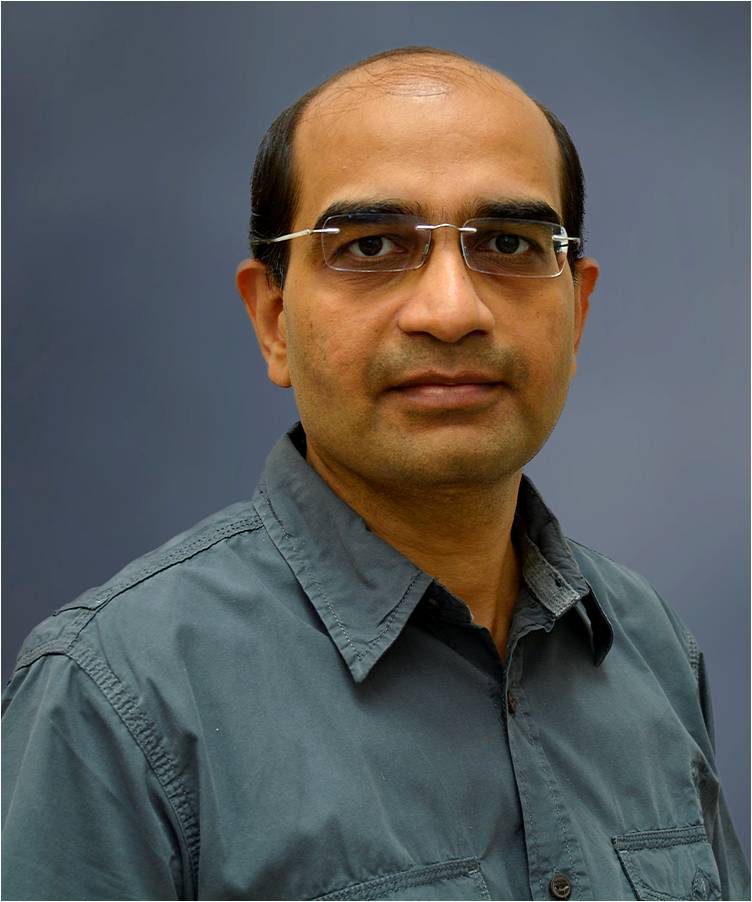
Prof. Ashutosh S. Gandhi is a Professor in the Department of Metallurgical Engineering and Materials Science at the Indian Institute of Technology Bombay (IIT Bombay), where he has been serving since December 2017. Previously, he was an Associate Professor at IIT Madras from 2012 to 2015 and an Assistant Professor there from 2006 to 2012. He held a Postgraduate Researcher position at the University of California, Santa Barbara from 2001 to 2005. His educational qualifications include a Ph.D. and M.E. in Metallurgy from the Indian Institute of Science (IISc), Bangalore, specializing in Ceramics, and a B.E. in Metallurgical Engineering from Visvesvaraya National Institute of Technology, Nagpur, where he secured the university rank. Prof. Gandhi's research focuses on the Science of Ceramics , particularly High Temperature Protective Coatings such as Thermal Barrier Coatings (TBCs) and Environmental Barrier Coatings (EBCs), Surface Engineering , High Entropy Ceramics , Phase Transformations , and Metastable and Amorphous Materials . His work bridges fundamental materials science with industrial applications in aerospace, energy, and nuclear sectors. The selected publications highlight a strong trend in advanced ceramic materials, especially zirconia-based systems, rare earth silicates, and high entropy oxides. The research spans synthesis (sol-gel, combustion), processing (spark plasma sintering), and characterization of phase evolution, thermal stability, and mechanical properties under extreme conditions. Key themes include entropy stabilization, nanocrystallinity, and high-temperature performance. He has secured significant research funding from national and international agencies including the Science & Engineering Research Board, Aeronautics Research & Development Board, Department of Science & Technology, Naval Research Board (DRDO), Indian Space Research Organisation, The Boeing Company, and Pratt & Whitney. He also collaborated with GE India Technology Center on critical literature reviews. Prof. Gandhi holds an Indian patent on a thermal barrier coating made of high entropy oxide ceramics. He has contributed to the field through peer-reviewed journal publications and book chapters in prestigious publications by Springer and Pan Stanford. His research group at IIT Bombay is actively involved in developing next-generation ceramic materials for extreme environments, including icephobic coatings for aerospace and protective coatings for refractories. The lab utilizes advanced spectroscopic and materials characterization techniques.
Roy Johnsen is a Professor in the Department of Mechanical and Industrial Engineering at the Norwegian University of Science and Technology (NTNU), specializing in corrosion and surface technology. With a Dr.ing. degree from NTH (1984), he has extensive industry experience from Statoil Research Centre (1985-1991) and CorrOcean (1991-2004), where he expanded the company globally. His current research focuses on hydrogen embrittlement, corrosion protection, and integrity management in offshore systems, with collaborations across Europe, Asia, and the Americas.
Michael E. McHenry is a Professor of Materials Science and Engineering at Carnegie Mellon University's College of Engineering. He holds appointments with multiple research centers including the Data Storage Systems Center, Engineering Research Accelerator, Materials Research Science and Engineering Center, and Wilton E. Scott Institute for Energy Innovation. Dr. McHenry received his BS in Metallurgical Engineering and Materials Science from Case Western Reserve University in 1980, his PhD in Materials Science and Engineering from MIT in 1988, and completed a postdoctoral fellowship at Los Alamos National Laboratory. His research focuses on soft magnetic nano-composites for power and energy applications, with particular expertise in metal amorphous nanocomposites (MANCs) for high-efficiency electric motors and power systems. His work spans advanced materials processing, magnetic properties under various conditions, and rare earth materials criticality. His research portfolio demonstrates a clear progression toward practical applications of magnetic materials, particularly in high-power density, high-efficiency motors that can operate at high rotational speeds with minimal energy loss. His publications reveal a strong focus on translating fundamental materials science into engineering solutions for energy conversion, with significant emphasis on rare earth-free alternatives and high-frequency applications. IEEE Distinguished Lecturer (2013) TMS Awardee for Research Excellence (2014) Subject of TMS Symposium in Honor of M. E. McHenry (2016) NATO Series Lecturer on Rare Earth Criticality (2016/17) Dr. McHenry has co-founded CorePower Magnetics Inc. with Paul Ohodnicki and Samuel Kernion, commercializing soft magnetic technologies with applications in grid modernization and electric vehicles. His extensive publication record and leadership in major research initiatives including a MURI on high-temperature magnetic materials and an ARPA-E program demonstrate significant impact in both academic and industrial contexts. He has served in various leadership roles for Magnetism and Magnetic Materials and Intermag Conferences, and continues to advise on rare earth scarcity issues for organizations like NATO.
Dr. Sumsun Naher is a Senior Lecturer in the Department of Engineering at City, University of London , where she has worked since 2013. Previously, she served as Lecturer and Research Development Officer at Dublin City University (2006–2013) and as Scientific Officer at Bangladesh Council of Scientific & Industrial Research (1998–2000). Her academic career includes a Post Graduate Diploma in Academic Practice from City, University of London. PhD , School of Mechanical & Manufacturing Engineering, Dublin City University MSc , Materials & Metallurgical Engineering, Bangladesh University of Engineering and Technology BSc , Materials & Metallurgical Engineering, Bangladesh University of Engineering and Technology Her research focuses on semi-solid processing , laser processing , simulation & modelling of materials technologies , and materials characterisation . Recent work explores cellulose nanofiber-based water filters for antibiotic removal and phase change materials in geothermal energy systems. Key article trends reveal expertise in: Laser Surface Modification of metals and composites Advanced Casting Methodologies and semi-solid metal forming Nanoparticle Reinforcement in metal matrix composites Thermal Modelling for energy systems Sustainable Material Solutions in water treatment and energy Computational Materials Science via finite element analysis Naher has received the DCU Invent Commercialisation Award (2011) and holds fellowships from IMechE , Institute of Materials, Minerals & Mining , and Advance Higher Education Authority . She actively reviews for funding bodies and examines PhD theses internationally. As an organiser of the ESAFORM Conference and co-organiser of its Additive Manufacturing symposium since 2017, she contributes to academic leadership. Her professional roles include Board of Directors for the European Association of Materials Forming and participation in EU COST Action projects (Thixoforming, Thixosteel, Nanostructured Materials).
Prof. Xing Yang is a Professor at KU Leuven's Institute for Sustainable Metals and Minerals (ISM2), leading the Process Engineering for Sustainable Systems (ProcESS) research group. His work focuses on developing membrane-based technologies for sustainable resource recovery and environmental protection, with strong emphasis on metallurgical and wastewater applications. His research centers on advanced membrane engineering for separation processes, particularly membrane distillation, electrodialysis, and solvent extraction-based systems. Key interests include designing stimuli-responsive membranes, optimizing ion-selective transport, and developing energy-efficient processes for metal recovery from end-of-life batteries and industrial waste streams. His work bridges materials science, chemical engineering, and environmental sustainability to address critical resource scarcity challenges. Analysis of his 15 most recent publications (2024-2025) reveals a dominant focus on lithium and transition metal recovery through electro-driven membrane processes. He pioneers innovations in membrane architecture – including macrocycle-based channels, zwitterionic coatings, and PVDF modifications – to achieve unprecedented selectivity in complex matrices. His research consistently targets industrial applicability, with demonstrated applications in battery recycling, wastewater valorization, and CO 2 capture systems. The ProcESS research group operates within KU Leuven's Institute for Sustainable Metals and Minerals, collaborating across metallurgy, environmental engineering, and materials science disciplines. Their work integrates experimental membrane fabrication with process modeling to develop scalable solutions for circular economy implementation in resource-intensive industries.
Eralp Demir is a Post-Doctoral Researcher at the Department of Engineering Science, University of Oxford. His research focuses on materials mechanics, crystal plasticity, and finite element methods. He holds a PhD from RWTH Aachen University and has conducted research at institutions including Carnegie Mellon University, Max Planck Institute, and Cornell University. His current work involves developing the OXFORD-UMAT framework for fusion energy materials in collaboration with UKAEA. He specializes in in-house finite element code development and commercial software integration (e.g., Abaqus, MSC Marc). His expertise spans computational materials modeling, microstructural analysis, and experimental validation using techniques like 3D XRD. Education: PhD in Engineering Science, RWTH Aachen University Advanced Studies at Carnegie Mellon University (Mechanical Engineering), Cornell University (MAE), and others Research Interests: Crystal plasticity modeling, fusion energy materials, finite element method development, microstructural mechanics, and additive manufacturing. His work bridges computational simulations with experimental techniques to understand material behavior under extreme conditions. Labs/Teams: Collaborates with the Tarleton Research Group at Oxford and UKAEA on fusion energy projects. Active in developing open-source tools for material modeling.
Elsa A. Olivetti is the Jerry McAfee (1940) Professor in Engineering and Professor of Materials Science and Engineering at MIT, and a MacVicar Faculty Fellow. She leads the Olivetti Group, focusing on sustainable materials design, recycling strategies, and computational models for environmental and economic impact assessment. Her work bridges materials science with sustainability, emphasizing circular economy principles and decarbonization. Education: B.S. in Engineering Science from University of Virginia (2000); Ph.D. in Materials Science and Engineering from MIT (2007). Her doctoral research centered on lithium-ion battery electrode materials. She joined MIT’s Department of Materials Science and Engineering (DMSE) in 2014 as an Assistant Professor, later advancing to full Professor. She co-directs the MIT Climate & Sustainability Consortium and chairs the MIT Climate Nucleus. Research interests include: sustainable materials systems, recycling-friendly material design, waste mining, and AI-driven materials discovery. She develops models for cost prediction, environmental impact analysis, and policy-relevant supply chain dynamics. Notable contributions include high-throughput zeolite design and battery recycling frameworks. Awards include the Bose Teaching Award (2021), NSF Early Career Award (2018), and Minerals, Metals & Materials Society Early Career Fellowship (2019). Her work emphasizes education and curriculum development, including courses for MIT’s Climate Scholars program. Labs/Teams: Olivetti Group (MIT), MIT Climate & Sustainability Consortium. Active in global sustainability initiatives, focusing on materials for energy transition and climate resilience.
S. Mallick is a Professor in the Department of Metallurgical Engineering and Materials Science at the Indian Institute of Technology Bombay (IIT Bombay), a position he has held since May 2021. His research is centered on advanced functional materials with applications in energy and electronics. Research Interests: Electroceramics and piezoelectric materials Dye-sensitized solar cells Structural transformations in perovskite-based oxides Hydrothermal synthesis of ceramic powders His recent publications indicate a strong focus on bismuth titanate systems, phase transformations, and high-temperature piezoelectric ceramics, reflecting a deep engagement with materials design and characterization. These works span disciplines such as materials chemistry, solid-state physics, and ceramic engineering, with implications for sensors, actuators, and renewable energy technologies. Scientific Contributions: Author of book: High Temperature Piezoelectric Ceramics (2009) Multiple peer-reviewed publications in applied physics and ceramic transactions S. Mallick advises research students in materials engineering and leads a research laboratory at IIT Bombay. His lab website (https://sites.google.com/site/pmlabiitb01/) and personal page (https://sites.google.com/site/sudhanshumallick/) reflect ongoing academic activity. He received his B.Tech. from IIT Bombay (2000), followed by an M.S. and Ph.D. from Purdue University in Electrical and Computer Engineering and Materials Engineering, respectively.
Somnath Basu is a Professor in the Department of Metallurgical Engineering and Materials Science at the Indian Institute of Technology Bombay. He has been serving in academic roles since 2011, progressing from Assistant Professor to Associate Professor and then to Professor in 2022. His work is deeply rooted in process metallurgy and materials engineering, with a focus on industrial steelmaking technologies. His research interests include metal refining , thermodynamics of slag-metal reactions , phosphorus and sulfur removal , and continuous casting processes . He also explores nanofluids and their transport properties, indicating interdisciplinary engagement. His work bridges fundamental thermodynamic studies with practical industrial applications in iron and steel production. The selected publications reflect a strong trend in steelmaking process optimization , particularly in reaction kinetics , inclusion behavior , and process monitoring . His research spans both experimental investigations and thermodynamic modeling, targeting improvements in steel purity and casting efficiency. Scientific Contributions: Published in leading journals such as ISIJ International , Steel Research International , and Metallurgical and Materials Transactions B . Contributions to understanding phosphorus partitioning, nozzle clogging, and nanofluid conductivity. While no specific students or grants are listed, his long-standing academic position and publication record suggest active supervision of graduate research and involvement in funded projects related to metallurgical process innovation. His work likely supports both academic and industrial advancements in steel technology. He is affiliated with a leading research department equipped with advanced facilities for metallurgical experimentation and process simulation, though specific lab names or team structures are not mentioned in the text.
Dr Yongle Sun is a Lecturer in Additive Manufacture at Cranfield University , specializing in cross-scale modelling of metal manufacturing processes for aerospace and energy applications. BSc & MSc in Mechanics from Xi'an Jiaotong University PhD in Mechanical Engineering from The University of Manchester His research focuses on multi-physics modelling of additive manufacturing and welding processes, with particular emphasis on residual stress/distortion prediction and mitigation. Current projects include: NEWAM (cross-scale additive manufacturing) SAM (smart manufacturing) I-Break (process innovation) With over £10M in research funding, his work bridges mechanistic models with engineering applications through collaborations with: GE Avio Aero WAAM3D Airbus EPSRC Innovate UK Key achievements include: First author of 16 leading journal papers Co-author of 35+ peer-reviewed works H-index of 23 Queen's Anniversary Prize contribution Top-cited paper in International Journal of Impact Engineering
Dr. Mathew A. Kuttolamadom is a Professor and Associate Department Head for Research & Graduate Studies in the Department of Engineering Technology and Industrial Distribution (ETID) at Texas A&M University. His academic roles also include affiliations with Materials Science & Engineering and Multidisciplinary Engineering. He holds a Ph.D. in Materials Science & Engineering from Clemson University (2012), M.S. in Mechanical Engineering from the University of Detroit Mercy (2005), and B.Tech. in Mechanical Engineering from the University of Kerala (2002). Research Focus: Bioinspired functionally-graded materials, additive/subtractive manufacturing, tribology, pharmaceutical manufacturing, and engineering education. Grants & Awards: Over $14M as PI/Co-PI in grants, including a $480K NSF-ATE grant for smart manufacturing workforce education. Teaching: Taught courses like MMET-463 (Mechanical Design), MMET-275 (Mechanics for Technologists), and advised over 3500 students across levels. His lab (MGBTL) develops bioinspired solutions for wear-resistant surfaces and advanced manufacturing processes. Notable collaborations include work with industry partners like NSL Aerospace and ORNL-MDF. Dr. Kuttolamadom has mentored numerous graduate and undergraduate students in interdisciplinary research, with alumni in leading roles at Tesla, Intel, and academia.
Marika Kokko is a Professor of Bio- and Circular Economy at the University of Tampere, affiliated with the Faculty of Engineering and Natural Sciences and the Department of Materials Science and Environmental Engineering. Her research focuses on sustainable solutions for carbon dioxide utilization, nutrient recovery, and bioelectrochemical systems. She leads projects such as isoSUS (developing short-chain fatty acid conversion) and BioNH4 (recovering ammonium nitrogen from wastewater). Education: Doctor of Science (Technology), Tampere University of Technology (2013) Postdoctoral Researcher, University of Freiburg, Germany (2014–2016) Tenure-track career progression at Tampere University since 2016 Research Interests: CO₂ conversion via microbial electrosynthesis and bioelectrochemical processes Electrochemical nitrogen recovery from wastewater Microplastic analysis in environmental matrices Bioremediation of industrial waste streams Grants & Collaborations: Funded by Business Finland, Ministry of the Environment, and international consortia Active in interdisciplinary projects like CICAT2025 and UPCE Labs/Teams: Her research group investigates bioelectrochemical systems, microbial communities, and circular economy innovations. They collaborate with industry partners to scale sustainable technologies.
Karel Van Acker is a full professor in the Faculty of Engineering Science at KU Leuven , leading the Sustainable Materials Processing and Recycling (SeMPeR) research group. His work focuses on integrating environmental and economic sustainability assessments, particularly for metallurgical residues and circular economy systems. Head of SeMPeR group Contact person for SeMPeR at Arenberg campus Head of Subdivision 39, Brussels Campus Research areas include: Circular Economy: Monitoring systems, stock-flow models, and business models Sustainability Assessments: Life Cycle Assessment (LCA), techno-economic analysis, carbon footprinting Resource Valorization: Steel slag mineral carbonation, rare earth reduction, biorefinery processes Key article trends: 2025 works emphasize steel slag carbonation for carbon capture, hydrogen storage technologies, and clothing sufficiency as circular economy strategies 2024 research explores car mobility circularity , AI environmental impacts , and policy integration for circular economy monitors Earlier works (2023-2020) address textile recycling , biomass to biofuels , and landfill mining using system dynamics Teaching responsibilities: Sustainable Materials Management (H00R6A) Environmental Impact Analysis (I0V86A) Material Selection & Sustainability (D0X32A) Global Challenges for Sustainable Society (H0O00A)