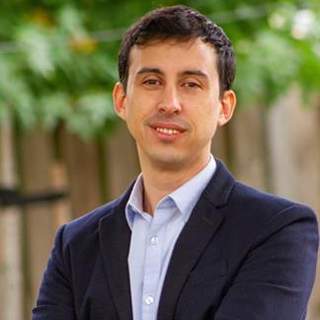
Rafał Biedrzycki is an Assistant Professor at The Institute of Computer Science within Warsaw University of Technology's Faculty of Electronics and Information Technology. His research focuses on optimization algorithms, evolutionary computation, and machine learning applications. He holds a PhD in Information Science (2009) and a D.Sc. (2024). Key research interests include evolutionary algorithms (e.g., Differential Evolution, CMA-ES), optimization techniques for real-world problems (e.g., compressor scheduling, optical networks), and algorithm benchmarking. He has contributed to improving constraint-handling methods and hybrid algorithm designs. Received team awards for scientific achievements from Warsaw University of Technology (2019, 2023) and teaching excellence (2021, 2024). Active in interdisciplinary projects, including the DAFNE initiative for data fusion systems (2010-2011). Supervises research in optimization, machine learning, and computational electromagnetics. His work bridges theoretical algorithm development with practical applications in engineering and data analysis. Recent efforts include analysis of CEC competition algorithms and parameter-tuning methodologies.
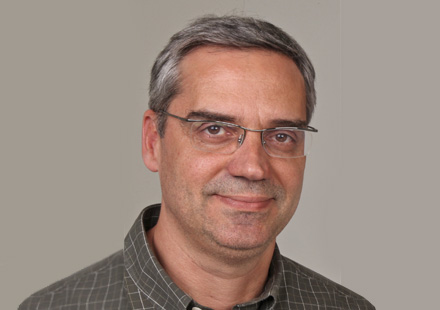
Alberto Santini is an Associate Professor of Operational Research and a Ramon y Cajal fellow at Universitat Pompeu Fabra in Barcelona, Spain. He is also an affiliate professor at the Barcelona Graduate School of Mathematics and the Data Science Centre at the Barcelona School of Economics. During 2025-2027, he coordinates the Transportation group of the Spanish O.R. Society. His research focuses on optimization methods applied to transportation, logistics, and sustainability, including scheduling, vehicle routing, and heuristic algorithms. He has contributed to solving complex problems like last-mile delivery integration with public transport, airline flight scheduling, and energy-efficient vertical farming. His work often employs advanced techniques like column generation and decomposition strategies. Notable contributions include decomposition strategies for vehicle routing heuristics and the application of metaheuristics such as Adaptive Large Neighbourhood Search (ALNS). He is the founder of EUROYoung and AIROYoung, youth branches within prominent operational research societies. His GitHub repositories, such as cvrp-decomposition , provide open-source implementations of his algorithms. Santini’s research addresses real-world challenges like epidemic resource allocation and sustainable logistics, reflecting his commitment to both theoretical and applied operational research. Awards: Ramon y Cajal Fellow Labs/Teams: Leads Transportation group (Spanish O.R. Society), Founded EUROYoung/AIROYoung.
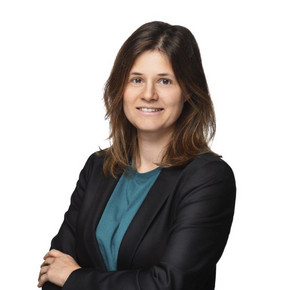
Eduardo Lalla-Ruiz is an Associate Professor in Logistics and Operations Research at the Department of High Tech Business and Entrepreneurship (HBE) at the University of Twente, Netherlands. He serves as educational director for the Industrial Engineering and Management (IEM) bachelor and master programmes. His academic journey includes degrees from the University of La Laguna (Spain): BSc in Industrial Engineering, MSc in Industrial Automation Engineering, MSc in Computer Science & AI, and a PhD with extraordinary distinction. Previously, he worked as a researcher and lecturer at the University of Hamburg’s Institute of Information Systems, where he became an Alexander von Humboldt Foundation Fellow. His research focuses on logistics optimization, mathematical programming, AI applications, and metaheuristics for scheduling and allocation problems. He has published widely, reviewed for journals, and organized academic sessions globally. Awards include his doctoral distinction and Humboldt Fellowship. He actively contributes to interdisciplinary projects at the Digital Society Institute. No specific labs/teams are explicitly mentioned in the provided text.
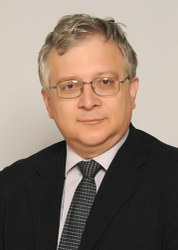
Dr. Andy Nguyen is a Senior Lecturer in Structural Engineering at the University of Southern Queensland, within the School of Engineering. He is an active researcher and educator, specializing in the Structural Health Monitoring (SHM) of critical civil infrastructure such as bridges, buildings, and transport tunnels. Bachelor of Engineering (BEng), NUCE, 1999 Master of Engineering (MEng), NUCE, 2003 Doctor of Philosophy (PhD), Queensland University of Technology (QUT), 2014 Dr. Nguyen's research is at the forefront of integrating advanced technologies into civil engineering. His primary focus is on developing and deploying sophisticated SHM systems that utilize sensors, data analytics, and machine learning to provide real-time insights into the structural integrity of ageing infrastructure. His work aims to enable proactive maintenance, extend the lifespan of structures, and enhance public safety. He has successfully implemented monitoring systems on major bridges and high-rise buildings in Queensland and New South Wales, with systems capable of even detecting distant earthquake events. His research interests span Structural Health Monitoring, Machine Learning for Engineering, Damage Detection, Finite Element Model Updating, Sustainable Building Materials like bamboo, and the application of AI for automated condition assessment of transport infrastructure. The analysis of his recent publications reveals a strong and consistent research trajectory centered on the application of data-driven and AI methods to solve practical problems in civil infrastructure. His work frequently combines signal processing techniques (like Stockwell Transform) with deep learning models for tasks such as crack detection in concrete and pavement. He also conducts significant research on model updating for complex structures like cable-stayed and arch bridges, using vibration data and optimization algorithms. The integration of machine learning for overload classification and the development of cost-effective, automated monitoring systems are key trends in his recent output. Advanced Queensland Fellow (2024-2027) Dr. Nguyen is actively involved in research supervision and collaboration. He is currently supervising several postgraduate students on projects related to AI-powered condition assessment, bamboo as a sustainable building material, and railway track design. He receives research funding from the Queensland Government through his Advanced Queensland Fellowship. His research has direct practical applications, as evidenced by his public engagement, such as writing for The Conversation on safeguarding ageing bridges, and his work with the Australian Network of Structural Health Monitoring. Dr. Nguyen's work embodies the development of a next-generation 'Living' Laboratory for engineering education, where research, teaching, and real-world infrastructure monitoring are integrated. His current projects involve creating smart, automated fault detection systems and advancing 'digital twin'-based monitoring platforms for infrastructure.
Hakan Basarir is a Professor in the Department of Mining Engineering at the Norwegian University of Science and Technology (NTNU), Trondheim, Norway. His research and teaching focus on mining rock mechanics, rock mass characterization, underground support systems, and the application of soft computing methods in mining engineering. PhD in Mining Engineering (2002) 20+ years of research and teaching experience 60+ publications in journals and conferences Research Interests include rock mass property prediction using measurement while drilling (MWD) techniques, numerical modeling of mining structures, optimization of mine support systems, and sustainable material development. His work integrates machine learning and computational methods to address challenges in mining geomechanics and backfill design. Recent Publications highlight advancements in AI-driven lithology prediction, eco-concrete formulation, and backfill mixture optimization. He has also contributed to tunnel stability analysis and seismic rock slope modeling. Teaching includes advanced courses in mining engineering, mineral production modeling, and specialization projects in geotechnology.
Waldemar Celes Filho is an Associate Professor in the Department of Computer Science at Pontifical Catholic University of Rio de Janeiro (PUC-Rio) and serves as Director of the Tecgraf Institute/PUC-Rio. With a career spanning over three decades, he has established himself as a leading researcher in computer graphics and scientific visualization. His educational background includes a Civil Engineering degree from UFRJ (1986), a Master's in Civil Engineering from PUC-Rio (1990), a Doctorate in Computer Science from PUC-Rio (1995), and postdoctoral studies in Computer Graphics at Cornell University (1995-1997). Dr. Celes Filho's research focuses primarily on Computer Graphics with special emphasis on Scientific Visualization, Numerical Simulation, Distributed Visualization, and Real-Time Rendering. He is particularly known for his work on visualization techniques for black oil reservoir models and as a co-creator of the Lua programming language. His research has resulted in over 50 publications spanning nearly three decades, with consistent output continuing through 2025. His recent publications demonstrate a strong trend toward applying advanced visualization techniques to complex industrial problems, particularly in petroleum engineering and construction informatics. His work bridges theoretical computer graphics with practical applications in engineering domains, showing particular strength in volume rendering, CAD model visualization, and distributed rendering systems. As Director of the Tecgraf Institute, he leads research initiatives that connect academic work with industry applications, fostering collaborations that translate visualization research into practical tools. Dr. Celes Filho has mentored numerous students who have become co-authors on his publications, including Paulo Ivson, Fábio Markus Miranda, and Lucas Caracas de Figueiredo, among others. His work continues to be influential in both academic and industrial settings.
Associate Professor Vera Hemmelmayr is affiliated with the Institute of Transport Economics and Logistics at the Vienna University of Economics and Business . Her research spans Operations Research , Logistics , Supply Chain Management , and Circular Economy , with a focus on vehicle routing , city logistics , and metaheuristics . She has led major projects like CREATE_AT (circular timber supply chains) and Sustainable Urban Deliveries . Research trends in her recent work include real-time optimization algorithms for railway disruptions, sustainable urban freight solutions , and integrated railcar fleet management . Her publications often bridge transport policy with computational methods , emphasizing green supply chains and smart city logistics . 2025: Preis für innovative Lehre 2017: Best Application Paper Honorable Mentions (IIE Transactions) 2012: Dr.-Maria-Schaumayer-Habilitationsstipendium 2012: WU Visiting Fellow 2005: Prämierung ausgezeichneter Diplomarbeiten She has supervised research projects on topics including two-echelon delivery systems , railway disruption management , and digital transformation in logistics, while contributing to policy frameworks for circular economy in transportation.
Rémy DUPAS is an Associate Professor with HDR (Habilitation à Diriger des Recherches) specializing in operations research, scheduling algorithms, and vehicle routing optimization. His work focuses on dynamic systems, genetic algorithms, and real-time logistics solutions. He has contributed extensively to the field through publications in journals like European Journal of Operational Research and International Journal of Innovative Computing and Applications . His research interests include vehicle routing problems (VRP), cyclic scheduling in manufacturing systems, and metaheuristics for dynamic optimization. He has developed innovative approaches using genetic algorithms and neural networks to address real-world logistics challenges, such as time-dependent travel times and flexible time windows. He has advised four PhD students, including Xin ZHAO (2004–2008), Haiyan HOUSROUM (2002–2005), and Guillaume CAVORY (1997–2000), focusing on topics like dynamic vehicle routing and evolutionary algorithms. His HDR thesis, Amélioration de performance des systèmes de production : apport des algorithmes évolutionnistes aux problèmes d’ordonnancement cycliques et flexibles , underscores his expertise in optimizing industrial systems. Key contributions include book chapters on metaheuristics for vehicle routing in dynamic contexts and conferences on topics like the traveling repairman problem and simulation platforms for dynamic vehicle tours.
Assoc. Prof. Iliev Atanas is affiliated with the Faculty of Electrical Engineering and Information Technologies (FEIT) at the Ss. Cyril and Methodius University of Skopje. He holds the position of Associate Professor at the Institute for Power Plants and Switchgear. His academic journey includes a PhD (2003), MSc (1993), and BSc (1987) in Electrical Engineering from FEIT. His work experience spans over three decades, starting as a Junior Assistant (1987–1994), progressing to Assistant Professor (1994–2008), and attaining his current rank in 2008. His research focuses on optimizing power systems through advanced algorithms, particularly genetic algorithms applied to unit commitment, hydrothermal scheduling, and microgrid management. Key areas include renewable energy integration, grid reliability, and security-constrained optimization. He has contributed to over 50 publications addressing topics like dynamic programming for hybrid power systems, fuzzy logic for hydroelectric project evaluation, and reliability modeling of substations under distributed generation uncertainty. Notable contributions include developing novel self-adaptive genetic algorithms for short-term scheduling and energy management in hybrid systems. His work bridges theoretical optimization with practical grid challenges, emphasizing sustainability and resilience in power infrastructure.
Steven Halim is an Associate Professor (Educator Track) in the Department of Computer Science at the School of Computing, National University of Singapore (NUS). He has been a full-time educator since 2007, teaching a wide range of courses including Data Structures and Algorithms, Competitive Programming, and Design and Analysis of Algorithms. He currently serves as the Director of the Centre for Nurturing Computing Excellence (CeNCE) and is a Fellow of the NUS Teaching Academy. Ph.D. in Computer Science, National University of Singapore B.Sc. in Computer Science, National University of Singapore His research and teaching interests focus on algorithms, competitive programming, visualization, and optimization. He is renowned for creating VisuAlgo , an interactive online platform that visualizes data structures and algorithms, used by students and educators worldwide. He is also the co-author of the widely acclaimed book "Competitive Programming" , now in its fourth edition, which is a key resource for programming contest preparation. His recent scholarly work centers on pedagogical innovations in computer science education, particularly algorithm visualization and competitive programming methodologies. Earlier publications from his PhD work focused on stochastic local search, metaheuristics, and algorithm tuning through visualization. The articles span topics from educational technology to combinatorial optimization, reflecting a transition from research in algorithm engineering to leadership in computing education. Commendation Medal (Pingat Kepujian), National Day Awards 2018 NUS Annual Teaching Excellence Award (ATEA) 2014/15, 2017/18, 2018/19 (with Honour Roll) Faculty Teaching Excellence Award (FTEA) 2011/12, 2012/13, 2014/15 (with Honour Roll) Best Teaching Assistant Award 2007/08 Steven Halim has advised numerous students through his courses and competitive programming teams. He has served as the head coach for NUS ICPC teams since 2008 and team leader for Singapore IOI teams since 2009, leading them to multiple international medals. He has also held leadership roles in major international competitions, including Deputy Director for IOI 2020 and 2021, and Regional Contest Director for ICPC Asia Singapore 2015 and 2018. He was a Resident Fellow at NUS Sheares Hall for nine years, deeply engaging with student life. He leads the Centre for Nurturing Computing Excellence (CeNCE), where he manages programming competition activities for both NUS and Singapore national teams. His work integrates education, competition, and mentorship, creating a synergistic environment that has significantly elevated Singapore's performance in international informatics olympiads.
Sonia Vanier is a Professor in the Department of Computer Science at École Polytechnique, where she holds multiple leadership positions: Head of the 'Trusted and Responsible AI' Chair (X/Crédit Agricole), Head of the 'Optimization and AI for Mobility' Chair (X/SNCF), Head of 3A, and Scientific Manager of Industrial Relations for both the Department and the Computer Science Laboratory (LIX). She coordinates the GdT OR (Network Optimization) working group and leads the REST (Energy, Services and Transport Networks) research axis of the CNRS GDROD, while serving on its scientific council. Her research develops decision support tools for complex industrial problems through hybrid approaches combining Artificial Intelligence and Operations Research , with focus areas including Network Optimization, ethical AI systems, sustainable computing, and trustworthy AI frameworks. Her work bridges theoretical foundations with applications in telecommunications, transportation, and cybersecurity. Publications demonstrate strong emphasis on optimization techniques (branch-and-price, cutting planes) applied to wireless networks, AI safety, and security challenges. Recent works explore LLM memorization, signomial programming, and multi-commodity flow problems, showing consistent integration of OR with machine learning for industrial-scale problems. Awards: Research Award and Innovation Award, Telecom Valley Association ALOES Orange Innovation Project She leads major industrial-academic partnerships through the Crédit Agricole and SNCF chairs, managing research grants focused on responsible AI deployment and mobility optimization. As Scientific Manager of Industrial Relations, she oversees industry collaborations for LIX laboratory. Affiliated with the Computer Science Laboratory (LIX), she directs the 3A research group and contributes to national initiatives through CNRS GDROD, coordinating research in network optimization and sustainable systems.
Marina Milovanović is a Professor at the University of Singidunum, Faculty of Informatics and Computing, Department of Mathematics. She holds dual doctoral degrees from the Faculty of Science, University of Kragujevac (Department of Mathematics, 2014) and Faculty of Entrepreneurial Business, Union University (2008), along with Master's and Bachelor's degrees from the Faculty of Mathematics, University of Belgrade (2000-2005 and 1995-2000 respectively). Faculty of Science, University of Kragujevac, Department of Mathematics (PhD, 2014) Faculty of Entrepreneurial Business, Union University (PhD, 2008) Faculty of Mathematics, University of Belgrade (Master's, 2000-2005) Faculty of Mathematics, University of Belgrade (Bachelor's, 1995-2000) Svetozar Marković High School, science and mathematics major (1991-1995) Professor Milovanović specializes in Mathematics Education and Educational Technology, with particular expertise in interactive multimedia applications for teaching mathematics. Her research consistently bridges theoretical mathematics with practical educational technology solutions, evolving from traditional multimedia approaches to incorporating cutting-edge AI and machine learning techniques. She has authored multiple books including 'Interactive multimedia in mathematics teaching' (2015) and collections of solved mathematics problems for entrance exams. Her recent publication record through 2025 demonstrates active engagement in interdisciplinary research, particularly at the intersection of educational technology, artificial intelligence, and practical applications in fields ranging from software engineering to medical diagnostics. Her work shows a clear trajectory from foundational educational technology research toward more sophisticated AI-enhanced learning systems. Professor Milovanović has made significant contributions to semantic web applications in education, particularly through Moodle LMS enhancements, and has explored SCADA applications in industrial contexts. Her collaborative research spans multiple countries and institutions, reflecting an international scholarly network. She has extensive experience developing computer tools for engineering education and has published on diverse topics including petroleum industry processes, environmental management, and financial mathematics. Her work demonstrates consistent application of computational approaches to solve domain-specific problems across multiple disciplines.
Hüseyin DEMİRCİ is an Assistant Professor at Sakarya University's Faculty of Computer and Information Sciences, Department of Information Systems Engineering. He holds a doctorate in Computer and Information Engineering from Sakarya University, where his thesis focused on designing a novel metaheuristic algorithm inspired by electricity movement in resistive media. Education: PhD (2015), MSc (2014), and BSc (2012) in Computer-related fields His research spans artificial intelligence, optimization algorithms, and decision-making systems, with a particular emphasis on metaheuristic methods like particle swarm optimization and genetic algorithms. He has applied these techniques to problems in surface reconstruction and real-time systems. Hüseyin also contributes to education through his role as a Research Assistant and has explored interdisciplinary domains such as feature selection, data clustering, and sustainable development-aligned computational approaches.
Michel Gendreau is a Full Professor in the Department of Mathematics and Industrial Engineering at Polytechnique Montréal. He holds a B.Com. from McGill University, and both an M.Sc. and Ph.D. from the University of Montreal. His research focuses on operational research with applications in logistics, transportation, energy systems, and telecommunications. He is affiliated with several prestigious research centers including the Institute for Data Valorization (IVADO), the Trottier Energy Institute (IET), and the Interuniversity Research Center on Enterprise Networks, Logistics and Transport (CIRRELT). Professor Gendreau's research interests span operational research, with particular emphasis on stochastic optimization methods applied to transportation and logistics problems, energy systems management, and telecommunications. His work often addresses real-world challenges through mathematical modeling and algorithm development, with applications ranging from bike-sharing systems to emergency response planning and electricity grid management. The analysis of his recent publications reveals a strong focus on vehicle routing problems under uncertainty, maintenance optimization, and the integration of stochastic programming with machine learning techniques for improved decision making. Professor Gendreau has received numerous prestigious awards recognizing his contributions to the field of operations research. In 2022, he was named a Fellow of the International Federation of Operational Research Societies (IFORS). In 2010, he was awarded Fellow status by INFORMS (Institute for Operations Research and the Management Sciences). Most notably, in November 2015, he received the Robert M. Herman Lifetime Achievement Award from the Transportation Science and Logistics Society of INFORMS, which is considered the most prestigious distinction for operational researchers working in logistics and transportation. Throughout his career, Professor Gendreau has supervised 25 doctoral students and 18 master's students, contributing significantly to the development of the next generation of operations research experts. His research has been supported by numerous grants from organizations including NSERC (Natural Sciences and Engineering Research Council of Canada), with expertise recognized in Operational Research and Management Science (NSERC subject 1601) and Logistics (NSERC subject 1603). Professor Gendreau is actively involved in several research teams and laboratories, particularly those focused on data valorization, energy systems, and transportation logistics. His current work continues to push the boundaries of stochastic optimization and its applications to complex real-world problems, with recent publications addressing challenges in urban transportation, energy management, and emergency response systems.
Prof. Uner Colak is a Professor at Istanbul Technical University's Energy Institute, specializing in nuclear reactor engineering, computational fluid dynamics, and thermal hydraulics. His research focuses on high-temperature reactors, neutron flux analysis, and reactor safety. He has led numerous projects on nuclear fuel management, hydrogen production, and energy systems optimization. Colak has received the TÜBA Scientific Copyright and Translated Works Awards Program (TEÇEP) in 2015. His work spans reactor core design, neutron transport analysis, and droplet dynamics, with over 49 publications and 12 projects since 2001. Research interests include nuclear reactor core physics, computational modeling for reactor safety, and advanced energy systems. His recent work involves validating reactor analysis codes, optimizing load dispatch algorithms, and investigating droplet-surface interactions for heat transfer applications. Projects include developing pebble flow dynamics for high-temperature reactors and assessing nuclear power localization strategies. His articles highlight contributions to reactor physics, fluid dynamics, and energy policy. Current activities include active projects on hydrogen technologies and sustainable energy solutions until 2027. Colak collaborates internationally, contributing to global nuclear energy advancements and training future researchers through ongoing theses supervision.