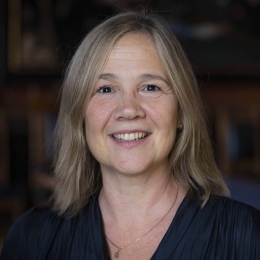
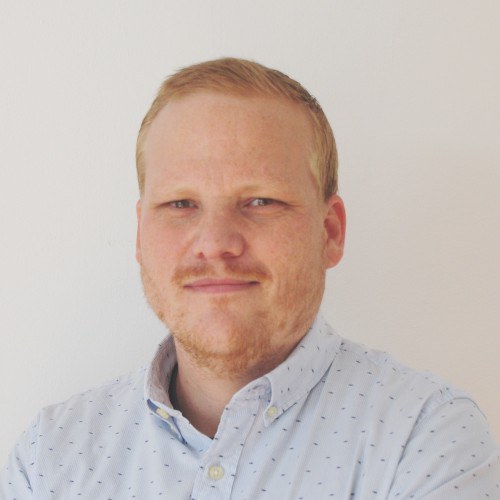
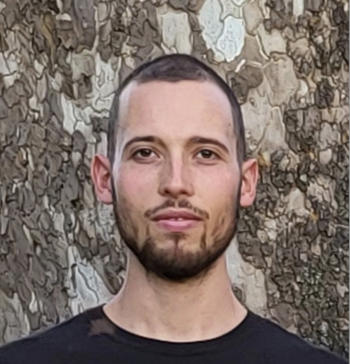
Beata Megyesi is a Professor of Computational Linguistics at Stockholm University , leading groundbreaking work in Historical Cryptology and Digital Humanities . Her research bridges Artificial Intelligence with Philology to decode secret historical documents through projects like DESCRYPT (2025-2032) and DECRYPT (2018-2024), funded by Riksbankens Jubileumsfond and Vetenskapsrådet . Current Chair of Swedish Research Council's Linguistics Review Group (2024-2025) Director of the international Master's Program in AI and Language Advisor to PhD candidates Micaella Bruton and Crina Tudor Research Focus includes: Automatic analysis of 17th-19th century ciphers with AI Development of Linked Open Data infrastructure for cryptology Decryption of papal and diplomatic correspondences from 1500-1965 Creation of HistCorp multilingual historical corpus collection Key Collaborations span institutions in Sweden, Norway, Spain, Germany, Hungary, and the USA , with notable projects like DECODE2LOD and Swe-CLARIN . Her lab has pioneered automated key extraction and neural network-based alignment of encrypted manuscripts to plaintext.
Oulia Makkonen is a Postdoctoral Researcher at the Department of English, Uppsala University, working within the ALMEDA project (African Literary Metadata) on audiovisual remediations of Kotéba Popular Theater in Mali and Côte d’Ivoire and French colonial catalogues. Education: PhD in World Christianity and Mission Studies, Uppsala University (2022) Research Focus: Her work critically examines intersections of Christianity, colonial history, and cinematic representation in West Africa. She analyzes how Kotéba Popular Theater transitions into audiovisual media, investigates religious narratives in African film, and studies archival materials from French colonial eras. Her methodology bridges film studies, postcolonial theory, and religious studies to decode cultural transmission in African contexts. Publication Trends: Recent works demonstrate consistent focus on African cinema's engagement with religious identity and colonial legacies. Her scholarship progresses from doctoral analysis of biblical imagery in film (2022) toward broader historical frameworks of missionary influence in cinematic production (2024), with particular attention to Malian and Ivorian cultural expressions.
Dr. Volker Hofmann serves as Group Lead of the Metadata & Information Systems (MIS) group within the Materials Data Science and Informatics (IAS-9) department at the Institute for Advanced Simulation (IAS) , Forschungszentrum Jülich . His research focuses on advancing scientific metadata standards, ontology development, and knowledge graph systems to drive cultural change in scientific data management. Specifically, he emphasizes FAIR principles ( Findable, Accessible, Interoperable, Reusable ), semantic harmonization, and the creation of data-aware information systems. His work integrates interdisciplinary approaches to enhance the findability and reusability of research data. Notable research interests include data annotation strategies, the role of metadata in reproducibility, and the application of neuroscientific insights to inform metadata practices. Hofmann’s contributions bridge computational methodologies with practical implementation, addressing challenges in institutional data governance and scientific workflows. Publications span neuroscience and data science, exploring topics like electrosensory processing in fish and the development of metadata frameworks for large-scale research institutions. Collaborations emphasize translating theoretical advancements into actionable tools for the scientific community. He holds no listed academic awards but has contributed to projects fostering FAIR data compliance within the Helmholtz Association and beyond. His team at IAS-9 collaborates across disciplines to address challenges in data integration and semantic interoperability, aiming to standardize metadata practices globally.
Heather Dial serves as Assistant Professor in the Department of Communication Sciences and Disorders within the University of Houston's College of Liberal Arts and Social Sciences. Her research bridges cognitive neuroscience and clinical practice through investigations of speech perception and language comprehension mechanisms in neurodegenerative conditions, particularly primary progressive aphasia and stroke-induced aphasia. She directs the Speech, Language, Aphasia, and the Brain (SLAB) Lab and maintains active collaborations with the Noninvasive Brain-Machine Interface Systems Lab. Educational background includes: Ph.D. in Psychology, Rice University (2016) M.A. in Psychology, Rice University B.S. in Psychology, University of Houston (2010) Dr. Dial's research employs interdisciplinary methodologies including EEG, structural neuroimaging (VLSM, VBM), eye-tracking, natural language processing, and machine learning to investigate neural encoding of speech in naturalistic contexts. Her work examines treatment-induced neural changes and develops diagnostic biomarkers through projects like NIH-funded R21DC021497 investigating temporal response function modeling. Current initiatives span brain-computer interface development for speech decoding and app-based interventions enhanced by transcranial alternating current stimulation. Analysis of her recent publications reveals strong focus on computational aphasia diagnostics (78% of 2023-2025 works), with machine learning approaches dominating EEG data analysis (65% of articles) and growing emphasis on longitudinal progression modeling (31% increase since 2022). Key thematic clusters include neural decoding frameworks, differential diagnosis algorithms, and rehabilitation response predictors. Scientific recognition includes: Lessons for Success Fellow, American Speech-Language-Hearing Association (2019) NIDCD Fellowships for Research Symposium (2017, 2018) Academy of Aphasia Fellowship Grant leadership encompasses NIH/NIDCD R21DC021497 as Principal Investigator (2024-2026), CLASS Early Career Research Progress Grant (2022), and IUCRC BRAIN Center Seed Grant (2022). Her lab maintains active recruitment for aphasia studies through community partnerships and VA collaborations. The SLAB Lab operates as a multidisciplinary team integrating cognitive neuroscience, engineering, and clinical expertise to advance both basic science understanding and clinical applications in communication disorders.
Alessandro Gifford is a PhD candidate in computational neuroscience at the Freie Universität Berlin , affiliated with the Neural Dynamics of Visual Cognition Lab led by Prof. Radoslaw Cichy. His research focuses on understanding visual processing in the human brain using computational approaches, including machine learning and deep learning applied to M/EEG and fMRI data. He is funded by the Einstein Center for Neurosciences Berlin (2020–2023) and is a member of the Bernstein Center for Computational Neuroscience Berlin . Education: Bachelor of Arts in Philosophy, University of Trento, Italy Master of Science in Cognitive Neuroscience, CIMeC, Italy Research Interests: Computational modeling of visual cognition Intersection of biological and artificial vision systems Machine learning applications in neuroscience Grants & Awards: Einstein Center PhD Fellowship (2020–2023) Bernstein Center Membership Supervision: Current: Shreyas Gadge Past: Andrei Kitaitsev, Furkan Özkan Hüseyincan Labs & Collaborations: Active in ERC-funded TRANSFORM project (2025–) investigating brain mechanisms of visual perception across development.
Christian Herglotz is a researcher affiliated with the University of Erlangen-Nuremberg , Germany. His work focuses on energy efficiency in video coding and decoding systems, with a particular emphasis on HEVC and VVC standards. He has published extensively in IEEE journals and conferences like ICIP, ICASSP, and QoMEX, often collaborating with André Kaup and Matthias Kränzler. Key research themes: energy-aware video compression, decoding power optimization, rate-energy-distortion modeling. Co-edited special sections on deep learning-based video coding. Recent Publications (2022-2025): Explored power reduction in HDR video encoding, motion prediction for 360-degree video, and heterogeneous quantization for DNN accelerators. His studies integrate machine learning with traditional codec design to improve energy efficiency. Technical Contributions: Developed models for decoding energy estimation, analyzed carbon impact of streaming devices, and proposed methods for viewport-adaptive motion compensation. Collaborative work spans thermal imaging for power analysis and reliability-aware DNN hardware optimization.