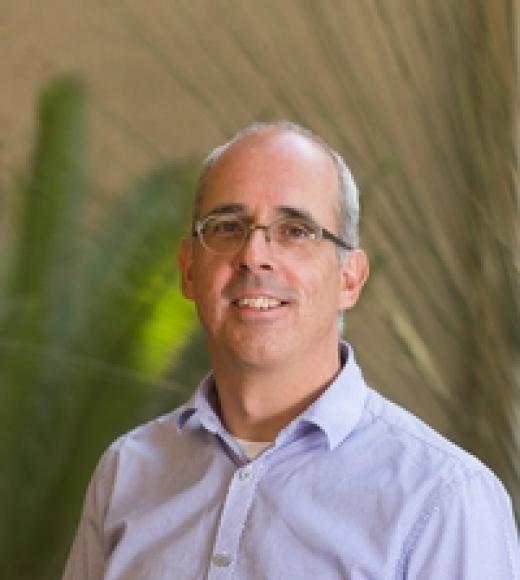
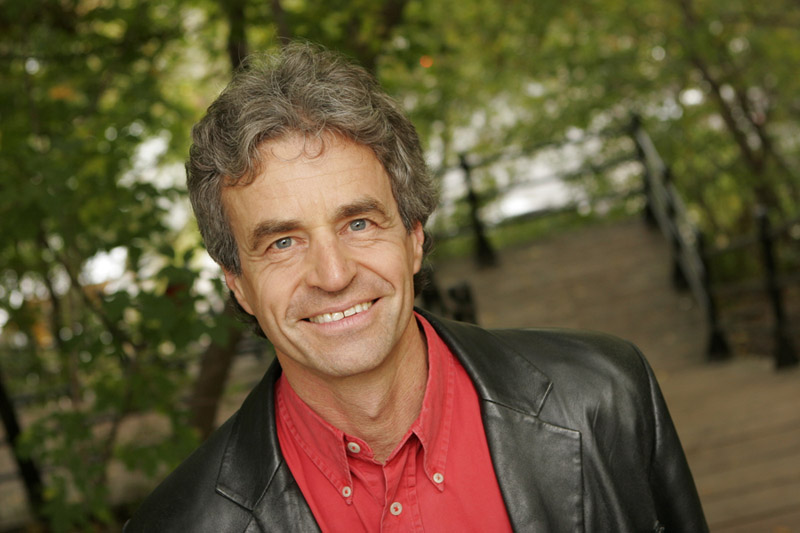
Kathrin Busch is a biological oceanographer conducting systems-oriented and interdisciplinary environmental research focused on cold and deep marine environments. Her work integrates ecological perspectives with advanced methodological approaches to study microbial communities within "deep-sea forests" formed by sponges and coral reefs. Research Interests: Ecosystem dynamics across spatial-temporal scales Matter fluxes and nutrient cycling Biodiversity assessments of marine microbiomes Abiotic-biotic interactions in extreme environments Biological networks and feedback mechanisms Connectivity in deep-sea ecosystems Methodological Expertise: In situ observational and experimental approaches Molecular ecology techniques Big data management and bioinformatics pipelines Integrative modeling frameworks Advanced data visualization "Digital ocean" technologies
Dr Chris Terry is a Leverhulme Trust Early Career Fellow at the University of Oxford's Department of Biology. His research focuses on community ecology, particularly the impacts of global change on species coexistence, metacommunity dynamics, and ecological networks. He employs theoretical modeling, Drosophila mesocosm experiments, and large-scale simulations to investigate how climate change, competition, and environmental stochasticity affect species ranges. Education: DPhil in Ecology (2018, Oxford University). Research interests include ecological network stability, climate change adaptation strategies, and improving statistical robustness in coexistence studies. His work bridges theoretical frameworks with empirical validation, addressing gaps in understanding species persistence under environmental shifts. Key achievements include the Leverhulme Early Career Fellowship and contributions to methodologies for analyzing ecological interactions. His research also explores transgenerational effects in host-parasitoid systems and the implications of skewed temperature dependence on species persistence. Awards: Leverulme Trust Early Career Fellowship (2021–present). Advising and grants: His fellowship supports research on climate change impacts, with outputs including experimental validations of coexistence theory. Collaborations involve integrating citizen science data through computer vision advancements. Labs/Teams: Active in Oxford's ecological networks research group, with a focus on experimental mesocosm systems and computational modeling frameworks.
Dr. Alex Callen is a Lecturer in Vegetation and Restoration Ecology at the University of Newcastle within the School of Environmental and Life Sciences. With extensive field experience and academic training, she focuses on the recovery of threatened species through ecological restoration to mitigate multiple environmental stresses, particularly examining how fine-scale habitat manipulations can improve survival of vulnerable amphibian communities in both natural and industrial environments. Dr. Callen earned her Doctor of Philosophy, Bachelor of Environmental Science, and Bachelor of Environmental Science (Honours), all from the University of Newcastle. Before returning to academia in 2013, she worked for sixteen years as an environmental scientist and ecologist across government and industry positions, bringing practical experience to her research and teaching. Her research spans conservation biology, restoration ecology, threatened species management, and amphibian conservation. She has pioneered approaches integrating community science and science-art communication to enhance biodiversity protection and public engagement. In 2020, she co-curated Biomes, an annual community outreach art-science exhibition, and co-founded Stream - Community for Knowledge Exchange, which increases science accessibility through experiential exhibitions and workshops. Dr. Callen's publication record demonstrates expertise in amphibian conservation, with recent work addressing hydroperiod effects on tadpole development, fire impacts on biodiversity, amphibian habitat design, and innovative monitoring techniques like tadpole fingerprinting. Her research consistently bridges theoretical understanding with practical conservation applications. Numerous research grants totaling over $8 million Collaborations with government agencies, industry partners, and community organizations Extensive field methodology expertise including bioacoustics, habitat analysis, and disease monitoring As an active supervisor of PhD students, Dr. Callen mentors the next generation of conservation scientists working on amphibian conservation, aquatic weed control, and environmental policy. Her work exemplifies the integration of rigorous scientific research with practical conservation outcomes and community engagement.
Dr. Michael R. Willig is a Professor in the Department of Ecology and Evolutionary Biology and Director of the Center for Environmental Sciences and Engineering at the University of Connecticut. His research focuses on multidisciplinary ecological studies using quantitative approaches, with emphasis on biodiversity, disturbance ecology, and conservation biology from an evolutionary perspective. He leads programs in tropical regions (Paraguay, Brazil, Puerto Rico, Peru) and has extensive experience in both observational and experimental studies across aquatic and terrestrial habitats. PhD (1981) and BS (1974) from the University of Pittsburgh Advisor: Michael A. Mares His research integrates metacommunity theory, island biogeography, and spatiotemporal modeling, particularly in tropical montane rainforests (e.g., Luquillo Mountains LTER). He has co-edited seminal works such as Theory of Ecology (2011) and Disturbance and Recovery in a Tropical Forest (2012). Recent publications analyze biodiversity gradients, functional traits, and responses to anthropogenic impacts. His work spans multiple ecological disciplines, including: Metacommunity dynamics Environmental gradient analysis Conservation prioritization Viral diversity in bats Long-term disturbance responses Biodiversity synthesis across scales As a leading figure in tropical ecology and biodiversity research, Dr. Willig has held key administrative roles, including Director of the Institute of Environmental Sciences and Chairman of Biological Sciences at Texas Tech University (1994-1997). He has also served as Program Director and Division Director at the National Science Foundation.
Daniel Oro is a Research Professor at the Spanish National Research Council (CSIC) . He graduated in Biology from the University of Barcelona, earned a European Doctorate in 1996, and conducted post-doctoral research in France and the United Kingdom before joining CSIC in Mallorca. His academic profile spans decades of contributions to ecological theory and conservation science. Education: PhD (Biology) from University of Barcelona Experience: Postdoctoral work in France/UK; CSIC since 1996 Research interests include: Animal ecology (species interactions, population dynamics) Climate change impacts on marine species Conservation strategies for endangered megafauna Trophic interactions and top predator roles Habitat protection effectiveness His publication trends reveal consistent focus on marine ecology, climate threats to reptiles, demographic modeling, and conservation frameworks. Key methodologies include hierarchical population modeling and empirical studies on seabirds and sea turtles. Network includes collaborations with institutions in Spain, France, UK, and the U.S., emphasizing global ecological challenges.
Daniel J. McGlinn is an Associate Professor in the Department of Biology at the College of Charleston, where he conducts research on ecological community assembly and biodiversity. He is affiliated with the Rita Hollings Science Center and leads the McGlinn Lab, which focuses on addressing questions about the spatial and temporal structure of biodiversity using macroecological analyses, field studies, and mathematical models. His work bridges theoretical ecology with practical conservation applications. McGlinn earned his Ph.D. from Oklahoma State University and his B.S. from the University of North Carolina Chapel Hill. His research focuses on the assembly of ecological communities in space and time, with particular interest in how fire and other disturbances shape community structure and diversity. He works primarily on plants and birds but applies cross-taxon perspectives to identify general community patterns. His lab develops and applies ecological theory to improve biodiversity conservation, with a strong emphasis on quantitative methods and open science practices. McGlinn's recent publications demonstrate a consistent focus on biodiversity measurement across spatial scales, with particular emphasis on disentangling the effects of species abundance distribution, density, and aggregation on diversity patterns. His work increasingly integrates quantitative methods with field studies to address conservation challenges, as evidenced by his development of the 'Measurement of Biodiversity' (mobr) framework and R package. Changing Face of Coastal South Carolina: Building a Resilient Future - South Carolina Sea Grant Consortium $110,800. 2022 Sabbatical Scholar Fellowship, German Centre for Integrative Biodiversity Research, $100,000. 2020-2021 Below Ground Processes Proposal, DOE proposal, $150,000; PI: A. Strand, Co-PI: S. Pritchard. 2015-2018 Greater Research Opportunities Fellowship, Environmental Protection Agency, $100,000, 2005-2008 McGlinn actively mentors graduate and undergraduate students, with several current and former advisees pursuing careers in ecology and conservation. He has successfully secured funding from multiple sources including federal agencies, state organizations, and internal university grants. His lab maintains strong collaborative ties with researchers worldwide, particularly through the development of the mobr R package and participation in large-scale biodiversity synthesis projects. The McGlinn Lab is an ecological research group that addresses biodiversity questions using macroecological analyses, field studies, and mathematical models. The lab is particularly known for developing the 'Measurement of Biodiversity' (mobr) R package and its related theoretical framework, which has become influential in the field of biodiversity science. McGlinn and his team are advocates for more open, diverse, and inclusive scientific community practices.
Christopher Steiner serves as Associate Professor in the Department of Biological Sciences within Wayne State University's College of Liberal Arts and Sciences. His research program integrates ecological and evolutionary approaches to study freshwater planktonic systems, with emphasis on zooplankton and phytoplankton dynamics in environmentally stressed habitats. Education: Ph.D. in Zoology, Michigan State University, 2001 B.S. in Biology, UCLA, 1992 Research Focus: Steiner investigates how dispersal, environmental fluctuations, and anthropogenic stressors shape community assembly and stability. His current work examines Daphnia population responses to road salt pollution, intraspecific variation in salinity tolerance, and metacommunity dynamics under nutrient enrichment. Through field experiments and laboratory studies, he explores eco-evolutionary feedbacks in predator-prey systems and the stabilizing role of genetic diversity in fluctuating environments. His research bridges theoretical ecology with conservation applications for freshwater ecosystems. Publication Trends: Recent publications (2023-2014) reveal a sustained focus on salinization impacts, with 40% of recent work addressing road salt effects on zooplankton communities. His research increasingly integrates metacommunity theory with eco-evolutionary dynamics, demonstrating how dispersal and genetic diversity buffer environmental stressors. Experimental approaches dominate his methodology, with 75% of recent papers employing mesocosm or field experiments to test theoretical predictions about community stability. Teaching & Mentoring: Steiner teaches Ecology and the Environment (BIO3500/ESG3500), Population and Community Ecology (BIO5490/BIO7490), and Biometry (BIO5040/BIO7045) across undergraduate and graduate levels. He advises graduate students in biological sciences, supervising research on freshwater community ecology and experimental evolution, though specific student names are not publicly listed.
Dr. Paul Meulenbroek is an active researcher at the University of Natural Resources and Applied Life Sciences in Vienna, Austria. His work focuses on freshwater biodiversity , fish ecology , and genetic conservation , with a strong emphasis on environmental DNA (eDNA) metabarcoding and riverine connectivity in both temperate and tropical ecosystems. Research keywords include: Conservation Biology Genetics Fish Biology Aquatic and Terrestrial Ecosystems Freshwater Biodiversity Taxonomy of Fish His recent work spans eDNA-based biodiversity monitoring , hydropower impacts on fish communities , and machine learning applications in morphological differentiation studies . Collaborations include institutions like the Christian Doppler Laboratory and Plant Science and Biodiversity .
Associate Professor Chris Roelfsema is a faculty member at School of the Environment , The University of Queensland (UQ) , where he serves as Academic Director at Heron Island Research Station . He leads the Marine Ecosystem Monitoring Lab and is affiliated with the Centre for Marine Science and Centre for Biodiversity and Conservation Science . Research Focus: Roelfsema specializes in monitoring marine ecosystem health , particularly coral reefs and seagrass habitats , using integrated field data and remote sensing . His work emphasizes cost-effective mapping and monitoring approaches , which have been adopted globally for conservation and climate change adaptation . Key projects include long-term studies at Heron Reef (2002–ongoing) and Moreton Bay (2000–ongoing) , SmartSat CRC hyperspectral remote sensing (2023–2027) , and contributions to Allen Coral Atlas and 3D GBR Habitat Mapping . Scientific Trends: His recent publications highlight deep learning applications for coral reef reconnaissance , 3D photogrammetry , global coral bleaching monitoring , and neotectonic impacts on reef geomorphology . Collaborative efforts span UQ , AIMS , and Great Barrier Reef Foundation initiatives. Funding & Grants: Current grants include projects on seahorse conservation , hyperspectral coral/seagrass assessment , and citizen science reef monitoring . Past funding covers GBR 3D mapping , Tongan reef recovery , and seagrass carbon stock analysis . Supervision: Roelfsema has supervised numerous PhD and Masters students on topics like coral dynamics , seagrass resilience , and coastal change detection . Students benefit from access to extensive field and satellite datasets . Community & Education: He actively supports citizen science through organizations like Reef Check Australia , CoralWatch , and UniDive , contributing to public education and capacity building in marine science.
Andy Dzialowski is a Professor in the Department of Integrative Biology at Oklahoma State University. His research focuses on aquatic ecosystems, including reservoirs, streams, and wetlands, with an emphasis on harmful algal blooms, invasive species, and metacommunity ecology. He investigates how biotic interactions, resource availability, and human activities shape aquatic communities and water quality. Research Interests : Aquatic Ecology Harmful Algal Blooms Invasive Species Metacommunity Ecology Water Quality Management Zooplankton Ecology Recent work includes studies on cyanobacteria's ecological impacts, Paddlefish restoration success in reservoirs, and the development of the Salt Belt Index for chloride pollution assessment. His research integrates field studies, laboratory experiments, and remote sensing technologies to address environmental challenges. Grants & Funding : Next-Generation Monitoring: Satellite Remote Sensing and eDNA Integration for Invasive Plants (2025–2028) Lake Texoma Watershed Plan Development (2023–2024) Monitoring Drinking Water Quality, City of Stillwater (2022–2023) Teaching : Dr. Dzialowski teaches courses such as Environmental Biology , Limnology , and Animal Biology , emphasizing hands-on field experiences and ecological principles. He mentors students through research programs like Research for PhD Dissertation and Undergraduate Research Problems . Collaboration & Labs : His work involves interdisciplinary collaboration, including the Collaboration Network , and focuses on applied solutions for water quality and ecosystem management.
Johan Leveau is a Professor of Plant Pathology at the University of California, Davis. His research focuses on the microbiology of plant surfaces (phyllosphere), microbial interactions in plant ecosystems, and the application of molecular tools to study microbial communities. He leads studies on bacterial mycophagy, microbial metagenomics, and bioreporter technology for environmental monitoring. His work bridges fundamental microbiology with agricultural applications, addressing challenges in plant health and sustainable agriculture. Research Highlights: Discovered novel species of Collimonas bacteria from forest soils Developed models explaining microbial colonization patterns on leaf surfaces Explored antifungal secondary metabolites for biocontrol applications Investigated the role of plant hormones (e.g., IAA) in shaping microbial communities Advanced understanding of phyllosphere microbiota's impact on plant disease dynamics Key Projects: Leader of the UC Davis Phyllosphere Microbiology Lab Co-founded the International Citrus Microbiome Consortium Developed the PHYLLOSIM agent-based model for microbial dispersion Recipient of grants for phytobiome research and microbial biotechnology His recent work emphasizes predictive ecology of phyllosphere communities and the integration of microbiome data into agricultural management strategies.
Martha Hoopes is a Professor of Biological Sciences at Mount Holyoke College and affiliated with the Organismic and Evolutionary Biology (OEB) department at the University of Massachusetts Amherst. Her research focuses on spatial and temporal heterogeneity in plant populations and communities, with emphases on invasion dynamics, conservation, and mathematical modeling. She combines experimental and theoretical approaches to address ecological questions. Education : BA in Physics and English, Phi Beta Kappa, Williams College (1987) Ph.D. in Ecology, University of California, Davis (1999) Research Interests : Dr. Hoopes investigates how environmental variability influences plant community structures and invasive species impacts. Current projects include studying invasive species in the Polygonaceae family (e.g., Polygonum and Rumex), nitrogen-fixing facilitation, and metacommunity dynamics. She employs multifactorial experiments alongside mathematical models to bridge applied and theoretical ecological research. Labs/Teams : Affiliated with the OEB department at UMass Amherst, contributing to collaborative efforts in invasion biology and conservation ecology.
Michel Loreau is an Exceptional-grade Research Director at the French National Centre for Scientific Research (CNRS) and an Adjunct Professor at McGill University. His career has been dedicated to integrating community, evolutionary and ecosystem ecology through rigorous theoretical and empirical research. He has held successive academic positions at McGill University (Tier 1 Canada Research Chair), Pierre and Marie Curie University (Paris), and the Free University of Brussels, and has served in leadership roles for numerous international biodiversity science initiatives including DIVERSITAS and IPBES. Education No explicit educational degrees are listed in the provided materials; however, his career trajectory from Research Assistant at the Belgian National Fund for Scientific Research (1977–1983) to Exceptional-grade CNRS Director implies advanced training in ecology and mathematics. Research Interests Theoretical foundations for a unified ecological synthesis integrating community, evolutionary and ecosystem ecology. Biodiversity–ecosystem functioning relationships and the ecological and societal consequences of biodiversity loss. Metacommunity and metaecosystem ecology, emphasizing spatial and evolutionary dimensions. Conservation biology and global change ecology, linking science to policy for biodiversity and ecosystem services. Loreau’s work uniquely combines mathematical modeling with experimental and empirical validation across terrestrial and aquatic systems, aiming to provide predictive frameworks for managing biodiversity under global change. Publication Trends His 300+ publications, including landmark papers in Nature , Science and PNAS , chart the evolution of biodiversity science from foundational theory (metacommunity concepts, insurance hypothesis) to integrative syntheses and policy-oriented assessments. A clear temporal trend shows increasing focus on the functional consequences of biodiversity change, ecosystem stability, and the translation of ecological science into governance mechanisms. Scientific Awards Fellow of the Royal Society of Canada (Academy of Science) – 2010 Queen Elizabeth II Diamond Jubilee Medal – 2013 Per Brinck Oikos Award (Sweden) – 2011 Tomlinson Science Award, McGill University – 2009 Silver Medal of the National Centre for Scientific Research (CNRS) – 2004 International Ecology Institute Prize (ECI, Germany) – 2002 Max Poll Prize, Royal Academy of Belgium – 1993 Agathon De Potter Prize, Royal Academy of Belgium – 1991 Winner, Annual Competition of the Royal Academy of Belgium – 1983 Paul Brien Prize (Belgium) – 1976 Leadership & Governance Roles Loreau has initiated and chaired major international programmes: Linking Community and Ecosystem Ecology programme, European Science Foundation DIVERSITAS – restructured and chaired the global biodiversity science programme International Conference on Biodiversity Science and Governance, under the patronage of the President of France and UNESCO Consultative process leading to the Intergovernmental Science-Policy Platform on Biodiversity and Ecosystem Services (IPBES) His advisory activities span national and international scientific committees, bridging ecology and policy for biodiversity conservation and sustainable ecosystem management. Laboratory & Research Teams While no specific laboratory names are provided, Loreau’s affiliation with CNRS’s EcoEx research unit (http://www.ecoex-moulis.cnrs.fr) and his leadership of large collaborative networks indicate that he directs interdisciplinary teams integrating theoreticians, empiricists and policy analysts.
Dr. Farnon Ellwood is a Teaching and Research Lecturer in the School of Natural and Environmental Sciences at Bangor University. He is an entomologist specializing in community ecology, with a focus on tropical ecosystems in Southeast Asia, particularly in Danum Valley, Malaysian Borneo, and adjacent oil palm plantations. His research integrates theoretical and experimental approaches to understand biodiversity patterns and ecological interactions, especially among arthropods and microbes. His research interests span community ecology, entomology, tropical ecology, and biodiversity conservation. He investigates how evolutionary relationships and environmental factors shape ecosystem structure and function, with a strong emphasis on sustainable management. His work often involves field studies in tropical rainforests and human-modified landscapes, examining processes such as decomposition, nitrogen fixation, and species interactions in canopy and soil systems. The analysis of his recent publications reveals a consistent focus on ecological modeling, microbial and invertebrate community dynamics, and the impacts of environmental gradients and land-use change. His work bridges theoretical ecology with applied conservation, particularly in the context of palm oil agriculture and biodiversity preservation. Key themes include metacommunity dynamics, functional traits, nutrient cycling, and public engagement in sustainability. Fellow of the Royal Geographical Society Fellow of the Royal Society of Biology Fellow of the Cambridge Philosophical Society Fellow of the Higher Education Academy Dr. Ellwood is actively involved in research supervision and has expressed willingness to mentor PhD students. He leads projects funded by NERC and the Welsh Crucible, focusing on rainforest microcosms and ecosystem gas exchange. His work is highly collaborative, involving institutions and researchers across the UK and Southeast Asia. His lab and field teams work on diverse topics including canopy ecology, soil microbiology, and insect-plant interactions. His research is conducted in collaboration with international teams across diverse ecosystems, particularly in tropical regions. He is involved in long-term ecological monitoring and experimental studies in Borneo, contributing to global understanding of tropical biodiversity and ecosystem function.
Daniel Boix Masafret is an Associate Professor at the Department of Environmental Sciences and a senior researcher at the Institute of Aquatic Ecology, University of Girona, Spain. He holds a PhD from the University of Girona (2000) and a Bachelor's degree from the University of Barcelona (1992). His academic career at the University of Girona began on January 16, 2010, as a Professor Agregat (equivalent to Associate Professor). His educational background includes: Bachelor's degree in Biological Sciences from the University of Barcelona (1992) PhD in Environmental Sciences from the University of Girona (2000) Dr. Boix's research focuses on aquatic community ecology, particularly in Mediterranean temporary ponds and other lentic systems. His work examines the effects of biotic and abiotic factors on species composition and community structure in these ecosystems. Key aspects of his research include: Ecology of Mediterranean temporary ponds and their biodiversity Effects of hydroperiod variation on community dynamics Food web dynamics in temporary aquatic systems Biodiversity assessment and conservation in Mediterranean wetlands Restoration ecology of aquatic ecosystems His recent publications (2021-2024) demonstrate a strong focus on metacommunity dynamics, invasive species impacts, biodiversity assessment in Mediterranean aquatic systems, and the application of ponds as nature-based solutions. His research spans multiple taxonomic groups including zooplankton, zoobenthos, amphibians, and reptiles, with particular attention to Mediterranean temporary ponds as biodiversity hotspots. Dr. Boix has received recognition through his leadership in major research projects including the PONDERFUL project (2020-2024), funded by the European Commission's Horizon 2020 program. His scientific contributions have been acknowledged through invitations to serve as associate editor for prestigious journals including Annales de Limnologie (since 2011) and Hydrobiologia (since 2017). Dr. Boix has supervised seven doctoral theses to completion, all receiving "Excellent cum laude" distinctions, with one receiving an Extraordinary Award. His students have pursued research on topics including coastal lagoon ecology, Mediterranean pond dynamics, and freshwater community structure. He is actively involved in research groups including the Continental Aquatic Ecology Research Group (GRECO) at the Institute of Aquatic Ecology, University of Girona, and collaborates extensively with researchers across Europe on Mediterranean wetland conservation and restoration projects.