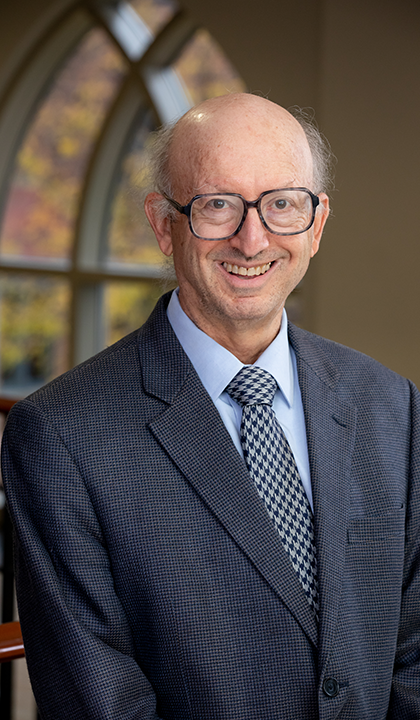
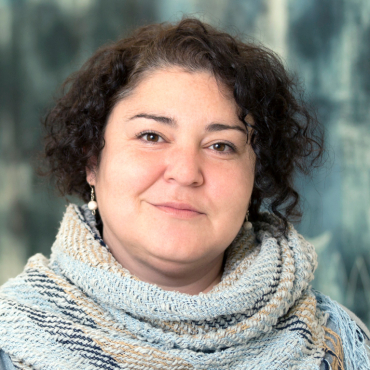
Frank Marino is Professor in Medicine and Director of Graduate Programs at Charles Sturt University's School of Rural Medicine. He holds a PhD from Charles Sturt University, MEd (Merit) from University of Sydney, and Specialist Certificate in Neuroscience from University of Melbourne. Research examines thermoregulatory responses during exercise in extreme environments, hydration impacts on cognitive performance, and evolutionary biology of human endurance. Publications integrate neurophysiological, immunological, and anthropological frameworks. Recent work analyzes fatigue induction methods and hydration-neurocognition relationships. Awards include dual Spitfire Memorial Defence Fellowships and research excellence recognition. Editorial roles include Journal of Thermal Biology and Journal of Science and Medicine in Sport.
David G. Renter is a Professor of Epidemiology at Kansas State University's College of Veterinary Medicine , where he serves as Director of the Center for Outcomes Research and Epidemiology and holds the Dr. Robert MacDonald Professorship in Veterinary Medicine . With a BS in Biological Sciences (1994, University of Nebraska at Kearney) , DVM (1998) , and PhD in Veterinary Microbiology (2002) from Kansas State University, his career focuses on applying epidemiological principles to enhance animal health, food safety, and human health intersections. Academic background in biological sciences, veterinary medicine, and microbiology Leadership role in veterinary outcomes research Teaching focus on epidemiology and evidence-based practice Industry-aligned research with beef production systems His research emphasizes experimental/observational epidemiology in feedlot cattle, addressing complex issues like bovine respiratory disease , antimicrobial stewardship , economic modeling , and food safety . A Fellow of the Conference of Researchers in Animal Disease , he has published extensively on feedlot management , statistical disease modeling , and veterinary decision analytics . Recent publications (2022-2025) demonstrate a pattern of economic risk modeling in cattle operations, antibiotic metaphylaxis outcomes , weather-disease correlations , and structural equation modeling for feedlot data. His work bridges statistical rigor with practical agricultural applications . 2025: Economic modeling of feedlot interventions 2024: Causal inference frameworks in veterinary research 2023: Anthelmintic refugia strategy validation 2022: Vaccine efficacy testing in neonatal calves As a continuing education developer and graduate training architect , he mentors DVM, MPH, MS, and PhD students while directing population health initiatives. The Center for Outcomes Research under his leadership implements data-driven strategies for livestock sustainability and economic viability in animal health systems.
Dr. Michael Shekelyan is a Lecturer (Assistant Professor) in Computer Science at Queen Mary University of London (2023–present), part of the School of Electronic Engineering and Computer Science. He holds a PhD in Computer Science from the Free University of Bozen-Bolzano (2018) and a Diploma in Media Informatics from Ludwig Maximilian University of Munich (2014). Previously, he worked as a Research Associate at King's College London (2021–2023) and a Research Fellow at the University of Warwick (2018–2021). His academic journey includes roles as a Meta-Reviewer for NeurIPS and ICDT Proceedings Chair (2024), with extensive service as a reviewer for top conferences like ICML, NeurIPS, ICLR, and journals such as TKDE and IEEE T-IFS. Research Interests: Focuses on algorithms and data structures for managing large/sensitive datasets, including differential privacy, random sampling (e.g., Hidden Shuffle Method), and multidimensional data summarization (e.g., DigitHist). His work bridges theoretical guarantees with practical applications in data management and machine learning. Notable contributions include privacy-preserving top-k selection, efficient sampling over joins, and error-bounded data summaries. Publications: Over 15 peer-reviewed articles in top venues including SIGMOD, ICDE, EDBT, AISTATS, and PVLDB. Key works include 'Streaming Weighted Sampling over Join Queries' (EDBT'23), 'Sequential Random Sampling Revisited' (AISTATS'21), and 'Sparse Prefix Sums' (Information Systems'19, which won an ADBIS award). Grants/Awards: Received the ADBIS'17 Award for Sparse Prefix Sums. Active in organizing conferences and mentoring early-career researchers through reviewing roles. Current projects include a PhD studentship on privacy-preserving algorithms for medical data sharing. Labs/Teams: Leads the Privacy-Preserving Algorithms initiative at Queen Mary, collaborating with international research networks in database systems and data privacy.
Pietro Belloni is a Researcher (RTDa) at the Department of Statistical Sciences, University of Padua, Italy. His primary role involves advancing statistical methodologies for drug safety and public health research through interdisciplinary projects like the Age-IT initiative. He holds a PhD in Statistics from the University of Padua, completed under Professors Giovanna Boccuzzo and Nicholas P. Tatonetti, with visiting research at Columbia University's Department of Biomedical Informatics. His academic journey includes a Master’s and Bachelor’s in Statistical Sciences from the University of Padua, complemented by an Erasmus exchange in Mathematics and Statistics at Århus University. Belloni’s research focuses on epidemiology, medical statistics, and social statistics, with particular emphasis on text mining, spatial epidemiology, and composite indicators for public health assessment. He actively contributes to research teams such as GLASS (a young Italian social statistics laboratory) and the Age-IT project addressing aging society challenges. Teaching responsibilities span epidemiology, medical statistics, and data analysis methods at both University of Padua and H-Farm College. His software contributions include R libraries like perla for mortality cluster analysis and MARMoT for statistical balancing techniques. Belloni’s work bridges theoretical statistics with practical applications in healthcare and social sciences, with publications in journals like Statistical Methods & Applications and Acta Otorhinolaryngol Italica , and book chapters on pharmacovigilance and text mining. His research has addressed topics ranging from cancer staging through NLP to pandemic sentiment analysis during the first wave of the COVID-19 crisis.
Dr. David Gilani serves as Head of Access and Participation at Middlesex University, where he leads student engagement initiatives and alumni relations within the School of Education & Student Experience. He holds a PhD in student belonging from the University of York and founded the Student Publication Association (2012). Gilani also chairs AHEP’s Student Experience and Engagement Network, promoting cross-institutional collaboration in UK higher education. His research focuses on student belonging , retention strategies , and equity in higher education . Gilani investigates how universities can foster inclusive environments through evidence-based interventions like agentic belonging workshops and peer-support systems. His meta-analytical work on student communications establishes best practices for institutional engagement. Key research trends from his recent publications include: Innovative methodologies for measuring belonging without researcher interference Critical analysis of deficit models in underrepresented student support Quasi-experimental validation of social belonging interventions Systematic reviews of belonging's relationship with retention Gilani actively translates research into policy through Wonkhe commentaries and institutional consultations. He maintains ORCID (0000-0003-1099-7118) tracking extensive research outputs with over 1,100 views.
Christopher Shepard is an Assistant Professor in the Department of Plant and Soil Sciences at the University of Kentucky's Martin-Gatton College of Agriculture, Food and Environment. He holds a Ph.D. in Soil, Water and Environmental Science from the University of Arizona (2018), complemented by M.S. (2014) and B.S. (2011) degrees in Environmental Science. Research focuses on pedology and soil formation processes, with emphasis on fragipan genesis, mineral-organic interactions, and topographic influences on soil properties. His work employs advanced spectroscopic techniques and geospatial analysis to understand soil health in agricultural and natural systems. Award recognition includes multiple graduate research prizes from the Soil Science Society of America. Recent publications examine phosphorus cycling, mineral weathering, and karst landscape soil variability, frequently utilizing Kentucky's diverse geological settings as model systems.
Gyrd Thrane is an Associate Professor in Physiotherapy at The Arctic University of Norway. His research focuses on physical activity interventions in clinical populations, particularly after cardiac events and stroke, using mHealth approaches. Recent work includes studies on smartwatch-based atrial fibrillation detection post-cardiac surgery, machine learning prediction of post-stroke fatigue, and mobile health interventions for physical activity in intellectual disability populations. Publications demonstrate expertise in rehabilitation outcome measurement, longitudinal recovery patterns, and digital health innovation in physiotherapy.
Dr. Kim Hellemans is an Assistant Professor in Neuroscience at Carleton University and currently serves as the Associate Dean of Science (Student Recruitment, Wellness and Success). Holding a PhD from Queen's University, her research focuses on the biological basis of drug addiction, student mental health, and cannabis use. She completed postdoctoral training at Cambridge University and the University of British Columbia. Dr. Hellemans is a dedicated educator, recognized for her innovative teaching methods and contributions to the Scholarship of Teaching & Learning (SoTL). She co-founded the Teaching Mentors Program and co-hosts the award-winning podcast Minding the Brain . Her research interests span three key areas: (1) mental health challenges among university students linked to social media, cannabis use, and stress; (2) advancing pedagogical strategies through SoTL initiatives like the Welcome to My Classroom series; and (3) science communication efforts to reduce stigma around mental health and addiction. Collaborations include producing educational animations with CCSA and CAPSA, leading the #StigmaEndsAtCU campaign, and delivering public talks. Dr. Hellemans teaches courses such as NEUR 1202 (Neuroscience of Mental Health) and NEUR 4306 (Neural Basis of Addiction). She supervises graduate students and capstone projects. Her work bridges neuroscience research with practical educational and community engagement, emphasizing student well-being and accessible science communication.
Collin Shepley is an Associate Professor in the Department of Early Childhood, Special Education, and Counselor Education at the University of Kentucky, affiliated with the Interdisciplinary Early Childhood Education program. He has seven years of experience in public schools as a paraprofessional, home-based service provider, and preschool special education teacher, focusing on children with social-communication delays and challenging behavior. He also served as a clinical supervisor at the University of Georgia’s Severe Behavior and Skill Acquisition Clinic, overseeing service provision and program development for individuals with severe behavior and young children with autism. His teaching portfolio includes courses on child development, preschool lesson planning, assessment of young children, and special education methodologies. Dr. Shepley’s research prioritizes evidence-based interventions for children with disabilities, emphasizing practical teacher/caregiver training, tiered support systems in early childhood, and advancing research methodologies in line with the Open Science movement. His work often explores feasible practices for educators and caregivers, including progress monitoring tools, behavior analytic service delivery quality, and systematic reviews of interventions. He actively advocates for data transparency and rigorous methodological standards in educational research. His articles (2021–2025) focus on topics such as progress monitoring efficacy, single-case research rigor, naturalistic interventions’ impact on family quality of life, and multitiered support systems in early childhood settings. He emphasizes translating research into actionable strategies for educators and families.
Fred Niederman is the Shaughnessy Endowed Professor in the Department of Management at Saint Louis University's Richard A. Chaifetz School of Business. He holds a Ph.D. in Business Administration from the University of Minnesota, an MBA from the same institution, and a B.A. in English Literature from the University of California-Santa Barbara. His research explores Philosophy of Science Applied to Information Systems, IT Computer Personnel, Ethics, Computer Mediated Group Systems, and Project Management. Professor Niederman's work examines theoretical foundations of information systems, ethical considerations in technology management, and optimization of digital workforce practices. His publications focus on advancing research methodologies in information systems, including replication studies, theory development, and agile implementation. Recent work analyzes disruptions from AI in project management and the philosophical underpinnings of social theories. SIGMIS Lifetime Achievement Award (2022) Fellow of Association of Information Systems (2020) Journal of AIS Senior Editor of the Year (2016, 2018) Multiple Saint Louis University research and service awards As Director of doctoral programs, he advises graduate students and coordinates research initiatives. He has led editorial roles for Communications of AIS and served as Chair of ACM SIGMIS. Professor Niederman also contributes to community initiatives including cybersecurity education and AI advisory boards.
Joshua Wyatt Smith is an Affiliate Assistant Professor (mapped to Assistant Professor) in Mathematics and Statistics at Concordia University's Faculty of Arts and Science. He received his PhD from Georg-August-Universität, Germany in 2018. Research interests include sports analytics and algorithmic trading. Publications demonstrate interdisciplinary work across robotics, particle physics, healthcare analytics, and environmental science, utilizing advanced statistical and computational methods.
Robert Cowan is a Senior Lecturer in Philosophy at the University of Glasgow. He serves as Director of Teaching for Philosophy and is a Humanities Widening Participation Officer. His research focuses on moral epistemology, the normativity of dreams, and the role of emotions in justification. He has published extensively on ethical intuitionism, dream theory, and evaluative perception. Cowan co-authored Critical Thinking: A Concise Guide (5th ed., 2019) and co-edited Evaluative Perception (2018). He teaches courses including 'How Do I Think Critically?' and 'Dreams' at the undergraduate and graduate levels. His research explores topics such as moral responsibility in dreaming, the ethics of dreams, and the cognitive science of pain. Recent work includes analyses of lucid dreaming's epistemic implications and the intersection of safety conditions in epistemology. Cowan currently supervises PhD students on topics like democratic paradoxes, interactive cognitivism, and moral agency in manipulated will scenarios. His editorial contributions include special issues in Ethical Theory and Moral Practice and Philosophical Studies . Key contributions include advancing perceptual intuitionism, critiquing epistemic sentimentalism, and integrating empirical findings on pain into ethical theory. His work bridges analytic philosophy with interdisciplinary approaches to moral psychology and epistemology.
Dr. MC Adriaanse is an Associate Professor at the Vrije Universiteit Amsterdam , affiliated with the Faculty of Science and the APH - Health Behaviors & Chronic Diseases institute. His work spans mental health, smoking cessation, depression, and meta-analytical methodologies. Current Role: Associate Professor in Health Sciences Key Collaborations: Ambulatory mental healthcare, diabetes comorbidity research Research Focus: Dr. Adriaanse specializes in mental health interventions, particularly for patients with subthreshold depression and severe mental illness. His recent studies examine smoking cessation programs, VR-based breathing interventions, and preventive strategies against major depression onset. Recent Trends: A surge in systematic reviews and meta-analyses addressing depression prevention, VR applications for mental health, and implementation challenges of smoking cessation in psychiatric settings. Collaborative work with teams in the Netherlands and international networks. Projects: Led the KISMET project (2020-2024), evaluating smoking cessation interventions for individuals with serious mental illness. Courses: Teaches Health Promotion and Disease Prevention (2024-2025 academic year).
Michael Spezio is an Associate Professor of Psychology, Neuroscience, and Data Science at Scripps College. He directs the LIVE Lab (Laboratory for Inquiry into Valuation and Emotion) and specializes in computational cognitive neuroscience, focusing on decision science, valuation, emotion, and social interaction. His work bridges neuroscience, ethics, and virtue science, with notable contributions to understanding autism spectrum disorders, neurodiversity, and moral action. Education: B.S. in Biochemistry, Case Western Reserve University M.Div., Pittsburgh Theological Seminary Ph.D. in Biochemistry, Cornell University Ph.D. in Cognitive & Systems Neuroscience, University of Oregon Key Roles: Co-Director at Scripps College Principal Investigator on multiple grants totaling over $2.5M Research Interests: Spezio explores formal computational models of personal and moral values, the neural basis of social cognition, and ethical implications of neuroscience. His lab integrates EEG/fMRI, natural language processing, and behavioral experiments to study valuation dynamics, trust, and neurodiversity. Recent work addresses how institutions shape values and how interdisciplinary approaches can advance virtue science and moral psychology. Publications Trends: His articles span decision neuroscience, autism neurodiversity, and computational social science. Key themes include amygdala dysfunction, facial emotion recognition deficits, and the neurobiology of social interaction. He critiques popular neuroscientific theories (e.g., McGilchrist’s divided brain hypothesis) using meta-analytic and linguistic methods. Awards: Funded by Templeton Religion Trust, NSF, and NIH Notable grants include the MMIPV project ($190K) and Computational Modeling of Cooperative Success ($697K) Advising & Grants: Spezio has led major initiatives like the Humility in Loving Encounter grant and co-authored grants on autism’s neural circuitry. He collaborates internationally with institutions like Caltech and the German BMBF. Labs/Teams: The LIVE Lab combines interdisciplinary methods to study valuation dynamics. Collaborators include Ralph Adolphs (Caltech), Jan Gläscher (UCI), and teams from theology and ethics.
Irini Kokkinou is a Teaching Professor of Liberal Arts at the Savannah College of Art and Design (SCAD) since 2010. Previously, she served as a Visiting Assistant Professor at Indiana University-Purdue University Indianapolis (IUPUI) and held graduate roles at Purdue University, including Graduate Instructor and Teaching Assistant from 2002-2008. She earned a Ph.D. and M.S. in Psychological Sciences from Purdue University and a B.A. in Psychology from Vassar College. Her research focuses on Industrial and Organizational Psychology, with an emphasis on work-family conflict, mentorship strategies for women in STEM fields, and collaborative learning dynamics in art and design education. She has also explored employee performance, diversity policies, and goal orientation theories in organizational contexts. Her work bridges psychological principles with practical applications in education and workplace environments. Dr. Kokkinou has been recognized with the Dean's Award for Teaching Effectiveness (SCAD, 2014-2015), Presidential Fellowship (SCAD, 2015), and multiple teaching accolades at IUPUI. She has secured research grants from Purdue University and contributed to national and international conferences through presentations on mentorship, work-life balance, and pedagogical strategies. In addition to her academic roles, she served as an external consultant for the West Lafayette Police Department (2007-2010). Her professional memberships include the Society for Industrial and Organizational Psychology (SIOP) and the Association for Psychological Science (APS).