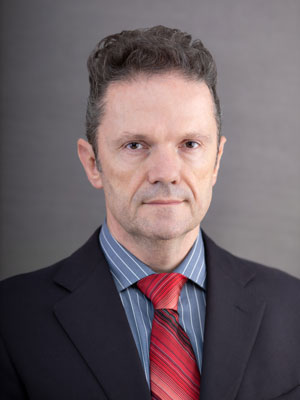
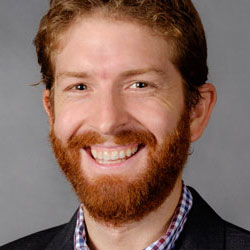
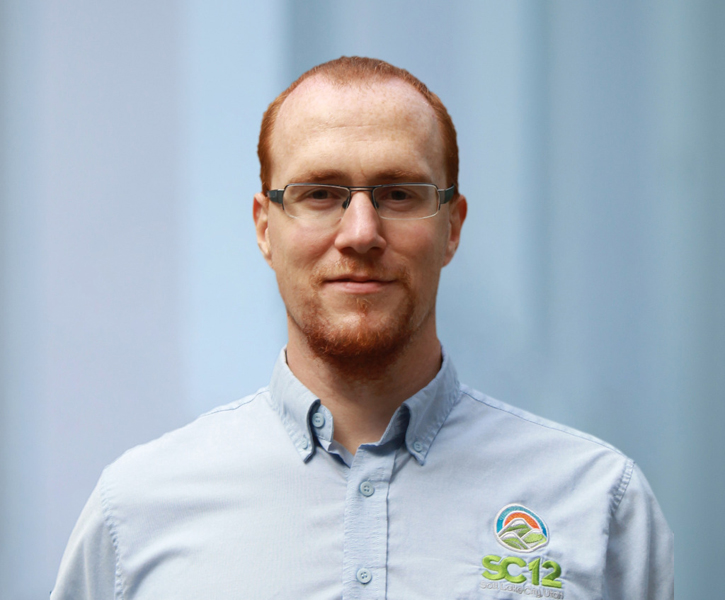
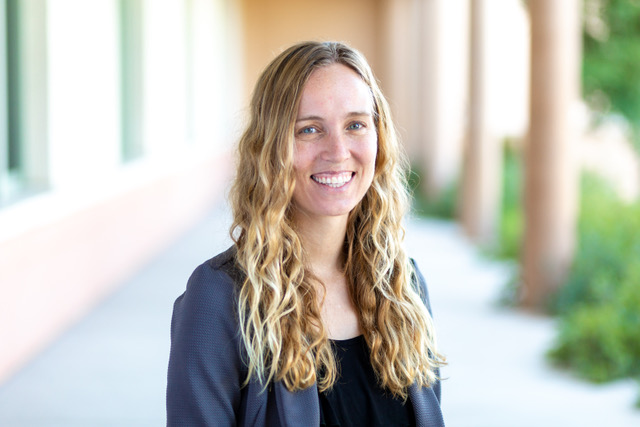
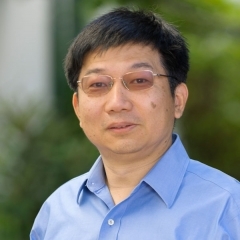
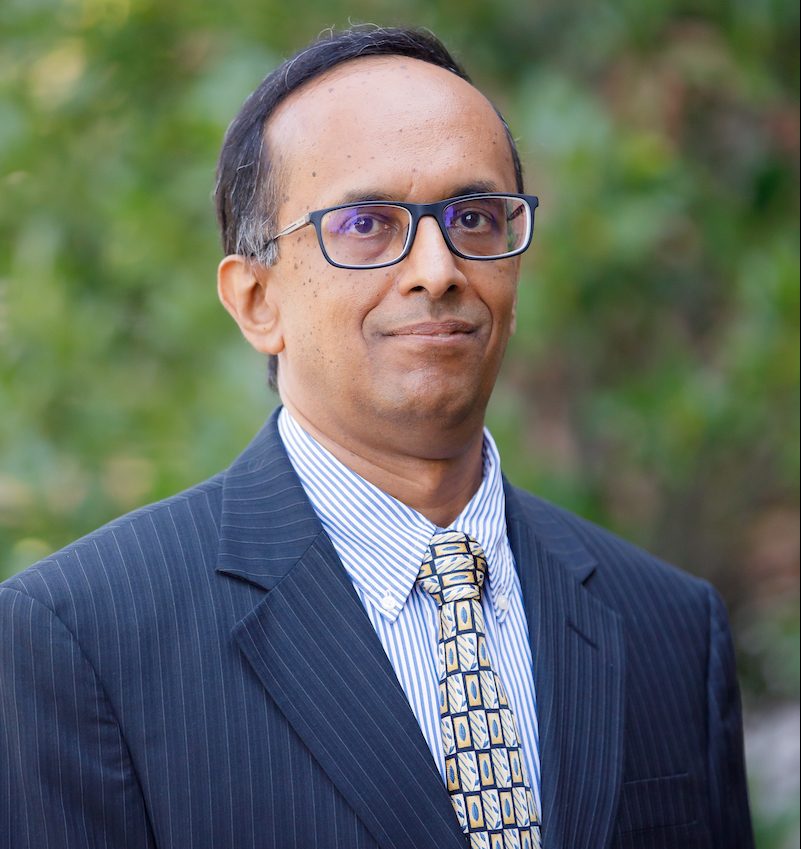
Sebastian Riedel is a Professor at University College London (UCL) and a Researcher at DeepMind, leading the UCL NLP Lab. His work focuses on teaching machines to read, reason, and write, integrating Natural Language Processing (NLP) with Machine Learning. He holds an Allen Distinguished Investigator award and has held roles at FAIR, UMass Amherst, Tokyo University, and the University of Edinburgh. Education: PhD in Computer Science from the University of Edinburgh (advisor: Ewan Klein), postdoctoral research at UMass Amherst (advisor: Andrew McCallum), and research at Tokyo University (advisor: Tsujii Junichi). Research Interests: NLP, machine learning, information extraction, and multimodal models like Gemini. He develops tools such as UCLEED (BioNLP event extractor), frontlets (Scala map wrappers), and thebibbrag (BibTeX to HTML converter). Awards: Allen Distinguished Investigator. Software contributions include GitHub repositories for NLP, machine learning, and data tools. Contact: s.riedel@ucl.ac.uk | Office: 1st Floor, 90 High Holborn, London WC1V 6LJ | Office Hours: Mondays 11 AM–12 PM.
Zoran Budimlić is an Instructional Associate Professor in the Department of Computer Science and Engineering at Texas A&M University. He also serves as Director of Undergraduate Studies for Galveston. His roles include teaching and academic leadership in computer science education and high-performance computing. He holds a Ph.D. in Computer Science from Rice University (2001) and a B.S. in Computer Science and Engineering from the University of Belgrade (1994). His research interests focus on high-performance and parallel computing, compiler optimizations, programming languages, runtime systems, and high-level programming models. He emphasizes improving educational practices in computer science through innovative methods and curricula. His recent publications span parallel algorithms, task parallelism integration with MPI, and compiler optimizations for performance. Earlier work includes contributions to Java runtime optimization and static analysis techniques. Zoran Budimlić has no explicitly listed scientific awards or grants in the provided text, but his contributions to parallel computing and compiler design are notable. He advises students in these areas but no names are provided in the text.
Dominik Huber is a Ph.D. candidate and researcher at the Technical University of Munich , affiliated with the Chair of Computer Architecture & Parallel Systems . His work focuses on Dynamic Resource Management in High-Performance Computing (HPC) , with expertise in Parallel & Distributed Programming Models and Hardware-aware programming . He has actively contributed to teaching courses like Parallel Programming Systems and Advanced Computer Architecture . His research emphasizes adaptive resource allocation in hybrid HPC clusters, leveraging technologies such as MPI Sessions , PMIx , and frameworks like LAIK and XBraid . Recent projects include the DynRes software suite for dynamic resource management and collaborations on quantum-HPC integration. Huber has advised students on topics ranging from Dynamic Resource Management in Charm++ to CI Systems for HPC Software , and his publications address challenges in malleability, scheduling, and power-constrained environments. Current affiliations include participation in the SEANERGYS (EuroHPC) and PlasmaPEPS projects.
Dr. Grey Ballard is an Associate Professor in the Department of Computer Science at Wake Forest University . He earned a B.S. in Math and Computer Science (2006), M.A. in Math (2008) from Wake Forest, and PhD in Computer Science (2013) from the University of California, Berkeley. He was a Truman Fellow at Sandia National Laboratories before joining Wake Forest. Research Focus: Ballard develops communication-optimal algorithms for high-performance computing , particularly in tensor decompositions , symmetric matrix computations , and nonnegative matrix factorization . His work combines numerical linear algebra with parallel algorithm design to reduce data movement costs in distributed systems. Publications demonstrate expertise in communication lower bounds , randomized tensor rounding , and visualization tools for parallel algorithms. He has contributed software packages such as TuckerMPI , GentenMPI , and PLANC for large-scale data compression and clustering. Scientific Awards: Wake Forest Excellence in Research Award NSF CAREER Award SIAM Linear Algebra Prize Three Conference Best Paper Awards (SPAA, IPDPS, ICDM) C.V. Ramamoorthy Distinguished Research Award (UC Berkeley) ACM Doctoral Dissertation Award – Honorable Mention Teaching: Courses include Introduction to Computer Science , Numerical Linear Algebra , and Parallel Algorithms . He has developed educational tools using the Thread-Safe Graphics Library to visualize parallel dynamic programming and collective communication.
Dr. Michelle Zhu is a Professor and Associate Director for Faculty and Academic Affairs at the School of Computing, Montclair State University. She previously held roles as Associate Professor and Director of Undergraduate Programs at Southern Illinois University Carbondale. Dr. Zhu holds a Ph.D. in Computer Science from Louisiana State University and a B.S. in Biomedical Engineering from Zhejiang University. Her research focuses on parallel/distributed computing, big data analytics, and high-performance networking, supported by grants from NSF, DOE, and NVIDIA. She has authored over 150 peer-reviewed publications. Education: Ph.D., Computer Science, Louisiana State University (2005) M.Sc., Computer Science, Louisiana State University (2002) B.S., Biomedical Engineering, Zhejiang University (1996) Her research interests span parallel computing architectures, cloud workflow scheduling, and cybersecurity. She has led initiatives integrating computational thinking into STEM education and developed robotics-based learning tools. Her work has been funded through NSF grants such as the $1.1M "Assimilating Computational and Mathematical Thinking into Earth and Environmental Science" project (2017–2022). Dr. Zhu’s articles explore topics like blockchain-based cloud security, GPU-accelerated Gibbs sampling, and edge computing deployment strategies. She actively contributes to academic governance, serving on Montclair State’s Middle States accreditation committee and the University Academic Assessment Council. Key Grants: NSF MRI: Multimodal Collaborative Robot System (MCROS), $321,737 (2021–2024) DOE: Scalable Application Support Platform for E-Sciences, $389,398 (2009–2013) Service Roles: Curriculum Committee Chair, Computer Science Department Blue Ribbon Task Force for Gen Ed Redesign (2019–2020) She collaborates on robotics projects like MCROS and leads outreach efforts to engage pre-university communities in AI and robotics education.
Torsten Hoefler is a Full Professor of Computer Science at ETH Zurich, Switzerland, with an adjunct appointment in Electrical Engineering. He previously held roles at the National Center for Supercomputing Applications (University of Illinois at Urbana-Champaign) and Indiana University. Full Professor of Computer Science, ETH Zurich (2020–present) Adjunct Professor of Electrical Engineering, ETH Zurich (2020–present) Member at Large, ACM SIGHPC Executive Committee (2013–present) Leadership roles in the MPI Forum and Blue Waters project His research focuses on performance-centric system design , with emphasis on scalable networking, parallel programming models, and performance modeling. Key contributions include the Slim Fly network topology, Data-Centric Python framework, and innovations in parallel graph computations and RDMA-based systems. Recent publications span topics like LLM training networks , quantization geometry , chiplet interconnects , and AI-driven climate modeling , reflecting his interdisciplinary approach combining HPC, AI, and hardware-software co-design. ACM Gordon Bell Prize (2019) ERC Consolidator Grant (2020) IEEE TCSC Award for Excellence (2019) SIAM SIAG/SC Junior Scientist Prize (2012) Latsis Prize of ETH Zurich (2015) He has received multiple best paper awards at top conferences (SC10, SC13, SC14, SC19, IPDPS'15, HPDC'15, OOPSLA'16) and contributed to MPI-3 standardization.
Amanda Bienz serves as an Assistant Professor in the Department of Computer Science at the University of New Mexico (UNM), where she leads the Scalable Solvers Lab and acts as faculty advisor for Women in Computing. Her academic roles include teaching operating systems and parallel computing courses while spearheading efforts to restructure New Mexico's CS4ALL curriculum for statewide computer science education expansion. Her research centers on overcoming communication bottlenecks in high-performance computing systems, specifically targeting the performance gap between emerging exascale hardware and real-world applications. Key focus areas include developing portable communication optimizations, enhancing MPI collective operations, creating topology-aware message passing extensions, and benchmarking heterogeneous architectures. Her work directly addresses critical challenges in scaling parallel applications through innovations in sparse solvers, neighborhood collectives, and node-aware communication strategies for GPU-accelerated systems. Analysis of her 2022-2024 publications reveals consistent emphasis on communication optimization across diverse HPC domains. Her research demonstrates particular expertise in irregular communication patterns, locality-aware algorithms, and performance modeling for heterogeneous architectures. Significant contributions include novel approaches to sparse dynamic data exchange, compressed linear algebra algorithms, and persistent communication techniques that reduce synchronization overhead in large-scale simulations. Scientific Awards: NSF CAREER Award for "Towards Exascale Performance of Parallel Applications" Dr. Bienz actively mentors students through the Scalable Solvers Lab, welcoming new researchers interested in high-performance computing. Her NSF CAREER grant provides substantial research funding supporting both technical innovation and educational initiatives. The CS4ALL curriculum restructuring project demonstrates her commitment to broadening computer science access throughout New Mexico's K-12 education system. The Scalable Solvers Lab develops open-source tools including the Raptor algebraic multigrid solver and MPI-Advance communication library. Current projects focus on benchmarking heterogeneous architectures (Summit/Lassen supercomputers), optimizing FFT implementations, and creating node-aware communication strategies for conjugate gradient methods. The lab maintains active GitHub repositories with substantial community engagement, including contributions to CUDA-aware MPI implementations and halo exchange libraries for multi-GPU systems.
Qiyang Han is an Associate Professor in the Department of Statistics at Rutgers, The State University of New Jersey, within the School of Arts and Sciences. His research lies at the theoretical interface of statistics, probability, and algorithms, with a strong focus on foundational and high-dimensional problems. His research interests include mathematical statistics , high-dimensional probability , empirical process theory , nonparametric and shape-restricted inference , and Bayesian nonparametrics . He also investigates high-dimensional statistics , convex optimization , and large-scale iterative algorithms , with increasing attention to gradient descent dynamics and message passing methods. His recent publications reveal a consistent focus on precise asymptotic analysis, universality phenomena, and inference under geometric constraints. Themes across his work include robustness, adaptivity, and the theoretical underpinnings of modern statistical learning in overparameterized regimes. Ph.D. in Statistics, University of Washington, 2018 Supervised by Professor Jon A. Wellner He has collaborated with prominent researchers such as C.-H. Zhang, Bodhisattva Sen, Kengo Kato, and Richard J. Samworth. His work is published in top journals including The Annals of Statistics , Journal of the Royal Statistical Society Series B , and IEEE Transactions on Information Theory . Although no formal advising list is provided, his collaborative output suggests active mentorship and research leadership. He is involved in theoretical research with implications for machine learning, signal processing, and statistical inference. His lab or research group focuses on developing rigorous mathematical frameworks for understanding complex statistical algorithms and models, particularly in high-dimensional settings.
Dr.-Ing. Michael Johannes Barz is a researcher affiliated with the German Research Center for Artificial Intelligence (DFKI), specializing in Interactive Machine Learning . His work bridges human-computer interaction with machine learning systems, focusing on applications like eye tracking, federated learning, and augmented reality. His research explores: Interactive annotation tools for mobile eye tracking data Web-based federated learning frameworks Inductive message passing networks for human-in-the-loop systems Recent publications highlight his contributions to computer science and artificial intelligence, particularly in user-centric machine learning paradigms. He actively collaborates with interdisciplinary teams on projects such as No-IDLE, MASTER, and GeAR.
Geoffrey C. Fox serves as Professor and Director of the Digital Science Center at Indiana University Bloomington's Luddy School of Informatics, Computing, and Engineering, with over 1,200 publications spanning physics and computer science. His career encompasses foundational contributions to parallel computing methodology, algorithms, and data-intensive systems. Educational background includes a PhD in Theoretical Physics from Cambridge University. Fox's research focuses on synergies between high-performance computing and data analysis, pioneering decomposition principles for MIMD hypercubes and message-passing efficiency. He developed innovative systems like Twister (enhanced MapReduce for iterative computations) and SPIDAL (Scalable Parallel and Interoperable Data-intensive Application Library), bridging HPC with data-intensive applications through architectures comparable to Apache Spark and Flink. Major recognitions include: ACM-IEEE CS Ken Kennedy Award (2019) for foundational contributions to parallel computing methodology, algorithms, software, and data analysis interfaces with broad applications ACM Fellow (2011) for contributions to high-performance computing software applications and diversity outreach Fox demonstrates exceptional commitment to community engagement through teaching Java and parallel computing courses to Historically Black Colleges and Universities since 1997, creating a Computerworld-recognized 'Big Data Applications' MOOC, and leadership roles in Open Grid Forum and Java Grande Forum standards development. As principal investigator of the FutureGrid cyberinfrastructure testbed, he enabled novel scientific computing approaches while serving as General Chair for multiple conferences. He directs Indiana University's Digital Science Center and leads the SPIDAL project, which supports diverse data-intensive applications across high-performance computing platforms through interoperable library frameworks.
Thomas Gärtner is a Professor at the Institute of Logic and Computation within the Faculty of Informatics at Vienna University of Technology, leading the Machine Learning research group (E194-06). His work bridges theoretical machine learning with practical applications in chemistry, biology, and network analysis. His primary research focuses on graph neural networks (GNNs) and geometric deep learning, with significant contributions to GNN expressivity, graph transformations, and kernel methods for structured data. He explores fundamental questions about the limitations of message-passing architectures while developing practical enhancements like path-based extensions and expectation-complete representations. His chemical informatics work applies these techniques to binding affinity prediction, reaction classification, and solvent selection, demonstrating real-world impact in computational chemistry. Analysis of his 15 most recent publications (2023-2025) reveals three dominant research thrusts: theoretical GNN advancements (35% of articles), chemical informatics applications (40%), and novel learning frameworks (25%). The theoretical work increasingly addresses expressivity limitations through graph transformations and path-based approaches, while chemical applications show growing sophistication in molecular representation. Recent publications also indicate expanding interest in foundation models for graphs and robustness verification. He actively supervises master's students including Fabian Traxler (binding affinity prediction), Maximilian Plattner (SGD optimization), Fabian Jogl (graph transformations), and Thomas Schmied (reinforcement learning). His research is conducted through the Network Lab at TU Wien, where he serves as Principal Investigator for the Structured Data Learning with Generalized Similarities project.
Maria Jesus Garzaran is an Adjunct Associate Professor at the Siebel School of Computing and Data Science, University of Illinois. Her research focuses on compiler design, computer hardware architecture, parallel computing, and high-performance computing (HPC) systems. Key areas of expertise include GPU utilization, parallelization techniques, and network modeling for next-generation HPC infrastructure. Her work emphasizes optimizing communication protocols in distributed systems, minimizing hardware resource usage, and enhancing performance through innovative compiler and memory management strategies. Recent contributions include advancements in MPI-3 RMA implementations and JavaScript acceleration using hardware transactional memory. No scientific awards are explicitly mentioned. Research collaborations span network design exploration, triggered operations for collective communication, and structural simulation frameworks. Her advising and grant activities are not detailed in the provided text, though her publications suggest active involvement in HPC and parallel computing research projects. No specific lab affiliations are mentioned.
Tao Yang is a Professor in the Department of Computer Science at the University of California, Santa Barbara, where he has been a faculty member since 1993. His research spans web search and mining, database and information systems, machine learning and data mining, parallel and distributed systems, and cloud computing. He serves as an active educator, teaching courses including CS170 Operating Systems (Spring 2024), CS291A Neural Information Retrieval (Fall 2024), and CS140 Parallel Computing (Winter 2025). PhD in Computer Science, Rutgers University ME in Artificial Intelligence, Zhejiang University MS in Computer Science, Rutgers University BS in Computer Science, Zhejiang University Professor Yang's research focuses on advancing the field of information retrieval with particular emphasis on neural approaches to search and ranking. His recent work explores neural document ranking, privacy-aware search systems, and versioned data search. He has led significant projects including Neptune clustering infrastructure, Sorrento self-organizing storage cluster, and TMPI for MPI execution optimization. His research bridges theoretical advances with practical implementations, particularly in scaling search architectures to handle billions of documents while maintaining relevancy, performance, and freshness. His publication record shows a clear evolution from foundational work in parallel and distributed systems toward contemporary research in neural information retrieval. Recent publications demonstrate expertise in optimizing both sparse and dense retrieval methods, with particular focus on efficiency improvements for multi-vector representations. His work consistently addresses real-world challenges in search scalability and privacy preservation. Faculty Research Award, Google Research Research Initiation Award, NSF (1994) UC Regents' Junior Faculty Award (1994) Computer Science Faculty Teacher Award (1995) CAREER Award, NSF (1997) Noble Jeeviant Award, AskJeeves (2002) Professor Yang has supervised numerous graduate students, many of whom have gone on to prominent positions at companies like Google, Apple, and Coursera, or academic positions at universities worldwide. His industry experience as Chief Scientist for Ask.com (2001-2010) and founding Chief Scientist for Teoma (2000-2001) has informed his research direction and provided valuable practical context for his academic work. He has served on program committees for major conferences including WWW, SIGIR, KDD, WSDM, CIKM, ECIR, and EMNLP. His research group maintains active projects in neural information retrieval, privacy-aware search, similarity computing, and parallel computing systems. The group collaborates closely with industry partners, particularly in the search technology space, and has developed systems that power major search engines serving over 100 million users.
Dr. Purushotham V. Bangalore serves as the James R. Cudworth Professor in the Department of Computer Science at the University of Alabama's College of Engineering and holds the position of Associate Director for the Center for Understandable, Performant Exascale Communication Systems (CUP-ECS), a Predictive Science Academic Alliance Program (PSAAP) Focused Investigatory Center. His academic credentials include: B.E. in Computer Science and Engineering from Bangalore University (1991) M.S. in Computer Science from Mississippi State University (1995) Ph.D. in Computational Engineering from Mississippi State University (2003) Dr. Bangalore's research centers on High-Performance Computing (HPC) with emphasis on designing abstraction layers for heterogeneous architectures, predictive performance modeling, and portability. His work extends to fault-tolerant message-passing middleware, exascale storage security, and reliability frameworks. Additional expertise spans data analytics, object-oriented numerical libraries, grid computing environments, and adaptive systems development through three decades of HPC and cloud computing innovation. Analysis of his 2021-2025 publications reveals dominant themes in HPC security architecture, containerization for scientific workloads, and MPI communication advancements. Key application areas include hydrological modeling (NextGen framework), GPU-accelerated communication protocols, and data provenance systems for exascale platforms, reflecting interdisciplinary approaches to computational challenges. Dr. Bangalore has secured approximately $20 million in research funding as PI/Co-PI from NSF, NIH, DoE, and industry partners, resulting in over 90 peer-reviewed publications. His academic service includes editorial roles for IEEE Transactions on Parallel and Distributed Systems, MPI Forum contributions to the MPI-4.0 standard, and organization of DoD-sponsored HPC training workshops. He leads research initiatives through CUP-ECS while maintaining active participation in the MPI Forum. His team develops frameworks for exascale communication systems with focus on security posture analysis, performance portability, and fault tolerance in next-generation computing environments.
Qinglong Han is the Pro-Vice Chancellor (Research Quality) and a Distinguished Professor at Swinburne University of Technology in Melbourne, Australia. He previously held academic and leadership roles at Griffith University and Central Queensland University. His research focuses on networked control systems, multi-agent systems, time-delay systems, smart grids, and unmanned vehicles. He is a Fellow of IEEE, IFAC, and multiple other institutions, and has received prestigious awards including the IEEE Dr.-Ing. Eugene Mittelmann Achievement Award (2024) and Norbert Wiener Award (2021). His research interests span control engineering, applied mathematics, and artificial intelligence. Notable contributions include secure platooning control for autonomous vehicles, resilient control under cyber-physical threats, and optimization of industrial systems. He leads editorial roles in journals like IEEE Transactions on Industrial Informatics and IEEE/CAA Journal of Automatica Sinica. His work emphasizes interdisciplinary applications in smart grids, robotics, and industrial automation. Dr. Han has supervised numerous PhD students in areas like networked control and vehicle dynamics. He has secured grants from ARC and NSFC for projects on networked control systems and renewable energy integration. His achievements include multiple best paper awards and recognition as a Clarivate Highly Cited Researcher in Engineering and Computer Science.