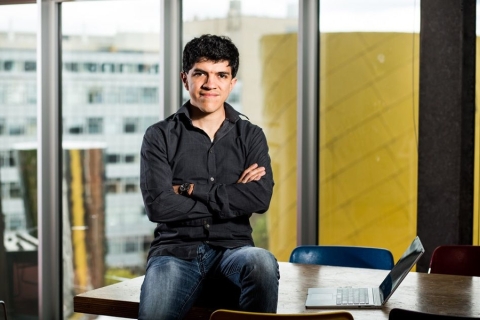
Marco MondelliView profile
Professor
Professor Marco Mondelli is a faculty member at the Institute of Science and Technology Austria (ISTA), where he has been employed since 2019. He was promoted from Assistant Professor to full Professor in 2025. His research focuses on machine learning, high-dimensional statistics, data science, information theory, and modern coding theory. He maintains affiliations with the ELLIS network as an ELLIS Member and collaborates extensively across European institutions. His research interests span theoretical foundations of machine learning with particular emphasis on high-dimensional phenomena, neural network theory, information limits in statistical inference, and applications in quantitative genetics. He has made significant contributions to understanding neural collapse phenomena, spectral methods for high-dimensional estimation, and privacy-preserving machine learning in overparameterized regimes. His work combines rigorous mathematical analysis with practical applications in modern AI systems. Mondelli's recent publications demonstrate strong trends in theoretical machine learning, particularly analyzing the behavior of deep neural networks, developing optimal estimation algorithms for high-dimensional problems, and establishing fundamental limits for various learning tasks. His research bridges statistical physics approaches with modern machine learning theory. ERC Starting Grant recipient for project "Inference in High Dimensions: Light-speed Algorithms and Information Limits" Co-organizer of the "Youth in High Dimensions" conference series Editor for IEEE BITS special issue on Generative Models Associate Editor for IEEE Transactions on Information Theory Professor Mondelli actively mentors PhD students and postdoctoral researchers, currently supervising seven PhD students and one postdoc. His group has secured significant funding through the ERC Starting Grant, supporting multiple positions at all levels. He serves on program committees for top machine learning conferences including NeurIPS, ICML, and ICLR, and has organized workshops on high-dimensional learning dynamics.