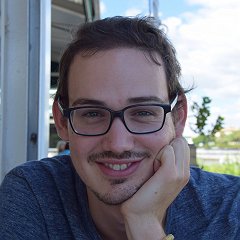
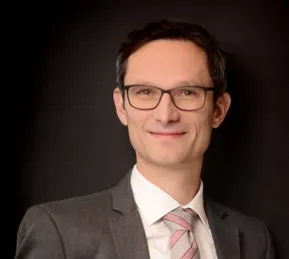
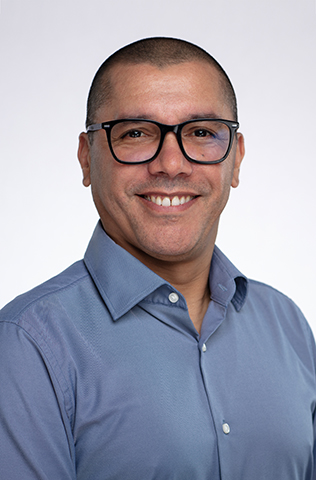
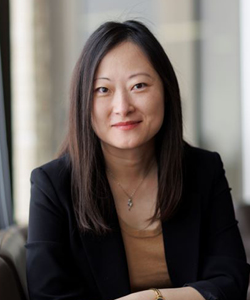
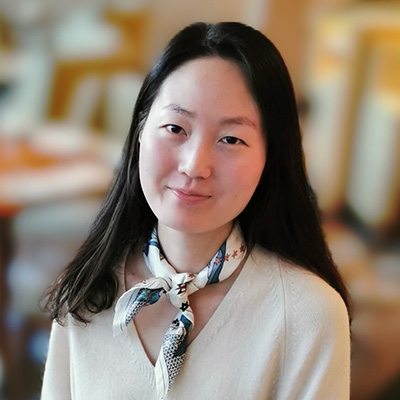
Quentin Stiévenart is a researcher at Université du Québec à Montréal, focusing on abstract interpretation, concurrency, and static analysis. His work spans programming language design, software verification, and tool development for WebAssembly and functional languages like Racket and Scheme. Active in organizing and reviewing for conferences including SPLASH, ICFP, ECOOP, and SAS Developed tools such as Wassail for WebAssembly static analysis and RacketLogger for educational purposes Contributions include theoretical work on effect-driven flow analysis and practical advancements in concolic execution abstraction His research addresses challenges in concurrency verification, cyclic reinforcement in incremental analysis, and security-focused taint tracking across multiple language paradigms.
Elisa Tattersall Wallin holds a PhD in Library and Information Science from the Swedish School of Library and Information Science, affiliated with the University of Borås. Her research focuses on information practices, digital cultures, and reading habits, particularly exploring how climate change information circulates online and the evolving landscape of audiobook consumption among young adults. She teaches courses on research methods, thesis writing, and digital information practices. Her 2022 doctoral thesis Sound Reading investigated audiobook practices through a temporal and spatial lens, analyzing subscription platforms like streaming services. This work earned her the iSchools doctoral dissertation award (runner-up, 2023). She actively engages in collaborative projects such as the Mistra Environmental Communication initiative, studying public engagement with renewable energy topics. Her publications span academic journals and edited volumes, addressing themes like climate change communication, audiobook infrastructure, and digital literacy. She contributes to initiatives like the Programming Historian to democratize digital research tools.
Maria Cruz Negreira Rey is an Assistant Professor at the Department of Communication Sciences, Faculty of Communication Sciences, University of Santiago de Compostela. She is affiliated with the Institute of Studies and Development of Galicia (IDEGA). Her research focuses on digital media innovation, hyperlocal journalism, and the intersection of technology with news production. She holds a Doctorate (2020) from the same university, with a thesis on hyperlocal cybermedia in Spain, supervised by Dr. Xosé López García. Her academic work emphasizes the transformation of journalism in the digital age, particularly exploring AI integration in communication sectors, audience-driven journalism, and challenges posed by news deserts. Key research areas include media geography, risk communication (e.g., radon gas reporting), and the adaptation of journalism to platforms like TikTok and Twitch. She has also studied comparative models of hyperlocal media in Spain and the Netherlands, and the role of digital native media in societal communication. Her publications highlight trends such as the blurring boundaries between traditional journalism and citizen-generated content, the ethical implications of AI in media, and the strategic reinvention of local journalism in the face of technological disruption. While no formal awards are listed, her prolific output reflects significant contributions to media studies and communication science. Her research extends to media labs, innovation in public service broadcasting, and the sociability functions of online media networks. She collaborates on projects mapping media landscapes, such as Galicia’s digital media ecosystem, and analyzing the impact of instant messaging platforms like WhatsApp in news dissemination.
Stephanie Lyons is a Lecturer in Health Psychology at the University of Manchester, affiliated with the Division of Psychology & Mental Health. She is an active researcher in the Manchester Centre for Health Psychology (since 2010), contributing to interdisciplinary health-related studies. Her work focuses on psychological factors influencing health behaviors, particularly breastfeeding in women with high BMI and indoor tanning practices. She holds a PhD from the University of Manchester (2020) and has been widely cited in peer-reviewed journals. Her research aligns with UN Sustainable Development Goals, emphasizing healthier futures through evidence-based interventions. Key research areas include: Psychosocial determinants of breastfeeding in obesity Indoor tanning motivations and alternatives Qualitative methodologies Her articles span topics like breastfeeding interventions, over-the-counter medication use in rheumatology, and systematic reviews on tanning behaviors. Media coverage includes BBC News and iNEWS, highlighting her work on breastfeeding disparities among obese mothers. She actively supervises research projects and contributes to health policy discussions through her peer-reviewed outputs.
Prof. Hagen Schölzel holds the professorship for Political Philosophy and Theory at the Department of Governance, Technical University of Munich (TUM) since October 2024. His research bridges political theory and science/technology studies, focusing on knowledge practices, technological developments, ecological crises, and cultural innovations. He advocates rethinking political concepts to address modern crises, emphasizing democratic renewal through frameworks like the 'democratic time-out' concept developed with André Brodocz. Current work explores populist politics' intersections with technology, ecology, and science. Research interests include crisis governance, institutional resilience, and democratic legitimacy. Notable contributions include critiques of 'state of emergency' narratives and advocacy for adaptive democratic frameworks. Schölzel critiques anti-scientific trends and emphasizes education’s role in countering misinformation and authoritarianism. His interdisciplinary approach integrates philosophy, political ontology, and digital society studies. Publications span democratic theory, pandemic governance, and Bruno Latour’s actor-network theory. No scientific awards are listed, but his work bridges academic and public discourse through accessible critiques of contemporary political challenges. Advising and grants details are not explicitly provided, though his research often collaborates with institutions addressing crisis policy and democratic innovation. No specific labs or teams are mentioned, but his work aligns with TUM’s focus on interdisciplinary solutions to societal challenges.
Nicolai Kröger is a researcher at the Chair of Communication Networks (Prof. Kellerer) at the Technical University of Munich (TUM). He holds an M.Sc. in Electrical and Computer Engineering from TUM, where his thesis focused on P4 switch performance modeling using queuing theory. His current research centers on 6G networks for critical telemedicine applications, particularly within the 6G-Life project, emphasizing end-to-end communication for medical robotics and surgical systems. He contributes to projects like the 6G Future Lab Bavaria and collaborates with the MITI group at Rechts der Isar Hospital to develop medical testbeds requiring high availability and low latency. Kröger also supervises student theses on 5G/6G security, network optimization, and in-network computing. His technical expertise spans programmable networks (P4), SDN, and performance analysis of network devices. He serves as a supervisor for student projects and internships, including implementations of medical testbeds and security analyses of cellular broadcast messages. His work bridges academic research with practical applications, aiming to advance communication networks for healthcare and future 6G systems.
Roles & Affiliations: Camilla Warnicke is an Associate Professor affiliated with Social Work at Örebro University. She currently serves as a visiting researcher at Stockholm University's Institute of Interpreting and Translation, and works part-time as a research funding advisor at Region Örebro County's Grants Office (RÖL). She is also a researcher and teacher at the Sign Language Interpreter and Deaf-Blind Interpreter Education program in Örebro. She holds an authorized interpreter certification between Swedish and Swedish Sign Language (STS). Research Interests: Her work focuses on social equality, participation, and interaction dynamics between individuals and society. Key areas include interpretation between Swedish and Swedish Sign Language, deaf populations, and deafblindness. She employs Conversation Analysis (CA) to study remote interpreting practices in services like the Swedish Video Relay Service (VRS). Collaborations: Active in multidisciplinary projects such as 'Remote interpreting between spoken and signed languages' (Region Örebro), 'Social equality and road safety' (funded by Swedish Transport Administration), and 'Better communication in congenital deafblindness' (Forte-funded with Linköping University). She also collaborates with the National Knowledge Center for Deafblind Issues (Nkcdb). Teaching & Supervision: Supervises doctoral student Charlotte Ryman at Örebro University's Department of Health Sciences. Teaches at undergraduate, postgraduate, and doctoral levels, including courses on remote interpreting and medical research funding. Leads courses at Stockholm University's sign language interpreting program. Awards & Recognition: None explicitly mentioned in the text. Labs & Teams: Part of research groups 'Deafblindness in a Multidisciplinary Perspective' and 'Social Work and Care across the Life Course (SAOL)'. Involved in initiatives like the 'Sign Language and Deaf-Blind Interpreter Education' program at Fellingsbro Folk High School.
Georgia Dede is an Assistant Professor at the Department of Informatics and Telematics, School of Digital Technology, Harokopio University of Athens. Her expertise lies in evaluating systems and electronic services, with a focus on cybersecurity, telecommunications, and operations research. She holds a PhD from National and Kapodistrian University of Athens (2015), a Master’s in Management and Economics of Telecommunications Networks (2007), and an undergraduate degree in Informatics and Telematics (2005). Education: PhD: Decision Making Methods and Uncertainty Study (2015), National and Kapodistrian University of Athens Master’s: Management and Economics of Telecommunications Networks (2007), National and Kapodistrian University of Athens Bachelor’s: Informatics and Telematics (2005), National and Kapodistrian University of Athens Research Interests: Georgia’s research spans cybersecurity frameworks, pairwise comparison methodologies for decision-making, and economic modeling of telecommunications infrastructure. She explores topics like resilient IoT systems, AI applications in governance, and competitive dynamics in energy and telecom markets. Her work integrates technical and socio-economic perspectives to address challenges in network security, service evaluation, and policy design. Grants and Projects: Leading and participating in EU-funded programs under Horizon Europe and Digital Europe initiatives Prior roles as senior advisor/administrator at Netcompany Intrasoft and ENISA Labs/Teams: Her involvement in projects at Harokopio University and collaborations with institutions like the University of Patras emphasize applied research in digital technology and policy innovation.
Mohammed Ibahrine is a Professor in Residence in the Journalism and Strategic Communication Program at Northwestern University in Qatar. He holds a distinguished academic career with previous roles including Professor at the American University of Sharjah (AUS), coordinator of the Innovation and Entrepreneurship Program in AUS's School of Business and Administration, and teaching positions at the University of Hamburg, University of Erfurt (Germany), and Al-Akhawayn University in Morocco. His interdisciplinary research focuses on technology, business, and human interaction across cultural, political, social, and economic contexts. His research interests span media accountability, digital transformation in Arab media, algorithmic transparency, social media's impact on religious practices, and the platformization of news ecosystems. Notable contributions include studies on Moroccan media dynamics, algorithmic fairness, and the domestication of streaming platforms in Gulf states. He has published extensively in journals like Journalism Practice and Online Information Review , with a Google Scholar profile showcasing over three decades of academic output. Ibahrine's work emphasizes critical analysis of media systems in the Middle East, particularly addressing challenges like misinformation, media capture, and the role of digital platforms in socio-political movements. He has advised on telecommunications strategies in Morocco and pioneered courses on innovation in arts and humanities education.
Ann McGrath is a Distinguished Professor and ARC Australian Laureate Fellow in the School of History at the Australian National University (ANU). Her research focuses on deep history, Indigenous histories, colonialism, and public history. She holds dual fellowships with the Australian Academy of Humanities and the Academy of Social Sciences, and was awarded the Order of Australia Medal (AM) for services to history. Education: Bachelor of Arts (Hons), University of Queensland, 1976 Doctor of Philosophy, La Trobe University, 1984 Research interests span: Comparative frontiers in Australia and North America Gender and colonialism Interdisciplinary deep history Indigenous knowledge systems Museums and public history Major publications include Illicit Love (winner of the NSW Premier’s History Prize) and Born in the Cattle . Her films Message from Mungo and A Frontier Conversation bridge academic and public audiences. Awards include the Inaugural W.K. Hancock Prize, Human Rights Award for Non-Fiction, and Honorary Doctorate from Linnaeus University. She has advised on land claims and served as an expert witness in Indigenous rights cases. Current projects include the global Rediscovering the Deep Human Past initiative and collaborations with archaeologists, filmmakers, and Indigenous communities.
Yang Yang is an Associate Professor at the Johnson Shoyama Graduate School of Public Policy, University of Saskatchewan, specializing in consumer behavior and food policy research. Her work examines how cultural values and communication strategies influence public acceptance of novel food technologies and Arctic food systems. Her academic credentials include: PhD in Agricultural Economics, University of Saskatchewan M.Sc. in Finance, Umeå University, Sweden M.Sc. in Economics, Dalarna University, Sweden B.Sc. in Economics, Tianjin University of Finance and Economics, China Yang's research program investigates consumer and farmer decision-making through experimental economics methodologies. She employs discrete choice experiments to analyze how narratives, cultural worldviews, and information framing affect responses to food technologies like gene editing and nanotechnology. Her work bridges agricultural economics with behavioral science, emphasizing heterogeneous consumer responses and the role of storytelling in science communication. This research has direct applications for food policy design, marketing strategies, and sustainable food system development. Analysis of her 2018-2020 publications reveals an evolving focus from technical assessments of consumer acceptance toward understanding communication mechanisms. Early work examined nanotechnology and biotechnology acceptance, while recent studies emphasize narrative framing effects and cultural value influences. A consistent thread is the investigation of Arctic food systems, where she explores certification impacts and indigenous knowledge integration. She received the Richardson-Applebaum Scholarship for Best PhD Dissertation (2018) and has secured research funding through collaborations with: Agriculture and Agri-Food Canada Arctic Council Northern Foods Yang actively mentors graduate students and teaches courses in resource economics and statistics. She is currently accepting MPP and PhD students for 2026 in food policy, experimental economics, and science communication. Her collaborative work with Drs. Jill Hobbs and David Natcher forms a core research team addressing socio-economic dimensions of food innovation, particularly in northern and indigenous contexts.
Stephen Siegel is an Associate Professor at the University of Delaware with a joint appointment in the Department of Computer and Information Sciences and the Department of Mathematical Sciences . Holding a PhD in Mathematics from the University of Chicago (1993), he transitioned from finite group theory research to formal methods in computer science, focusing on verification of parallel and scientific software. His research centers on the Verified Software Laboratory (VSL) and the CIVL Model Checker for HPC program verification. Recent work includes formal verification of PETSc components at CAV 2025 and collective contract frameworks for message-passing programs. Research Interests Formal methods for software verification Parallel and HPC software reliability Model checking techniques Application of mathematical logic to computing Academic Service Highlights Program Committee & Publication Chair, CAV 2025 Co-organizer, International Workshop on Verification of Scientific Software (VSS 2025) Chair, VerifyThis competition (2023) Editorial service at IEEE Transactions on Software Engineering (2015-2019) Teaching Portfolio CISC 404/604: Logic in Computer Science CISC 414/614: Formal Methods in Software Engineering CISC 372: Parallel Computing (MPI/OpenMP/CUDA instruction) Advanced Topics courses: Model Checking, Abstract Interpretation
Wenrui Li serves as an Assistant Professor in the Department of Statistics at the University of Connecticut, where she develops advanced statistical methodologies for complex biomedical data structures. Her work bridges theoretical statistics and practical healthcare applications, with particular emphasis on network-based modeling and high-dimensional data analysis in oncology and epidemiology. Dr. Li's research program centers on statistics for network data, causal inference under interference, and Bayesian modeling of structured high-dimensional datasets. She pioneers techniques for handling network noise in graph-guided models, with direct applications to cancer genomics, multi-omics integration, and infectious disease surveillance. Her methodological innovations address critical challenges in noisy data environments where traditional statistical approaches fail. Analysis of her 2021-2025 publications reveals three dominant research threads: (1) Digital health interventions to reduce time burden in cancer care, exemplified by her TIME text-messaging system; (2) Graph-guided Bayesian methods for multi-omics data integration with noisy network priors; and (3) Epidemiological modeling of time-varying parameters in noisy surveillance systems. These threads demonstrate consistent focus on methodological rigor applied to pressing biomedical problems. No scientific awards, student advisement records, grant funding details, or laboratory affiliations were documented in the source materials. Her collaborative work spans biostatistics, oncology, and network science, with frequent co-authorship on interdisciplinary projects addressing cancer care optimization and disease modeling.
Jenny Lindholm is a University Lecturer in the Faculty of Social Sciences, Business and Law at Åbo Akademi University, Finland, specializing in the field of Social Sciences. Her academic work is deeply rooted in political communication, digital media, and crisis leadership, with a strong focus on the Nordic context. Position: University Lecturer Institution: Åbo Akademi University School: Faculty of Social Sciences, Business and Law Department: Social Sciences Her research explores how political actors communicate during crises, especially through social media platforms like Instagram and Twitter, and how emotional content influences public opinion and affective polarization. She has led significant projects such as EPIC and EmoAffect, funded by foundations and research councils. The trends in her recent publications highlight a consistent focus on visual political communication, emotional responses to populist rhetoric, and comparative analyses of crisis management in Nordic countries. Her work bridges political science, communication studies, and digital sociology, often employing experimental and qualitative methods. Jenny Lindholm has contributed to academic discourse through peer review and editorial work for journals including the Journal of Public Deliberation and the Journal of Contingencies and Crisis Management . She has also presented her research publicly, including discussions on democratic apps for local political engagement. Visiting Researcher, University of Gothenburg (2023) Active involvement in research collaborations across Nordic institutions Development of digital tools for civic participation
Delphine Manceau is a Professor of Marketing and Innovation at Neoma Business School and currently serves as its Dean . Holding a PhD from HEC Paris (1996) and a Senior Research Fellowship at Wharton School (1997), she specializes in innovation management, new product development (NPD), and strategic marketing. PhD, HEC Paris (1996) Senior Research Fellow, Wharton School (1997) Dean, Neoma Business School (France) Founder, Institute of Innovation and Competitiveness (i7, 2011) Her research explores cross-functional collaboration in NPD, open innovation frameworks, and the cultural dimensions of marketing . She has contributed to policy reports for the French Ministry of Economics and the EU Commission, with a focus on innovation ecosystems and business model sustainability. Delphine's recent publications analyze creative industries , design-marketing synergy , and taboos in advertising . These works span empirical studies of product preannouncements, comparative analyses of crowdsourcing vs design thinking, and holistic innovation approaches in economic theory. Her career highlights include: Co-authoring the 16th French edition of Marketing Management with Kotler & Keller (2019) Membership in EU Commission's High-Level Expert Group RISE (2015-2018) Chairing AACSB's European Advisory Council (2018-2020)