Royal Holloway, University of LondonUnited Kingdom
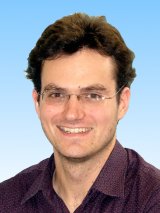
Grégoire Ithier is a Senior Lecturer in Physics at the Department of Physics, Royal Holloway, University of London. His research focuses on quantum engineering, decoherence, thermalization, mesoscopic physics, and random matrix theory. He leads the 'TypDyn' project exploring typical dynamics of embedded quantum systems, and co-leads the Leverhulme Trust-funded 'Generation and detection of quantum signals' initiative. His work bridges theoretical and experimental domains, including superconducting circuits and cryogenic microwave engineering. Ithier's research tools include advanced numerical methods (e.g., exact diagonalization) and statistical techniques (e.g., random matrix theory). Key Projects: TypDyn: Studies typical dynamics in embedded quantum systems (2015–present) QSimFP: Quantum simulators for fundamental physics (2020–2024) A new statistical theory of disordered quantum systems (2020–2024) His experimental work involves superconducting qubits, Josephson devices, and nano-superfluidic cavities. Grants include STFC and Leverhulme Trust funding. Recent publications address quantum thermalization, many-body systems, and random Hamiltonian analysis.
Swiss Federal Institute of Technology in LausanneSwitzerland
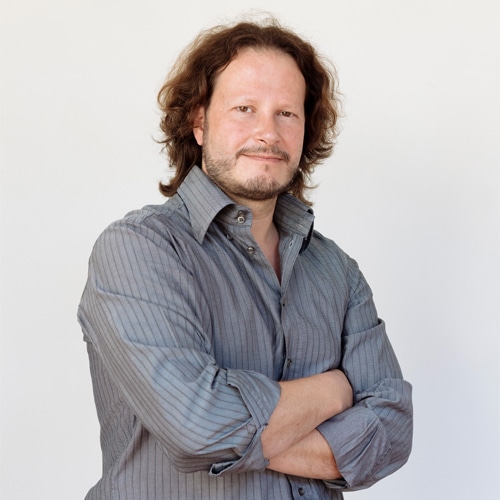
Jean-Philippe Brantut is an Associate Professor at École Polytechnique Fédérale de Lausanne (EPFL), affiliated with the School of Basic Sciences (SB), the Institute of Physics (IPHYS), and the School of Physics (SPH-ENS). He leads the Laboratory for Quantum Gases (LQG), a research group focused on quantum simulation with ultracold atomic systems. He also serves as a PhD program committee member for the Doctoral Program in Physics at EPFL. Research Interests: His work lies at the intersection of quantum optics, atomic physics, and condensed matter physics. He investigates strongly correlated fermionic systems, cavity quantum electrodynamics, mesoscopic physics, and quantum transport. His group pioneers the integration of Fermi gases with high-finesse optical cavities to simulate quantum devices and explore novel quantum matter. Recent Research Trends: His recent publications, appearing in Nature , Science , and Nature Physics , demonstrate a strong focus on engineering quantum many-body systems using photon-mediated interactions. Key themes include the realization of random spin models, observation of density-wave ordering, and the investigation of universal pair polaritons in strongly interacting Fermi gases. His earlier work laid foundations in quantum thermoelectricity and quantized transport in neutral matter. Scientific Awards: Latsis University Prize (2023) Physics Teaching Award at EPFL (2023) ERC Consolidator Grant (2022): Driven and Dissipative Quantum Simulators ERC Starting Grant (2016): Devices, engines and circuits: quantum engineering with cold atoms Fondation Sandoz Chair (2016) SNSF Ambizione Fellowship (2013) Advising and Grants: Brantut actively supervises multiple PhD students, including current students Gaia Bolognini, Tabea Bühler, Ekaterina Fedotova, Francesca Orsi, and Zeyang Xue, and has advised several successful graduates such as Victor Helson, Kevin Roux, Nick Sauerwein, and Timo Zwettler. His research is supported by major grants, most notably two European Research Council (ERC) grants, underscoring the significance and innovation of his work in quantum simulation and quantum engineering. Laboratories and Teams: He leads the Laboratory for Quantum Gases (LQG) at EPFL, which operates two main experimental setups: the Fermi gas experiment and the microscope experiment. The team includes post-doctoral researchers, PhD students, and visiting scientists, fostering a collaborative environment for advancing quantum science with ultracold atoms.
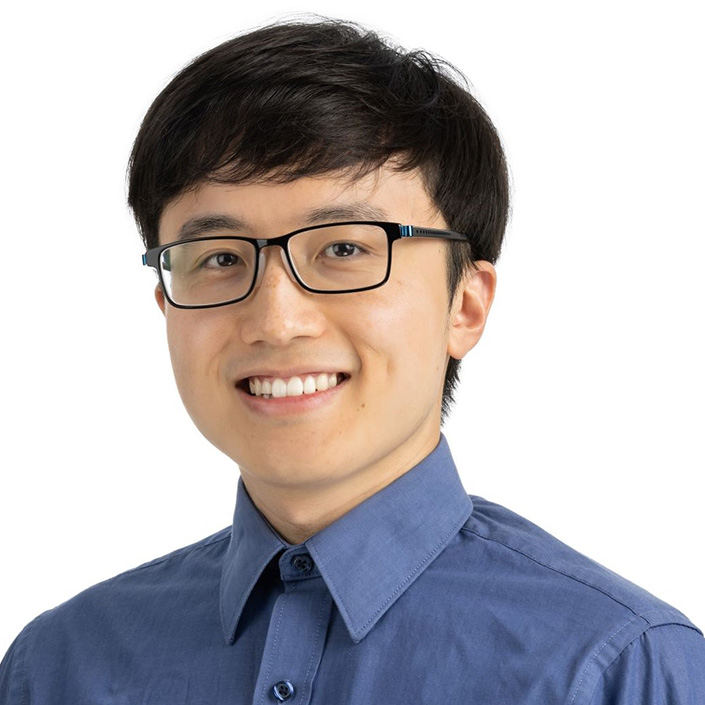
Kevin C. Zhou is an Assistant Professor in the Department of Biomedical Engineering at the University of Michigan. His research focuses on developing high-performance computational optical imaging systems with unprecedented spatiotemporal throughput, integrating advanced optical instrumentation with machine learning-driven algorithms to analyze big data in biology and medicine. His lab specializes in creating imaging systems capable of capturing high-resolution, high-speed, and high-dimensional datasets. Dr. Zhou holds a Ph.D. in Biomedical Engineering from Duke University (NSF GRFP Fellow) and a B.S. in Biomedical Engineering from Yale University (Barry Goldwater Scholar). Prior to joining U-M, he was a Schmidt Science Fellow and postdoctoral researcher at UC Berkeley. Key research areas include: High-throughput microscopy (gigapixel-scale systems) 3D tomographic imaging Light field and Fourier-based imaging modalities Machine learning for image reconstruction and analysis Biomedical applications in cellular/molecular imaging His recent work has advanced technologies like multi-camera array microscopes (MCAM/MCAS) and Fourier light field mesoscopes, achieving video-rate 3D imaging of freely moving organisms. These innovations enable applications in digital cytopathology, behavioral tracking, and high-content biological studies. Notable awards include the NSF Graduate Research Fellowship and Barry Goldwater Scholarship. His research has been featured in top journals and conferences with a focus on advancing optical imaging hardware and computational pipelines.
Diego Garlaschelli is Professor of Theoretical Physics at the IMT School for Advanced Studies in Lucca, Italy, and at the Lorentz Institute for Theoretical Physics, University of Leiden, the Netherlands. He leads the NETWORKS research unit at IMT and the Econophysics and Network Theory group at Leiden. He is also an external faculty member at the Complexity Science Hub in Vienna and an associate member of the Enrico Fermi Research Center in Rome. His affiliations reflect a strong international and interdisciplinary research profile in network science and statistical physics. He holds a master's degree in theoretical physics from the University of Rome III (2001) and a PhD in Physics from the University of Siena (2005). His postdoctoral experience includes positions at the Australian National University, the University of Siena, the University of Oxford, and the Sant’Anna School of Advanced Studies in Pisa. Garlaschelli’s research spans network theory, statistical physics, econophysics, financial complexity, ecological networks, and social dynamics. He applies maximum entropy models, information theory, and random graph frameworks to understand complex real-world systems. His teaching includes courses in Network Theory, Econophysics, and Complex Systems at both PhD and MSc levels. The 15 most recent publications highlight a consistent focus on network reconstruction, ensemble inequivalence, renormalization, and applications to financial and socio-economic systems. Key themes include statistical inference in networks, resilience, and multi-scale modeling, with publications in top journals such as Nature Reviews Physics , Physics Reports , Science , and Physical Review Letters . His scientific awards include the Best Paper Award at the 6th International Workshop on Self-Organizing Systems (2012) and the Jan Kijne Prize (2013) as supervisor. He has secured multiple grants from NWO, the European Union, and the Royal Society, and has supervised over 40 students at PhD, master’s, and bachelor’s levels. He also mentors postdocs and visiting scientists. Garlaschelli leads and organizes major international workshops and schools in network science and complex systems. He serves on scientific committees and is an active referee for journals like Nature and Physical Review Letters , as well as funding agencies including the ERC and NWO.
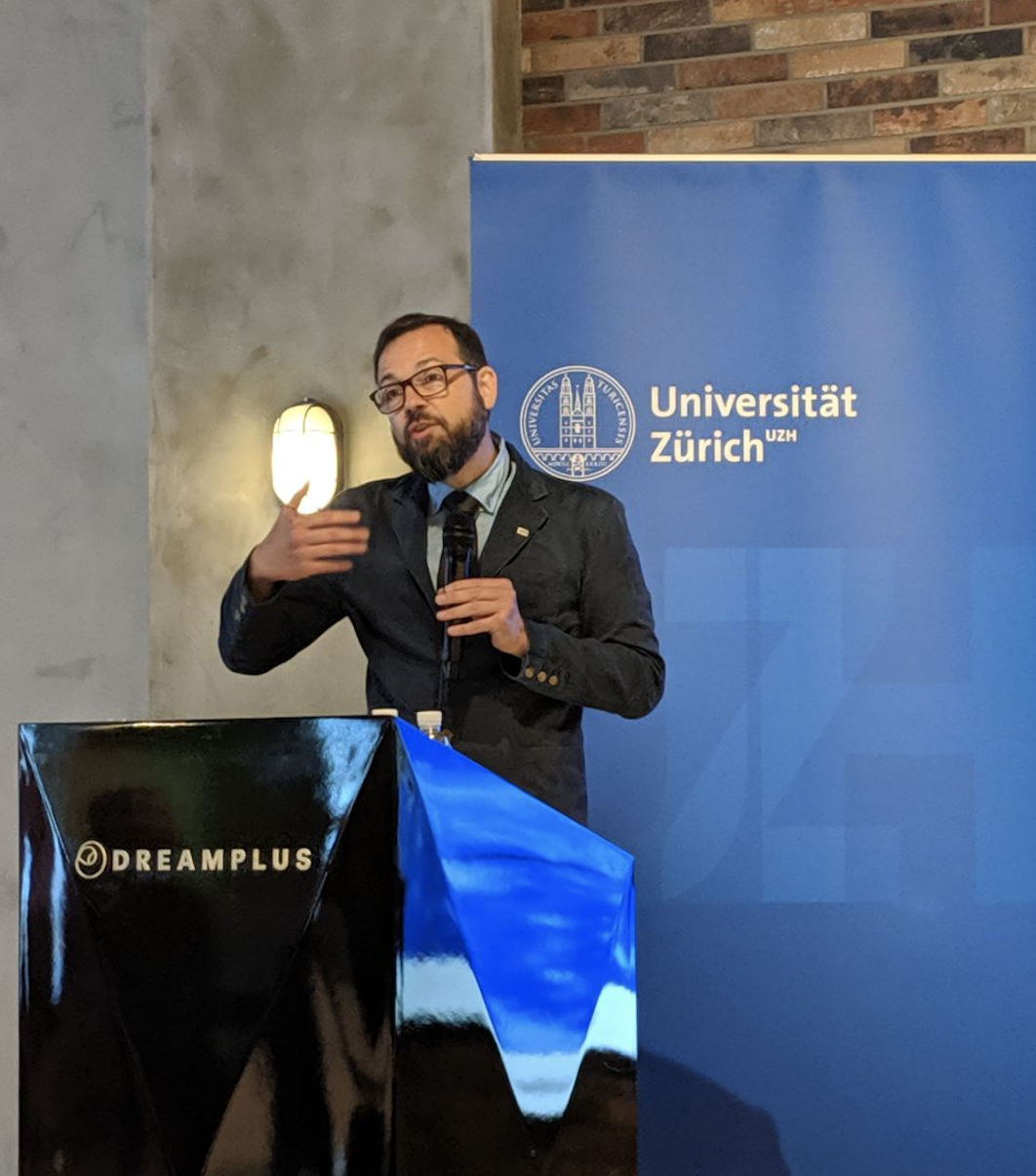
Prof. Claudio J. Tessone is a Professor of Blockchain and Distributed Ledger Technologies at the Department of Informatics, University of Zurich. He serves as Head of the Blockchain and Distributed Ledger Technologies group, Chairman of the UZH Blockchain Center, and is incharge of the NetSci Society. His academic background includes a PhD in Physics (Complex Systems) and an Habilitation in Complex Socio-Economic Systems from ETH Zurich. Education: PhD in Physics (2006): Thesis on synchronization in stochastic systems, Universitat de les Illes Balears, Spain Habilitation (2015): Thesis on agent-based modeling of socio-economic systems, ETH Zurich Master in Physics (1999): Thesis on stochastic resonance, Instituto Balseiro, Argentina Research Interests: Prof. Tessone specializes in modeling complex socio-economic and socio-technical systems, with a focus on blockchain-based systems. His work explores crypto-economics, blockchain scalability, decentralized finance (DeFi), and the interplay between micro-level agent behavior and macro-level emergent properties. Notable areas include transaction network analysis in Bitcoin/Ethereum, consensus mechanisms (Proof-of-Stake/Work), and blockchain governance models. Publications Trends: Recent articles emphasize empirical blockchain analysis (e.g., Ethereum microvelocity, Bitcoin mesoscopic structure), DeFi arbitrage strategies, and privacy-preserving blockchain applications in healthcare. His work bridges theoretical agent-based models with real-world blockchain datasets, addressing both technical and socio-economic dimensions of distributed ledger technologies. Grants & Labs: Director of the UZH Summer School on Blockchain and Certificate of Advanced Studies program. Active in interdisciplinary collaborations through the URPP Social Networks (2015–2021) and ETH Zurich’s Systems Design group (2007–2014). Labs/Initiatives: Leads the UZH Blockchain Center, a hub for academic-industry research on blockchain applications in finance, governance, and digital transformation.
Dr. Igor V. Pivkin is a Full Professor at the Institute of Computing within the Faculty of Informatics at the Università della Svizzera italiana (USI) in Lugano, Switzerland. His academic journey includes degrees from Novosibirsk State University (B.Sc./M.Sc. Mathematics), Brown University (M.Sc. Computer Science and Ph.D. Applied Mathematics), and postdoctoral research at MIT's Department of Materials Science and Engineering. His research focuses on multiscale/multiphysics modeling , numerical methods , and large-scale simulations of biological and physical systems. Key areas include biophysics, cellular/molecular biomechanics, stochastic modeling, and coarse-grained molecular simulations. He leverages high-performance computing (HPC) and particle-based methods to address complex biological phenomena. His work spans diverse applications, from understanding cellular mechanosensitivity and biofilm engineering to modeling cancer cell behavior and red blood cell dynamics in the spleen. His contributions bridge computational science, biotechnology, and biomedical research. He has published extensively in top-tier journals, with recent work advancing automated biofilm analysis, deep learning for microbial classification, and systems biology approaches to metal bioleaching. His lab collaborates on interdisciplinary projects, emphasizing computational innovation for real-world biological challenges.
University of Illinois Urbana-ChampaignUnited States
Taylor L. Hughes is a Professor in the Department of Physics at the University of Illinois at Urbana-Champaign. He focuses on theoretical condensed matter physics, particularly topological insulators/superconductors, quantum information/entanglement techniques, and mesoscopic transport in low-dimensional materials. His research also explores connections between high-energy physics, gravity, and condensed matter systems. Education : B.S. in Physics and Mathematics (2003, summa cum laude) from the University of Florida; Ph.D. in Physics (2009) from Stanford University under Shou-Cheng Zhang. Research Interests : Topological insulators and superconductors Quantum entanglement in condensed matter Mesoscopic transport in heterostructures Topological order and quantum Hall effect Spin-orbit coupling and low-dimensional systems Interdisciplinary links to high-energy physics Scientific Awards : Donald Biggar Willett Faculty Scholar (2020, 2022) ONR Young Investigator Award (2015) University of Illinois Center for Advanced Study Fellowship (2014) NSF CAREER Award (2014) Dean's Award for Excellence in Research (2014) Alfred P. Sloan Foundation Research Fellow (2013) Teaching and Advising : Hughes has taught advanced courses including Condensed Matter Physics I (PHYS 560) and Special Topics in Physics (PHYS 598 CMX). He actively mentors highly motivated undergraduate and graduate students in computational and theoretical physics projects.
Prof. B.J. (Bart) van Wees is a Professor of Applied Physics at the University of Groningen, affiliated with the Faculty of Science and Engineering and the Zernike Institute for Advanced Materials. He leads research in nanodevices, focusing on spintronics, magnonic spin transport, and quantum materials. His work includes pioneering contributions to spin caloritronics and graphene-based spintronic devices. Education: PhD in Physics from Delft University (1989), postdoc in mesoscopic superconductivity. Research interests include spin transport in 2D materials, chiral systems, and antiferromagnetic spintronics. He has held leadership roles in EU Graphene Flagship (Spintronics Workpackage) and the QuMat Zwaartekracht consortium. Key achievements: 2015 Spinoza Award, 2021 ERC Advanced Grant, Fellow of the American Physical Society. Awards also include KNAW membership and multiple grants. Research spans magnon transistors, graphene magnetism, and van der Waals heterostructures. Lab affiliations: Physics of Nanodevices group, Zernike Institute for Advanced Materials. Collaborations include EU-funded projects and international teams in spintronics and quantum materials.
Joerg Werner is an Assistant Professor of Mechanical Engineering at Boston University's College of Engineering and Core Faculty at the Institute for Global Sustainability (IGS). He holds a PhD in Materials Chemistry from Cornell University and an MS in Chemistry from Johannes Gutenberg University Mainz. His research focuses on mesostructured materials, functional nanomaterials, and energy storage systems, leveraging block copolymer self-assembly and microfluidics to design advanced materials. He leads the Mesostructured Materials and Devices Lab, exploring hierarchical structures, electrochemical polymers, and sustainable manufacturing. Research Interests: Werner’s work spans 3D nano-interdigitated batteries , mesostructured architectures , and dynamic microcapsules . Key areas include energy storage applications, phase separation of complex fluids, and nanoconfined synthesis. His group develops sustainable templates for nanomaterials and electrochemically active polymers for thin films on 3D substrates. Publications Trends: Recent work emphasizes electrode architectures (e.g., low-tortuosity electrodes), responsive microcapsules , and self-assembly-driven superconductors . Collaborations with labs like Harvard and industry partners highlight applied energy solutions. Funding & Labs: Current grants support projects on mesohybrids and architected electrodes. The MeMaD Lab collaborates on projects like PANDA (self-driving lab for polymer films) and advanced battery designs. Patents include solid-state battery assemblies and mesoporous carbon materials.
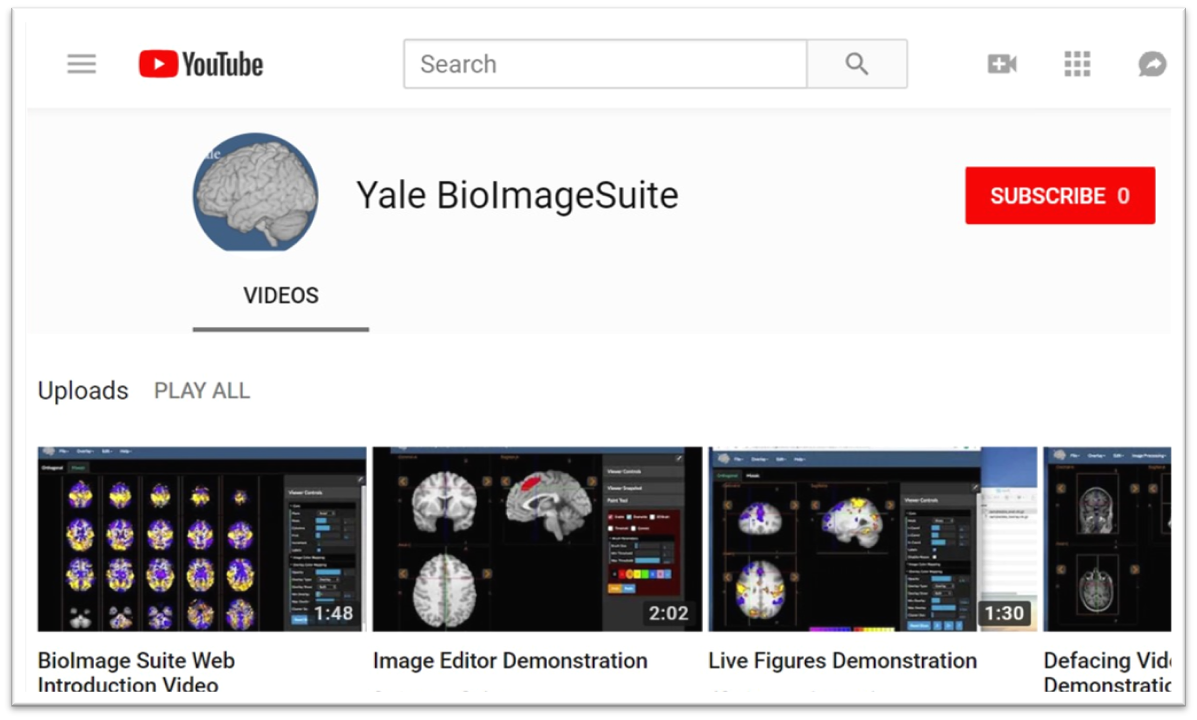
Xenophon Papademetris is a Professor of Biomedical Informatics & Data Science and Radiology & Biomedical Imaging at Yale School of Medicine. He serves as Associate Director of Biomedical Imaging Data Sciences at Yale Biomedical Imaging Institute and directs the Medical Software and Medical Artificial Intelligence Certificate Program. PhD in Electrical and Information Sciences from Yale University (2000) BA from Cambridge University (1994) Postdoctoral Fellowship at Yale University (2002) His research focuses on medical image analysis, machine learning, and biomedical software development. He has developed tools like BioImage Suite Web and contributed to standards committees at the Association for the Advancement of Medical Instrumentation (AAMI). His work spans modalities including MRI, CT, PET, and optical imaging. Recent publications emphasize neuroimaging analysis, explainable AI in healthcare, and multimodal data integration across species. He leads NIH-funded research under the BRAIN Initiative (R24 MH114805) and has authored a textbook on Medical Software published by Cambridge University Press. IEEE Senior Member Yale Brown-Coxe Postdoctoral Fellowship Harding Bliss Prize for Excellence in Engineering He directs the BioImage Suite Project, creating web-based image analysis tools using JavaScript and WebAssembly. His teaching includes both academic courses and a Coursera program on Medical Software with over 14,000 enrollments.
Prof. Dr. Gert-Ludwig Ingold is a Professor of Theoretical Physics at the Institute of Physics, Faculty of Mathematics, Natural Sciences, and Materials Engineering, University of Augsburg. His research spans multiple areas of theoretical physics with emphasis on quantum phenomena in nanoscale systems. His work on the Casimir effect explores interactions between various geometries including spheres, plates, and dielectric materials, with applications in nanotechnology and biophysics. His research on dissipative quantum systems investigates thermodynamic anomalies and quantum Brownian motion. In mesoscopic physics, he studies charge transport through nanoscale structures and quantum interference effects. His work on quantum systems in phase space connects classical and quantum dynamics, while his semiclassical research examines quantum revival patterns and phase-space trajectories. Prof. Ingold's publications reveal a strong focus on the Casimir effect, with numerous papers examining interactions between different geometries and materials. His work demonstrates expertise in both theoretical modeling and numerical methods, as evidenced by his development of the CaPS software for Casimir effect calculations. He frequently collaborates with international researchers, particularly with Paulo A. Maia Neto, Tanja Schoger, and Benjamin Spreng. Prof. Ingold has made significant contributions to physics education through textbooks and popular science books, including Quantentheorie: Grundlagen der modernen Physik and Die 101 wichtigsten Fragen: Moderne Physik . He has co-authored the Python-based educational resource Numerische Physik mit Python and maintains extensive online teaching materials including lecture notes and video tutorials.
Na Young Kim is an Associate Professor in the Department of Electrical and Computer Engineering at the University of Waterloo with affiliations at the Institute for Quantum Computing (IQC) and Waterloo Institute for Nanotechnology. She holds cross-appointments in the Departments of Physics and Astronomy and Chemistry. Her research focuses on developing large-scale quantum processors using novel materials and advanced technologies, including semiconductor quantum processors and multi-functional nanoscale devices. Dr. Kim leads the Quantum Innovation (QuIN) laboratory, pioneering projects in planar architecture design for quantum devices integrating electrical, optical, thermal, and mechanical functionalities. Prior to academia, she worked at Apple Inc. on small display technologies. She earned a BS in Physics from Seoul National University and a PhD in Applied Physics from Stanford University, where she specialized in mesoscopic transport in nanostructures. Her postdoctoral work expanded into quantum optics and nanophotonics through collaborations with international researchers. Current teaching includes courses on quantum mechanics, quantum computing algorithms, quantum information processing devices, and photonic systems. She actively supervises graduate students in quantum technology development and is accepting new applications. Research activities span quantum artificial intelligence, quantum security protocols, and nanotechnology applications. Her work bridges theoretical frameworks with experimental implementations in solid-state quantum systems.
Essa Yacoub is a Professor in the Department of Radiology at the University of Minnesota, affiliated with the PhD Program in Medical Physics and the Center for Magnetic Resonance Research. His work focuses on advancing MRI and fMRI technologies, particularly at ultrahigh magnetic fields (e.g., 10.5 T), to achieve unprecedented spatial and temporal resolution in brain imaging. He leads projects in RF coil design, noise reduction algorithms, and developmental neuroimaging. Roles: Professor, Medical Physics Program Faculty Affiliations: Center for Magnetic Resonance Research, Department of Radiology Research emphasizes high-resolution fMRI applications, including layer-specific brain mapping, pediatric neurodevelopment studies (e.g., Baby Connectome Project), and translational tools like BIBSNet for infant brain segmentation. His innovations bridge hardware engineering (RF coils) and software (denoising pipelines) to tackle challenges in mesoscopic-scale imaging. Key contributions include optimizing imaging protocols at 7T/10.5T, developing NORDIC denoising for submillimeter data, and advancing understanding of brain networks in aging and neurological disorders. His work is foundational for large-scale initiatives like the Human Connectome Project and non-human primate neuroimaging collaborations. Grants and collaborations focus on translational imaging technologies, while educational contributions include training through the Medical Physics PhD Program. Ongoing efforts aim to refine ultra-high field MRI applications for clinical and basic neuroscience research.
François Peeters is a Full Professor of Physics at the University of Antwerp, Belgium, holding the position since 2000 (with Dutch title 'gewoon hoogleraar' since 2003). He previously served as Research Director (FWO-VI) at the University of Antwerp (1996-1999), Research Leader (NFWO) (1992-1996), and Senior Research Assistant (NFWO) (1988-1992), establishing a distinguished academic career spanning over three decades. His educational background includes a Ph.D. in Physics from the University of Antwerp (1982), followed by a Habilitation (Hoger aggregaat) from the same institution (1987), and a postdoctoral fellowship at Bell Laboratories in Murray Hill, New Jersey (1982-1983). His academic journey also featured research periods at prestigious institutions including the High Magnetic Field Laboratory in Grenoble, University of California Berkeley, Oxford University, and several Brazilian and Australian universities. Peeters' research focuses on theoretical condensed matter physics , specializing in the electronic, optical, and magnetic properties of nanostructured systems. His work encompasses semiconductors , superconductors , graphene , and hybrid quantum systems , with particular emphasis on strong correlations in both classical (colloids, dusty plasma) and quantum (quantum dots) environments. His theoretical frameworks bridge fundamental quantum mechanics with practical nanotechnology applications, driving innovations in spintronics and quantum device design. Analysis of his publication record reveals a clear evolution from foundational work on polaron physics and quantum Hall systems in the 1980s-1990s toward contemporary research on graphene, topological materials, and programmable quantum nanodevices. His most cited works demonstrate consistent leadership in mesoscopic physics, with recent publications showing increased focus on spin-dependent transport phenomena and two-dimensional material systems. His scientific recognition includes: Fellowship in the American Physical Society (2005) APS Outstanding Referee award (2008) Doctor Honoris Causa from University of Szeged, Hungary (2009) Peeters has supervised 26 completed PhD theses and currently leads the Condensed Matter Theory research group comprising 3 ZAP researchers, 16 PhD students, and 8 postdocs. His grant portfolio includes coordination of an EU Marie Curie Training site on 'Electrons on helium', participation in multiple EU projects, COST actions, and ESF networks, demonstrating sustained success in securing competitive international funding. The Condensed Matter Theory group maintains extensive international collaborations, evidenced by Peeters' research visits to over 10 institutions worldwide and regular hosting of 3-4 international visitors at postdoc or professorial levels. The group's output of over 770 refereed publications with 12,000+ citations reflects its position at the forefront of theoretical condensed matter physics research.
Leonid Glazman is the Donner Professor of Physics and Professor of Applied Physics at Yale University. His research focuses on condensed matter physics, particularly in mesoscopic systems, superconductivity, and topological materials. He is a Fellow of the American Physical Society and recipient of the Humboldt Research Award. His work explores quantum fluctuations in low-dimensional systems, nonlinear Luttinger liquids, and superconducting qubits such as fluxonium. Collaborations with experimentalists like Rob Schoelkopf and Michel Devoret have led to breakthroughs in quantum technologies. Key research areas include topological insulators, helical edge states, and the dynamics of quantum phase slips. His theoretical contributions span Coulomb blockade effects, Kondo physics in quantum dots, and vortex lattice dynamics in layered superconductors. Recent studies address quantum interference in superconducting circuits and the development of high-coherence qubit architectures. Awards: Humboldt Research Award, APS Fellowship Grants: Supported by the Simons Foundation and National Science Foundation Labs/Teams: Collaborates with Yale Quantum Institute and experimental groups on superconducting devices His publications include seminal reviews on nonlinear Luttinger liquids and articles in Nature , Science , and Physical Review Letters . Current research emphasizes topological superconductivity, Majorana fermions, and quantum noise suppression in qubits.