California State University, Monterey BayUnited States
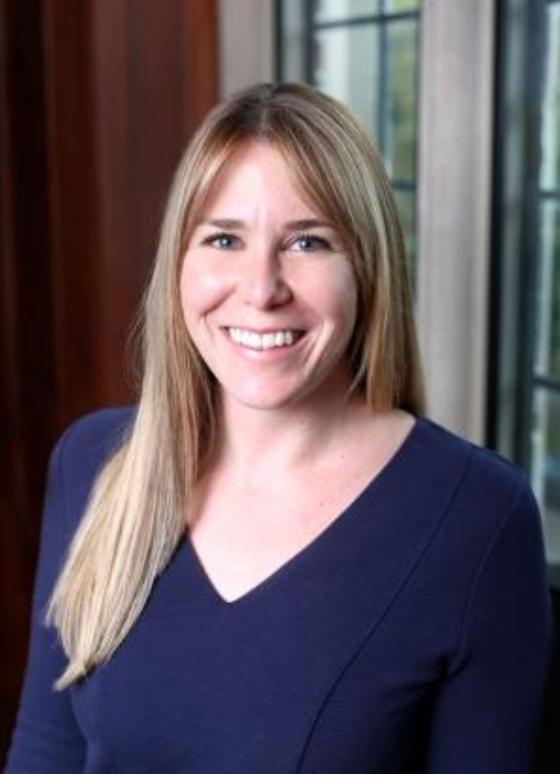
Kelly Medina-López is an Assistant Professor in the Department of Humanities & Communication, focusing on Latinx rhetorics, border studies, and decolonial methodologies. Her work intersects social justice with translingual practices and place-based epistemologies. Key research areas include racioalphabetic ideologies, myth-as-methodology, and the intersection of embodiment and spatial identity. Research Focus: Latinx rhetoric, border rhetorics, feminist/indigenous methodologies Key Concepts: Querencia, rasquache aesthetics, translingual pedagogy Her publications explore the US-Mexico border's rhetorical landscapes and the role of myth in knowledge production. Recent works analyze alternative writing systems as acts of resistance and the cultural significance of New Mexico's place narratives. Advising and grant details are not documented in the provided materials.
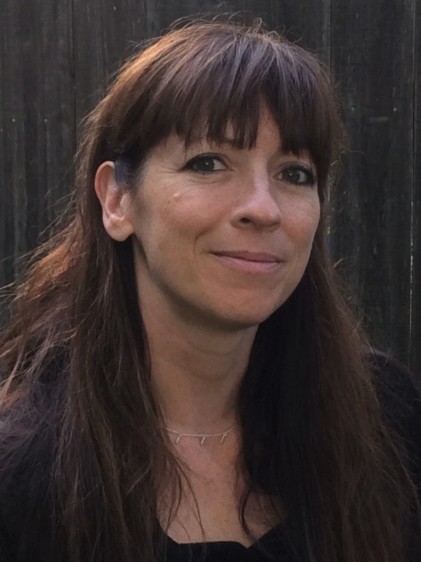
Sarah Newman is an Assistant Professor of Anthropology and Social Sciences at the University of Chicago's College and serves as Director of Undergraduate Studies. She holds a PhD from Brown University (2015). Her research integrates archaeological, historical, and art historical methods to examine themes such as waste, human-animal relationships, and long-term landscape transformations in Mesoamerica and beyond. Key projects include the Invisible Landscapes initiative, co-directed with Felipe Rojas and Eduardo Góes Neves, which explores anthropogenic landscapes through multidisciplinary collaboration. Newman’s fieldwork in Jordan investigates water management systems near Petra, while her Maya-focused studies address zooarchaeology, sensory experiences, and knowledge systems. Her monograph Unmaking Waste: New Histories of Old Things (2023) redefines waste as a culturally contingent concept, challenging Eurocentric narratives through cross-cultural comparisons. A current book project, Animal Archaeology , extends archaeological methodologies to non-human histories. Newman’s affiliations include the Committee on Environment, Geography, and Urbanization, the Institute for the Formation of Knowledge, and the Center for Latin American Studies. Publications span topics from Classic Maya animal categories to Neolithic sites in Jordan. Her work emphasizes interdisciplinary approaches, including remote sensing and 3D imaging technologies. Recent research explores sensory archaeology, particularly olfactory practices in Mesoamerica, and critiques traditional archaeological frameworks through comparative global perspectives.
Rutgers, The State University of New JerseyUnited States
Camilla Townsend is the Board of Governors Distinguished Professor of History at Rutgers University . Her work focuses on Indigenous perspectives during the colonial period in the Americas, particularly through Nahuatl language sources and Native American historiography. She has published extensively on early Latin American and Native American history. Specialty: Indigenous peoples in the Americas, Nahuatl language, colonial interactions Teaching: Undergraduate and graduate courses in Native American History, Latin American History, Borderlands, and Comparative History Research Interests Dr. Townsend explores indigenous conceptualizations of history through Nahuatl annals and early writings. Her work bridges Early American and Latin American history, emphasizing the agency of Native peoples during and after European contact. She has analyzed colonial Mexico, the Andean Region, and the Chesapeake, with a focus on how Native historians documented their experiences. Scientific Awards Cundill Prize (2020) Beveridge Prize, Howard Cline Award, Arthur Whittaker Prize (2017-18) National Endowment of the Humanities Public Scholar Fellowship (2017) Guggenheim Fellowship (2010) Media and Public Engagement Dr. Townsend has appeared on CBC Radio, NPR, BBC, and other platforms, discussing her research on Indigenous history and colonialism. Her work has been featured in documentaries and public lectures, including the Rutgers British Studies Center and SAS seminars.
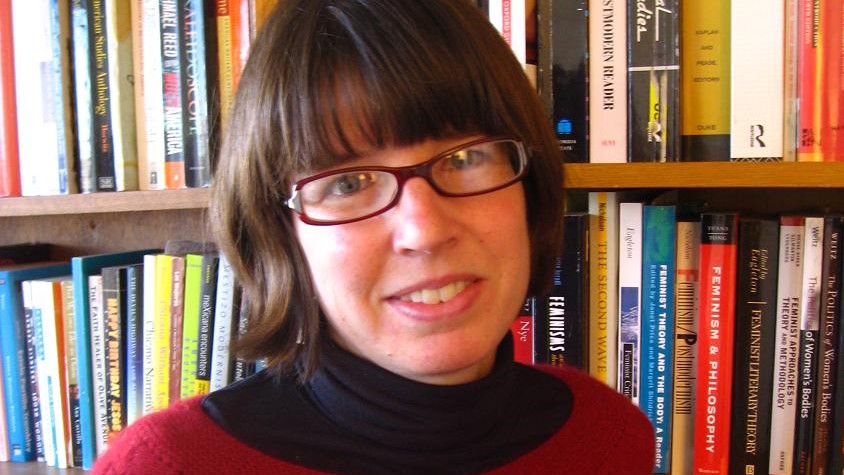
Jennifer Caroccio Maldonado is an Assistant Professor in the Department of English at Baruch College’s Weissman School of Arts and Sciences. Her work bridges Latinx literature, graphic narratives, and critical race studies. Education: Ph.D. in American Studies, Rutgers University-Newark M.A. in English, Brooklyn College, CUNY B.A. in English, Queens College, CUNY Her research explores Latinx graphic counter-histories, queer temporalities, and the intersection of labor resistance with visual storytelling. She has published on topics ranging from Mixtec pictography in comics to BIPOC mythologies in speculative art. Recent publications include work on Who is Ana Mendieta? (2025) and Puerto Rico Strong (2025). Her research also examines the role of sonic theory in punk and hip-hop comics, and she has received a CUNY Faculty Fellowship (2023) and a PSC-CUNY grant (2023). Scientific Awards: Faculty Fellowship, CUNY University Human Resources (2023) She teaches courses on Latino/a Literature, Great Works of Literature, and Writing, and is actively involved in the International Comics Art Forum and Latinx Comic Arts Festival. Her lab work focuses on visual-textual analysis of Latinx life writing.
Catherine DiCesare is an Associate Professor of Art History and Undergraduate Coordinator in the Department of Art and Art History and Art Museum at Colorado State University (CSU). She holds a Ph.D. in Pre-Columbian Art History/Arts of the Americas from the University of New Mexico (2002) and an M.A. in Italian Renaissance Art from Syracuse University's Florence program (1994). Education: Ph.D. 2002, University of New Mexico M.A. 1994, Syracuse University B.A. Not specified Her research focuses on Mexican pictorial manuscripts, Aztec rituals, and pre-Columbian Mesoamerican art. She teaches courses on Mesoamerican art, Aztec festivals, and Italian Renaissance art. DiCesare also leads study abroad programs in Italy, emphasizing Western European art from Medieval to Baroque periods. Her work bridges art history with cultural anthropology, exploring how material culture reflects ritual practices and cosmological beliefs. Her publications analyze Aztec festivals like Ochpaniztli and Huey Tozoztli, emphasizing their symbolic and temporal dimensions. She engages with codices such as the Borbonicus to decode ritual meanings, while also examining gender roles in pre-Hispanic ceremonies. DiCesare’s expertise spans both Mesoamerican and Italian art traditions, integrating interdisciplinary methods to contextualize art within broader socio-religious frameworks.
Simon Martin is an Adjunct Associate Professor in the Department of Anthropology and Associate Curator & Keeper of the American Section at the University of Pennsylvania Museum of Archaeology and Anthropology. He specializes in Maya hieroglyphic writing, focusing on Classic Period (150-900 CE) political systems, religious beliefs, and social organization. His research includes epigraphic fieldwork at Calakmul (UNESCO site) and collaboration on Ucanal, Guatemala. He co-curated major exhibitions like 'Courtly Art of the Ancient Maya' and 'MAYA 2012: Lords of Time', and authored/co-authored influential works including Chronicle of the Maya Kings and Queens and Ancient Maya Politics . Education: PhD from University College London (2014). Notable roles include the Jay I. Kislak Chair (2019-2020). Awards include three 2020 PROSE Awards and the 2021 James Henry Breasted Prize. His work bridges archaeology, epigraphy, and museum studies, emphasizing political anthropology and Mesoamerican heritage. Awards: R.R. Hawkins Award (PROSE 2020), James Henry Breasted Prize (2021) Key Projects: Calakmul fieldwork (1994-2016), Ucanal collaboration, Penn Museum reinstallation (2019) Teaching: Taught courses on Maya archaeology, including 'The Ancient Maya: Integrating Material, Text, and Image'
David Stuart is a Professor in the Department of Art and Art History at the University of Texas at Austin, specializing in Mesoamerican archaeology, art, linguistics, and epigraphy. He earned his Ph.D. from Vanderbilt University and is renowned for his expertise in Maya culture and hieroglyphic decipherment. Education: Ph.D., Vanderbilt University His research focuses on Mesoamerican civilizations, particularly the Maya, with emphasis on writing systems, ritual practices, and cultural exchange. Recent publications highlight interactions between Teotihuacan and Maya regions, as well as advancements in hieroglyphic interpretation. Publications Trends: David Stuart's academic output spans Maya political history, Teotihuacan influence, and cross-cultural interactions, with occasional interdisciplinary ventures into virology (e.g., 2025 Monkeypox study). His work combines archaeological analysis, textual studies, and cosmological insights. As the Schele Professor of Mesoamerican Art and Writing, he has authored influential books like The Order of Days (2011), debunking myths about the 2012 apocalyptic predictions.
Larry Estrada is an Associate Professor and Director of the American Cultural Studies program at Western Washington University. He also serves as the President of the National Association for Ethnic Studies. His office is located in FA 311, and he can be reached at Lawrence.Estrada@wwu.edu . His research interests include Race and Ethnicity in America, Chicana-Hispano Studies, Urban Multicultural Education, U.S.-Mexican Relations, Social Theory, Comparative Cultural and Ethnic Studies, U.S./Mexican Border Relations, Mesoamerican Culture and Mythology, and Chicano/a Studies. These areas focus on the impacts of demographic changes on social, cultural, and economic landscapes in the U.S. and beyond. Larry's professional contributions include being featured in WWU's Innovative Teaching Showcase (2005-06) and leading a course in the Dominican Republic, "Race, Culture and Society in the Latino Caribe" (Winter 2010), which inspired a student-produced video.
Suzanne Bost is a Professor and Chair of the English Department at Loyola University Chicago, with affiliations in Women’s Studies and Gender Studies. Her research bridges interdisciplinary fields, focusing on Latinx Studies, Ethnic Studies, and Feminist Theory, with a particular emphasis on Gloria Anzaldúa’s archives and posthumanist ethics. She holds a BA from the University of Texas at Austin and an MA/PhD from Vanderbilt University. Her work explores intersections of disability, decolonial thought, and embodiment in literature. Recent projects include analyzing ethical alternatives to liberal humanism through queer ecologies and trans-species narratives. Her book Shared Selves: Latinx Memoir and Ethical Alternatives to Humanism (2019) exemplifies her innovative approach to cross-genre scholarship. Bost’s publications span journals like Disability and the Global South and Frontiers: Journal of Women’s Studies , with a focus on topics such as healing justice, archival methodologies, and feminist pedagogy. She won the 2010 NWSA Gloria E. Anzaldúa Book Prize for Encarnación: Illness and Body Politics in Chicana Feminist Literature . Her teaching prioritizes transformative education, emphasizing experimental methodologies and collaborative learning. She has advised students on interdisciplinary projects but no formal advisee list is provided. Bost’s work often intersects with public scholarship, advocating for embodied and socially engaged intellectual practices.
Susan D. Gillespie is a Professor in the Department of Anthropology at the University of Florida's College of Liberal Arts and Sciences. She joined UF as an Associate Professor in August 2001, became Associate Department Chair from 2003-2009, and was promoted to full Professor in August 2013. She has held significant leadership positions including President of the Archaeology Division of the American Anthropological Association (2005-2007) and Member of the AAA Executive Board (2010-2013). Dr. Gillespie received her Ph.D. in Anthropology in 1983 from the University of Illinois at Urbana-Champaign. Her academic career includes positions as Assistant Professor (1983) and Associate Professor (1990) at Illinois State University, and Assistant Professor (1994) and Associate Professor (2000) at the University of Illinois, before joining the University of Florida. Her research focuses on Mesoamerican archaeology and ethnohistory, with particular expertise in Aztec, Maya, and Olmec civilizations. She specializes in kinship, kingship, and socio-political organization; cosmology and political ideologies; and the anthropology of art and technology. Her methodological approaches integrate archaeological, ethnohistorical, iconographic, and epigraphic evidence with theoretical frameworks from structural, semiotic, and symbolic anthropology. Dr. Gillespie's publications demonstrate consistent engagement with object itineraries, house society models, personhood, and memory practices across Mesoamerican cultures. Her work connects material culture studies with broader anthropological theory, particularly in examining how objects, architecture, and landscapes embody and transmit social relations and historical consciousness. She has received prestigious awards including the 1990 Erminie Wheeler-Voegelin Prize for The Aztec Kings , the 2002 Gordon R. Willey Prize, and was named the 2012 Patty Jo Watson Distinguished Lecturer. 1990 Erminie Wheeler-Voegelin Prize 2002 Gordon R. Willey Prize 2012 Patty Jo Watson Distinguished Lecturer Dr. Gillespie has advised doctoral students including David L. Haskell (2008), Adolfo Ivan Batun Alpuche (2009), Matthew Clay Watson (2010), and Hilary L. Zarin (2010). Her current research includes an Architectural Reconstruction of La Venta Complex A and developing Principles of 21st Century Archaeology, a textbook on contemporary archaeological practice. She directs research projects examining Mesoamerican monuments, domestic ritual practices, and the political organization of ancient societies through the lens of house societies. Her work with the Register of Professional Archaeologists (certified 2006) demonstrates commitment to professional archaeological standards.
Davíd Carrasco is the Neil L. Rudenstine Professor of the Study of Latin America at Harvard University, holding a joint appointment in the Department of Anthropology (Faculty of Arts and Sciences) and Harvard Divinity School. His work bridges Mesoamerican religious history, urbanization, and the Mexican-American borderlands. Educated at Western Maryland College (BA), University of Chicago (ThM, MA, PhD), he specializes in Aztec and Maya civilizations, ritual violence, and transculturation. Research focuses on sacred spaces, postcolonial ethnography, and the symbolic dimensions of violence. Notable works include Religions of Mesoamerica , City of Sacrifice , and Cave, City, and Eagle's Nest . He directs the Moses Mesoamerican Archive and Research Project, co-produced the film Alambrista , and received Mexico's highest honor, the Order of the Aztec Eagle. Recent publications emphasize Mesoamerican urbanism, colonial encounters, and Latino religious identity. His interdisciplinary approach integrates archaeology, art, and literature, addressing themes like mestizaje and the legacy of conquest. Public engagement includes debates on race, immigration, and social justice, alongside collaborations with Mexican scholars like Eduardo Matos Moctezuma.
Allen Christenson is an Associate Professor in the Department of Comparative Arts and Letters at Brigham Young University. His research focuses on Maya archaeology, Mesoamerican mythology, and Indigenous religious practices, with a particular emphasis on the K’iche’ Maya of Guatemala. He is renowned for his work on the Popol Vuh , an ancient K’iche’ sacred text, and its cultural and mythological significance. Christenson’s research bridges archaeology, ethnohistory, and linguistics, examining topics such as ritual practices, colonial Indigenous texts, and the interplay between oral tradition and written records. His academic contributions include analyses of Maya cosmology, the interpretation of ritual feasting, and the study of Chiasmus—a rhetorical device in Maya oral poetry. He has conducted fieldwork in sites like Cahal Pech, Belize, and Santiago Atitlán, Guatemala, linking material evidence to mythological narratives. Christenson also engages with contemporary Maya communities to document and preserve Indigenous knowledge systems. His publications span archaeological reports, literary analyses of sacred texts, and studies on colonial-era manuscripts such as the Title of Totonicapán . He emphasizes the continuity of Maya cultural traditions from pre-Columbian times to modern practices, highlighting the resilience of Indigenous cosmological frameworks. Christenson’s work frequently explores themes of creation myths, sacred geography, and the role of language in sustaining cultural identity. His interdisciplinary approach underscores the importance of integrating textual, archaeological, and ethnographic evidence to understand Maya civilization comprehensively.
Maud W. Makemson was a pioneering astronomer and anthropologist, serving as a professor at Vassar College from 1932 to 1957. She held the rank of full professor and directed the Vassar Observatory from 1936 until her retirement. Her work combined astronomy with the study of ancient civilizations, notably the Maya and Polynesians, and she contributed to lunar exploration for NASA. She earned a PhD from the University of California, Berkeley (1930) and held prestigious fellowships, including a Guggenheim (1941–1942) and Fulbright (1953–1954). Education highlights include studies at Radcliffe College, UCLA, and Berkeley. Her research spanned celestial navigation, ancient calendars, and the intersection of astronomy with religion and culture. She advised notable students like Vera Rubin, who later pioneered dark matter research. Post-Vassar, she taught at UCLA and consulted for NASA’s lunar missions. Her scientific awards include Phi Beta Kappa and recognition through her Fulbright and Guggenheim fellowships. Key contributions include deciphering Mayan astronomy, analyzing Polynesian navigation systems, and developing lunar positioning methods for Apollo astronauts. She was a member of prominent scientific societies, including the American Astronomical Society and AAAS. Makemson’s legacy lies in her interdisciplinary approach, bridging astronomy with anthropology, and her role as a trailblazing woman in STEM during mid-20th century academia.
Christine Hernández is Curator of Special Collections at Tulane University's Latin American Library and Core Faculty in Anthropology. Her research focuses on Mesoamerican archaeology with specialization in Maya codices, epigraphy, and cultural heritage. With a PhD from Tulane University, she investigates intellectual exchange, ritual practices, and scribal traditions in Postclassic Maya society. Research emphases include: Foundation rituals and mythologies in Maya codices Rain and fertility ceremonies in Postclassic Yucatan Continuity of divinatory texts across Maya periods Interregional knowledge exchange between Maya regions and highland Mexico
Anna Blume is a Professor in the Art History and Museum Professions department at the Fashion Institute of Technology (FIT), State University of New York. Her academic work bridges Mesoamerican art history, Native American studies, and contemporary art activism. Based in the Business and Liberal Arts Center (Room B649), she coordinates the Ethics and Sustainability Minor and teaches courses including HA 114 Prehistoric Art, HA 116 American Indian Art, HA 224 Mesoamerican Art, and HA 397 Studies in Maya Art and Culture. Her research spans Mesoamerican civilizations (particularly Maya timekeeping and architecture), Native American visual culture (Mississippian monuments and Plains Indian drawings), and art activism (ACT UP political funerals and gender identity). She examines how disaster, colonialism, and ethics manifest in visual representation, with recent work analyzing monumentality in Indigenous North American landscapes and cultural appropriation in fashion. Blume's publications reveal consistent engagement with interdisciplinary methodologies combining archaeology, anthropology, and art history. Her scholarship demonstrates particular strength in deciphering pre-Columbian epigraphy while connecting historical practices to contemporary issues of identity and representation. The temporal scope of her work—spanning ancient Maya codices to modern protest art—highlights her unique perspective on visual continuity across millennia. State University of New York Chancellor's Award for Excellence in Teaching (2011-2012) Fulbright Fellowship American Philosophical Society Grant Dumbarton Oaks Grant Josef Albers Foundation Grant Ford Foundation Grant SUNY Research Grant Professor Blume has secured significant research funding from major institutions including the Ford Foundation and Fulbright program. Her teaching excellence was formally recognized by SUNY, and she actively bridges academic research with public engagement through museum collaborations and editorial contributions to major publications like the New York Times. While not explicitly mentioned as advising graduate students, her extensive publication record and dissertation supervision (evidenced by her Yale PhD and Zoe Leonard interview) suggest mentorship experience. Her work with the ACT UP Oral History Project and contemporary art exhibitions indicates active participation in activist and curatorial communities. The Archaic Bannerstone Project (2018) represents a digital humanities initiative connecting ancient artifacts with modern interpretation.