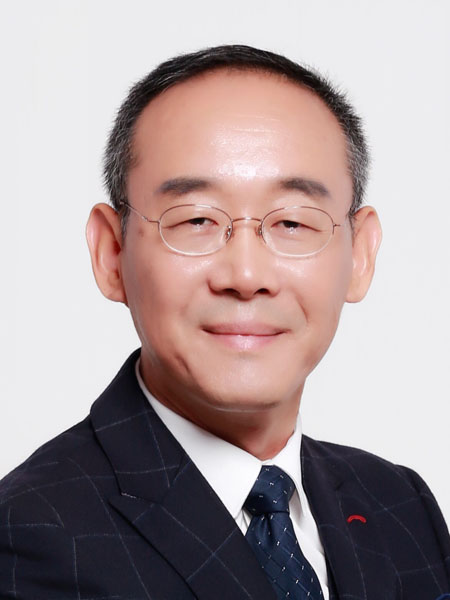
Professor Keqin Li is a globally recognized academic holding concurrent professorships at Hunan University (China) and State University of New York (USA). He has held distinguished titles including National Distinguished Professor and SUNY Distinguished Professor. His research focuses on computer networking, heterogeneous systems, energy-efficient computing, and distributed systems. He has authored over 800 publications with an h-index of 64 and secured major grants from Chinese National Science Foundation and Ministry of Science and Technology. Education: PhD in Computer Science from University of Houston (1990), B.S. from Tsinghua University (1985). Research Interests: Includes parallel computing architectures, cloud-edge computing integration, energy-efficient algorithms, and task scheduling optimization. His work spans foundational studies to applied solutions in distributed systems, with notable contributions to network function virtualization and secure cloud data sharing. Awards: Ranked top globally in distributed computing by Scopus citation metrics (2020-2021) IEEE Fellow (2015) Recipient of 1000 Plan Chinese Talent Program (2013) Professional Activities: Editorships at ACM Computing Surveys, IEEE Transactions on Parallel and Distributed Systems, and over 190 conference organizing roles. Principal Investigator of 12+ major research projects (2013-2025). Labs/Teams: Leads research groups focused on parallel computing, cloud-edge systems, and energy-efficient architectures across multiple institutions.
Andrew J. Duffy, MD, FACS, FASMBS is an Associate Professor of Surgery specializing in Bariatric and Minimally Invasive Surgery at Yale School of Medicine. He serves as Associate Surgical Chief of the Digestive Health Service Line and Medical Director of the Yale New Haven Health System Hernia Program. Dr. Duffy is also the interim Program Director for the General Surgery Residency Program at Yale, where he has developed innovative simulator programs to train residents in advanced surgical techniques. His clinical expertise spans minimally invasive abdominal and gastrointestinal procedures with emphasis on hernia repair and bariatric surgery. Dr. Duffy's educational journey includes: BS from Boston College (1992) MD from University of Massachusetts Medical School (1996) Residency at University of Massachusetts Medical School (2002) Chief Resident at University of Massachusetts Medical School (2003) Clinical Fellowship at Weill Medical College of Cornell University (2004) His research focuses on advancing surgical techniques and improving patient outcomes through multiple avenues. Dr. Duffy investigates racial disparities in surgical access and outcomes, develops structured training programs for robotic surgery, and examines psychological factors affecting weight management after bariatric procedures. His work bridges clinical surgery with behavioral health, emphasizing multidisciplinary approaches to complex patient care. Recent publications demonstrate a commitment to quality improvement initiatives that enhance surgical safety and efficiency. Dr. Duffy's scholarly output reveals a clear trajectory toward optimizing surgical care through technology integration and addressing healthcare disparities. His work on robotic hernia repair examines racial differences in outcomes, while his bariatric research investigates long-term weight management strategies and psychological factors affecting success. The integration of telehealth technologies into preoperative assessment represents another innovative area of his work, demonstrating responsiveness to evolving healthcare delivery models. Dr. Duffy has received significant recognition for his clinical excellence: Connecticut Magazine Top Docs (2015, 2016, 2017) New York Magazine Best Doctors (2012) As interim Residency Program Director, Dr. Duffy oversees the comprehensive training of surgical residents at Yale. He has developed simulator-based educational frameworks that prepare trainees for complex minimally invasive and robotic procedures. His research program, supported by multiple grants, examines hernia repair techniques, bariatric surgery outcomes, and behavioral interventions for postoperative weight management. Dr. Duffy's work with the Obesity Research Working Group and Center for Weight Management reflects his commitment to multidisciplinary care approaches. Dr. Duffy leads the Yale New Haven Health System Hernia Program and collaborates extensively with the Center for Weight Management and Bariatric Surgery. His research teams include psychologists, nutritionists, and exercise professionals, reflecting his holistic approach to patient care. Current initiatives focus on developing structured training protocols for robotic surgery and investigating long-term outcomes following metabolic procedures.
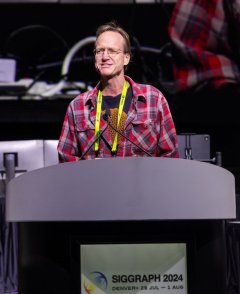
Tim McGraw is an Associate Professor in the Department of Computer Graphics Technology at Purdue University’s Purdue Polytechnic Institute. He specializes in virtual reality, scientific visualization, and medical image processing, with notable work on diffusion tensor MRI (DT-MRI) visualization and mesh editing in VR. He has held industry roles as a Mechanical Engineer and game developer at Electronic Arts, Schell Games, and Rainbow Studios. Education: Ph.D. in Computer and Information Science and Engineering (University of Florida), B.S. in Mechanical Engineering (University of Florida). Research interests focus on blending computational art with scientific challenges, including real-time graphics, medical imaging, and game development. His recent work explores soft-body physics simulation (e.g., Mesh Mortal Kombat) and thermal imaging analysis. Awards include 2024 Best Paper/Presentation at Motion Interaction Games and 2024 SIGGRAPH Best in Show. Grants include 3D Visualization of Molecular Dissolution (2016) and industry partnerships with NVIDIA, Eli Lilly, and Boeing. He holds four patents related to DT-MRI visualization technologies developed with Siemens Corporate Research. Labs/Teams: Leads the Interactive Graphics Technology Lab, contributing to projects like Bodygraphe (a gestural computing art installation showcased at SIGGRAPH 2016).
Bruce Lu is a Senior Lecturer in the Department of Computer Science and Software Engineering at The University of Western Australia's School of Physics, Maths and Computing. With a PhD from Zhejiang University and over two years as a Research Fellow in Singapore, he has published 110+ papers with nearly 4000 citations (h-index 32) in premier venues including IEEE TPAMI, CVPR, and NeurIPS. Education PhD, Zhejiang University Research Focus Dr. Lu's work centers on Artificial Intelligence and Visual Computing , specializing in 3D vision/graphics , VR/AR , and digital health applications . His research integrates contrastive learning and point cloud processing to solve challenges in low-quality data environments, with significant contributions to medical imaging and biometrics. Publication Trends His 2025 publications reveal a concentrated focus on 3D data processing, particularly point cloud orientation and completion. Key methodologies include dual-network architectures and mixup consistency techniques applied to face recognition and endoscopic reconstruction, demonstrating strong alignment with computer vision frontiers and medical technology applications. Honors School's Mid-Career Research Award (2025) School's Early-Career Research Award (2022) Best Paper Honourable Mention at CVM 2025 Best Paper Award at DICTA 2024 Research Leadership As Associate Editor for IEEE TMM and TNNLS, Program Chair for CASA 2024/ICVR 2023-2025, and Area Chair for CVPR/NeurIPS/ICLR, Dr. Lu actively shapes the computer vision community. He currently supervises PhD students and has secured $$1.5$$ million through: ARC Discovery Projects ARC Research Hub Projects Industry partnerships State government grants Collaborative Impact His international network spans 10+ institutions, driving innovations in digital health and sustainable computing aligned with UN SDG goals for industry advancement and health technology.
Professor Kenneth Morgan is a faculty member in the School of Aerospace, Civil, Electrical and Mechanical Engineering at Swansea University, specializing in Civil Engineering. He holds the rank of Professor and is actively involved in research and postgraduate supervision. His research focuses on computational fluid dynamics, computational electromagnetics, mesh generation, and wave propagation. Education and Affiliations: While specific educational details are not provided, his academic position and research output indicate advanced training in engineering and applied mathematics. He is affiliated with the Morgan Advanced Studies Institute (MASI) as an academic leader and collaborator. Research Interests: Professor Morgan’s work spans advanced numerical methods for engineering simulations, including finite element and volume techniques, mesh optimization, and applications in aerodynamics, electromagnetics, and fluid dynamics. His recent projects include developing neural network-based aerodynamic design tools and high-fidelity simulations for complex geometries. Publications and Awards: He has authored numerous peer-reviewed articles, with recent contributions on NURBS-enhanced FEM, solar absorber design, and aerodynamic analysis of supersonic vehicles. His accolades include fellowships from the Royal Academy of Engineering and the Learned Society of Wales. Grants and Collaborations: He has led or contributed to major grants such as the Platform Grant for mesh generation (EPSRC, 2006–2011) and the FLAVIIR aeronautics initiative (EPSRC/BAE Systems, 2004–2007). His work bridges academia and industry, addressing challenges in aerospace, energy, and computational methods. Labs and Teams: As part of MASI, he collaborates in interdisciplinary teams tackling global challenges like sustainable engineering and advanced material systems.
Prof. Marius Preda is a Lecturer at Telecom SudParis, specializing in multimedia technologies and standards. His work focuses on 3D graphics, point cloud compression, augmented and virtual reality, and MPEG standardization. He has contributed to numerous international conferences and publications, particularly in advancing compression techniques and interactive media systems. Key research areas include MPEG standards for 3D graphics, point cloud compression (notably G-PCC), and AR/VR applications in industrial and educational contexts. He has led projects like ATOFIS, an AR training system for manufacturing, and explored lightweight neural network libraries (FasterAI). His work bridges theoretical advancements with practical implementations, emphasizing interoperability and efficiency. Preda has collaborated extensively on international standards through MPEG, contributing to the development of protocols for mixed reality, media convergence, and interactive systems. His research also addresses challenges in real-time processing, hardware optimization, and user-centric design across domains like robotics, energy systems, and cultural heritage preservation.
Eva Herbst is a postdoctoral researcher at the Institute for Biomechanics , ETH Zürich, and collaborates with the Schulthess Clinic . Her work bridges clinical biomechanics and paleontological research , focusing on shoulder implant development, finite element analysis, and evolutionary locomotion studies. Collaborators: Prof. Dr. Stephen Ferguson (ETH Zürich), Prof. Dr. med. Philipp Moroder (Schulthess Clinic), Prof. John Hutchinson (Royal Veterinary College). Coding & Tools: Developed the MyoGenerator Blender add-on for 3D muscle modeling and MATLAB scripts for joint mobility visualization. Her research spans implant constraint variability in shoulder arthroplasty, salamander locomotion kinematics, and fossil musculoskeletal reconstructions. Publications highlight interdisciplinary approaches combining medical imaging , computational modeling , and evolutionary biology . Her scientific resources include: MyoGenerator GitHub for muscle modeling workflows Figshare datasets for mouse epiphysis CT scans MorphoSource repositories for fossil and mammalian joint data
Suman Banerjee is the David J. DeWitt Professor in the Department of Computer Sciences at the University of Wisconsin-Madison. He leads the WIsconsin WIreless and NetworkinG Systems (WiNGS) Laboratory, focusing on wireless and mobile networking, distributed systems, and network security. Education: Ph.D. (Computer Science, 2003) from University of Maryland; M.S. (1999) and B.Tech. (1996) from University of Maryland and IIT Kanpur, respectively. Research Interests: Mobile and wireless networking systems, overlay systems, traffic classification, and network security. His WiNGS lab explores topics like interference detection (Airshark), enterprise WLAN optimization (FLUID), and vehicular networking (WiRover). Awards: ACM SIGMOBILE Rockstar Award (2013), NSF Career Award (2008), ACM MobiCom Best Paper (2009), and Wisconsin Governor’s Business Plan Competition Grand Prize (2011). Grants & Activities: Over $4M in NSF and industry grants since 2005. Served as Program Chair for ACM MobiCom, IEEE SECON, and ACM CellNet. Editor-in-Chief of Mobile Computing and Communications Review. Labs & Teams: WiNGS Lab develops systems like WiRover for vehicular connectivity and Airshark for non-WiFi interference detection. Collaborates with industry partners like Cisco, Microsoft, and Intel.
Dr. Tajdari is a distinguished researcher at Delft University of Technology, specializing in interdisciplinary fields at the intersection of robotics, control systems, and biomedical engineering. His work focuses on advanced control methodologies, non-rigid registration techniques for medical imaging, intelligent transportation systems, and personalized product design through digital fabrication. He has contributed significantly to the development of adaptive controllers for robotics systems, including Stewart platforms and surgical robots, as well as innovative approaches to 3D/4D human mesh registration for applications in healthcare and biomechanics. Key Research Areas: Autonomous Vehicles, Medical Robotics, Intelligent Transportation, 3D Reconstruction, and Human-Motion Analysis His recent research emphasizes integrating machine learning with traditional control theory to address challenges in traffic management, spinal deformity prognosis, and human-centered design. Collaborations include projects on smart infrastructure systems and personalized medical devices. Over 25 peer-reviewed articles demonstrate his expertise in both theoretical and applied engineering domains.
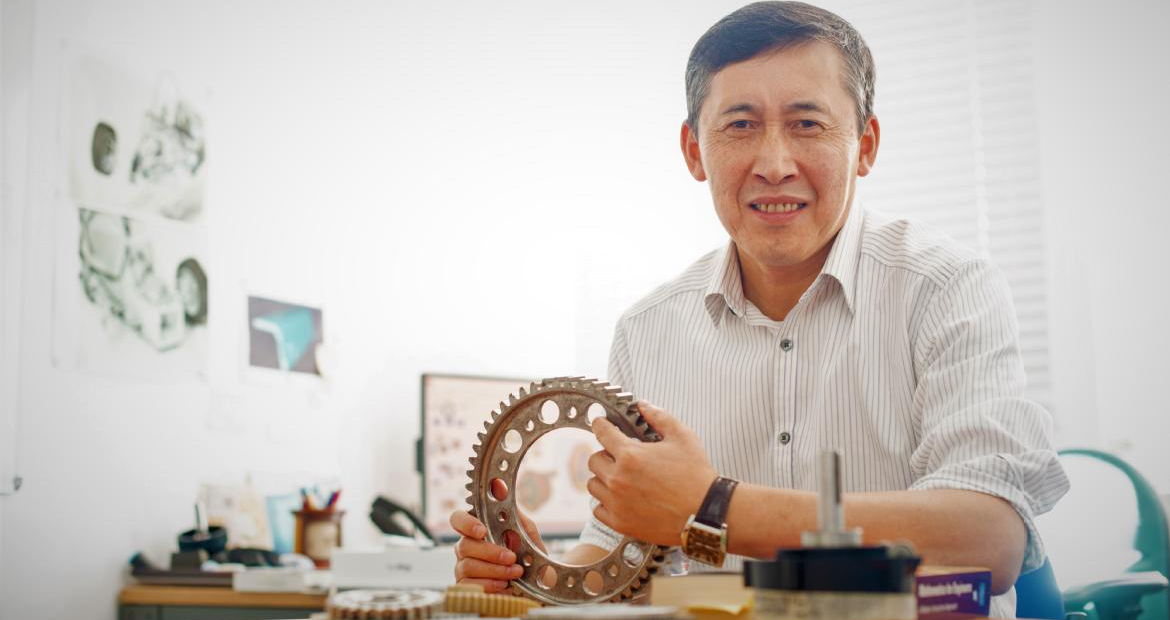
Professor Ken Mao is a Mechanical Engineering academic at the University of Warwick's School of Engineering. He specializes in polymer composite materials, gear design optimization, and tribology applications across automotive, healthcare, and additive manufacturing domains. His research integrates advanced numerical simulations with experimental validation methods. Research focuses include: Lightweight polymer composite gear systems for EVs and motorcycles Non-linear FEM analysis of gear transmission and tyre contact systems 3D printed polymer gear performance under dynamic loads Over 100 peer-reviewed publications demonstrate his work on polymer gear wear mechanics, additive manufacturing parameters, and biocompatible materials. Active industrial collaborations include projects with TVS Motors, Innovate UK, and DSM. Teaching responsibilities include advanced mechanical design modules covering finite element methodologies and lightweight gearbox optimization principles. Current projects: Lightweight motorcycle gearbox development (funded by TVS Motors) Innovate UK-supported polymer gear design initiatives Office location: F327 School of Engineering, Coventry CV4 7AL. Advice hours: Wednesdays 11:00-13:00 during term time.
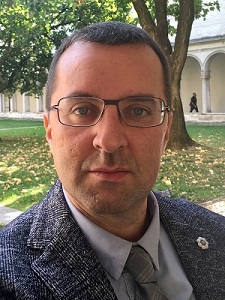
Prof. Alberto Signoroni is an Associate Professor at the University of Brescia, Italy, affiliated with the Department of Medical and Surgical Specialties, Radiological Sciences and Public Health. His academic journey includes a 1997 Electronic Engineering degree (110/110 cum laude) and a 2001 PhD in Information Engineering from the same institution. He later earned a 2019 Master in Research Management from Polytechnic of Milan. His research focuses on Computer Vision , Machine Learning , and Biomedical Image Processing , with notable contributions to medical AI applications such as predictive analytics in cardiology, 3D surgical navigation, and hyperspectral imaging for microbiology. His team, tAImedIA , explores interdisciplinary solutions for medical image interpretation challenges. Recent work emphasizes AI-driven tools for healthcare, including mortality prediction from chest X-rays, scanner-effect mitigation in MRI segmentation, and claustrophobia management in MRI using ChatGPT dialogues. He has also pioneered datasets like CineScale2 for cinematic analysis and DenseMatch for real-time 3D reconstruction. Prof. Signoroni’s publications bridge computational techniques with clinical needs, addressing both technical (e.g., LiDAR odometry, mesh denoising) and applied challenges (e.g., telemonitoring in orthodontics, bacterial colony classification via CNNs).
Mathias Wien is a Professor and Head of the Chair of Image Generation and Image Processing at RWTH Aachen University. He specializes in video and image communication, with a focus on compression standards, 3D video technology, and perceptual quality metrics. His work spans medical imaging applications, adaptive coding techniques, and algorithm optimization for real-time video processing. Research interests include video coding algorithms, immersive media standards (e.g., VVC), point cloud quality assessment, and efficient template matching methods for reference picture padding. He actively contributes to MPEG and IEEE initiatives, co-authoring standards and reviewing emerging technologies. Recent publications (2021–2025) emphasize advancements in template-based video coding, medical image segmentation using deep learning, and viewer training protocols for visual assessment. He leads a research team addressing challenges in scalable compression, dynamic mesh coding, and 3D LiDAR odometry. His team collaborates with institutions like the RWTH Aachen University Medical Department and industry partners, focusing on clinical applications of imaging technology.
Dr. Isaak Lim is a researcher in the Department of Computer Science at RWTH Aachen University, Faculty of Mathematics, Computer Science and Natural Sciences. His contact information includes Room 109, phone +49 241 8021805, fax +49 241 8022899, and email isaak.lim@cs.rwth-aachen.de. He maintains an active research profile with publications spanning from 2016 to 2025. Lim's research focuses on computer graphics, 3D shape generation, deep learning applications for visual data, and geometry processing. His work bridges computer vision and graphics with machine learning techniques, particularly exploring how to represent and generate visual data more effectively. He has made significant contributions to point cloud processing, feature curve analysis, and vision-language model fine-tuning. His research often addresses the challenge of creating efficient representations of visual data that balance compression with information preservation. His publication record shows a clear trajectory of increasing independence and impact, with recent work (2023-2025) often featuring him as first author on high-impact venues like ICCV and VMV. His research demonstrates a consistent focus on improving the representation and processing of visual data through novel algorithmic approaches that combine traditional computer graphics techniques with modern deep learning methods. Among his notable achievements is the Best Paper Award at VMV 2025 for his work on Quantised Global Autoencoders, which presented a holistic approach to visual data representation inspired by spectral decompositions but enhanced with data-driven basis functions. Lim frequently collaborates with Prof. Leif Kobbelt and other researchers at RWTH Aachen, contributing to a productive research environment in computer graphics. While specific grant information isn't provided in the available text, his consistent publication output across major conferences suggests active research funding support. His work has practical applications in areas including 3D modeling, image generation, and computer vision systems. His research group appears to be part of the Computer Graphics group at RWTH Aachen, focusing on the intersection of traditional computer graphics techniques with modern deep learning approaches. The team's work emphasizes practical solutions for visual data representation that balance computational efficiency with high-quality output.
Steve Gorrell is a Professor in the Department of Mechanical Engineering at Brigham Young University (BYU), College of Engineering. He holds a Ph.D. in Mechanical Engineering from Iowa State University (2001), an M.S. from Virginia Tech (1990), and a B.S. from BYU (1988). Prior to his academic career, he served as a Senior Aerospace Engineer at the Air Force Research Laboratory (AFRL) from 1989 to 2007, where he conducted advanced research in propulsion and turbomachinery. Ph.D., Mechanical Engineering, Iowa State University, 2001 M.S., Mechanical Engineering, Virginia Tech, 1990 B.S., Mechanical Engineering, Brigham Young University, 1988 His research is centered on experimental and computational fluid dynamics (CFD), with a strong focus on turbomachinery systems including compressors, turbines, and fans. He investigates unsteady flow phenomena such as stator-rotor interactions, inlet distortion, wake-shock dynamics, and cavitation. His work integrates high-fidelity CFD simulations with experimental techniques like Particle Image Velocimetry (PIV) to validate models and improve design methodologies. He also contributes to engineering education, particularly in collaborative and multi-university design projects. The most recent publications highlight a consistent trend in high-fidelity, time-accurate CFD analysis of unsteady flows in turbomachinery. Key themes include blade-row interactions, inlet distortion transfer, vortex dynamics, and feature extraction in simulations. His work frequently appears in ASME and AIAA journals and conferences, emphasizing both experimental validation and computational innovation. Notable awards include the Department of the Air Force Award for Civilian Achievement (2007), AIAA Associate Fellow (2007), AFRL Scientific/Technical Achievement Award (2006), and multiple honors for engineering education and collaboration (2013–2015). He also received the NASA Group Achievement Award (2003) and the Dayton-Cincinnati Aerospace Science Symposium Best Turbomachinery Paper (2002). Department of the Air Force Award for Civilian Achievement, 2007 AIAA Associate Fellow, 2007 AFRL Scientific/Technical Achievement Award, 2006 NASA Group Achievement Award, 2003 Best Paper, Dayton-Cincinnati Symposium, 2002 Outstanding Faculty Award, BYU ME, 2015 Best Overall Award, ASME IAM3D Challenge, 2014 AFOSR Summer Faculty Fellowship, 2013 Steve Gorrell has advised numerous graduate students on theses related to CFD, compressor and turbine design, and flow simulation. He has served as a principal investigator or collaborator on various research grants, particularly in high-performance computing and propulsion systems. His professional service includes editorial roles (Associate Editor, ASME, 2014–2018), committee leadership in AIAA and ASME, and extensive peer review for NSF, DOE, and other agencies. He has been actively involved in multi-university collaborative education initiatives, such as the PACE program. He leads a research group focused on computational and experimental fluid dynamics in turbomachinery, often collaborating with national labs and industry partners. His team employs advanced CFD solvers and data mining tools to extract meaningful features from complex simulations. The integration of computational science with engineering education remains a key component of his lab’s mission.
Prof. Franz Rottensteiner is an Adjunct Professor and Deputy Director at the Institute of Photogrammetry and GeoInformation, Leibniz University Hannover. His work focuses on remote sensing, photogrammetry, and AI applications in geospatial data analysis. He leads projects like Gauss Centre for temporal geospatial data analysis and EU ChemiNova for cultural heritage conservation. Key research areas include CNN-based 3D reconstruction, satellite image time series classification, and cooperative vehicle positioning using UAV imagery. He collaborates on initiatives such as OER4Ukraine, providing educational resources in image analysis for Ukrainian academia. His recent projects emphasize interdisciplinary AI applications, including the Leibniz AI Academy for trans-curricular learning. Notable contributions include deep learning frameworks for land cover classification and vehicle pose estimation, with publications spanning 2020–2025. Current research integrates transformer models for temporal data analysis, semantic segmentation, and domain adaptation techniques. His work bridges theoretical advancements with practical applications in autonomous systems, environmental monitoring, and heritage preservation.