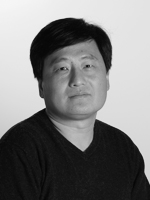
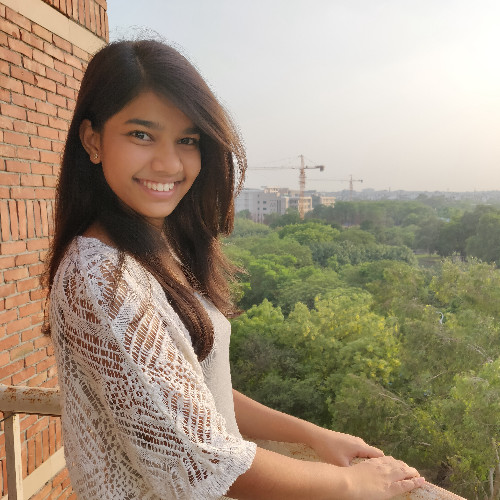
Chi Zhou is an Associate Professor of Electrical and Computer Engineering at Illinois Institute of Technology's Armour College of Engineering. She joined the department in 2006 and specializes in wireless communications and mobile networks with a focus on power control, heterogeneous network integration, and reliable transmission in OFDM/MIMO systems. Her work bridges theoretical analysis and practical network design. Ph.D. in Electrical and Computer Engineering (ECE), Northwestern University, 2002 M.S. in ECE, Northwestern University, 2000 B.S. in Business Administration and Automation, Tsinghua University, China, 1997 Research emphasizes energy-efficient protocols, cooperative diversity, and cross-layer optimization in wireless systems. Recent publications explore network coding, multistage cooperation in sensor networks, and hybrid EPON-WiMax architectures. Her work spans smart grid communication systems and multi-radio channel capacity optimization. Publications focus on improving wireless network performance through innovative resource allocation and interference management strategies. Collaborations include projects on outage performance modeling and distributed computing in heterogeneous environments. Contact: zhou@iit.edu | 312.567.7998 | Siegel Hall 130, Illinois Tech
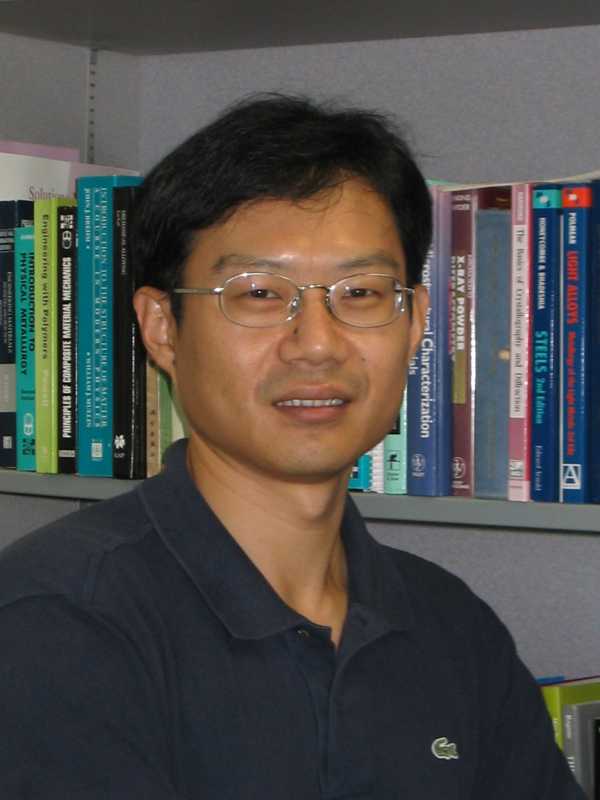
Lourdes Salamanca-Riba is a Professor of Materials Science & Engineering at the University of Maryland, affiliated with the Department of Materials Science and Engineering within the College of Engineering. Her research focuses on advanced materials including nanocomposites of ferroelectric-magnetic oxides, solid oxide fuel cells (SOFC), and nanocarbon-infused metals like covetics. She specializes in analytical techniques such as transmission electron microscopy (TEM) and STEM-EELS for studying semiconductor interfaces and nanostructure formation. Her work spans energy materials, high-temperature processing, and multifunctional composites. Key areas include improving the electrical/thermal properties of metal-ceramic systems and developing novel nanocarbon-matrix composites via electro-charging processes. Recent studies emphasize interface characterization in MOS devices and durability of SOFC cathodes under operational stress. Publications highlight innovations in graphene nanoribbon synthesis within metals, tunable mechanical properties of nanocomposites, and EMI shielding effectiveness. While no explicit awards are listed, her prolific output (over 100 articles from 2006–2025) underscores sustained contributions to materials science.
Akila Hewa Thondilege is a Postdoctoral Research Fellow at Queensland University of Technology (QUT), affiliated with the School of Electrical Engineering & Robotics. She is part of the Signal Processing, Artificial Intelligence, and Vision Technologies group. Her qualifications include a PhD from QUT and a B.Sc.Eng(Hons) in Computer Science and Engineering. Her research focuses on applying machine learning principles to solve complex problems in communications, defense, healthcare, sports, and infrastructure. Her work spans radar signal processing, medical imaging, and robotics applications. Recent contributions include developing radar spectrum detection datasets and multi-task learning frameworks for signal characterization. Earlier research explored semantic segmentation in multimodal images and aspect-based analysis of restaurant reviews. Akila’s publications reflect her expertise in machine learning, signal processing, and computer vision. She collaborates with teams addressing challenges in defense systems, healthcare monitoring, and robotic vision. While no academic awards are listed, her research consistently bridges theoretical advancements with practical applications in emerging technologies.
Anders Logg is a Professor in Applied Mathematics and Statistics at the University of Gothenburg, leading the Digital Twin Cities Centre. His work focuses on computational mathematics, finite element methods, and scientific software development. He is a core contributor to the FEniCS Project, an open-source computing platform for solving partial differential equations. Research interests include numerical analysis, multiphysics simulations, and applications in engineering, biology, and physics. Notable contributions include multimesh finite element methods, CutFEM techniques, and real-time simulations in augmented reality. Logg's work bridges theoretical mathematics with practical software implementation, emphasizing reproducibility and accessibility. Publications highlight advancements in mesh adaptation, error analysis, and fluid-structure interaction modeling. His collaborative projects span academia and industry, addressing challenges in computational geometry, urban modeling, and gravitational physics. Current efforts involve developing digital twin technologies for smart cities through the Digital Twin Cities Centre.
Xing Cai is a Professor at the Department of Informatics, University of Oslo, specializing in Scientific Computing and Machine Learning. His academic career spans several decades with a consistent focus on high-performance computing and its applications to complex scientific problems. He maintains an active research profile with numerous publications in top-tier journals and conferences. Professor Cai's research interests encompass parallel programming and high-performance computing, performance modeling and optimization, automated code generation, heterogeneous computing, and numerical methods for solving partial differential equations. His work extends to specialized applications in computational cardiology, computational geoscience, and biomedical computing. His research bridges theoretical computer science with practical applications in medicine and earth sciences, demonstrating exceptional interdisciplinary reach. An analysis of his recent publications (2019-2024) reveals a strong trend toward leveraging novel hardware architectures (GPUs, AI processors, specialized accelerators) for scientific computing, with particular emphasis on cardiac modeling applications. His work shows increasing sophistication in hardware-aware algorithm design, with publications spanning from fundamental performance modeling to domain-specific applications. The interdisciplinary nature of his work is evident in the diverse range of journals and conferences where he publishes, from computer science venues to specialized medical and geoscience publications. Professor Cai leads or participates in several significant research projects including the EuroHPC Centre of Excellence: Numerical Modeling of Cardiac Electrophysiology at the Cellular Scale (MICROCARD-2), High resolution simulation of cardiac electrophysiology on realistic whole-heart geometries, Maelstrom Associate Team, ODISSEE, Simula-Berkeley Education and Research collaboration (SIMBER), and aCG eX3: Experimental Infrastructure for Exploration of Exascale Computing. These projects reflect his leadership in both computational methodology development and domain-specific applications. His research group maintains strong collaborations with medical researchers, particularly in cardiac electrophysiology, and with geoscientists working on reservoir simulation. The publications list demonstrates consistent mentorship of junior researchers, with frequent co-authorship patterns suggesting an active supervision of PhD and postdoctoral researchers. His work on the EMI model for cardiac tissue represents a significant contribution to computational cardiology with potential clinical applications. The laboratory environment surrounding Professor Cai's work appears to be well-equipped for high-performance computing research, with access to advanced hardware platforms including GPU clusters, AI processors, and specialized accelerators. His publications on the use of Graphcore IPUs, Xeon Phi processors, and NVIDIA architectures indicate a well-resourced research environment capable of experimenting with cutting-edge hardware.
Prof. Dr. Thomas Wick is a Professor at the Institute of Applied Mathematics within the Faculty of Mathematics and Physics at Leibniz University Hannover. He holds leadership roles, including Executive Director of the Institute and membership in the Executive Board and Faculty Council. His research focuses on numerical methods for coupled nonlinear partial differential equations, multiphysics systems (e.g., fluid-structure interaction, phase-field fracture), adaptive finite element techniques, and robust solvers. Key projects include the DFG-funded SPP 1962 and SPP 1748 initiatives, the PhoenixD Cluster of Excellence, and international collaborations like the Indo-German Higher Education Partnership. He has received grants from DFG, DAAD, and the Alexander von Humboldt Foundation. His work emphasizes algorithm design, error control, and computational efficiency in engineering and scientific applications. Research Interests: Numerical modeling of coupled PDE systems, multiphysics phenomena, phase-field fracture, adaptivity, and optimization. Projects include CoMeTeNd (IRTG 2657/1), PhoenixD Task Group S4, and Strukturerhaltende Adaptive Enriched Galerkin Methods. Scientific Awards: Feodor Lynen Fellowship, DFG Projects, DAAD grants. Collaborations span Germany, Austria, India, Peru, and France. Publications highlight advancements in phase-field fracture, fluid-structure interaction, and adaptive methods. His contributions address challenges in mesh adaptivity, error estimation, and high-performance computing.
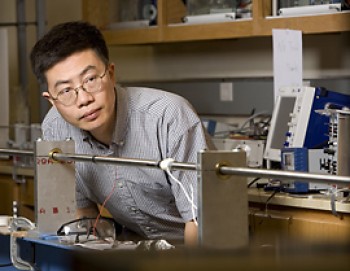
Dr. Hongbing Lu is the Louis A. Beecherl, Jr. Chair Professor and Associate Head for Undergraduate Studies in Mechanical Engineering at the Erik Jonsson School of Engineering and Computer Science, University of Texas at Dallas. He holds a PhD in Aeronautics from Caltech (1997), an M.S. in Engineering Mechanics from Tsinghua University (1988), and a B.S. in Solid Mechanics from Huazhong University of Science and Technology (1986). His research focuses on experimental mechanics, nanomechanics, mechanics of time-dependent materials, and the mechanical behavior of nanomaterials. Notable projects include studies on aerogel materials, additive manufacturing, and composite materials. He leads the MAML Lab and has secured over $10M in grants, including a DOE grant for nuclear reactor efficiency research and a $720K award from the University of Colorado. Lu has received prestigious awards such as the NSF Career Award (2000) and the Regents Distinguished Research Award (2008). His work spans interdisciplinary collaborations, including landmine blast studies and bio-inspired materials development. His recent publications emphasize advanced materials characterization and innovative manufacturing techniques.
Giovanni Maizza is a Full Professor at the Department of Applied Science and Technology (DISAT) at Politecnico di Torino, Italy. He leads research in advanced materials processing, multiphysics modeling, and additive manufacturing, with applications in aerospace, automotive, and industrial tooling. He has held leadership roles in EU and Italy-Japan collaborative projects and serves on international standards committees. Full Professor, DISAT, Politecnico di Torino Scientific Director of multiple national and commercial research projects Coordinator, Italy-Japan Network of Excellence on Nanomaterials Member, ISO/TC 164 and UNIMET standards committees Guest Editor, MATERIALS (2020–2022) Research Interests: Giovanni Maizza specializes in the development of multiphysics and multiscale methodologies for designing and optimizing materials and manufacturing processes. His work emphasizes reducing experimental burden through advanced simulation and modeling. Key areas include additive manufacturing (especially EBM of Ti6Al4V), spark plasma sintering, laser-based deposition and repair, powder metallurgy, and the processing of nanostructured and superhard materials. His research is highly interdisciplinary, combining computational modeling with experimental validation. Publication Trends: His recent publications focus on spark plasma sintering of ceramics and composites, microstructure modeling in aluminum alloys, and the development of transparent or superhard materials. There is a strong emphasis on process-structure-property relationships, with frequent use of finite element and particle-based simulations to understand thermal, mechanical, and microstructural evolution during processing. Scientific Awards and Recognitions: Fellow, UNIMET (2021–present) Fellow, ISO/TC 164 – Mechanical Testing of Metals (2021–present) Permanent Member, UNI/CT 026/GL 03 – Mechanical Testing of Metallic Materials Guest Editor, MATERIALS journal (2020–2022) Advising and Grants: While specific student names are not listed, Maizza has supervised numerous research projects funded by industry and public grants. He has served as Scientific Director for projects funded by Danieli SpA, KEMEX Ltd, AVIO GE SPA, and Punch Torino SPA. His work includes EU-funded initiatives and collaborations with Japanese laboratories (NIMS, AIST). He has developed custom simulation codes and utilized commercial software for industrial clients. Labs and Research Teams: He is affiliated with the Center of Modelling and Design of Materials and Processes (DISAT), where he leads research integrating computational modeling, experimental testing, and industrial application. His team works on developing self-consistent multiphysics codes using Fortran, MATLAB, and C++, and applies tools like ANSYS, COMSOL, and LS-DYNA.
Martín Bayón Gutiérrez is an Assistant Professor at the Department of Electrical Engineering and Systems and Automation, within the School of Industrial, Computer Science and Aerospace Engineering at the University of León. His research focuses on Systems Engineering and Automation, with a strong emphasis on robotics, IoT security, and machine learning applications. Thesis: Percepción y optimización en plataformas robóticas autónomas (2025) Advisors: Dr. Maite García-Ordás, Dr. José Alberto Benítez Andrades His work spans multiple domains including autonomous robotics, cybersecurity for IoT environments, and biomedical applications. Recent publications demonstrate expertise in SLAM algorithms, network security, and multi-sensor fusion techniques. Research projects include: CAD2SLAM adaptive mapping systems IoT-based smart office QoS optimization CoAP attack detection in IoT networks ASD detection through social media text analysis LiDAR and camera sensor fusion for road detection
Junaid Shuja is a researcher with significant contributions to Mobile Edge Computing , Cloud Environments , and IoT Systems . Collaborating with scholars like Kashif Bilal , Abdullah Gani , and Ehzaz Mustafa , his work spans computation offloading, resource allocation, and security frameworks. Research Highlights 2017: Analysis of Vector Code Offloading in Heterogeneous Architectures 2021: Survey on Machine Learning for Edge Caching 2023: Reinforcement Learning for Computation Offloading in Vehicular Networks 2024: Blockchain Applications in Land Lease Systems and Employee Transfers 2025: Deep Reinforcement Learning for Resource Optimization His recent work focuses on Deep Learning and Blockchain for latency-sensitive applications in IoT and vehicular networks, published in IEEE Access , Cluster Computing , and Telecommunication Systems . Key co-authors include Faisal Rehman , Abdallah Namoun , and Muhammad Bilal .
Shanthika Naik is a Senior Research Fellow at IIT Jodhpur, specializing in Deep Learning and Geometric Processing. She holds a Master’s degree from the Center for Visual Information Technology (CVIT) at IIIT Hyderabad and a Bachelor’s in Computer Science from KLE Technological University. Research Focus: 3D garment retargeting, UV parametrization, neural terrain generation, point cloud processing, and clothed human modeling. Key Projects: Self-supervised 3D surface parameterization, physics-based garment deformation frameworks, and interactive terrain authoring tools. Her work often involves interdisciplinary applications of Deep Learning in computational geometry and multimedia systems. She has contributed to publications at SIGGRAPH Asia, IGARSS, and PReMI conferences, focusing on improving accuracy and efficiency in 3D simulations. Shanthika has collaborated with labs including the VCAI lab (MPI Saarland) and 3DVisLab. Her open-source contributions include repositories for FeatureNet and terrain generation frameworks.
Jack van Wijk is a Full Professor in Visualization at Eindhoven University of Technology (TU/e). He holds a MSc (1982) and PhD (1986) in Computer Science from Delft University of Technology. His research focuses on information visualization, visual analytics, and mathematical visualization, with notable contributions to flow visualization and cartographic projections. He has co-authored over 160 papers and served as program co-chair for multiple IEEE Visualization conferences (2003–2023). Awards include the IEEE Visualization Technical Achievement Award (2007), Eurographics 2013 Outstanding Technical Contributions Award, and the VGTC Lifetime Achievement Award (2021). In 2023, he was honored with the Order of the Netherlands Lion. He co-founded MagnaView BV and SynerScope BV, and served as Scientific Director of the Data Science Center Eindhoven (2018–2021). Notable projects include SequoiaView (disk visualization), myriahedral projections, and IBFV (Image-Based Flow Visualization).
Voichita Dadarlat is an Assistant Professor of Biomedical Engineering at Purdue University's College of Engineering, located on the West Lafayette campus. Her research focuses on molecular dynamics simulations, protein stability, and biophysical modeling, with particular attention to protein compressibility, hydration effects, and computational methods in structural biology. She employs advanced simulation techniques to study protein behavior, including the role of charged groups, phosphorylation, and environmental interactions. Her work integrates experimental and computational approaches, such as particle mesh Ewald methods and force field modifications, to enhance the accuracy of biophysical models. Dadarlat's studies also explore the structural dynamics of biological macromolecules, including DNA and proteins, contributing to understanding their thermodynamic stability and functional mechanisms. Key contributions include insights into protein compressibility decomposition and the interplay between hydration shells and molecular stability. While no specific awards or grants are listed, her extensive publication record (2001–2012) demonstrates a sustained focus on advancing computational biophysics and molecular modeling techniques. Her research has implications for drug design, protein engineering, and understanding fundamental biological processes.
Zhang Yunfeng is an Associate Professor in the Department of Mechanical Engineering at the National University of Singapore (NUS), where he has been a faculty member since 1992. He teaches undergraduate courses including ME3261: Principles of CAD/CAM and ME4262: Automation in Manufacturing, contributing to advanced manufacturing education. He earned his B.Eng. from Shanghai Jiao Tong University (1985) and Ph.D. from the University of Bath (1991), establishing his expertise in computational manufacturing systems. His research spans Computational Intelligence in Design and Manufacturing—with focus areas in reverse engineering, CAPP coupled with production scheduling, and multi-axis tool-path planning—and UAV Applications, particularly mission planning for heterogeneous UAVs in complex environments. Analysis of his 2009-2015 publications reveals strong emphasis on sustainable manufacturing (energy-efficient machining processes) and intelligent UAV coordination systems. His work consistently bridges theoretical computational intelligence with industrial implementation, yielding practical algorithms for manufacturing optimization and aerial robotics. Professional recognition includes: Senior Member of the Society of Manufacturing Engineers (SME) His academic service encompasses key CAD/CAM instruction and research supervision. While specific grant details and student lists are unreported, his sustained publication output and 30+ year tenure at NUS indicate substantial research funding and mentorship activities in manufacturing automation and UAV technology.
Dr. Chris Cantwell is a Professor in Computational Engineering at the Department of Aeronautics, Imperial College London . He specializes in developing high-performance numerical methods and software tools for fluid dynamics and biomedical applications. His work focuses on spectral/hp element methods, machine learning integration, and open-source frameworks like Nektar++. Education : MMath in Mathematics (2005), University of Warwick MSc in Scientific Computing (2006), University of Warwick PhD in Scientific Computing (2009), University of Warwick Research Interests : High-fidelity simulation of complex flows (aerodynamics, turbomachinery, nuclear fusion) Cardiac electrophysiology modeling and biomedical engineering Machine learning for fluid dynamics and system dynamics Open-source software development (Nektar++ framework) Affiliations : Imperial College Centre for Cardiac Engineering ElectroCardioMaths Programme Quantum Engineering, Science and Technology Nektar++ Project Leadership Labs & Teams : Leading research in fluid dynamics and cardiac engineering at Imperial College Cross-disciplinary collaborations in biomedical and computational sciences