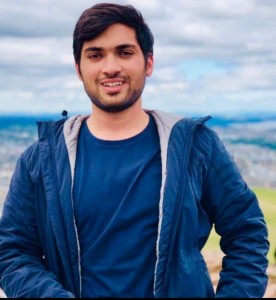
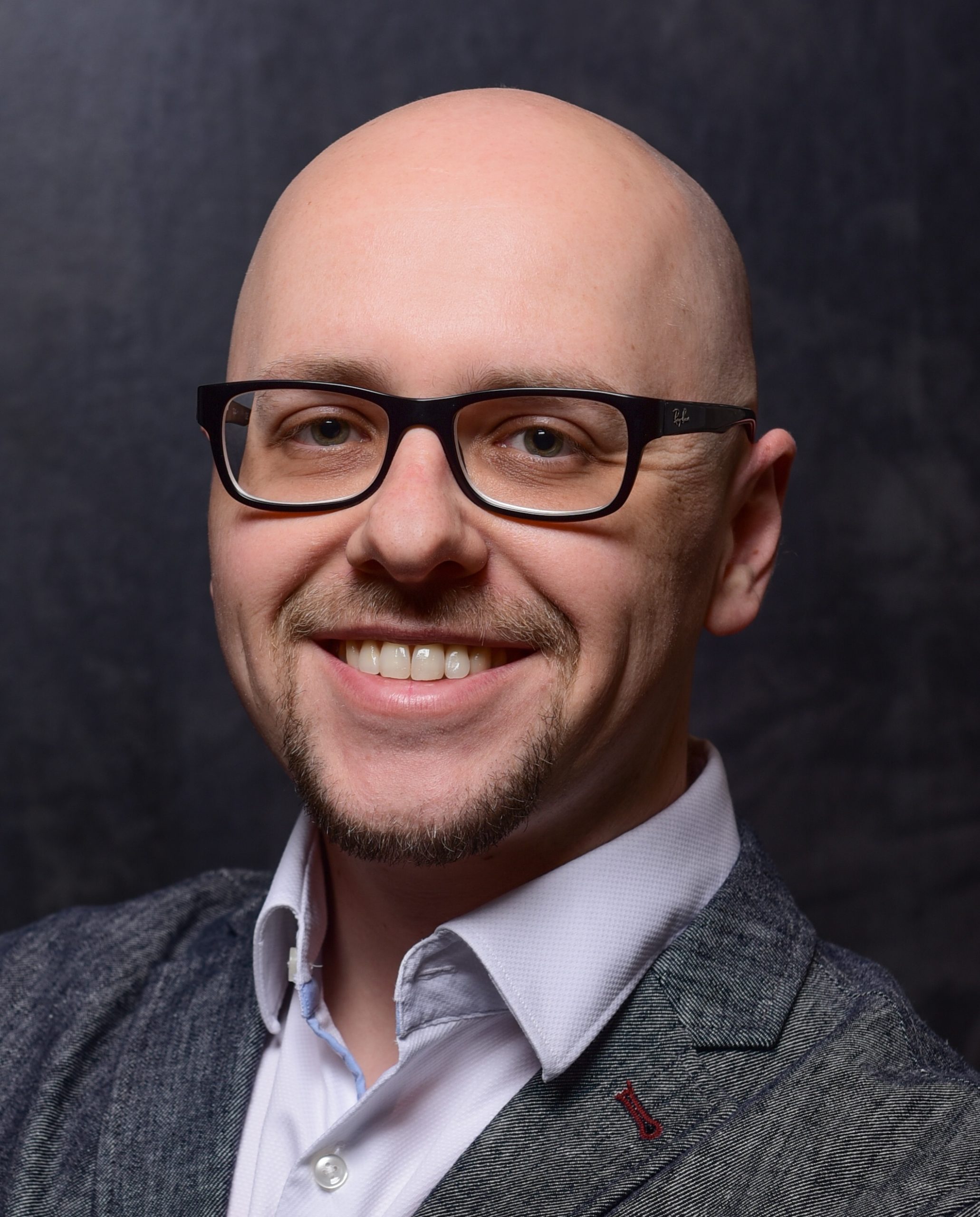
Mennan Selimi is a Full Professor at the Faculty of Contemporary Sciences and Technologies at South East European University (SEEU). His research focuses on Federated Learning, Edge Computing, Wireless Mesh Networks, and Decentralized Systems, with applications in IoT and resource-constrained environments. Position: Full Professor Affiliation: Faculty of Contemporary Sciences and Technologies, SEEU Contact: m.selimi@seeu.edu.mk Research Trends: Professor Selimi's work emphasizes adaptive machine learning frameworks for low-capacity devices, integration of LoRa technology in mesh networks, and decentralized edge infrastructure management. His recent publications highlight innovations in federated learning algorithms for wireless environments and experimental platforms for distributed AI research. Collaborations: He actively collaborates with researchers like Felix Freitag, Leandro Navarro, and Joan Miquel Sole across institutions in Italy, Montenegro, and Spain. His projects include the CityLab Testbed and LightKone Reference Architecture.
Hao Li is a MSCA Postdoc Fellow and Visiting Scholar at LIP6 , affiliated with the University of Southern Denmark in the Department of Mechanical Engineering . His research focuses on advanced computational methods for topology optimization in thermal, fluid, and structural engineering systems. Education: Not explicitly stated in the provided text. Current Projects: Leading EU-funded research on heat exchanger design using multiscale models and machine learning. Dr. Li's work spans multiscale topology optimization, level-set methods, and fluid-structure interaction, with applications in microchannel cooling, compliant mechanisms, and biodegradable composites. His recent publications highlight advancements in 3D conjugate heat transfer, adaptive meshing, and eigenfrequency maximization. The trends in his research output (2017–2025) emphasize thermal-fluid systems , high-resolution structural optimization , and manufacturable composite designs . Notable subfields include triply periodic minimal surfaces for cooling channels, nonlinear buckling analysis, and phasor-based dehomogenization techniques. Teaching & Supervision: Currently supervising projects on topology optimization frameworks for heat sinks and high heat flux cooling. His past projects (2018–2023) include research on piezoelectric transducers and thermal-fluid system design. Labs & Collaborations: Collaborates with institutions in Japan and France, focusing on experimental validation and industrial applications. His network includes partnerships with researchers in structural mechanics, computational fluid dynamics, and additive manufacturing.
Dr. Hussain Ali Abid is a Postdoctoral Research Assistant at the School of Engineering and Materials Science, Queen Mary University of London. His research focuses on computational fluid dynamics, aeroacoustics, and machine learning applications in aerospace engineering. BEng(Hons), PhD Research Interests: Computational aeroacoustics Large-eddy simulations Jet and propeller noise modelling Machine learning in aerodynamics Trailing edge noise prediction Analytical and GPU-accelerated methods Publications highlight his work on CABARET method applications, chevron nozzle noise reduction, and data-driven noise models. He specializes in rotating mesh simulations and turbulent flow anisotropy studies.
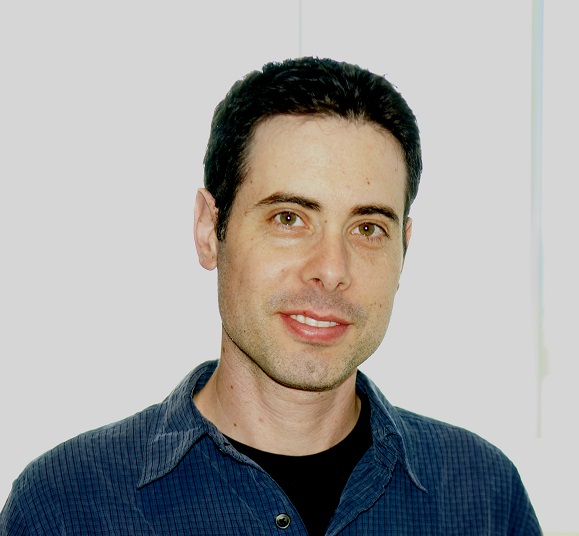
Eran Treister is an Assistant Professor at the Ben Gurion University of the Negev in the Department of Computer Science. He completed his postdoctoral fellowship at the University of British Columbia (2014-2016) and earned his PhD from the Technion in 2014 under Prof. Irad Yavneh. His research spans computational science, numerical methods, and machine learning, with a focus on: Scalable algorithms for inverse problems Graph Neural Networks (GNNs) optimization Seismic and optical imaging via PDE solvers Low-precision deep learning acceleration Multilevel preconditioning techniques Recent work explores: Graph neural networks for PDEs with adaptive meshes Deep learning approaches to Helmholtz equation modeling 3D shape reconstruction via parametric level sets He serves on editorial boards: SIAM Journal on Scientific Computing (2024-) Copper Mountain Conference on Multigrid Methods (2025) International Conference on Machine Learning (ICML) as Area Chair (2025) Current teaching: Optimization Methods for Data Science (Spring 2025) Deep Learning Mini-Project (Winter 2024/5) Advanced Numerical Optimization (Spring 2025)
Frederik Zahle is a Senior Research Scientist at the Department of Wind and Energy Systems at the Technical University of Denmark (DTU). His work focuses on Wind Turbine Engineering , Computational Fluid Dynamics (CFD) , and Aeroelastic Stability Analysis , particularly in airfoil optimization, vortex shedding, and multi-fidelity modeling. He contributes to international collaborations such as the IEA Wind Tasks and leads projects on boundary layer control and large-scale turbine design. Key Research Areas : Aerodynamics, CFD, aeroelasticity, airfoil design. Supervision : He supervises PhD students like Sina Habibzadeh and Felipe Cespedes Moreno. Projects : Involved in initiatives like the Tip and Root Vortex Generators for Boundary Layer Control and the IEA 22-MW Reference Wind Turbine . Zahle's recent articles emphasize high-fidelity CFD , stabilized solvers , and offshore turbine optimization , reflecting trends in computational modeling and system engineering for wind energy. He actively participates in conferences and workshops, advancing aerodynamic design tools and validating complex flow simulations.
Vincent Danjean is an associate professor at Grenoble Alpes University , specializing in parallel computing, high-performance computing, and bioinformatics. He earned his PhD in 2004 from École Normale Supérieure de Lyon under the supervision of Raymond Namyst. Research Interests: Vincent's work spans several critical areas in computational science: Parallel and Distributed Systems: Focus on task-based parallelism and hybrid cluster architectures. Performance Analysis: Development of visual frameworks for analyzing parallel applications. Bioinformatics: Application of computational methods to genetic and genomic data analysis. GPU Computing: Efficient scheduling and work stealing strategies for multi-GPU systems. Reproducible Research: Workflows using Git and Org-mode for scientific transparency. Publication Trends: His publications demonstrate a consistent focus on advancing parallel computing techniques, with significant contributions to GPU scheduling, cache-efficient algorithms, and visualization tools. Recent work includes interdisciplinary applications in genomics and cybersecurity protocols. Contact: vincent.danjean@imag.fr
Professor Yuming Jiang is affiliated with the Norwegian University of Science and Technology (NTNU) as a full Professor in the Department of Information Security and Communication Technology, Faculty of Information Technology and Electrical Engineering. He leads the Master of Science in Digital Infrastructure and Cyber Security program and serves on the board of IEEE Norway Section. BSc: Peking University MEng: Beijing Institute of Technology PhD: National University of Singapore (NUS) His research focuses on network calculus , quality of service guarantees in communication networks, and performance analysis of wireless systems and time-sensitive networks . He has developed foundational models for stochastic network calculus (snetcal) and explored deterministic networking (DetNet) principles. Recent publications address UAV-assisted IoT networks , NFV recovery strategies , and blockchain transaction analysis . He has held visiting positions at Northwestern University (2009-2010) and Columbia University (2015-2016). ERCIM Fellowship recipient Member of Norwegian Academy of Technological Sciences (NTVA) His work spans network management , virtualization , and cybersecurity in both theoretical and applied contexts.
Nico Pietroni is a Professor at the School of Computer Science at the University of Technology Sydney (UTS), where he conducts research at the intersection of geometry processing, digital fabrication, and architectural geometry. His work bridges theoretical foundations in computational geometry with practical applications in industrial production pipelines, and he is affiliated with the Visualisation Institute (VI) Research Network at UTS. His primary research interests include geometry processing, mesh parametrisation, digital fabrication, architectural geometry, and computational design. He has pioneered techniques such as FlexMaps for computational design of flat flexible shells and Metamolds for computational design of silicone molds. His research focuses on developing concepts and practical algorithms for the creation and manipulation of digital shape representations, with applications spanning entertainment industry, digital fabrication, and architectural geometry. His recent publications demonstrate a strong trend toward computational methods for digital fabrication and architectural applications. His work spans from garment design and alteration to architectural structures like grid shells and bending-reinforced structures. He has developed innovative approaches for surface approximation, mesh processing, and computational design that address practical challenges in manufacturing and construction, with particular emphasis on reducing manufacturing complexity while maintaining design integrity. Wynne Prize finalist for "Bending the Light" artwork, exhibited at the Art Gallery of New South Wales Professor Pietroni has supervised numerous research students working on projects related to geometry processing, digital fabrication, and computational design. His funded research includes projects such as "Digital Optimization of Personalised Spacesuit" and "CRC-P Shoulder Replacement Implant Design for Additive Manufacturing," demonstrating the practical applications of his work across diverse fields from space research to medical technology. He has secured multiple research grants totaling significant funding for computational design research. He has developed several influential software projects including MeshLab (an open-source system for 3D mesh processing that won the SGP Software Award in 2017), HexaLab (an online viewer for hexahedral meshes), and QuadMixer (for layout-preserving blending of quadrilateral meshes). His work has been widely adopted by both academic researchers and industry practitioners in fields ranging from entertainment to architecture to medical technology.
Fabrice Theoleyre is a Research Director at CNRS , affiliated with ICUBE UMR 7357 at the University of Strasbourg . He leads the Network Team , focusing on wireless networking, Industrial IoT, and cybersecurity. His research spans low-power networks, 6TiSCH protocols, and AI-driven network design. Education: Habilitation à Diriger des Recherches (HDR) in 2014. Students: Supervised 8 PhD/Master’s students, including Fatemeh Stodt, Amine Falek, and Rodrigo. Research Interests include Industrial IoT, wireless mesh networks, digital twins, and cybersecurity. His work addresses network reliability, protocol optimization, and non-terrestrial communication (e.g., satellite, UAVs). Recent projects involve ANR DONUTS (2024) and an International Emerging Action (2025) with South Korean collaborators. Scientific Awards : Best Paper Award at Adhocnow'16 Elevation to IEEE Senior Member in 2016 Service & Leadership: Organized summer schools, workshops (e.g., EWSN 2020), and special issues. Co-chaired conferences like IEEE ISCC 2024 and GDR RSD (2024). Actively recruits PhD/postdoc candidates for projects on AI-powered mesh networks and IIoT security.
Marie E. Rognes is a Chief Research Scientist at Simula Research Laboratory's Numerical Analysis and Scientific Computing department. She specializes in computational mathematics and biomedical modeling, particularly focusing on cerebral fluid dynamics, electrodiffusion, and poroelasticity. Her work bridges advanced numerical methods with clinical applications in neuroscience. Research Pillars: Brain waterscape modeling, finite element methods, and biophysical simulations Software Leadership: Key contributor to FEniCS and Dolfin-adjoint projects Application Domains: Neurodegenerative diseases, cardiac electrophysiology, and personalized medicine Recent publications reveal methodological innovations in perivascular flow modeling , ionic transport simulations , and multi-scale brain mechanics . Her work on glymphatic system dynamics and cardiac tissue modeling demonstrates cross-disciplinary impact. While no explicit awards are listed, her extensive publication record in top-tier computational journals (SIAM, PLOS, Nature Computational Science) and invited talks at premier conferences (SIAM, ECCOMAS, FEniCS workshops) establish her as a leading figure in biomedical computing.
Jerry Eriksson is an Associate Professor at the Department of Computer Science , Umeå University. He is also affiliated with the High Performance Computing Center North (HPC2N) at the same institution, focusing on computational methods and applications. Academic Rank : Associate Professor Primary Affiliation : Department of Computer Science, Umeå University Secondary Affiliation : High Performance Computing Center North (HPC2N) Email : jerry.eriksson@umu.se Dr. Eriksson's research spans interdisciplinary domains where computer science intersects with applied physics and network engineering . His work includes: Medical Imaging : Fluorescence optical tomography and electromagnetic shape tomography using advanced mathematical models Computational Methods : Implicit radial basis function techniques, Gauss-Newton optimization, and regularization schemes Network Engineering : Collision detection algorithms in wireless networks and peer-to-peer streaming protocols 3D Measurement : Bundle adjustment formulations for photogrammetry and robotics applications Article trends show a focus on applied inverse problems (2003-2017) with emphasis on: Medical imaging reconstruction algorithms Wireless network optimization techniques Geometric computing for 3D modeling Mathematical methods in computational engineering
Jacek Rak is a Professor at the Department of Communications and Computer Networks within the Faculty of Electronics, Telecommunications and Informatics at Gdańsk University of Technology. His research career spans over two decades with continuous contributions to network resilience engineering, evidenced by over 50 publications in top-tier IEEE and Springer journals. He serves as a leading authority in optical network design, vehicular communications, and disaster-resilient systems, frequently collaborating with international institutions including Hungarian Academy of Sciences, University of Lisbon, and Polish-Japanese Academy of Information Technology. Professor Rak's research focuses on network resilience engineering across multiple domains. His work establishes foundational frameworks for protecting communication systems against disasters, with significant contributions to optical network survivability, 5G/6G fronthaul optimization, and vehicular network security. His research methodology integrates mathematical modeling with practical implementation, particularly evident in his development of the κ-Penalty approach for disjoint path calculation and eFRADIR disaster resilience framework. Recent work emphasizes the convergence of wireless and optical technologies for next-generation networks, addressing critical challenges in energy efficiency and cost modeling for 6G infrastructure. His publication portfolio reveals a clear evolution from VANET security (2010-2015) to comprehensive disaster resilience frameworks (2016-present), culminating in the 2020 Springer monograph Guide to Disaster-Resilient Communication Networks co-edited with David Hutchison. Current research examines optical fronthaul optimization for 6G systems, with multiple 2023-2025 publications establishing new methodologies for cost-energy tradeoff analysis in next-generation wireless infrastructure. IEEE Communications Society Distinguished Lecturer (2018-2020) Editor-in-Chief, Optical Switching and Networking special issue on Disaster-Resilient Optical Networks (2021) Technical Program Committee Chair, International Workshop on Reliable Networks Design and Modeling (RNDM 2012-2015) Professor Rak actively mentors next-generation researchers through collaborative projects like RECODIS (Resilient Communication Services Protecting End-user Applications from Disaster-based Failures) and coordinates international research efforts through EU-funded initiatives. His work demonstrates consistent leadership in establishing resilience metrics and validation methodologies for critical communication infrastructure, with increasing focus on climate change adaptation and sustainable network design principles in recent publications.
Dr. Sebastian Kuckuk is a researcher and head of training at the Erlangen National High Performance Computing Center (NHR@FAU), Friedrich-Alexander-Universität Erlangen-Nürnberg. He is affiliated with the Department of Computer Science and contributes to the Chair of System Simulation. His work bridges research, training, and software development in high-performance computing. Education: PhD in Computer Science, Friedrich-Alexander-Universität Erlangen-Nürnberg (2019) His research focuses on enhancing performance portability and programmer productivity using domain-specific languages, code generation, automatic parallelization, and GPU programming. These techniques are applied to develop massively parallel numerical solvers for computational fluid dynamics, particularly for the shallow water equations. He is a core developer of the ExaStencils framework, which enables automated generation of efficient multigrid solvers for structured and patch-structured grids. Analysis of his recent publications (2020–2025) reveals a consistent focus on code generation, GPU acceleration, and solver optimization for fluid dynamics problems. Key themes include heterogeneous computing, block-structured grids, and adaptive methods. His work integrates advanced compiler techniques with numerical mathematics to improve scalability and performance on modern HPC architectures. Scientific Recognition: NVIDIA Deep Learning Institute (DLI) University Ambassador Certified Instructor for DLI courses in GPU programming and CUDA He actively contributes to teaching and training through courses such as Programming Techniques for Supercomputers and High-End Simulation in Practice . He conducts workshops and tutorials on GPU programming and performance optimization. While no formal students are listed, his mentoring role is evident through collaborative research and training activities. He has no recorded grants in the provided text, but his involvement in NHR and KONWIHR projects indicates active participation in funded HPC initiatives. Laboratories and Projects: Lead developer of ExaStencils , a code generation framework for multigrid solvers Contributor to GHODDESS , a module for higher-order discretizations in shallow water modeling Active in NHR@FAU and KONWIHR projects focused on GPU computing and performance optimization
Dr. Pin Shuai is an Assistant Professor in the Department of Civil and Environmental Engineering at Utah State University, affiliated with the Utah Water Research Laboratory (UWRL) within the College of Engineering. He leads the Shuai Computational and Integrated Hydrology (SCI-Hy) research group, focusing on advancing the understanding of complex hydrological systems through computational modeling and data integration. Dr. Shuai holds a PhD in Geology (Hydrogeology) from Texas A&M University (2017), an MS in Water Resources Engineering from Wuhan University (2013), and a BS in the same field from Wuhan University (2011). His academic journey was followed by a postdoctoral and staff scientist position at the Pacific Northwest National Laboratory from 2017 to 2022. His research interests are centered on groundwater-surface water interactions, nutrient and contaminant transport, watershed biogeochemistry, and integrated hydrologic modeling. He employs a model-data integrative approach combining field observations, laboratory data, remote sensing, and numerical models powered by high-performance computing. His group emphasizes open-source and reproducible science, addressing critical environmental challenges such as human-water interactions and the impacts of disturbances like drought and land use change on watershed processes. The recent publications of Dr. Shuai reflect a strong trend toward computational hydrology, with a focus on high-resolution watershed modeling, the role of streambed representation, the impact of meteorological forcing resolution, and the application of machine learning and deep neural networks for model calibration and permeability estimation. His work bridges traditional hydrological modeling with modern data science techniques, aiming to improve predictive capabilities in complex hydrological systems. Dr. Shuai has mentored several graduate students, including Collins Stephenson, Ehsan Ebrahimi, Pamela Claure, and Jihad Othman, guiding them through thesis research in civil and environmental engineering. While no scientific awards are listed in the provided text, his active research program, consistent publication record in high-impact journals, and leadership of a growing research group indicate a strong trajectory in the field. He teaches courses such as Groundwater Engineering, Hydrologic Modeling, and GIS for Civil Engineers, contributing to both graduate and undergraduate education. The SCI-Hy group, under Dr. Shuai’s leadership, is actively engaged in projects that integrate advanced modeling tools like the Advanced Terrestrial Simulator (ATS) and Watershed Workflow to parameterize and simulate watershed processes. The group welcomes passionate students and recently advertised for a postdoctoral position focused on ML/AI applications in hydrology, highlighting its forward-looking research direction.
Torben Peters is a Lecturer in the Department of Civil, Environmental and Geomatic Engineering at ETH Zürich. His research focuses on 3D computer vision, deep learning, and generative models applied to geospatial analysis and photogrammetry. Research Focus: Peters develops computational tools for processing LiDAR point clouds, aerial imagery, and satellite data. His work enables automated environmental monitoring (e.g., forest inventories and avalanche mapping) and urban modeling through advanced segmentation and 3D reconstruction techniques. Generative models like TetraDiffusion expand capabilities in geometric deep learning. Publication Trends: Recent articles emphasize scalable geospatial AI, including war damage assessment in Ukraine, global biomass datasets, and self-supervised shape completion. Methodological innovations center on reducing annotation dependencies and improving geometric accuracy. Teaching: Leads courses on image-based mapping and geodetic data processing at ETH Zürich.