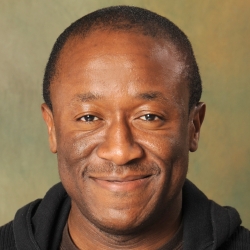
Henry Boateng is an Associate Professor in the Department of Mathematics at San Francisco State University (SFSU), affiliated with the College of Science & Engineering. His research focuses on scientific computing, computational chemistry, and numerical analysis with applications in particle methods, materials science, and randomized linear algebra. He develops advanced algorithms for electrostatic interactions, treecode methods, and hierarchical clustering. Education details are not explicitly stated but inferred from his academic role. His work integrates computational mathematics with interdisciplinary applications, supported by grants from NSF and the U.S. Department of Energy. He has developed multiple software tools in C++, Fortran, and Python for treecode implementations, including the Periodic Coulomb Tree Method and tricubic interpolation-based algorithms. Research interests include mesh-free methods, multipolar electrostatics, and high-performance computing. His publications emphasize algorithm design for efficiency and accuracy in large-scale particle systems. He teaches courses in linear algebra, numerical analysis, and computational mathematics at SFSU and previously at Bates College.
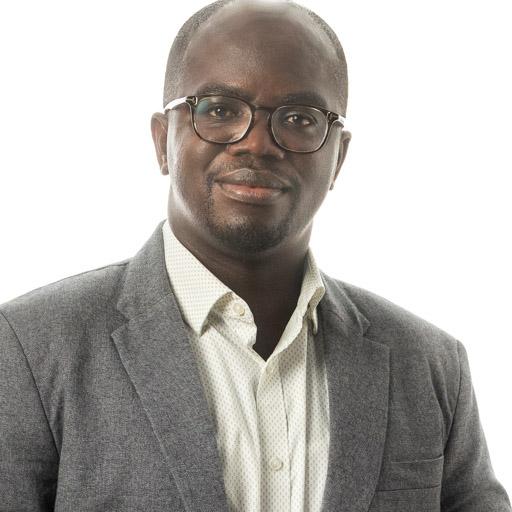
Dr. Ebenezer Ekow Essel is an Assistant Professor in the Department of Mechanical, Industrial and Aerospace Engineering at Concordia University. His research focuses on turbulence, aerodynamics, flow control, and computational fluid dynamics, with a particular emphasis on synthetic jet actuators, boundary layer interactions, and machine learning applications in bioassay analysis. He holds a B.Sc. from Kwame Nkrumah University of Science and Technology (Ghana), and M.Sc. and Ph.D. degrees in Experimental Fluid Mechanics from the University of Manitoba. His career includes postdoctoral research at the University of Windsor (NSERC PDF recipient) and the University of Toronto’s Turbulence Research Laboratory. Education: B.Sc. Mechanical Engineering (KNUST), M.Sc./Ph.D. Experimental Fluid Mechanics (University of Manitoba) His research explores advanced flow control techniques, computational methods, and experimental fluid mechanics. Key areas include synthetic jet dynamics, turbulent boundary layers, and the integration of machine learning for bioassay analysis. Recent work emphasizes GPU-native adaptive mesh refinement for lattice Boltzmann simulations and flow interactions in complex geometries. Dr. Essel’s publications span topics like jet actuator modeling, wake interference in cylinder arrays, and turbulent flow characterization in automotive and hydraulic contexts. He leads the Turbulence Research Lab at Concordia and has received the NSERC Postdoctoral Fellowship (2019). Notable Awards: NSERC Postdoctoral Fellowship (2019) His advising focus includes thesis supervision in fluid dynamics and flow control. Current research projects involve active flow control strategies, aerodynamic optimization, and high-performance computing for fluid simulations.
Dr. Eike Mueller is a Reader (Associate Professor) in the Department of Mathematical Sciences at the University of Bath. His research focuses on developing fast numerical algorithms for solving physical problems across scales, from atmospheric models to subatomic particles. As part of the Numerical Analysis group, he specializes in parallel computing implementations using frameworks like DUNE and Firedrake/PyOP2. His work is characterized by close collaboration with the Met Office on weather and climate forecasting models. Research interests center on numerical techniques for complex systems, emphasizing parallel computing architectures including GPU clusters. Key areas include massively parallel solvers for PDEs, multilevel Monte Carlo methods for atmospheric dispersion, and performance-portable frameworks for physics simulations. Recent work explores machine learning integration with traditional numerical methods for enhanced computational efficiency. Publications demonstrate consistent focus on accelerating scientific computation through novel algorithms. Recent articles emphasize the application of multigrid methods to climate modeling, neural networks in numerical integration, and Bayesian inference techniques. A significant portion of work targets performance optimization on modern hardware architectures including GPU acceleration. Research leadership includes principal investigator roles for major EPSRC projects: 'MGHyPE: An ExaHyPE version with a multigrid solver' and 'IAA – Accelerating climate- and weather-forecasts with faster multigrid solvers'. Collaboration with the Met Office has resulted in operational improvements to weather prediction models through bespoke solver development.
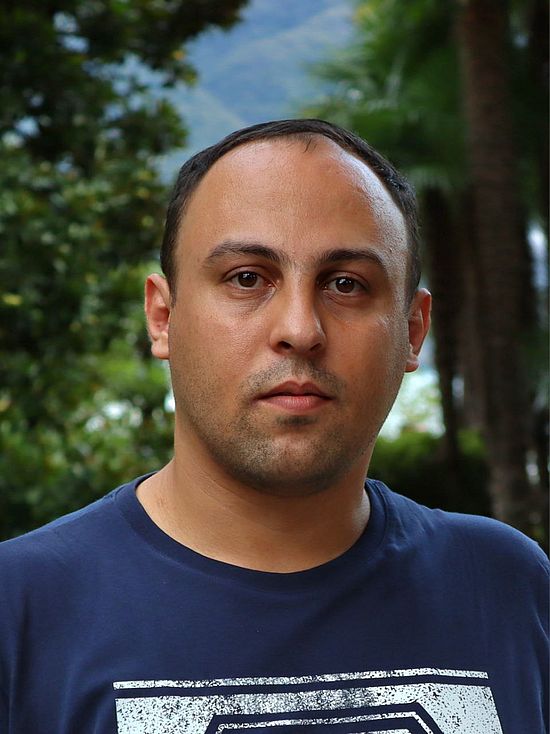
Ehsan Rahmatizad Khajehpasha is a Research Fellow at the University of Basel's Department of Physics, part of the Computational Physics Group led by Prof. Stefan Goedecker. He holds a PhD in Computational Physics from the Institute for Advanced Studies in Basic Sciences (Zanjan, 2016–2021), a Master's in Solid-state Physics from the University of Zanjan (2014–2016), and a Bachelor's in Solid-state Physics from the Iran University of Science and Technology (2010–2014). His research focuses on advancing computational methods for atomistic simulations, including machine learning potentials, charge equilibration techniques, and structure prediction algorithms. Key projects include the development of the FLAME library for atomistic modeling environments and contributions to the Minima Hopping algorithm for materials discovery. Recent work emphasizes entropic contributions in phase transitions and improving the accuracy of density functional theory calculations using surface integral approaches. Publications highlight advancements in computational physics, such as optimizing geometry calculations, accelerating machine learning potentials, and analyzing free energy landscapes in molecular crystals. Collaborations span interdisciplinary topics like bioinformatics (e.g., predicting BRCA gene variants) and agricultural genomics (vernalization gene prediction). He is affiliated with the Philosophisch-Naturwissenschaftliche Fakultät and actively contributes to the Computational Physics Group's projects in materials science and quantum chemistry.
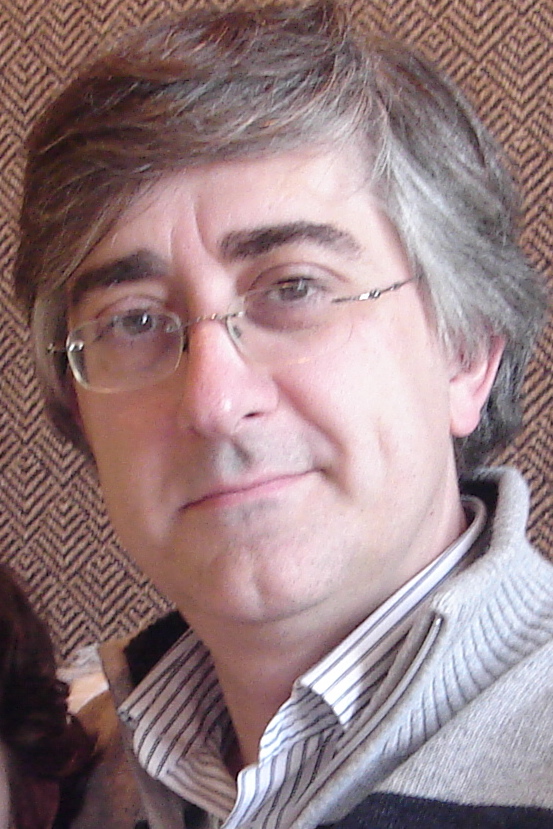
Dr. José Manuel Rodríguez Seijo is an Associate Professor at the Department of Mathematics within the Higher Technical School of Architecture at the University of A Coruña. With 6 teaching quinquennia and 4 research sexennia, he specializes in mathematical modeling for physical systems. Research Focus: Partial differential equations, asymptotic analysis, and mechanics of continuous media Teaching: Mathematics for Architecture, Continuum Mechanics, Mathematical Modeling Students: Supervised 2 doctoral theses to completion His recent publications predominantly address thin domain modeling in elasticity and shallow water dynamics , with key contributions to asymptotic analysis and numerical methods for reduced dimensional problems. Active in European research projects (2019-2022) and national grants (MINECO 2016-2020, multiple earlier projects), he has presented at international conferences across 15 countries including Finland, Italy, and Portugal.
Professor Vaughan Voller is a faculty member in the Department of Civil, Environmental, and Geo-Engineering at the University of Minnesota, where he conducts research at the St. Anthony Falls Laboratory. His work focuses on developing numerical and analytical techniques for problems in geophysics and heat transfer, with particular emphasis on situations involving moving boundaries and free surfaces. Professor Voller's educational background spans several decades of research in computational methods for geophysical systems. His expertise includes modeling crystal growth in undercooled melts, shoreline advance into sedimentary basins, unsaturated drainage, and particle-based solutions to Stefan problems. His research bridges theoretical mathematical approaches with practical geophysical applications, particularly in understanding shoreline evolution, sediment transport processes, and phase change phenomena. His recent publications (2021-2025) demonstrate a strong focus on coastal hydrogeology, deltaic systems evolution under sea-level changes, anomalous diffusion phenomena, and moving boundary problems in geophysical contexts. The research shows increasing integration of fractional calculus methods to address complex transport phenomena that don't follow classical diffusion models. Professor Voller has secured significant research funding for projects including: Field Investigation of Hydrologic and Hydraulic Characteristics of Effective Sea Lamprey Barriers (2025-2027) HYDROLOGIC AND HYDRAULIC CHARACTERISTICS OF EFFECTIVE SEA LAMPREY BARRIERS (2022-2024) Collaborative Research on Sea-Level Change, Sediment Transport and Geomorphology (2019-2024) Physical and numerical modeling of progradation of segregating tailing beaches (2018-2022) He teaches CE 8022: Numerical Methods for Moving Boundary Problems, emphasizing practical implementation of numerical methods including Control Volume Finite Element Method solutions. His research group maintains an active agenda with consistent publication output, reflecting his sustained contribution to the field since the 1980s.
Tom Abel is a Professor of Particle Physics and Astrophysics and of Physics at Stanford University, with a joint appointment at the SLAC National Accelerator Laboratory. He serves as a senior member at the Kavli Institute for Particle Astrophysics and Cosmology (KIPAC), where he was Director from 2013-2018. His research spans computational cosmology, focusing on the formation of the first objects in the universe. Abel received his Ph.D. from Ludwig-Maximillian University in Munich in 1999, with a thesis on the Formation of the First Objects in the Universe. Prior to joining Stanford in 2004, he was faculty at Penn State University and held postdoctoral positions at Harvard Smithsonian Center for Astrophysics and the Institute of Astronomy in Cambridge, UK. He has been a visiting scientist at the National Center for Supercomputing Applications at the University of Illinois since 1993. His research focuses on the first billion years of cosmic history using ab initio supercomputer calculations. Abel's group has shown from first principles that the very first luminous objects are very massive stars and has developed novel numerical algorithms using adaptive-mesh-refinement simulations that capture over 14 orders of magnitude in length and time scales. His current work continues on first stars, first galaxies, and their role in chemical enrichment and cosmological reionization. Most recently, he has pioneered novel numerical algorithms to study collisionless fluids such as dark matter and astrophysical plasmas. His group studies the full spectrum of first objects in the universe: first stars, first supernovae, first HII regions, first magnetic fields, and first heavy elements. Their work has settled a 30-year debate on the nature of the first luminous objects, demonstrating they were massive stars. Abel has also developed adaptive ray tracing techniques to study radiation effects and magneto-hydrodynamic algorithms for plasma behavior. Elected Fellow of the AAAS (2014) Lagrange Prize, Institute Lagrange de Paris (2011) NSF Career Award (2003-2008) Gordon Bell Prize Finalist (2001) Wempe Prize (2000) Abel has mentored numerous students and postdocs who have gone on to prominent positions at institutions worldwide. His group has developed several important computational tools, including contributions to the yt analysis framework and specialized codes for dark matter simulations and radiation hydrodynamics. His research has been featured in numerous high-impact publications, planetarium shows, and media outlets including National Geographic and Scientific American. He leads the KIPAC visualization lab, where immersive visualization techniques are used to analyze complex cosmological data. His group's visualizations have appeared in major publications and documentaries, including BBC's Cosmic Dawn, National Geographic's Inside the Milky Way, and the IMAX film Voyage of Time.
Xiangyu Hu, Dr.-Ing. habil., is a researcher at the Chair of Aerodynamics and Fluid Mechanics at Technische Universität München (TUM). Based at the TUMWAER facility in Garching bei München, their work focuses on advanced computational methods in fluid dynamics and solid mechanics using smoothed particle hydrodynamics (SPH). Research Focus: SPH methodology development, fluid-structure interaction (FSI), multi-phase flows, numerical stability, and GPU-accelerated simulations Recent publications demonstrate a strong emphasis on solving complex fluid dynamics problems through SPH method enhancements, including: Multi-resolution and multi-physics SPH frameworks Deep reinforcement learning integration for dynamic optimization Novel approaches to hourglass instability and consistency correction Applications to wave energy conversion and elastic tank sloshing suppression Their work combines theoretical advancements with practical implementations in the SPHinXsys library, addressing challenges in both incompressible and compressible flow simulations.
René Kahawita is a Full Professor at the Department of Civil, Geological and Mining Engineering at Polytechnique Montréal . Holding a Ph.D. from Colorado State University, his research focuses on hydraulic engineering , fluid mechanics , and numerical simulation of water flow systems. His academic journey includes a B.Sc. from Imperial College , an M.Sc.A. from Waterloo , and a Ph.D. from Colorado State . As a member of the Experimental and Digital Water Flow Engineering Group (GENIE EAU) , he has supervised 16 graduate theses (6 Ph.D. and 10 Master's) on topics ranging from dam breach modeling to pollutant transport in porous media . Research Themes : Hydraulic modeling of rivers and estuaries Numerical simulation of fluid dynamics Air/water pollution dispersion analysis Heat transfer in environmental systems Computational methods for floodplain simulation Dam failure and breach formation The 15 most recent publications (1977-2019) demonstrate sustained expertise across fluid mechanics , environmental pollution , and computational hydraulics . Key methodologies include Godunov schemes , SPH techniques , and finite-volume methods .
Vincent Moureau is a CNRS Research Fellow (HDR) at the CORIA laboratory, specializing in advanced computational fluid dynamics and combustion modeling. His research focuses on Large-Eddy Simulation (LES) of turbulent flows, spray dynamics, and thermo-acoustic instabilities in complex geometries. He is a core developer of the YALES2 solver, a high-order unstructured code for multiphase reactive flows. Positions: Research Fellow at CORIA, HDR, and affiliated with INSA de Rouen for teaching. Key Expertise: LES in gas turbines, piston engines, and wind turbines; numerical methods for HPC systems. He has taught courses on numerical methods, aerodynamics, and CFD software training. His work earned awards including the 2018 Grand Prix ONERA and the Digital Simulation Collaboration Award. His research includes industrial collaborations with SAFRAN and INRIA. Labs/Teams: Leads the YALES2 development team and contributes to the SIAME project for exascale computing. Active in the SIAME and MATI projects for aero-thermal systems and combustion modeling.
Andi Makarim Katili is a Research Associate at the Chair of Structural Analysis at the Technical University of Munich (TUM). He holds an M.Sc. in Computational Mechanics (2023, TUM) and a B.Sc. in Civil Engineering (2019, Universitas Indonesia). His research focuses on computational mechanics, structural analysis, and numerical methods, including particle methods (Material Point Method), finite-element technology, isogeometric analysis, shell analysis, and modeling of natural hazards. He contributes to projects like CoDA, Mistralwind, and FlexWing, and teaches courses on finite element methods and structural analysis. His work involves developing advanced structural analysis tools and collaborating on interdisciplinary engineering challenges. Education: M.Sc. Computational Mechanics, Technical University of Munich (2019–2023) B.Sc. Civil Engineering, Universitas Indonesia (2015–2019) Research Interests: Particle methods (MPM) for natural hazard modeling Isogeometric analysis and design of membrane structures Structural optimization for additive manufacturing Wind engineering and fluid-structure interaction Numerical methods for composite materials and shell structures Software Contributions: Carat++ (finite element software) Kratos Multiphysics (open-source framework) WindGenerator and Kiwi!3d
Prof. Alessandro Reali is a Full Professor of Mechanics of Solids and Structures at the University of Pavia and a Hans Fischer Senior Fellow at the Technical University of Munich's Institute for Advanced Study (TUM-IAS). His research focuses on computational mechanics, particularly isogeometric methods, structural analysis, and biomechanics. He has authored over 90 journal articles and received prestigious awards such as the ERC Starting Grant and IACM John Argyris Award. His work spans applications in engineering, materials science, and biomedical systems. Education: Laurea (MSc equivalent) in Civil Engineering, University of Pavia (2001) MSc and PhD in Earthquake Engineering, University of Pavia and Institute of Advanced Study of Pavia (2004–2005) Research Interests: Isogeometric Analysis Constitutive Models for Advanced Materials Finite Element Methods Fluid-Structure Interaction Biomechanical Simulations Key Contributions: Developed novel isogeometric collocation methods for structural dynamics and fluid mechanics. Advanced computational frameworks for patient-specific biomedical applications, such as heart valve modeling and stent flexibility analysis. Contributed to eigenvalue problem solutions and numerical stabilization techniques in complex systems. Awards: 2018 Bruno Finzi Prize 2017 Commander of the Order of Merit of Italy 2014 IACM John Argyris Award 2010 ERC Starting Grant Grants & Projects: Funded by ERC, MIUR, ONR, and industry partners (e.g., Total, Nokia). Coordinated projects on computational mechanics and materials science. Labs/Teams: Focus Group Lead: Computational Mechanics: Geometry and Numerical Simulation Collaborations with institutions like the University of Texas at Austin and TUM.
Christopher Batty is an Associate Professor and Director of Infrastructure at the University of Waterloo's Department of Computer Science. His research focuses on computer graphics and scientific computing, with an emphasis on physics-based numerical simulation of fluids and solids for applications in animation, visual effects, and interactive environments. He holds a Ph.D. from the University of British Columbia (2010) and a B.C.Sc. from the University of Manitoba (2004). His work spans fluid dynamics, solid mechanics, and geometry processing, addressing challenges like surface reconstruction, multi-scale simulations, and efficient solvers for complex fluid-solid interactions. Recent contributions include novel methods for divergence-free fluid editing, discrete elastic rod optimization, and Monte Carlo-based approaches for PDEs on surfaces. Batty’s research integrates computational geometry, numerical analysis, and optimization to create scalable and accurate tools for procedural fluid and solid simulation. His articles emphasize robustness in handling thin obstacles, narrow gaps, and intricate boundary conditions, often leveraging advanced techniques like closest point methods and monolithic solvers. No scientific awards are listed, though his extensive publication record reflects significant contributions to the field. He leads projects on adaptive liquid simulations, surface-only deformable models, and high-resolution embedded fluid surfaces.
Alina Chertock serves as the Head of the Department of Mathematics at North Carolina State University (NCSU), where she leads academic and research initiatives in computational mathematics. Her work focuses on developing advanced numerical methods for hyperbolic conservation laws, fluid dynamics, and models involving uncertainty quantification. Chertock’s research integrates finite-volume, particle, and hybrid methods to address complex phenomena such as chemotaxis, magnetohydrodynamics, and shallow water systems. She has contributed to high-resolution schemes for stiff detonation waves and stochastic collocation techniques for nonlinear PDEs with uncertainties. Her research interests span computational fluid dynamics, numerical analysis, and applied mathematics, with applications in geophysical flows, multiphase systems, and biological models. Notable contributions include well-balanced path-conservative schemes for rotating flows and divergence-free flux methods for magnetohydrodynamics. Chertock collaborates actively with institutions on NSF-funded projects, including structure-preserving methods for atmospheric and shallow water models. Her publications emphasize adaptive algorithms, error mitigation in stochastic systems, and the integration of machine learning for wave equation analysis. Chertock’s work bridges theoretical developments with practical applications, addressing challenges in computational efficiency and accuracy across diverse scientific domains.
Nanjie Deng is an Associate Professor in the Department of Chemistry/Physical Sciences at Dyson College of Arts and Sciences, Pace University, New York City. His research focuses on computational biochemistry and biophysics, with support from active NIH grants. Research Interests: Dr. Deng specializes in the development and application of computational methods to study biomolecular systems. His work emphasizes protein-ligand and protein-protein interactions, DNA-ligand recognition, and conformational dynamics of proteins and nucleic acids. He employs advanced techniques such as molecular dynamics simulations, free energy calculations, and alchemical methods to understand thermodynamic and kinetic aspects of biochemical processes. Publication Trends: His recent publications (2016–2022) demonstrate a strong focus on methodological advancements in binding free energy estimation, including alchemical transfer methods, grid inhomogeneous solvation theory, and Hamiltonian replica exchange. Applications span HIV-1 integrase and capsid systems, G-quadruplex DNA, and host-guest models, reflecting a blend of theoretical innovation and biological relevance. Scientific Awards: No awards are listed in the provided text. Advising and Grants: Dr. Deng advises students through independent study and research courses (BIO 395, BMB 710/711, CHE 480). His research is funded by active grants from the National Institutes of Health (NIH), indicating sustained support for his work in computational biophysics. Labs and Teams: While no formal lab name is provided, Dr. Deng leads a research group engaged in computational projects, often collaborating with prominent scientists such as Ron Levy (Temple University), Emilio Gallicchio (City University of New York), and Danzhou Yang (University of Arizona), suggesting strong interdisciplinary and external collaborations.