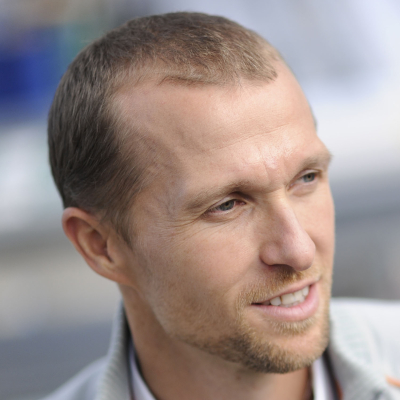
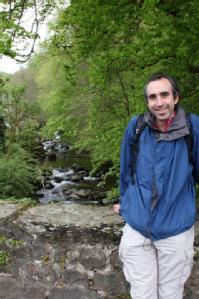
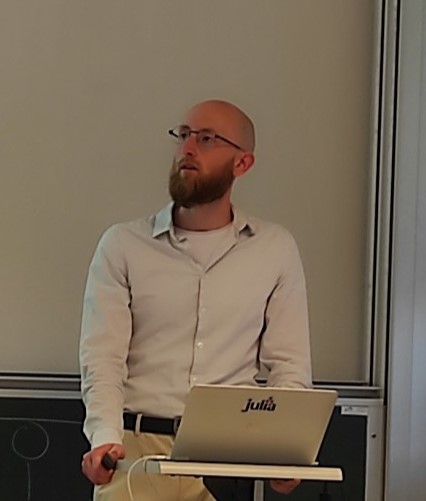
Jose Manuel Dominguez Alonso is a researcher at the University of Vigo , affiliated with the Faculty of Sciences and the Marine Research Center . His work focuses on Earth Physics and Smoothed Particle Hydrodynamics (SPH) applications in marine and renewable energy systems. He is part of the FA9 EphysLab research group at the Ourense campus. Education: PhD in Applied Physics from the University of Vigo (2014) under advisors Dr. Moncho Gómez Gesteira and Dr. Alejandro Jacobo Cabrera Crespo. His research explores fluid dynamics , off-shore wind turbines , wave energy converters , and fluid-structure interaction . He has developed DualSPHPhysics for high-performance computing in marine environments. His recent articles (2024-2025) emphasize teaching numerical modeling to students, 3D hydrodynamic analysis , and coupled simulation techniques . His work bridges computational methods with real-world marine engineering challenges like coastal protection and renewable energy optimization.
Elena Toscano is a researcher in the Department of Mathematics and Computer Science at the University of Palermo. She specializes in numerical analysis, machine learning, and computational mathematics, with a focus on mesh-free methods like Smoothed Particle Hydrodynamics (SPH) and applications to physics, engineering, and interdisciplinary fields. Teaching: Numerical Analysis (Master's in Informatics and Mathematics, 2025/2026) Research Areas: Signal/image processing, SPH consistency restoration, genetic algorithms for tomography, and mathematical-literary collaborations (e.g., Oulipo). Her publications span computational physics, machine learning, and mathematical modeling, emphasizing numerical stability and interdisciplinary innovation.
Jiří Kosinka is an Associate Professor (Tenure Track) at the University of Groningen, affiliated with the Faculty of Science and Engineering and the Bernoulli Institute. He leads the Scientific Visualization and Computer Graphics research group. His roles include coordinating and lecturing in Computer Graphics and Advanced Computer Graphics courses, as well as serving as an editor for journals like Computer-Aided Design and Graphical Models . Academic Position: Associate Professor, Tenure Track Affiliations: Bernoulli Institute, Faculty of Science and Engineering Research Group: Scientific Visualization and Computer Graphics Education PhD in Mathematics (2006), Charles University, Prague MSc in Mathematics (2002), Charles University, Prague Research Interests Kosinka's work focuses on geometric modeling, computer graphics, and image processing. He develops algorithms for subdivision surfaces, numerical quadrature, and fluid simulation, with applications in surgical planning and medical visualization. His research bridges theoretical contributions with practical implementations in CAD systems and real-time rendering. Conference Contributions Co-organizer of DGMM 2025 (Discrete Geometry and Mathematical Morphology) in Groningen Program Chair for AniNex 2022/2023 (Next Generation Computer Animation) IPC member for SGP, SPM, Pacific Graphics, and other key conferences Editorial Roles He serves on the editorial boards of Computer-Aided Design and Graphical Models , and has guest-edited special issues in Computer Aided Geometric Design . Labs & Teams He leads the Scientific Visualization and Computer Graphics group, collaborating on projects like BoneStory (3D surgical planning) and fluid dynamics simulations. His lab focuses on advancing geometric algorithms and their real-world applications.
Professor Antonio Gil is a faculty member at Swansea University within the Faculty of Science and Engineering , specifically in the Department of Civil Engineering . He graduated magna cum laude from the University of Granada (Spain) in 1999 and earned his PhD in computational analysis of non-linear structural membranes at Swansea University in 2005, winning the UK Society for Computational Mechanics best PhD paper in 2004. Education: Ingeniero de Caminos, Canales y Puertos (University of Granada, 1999); MSc in Computational Mechanics; PhD in Computational Mechanics (Swansea University, 2005) Research Interests span Computational Mechanics , Fluid-Structure Interaction , Finite Strain Modeling , and Soft Robotics , with a focus on physics-informed machine learning and multi-physics simulations. His work addresses challenges in electromechanical systems , cardiac mechanics , and high-strain dynamics . Recent Publications highlight advancements in SPH algorithms , topology optimization , and hyperelastic metamodels , reflecting his leadership in numerical methods and material modeling . These contributions have been recognized by prestigious awards including the Philip Leverhulme Award (2011) and the Olgierd Cecil Zienkiewicz Award (2016) . Scientific Awards: UK Philip Leverhulme Award (2011) Olgierd Cecil Zienkiewicz Award (2016) 1st National Award (Spanish Ministry of Education, 2000) Grants include coordination of the Erasmus Mundus PhD Program and leadership in H2020 Marie Curie ETN projects with budgets exceeding €6M. His supervision covers PhD projects in soft robotics , computational fracture , and MRI scanner design .
Nico Pietroni is a Professor at the School of Computer Science at the University of Technology Sydney (UTS), where he conducts research at the intersection of geometry processing, digital fabrication, and architectural geometry. His work bridges theoretical foundations in computational geometry with practical applications in industrial production pipelines, and he is affiliated with the Visualisation Institute (VI) Research Network at UTS. His primary research interests include geometry processing, mesh parametrisation, digital fabrication, architectural geometry, and computational design. He has pioneered techniques such as FlexMaps for computational design of flat flexible shells and Metamolds for computational design of silicone molds. His research focuses on developing concepts and practical algorithms for the creation and manipulation of digital shape representations, with applications spanning entertainment industry, digital fabrication, and architectural geometry. His recent publications demonstrate a strong trend toward computational methods for digital fabrication and architectural applications. His work spans from garment design and alteration to architectural structures like grid shells and bending-reinforced structures. He has developed innovative approaches for surface approximation, mesh processing, and computational design that address practical challenges in manufacturing and construction, with particular emphasis on reducing manufacturing complexity while maintaining design integrity. Wynne Prize finalist for "Bending the Light" artwork, exhibited at the Art Gallery of New South Wales Professor Pietroni has supervised numerous research students working on projects related to geometry processing, digital fabrication, and computational design. His funded research includes projects such as "Digital Optimization of Personalised Spacesuit" and "CRC-P Shoulder Replacement Implant Design for Additive Manufacturing," demonstrating the practical applications of his work across diverse fields from space research to medical technology. He has secured multiple research grants totaling significant funding for computational design research. He has developed several influential software projects including MeshLab (an open-source system for 3D mesh processing that won the SGP Software Award in 2017), HexaLab (an online viewer for hexahedral meshes), and QuadMixer (for layout-preserving blending of quadrilateral meshes). His work has been widely adopted by both academic researchers and industry practitioners in fields ranging from entertainment to architecture to medical technology.
Sarah C. Vigmostad is an Associate Professor of Biomedical Engineering and Interim Associate Dean at the University of Iowa's College of Engineering. She also serves as a Researcher at the Iowa Institute for Biomedical Engineering. Her work focuses on computational techniques for fluid-structure interactions, computational fluid mechanics, and multiscale modeling of biological phenomena. She joined the faculty in 2008 and holds degrees from the University of Iowa: a BSE (2001), MS (2003), and PhD (2007) in Biomedical Engineering. Her research spans coronary blood flow dynamics, heart valve mechanics, cardiovascular implant design, RBC dynamics, and vocal cord biomechanics. Notable projects include studies on Descemet membrane endothelial keratoplasty biomechanics, mitral valve surgical simulation, and hybrid CT/MRI vocal tract modeling. Her work often integrates medical imaging data with computational fluid dynamics to address clinical challenges in cardiovascular and ophthalmologic systems. Professional affiliations include the Biomedical Engineering Society (BMES). Her publications reflect interdisciplinary collaboration across biomechanics, fluid dynamics, and medical device innovation. Though no awards are listed in the provided texts, her extensive publication record indicates significant contributions to biomedical engineering research. Her advising and grant activities are not detailed here, but her involvement in the Iowa Institute for Biomedical Engineering suggests engagement in collaborative research initiatives. Her work interfaces with labs focused on biomedical imaging, cardiovascular mechanics, and tissue engineering.
Paul Gibbon is a Professor and current Head of the HPC in Applied Sciences and Engineering division at the Jülich Supercomputing Centre (JSC), Forschungszentrum Jülich. He also maintains a part-time teaching appointment at Katholieke Universiteit Leuven where he teaches computational physics. Having joined JSC in 2001, he helped establish the Simulation Labs for Plasma Physics in 2008 and served as Head of the Computational Science Division from 2009 to 2022. After a brief period working in the fusion energy industry, he returned to JSC in 2024 as co-head of his current division. Gibbon's educational background includes physics studies at Bristol University followed by plasma physics research at Imperial College London. His postdoctoral journey took him across Europe to CEA Saclay and the University of Jena before settling at JSC. His research spans computational plasma physics, laser-based particle and radiation sources, and parallel mesh-free N-body simulation techniques. His publication record demonstrates significant contributions to computational plasma physics, with recent work focusing on N-body simulation methods (particularly the PEPC solver), laser-plasma interactions, particle acceleration mechanisms, and fusion energy applications. His research shows a clear trajectory from fundamental plasma simulation methods toward practical fusion energy applications, with substantial contributions to high-performance computing techniques for scientific simulation. Gibbon has been instrumental in advancing high-performance computing applications for plasma physics and fusion research, with leadership roles in developing simulation capabilities at one of Europe's premier supercomputing centers. His work bridges theoretical plasma physics with practical computing implementations, contributing to both the computational methods community and fusion energy research.
Francesco Bonelli is an Assistant Professor at the Department of Mechanics, Mathematics & Management (DMMM) at Polytechnic University of Bari, Italy. His research focuses on fluid dynamics, computational modeling of hypersonic flows, and biomedical applications of microwave ablation technology. Academic Rank: Assistant Professor Department: Mechanics, Mathematics & Management Research Focus: Fluid Dynamics, Hypersonic Flow Simulation, Microwave Ablation Email: francesco.bonelli@poliba.it Research interests include: Thermochemical non-equilibrium in high-enthalpy flows GPU-accelerated fluid dynamics simulation Microwave applicator design for cancer therapy Active matter and liquid crystal dynamics Immersed boundary methods for hypersonic flows Turbulent jet analysis in aerospace applications Publication trends show expertise in hypersonic flow modeling, thermochemical non-equilibrium effects, and biomedical engineering applications, particularly in developing cost-effective microwave ablation devices. His work combines advanced numerical methods with practical engineering solutions. Contact : francesco.bonelli@poliba.it
Dr.-Ing. Yoshiyuki Sakai is a Scientific Employee at the Department of Hydromechanics, College of Engineering, Technical University of Munich (TUM). His research focuses on wall-bounded flows, duct turbulence, coherent structures, computational fluid dynamics (CFD), and high-performance computing (HPC) applications. PhD in Fluid Mechanics (2016) from Karlsruhe Institute of Technology MSc in Computational Science and Engineering from TUM (2012) BEng in Aerospace Engineering from University of Southampton (2010) His work bridges fundamental turbulence research with environmental applications, particularly microplastic transport in aquatic systems and hyporheic exchange processes. He has contributed to advancing DNS and HPC capabilities through code optimization studies. Recent publications show strong focus on: Turbulent flow structure evolution Pore-scale and open channel flow dynamics Microplastic dispersion modeling LES-RANS hybrid methods Flow regime transitions HPC performance optimization His work combines theoretical fluid mechanics with advanced computational methods to address both engineering and environmental challenges.
Prof. Dr.-Ing. Thomas Rung is a Professor of Computational Fluid Dynamics at the Hamburg University of Technology (TUHH), where he leads research at the Institute for Fluid Dynamics and Ship Theory (M8). He has been with the university since 2005 and maintains an active research program focusing on advanced computational methods for fluid dynamics problems. His academic background includes: 1993: Dipl. Ing. in Aeronautical Engineering from TU Berlin 2000: Dr.-Ing. in Mechanical Engineering from TU Berlin Prof. Rung's research spans multiple domains within fluid dynamics, with particular expertise in computational methods for engineering applications. His work combines theoretical developments with practical implementations for real-world problems in naval architecture, aerospace engineering, and biomedical applications. He has pioneered approaches using emerging computing paradigms including GPU acceleration and quantum computing for fluid dynamics simulations. His research group develops advanced numerical methods for multiphase flows, shape optimization, and high-fidelity simulations of complex engineering systems. His recent publications demonstrate a strong focus on integrating machine learning techniques with traditional computational fluid dynamics, exploring quantum computing applications for fluid simulation, and advancing methods for biomedical flow analysis. The research shows consistent innovation in numerical methods while maintaining relevance to practical engineering challenges across multiple industries. Prof. Rung has supervised numerous research projects related to ship hydrodynamics, vehicle aerodynamics, and urban area simulations. His work has applications in naval architecture, aerospace engineering, and biomedical device design. His research group maintains strong connections with industry partners in transportation and engineering sectors. At the Institute for Fluid Dynamics and Ship Theory, Prof. Rung leads a research team that utilizes advanced computational facilities including high-performance computing resources for large-scale fluid dynamics simulations. The team develops and applies both mesh-based (FV, FD) and particle-based (LBM, SPH) methods to tackle challenging fluid dynamics problems across multiple scales and applications.
Nikolaus Adams is a Professor at the Chair of Aerodynamics and Fluid Mechanics at the Technical University of Munich (TUM) . His research focuses on computational fluid dynamics (CFD), numerical methods, and data-driven modeling of complex fluid phenomena. Key contributions include the development of differentiable CFD frameworks like JAX-Fluids and integration of machine learning with high-order schemes. Research Interests : High-order numerical methods (WENO, SPH, Lattice-Boltzmann) Machine learning/RL for flow control and turbulence modeling Quantum algorithms for fluid simulations Multiphase flows with surface tension and cavitation Shock wave interactions and aerodynamic breakup Recent article trends highlight applications of differentiable programming, neural networks, and Bayesian optimization in compressible/two-phase flows, alongside quantum lattice-Boltzmann advancements. Labs/Teams : Leads the Chair of Aerodynamics and Fluid Mechanics at TUM, contributing to the TUMWAER group and TUZEMSE research initiatives.
Daniel Millán serves as Professor of Strength of Materials at the Mechanical Engineering Department, School of Industry-Applied Sciences, National University of Cuyo. He concurrently holds leadership positions as Director of the Institute I CAI CONICET-UNCuyo, Director of the Mechanical Engineering Department, Independent Researcher at CONICET, and Head of the MoCCAI research group. His research spans computational modelling and advanced numerical methods for engineering, with core expertise in: High-order phase-field modeling of fracture mechanics in thin-shells Thin-shell flexoelectric metamaterials Automatic data-driven collective variables identification Multiscale mechanobiological modeling of cerebral arteries Cerebral aneurysm morphometry and rupture risk assessment Ultrasonic analysis for additive manufacturing evaluation Analysis of his 2019-2024 publications reveals dominant themes in cerebral aneurysm biomechanics (using Kirchhoff-Love shell theory for patient-specific modeling) and fracture mechanics in thin structures. His work bridges theoretical numerical methods like phase-field modeling with practical applications in biomedical engineering and material science, particularly in ultrasonic characterization of ice composites. As leader of the MoCCAI research group, he directs computational mechanics initiatives focused on developing advanced numerical techniques for solving complex engineering and biomedical problems through interdisciplinary collaboration.
Anthony Wachs is an Associate Member of the Department of Mathematics at the University of British Columbia (UBC), affiliated with the Faculty of Science. His research focuses on computational fluid dynamics (CFD), particulate flows, and multiphase systems, with emphasis on numerical methods like DEM-CFD coupling and high-fidelity simulations of complex fluid-particle interactions. He develops scalable solvers for non-spherical rigid bodies and fluid-structure interactions, contributing to fields such as granular media, viscoplastic fluids, and biological capsule dynamics. His work bridges computational approaches with real-world applications in energy, biomedical engineering, and environmental systems. Research interests include particle-resolved direct numerical simulations (DNS), fluidized beds, and the development of tools like Grains3D and PeliGRIFF for particle dynamics. His studies address challenges in flow past irregular geometries, hydrodynamic force modeling, and machine learning-enhanced fluid dynamics. Wachs collaborates across disciplines, integrating advanced numerical techniques with experimental validation to advance understanding of multiphase flow phenomena.
Ben McMillan is an Associate Professor in Physics at the University of Warwick's Centre for Fusion, Space and Astrophysics, specializing in numerical and theoretical plasma physics with focus on magnetically confined fusion. He joined the university in April 2011 and leads research on tokamak turbulence modeling and numerical plasma physics, particularly developing the gyrokinetic code ORB5 in collaboration with international institutions. His research examines large-amplitude fluctuations in tokamaks, numerical methods for complex magnetic geometries, and flow modeling that may explain transport barriers in fusion devices. McMillan's work aims to improve confinement properties of tokamaks for economic fusion energy production. He teaches advanced plasma physics and mentors postdoctoral researchers in fusion science.
Yoann Le Hénaff is a postdoctoral researcher at the Numerical Analysis Department of the University of Tübingen, Germany. He works within the CRC TRR 352's B4 project and collaborates with C. Lubich's group. His research focuses on computational mathematics and physical modeling through numerical analysis. Education: PhD in Mathematics (2024), University of Rennes, France Master's degree in Mathematics, University of Rennes, France Engineering degree in applied mathematics, INSA Rennes, France Research Interests: Specializing in partial differential equations and numerical simulations, Le Hénaff develops grid-free particle methods for the Vlasov-Poisson system and studies modulated soliton solutions for nonlinear Schrödinger equations. Key subfields include spectral concentration problems, Dirac-Frenkel variational principles, and computational complexity optimization. Publication Trends: Recent work demonstrates expertise in hybrid numerical methods combining classical PDE approaches with modern computational techniques. 2023-2025 publications show progression from particle method convergence proofs to advanced soliton-based algorithms and spectral concentration generalizations across multiple dimensions. Collaborations: Actively involved in the CRC TRR 352 consortium, participating in annual retreats and contributing to the B4 project's objectives. Regularly presents at international seminars including the NAG seminar in Tübingen and IRMAR doctoral meetings in Rennes.