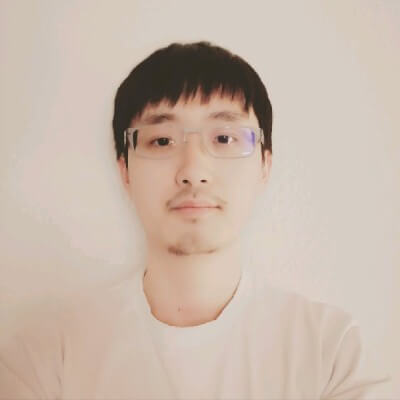
Yan Zhang is a scientific leader at Meshcapade and a guest lecturer at ETH Zurich's Computer Vision and Learning Group (VLG). He previously served as a postdoctoral researcher at ETH Zurich (2020-2023) and research intern at Max Planck Institute for Intelligent Systems (2018-2020). His research focuses on generative human foundation models, human motion and behavior synthesis, 3D human perception, and applications in AR/VR, embodied AI, and interactive avatars. He has pioneered methods for scene-conditioned motion generation, contact-aware reconstruction, and egocentric interaction modeling. His recent publications (2025-2020) span Real-time motor models for avatars (PRIMAL, ICCV'25) Diffusion architectures for motion (RoHM, CVPR'24) Scene-population algorithms (Odysseus, CVPR'22) Physics-aware reconstruction (EgoHMR, ICCV'23) Whole-body grasping models (SAGA, ECCV'22) Multi-modal datasets (EgoBody, ECCV'22) Scientific recognition includes the Qualcomm Innovative Fellowship Europe 2023 . He organized workshops at CVPR'25, ECCV'24, and ECCV'22, and served on senior program committees (AAAI'26) and area chairs (CVPR'25). As co-supervisor, he mentored student projects on diffusion-based hand motion capture, 3D pose estimation, body-scene interaction, and mixed reality navigation at ETH Zurich (2020-2023). His work bridges computer vision, machine learning, and computer graphics to advance human-centric AI systems.
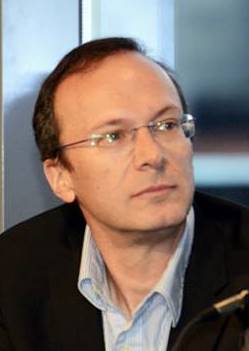
Craig Gotsman is a Professor and Dean at the Ying Wu College of Computing, New Jersey Institute of Technology. He previously held roles at Cornell Tech, Technion, ETH Zurich, and MIT. His research focuses on computational geometry, computer graphics, and 3D animation. Ph.D. in Computer Science, Hebrew University of Jerusalem (1991) His work spans geometric modeling, mesh processing, and applications in animation and visualization. Recent research trends include gaze correction in video conferencing, mesh parameterization, and spectral compression techniques. Notable awards include Fellowships in the US National Academy of Inventors and the Academy of Europe, multiple best paper awards, and the Technion's Hewlett Packard Chair in Computer Engineering. Gotsman has mentored over 50 postgraduate students and holds ten US patents. He co-founded three companies: Virtue 3D Inc. (acquired by NVIDIA), Estimotion Inc. (now ITIS Israel Ltd.), and CatchEye.
Christian Timmerer is a Professor at the Institute of Information Technology, Alpen-Adria-Universität Klagenfurt. His research focuses on adaptive video streaming , energy efficiency , MPEG standardization , and quality of experience (QoE) , with significant contributions to HTTP Adaptive Streaming (HAS), multi-codec optimization, and immersive media systems. Email: christian.timmerer@aau.at Office Hours: Monday 3:00-4:00 PM (by appointment) Projects: CD-Labor ATHENA, GAIA, SPIRIT His research integrates machine learning and generative AI to enhance video encoding, super-resolution, and voice dubbing, while prioritizing sustainability through energy-aware algorithms and open-source tools like GREEM and VEED. Current work emphasizes latency reduction and dynamic bitrate adaptation in live streaming environments. Recent publications address VVC optimization , multi-resolution encoding , and perceptual quality modeling , reflecting interdisciplinary efforts in networking , computer vision , and human-computer interaction . Awards include leading funded projects on adaptive streaming and green video systems.
Leif Kobbelt serves as a University Professor at RWTH Aachen University, leading the Computer Graphics Group within the Department of Computer Science (Informatik 8). His research focuses on advancing geometry processing, interactive visualization, and computer graphics through innovative algorithmic solutions and interdisciplinary collaborations. Professor Kobbelt's research program centers on geometry acquisition and processing, with significant contributions to mesh generation, surface reconstruction, and neural rendering techniques. His work bridges theoretical geometry with practical applications in computer vision, photo-realistic image synthesis, and multimedia data transmission, often involving collaborations with industry partners and international research teams funded by DFG and EU sources. Recent publications (2023-2025) reveal a strategic integration of deep learning with traditional geometry processing, particularly in Gaussian splatting for real-time rendering, NeRF-based 4D content generation, and robust mesh Boolean operations. His group maintains leadership in quad mesh optimization and surface mapping while expanding into immersive visualization techniques for complex data analysis. The group has earned recognition through prestigious awards: Günter Enderle Best Paper Award at Eurographics 2023 Best Paper Award (1st place) at Symposium on Geometry Processing 2022 Honorable Mention for Best Paper at ACM Symposium on Virtual Reality Software and Technology Funding from Deutsche Forschungsgemeinschaft and European Union programs supports the group's research infrastructure and international collaborations. The team actively supervises graduate theses while developing open-source software tools that translate theoretical advances into practical industry applications, particularly in digital fabrication and immersive visualization systems. The Computer Graphics Group operates as a central hub for visual computing research at RWTH Aachen, maintaining strong ties with both academic institutions and technology companies. Their recent work on virtual reality educational tools and high-fidelity 3D reconstruction systems demonstrates commitment to knowledge transfer and real-world impact beyond traditional publication venues.
Xinfeng Gao is a Professor of Mechanical & Aerospace Engineering at the University of Virginia, leading the CFD & Propulsion Laboratory. She specializes in high-performance computing (HPC) algorithms for fluid dynamics, combustion, and plasma systems. Her work integrates numerical methods, parallel computing, and data analytics to address complex engineering challenges. Prior to UVA, she held a professorship at Colorado State University from 2011 to 2023, establishing the CFD and Propulsion Lab there. She earned her PhD in Aerospace Engineering from the University of Toronto in 2008, followed by postdoctoral research at Lawrence Berkeley National Laboratory (LBNL). Her research focuses on three core areas: high-order CFD methods for high-speed flows, parallel adaptive algorithms for spatial and temporal domains, and HPC combined with data analytics for aerospace design optimizations. Applications include reduced-order models for turbulence, propulsion device innovation, and quantum computing for fluid simulations. She collaborates with national labs (LLNL, LBNL), aerospace industries (Boeing), and software companies to translate research into practical solutions. Her recent grants include the NSF Mid-Career Advancement Award (2022–2025) for CFD+DA integration in commercial tools and UVA’s RIG Award (2025–2026) for gas-surface material studies under extreme conditions. She teaches MAE 6720 (Computational Fluid Dynamics) and MAE 3420 (Computational Methods). Key awards include the 2023 University of Virginia Research Achievement Award and the 2022 NSF MCA Award. Her work emphasizes cross-disciplinary innovation, blending computational science with experimental validation through initiatives like the Gas-Surface-Materials RIG project, involving experts from MAE, MSE, Chemistry, and Physics.
Theodore Kim is a Professor of Computer Science at Yale University, where he co-leads the Computer Graphics Group with Julie Dorsey and Holly Rushmeier. His research focuses on physics-based simulation, including fluid dynamics, solid mechanics, and fractal growth structures. He holds a PhD from the University of North Carolina at Chapel Hill and has held academic positions at UCSB and the University of Saskatchewan. His work has been applied in over two dozen films, earning him SciTech Oscars in 2012 and 2022. He previously served as a Senior Research Scientist at Pixar, contributing to projects like *Cars 3*, *Coco*, and *Incredibles 2*. Education: Ph.D., Computer Science, University of North Carolina at Chapel Hill (2006) M.S., Computer Science, University of North Carolina at Chapel Hill (2006) B.S., Computer Science, Cornell University (2001) Research Interests: Kim’s work bridges academia and industry, emphasizing practical applications of physics-based simulation. Notable areas include hair and skin simulation for animation, fluid dynamics, and the historical context of computer graphics innovations. His research also addresses racial biases in graphics, such as in hair and skin modeling. Articles Trends: Recent work emphasizes diverse representation (e.g., Black hair simulation), biomechanical accuracy (feather modeling), and historical analysis of technical contributions (e.g., Búi Tướng Phong’s legacy). Earlier publications focus on fluid subspace methods, wavelet turbulence, and efficient simulation techniques. Awards: Academy Award for Scientific and Technical Achievement (2012, 2022) NSF CAREER Award (2013–2018) UCSB Harold J. Plous Award (2015) Best Paper Awards at SCA (2011, 2016, 2018) Grants & Labs: Leads Yale’s Critical Computing Initiative and directs undergraduate studies in CS. His lab collaborates with industry (e.g., Pixar) and emphasizes open-source software. Current projects include fractal design tools and anti-racist graphics research.
Hari Sundar is an Associate Professor in the Department of Computer Science at Tufts University, holding the Ada Lovelace Associate Professorship. Previously, he served as an Associate Professor at the Kahlert School of Computing, University of Utah. His research focuses on developing parallel algorithms for computational sciences and high-performance computing, addressing challenges in biosciences, geophysics, computational fluid dynamics, and computational relativity. He leads efforts in adaptive mesh refinement, geometric multigrid methods, and scalable scientific computing frameworks like Dendro-GR for numerical relativity. Education: Ph.D. in Computer Science from the University of Pennsylvania (2009), and a Bachelor of Engineering from the University of Delhi (2000). Postdoctoral work at the Oden Institute, University of Texas at Austin. Research Interests: Parallel algorithms, high-performance computing architectures, computational relativity (binary black hole simulations), multiphase flow modeling, and domain-specific languages for scientific computing. His work emphasizes scalability and efficiency on modern supercomputers. Key Contributions: Development of the Dendro-GR platform for gravitational wave simulations, scalable PDE solvers, and GPU-optimized algorithms for phonon transport and genomic sequence alignment. His recent work includes advancements in gravitational waveform modeling for LISA space missions and thermodynamically consistent two-phase flow simulations. Grants & Collaborations: Active in NSF-funded projects on computational relativity, multiphase flow algorithms, and scalable PDE solvers. Collaborates across disciplines in astrophysics, materials science, and bioinformatics.
Leila De Floriani is a Professor at the University of Maryland, with appointments in the Department of Geographical Sciences and the University of Maryland Institute for Advanced Computer Studies (UMIACS). She previously served as a professor at the University of Genova (Italy) since 1990, where she developed Italy's first undergraduate and graduate curricula in computer graphics and directed the Ph.D. program in Computer Science for eight years. Her professional activities include serving as the 2020 President of the IEEE Computer Society and currently as IEEE Division VIII Director for 2023-24. Professor De Floriani's research spans geometric modeling, data visualization, spatial data representation and processing, computer graphics, shape analysis, and topological data analysis. Her work focuses on developing mathematical models and algorithms for representing, analyzing, and visualizing complex spatial data, particularly through hierarchical models, mesh-based representations, and topology-based approaches. Her research group, the GeoVis group, investigates applications in terrain modeling, environmental data analysis, and forest structure mapping using LiDAR technology. Analysis of her recent publications reveals a strong focus on terrain representation and processing, with increasing emphasis on topological data analysis, machine learning integration, and efficient algorithms for large-scale spatial data. Her work bridges theoretical foundations in computational topology with practical applications in geospatial sciences, demonstrating consistent innovation in data structures and visualization techniques. Scientific Awards & Recognitions Fellow of IEEE (2016) for contributions to geometric modeling and scientific visualization Fellow of International Association for Pattern Recognition (IAPR) (1998) for contributions to geometric modeling and image analysis Fellow of Eurographics Association (2020) for outstanding contributions to computer graphics and visualization Pioneer of Solid Modeling Association (2017) for seminal work in solid and feature-based modeling Inducted Member of IEEE Visualization Academy (2020) IEEE Computer Society Golden Medal Award (2018) Inducted Member of IEEE Honor Society Eta Kappa Nu (2019) Multiple best paper awards at major conferences including Shape Modeling International (2015), IEEE/EG Symposium on Volume and Point-Based Graphics (2008), and ACM SIGSPATIAL (2008) Professor De Floriani has successfully advised numerous PhD students including Xin Xu, Yunting Song, and Noel Dyer, whose recent dissertations focused on topology-based individual tree mapping, efficient terrain analysis, and bathymetric data visualization respectively. Her research has been funded by prestigious agencies including the National Science Foundation, NASA, and the European Commission. As the leader of the UMD GeoVis group, she oversees a research program that develops open-source tools for spatial data analysis available on GitHub, with current projects focusing on forest point cloud processing and topology-based geospatial data visualization. The GeoVis group, affiliated with the Department of Geographical Sciences, UMIACS, and the Center for Geospatial Information Sciences, maintains a strong collaborative environment with ongoing projects in geometric modeling, spatial data structures, topology-based machine learning, and mesh-based terrain modeling. The group has received recent funding from NASA's HPOSS program for developing an open-source library for forest point cloud processing based on topological data analysis.
Ting-Chung Poon is a Professor in the Bradley Department of Electrical and Computer Engineering at Virginia Tech. His research focuses on optical scanning holography (OSH), digital holography, and 3D imaging applications. He leads the Optical Scanning-Holographic Imaging Group (OSIG), which explores OSH for 3D imaging, processing, and display, emphasizing 2D optical heterodyne scanning techniques. Education: Ph.D., University of Iowa, 1982 M.S.E.E., University of Iowa, 1979 B.A., University of Iowa, 1977 Research Interests: Optical Scanning Holography (OSH) and its applications in 3D imaging Computer-Generated Holography (CGH) Quantitative Phase Imaging Optical Cryptography Efficient Hologram Algorithms His work spans theoretical advancements and practical implementations, including encryption systems, noise reduction techniques, and high-resolution 3D reconstruction. Recent Research Trends: Focus on polygon-based CGH algorithms for faster rendering Integration of machine learning for speckle noise reduction and hologram classification Development of adaptive and compressive holography methods for industrial and biomedical applications Labs & Teams: Optical Scanning-Holographic Imaging Group (OSIG) at Virginia Tech Collaborations with institutions globally, including conferences on digital holography and photonics
Christophe Bailly is the Director of the Laboratory of Fluid Mechanics and Acoustics (LMFA UMR5509) and a Professor at École Centrale de Lyon, France. His career spans academic roles at École Centrale Paris (1995-2006) and École Nationale Supérieure des Techniques Avancées (2001-2020), alongside membership in the Institut Universitaire de France since 2007. He specializes in turbulence, aeroacoustics, sound propagation, and high-resolution numerical methods. His research focuses on jet noise , ducted flow acoustics , and advanced diagnostic techniques like Interferometric Rayleigh Scattering. He has co-authored over 120 peer-reviewed articles and a textbook on turbulence with Geneviève Comte-Bellot. Notable scientific awards include the Yves Rocard Prize (1996), Alexandre Joannidès Prize (2001), Air & Space Academy Medal (2016), CEAS Aeroacoustics Award (2020), and the French Medal (2023). He serves as Associate Editor for the AIAA Journal and Advisory Editor for Flow, Turbulence and Combustion .
Dario De Marinis is an Assistant Professor at the Department of Mechanics, Mathematics & Management, Politecnico di Bari, Italy. His research focuses on fluid dynamics with applications in biomedical engineering, aerospace, and computational physics. Research Interests Fluid-structure interaction modeling Microfluidics and particle transport Biomedical applications (blood flow, valve mechanics) Aerospace engineering (hypersonic flows, turbulence) Numerical methods (Lattice Boltzmann, immersed boundary) Publications Trend Dario's recent work (2015–2025) spans computational fluid dynamics, with emphasis on multiphase flows, viscoelastic material behavior, and biomedical microfluidic devices. He has contributed to aerospace applications and turbulent thermal flows.
Prof. Indranil Gupta (Indy) is a Professor of Computer Science at the University of Illinois at Urbana-Champaign, affiliated with the Beckman Institute and ECE department. His research focuses on distributed systems, including cloud computing, IoT, and machine learning systems. He leads the Distributed Protocols Research Group (DPRG) and collaborates with industry to improve production systems. Indy is an IEEE Fellow, ACM Distinguished Scientist, and recipient of the NSF CAREER Award and multiple Best Paper Awards. Education: PhD in Computer Science from Cornell University (2004), B.Tech from IIT Madras (1998). Industry experience includes roles at Google, Microsoft Research, and IBM Research. Teaching: Teaches CS 425 (Distributed Systems), CS 525 (Advanced Distributed Systems), and a Coursera MOOC with 250K+ enrollments. Known for innovative teaching methods, including music-based CS education. Awards: Over a dozen awards including Best Paper recognitions at IC2E, CCGrid, and ICAC. His students have won NSF Fellowships, Rising Stars in EECS, and Microsoft Dissertation Grants. Service: Served as General Chair of ACM PODC 2007, PC co-chair for multiple conferences, and editorial board member for IEEE TCC and ACM TAAS. Hosts the podcast 'Immigrant Computer Scientists.' Research Impact: Contributions include fault-tolerant protocols (e.g., Zeno, SWIM), distributed ML systems, and cloud resource management techniques used by major tech companies.
Ngoc Cuong Nguyen is a Principal Research Scientist in the Department of Aeronautics and Astronautics at MIT and a member of the MIT Center for Computational Engineering. His research focuses on computational mechanics, numerical simulation, and advanced numerical methods such as hybridizable discontinuous Galerkin (HDG) methods for multi-scale and multi-physics problems. Education: PhD in High Performance Computation for Engineered Systems (2005), National University of Singapore BEng in Aeronautical Engineering (2001), Ho Chi Minh City University of Technology Research Interests: Computational Mechanics, Molecular Mechanics, Nanophotonics Numerical Simulation & Optimization, Scientific Computing, Machine Learning Reduced Basis Methods, High-Order Methods (e.g., HDG), Uncertainty Quantification Key Projects: Development of HDG methods for fluid dynamics, structural mechanics, and electromagnetics Plasmonic nanostructure simulations using quantum hydrodynamic models Space weather modeling via GPU-accelerated HDG approaches Optimization of photonic crystals and nanostructured materials Large-eddy simulation (LES) of hypersonic flows and buffet phenomena Labs & Teams: Active contributor to the MIT Center for Computational Engineering, leading projects in numerical methods, computational fluid dynamics, and interdisciplinary applications of advanced simulation techniques.
Dr. Amneet Bhalla serves as an Associate Professor in the Department of Mechanical Engineering within the College of Engineering at San Diego State University (SDSU). His primary contact email is asbhalla@sdsu.edu, with office located in Engineering Building Room 323-G, and phone number (619) 594-2043. Education: Ph.D., Mechanical Engineering, Northwestern University (2013) M.S., Mechanical Engineering, Indian Institute of Technology Kharagpur (2009) B.S., Mechanical Engineering, Indian Institute of Technology Kharagpur (2004-2008) Postdoctoral Training: University of North Carolina at Chapel Hill (Mathematics Department) and Lawrence Berkeley National Laboratory (Computational Research Division) Research Interests: Dr. Bhalla develops advanced numerical methods and high-performance computing techniques for computational fluid dynamics (CFD) and fluid-structure interaction (FSI) problems. His work spans aquatic locomotion, renewable energy device modeling, multiphase flows, vehicular aerodynamics, and bioengineering applications. He creates mathematical models to interrogate underlying flow physics for engineering design optimization, with emphasis on open-source software development through the IBAMR library. Publication Trends: Recent publications (2023-2025) focus on robust numerical frameworks for multiphase flows with phase change, acoustic streaming, and fluid-structure interaction. Key themes include mass conservation in level set methods, adaptive mesh refinement, and solvers for non-isothermal gas-liquid-solid systems. Applications range from aquatic locomotion and renewable energy devices to microfluidics and biomedical flows, demonstrating commitment to both theoretical advances and practical engineering solutions. Scientific Awards: No awards mentioned in the provided text Advising and Grants: Dr. Bhalla secured an NSF CAREER award (2023) for "Consistent Continuum Formulation and Robust Numerical Modeling of Non-Isothermal Phase Changing Multiphase Flows". As PI of the CFD Lab, he mentors graduate students in computational mechanics, leveraging prior industrial experience at ExxonMobil Upstream Research Company. His research integrates industrial practicality with academic rigor through collaborations with national laboratories. Laboratory and Team: The Computational Fluid Dynamics and Flow Physics Laboratory (CFD Lab) develops the open-source IBAMR software—a distributed-memory parallel implementation of the immersed boundary method with adaptive mesh refinement. The lab emphasizes transparency, community engagement, and reproducibility, establishing cross-institutional collaborations while advancing computational methods for complex flow phenomena in engineering and biological systems.
Michael C. Gurnis is the John E. and Hazel S. Smits Professor of Geophysics at the California Institute of Technology and has served as Director of the Seismological Laboratory (2009-2024) and Schmidt Academy for Software Engineering (2019-). With a B.S. from the University of Arizona (1982) and a Ph.D. from Australian National University (1987), he has held faculty positions at Caltech since 1994, becoming full Professor in 1996 and Smits Professor in 2005. His research spans computational geodynamics, mantle convection, and plate tectonics. California Institute of Technology Division of Geological and Planetary Sciences Seismological Laboratory Schmidt Academy for Software Engineering Research Interests: Gurnis focuses on computational geodynamics to link mantle convection to surface tectonics, using forward/inverse models to study plate motion dynamics , subduction zone mechanics , and deep mantle structures . His work bridges present-day geophysics with historical models through 4D Earth modeling , integrating seismic tomography, mineral physics, and paleogeography via the GPlates consortium. Recent projects include dynamic emergence of continents , plume interactions , and impact-driven subduction . Publications: Gurnis' research spans high-resolution global models of mantle flow, subduction zone rheology, and cratonic basin dynamics. Key trends include multi-physics coupling , Bayesian inversion techniques , and planetary-scale tectonic drivers . His 2024 papers address nonlinear mantle viscosity , shear zone weakening , and impact origins of tectonics . Scientific Awards: Gordon Bell Prize Finalist (2008, 2010) Springer CSE Prize (2011) for plate tectonics simulation work Advising: Mentors graduate students in computational geodynamics, including Jiaqi Fang, Erin Hightower, Yida Li, and Ojashvi Rautela. Collaborates with postdocs and international institutions like ETH-Zurich and National University of Mexico on mantle wedge dynamics and seismic geography. Labs & Teams: Leads the Seismological Laboratory and co-founded the Schmidt Academy for Software Engineering , driving innovations in geodynamic simulations and computational tools.