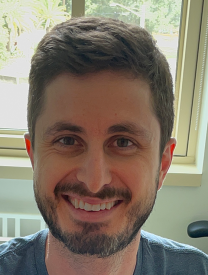
Professor Justin Chalker is the Matthew Flinders Professor and Research Leader at Flinders University 's College of Science and Engineering, affiliated with the Flinders Institute for NanoScale Science and Technology. He works at the intersection of organic chemistry, chemical biology, and materials science , focusing on sustainable chemistry solutions for environmental and technological challenges. Education: B.S. in Chemistry and B.A. in History/Philosophy of Science (University of Pittsburgh, 2006); D.Phil. in Chemistry (University of Oxford, supervised by Benjamin Davis) Career: Assistant Professor at University of Tulsa (2012-2015); Lecturer (2015) and Senior Lecturer (2017-present) at Flinders University His lab develops chemical tools for biological system interrogation and novel materials like sulfur-based polymers for mercury remediation, recyclable composites, and zinc-ion battery cathodes. Current projects include inverse vulcanization, waste valorization, and environmental applications of sustainable chemistry. His research aligns with UN Sustainable Development Goals for environmental protection and resource efficiency, particularly in material science (vulcanization, composite materials, polysulfides) and chemical biology (cysteine modification, protein chemistry). Key scientific recognitions: 2016 Tall Poppy Award, 2017 Dream Chemistry Award Finalist, Eureka Prize Finalist (2018), SA STEM Educator of the Year (2018), AMP Tomorrow Maker Award (2018) Prospective students can contact Dr. Chalker directly for Ph.D. and Honours opportunities. The lab website ( www.chalkerlab.com ) provides details on their research in sulfur chemistry, recyclable polymers, and chemical sustainability .
Peter A. Raymond is the Oastler Professor of Biogeochemistry at Yale University's School of the Environment and Department of Geology and Geophysics. He serves as Senior Associate Dean of Research & Director of Doctoral Studies and is Co-Director of the Yale Center for Natural Carbon Capture. Raymond leads the Raymond Biogeochemistry Lab, which investigates the biogeochemistry of inland waters, enhanced weathering, methane cycling, and blue carbon systems through cutting-edge field, laboratory, and modeling approaches. Education B.S., Marist College Ph.D., College of William and Mary/Virginia Institute of Marine Science Research Focus Raymond's research fundamentally reshapes our understanding of carbon cycling in aquatic systems, demonstrating that rivers serve as dynamic conduits rather than passive pipes in the global carbon cycle. His work examines how biology and watershed variables alter carbon chemistry in streams, rivers, and estuaries, with particular emphasis on understanding global carbon cycles in relation to climate change. Raymond employs radiocarbon measurements to explore the age and turnover of carbon in aquatic ecosystems, revealing that rivers are variable sources of both old and young terrestrial dissolved organic carbon to oceans. The Raymond Lab is particularly known for developing the Pulse-Shunt Concept, which challenges traditional views of riverine biogeochemistry by emphasizing the episodic and dynamic nature of elemental fluxes. Current research directions include enhanced weathering and alkalinity studies for carbon removal, global greenhouse gas budgets through projects like RECCAP 2, natural methane cycling in aquatic systems, and blue carbon ecosystems such as mangroves and salt marshes. Publication Trends Raymond's recent publications (2023-2025) demonstrate a strong focus on global carbon and methane cycling, with particular attention to inland water systems' role in the Earth's climate system. His work increasingly integrates large-scale datasets with field measurements to understand how climate change and human activities affect greenhouse gas emissions from rivers and streams. A significant portion of his recent work contributes to international efforts like the Global Carbon Project, aiming to refine estimates of global carbon and methane fluxes. His research also shows growing emphasis on carbon removal strategies, particularly enhanced rock weathering through the Earthshot-funded GOAL-A project, and their potential for climate mitigation. Scientific Recognition Fellow of the American Association for the Advancement of Science Member of the Connecticut Academy of Science and Engineering Coastal and Estuarine Research Federations Cronin Award for Young Scientists ISI highly cited author Past Editor and Chief of the American Geophysical Union's journal Global Biogeochemical Cycles Mentorship and Funding Professor Raymond currently mentors four doctoral students (Jon Gewirtzman, Shou-En "Samuel" Tsao, Benjamin Saalidong, and Mingyu Zhang) and masters student Bella Garrioch. His research is supported by multiple grants from the National Science Foundation (NSF), including CAREER awards, and participation in the Earthshot-funded GOAL-A (Global Ocean And Land Alkalinization) project. Raymond has also been involved in significant collaborative projects with USGS data to research how climate and land use change alter carbon export from US watersheds, and with Lamont Doherty to develop methods for measuring air-sea gas exchange of CO2 in rivers and estuaries. Research Infrastructure The Raymond Biogeochemistry Lab at Yale is a dynamic research group comprising research scientists, postdocs, doctoral and masters students, and postgraduate researchers. The lab recently acquired a Mini Carbon Dating System (MICADAS) at Yale, significantly expanding their research capabilities in ecosystem carbon turnover and verification of natural climate solutions. The lab collaborates globally on projects in the Arctic, Hudson River, and middle Atlantic Bight, and is actively involved in the NASA Carbon Monitoring System BlueFlux field campaign to assess carbon exchange in coastal wetlands.
Frank Corsetti is a Professor of Earth Sciences at the University of Southern California (USC), leading the Corsetti Lab. His research focuses on the co-evolution of Earth and its biosphere, particularly during extreme events like the 'Snowball Earth' glaciation and mass extinctions. He holds a Ph.D. in Geological Sciences from UC Santa Barbara (1998) and a B.S. in Geology from UC Davis (1989). Research Interests: Corsetti studies geobiological processes such as stromatolite formation, microbial carbonate systems, and the environmental impacts of mass extinctions. His lab investigates biosignatures, diagenetic processes, and astrobiological applications. Current projects include the end-Triassic mass extinction and microbial interactions in extreme environments. Advising & Grants: He mentors a team of PhD students (including Reena Joubert, Alison Cribb, and others) and has secured funding from NASA for projects like stromatolite carbonate formation studies. His work bridges paleontology, geochemistry, and microbiology, contributing to understanding Earth’s long-term climate and life history. Labs/Teams: The Corsetti Lab at USC explores stromatolites, microbial mats, and ancient Earth systems. Collaborations involve institutions like JPL and international universities.
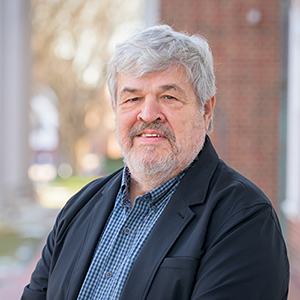
William H. Matthaeus is the Martin A. Pomerantz Chair of Physics & Astronomy at the University of Delaware, where he has been a faculty member since 1983. He is affiliated with the Bartol Research Institute, housed in the H. Rodney Sharp Laboratory on the University of Delaware campus. His work focuses on space physics, plasma physics, turbulence theory, and computational physics. Dr. Matthaeus received his B.A. degree in physics and philosophy from the University of Pennsylvania in 1973, followed by a Ph.D. from William and Mary in 1979. His academic journey included a National Academy of Sciences Research Associate position from 1980-1982 before joining the University of Delaware. Matthaeus's research spans solar wind physics, space plasmas, kinetic microinstabilities, and space mission development. His work involves theoretical, computational, and observational approaches to understanding plasma turbulence and magnetic reconnection in space environments. He has made significant contributions to understanding energy transfer in magnetohydrodynamic turbulence, solar wind dynamics, and particle acceleration mechanisms. His recent publications demonstrate a continued focus on multiscale plasma phenomena, with particular attention to turbulence in the solar wind, magnetosheath, and near-Sun environments. The research utilizes data from multiple spacecraft missions including Parker Solar Probe, MMS, and HelioSwarm, combined with sophisticated numerical simulations. James Clerk Maxwell Prize in Plasma Physics (2019) from the American Physical Society James B. Macelwane Award from the American Physical Society University of Delaware College of Arts & Sciences Scholarship Award Fellow of the American Physical Society Fellow of the American Geophysical Union Fellow of the American Association for the Advancement of Science Fellow of The Institute of Physics Dr. Matthaeus serves as director of the Delaware NASA Space Grant Consortium and the Delaware NASA EPSCoR program. He is a co-investigator on several major spacecraft missions including Cluster/PEACE, the Magnetospheric Multiscale mission, the Parker Solar Probe ISOIS instruments, the Interstellar Mapping and Acceleration Probe, PUNCH and Helioswarm. For over a decade, he has organized the Arcetri Workshop on Plasma Astrophysics in Florence, Italy, fostering international collaboration in the field. His research group at the Bartol Research Institute maintains active collaborations with scientists worldwide and contributes to advancing our understanding of fundamental plasma processes that govern space weather and astrophysical phenomena.
Dr. Rajesh Bera is a Research Fellow at ICFO's Functional Optoelectronic Nanomaterials group specializing in quantum-confined nanostructures. His research examines ultrafast carrier dynamics, excitonic properties, and optoelectronic applications of nanomaterials including quantum dots, nanoplatelets, and hybrid nanostructures. Current investigations focus on intraband transitions in doped nanocrystals, orientation-dependent excitonic behavior in 2D materials, and charge transfer mechanisms in heterostructure devices. Work bridges fundamental photophysics with applications in photodetection, sensing, and energy conversion. Recent publications demonstrate expertise in time-resolved spectroscopy of quantum materials, nanomaterial synthesis via colloidal chemistry, and rational design of optoelectronic devices. Continually develops novel characterization methods to probe ultrafast processes at nanoscale interfaces.
Gary Rochelle is the Carol and Henry Groppe Professor in Chemical Engineering and a faculty member at the University of Texas at Austin . His research focuses on developing fundamental insights into kinetic and mass transfer phenomena in aqueous technologies for air pollution control and acid gas treating, particularly for carbon dioxide and mercury removal. Education: Ph.D. in Chemical Engineering from UC Berkeley (1977), M.S./B.S. from MIT (1971) His work addresses critical challenges in CO2 capture using amine scrubbing, including process design optimization, solvent degradation mitigation, and pilot plant validation. Recent studies emphasize energy efficiency, oxidation inhibition, and environmental impacts such as amine aerosol emissions. The Texas Carbon Management Program , which he contributes to, aims to improve amine scrubbing technologies for retrofitting power plants and enabling geological sequestration or enhanced oil recovery. His group has validated concentrated aqueous piperazine (PZ) with an advanced flash stripper as the most efficient open-literature system.
Marja Kaarina Koski is a Professor at the National Institute of Aquatic Resources (DTU Aqua), Technical University of Denmark, within the Section for Oceans and Arctic. She holds a PhD and Master’s in hydrobiology from the University of Helsinki and is recognized as a Docent in Aquatic Sciences. Her research spans marine and Arctic ecosystems, focusing on zooplankton, food webs, and environmental stressors. PhD in Hydrobiology / Marine Biology, University of Helsinki (1999) Master’s in Hydrobiology, University of Helsinki (1993) Docent in Aquatic Sciences, University of Helsinki (2007) Her research centers on zooplankton ecology , Arctic marine ecosystems , and mercury bioaccumulation , with a strong emphasis on climate change and anthropogenic impacts. She investigates how copepods and other plankton influence the biological carbon pump and contribute to ecosystem stability in polar regions. Recent publications reveal a consistent focus on mercury dynamics in Arctic plankton, carbon export via marine snow, and the effects of pollution on planktonic food webs. Her work integrates field experiments with international collaborations across Greenland, Scandinavia, and the North Sea. Scientific Awards: No specific awards mentioned in the provided text. She actively supervises PhD students and leads major research initiatives. Her current projects include ECOTIP and Assessing cumulative effects of shipping discharges , highlighting her role in both ecological monitoring and environmental policy support. She has advised multiple PhD candidates, including E. S. Thomsen, T. Konstantinopoulos, and D. Asiedu. Koski has collaborated extensively with institutions in the Netherlands, Finland, Sweden, Norway, and Greenland. Her lab integrates experimental marine biology with biogeochemical analysis, particularly in Arctic and sub-Arctic fjord systems influenced by glacial meltwater and climate change.
Barbara A. Knuth is a Professor Emerita at Cornell University's College of Agriculture and Life Sciences, Department of Natural Resources and the Environment. She previously served as Dean of Cornell's Graduate School (over 10 years), Vice Provost/Senior Vice Provost (8 years), and Senior Associate Dean in CALS (3 years). Her academic career began with a PhD in Fisheries and Wildlife Sciences from Virginia Tech (1987), making her the first woman in tenure-track faculty at Cornell's Department of Natural Resources. Education: Ph.D., Fisheries and Wildlife Sciences (Virginia Tech) M.En., Environmental Science (Miami University) B. Phil. & A.B., Zoology/Environmental Studies (Miami University, Phi Beta Kappa) Research Interests: Focuses on ecosystem-based management in Great Lakes/marine systems, risk communication around chemical contaminants in fish, and environmental stewardship. Also studies equity/inclusion in graduate education. Key themes include: Social science integration in natural resource policy Health benefits/risk trade-offs in fish consumption Community-based conservation strategies Outreach: Advises state/tribal agencies on fishery management and public health. Led initiatives improving graduate education through professional development, mental health support, and faculty mentoring programs. Awards: Debra W. Stewart Award (2019) Fellow, American Fisheries Society (2015-) Council of Graduate Schools Recognition Multiple teaching/research awards (1999-2006) Grants & Funding: Supported by NSF, Sea Grant, EPA, Sloan Foundation, and others for projects on Great Lakes management, educational equity, and contaminant risk communication. Labs/Teams: Affiliated with Cornell's Center for Conservation Social Sciences. Collaborated with Ecologists Without Borders, Great Lakes Fishery Commission, and National Academies Ocean Studies Board.
Jon Hawkings is an Assistant Professor in the Department of Earth and Environmental Science at the University of Pennsylvania School of Arts & Sciences. His research focuses on biogeochemical cycles in glacial environments, particularly the role of glacial meltwater in downstream ecosystems and coastal oceans. He investigates processes such as subglacial weathering, nutrient mobilization, and contaminant transport, with fieldwork conducted in the Arctic, Patagonia, Himalayas, and Antarctica. Education: PhD in Biogeochemistry (University of Bristol, 2015); MSci in Physical Geography (University of Bristol, 2009). Research Interests: Aqueous biogeochemistry and elemental cycles Chemical weathering and mineral dissolution Contaminant transport (e.g., mercury, arsenic) Glaciology and ice sheet dynamics Environmental impacts of glacial meltwater He collaborates on projects such as the Salsa-Antarctica subglacial lake drilling initiative. His work integrates field observations, electrochemical sensing, and lab analyses to address pressing questions in cryosphere science. Awards: None explicitly listed, but active in professional societies like the American Geophysical Union. Advising/Grants: No student advisees listed; funding sources include grants for fieldwork and analytical studies in glacial systems. Labs/Teams: Leads field research groups in remote polar and mountainous regions, emphasizing interdisciplinary collaborations between geochemistry, glaciology, and environmental science.
Steven Siciliano is a Professor and NSERC/FCL Industrial Research Chair in In Situ Remediation and Risk Assessment at the University of Saskatchewan's College of Agriculture and Bioresources. He leads the CREATE Human and Ecological Risk Assessment Program. His expertise spans soil toxicology, greenhouse gas dynamics in polar ecosystems, and nitrogen cycle interactions in contaminated environments. Education: Ph.D. in Toxicology, University of Saskatchewan B.Sc. in Biochemistry, Concordia University Research Interests: His work focuses on human-soil interaction dynamics, including soil pollution impacts on human health (e.g., PAH toxicity via soil ingestion) and ecosystem resilience (e.g., nitrogen cycle disruptions). He investigates Arctic/Antarctic soil microbiology, greenhouse gas production in polar deserts, and the ecological effects of pollutants like mercury and petroleum hydrocarbons. His lab is divided into toxicology (e.g., metal cardiovascular effects, soil ingestion models) and ecology (e.g., sub-zero water effects on gene expression, Arctic nitrogen cycles). Teaching: Teaches courses on environmental fate analysis, contaminated site management, and advanced risk assessment methodologies at both undergraduate and graduate levels. Courses include EVSC 420, TOX 820, and EVSC 821. Grants & Labs: Directs the CREATE Program and leads projects funded by NSERC and industry partnerships. His lab integrates fieldwork, molecular techniques, and modeling to address environmental remediation challenges. Collaborates on projects like cryoturbation-driven carbon dynamics and microbial community analysis in agricultural systems. Labs/Teams: Active in soil science research teams, including Arctic soil microbiology and bioremediation innovation groups. Engages in interdisciplinary collaborations with environmental engineers and ecologists to advance in situ remediation technologies.
Mark Abbott is a Professor at the University of Pittsburgh, specializing in paleoclimatology and environmental science. He holds a PhD from the University of Minnesota (1997) and conducted postdoctoral research at the University of Massachusetts. His research integrates stratigraphy, geochemistry, and isotopic analysis to study climate change impacts on human societies and environmental systems. Abbott leads projects recovering lake sediment cores to document Holocene climate variability, focusing on annual-resolution records for temperature and drought reconstructions. He has authored over 50 peer-reviewed articles, with recent work emphasizing monsoon dynamics, Arctic mercury deposition, and tropical Andean glacial retreat. His fieldwork spans North America, South America, and Asia, including collaborative projects in Alaska, Peru, and India. Education: PhD in Geology (Minnesota, 1997), MS (Colorado, 1991), BA in Biology (Colorado, 1987) Postdoctoral Training: Climate System Research Center (UMass) Research interests include reconstructing past environmental changes via lacustrine archives, with emphasis on human-environment interactions. His lab analyzes stable isotopes, organic biomarkers, and sedimentology to address critical climate questions. Recent studies highlight climate-vegetation-fire linkages in the Pacific Northwest and Holocene lake-level changes in Canada/Yunnan. Recent articles focus on decadal-to-millennial climate shifts in mountain regions, Arctic permafrost dynamics, and anthropogenic impacts on lake ecosystems. Abbott’s work is supported by grants from NOAA and the NSF, with field sites in the Canadian Rockies, Himalayas, and Alaskan Arctic.
Dr. Sharon K. Sagiv is an Adjunct Assistant Professor of Epidemiology at UC Berkeley's School of Public Health and an investigator at the Center for Environmental Research and Children’s Health. Her research focuses on prenatal and early-life environmental toxin exposures, particularly persistent organic pollutants, heavy metals, pesticides, and consumer chemicals, and their impacts on child neurodevelopment. She has extensively studied associations between environmental toxicants and neurodevelopmental disorders like ADHD and autism, alongside innovative work using functional neuroimaging to assess neural activity in exposed populations. Dr. Sagiv holds a PhD in Epidemiology from UNC Chapel Hill (2004), an MPH from Boston University (1998), and a BA in Biology from Franklin and Marshall College (1993). She has contributed to major cohorts such as CHAMACOS and Project Viva, examining long-term effects of pollutants like PFAS, organophosphates, and PBDEs. Her work bridges epidemiology, toxicology, and neuroimaging to advance understanding of environmental health risks. Research interests emphasize translational environmental health science, with a focus on pesticide mixtures, air pollution, and endocrine disruptors. Key themes include exposure assessment frameworks, functional neuroimaging outcomes, and developmental origins of health disparities. She teaches grant-writing seminars and collaborates globally on pesticide neurotoxicity studies in farmworker populations. Recent publications highlight links between prenatal PFAS exposure and metabolic outcomes, pesticide exposure and brain connectivity, and traffic pollution’s role in neurocognitive decline. Her research portfolio includes systematic reviews on air pollution health impacts and methodological innovations for assessing chemical mixtures in pregnancy. Dr. Sagiv’s work has policy implications for environmental regulations and public health interventions targeting vulnerable populations.
Robert Fletcher is a Researcher at the University of Cambridge, affiliated with the Department of Zoology and the C-CLEAR Doctoral Training Partnership . His work focuses on applied ecology and conservation science, utilizing landscape and population ecology to address biodiversity challenges globally. Research Areas : Conservation biology, population ecology, landscape ecology, environmental informatics Collaborations : Partners in North America, Europe, Africa, and Southeast Asia Key Themes : Species extinction prevention, landscape conservation prioritization, and rapid biodiversity data delivery Email : rf497@cam.ac.uk Fletcher's interdisciplinary approach integrates fieldwork (e.g., Everglades endangered species, African elephants) with advanced modeling of habitat loss, fragmentation, invasive species, and climate change impacts. His recent work emphasizes: Drivers of species decline and recovery strategies Landscape management and restoration techniques Interdisciplinary collaborations with engineers, social scientists, and computer scientists His publications span topics like savanna ecosystem dynamics, community science applications, and conservation forecasting, reflecting a commitment to actionable science for global biodiversity preservation.
Fritz Brugger is a Lecturer at the Department of Humanities, Social and Political Sciences at ETH Zürich and serves as the executive director of NADEL (Network for African-Ethiopian Development Linkages). He holds a PhD in Development Studies from the Graduate Institute of International and Development Studies in Geneva. His research focuses on the developmental impacts of natural resource extraction, extractive industries' corporate roles, and governance challenges in Sub-Saharan Africa. Key areas include health impacts of mining, illicit financial flows, and policy interventions in resource-dependent economies. Prior to joining ETH Zürich, Brugger worked at Helvetas for eight years, later becoming a consultant on governance issues in water management, agriculture, and corporate responsibility. He designed an index-based agricultural insurance system and a mobile-tech platform for smallholder farmers' market access. His work spans diverse regions, with a focus on Burkina Faso, Ghana, and Mozambique. His publications emphasize interdisciplinary approaches, such as Q-methodology for policy engagement, and address topics like mercury use in artisanal mining, corporate due diligence, and the energy transition's impact on social licenses. He contributes to global debates on illicit financial flows, tax evasion, and sustainable development goals implementation through multilateral institutions. Brugger's advisory and grant work includes projects on health impact assessments in mining communities, policy coherence in development aid, and the nexus of extractive industries and conflict. He collaborates with NGOs, governments, and private sector entities to bridge research and policy, particularly in fragile contexts.
Gautam Gowrisankaran is a Professor of Economics at Columbia University , with affiliations as a Research Associate at the National Bureau of Economic Research (NBER), a Research Fellow at the Centre for Economic and Policy Research (CEPR), and a Professeur affilié at HEC Montréal. His research spans Health Economics , Industrial Organization , and Environmental Economics . Primary Affiliation : Columbia University, Department of Economics Secondary Affiliations : NBER, CEPR, HEC Montréal His work investigates dynamic market behaviors , including hospital pricing under Medicare reforms, energy transitions in regulated markets, and the impact of policy uncertainty on technology adoption. Recent publications focus on renewable energy integration , insurance market dynamics , and environmental regulation enforcement . Key trends in his research include applied microeconomic modeling , policy evaluation , and strategic interactions in markets with high stakes such as healthcare and energy. His methodological approach often combines structural estimation with empirical data analysis . Notable Grants : Doctoral Dissertation Research in Economics (Effect of Certified Nurse Midwife Scope-of-Practice Laws) Gautam actively contributes to academic discourse through collaborations with institutions like the University of Arizona and University of Chicago . His work addresses critical societal challenges, including healthcare affordability, energy sustainability, and regulatory efficiency.