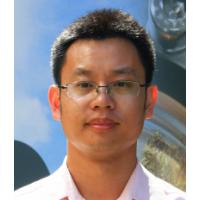
Yi Sun is Reader in Data Science at the University of Hertfordshire's School of Physics, Engineering & Computer Science. She specializes in applied machine learning, data visualization, and computational methods for bioinformatics/cheminformatics. Her PhD research at Aston University was funded by Pfizer Central Research. Current research includes neural networks for medical imaging, sentiment analysis using BERT models, HuBERT-based emotion recognition, and time-series analysis for astronomical data. She teaches Foundations of Data Science and Neural Networks. Supervised eight PhD projects including bacterial colony counting using deep learning and telecom customer churn prediction. Recent publications focus on AI applications in healthcare and communications engineering.
Prof. Laura Bégon-Lours is an Assistant Professor at ETH Zürich's Department of Information Technology and Electrical Engineering, specializing in neuromorphic electronics and AI hardware. Her research focuses on developing analog in-memory computing systems using novel materials like conductive-metal-oxide/HfOx ReRAM and ferroelectric nanolaminates. She explores applications in bio-inspired computing, low-power neuromorphic processors, and beyond-CMOS device integration. Her work bridges material science and electronics engineering, emphasizing scalable, energy-efficient computing architectures. Key contributions include crossbar operation of ferroelectric tunnel junctions, BEOL integration of synaptic weights, and unsupervised learning models leveraging memristive systems. Current projects target multi-timescale synaptic weights and photonic-electronic hybrid systems for next-generation AI acceleration. Publications highlight advancements in resistive switching mechanisms, ferroelectric field effects, and neuromorphic processor design. Her research has been published in top journals, with recent focus on 2023-2025 innovations in analog computing and neuromorphic circuits.
Dr. Guo-Xing Miao is an Associate Professor in the Department of Electrical and Computer Engineering at the University of Waterloo, with affiliations to the Institute for Quantum Computing. His research focuses on spintronics, iontronics, and topological quantum computing, emphasizing novel materials and devices for energy-efficient information processing. He holds a BSc from Shandong University (1999), a PhD from Brown University (2006), and postdoctoral experience at MIT (2011). Key research areas include spiontronics, memristors, neuromorphic computing, and the development of advanced nanoelectronic systems. He has been recognized with the 2017 Ontario Early Researcher Award. Dr. Miao is active in professional organizations such as IEEE, MRS, and APS, and teaches courses ranging from semiconductor physics to quantum circuits. Education: BSc, Shandong University, 1999 PhD, Brown University, 2006 Research Scientist, MIT, 2011 Recent Teaching: ECE 231: Semiconductor Physics and Devices (2023) ECE 405D: Superconducting Quantum Circuits (2025) NANO 601: Characterization of Nanomaterials (2022–2025) Research Highlights: Design of spin-based quantum computing architectures Development of iontronic memory devices Interfacial engineering in resistive switching systems His lab focuses on merging spin and ion dynamics to create next-generation devices, with a particular emphasis on scalable fabrication techniques. Dr. Miao actively supervises graduate students and maintains Sole-Supervisory Privilege Status (SSPS) for doctoral admissions.
Pooya Ronagh is a Research Assistant Professor at the University of Waterloo, affiliated with the Department of Physics & Astronomy and the Institute for Quantum Computing (IQC). He also serves as a Scientific Lead at the Perimeter Institute Quantum Intelligence Lab (PIQuIL) and directs the Hardware Innovation Lab at 1QBit. His work bridges quantum computation, machine learning, and optimal control, focusing on quantum algorithms, error correction, and hybrid quantum-classical systems. Education: PhD in Mathematics (University of British Columbia, 2016), MSc in Mathematics (UBC, 2011), dual BSc in Mathematics and Computer Science (Sharif University of Technology, 2009). Awards include the Benjamin Franklin Fellowship (2009). Research Interests: Quantum algorithms for machine learning, reinforcement learning, fault-tolerant quantum architectures, cryogenic systems, and quantum control. He explores applications of quantum simulation to improve learning efficiency and robustness in AI systems. Recent work includes optimizing quantum error correction decoders, developing scalable superconducting architectures, and advancing neural network-based quantum state tomography. His contributions span theoretical frameworks (e.g., lattice surgery scheduling) and experimental methods (e.g., SFQ pulse control). Teaching: Courses like PHYS 490 (Machine Learning in Physics) emphasize practical coding and interdisciplinary projects. Grants and collaborations involve industry and academic partners in quantum hardware and software development. Labs: Hardware Innovation Lab (1QBit), IQC Quantum Control Group Future Work: Scaling quantum supercomputers, cryogenic neural decoders, quantum-enhanced generative AI
Jinsong Pei is an Associate Professor at the University of Oklahoma's School of Civil Engineering and Environmental Science within the Gallogly College of Engineering, having joined the faculty in July 2002. She earned her doctoral degree from Columbia University in 2001. Her research focuses on multidisciplinary applications of advanced computational methods and scientific machine learning to address societal challenges in infrastructure renewal, climate change adaptation, and resilient environments. Education: Ph.D. from Columbia University (2001) Dr. Pei's research interests include nonlinear dynamical systems, memristors, memcapacitors, and hybrid dynamical systems, with applications in structural health monitoring, damage detection, and earthquake engineering. Her team develops 'mem-models'—a new family of hysteresis models—and contributes to interpretable machine learning for nonlinear function approximation. Contact: jspei@ou.edu | Phone: 405.325.4272 | Team Website No specific grants, awards, or advisees are listed in the provided information. Her work is affiliated with the Fears Lab, focusing on FPGA-based computation and embedded algorithms.
Do Lee is a Researcher at the COPPER Center within the Yale School of Medicine at Yale University. She holds a B.S. in Elementary Education from the University of Maryland, College Park, and an MPH in Biostatistics from George Washington University. Her research focuses on addressing racial and socio-economic disparities in cancer care to advance equitable healthcare. She contributes to interdisciplinary efforts in health equity, biostatistics, and public health, leveraging her expertise to improve patient outcomes through data-driven strategies. Affiliated with both the COPPER Center and the Department of Internal Medicine, her work integrates statistical methodologies with clinical and translational research. While no awards are explicitly noted, her contributions to health disparities research reflect a commitment to impactful translational science. Her scholarly publications span neuromorphic computing, artificial synapse electronics, and efficient machine learning techniques, demonstrating a blend of computational innovation and applied health research. Collaborations likely bridge engineering and medical domains to address complex healthcare challenges.
Leon O. Chua is a Professor in the Department of Electrical Engineering and Computer Sciences at the University of California, Berkeley. He joined the faculty in 1970 after serving as an Assistant and Associate Professor at Purdue University. His research focuses on Cellular Neural Networks, Nonlinear Dynamics, and Chaos Theory, with contributions to circuit theory and complexity science. Chua is a Fellow of the IEEE and has received numerous awards, including the IEEE Gustav Kirchhoff Award (2005) and the Neural Networks Pioneer Award (2000). He holds 7 U.S. patents and 8 honorary doctorates from international universities. Education: B.S., Electrical Engineering, Mapúa Institute of Technology, 1959 M.S., Electrical Engineering, Massachusetts Institute of Technology, 1961 Ph.D., Electrical Engineering, University of Illinois, 1964 Research Interests: Cellular Neural Networks and their applications Nonlinear circuits and chaos theory Complex systems and bifurcation analysis Notable Achievements: Coined the term 'memristor' in 1971, later validated experimentally Founded the Cellular Neural Network (CNN) paradigm Recipient of the Top 15 Most Cited Author in Engineering (2002) Lab & Teams: He leads the NOEL (NOnlinear ELectronics) Lab at UC Berkeley, focusing on nonlinear circuits and systems.
Professor Nagarajan Valanoor is a faculty member in the School of Materials Science and Engineering at the University of New South Wales (UNSW), Sydney. He holds a PhD in Materials Science and Engineering from the University of Maryland (2001) and a Bachelor of Engineering in Metallurgy from the University of Pune (1997). His research focuses on functional nanomaterials, particularly ferroics and multiferroics, exploring their properties at the nanoscale and their applications in energy, electronics, and sensing. Key research areas include thin-film epitaxy, interface-mediated phenomena, and scanned probe microscopy. His work addresses challenges in scaling functional materials to nanometer dimensions, including signal-to-noise optimization and structural control. Current projects investigate interface effects in ferroelectric/multiferroic thin films, resistive switching in nanostructured interfaces, and solution-processed oxide materials. Education: PhD (Materials Science, University of Maryland, 2001), Bach. Engg (Metallurgy, University of Pune, 1997) Affiliations: Postgraduate Coordinator at the School of MSE, IEEE Ferroelectrics Committee member, and advisory board member for Piezoresponse Force Microscopy workshops Professor Valanoor has received prestigious awards including the 2014 IEEE Ferroelectrics Young Investigator Award, 2012 Vice-Chancellor’s Postgraduate Supervision Award, and the 2009 Edgeworth David Medal. His teaching includes MATS3005: Phase Transformations. His lab emphasizes international collaboration, with partners in the US, Europe, and Asia-Pacific. Research highlights include pioneering studies on ferroelectric domain wall dynamics, polarization-induced photoelectrocatalytic enhancements, and hybrid ferroelectric tunnel junctions. Recent work explores topological defects in multiferroic superlattices and strain-engineered phase transitions in BiFeO3 films.
Dr. Maciej Zawodniok is an Associate Professor of Computer Engineering at the Missouri University of Science and Technology, part of the College of Engineering. He holds a Ph.D. in Computer Engineering from Missouri S&T (2006) and an M.Sc. in Computer Science from Silesian University of Technology, Poland (1999). His research focuses on adaptive and energy-efficient protocols for wireless networks, cyber-physical systems, and RFID systems. He is an investigator at the Intelligent Systems Center and serves as Assistant Director of the NSF I/UCRC on Intelligent Maintenance Systems. Education: Ph.D. in Computer Engineering, Missouri University of Science and Technology (2006) M.Sc. in Computer Science, Silesian University of Technology (1999) Research Interests: Wireless sensor networks RFID systems Energy-efficient protocols RF-based localization Cyber-physical systems Notable Awards: 2013 Outstanding Branch Counselor (IEEE St Louis Section & Region 5) 2013 Outstanding Teaching Commendation Award 2012 Outstanding New Advisor of the Year Award Advising & Grants: Dr. Zawodniok has led NSF-funded projects including the I/UCRC on Intelligent Maintenance Systems and research on memristors for RFID devices. His work emphasizes practical applications in manufacturing, disaster response, and smart grid systems. Collaborations include industry partners like Amplisine. Labs/Teams: Active in the AutoID Research Group and the Missouri S&T Motes project, focusing on wireless network testbeds and RFID innovations.
Dr. Said Al-Sarawi is an Associate Professor in the School of Electrical and Mechanical Engineering at the University of Adelaide, affiliated with the Centre for Biomedical Engineering (CBME) and The Centre for High Performance Integrated Technologies and Systems (CHiPTec). He holds a PhD in Electrical and Electronic Engineering (2003) and a Graduate Certificate in Education (2006). His research focuses on biomedical engineering, MEMS/NEMS technologies, neuromorphic systems, and secure hardware/software co-design. Dr. Al-Sarawi leads multiple research initiatives including advanced integrated circuits using Gallium Nitride, fall detection systems for elderly care, and memristor-based neuromorphic applications. He has secured funding from the Premier’s Research and Industry Fund (PRIF), ARC Discovery grants, and international collaborations. Current projects involve 24 PhD students and postdoctoral researchers across biomedical sensors, cybersecurity in AI, and space-based sensor systems. He has been recognized with the University Medal (2003) for postgraduate academic excellence and actively contributes to education committees within the university. His work spans interdisciplinary domains, bridging biomedical innovations with cutting-edge electronics and cybersecurity solutions.
Miguel Muñoz Rojo is an Associate Professor specializing in Thermal Engineering and Nanotechnology. He holds a PhD in Condensed Matter Physics and Nanotechnology from Universidad Autonoma de Madrid (2015), a Master's in Nanoscience and Molecular Nanotechnology (2013), and a Physics degree (2010). His research focuses on Nanoscale thermal transport Thermoelectrics 2D materials Memristive device engineering Atomic Force Microscopy (AFM) Thermal sensors . Recent work includes hybrid 2D-CMOS microchips, VO2-based resistive switching devices, and thermal management systems. His 193 citations for the 2023 Nature publication on memristive applications highlight his impact. Awarded the Leonardo da Vinci's Fellowship at the National Physical Laboratory (2010-2011), he served as examiner for MSc defenses and participated in conferences like the 2020 Device Research Conference. Collaborations span institutions in Spain, the U.S., and the Netherlands.
Gisya Abdi , an Adjunct Assistant Professor at the Department of Photophysics and Electrochemistry of Semiconductors within the Academic Centre for Materials and Nanotechnology at AGH University of Science and Technology, focuses on advanced materials for neuromorphic computing and environmental applications. Her work spans memristor development, nanomaterials for greenhouse gas adsorption, and artificial photosynthesis systems. University: AGH University of Science and Technology School: Academic Centre for Materials and Nanotechnology Department: Department of Photophysics and Electrochemistry of Semiconductors Email: agisya@agh.edu.pl Research Interests: Design of memristors for neuromorphic data computing and synaptic plasticity Development of nanomaterials for reservoir computing and sensor technologies Study of multiferroic ceramics and unconventional resistive switching mechanisms Application of graphynes and graphene oxide derivatives in environmental science Article Trends: Recent publications highlight memristor-based neuromorphic systems, nanomaterials for energy/environmental applications, and hybrid technologies integrating electrochemical and optical properties. Key areas include physical reservoir computing, diffusive memristors, and adsorbent materials for pollution mitigation.
Professor Dewei Chu is a faculty member at the School of Materials Science & Engineering, University of New South Wales. His research focuses on nanoionic materials for nanoelectronics and energy storage/conversion systems, including sensors, memories, batteries, and moisture energy generators. He leads the Nanoionic Materials Group with 34 researchers and supervises 21 HDR students. Key awards include the ARC Mid-career Industry Fellowship (2023-2027) and ARC Future Fellowship (2014-2018). His work spans functional ceramics, printed electronics, and scalable nanomaterial fabrication. Teaching includes courses like MATS2001 and MATS6108.
Patricio Farrell is a Senior Lecturer and Research Group Leader in Applied Mathematics at the Weierstrass Institute Berlin (WIAS). His work bridges mathematical theory and engineering applications, focusing on numerical methods for semiconductor devices, perovskite solar cells, and neuromorphic materials. He leads the 'Methods for Innovative Semiconductor Devices' group at WIAS and serves as Vice Chair of the Committee for Mathematical Modeling, Simulation, and Optimization (KOMSO). Affiliations: WIAS Berlin, Freie Universität Berlin (Privatdozent), Berlin Mathematical School (Mentor) Educations: PhD in Applied Mathematics (University of Oxford), Diplom (University of Hamburg/University of Bath) His research emphasizes structure-preserving numerical methods for drift-diffusion systems, with applications ranging from next-generation semiconductors to photonic crystal lasers. He develops simulation tools like ChargeTransport.jl and contributes to open-source numerical libraries such as VoronoiFVM.jl. Key projects include the ARISE initiative for semiconductor solvers (€1M), Excellence in Photonic Crystal Surface Emitting Lasers (PCSELence), and MATH+ projects on perovskite devices and semiconductor mechanics. Farrell is a scientific ambassador for Brain City Berlin and actively publishes in top journals, emphasizing computational methods for energy transition and material science challenges.
Professor Jing Sheng CHEN is a distinguished faculty member in the Department of Material Science and Engineering at the National University of Singapore (NUS), College of Engineering. He serves as Principal Investigator leading an experimental materials science research group with state-of-the-art facilities for thin film deposition, nanofabrication, and magnetic characterization. His research has received international recognition including IEEE Fellow status and IEEE Magnetics Society Distinguished Lecturer appointment. Professor Chen's research focuses on cutting-edge areas of spintronics and magnetic materials, with particular emphasis on high anisotropy magnetic materials for hard disk drives, perpendicular anisotropy based magnetic tunnel junctions, Rashba/spin Hall effects, multiferroic materials and devices, and nanostructured magnetic systems. His work bridges fundamental physics with practical applications in next-generation memory and computing technologies. The research group maintains strong international collaborations with institutions across Asia, Europe, and North America. Analysis of recent publications reveals a strong trend toward antiferromagnetic spintronics, topological spin transport phenomena, and the integration of ferroelectric control with spin-orbitronic devices. The group has made significant contributions to understanding chiral antiferromagnetic order, electrical manipulation of topological states, and the development of energy-efficient spin current generation mechanisms. Their work spans fundamental physics discoveries to prototype device demonstrations with potential applications in neuromorphic computing and low-power electronics. IEEE Fellow (2024) IEEE Magnetics Society Distinguished Lecturer (2022) Professor Chen has supervised numerous PhD students, Master's students, and postdoctoral fellows who have gone on to successful careers in academia and industry worldwide. His group has secured substantial research funding supporting advanced facilities including multiple sputtering systems, pulsed laser deposition equipment, and sophisticated magnetic characterization tools. The research program maintains strong industry connections with major data storage and semiconductor companies. The research group operates specialized facilities including multiple sputtering machines (Kurt J. Lesker with 6 targets, AJA International with 7 targets), pulsed laser deposition systems, ion beam etching equipment, and comprehensive magnetic characterization systems including a 9T PPMS, homemade integrated harmonic Hall voltage measurement system, ferromagnetic resonance system, and magneto-optic Kerr effect setup. These facilities support the group's research in thin film growth, nanofabrication, and advanced magnetic property characterization.