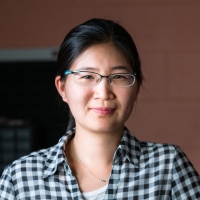
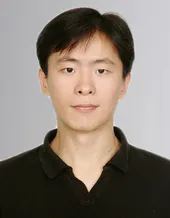
Wilhelmina Mulders is an Associate Professor at the University of Western Australia (UWA), based in the School of Human Sciences. She holds dual roles in teaching and research, coordinating neuroscience programs and the Master of Clinical Audiology. Her research focuses on auditory neuroscience, particularly brain plasticity linked to hearing loss, tinnitus, and cochlear implant fibrosis. She has secured over $3.5 million in grants since 2001 from organizations like the NHMRC and Telethon Trust. Education: PhD in Neuroanatomy (Nijmegen, 1997), followed by a postdoc in hippocampal anatomy. Joined UWA’s Auditory Lab in 1997, becoming a tenured faculty member in 2015. Research Interests: Explores auditory system dynamics, including how hearing loss impacts cognition and tinnitus. Techniques include electrophysiology, behavioral studies, and gene/protein expression analysis. Recent work addresses cochlear implant fibrosis and pediatric hearing assessment tools. Awards: School of Human Sciences Research Mentorship Award (2022) Channel 7 Telethon Grants (2021, 2022) Teaching & Grants: Coordinates multiple courses (e.g., NEUR5011, PHYL5501) and leads 15 active grants, including projects on auditory processing interventions and pediatric audiology equipment. Labs & Teams: Active in the Auditory Laboratory at UWA, collaborating on projects like silk-based tympanic membrane repair and auditory cued exercise for children.
Vivienne Sze is a Professor at MIT's Department of Electrical Engineering and Computer Science (EECS), part of the School of Engineering. Her research focuses on energy-efficient computing systems for machine learning, computer vision, and video compression, with applications in autonomous systems, healthcare, and IoT. She leads projects integrating algorithmic innovations with hardware design to achieve low-power solutions for embedded and mobile devices. Her work has been recognized through prestigious awards, including the Primetime Engineering Emmy Award for co-developing the HEVC video compression standard and multiple faculty awards from tech giants like Google and Qualcomm. She co-authored the book *Efficient Processing of Deep Neural Networks*, emphasizing practical hardware-software co-design strategies. Research Interests: Energy-Efficient Machine Learning Accelerators Video Coding and Compression Standards Embedded Systems and Mobile Computing Processing-in-Memory (PIM) Architectures AI for Health Monitoring and Digital Health Sustainability in AI Infrastructure Publications highlight trends in: Optimizing DNNs for edge devices Innovations in entropy coding and CABAC Memory-efficient Gaussian-based algorithms Energy-aware design for photonic computing Awards include IEEE conference best paper awards and industry recognitions for her contributions to video coding and hardware acceleration. Her lab's collaborative efforts span academia and industry, aiming to bridge theoretical research with real-world deployable systems.
Sheheeda Mariam Manakkadu is an Associate Professor in the Department of Computer Science at Southern Illinois University Carbondale. She teaches graduate courses in Data Structures, Object-Oriented Programming, Data Mining, Text Mining, and Cloud Architecture, along with undergraduate courses in Operating Systems and Data Analytics. Ph.D., Computer Engineering M.E., Biomedical Engineering Her research spans robotics, data analytics, and parallel computing. Key areas include adaptive control of robotic manipulators, big data processing via MapReduce, IoT resource allocation, and computational bioinformatics for protein networks. Recent publications focus on neuro-sliding mode control, cloud architecture, and scalable recommender systems. She actively participates in academic service as a committee member for graduate courses and the IEEE Erie Section. Her work integrates machine learning, optimization algorithms, and distributed systems across diverse domains.
Matthew Allen Bishop is a Professor in the Department of Computer Science at the University of California, Davis. His primary affiliation is with the College of Engineering. Bishop's research focuses on cybersecurity, including secure programming, insider threat detection, malware analysis, and cybersecurity education. He has contributed extensively to curricular guidelines (e.g., CSEC 2017) and frameworks for cyber defense. His work spans theoretical advancements (e.g., intrusion detection models) and applied systems (e.g., secure voting platforms). Notable research areas include: Cybersecurity Education: Developing curricula and pedagogical frameworks for secure coding and ethical practices. Insider Threat Mitigation: Declarative approaches and behavioral analysis for detecting and preventing attacks. Malware Mitigation: Techniques leveraging uncertainty principles and defensive programming. Election Security: Analyzing vulnerabilities and designing secure voting systems. Bishop has collaborated with institutions like the Department of Homeland Security (DHS) and National Security Agency (NSA) on critical infrastructure protection. His publications span conferences like IEEE Security & Privacy, HICSS, and NSPW, emphasizing real-world applications of cybersecurity principles.
Dr. Shivanjali Khare is an Assistant Professor in the Computer Science department at the University of New Haven, affiliated with the Tagliatela College of Engineering. She leads the SARI (Security and ARtificial Intelligence) Research Lab and teaches courses in Artificial Intelligence and Data Mining. Her research focuses on enhancing cybersecurity through hybrid cryptography, IoT data security, machine learning, and wireless sensor technologies to empower user protection in the digital age. Education: Ph.D. and M.S. in Computer Science from the University of Louisiana at Lafayette (2021 and 2016, respectively). Research Interests: IoT Data Security Hybrid Cryptography Systems Wireless Sensor Networks Big Data Sharing Mechanisms AI-Driven Cybersecurity Solutions Publications highlight contributions in IoT security protocols, cryptographic algorithm optimization, and machine learning applications. Notable work includes energy-efficient secure IoT drone systems (ESIoD) and ensemble learning for anomaly detection in smart homes. Recent outreach includes conducting cybersecurity seminars for senior citizens through the New Haven Free Public Library, demonstrating her commitment to societal impact and public education.
Tsung-Yi Ho is a Professor in the Department of Computer Science at National Tsing Hua University, Taiwan. He holds the Hans Fischer Fellowship at the Technical University of Munich's Institute for Advanced Study (TUM-IAS). His primary research focuses on design automation for microfluidic biochips and nanometer integrated circuits, emphasizing reliability, optimization, and interdisciplinary applications in bioengineering. Ho received his Ph.D. in Electrical Engineering from National Taiwan University in 2005. He has held positions at National Cheng Kung University and National Chiao Tung University before joining National Tsing Hua University. His work bridges algorithmic design with practical biochip fabrication, addressing challenges like contamination control, routing optimization, and fault tolerance in microfluidic systems. His research interests span design automation for emerging technologies, including paper-based biochips and 3D microfluidic architectures. He has pioneered methods for integrating hardware-software co-design principles into biochip development, enhancing both functionality and reliability. His contributions include novel routing algorithms, contamination mitigation techniques, and reliability-aware synthesis frameworks. Ho has authored over 100 publications, including influential papers in IEEE Transactions on CAD and ACM journals. He serves on the editorial boards of multiple top-tier journals and chairs professional chapters for ACM and IEEE. His awards include the Humboldt Research Fellowship, Dr. Wu Ta-You Memorial Award, and Best Paper Awards at VLSI Test Symposium and IEEE Transactions on CAD. His current projects involve optimizing control-fluidic co-design for paper-based biochips and developing AI-driven frameworks for microfluidic functionality prediction. He collaborates widely, leading cross-disciplinary initiatives at TUM-IAS and Taiwan's academic institutions.
Kai Barron is a Research Fellow at the WZB Berlin Social Science Center, affiliated with the Berlin School of Economics. He holds a PhD in Economics from University College London (UCL), following an MRes and MSc in Economics from UCL and a B.Soc.Sc. (Hons) in Economics from the University of Cape Town. His research focuses on behavioral and experimental economics, exploring topics such as belief formation, narratives, and discrimination. He also examines economic disparities in the Global South, with studies on child development and the psychological foundations of discrimination. Research interests span cognitive foundations of economic decisions, narratives' influence on persuasion, and applications in understanding mental models and discrimination. His recent work includes studies on alcohol policy impacts in South Africa and experiments on children's social behaviors. Kai has been involved with the CRC Rationality & Competition and contributed to collaborative projects like the 'Your Contribution Squared' initiative for Ukraine aid. He has published in top journals such as the American Economic Review, Management Science, and the Review of Economics and Statistics. His research is highlighted by interdisciplinary collaborations, including work on violence reduction, medical adherence, and gender bias in hiring. Kai actively participates in academic networks and promotes evidence-based policy through platforms like VoxDev and Bluesky.
Johan Samuelsson is a Professor of History at Karlstad University, affiliated with the Faculty of Arts and Social Sciences and the Department of Political, Historical, Religious and Cultural Studies. He holds a PhD in History from Uppsala University (2005) and has conducted extensive research on educational history, progressive pedagogy, and 20th-century Swedish institutional development. His research focuses on the history of education systems, particularly examining progressive education reforms, funding mechanisms, and policy transitions from the 19th century to contemporary times. Key themes include the interplay between national identity, historical narratives, and educational curricula, with a special emphasis on Sweden’s educational policies during the Cold War era. Recent work includes co-authored studies on the evolution of educational governance in Sweden (2025), Cold War preparedness education (2024), and the material and ideological foundations of progressive teaching practices (2021). His analyses often bridge historical scholarship with contemporary debates about educational equity and societal transformation. Samuelsson has contributed to edited volumes on comparative pedagogical theory, historical didactics, and the role of teachers as agents of educational reform. His interdisciplinary approach integrates archival research, policy analysis, and qualitative studies of educational actors.
Hedy Kober is an Adjunct Associate Professor in Psychiatry at Yale School of Medicine and an Adjunct Associate Professor of Law. She serves as Director of the Clinical and Affective Neuroscience Laboratory at Yale. Her work bridges psychology, neuroscience, and clinical interventions, with a focus on emotion regulation, mindfulness, and addiction. Education PhD in Clinical Psychology (Respecialization), Fielding Graduate University (2021) PhD, Columbia University (2009) MPhil, Columbia University (2008) MA, Columbia University (2007) Research Interests Dr. Kober's research focuses on the cognitive and neural mechanisms underlying emotion regulation, with particular emphasis on mindfulness-based interventions for various conditions including addiction, eating disorders, and depression. Her work explores how individuals regulate cravings, manage negative emotions, and develop healthier behavioral patterns through cognitive strategies and mindfulness practices. She employs a range of methodologies including fMRI, ecological momentary assessment, and clinical trials to investigate these processes in both healthy individuals and those with clinical conditions. Her recent work has increasingly focused on digital interventions that make evidence-based therapies more accessible, particularly for substance use disorders and eating disorders. She examines how brief, scalable interventions can effectively target core mechanisms of behavior change. Research Trends Dr. Kober's recent publications demonstrate a strong focus on the intersection of emotion regulation, mindfulness, and clinical applications. Her work connects basic cognitive neuroscience with clinical interventions, particularly examining how individuals regulate cravings and negative emotions. Recent studies have expanded to include digital delivery of interventions, network approaches to understanding emotional processes, and the development of neuromarkers for addiction. Her research increasingly incorporates longitudinal and ecological momentary assessment methods to capture real-world emotional dynamics. Scientific Awards Outstanding Mentor Award (2019) from American Academy of Child and Adolescent Psychiatry Early Career Investigator Award (2018) from NIDA and NIAAA Teaching Excellence at Yale (2017) from Yale Center for Teaching and Learning Helmsley Fellowship in Cross Disciplinary Science (2016) from Helmsley Charitable Trust Scholar Award (2011) from Yale Center for Clinical Investigation Advising and Grants Dr. Kober has received significant grant funding for her research on emotion regulation and addiction. She serves as Principal Investigator on clinical trials examining brief training for alcohol craving regulation and the role of reward learning and decision making in addiction. Her work has been supported by organizations including NIDA and NIAAA. As a mentor, she has guided numerous students and early-career researchers, recognized by her Outstanding Mentor Award from the American Academy of Child and Adolescent Psychiatry. Laboratory Dr. Kober directs the Clinical and Affective Neuroscience Laboratory at Yale, which investigates the neural and cognitive mechanisms of emotion regulation and their application to clinical problems. The lab employs a multi-method approach including neuroimaging, behavioral experiments, and clinical interventions to understand how people regulate emotions and cravings, with the goal of developing more effective treatments for conditions like addiction and eating disorders.
Peter Johnson is an academic researcher affiliated with James Cook University, contributing to medical education, healthcare leadership, and biomedical sciences. His work focuses on curriculum development for medical programs, leadership training for healthcare professionals, and interdisciplinary research in physiology and pharmacology. He has been deeply involved in reshaping curriculum delivery for JCU's expanding MBBS program across multiple campuses. His research also explores the application of multimedia in health sciences education and the molecular mechanisms underlying cardiovascular health. Education background not explicitly stated in provided texts Key research areas include medical leadership assessment, interprofessional education frameworks, and toxin effects on cardiovascular systems Co-leads projects on medical student leadership development and clinical competence benchmarking Johnson's publications demonstrate a strong focus on translational research bridging basic sciences with clinical practice. His 2018-2023 work emphasizes leadership skill development for healthcare trainees while maintaining rigorous biomedical research in areas like transcranial stimulation and bacterial toxin physiology. No specific awards or grants are listed in this publication record. Collaborates extensively with JCU colleagues including Simone Ross, Tarun Sen Gupta, and Karen Carlisle on medical education initiatives.
Dr. Vasileios Vasilakis is a Senior Lecturer in Cyber Security at the University of York's Department of Computer Science. He holds a PhD in Electrical & Computer Engineering from the University of Patras, Greece. His research focuses on IoT Security, Mobile Network Security, and SDN Security, with contributions to projects like the EC H2020 SESAME and RIFE initiatives. He has supervised numerous PhD students and contributed to academic service roles such as Guest Editor in IEICE Transactions and Program Committee member for IEEE ICC and GLOBECOM. His work spans secure systems design, network protocols, and cybersecurity defenses, with recent publications addressing SDN-based intrusion detection, IoT attack mitigation, and ransomware analysis. Affiliations: York Interdisciplinary Centre for Cyber Security (YiCS), University of York Education: PhD in Electrical & Computer Engineering (University of Patras, 2011) Research Interests His research emphasizes practical cybersecurity solutions for modern networks, including: IoT Security: Developing authentication and intrusion detection mechanisms for RPL-based networks SDN/NFV Security: Designing defenses against ransomware and distributed attacks Wireless Network Security: Analyzing vulnerabilities in 5G and UAV communication systems Academic Contributions He has organized special sessions at IEEE conferences, co-authored over 120 publications, and reviewed PhD theses at multiple institutions. Current projects include secure edge computing in 5G networks and lightweight authentication schemes for IoT protocols like MQTT.
Chad Hoggan is a Professor in the Department of Educational Leadership, Policy, and Human Development at North Carolina State University's College of Education. He serves as Co-director of the Institute of Civic Studies and Learning for Democracy and holds editorial leadership roles as Co-editor of the Journal of Transformative Education and The Good Society: A Journal of Civic Studies , while also contributing as Consulting Editor for Adult Education Quarterly . Doctor of Education in Adult Learning & Leadership, Teachers College, Columbia University (2011) Master of Education in Adult Education, NC State University (2006) Bachelor of Science in Business Administration, Brigham Young University (1993) Hoggan's research centers on transformative learning theory and its applications in civic education, with particular focus on migration contexts. His work examines how transformative experiences reshape individuals' engagement with democratic societies, drawing from studies with refugees, military veterans, cancer survivors, and postsecondary students. Since 2019, he has conducted extensive research on migrant integration in Central and Eastern Europe following refugee influxes from Syria and Ukraine, collaborating with institutions in Germany and Italy while co-founding the Deutsch-Ukrainischer Dialog association to support Ukrainian refugees. His recent publications reveal a strong trajectory toward civic learning in democratic societies, with 2022-2025 works addressing epistemic crises in post-truth contexts, radicalization processes, and democratic infrastructure. The scholarship demonstrates consistent application of transformative learning frameworks to contemporary challenges in migration, political extremism, and democratic resilience, with increasing emphasis on practical applications for civic engagement. Cyril O. Houle Award for Outstanding Literature in Adult Education (2020) for Transformational Learning in Community Colleges International Adult & Continuing Education Hall of Fame induction NCSU College of Education Outstanding Global Engagement Award UNESCO Chair of Lifelong Learning Professional Education appointment (2021) Hoggan advises doctoral students in transformative learning theory and civic education while leading international collaborations through the Institute of Civic Studies. His work bridges academic research with community engagement, particularly through refugee support initiatives in Germany and Ukraine-focused educational projects. Current research examines democratic learning structures in migration societies and the ethical dimensions of transformative education in polarized political contexts.
Elizabeth A. Williams is a Professor of Organizational and Health Communication and Chair of the Department of Communication Studies at Colorado State University, with affiliate faculty status at the Colorado School of Public Health. Her research examines high reliability organizations (e.g., fire departments) and their health/safety practices, including accident response, organizational learning, and wearable technology applications. Education: Ph.D. in Communication from Purdue University Affiliations: Department of Communication Studies, Colorado School of Public Health Recent work includes: Nonprofit resilience during crises (2024) Emotional sustainability in human services (2022) Wearable tech integration in firefighting (2018) Virtual team communication dynamics (2011) She co-edited the award-winning Organizations, Communication, and Health (2017 NCA award) and serves on ResponderStrong's advisory board. Recognized for Excellence in Teaching and Outstanding Service by the College of Liberal Arts, her research bridges organizational theory with public health through communication strategies.
Jeff M Phillips is a Professor in the Kahlert School of Computing at the University of Utah, specializing in algorithms for big data analytics, computational geometry, and machine learning. He holds a BS in Computer Science and Mathematics from Rice University (2003) and a PhD in Computer Science from Duke University (2009). He serves as Director of the Utah Center for Data Science, Director of the Data Science Program in the Kahlert School of Computing, and Faculty Co-Director of the One U Data Science Hub. His research focuses on geometric data analysis, coresets, sketches, and handling uncertainty in data. Education: BS/BA (Rice University, 2003), PhD (Duke University, 2009) CI Postdoctoral Fellow at University of Utah (2009–2011) His research interests include algorithms for big data analytics, computational geometry, machine learning, spatial statistics, and AI. He has led NSF-funded projects on spatial data analysis, cosmic origins via AI, and reactive flow data modeling. Phillips has advised numerous PhD and master’s students, contributing to topics like trajectory classification and bias mitigation in word embeddings. His publications span computational geometry, data science, and machine learning. Notable work includes coresets for kernel density estimates, bias mitigation in language models, and scalable spatial scan statistics. Phillips is also active in academic service, serving as co-PC chair for SoCG 2024 and on program committees for major conferences like NeurIPS and ICML.
George Bosilca is a Research Professor at the University of Tennessee, Knoxville, affiliated with the Department of Electrical Engineering and Computer Science and the Innovative Computing Laboratory. He holds a PhD in Computer Science (University of Paris XI, 2004) and an MS in Math and Computer Science (University of Paris XI, 1999). His research focuses on distributed algorithms, parallel programming paradigms, performance modeling/optimization, and resilience in programming models. He contributes to exascale computing initiatives through projects like PaRSEC and Open MPI. Key research areas include task-based runtimes, MPI standardization for exascale systems, and fault-tolerant distributed computing. His work emphasizes scalable and portable constructs for high-performance applications. Bosilca is involved with the Innovative Computing Laboratory (ICL) and collaborates on projects like the EPEXA ecosystem and Argobots threading framework. Recent publications highlight advancements in asynchronous many-task systems, GPU-accelerated collective operations, and resilience strategies for HPC platforms. His contributions span theoretical frameworks and practical implementations, bridging algorithmic innovation with real-world HPC challenges.