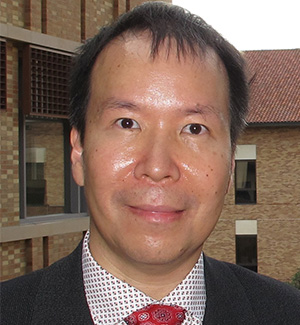
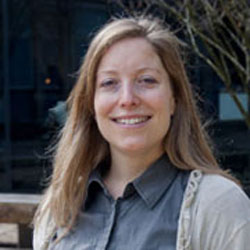
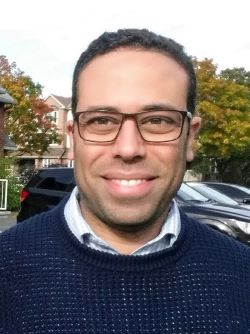
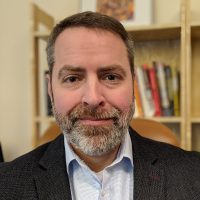
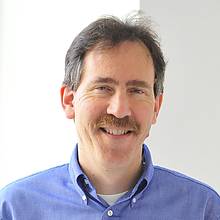
Lance Rips is a Professor in the Psychology Department at Northwestern University , Evanston, IL. His research focuses on cognitive psychology, particularly concepts, reasoning, and autobiographical memory. Academic Rank: Professor Institution: Northwestern University Department: Psychology Department Contact: ripslab@gmail.com , rips@northwestern.edu Research interests include: Deductive and inductive reasoning Concepts of objects/events over time Causal cognition Mathematical thinking (numbers, non-Euclidean geometry) Informal argumentation and survey methodology His lab investigates foundational questions in cognition, with recent work on conditional reasoning, object individuation, and developmental understanding of substances. Publications span journals like Cognitive Science , Psychological Science , and Cognition .
Talia Ringer is an Assistant Professor in the Department of Computer Science at the University of Illinois, where she is a member of the PL/FM/SE (Programming Languages/Formal Methods/Software Engineering) research group. She leads the Illinois Theorem Provers (ITP) lab, which focuses on advancing proof engineering technologies to make formal verification accessible to programmers of all skill levels across all domains. Research Interests Dr. Ringer's research spans multiple aspects of proof engineering with a strong focus on integrating techniques from dependent type theory, program transformations, and neural proof synthesis to solve real-world verification challenges. Her work addresses how to build systems that allow programmers to prove the absence of costly or dangerous bugs in software. She is particularly interested in proof repair, machine learning for proofs, and developing new methodologies that can drive the creation of large, secure, and robust verified software and hardware systems. Research Trends Dr. Ringer's recent publications demonstrate a strong shift toward integrating machine learning with formal verification, particularly in proof repair and synthesis. Her work explores how large language models can assist with theorem proving, how reinforcement learning can automate verification processes, and how to make proof engineering more practical for real humans. Many publications involve collaborations with students and researchers from multiple institutions, reflecting her commitment to interdisciplinary research. Awards and Recognition Distinguished Paper Award at ESEC/FSE 2023 for "Baldur: Whole-Proof Generation and Repair with Large Language Models" ACM SIGPLAN Distinguished Service Award in 2023 Mentoring and Service Dr. Ringer is a dedicated mentor who has advised numerous undergraduate and graduate students. She is the founder and president of the Computing Connections Fellowship, which provides transitional funding for computer science PhD students needing to escape unhealthy environments. She is also the founder and previous chair of the SIGPLAN Long-Term Mentoring Committee (SIGPLAN-M), which connects more than 200 mentors and 300 mentees across more than 44 countries. Her service work was formally recognized with the 2023 ACM SIGPLAN Distinguished Service Award. Laboratory and Collaborations Dr. Ringer leads the Illinois Theorem Provers (ITP) lab with current members including postdocs, PhD students, masters students, and undergraduates. She collaborates extensively with researchers at the University of Washington, UMass Amherst, Google Research, Galois, and other institutions on various proof engineering projects.
Professor David J.A. Evans is a distinguished glacial geomorphologist at Durham University's Department of Geography. His research spans three interconnected themes at the interface of glacial geology and Quaternary science, focusing on palaeoglaciology and the reconstruction of former glaciers and ice sheets through time. With extensive field experience across the Arctic, North Atlantic, and Southern Hemisphere, he has contributed significantly to the understanding of glacial landscapes and processes globally. BA (Hons), St. David's University College, University of Wales, Lampeter, 1982 MSc, Memorial University of Newfoundland, Canada, 1984 PhD, University of Alberta, Canada, 1988 Professor Evans' research centers on glacial landsystems, glacial sedimentology, and Quaternary palaeoenvironments of glaciated basins. His work develops conceptual landsystems models for glacial process-form relationships, with field sites ranging from the Canadian High Arctic to mid-latitude mountains. He has pioneered research connecting subglacial process-form relationships to landform development models, particularly through his studies of active temperate glacier margins in Iceland. His sedimentological work has established a genetically framed classification scheme for tills and glacitectonites. Evans has contributed to major ice sheet reconstructions worldwide, including the British and Irish Ice Sheet (through the BRITICE-CHRONO project), Laurentide Ice Sheet, and Arctic Norway. His extensive publication record demonstrates consistent research activity with 15 recent articles focusing on ice sheet dynamics, glacial landform evolution, and Quaternary environmental reconstruction across multiple continents. These works reveal a strong emphasis on methodological innovation in mapping and analyzing glacial landscapes, with increasing integration of remote sensing and quantitative approaches to understand both contemporary glacier behavior and past ice sheet dynamics. Scientific Recognition: Busk Medal (Royal Geographical Society), 2017, for excellence and originality in the study of glacial landscapes and processes and empowering the next generation Professor Evans has collaborated extensively with international research teams on major projects including BRITICE-CHRONO and has contributed to engineering geology applications through technical guides for glaciated terrains. His work bridges pure academic research with practical applications in engineering geology and environmental management. He has supervised numerous field guides and edited influential publications in glacial geomorphology. His research involves extensive fieldwork in Iceland (particularly on the Vatnajökull ice cap), the British Isles, Canadian Arctic, and other glaciated regions, often using modern glacier systems as analogues for reconstructing past ice sheets. Evans has developed significant expertise in glacial landsystem mapping and interpretation, contributing to both academic understanding and practical engineering applications in glaciated terrains.
Dr. Sarah Loos is an independent postdoctoral researcher at the Department of Applied Mathematics and Theoretical Physics (DAMTP), University of Cambridge, and a Research Fellow at Corpus Christi College. Her work focuses on theoretical descriptions of nonequilibrium systems, integrating statistical physics, thermodynamics, control theory, and nonlinear dynamics. PhD in Statistical Physics (TU Berlin, 2020) Marie-Curie and DFG Walter-Benjamin Fellow Key research areas: stochastic thermodynamics, non-Markovian processes, active matter, nonreciprocal systems Her research explores entropy production, time-reversal asymmetry, and collective dynamics in active matter. She has received multiple awards, including the Royal Society of Chemistry's Early Career Award (2024) and Springer Thesis Award (2020). Recent publications emphasize nonreciprocal interactions, optimal control protocols, and memory effects in complex systems. Scientific Awards: Early Career Award (2024) Marie-Skłodowska-Curie Fellowship (2022) DFG Walter-Benjamin Fellowship (2022) SKM Dissertation Prize (2021) Carl Ramsauer Preis (2020) EPL Poster Prize (2019) Her work has been supported by the Joachim-Herz Stiftung (2022) and Studienstiftung des Deutschen Volkes (2013-2015). Collaborations span institutions like ICTP Trieste, Leipzig University, and Duke University.
Yunlan (Emma) Zhang is an Assistant Professor in the Department of Civil, Architectural, and Environmental Engineering at the University of Texas at Austin, part of the Cockrell School of Engineering. Her research focuses on architected materials, deployable structures, nature-based solutions, and extraterrestrial materials. She holds a B.S. from The Ohio State University (2012), M.S. and Ph.D. from Purdue University (2014, 2019), and completed a postdoc at the University of Oxford (2022). Her work bridges mechanical metamaterials with biomedical and environmental applications, including deployable medical devices and sustainable infrastructure. Education: B.S., The Ohio State University, 2012 M.S., Purdue University, 2014 Ph.D., Purdue University, 2019 Postdoc, University of Oxford, 2022 Her research interests emphasize biomimetic materials inspired by natural systems (e.g., avian feathers) and their translation into engineered solutions. Current projects include developing lightweight superalloys for aerospace, shape-memory materials for medical devices, and artificial reefs for marine conservation. She leads the UT Metamaterials and Advanced Structures Lab (UTMASLab), accessible at https://sites.utexas.edu/utmaslab/ . Recent publications explore novel applications of architected materials in healthcare, disaster-resistant structures, and environmental sustainability. Her work frequently appears in top journals across mechanical engineering, materials science, and biomedical engineering disciplines.
Steven F. Son is the Alfred J. McAllister Professor of Mechanical Engineering at Purdue University, affiliated with the College of Engineering. He holds joint appointments in Aeronautics and Astronautics, Materials Engineering, and Mechanical Engineering. His research focuses on energetic materials, combustion science, and propulsion systems, with emphasis on detonation physics, additive manufacturing of explosives, and novel propellant designs. Key projects include developing throttleable solid propellants, studying material-filled void effects on detonation waves, and optimizing nanomaterials for enhanced reactivity. Dr. Son’s work integrates experimental and computational methods, such as laser absorption spectroscopy and machine learning, to advance understanding of high-energy materials. His contributions span from fundamental material characterization to applied systems like Martian perchlorate-based propellants. He leads research at the Maurice J. Zucrow Laboratories, Purdue’s premier facility for propulsion and energetic materials research. His recent studies explore flexoelectricity in fluoropolymer/aluminum composites, laser ignition systems for solid propellants, and thermal decomposition mechanisms of novel energetic formulations. While no awards are explicitly listed, his prolific publication record and interdisciplinary approach highlight his influence in the field.
Kunal Agrawal is a Professor in the Department of Computer Science & Engineering at the McKelvey School of Engineering, Washington University in St. Louis. She holds a PhD from MIT (2009), an MS from the National University of Singapore (2002), and a BE from Mumbai University (2001). Her research focuses on parallel computing, runtime systems for parallel programming, scheduling, transactional memory, and cache-aware/streaming algorithms. She joined WashU in 2009 after working with MIT's Supercomputing Technologies Group. Her 2012 NSF CAREER Award supports developing concurrency platforms for high-throughput parallel programs. Collaborative projects include enhancing atmospheric simulation software (GEOS-Chem) and studying novel computer memory properties. She also contributed to an NSF-funded study on interactive parallel applications. Her lab explores foundational challenges in parallel system design. Lab Website: Link Google Scholar Profile: Link Research emphasizes bridging theoretical guarantees with practical efficiency in parallel systems, addressing scalability and resource management in real-time environments.
Paul Ward is an Associate Professor in the Department of Electrical and Computer Engineering at the University of Waterloo and a faculty fellow at the IBM Centre for Advanced Studies. He holds a PhD (2002) and MASc (1993) from Waterloo and a BScE (1998) from the University of New Brunswick. His research focuses on distributed systems management, dependable systems, autonomic computing, wireless networks, and IoT. Key areas include fault detection in web services, service-oriented networking, and optimization of wireless mesh networks. Ward's publications span computer networks, cognitive science, and sports analytics, reflecting interdisciplinary applications of computational methods. He holds two patents in mobile web services and fault resolution.
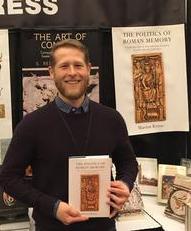
Marion Kruse is an Assistant Professor of Classics at the University of Cincinnati, specializing in Roman historiography and late antiquity. She also holds an adjunct position at The Ohio State University. Her research bridges ancient history, Byzantine studies, and economic thought in antiquity. Ph.D. in Classics from The Ohio State University (2015) B.A. in History from the University of Richmond (2008) Dr. Kruse explores narratives of Roman identity post-476 AD, focusing on Justinianic historiography, Cassius Dio's textual tradition, and the Roman military high command. Her work interrogates intersections between law, literature, and economic ideology in late antiquity. Recent publications analyze Procopius' agonistic authorship techniques, Roman economic discourse in the Secret History , and the evolution of the Notitia Dignitatum system. These works span subfields including military history, rhetorical analysis, and late antique historiographical methods. Her academic career includes peer-reviewed articles in Classical Quarterly , Studies in Late Antiquity , and Greek, Roman, and Byzantine Studies . She has also authored two seminal books: The Politics of Roman Memory (2019) and The Field Armies of the East Roman Empire (2023, co-authored with Anthony Kaldellis). Dr. Kruse remains active in revising Byzantine-era historiographical approaches and continues to publish on the role of Roman governmental structures in shaping Christian institutions.
Professor Albert Cheng is a faculty member in the Department of Computer Science at the University of Houston. His research focuses on real-time systems, cyber-physical systems, smart cities, and embedded systems with societal impacts. He has authored over 270 publications and a textbook on real-time systems. Cheng holds roles as an Associate Editor for the IEEE Transactions on Knowledge and Data Engineering and ACM Computing Surveys. His research interests span real-time scheduling, machine learning applications, and systems optimization. Recent work includes vehicular traffic modeling for epidemiological risk reduction, quantum computing response time analysis, and satellite mission planning. Awards include Fulbright Specialist, Distinguished ACM membership, and IEEE Senior Member status. Cheng’s articles demonstrate expertise in real-time scheduling algorithms, cyber-physical systems development, and smart city infrastructure. His contributions bridge theoretical computer science with practical implementations in transportation, healthcare, and aerospace domains. Ongoing efforts include fault-tolerant systems, energy-efficient scheduling, and CPS education initiatives. Awards: Fulbright Specialist, ACM Distinguished Member, IEEE Senior Member, Institute of Physics Fellow Labs/Teams: Hewlett Packard Enterprise Data Science Institute (HPE DSI), Research Computing Data Core (RCDC)
Tamsin Barber is a Senior Lecturer in Sociology at the Oxford Brookes University , where she leads the Migration and Refugees Research Network. She holds a PhD in Sociology from the University of Roehampton (2011), an MA in Social Science from Oxford Brookes University, and a BA in Sociology and French. Education PhD in Sociology, University of Roehampton (2011) MA in Social Science, Oxford Brookes University BA in Sociology and French Her research focuses on 'race', ethnicity, youth identity , and migration studies , particularly examining inclusion/exclusion dynamics and identity formation among UK Vietnamese and East/Southeast Asian communities. She has conducted extensive work on superdiverse contexts, racial categorization, and migrant agency. Recent research projects include: "Vietnamese migrants and UK bordering processes" (Leverhulme Trust Fellowship, 2024-2025) "New Labour Migrations Between Vietnam and the UK" (Newton Mobility Grant, 2016) "Becoming East Asian: Youth Politics of Belonging" (British Academy/Leverhulme Grant, 2017-2019) She has received recognition for her work including a BSA Philip Abrams Memorial Prize nomination (2016) for her monograph Oriental Identities in Super-Diverse Britain: Young Vietnamese in London . Her publications explore topics spanning: International education mobility regimes Migrant categorization in policy Transnational belonging Post-refugee generation identities Border politics and agency Racialized embodiment She supervises PhD projects on Vietnamese migration, refugee labor market transitions, and migrant vulnerability frameworks, with collaborations across Canada, France, Vietnam, and the UK.
Nicolas Davidenko is an Associate Professor in the Department of Psychology at the University of California, Santa Cruz (UCSC). He leads the High Level Perception Lab, focusing on behavioral and computational studies of human perception, particularly face recognition, spatial orientation, and visual ambiguity. His work emphasizes 'top-down' processes like attention and expectations. Davidenko holds a Ph.D. in Psychology from Stanford University (2006), an M.S. in Statistics from Stanford (2004), and an A.B. in Mathematics from Harvard (1998). His research explores how humans perceive and interpret complex visual information, including studies on illusions, virtual reality, and misophonia. He has developed parametric models of faces to study memory encoding and drawing accuracy. Notable achievements include a Top-10 Finalist placement in the 2015 Best Illusion of the Year Contest for his 'Mind-controlled motion' research. He teaches courses such as PSYC 121 (Perception), PSYC 139K (Face Recognition), and advanced cognitive research seminars. Davidenko also runs the CSASS Matlab Workshops, training researchers in statistical tools. His lab includes graduate students and postdocs, with alumni like Jennifer Day (Ph.D. ’19) and Pat Samermit (Ph.D. ’18). Recent projects include investigations into vection in VR environments, cross-sensory modulation of aversive sounds, and time perception in virtual reality. His work bridges cognitive psychology, neuroscience, and computational modeling, contributing to understanding how perception shapes human interaction with the environment.
Ebrahim Bedeer Mohamed is an Assistant Professor in the Department of Electrical and Computer Engineering at the University of Saskatchewan. He joined in July 2019, following roles as an Assistant Professor (Lecturer) at Ulster University, UK, and postdoctoral fellowships at Carleton University and the University of British Columbia. He holds a Ph.D. (Distinction) from Memorial University of Newfoundland (2014), with expertise in signal processing and wireless communications. His research focuses on optimizing communication systems through advanced signal processing techniques, including faster-than-Nyquist signaling, IoT network design, AI integration, and energy-efficient protocols. Key areas include next-generation communication networks, non-orthogonal modulation, and MIMO systems. Notable contributions include work on channel estimation for FTN signaling, RIS-aided wireless systems, and LR-FHSS protocols in IoT. His publications span spectral efficiency, interference minimization, and energy management in 5G/6G contexts. He actively seeks Ph.D. students with strong backgrounds in signal processing fundamentals. Awards and grants are not explicitly listed in the provided texts. His work emphasizes practical applications, such as UAV trajectory optimization for IoT data collection and energy-efficient caching strategies in dynamic networks.
J. Paul Goode is an Associate Professor and McMillan Chair in Russian Studies at the Institute of European, Russian and Eurasian Studies (EURUS) within Carleton University’s Faculty of Public and Global Affairs. His research focuses on nationalism, authoritarianism, and political identity in Russia and post-Soviet states. He holds degrees from the University of Oxford (PhD, MPhil), University of Wisconsin-Madison (MA), and University of Texas-Austin (BA). Professor Goode serves as Editor-in-Chief of Communist and Post-Communist Studies and Associate Editor of Nationalities Papers . He contributes to editorial roles at Russian Politics and Social Science Quarterly , and advises Nations and Nationalism . His professional memberships include the Program Committee and advisory board of the Association for the Study of Nationalities, and the Department Development Partnership Program of European University at St. Petersburg. Previous roles include founding Director of the Center for the Study of Nationalism and Coordinator for Russian and East European Studies at the University of Oklahoma, and Convenor of the Research Group on Nationalism, Populism, and Radicalism at the University of Bath. His research explores nationalism in authoritarian contexts, the interplay between state strategies and everyday patriotic practices, and political legitimation mechanisms. Recent projects investigate pandemic politics, AI’s impact on identity, and the evolution of Putin’s governance. He consistently analyses how regimes engineer nationalist narratives to sustain power, with a focus on Russia’s territorial and ideological boundaries. Goode’s work bridges theory and practice through interdisciplinary frameworks, emphasizing constructivist approaches to mass-level nationalism. His editorial leadership aims to democratize scholarly discourse on post-communist and authoritarian systems. He has pioneered studies on hybrid regimes and the challenges of conducting fieldwork in restricted environments. His contributions highlight the need for adaptive research strategies in politically volatile regions.
Alan Sussman is a Professor and Associate Chair of Undergraduate Education in the Computer Science department at the University of Maryland. His research focuses on databases, high-performance computing, parallel systems, and educational curriculum development for computing disciplines. He holds a Ph.D. from Carnegie Mellon University (1991) and a B.S.E. from Princeton University (1982). His educational contributions include integrating parallel and distributed computing concepts into early undergraduate courses, supported by NSF-funded initiatives like the CyberTraining program. He has advised students such as Harshit Soora (Master's) and Xiaolong Tian (PhD). His research spans compiler optimizations for parallel programs, distributed data management systems, and scientific workflow frameworks like DYFLOW. He collaborates with UMIACS and contributes to interdisciplinary projects like the TASCS center. Key innovations include VeloxDFS for distributed dataset streaming, compiler techniques for irregular memory access in PGAS programs, and NetCDFaster for geospatial data optimization. His work emphasizes productivity improvements for high-performance applications and curriculum modernization to address emerging computational challenges. Awards: No individual awards explicitly listed; however, collaborator Jik-Soo Kim received a best paper award in 2006. Grants: NSF CyberTraining, TCPP Curriculum Initiative, and Center for Technology for Advanced Scientific Component Software (TASCS). Labs/Teams: Active in UMIACS and interdisciplinary collaborations, including the TASCS center and InterComm framework development.