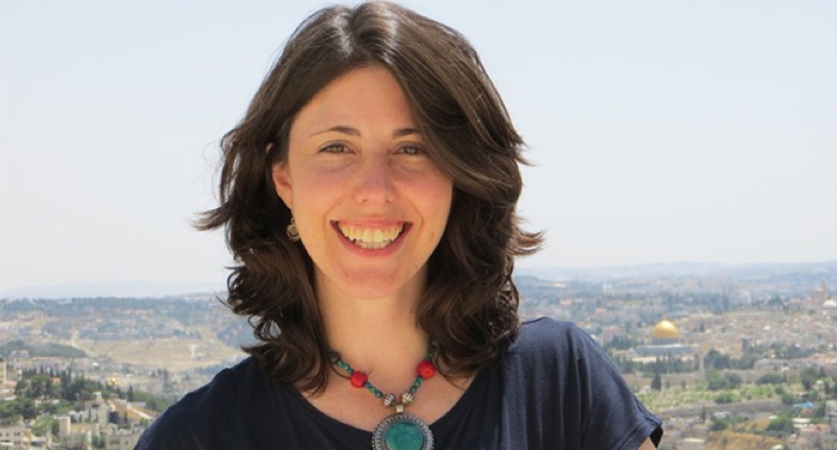
Dr. Valerie Hebert is a Professor of History and Interdisciplinary Studies at Lakehead University, specializing in Holocaust photography, genocide studies, transitional justice, and human rights. She joined Lakehead in 2010 and previously held a SSHRC Post-Doctoral Fellowship at York University. Ph.D., University of Toronto (2006) M.A., McGill University (1999) H.B.A., McGill University (1997) Her research intersects 20th-century European history , legal historiography , and visual analysis , with a focus on post-atrocity justice (Nuremberg, Rwanda) and the role of photography in documenting human rights violations. She has presented internationally at conferences in Canada, the U.S., U.K., and Europe. Dr. Hebert has received multiple fellowships, including from the German Historical Institute , US Holocaust Memorial Museum , and Martin Buber Society . Her SSHRC Insight Grant -funded monograph project Five Shots from Sdolbunow examines Holocaust photography.
Desmond Elliott is an Associate Professor in the Natural Language Processing section at the Department of Computer Science, University of Copenhagen (UCPH). His research focuses on multimodal and multilingual models with specific emphasis on vision-language integration and tokenization-free NLP approaches. He teaches Bachelor and Master's level courses including Advanced Topics in Natural Language Processing (since 2019), Grundlæggende Data Science (since 2023), and previously Data Science (2021-2023). His research interests center on building and understanding multimodal and multilingual models , particularly exploring vision and language interactions through billion-parameter systems. Current work investigates cultural representation disparities in vision-language models, parameter-efficient captioning, and multimodal distributional semantics across diverse domains including food culture and medical imaging. His methodology emphasizes real-world applicability in non-English contexts and ethical considerations in multimodal systems. Elliott's recent publications (2025) demonstrate leadership in multimodal NLP, with significant contributions to vision-language pretraining, multilingual evaluation frameworks, and clinical NLP applications. His work spans theoretical advancements in model architectures and practical implementations addressing challenges in low-resource languages and domain adaptation. Best Long Paper Award at EMNLP 2021 Best Poster Award at COLING 2019 As an active educator, Elliott contributes to courses on Fair and Transparent Machine Learning and previously taught Information Retrieval. His research collaborations span international institutions with particular focus on European and non-English language contexts, reflecting UCPH's recognition as Europe's #1 institution for HCI research over the past decade.
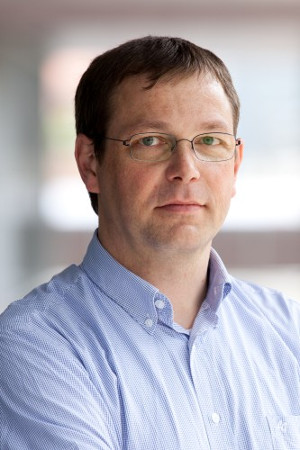
Hans-Bert Rademacher is a Professor of Differential Geometry at the University of Leipzig's Faculty of Mathematics and Computer Science, where he has held the chair since 1995. He completed his Habilitation in 1991 and earned his PhD (Dr.rer.nat., summa cum laude) in 1986 from Universität Bonn, following a Diploma in Mathematics (1983) from the same institution. Research Interests: His work focuses on differential geometry, including pseudo-Riemannian geometry, Finsler geometry, conformal geometry, Dirac operators and twistor spinors, Morse theory and closed geodesics, topology of free loop spaces, and discrete curve shortening. His research bridges geometric analysis and topology, particularly in the study of geodesic systems and curvature properties. Publication Trends: Recent articles center on closed geodesics in various geometric settings (spheres, Finsler manifolds, 3-manifolds), solitons in geometric flows, homology of loop spaces, and conformal geometry. His work frequently applies Morse theory to solve problems in global analysis and topology. Awards and Honors: University Medal (2021) Full Member, Saxon Academy of Sciences and Humanities (since 2010) Heisenberg Fellowship (1992-1995) Felix Hausdorff Memorial Prize (1985) National Mathematics Competition Winner (1978) Academic Service: He has supervised 12 PhD students and served as Dean (2011-2014) and Vice-Dean (2005-2008) of his faculty. He coordinated the Research Training Group "Analysis, Geometry and their interaction with the sciences" (2000-2010) and serves on editorial boards for several mathematics journals.
Kirsten Weld is a Professor of History at Harvard University, affiliated with the Faculty of Arts and Sciences. Her work focuses on modern Latin America, particularly struggles over inequality, justice, historical memory, and social inclusion. She holds a BA from McGill University and a PhD from Yale University. Her research has been recognized with prestigious awards, including the WOLA-Duke Human Rights Book Award (2015) and the Latin American Studies Association’s Best Book Award (2016). Her first book, *Paper Cadavers: The Archives of Dictatorship in Guatemala* (2014), examines the role of archives in shaping historical narratives during Guatemala’s civil war. Her current project, *Ruins and Glory: The Long Spanish Civil War in Latin America*, explores the war’s legacies in the Americas. She teaches courses on Latin American history, U.S.-Latin American relations, archival theory, and historical methods. Weld’s publications span journals like *Hispanic American Historical Review* and *Dissent Magazine*, addressing topics such as Cold War dynamics, memory politics, and surveillance. Her work bridges historical scholarship with activism, emphasizing archives as tools for justice and accountability. Her awards reflect her contributions to human rights scholarship and historical methodology. Weld’s research often intersects with contemporary issues, including post-conflict justice and the ethical use of archival materials.
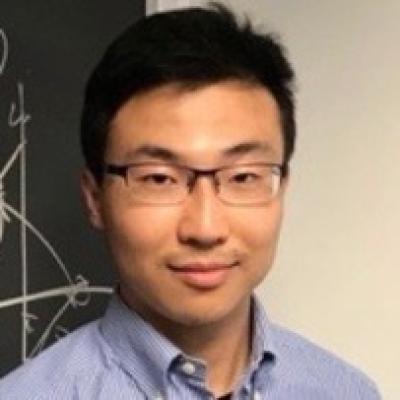
Andrew Lan is an Associate Professor in the College of Information and Computer Sciences at the University of Massachusetts Amherst, where he also serves as the CS Undergraduate Program Director. He was granted tenure by the UMass Board of Trustees in June 2025 and is currently on leave through Spring 2026. His research focuses on developing human-in-the-loop machine learning methods to enable scalable, effective, and personalized learning experiences in education. Dr. Lan received his BS in Physics and Mathematics from the Hong Kong University of Science and Technology, followed by his MS (2014) and PhD (2016) in Electrical and Computer Engineering from Rice University. He completed postdoctoral research at Rice University (2016) and Princeton University's EDGE Lab (2017-2018). His research spans artificial intelligence for education, with particular expertise in educational data mining, knowledge tracing, personalized learning systems, and human-AI collaboration in educational contexts. Dr. Lan's work leverages massive and multimodal learner and content data collected from both traditional classrooms and online learning platforms to develop systems that deliver high-quality, affordable, and personalized learning experiences. He has made significant contributions to areas including computerized adaptive testing, math word problem generation, student affect detection, and automated grading systems. His recent work increasingly focuses on leveraging large language models for educational applications while maintaining rigorous scientific validation of these approaches. Best Student Paper Award at the 2024 AIED Conference (with Alexander Scarlatos) Best Paper Nominee at LAK 2021 Best Student Paper Award at IEEE Big Data 2020 NAEP Math Automated Scoring Challenge Grand Prize Winner Dr. Lan actively mentors graduate students and postdoctoral researchers, with several of his advisees receiving recognition for their work. He has secured substantial funding from the National Science Foundation, including a $90M grant for the SafeInsights project, a secure cyberinfrastructure for educational research. His research group collaborates with institutions including Worcester Polytechnic Institute, University of Pennsylvania, and Rice University. He teaches undergraduate and graduate courses including COMPSCI 240 (Reasoning under Uncertainty) and COMPSCI 590OP (Applied Numerical Optimization), with a focus on the practical application of theoretical concepts in machine learning and artificial intelligence. His educational philosophy emphasizes bridging the gap between theoretical foundations and real-world implementation in educational technology.
Jacob Krüger is an Assistant Professor at Eindhoven University of Technology , specializing in the development and evolution of variant-rich software systems. He holds a PhD from Otto-von-Guericke University Magdeburg (2021) and has held academic and research positions at institutions including Ruhr-University Bochum, Chalmers University of Technology, and the University of Toronto. His research focuses on the interplay between human cognition and software quality, particularly in complex systems requiring frequent adaptation. Education: PhD in Computer Science, Otto-von-Guericke University Magdeburg (2021) MSc Business Informatics, Otto-von-Guericke University Magdeburg (2016) Research Interests: Variant-Rich Systems Program Comprehension Software Product Lines Human Factors in Software Engineering Architecture Smells and Quality Assurance Articles Trends: Recent work emphasizes fork ecosystem visualization (VisFork tool), the impact of AI on scientific practices, and crisis-driven software development (e.g., Corona-Warn-App). Key themes include empirical studies, tool development, and industry collaboration. Awards: Best Dissertation Award (2022) Frank Anger Memorial Award (2019) Multiple conference best-paper and review awards Advising & Grants: Supervises 12+ PhD students across multiple institutions. Active in funding projects like INKleSS (German Research Foundation) and FOSD Meeting 2024 (NWO). Leads collaborations with ASML, Danfoss, and Axis AB. Labs/Teams: Member of the Software Engineering and Technology (SET) group at TU Eindhoven, focusing on industrial-strength software systems and cognitive aspects of development.
Tom Dhaene is a Full Professor at Ghent University, affiliated with the Department of Information Technology (INTEC-IDLab) within the Faculty of Engineering and Architecture (FEA). He also holds a position at imec, a research and innovation hub in nanoelectronics and digital technologies. Research Unit: Internet Technology and Data Science Lab (IDLab) Academic Rank: Full Professor Affiliations: Ghent University, imec His research focuses on data-efficient machine learning, surrogate modeling, Gaussian processes, Bayesian optimization, and system identification. He has developed widely used software tools such as the SUMO toolbox and ooDACE, and holds 5 U.S. patents. His work bridges theoretical advancements with practical applications in engineering and biomedical domains. Recent publications highlight his contributions to physics-informed machine learning, antenna design, microwave optimization, and healthcare applications. Notably, he explores Bayesian active learning, multi-objective optimization under uncertainty, and efficient modeling techniques for complex systems. Prof. Dhaene's research has been recognized through over 500 peer-reviewed publications and collaborations across academia, industry, and government sectors globally.
James Aspnes is the Harold W. Cheel Professor of Computer Science at Yale University, specializing in distributed algorithms and randomized methods. He holds a PhD from Carnegie Mellon University and degrees from MIT. His research focuses on distributed systems, peer-to-peer networks, and sensor networks, emphasizing tools for efficient data management and fault-tolerance. Education: PhD (CMU, 1992), SM & SB (MIT, 1987) Affiliations: Yale since 1993, IBM Almaden Research Center (1992–1993) Research interests include distributed algorithms, randomization, and applications in biology and economics. Notable contributions include skip graphs, population protocols, and consensus algorithms. He has received the ACM-EATCS Dijkstra Prize (2020) and Dylan Hixon Prize (2000). Publications span distributed computing, algorithms, and cryptography. Recent work explores consensus protocols and privacy in population models. Grants include NSF awards totaling over $2M. Active in editorial roles (Algorithmica, Distributed Computing) and conference organization (PODC 2005, DCOSS 2007).
Suranga Chandima Nanayakkara is an Associate Professor in the Department of Computer Science at the National University of Singapore (NUS), leading the Centre for Holistic Inquiry into Lifelong Learning (CHILL) and the Smart Systems Institute (SSI). He holds roles such as AI+HCI Theme Lead at NUS+CNRS IPAL Lab and Residential Fellow at NUS College. His research focuses on assistive human-computer interfaces, emphasizing technologies that enhance perceptual and cognitive capabilities for individuals with sensory deficits. He earned his PhD and BEng from NUS, followed by postdoctoral work at MIT Media Lab. Notable projects include the Augmented Human Lab, iTILES for rehabilitation, and the FingerReader device for visually impaired shoppers. His work has garnered awards like the MIT TR35, TOYP, and INK Fellowship. Research interests include Intelligent Systems, Human Augmentation, and Design Science. He explores applications in assistive technologies, healthcare informatics, and educational tools. Over 15 publications highlight innovations in wearables, stress management, and multimodal interaction. Awards: 40+ accolades, including MIT TR35, TOYP, and multiple design awards for projects like Kiwrious and FingerReader. Grants: Led projects funded by institutions like NUS and Singapore’s innovation initiatives. Labs: Augmented Human Lab (founded 2011), focusing on humanizing technology through natural interfaces.
Prof. Dr. Arndt Brendecke is a Professor of Early Modern History at Ludwig-Maximilians-Universität München (LMU), holding the Chair for Early Modern History since 2011. He serves as a spokesperson for the Collaborative Research Centre 1369 ‘Cultures of Vigilance’ and has held leadership roles such as Dean of LMU’s Faculty of History and Arts (2021–2023) and Director of LMU’s History Department (2013, 2014, 2019). His academic career includes visiting professorships at the Université Paris 1 (Panthéon-Sorbonne) and the German Historical Institute in London. Brendecke’s research focuses on early modern political and colonial history, with a particular emphasis on Spain’s empire, knowledge politics, and vigilance cultures. Education: PhD in Modern History (1999), LMU Munich Habilitation in Modern History (2008), LMU Munich Research Interests : Brendecke explores the intersection of knowledge, power, and governance in early modern Europe, especially in Spanish colonial contexts. His work on ‘vigilance cultures’ examines how societies historically managed attention and surveillance. Key themes include colonial administration, archival practices, and the conceptual history of modernity. Awards and Roles : He is a member of the Bavarian Academy of Sciences and Humanities (2024), Academia Europaea (2016), and the LMU Centre for Advanced Studies. He co-edits major journals like Historische Zeitschrift and has led major research initiatives, including the Collaborative Research Centre 573 (2007–2009) and ProMoHist doctoral program (2012–2023). Grants and Advisory Roles : Funded projects include the Goethe-Institute’s translation of his habilitation thesis. He advises institutions such as the Bavarian Academy of Sciences and the Munich Centre for Global History. His work bridges historical scholarship with global perspectives, emphasizing the empirical dimensions of early modern empires. Labs/Teams : Leads the Collaborative Research Centre 1369, exploring vigilance as a cultural and historical phenomenon. Collaborates with international networks like the ‘Network of Early Modern Senses’ and the ‘Cooperation Network of European Routes of Emperor Charles V’.
Dr. Ameer Abdelhadi is an Assistant Professor in the Department of Electrical and Computer Engineering at McMaster University. His research focuses on application-specific custom-tailored computer architectures, hardware-efficient deep learning, neurotechnology, and reconfigurable computing. He holds a PhD from the University of British Columbia and has held academic positions at the University of Toronto, Imperial College London, and Simon Fraser University, alongside industry experience in semiconductor design. Education: PhD in Computer Engineering (University of British Columbia, 2016). Research Interests: Hardware acceleration for machine learning and neurotechnology Reconfigurable computing and FPGAs/ASICs Asynchronous circuits and synchronization protocols VLSI physical design and CAD algorithms Publications span high-impact venues such as IEEE Journal of Solid-State Circuits, IEEE Hot Chips, and IEEE Micro. Notable achievements include the 2017 Best Paper Award at ASYNC for work on synchronization FIFOs. Teaching includes COMPENG 4DV4 (VLSI System Design) and ELECENG 4OI6B (Engineering Design). His lab focuses on advancing hardware systems for next-generation applications in AI and biomedical engineering.
Paolo Samorì is a full-time Professor at the Université de Strasbourg , where he serves as Director of the Nanochemistry Laboratory and Emeritus Director of the Institut de Science et d'Ingénierie Supramoléculaires (ISIS) . He is affiliated with multiple prestigious academies, including the German National Academy of Science and Engineering (ACATECH) , Royal Society of Chemistry (FRSC) , and European Academy of Sciences (EURASC) . Education: Laurea (MSc) in Industrial Chemistry (University of Bologna, 1995), PhD in Chemistry (Humboldt University Berlin, 2000, summa cum laude). His research focuses on Nanochemistry , 2D materials , and supramolecular systems at interfaces , with applications in organic electronics , optoelectronics , and sensing . He pioneered methods for scanning probe microscopies and photoresponsive nanodevices , including graphene-based systems and diarylethene molecular switches. His scientific awards include the ERC Advanced Grant (2019) , Blaise Pascal Medal (2018) , and Catalán-Sabatier Prize (2017) , among 20+ honors. He has trained over 130 students and researchers , including 34 professors now active globally.
John P. Spencer is a Professor of Psychology at the University of East Anglia , UK, and a member of its School of Psychology . He previously served as a Professor of Psychology and founding Director of the Delta Center at the University of Iowa. His research focuses on the development of executive function, working memory, attention, and word learning, with a pioneering emphasis on dynamical systems theory and dynamic neural field models of cognition and action. Sc.B. with Honors, Brown University (1991) Ph.D. in Experimental Psychology, Indiana University (1998) His work utilizes fMRI , fNIRS , and eye-tracking to explore neural-cognitive dynamics in infancy and childhood, particularly in low-resource settings. Recent articles highlight cross-situational word learning, air quality impacts on cognition, and brain network myelination studies. Scientific awards include: 2003 Early Research Contributions Award (Society for Research in Child Development) 2006 Robert L. Fantz Memorial Award (American Psychological Foundation) APA Fellow since 2007 Current projects include brain imaging centers, infant cognition in India, and theoretical advancements in dynamic systems. He leads the Developmental Dynamics Lab and collaborates with institutions worldwide.
David Blaauw is the Kensall D. Wise Collegiate Professor of Electrical Engineering and Computer Science (EECS) at the University of Michigan. His research focuses on ultra-low-power analog/mixed-signal circuits, mm-scale sensors, neural networks, and biomedical applications. He leads the Blaauw Lab, which has pioneered innovations like the Michigan Micro Mote (M^3) and neural recording probes. His work emphasizes real-world deployability, with applications in environmental monitoring (e.g., monarch butterflies), medical devices, and robotics. Education: B.S. in Physics and Computer Science, Duke University (1986) Ph.D. in Computer Science, University of Illinois Urbana-Champaign (1991) Research Interests: Blaauw’s lab explores ultra-low-power computing, mm-scale systems, RF communication, in-memory computing, and genomics acceleration. Key projects include: Millimeter-scale computers (e.g., 0.04mm³ temperature sensors) Wireless neural interfaces for brain-machine communication Energy-efficient accelerators for edge AI and genomics Micro-robotics with sensing/actuation/computation Awards: IEEE Fellow 2016 SIA-SRC Faculty Award Motorola Innovation Award Best Paper Awards at ISSCC, ISCA, and RFIC Advising & Impact: Over 600 publications, 65 patents, and 4 startup companies spun from his lab. Current research includes genome sequencing accelerators (GenAx) and neural recording dust for brain mapping. He directs the Michigan Integrated Circuits Lab and chairs major conferences like ISSCC and DAC. Labs/Teams: Blaauw Lab (University of Michigan) Michigan Integrated Circuits Lab (MICAL)
Robert Braun is an Associate Professor of Sociology and Political Science at the University of California, Berkeley. He holds a PhD from Cornell University (2017) and previously taught at Northwestern University. His research focuses on civil society dynamics during social upheaval, intergroup relationships in conflict settings, and the historical dimensions of political fear and persecution. His work has been published in prestigious journals like the American Journal of Sociology and American Political Science Review. Key contributions include his book Protectors of Pluralism (Cambridge UP, 2019), analyzing community responses to mass persecution, and his forthcoming project Bogeymen , tracing political fear through Central European folklore. Braun also examines healthcare economics, studying private equity impacts on medical practices and hospice care quality. His interdisciplinary approach bridges historical sociology, political theory, and quantitative analysis. Education: PhD in Sociology, Cornell University, 2017 Research Interests: Genocide Studies, Healthcare Policy, Ethnopolitical Conflict, Moral Mobilization Awards: Not explicitly mentioned in available texts Braun’s work on Holocaust resistance patterns and bystander dynamics has influenced debates on collective action and moral responsibility. His recent studies on healthcare consolidation highlight financialization effects in medical sectors, contributing to policy discussions on equity and access.