Prof. Dr. Bianca Burgfeld-Meise is a faculty member at the Department of Education and Social Sciences at South Westphalia University of Applied Sciences (FH-SWF). Her research focuses on media education, digitalization, and media socialization with a particular emphasis on media literacy, digital humanities, and social network sites. Key collaborations include TU Dresden (Digital@Humanities), HfM Detmold (digital music editions), and nationwide initiatives like Keine Bildung ohne Medien e.V. Research funded by DFG, BMBF, and institutional grants for projects on digital learning processes, MINT promotion, and digital edition methodologies. Her recent publications analyze lifelogging practices, digital memory, and interdisciplinary software development in educational contexts. She contributes to theoretical frameworks in media pedagogy and digital culture. She currently serves in the national steering committee of Keine Bildung ohne Medien e.V., advocating for systematic integration of media education across societal domains through workshops and policy discussions.
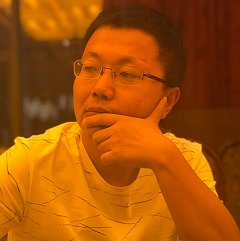
Xin Peng is a Professor and Deputy Dean at the School of Computer Science, Fudan University, China. He leads the CodeWisdom research team focusing on intelligent software engineering techniques for development, maintenance, and operation of software systems. His educational background includes a PhD in Computer Science (2001-2006) and Bachelor's degree in Computer Science (1997-2001), both from Fudan University. He progressed through the academic ranks from Assistant Professor (2006-2010) to Associate Professor (2010-2015) and finally to Professor (2015-present). Professor Peng's research interests span Software Analytics, Intelligent Software Development, Microservice systems, and AIOps. His work leverages AI technologies including deep learning and knowledge graphs to develop intelligent software engineering techniques. A significant portion of his recent work focuses on applying Large Language Models to various software engineering tasks, including vulnerability detection, API usage analysis, and test automation. His publication record shows a clear trend toward increasingly sophisticated applications of AI in software engineering, with recent work heavily featuring LLMs for tasks ranging from vulnerability patch porting to resource leak detection. The research spans multiple domains including microservice systems, automotive software, and Web of Things security. Best Paper Award of ICSM 2011 ACM SIGSOFT Distinguished Paper Award of ASE 2018 and 2021 IEEE TCSE Distinguished Paper Award of ICSME 2018, 2019, and 2020 IEEE Transactions on Software Engineering Best Paper award for 2018 Professor Peng serves in numerous leadership roles including Deputy Director of CCF Technical Committee on Software Engineering, Co-Editor-in-Chief of Journal of Software: Evolution and Process, and Associate Editor for ACM Transactions on Software Engineering and Methodology. He has been actively involved in program committees for major software engineering conferences including ICSE, ASE, ESEC/FSE, and ICSME. He leads the CodeWisdom research team at Fudan University, which has developed several benchmark systems including TrainTicket for microservice research. The team's work bridges academic research with industrial applications, particularly in microservice systems analysis and intelligent software development tools.
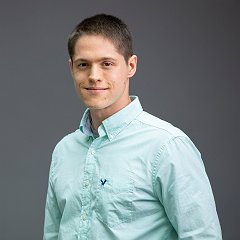
James C. Davis is an Assistant Professor in the Elmore Family School of Electrical and Computer Engineering at Purdue University. He leads the Duality Lab, which focuses on the engineering of software-intensive computing systems with particular interest in how these systems fail and how those failures can be mitigated. His research takes a socio-technical approach, considering both human and technical perspectives in system engineering. Dr. Davis received his PhD in Computer Science from Virginia Tech, where he was advised by Dongyoon Lee. His research interests span empirical software engineering, security, safety, testing, and web technologies, with a strong emphasis on practical impact and measurement. He applies a socio-technical philosophy to his work, believing high-quality systems must be engineered considering both human and technical perspectives. His recent research focuses on software supply chain security, regular expression vulnerabilities (particularly ReDoS), pre-trained model security, and failure analysis in software systems. His work often involves empirical studies of real-world software systems and security practices, with a strong emphasis on practical impact and measurable results. Dr. Davis has received significant funding from the National Science Foundation, Google, Cisco, and Rolls Royce for his research. His publications appear in top-tier venues including ICSE, FSE, ASE, and USENIX Security. He has served on program committees for many major software engineering and security conferences. Among his notable achievements are being elevated to IEEE Senior Member in 2022, receiving the Ruth and Joel Spira Outstanding Teacher Award from ECE@Purdue in 2022, and multiple Best Paper and Best Poster awards. He has successfully mentored numerous PhD and Master's students, with several completing their theses on topics related to software security and engineering. Dr. Davis actively recruits graduate and undergraduate research assistants for his Duality Lab, which has produced influential work on software failure analysis, regular expression security, and machine learning supply chain security. His lab is supported by multiple federal and industry grants focused on improving the security and reliability of software systems.
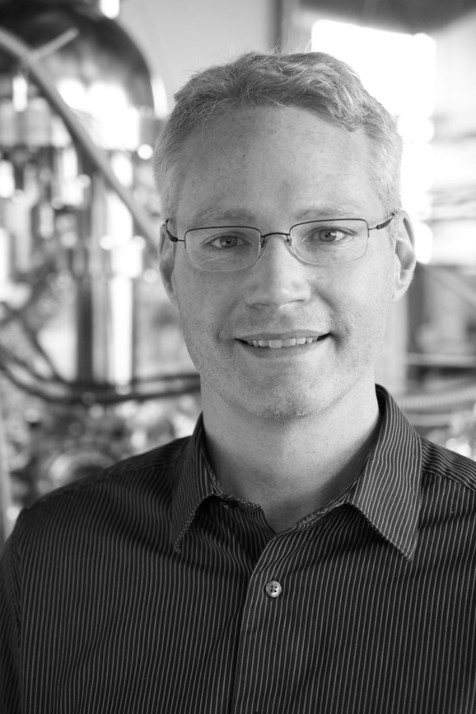
Prof. Ian D. Sharp is a Professor and Head of the Functional Semiconductors and Catalysts Group at the Walter Schottky Institute, Technical University of Munich (TUM). His research focuses on synthesizing and characterizing semiconductors and catalysts for renewable energy applications, particularly solar fuel production and photocatalytic systems. He leads a multidisciplinary team investigating material interfaces, charge carrier dynamics, and advanced deposition techniques like atomic layer deposition (ALD) and molecular beam epitaxy (MBE). Research Interests: His work centers on developing materials for efficient photochemical conversion, including nitride/oxynitride thin films, nanostructured catalysts, and heterostructured materials. Key areas include optimizing semiconductor interfaces for water splitting, enhancing charge collection efficiency, and studying defect properties using advanced spectroscopic and microscopic tools. Publications: Recent work emphasizes stable photoelectrodes, chiral perovskite heterostructures, and functional nanoarchitectures. His group's contributions span energy materials, nanotechnology, and sustainable chemistry, with a focus on bridging fundamental science and practical applications. Awards: ERC Consolidator Grant (2019) Grants: Active funding for solar fuels research and materials engineering. Advising: Mentors ~20 PhD and Master's students in experimental and theoretical projects. Labs/Teams: Oversees state-of-the-art facilities for thin film deposition, characterization (e.g., in situ spectroscopy), and nanofabrication. Collaborates with institutions like EPFL, National Taiwan University, and Lawrence Berkeley National Lab.
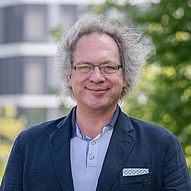
Christian Wolff is a University Professor and Chair of Media Informatics at the Institute for Information and Media, Language and Culture at the University of Regensburg. Since April 2022, he has served as the founding Dean of the Faculty of Computer Science and Data Science, while maintaining secondary membership in the Faculty of Languages, Literature and Cultural Studies (SLK). His academic career spans over three decades with significant contributions to multiple disciplines at the intersection of computer science and humanities. Wolff's research interests center around multimedia and multimodal information systems, electronic publishing, and text technology, particularly text mining. His work bridges computer science with digital humanities, legal informatics, and social media analysis. Recent publications demonstrate a strong focus on large language models, sentiment analysis applications across various domains, legal technology innovations, and virtual reality research for cognitive studies. His interdisciplinary approach has produced significant contributions in both technical and humanities domains. His recent publication trends reveal a strategic shift toward applied AI research, particularly in legal technology (LegalTech), social media analysis, and sentiment analysis using large language models. The publications show increasing collaboration across disciplines, connecting computer science with law, political science, literature, and psychology. His work on the digital basis document for legal proceedings represents a major practical application of his research in the German justice system. East Bavarian Cultural Prize Doctoral Award of the University of Regensburg Wolff has led numerous interdisciplinary research projects connecting computer science with humanities and legal studies. His leadership extends to institutional roles including Dean of Research, Vice Dean, and Dean of Faculty positions. He has been instrumental in establishing the new Faculty of Computer Science and Data Science at the University of Regensburg, demonstrating significant impact on institutional development and research infrastructure. Wolff directs research initiatives focused on text technology, digital humanities, and legal informatics. His work with the INDIGO - Internet and Digitization Eastern Bavaria initiative and the TRIO project demonstrates commitment to regional technology transfer and innovation. The interdisciplinary nature of his research groups connects computer scientists with legal scholars, linguists, and social scientists to address complex digital transformation challenges.
Heiko Falk is a Professor and Head of the Institute of Embedded Systems at Technische Universität Hamburg (TUHH). His roles include serving as Workshop Chair for the 2024 Embedded Systems Week (ESWEEK), Scientific Coordinator for the B.Sc. and M.Sc. Computer Science programs, and Deputy Head of the Board of Examiners for Computer Science and Engineering. His research focuses on real-time systems, compiler optimizations, and worst-case execution time (WCET) analysis. Key areas include multi-core architectures, cache management, energy efficiency, and hardware/software co-design. Falk's work emphasizes practical compiler techniques for improving real-time performance, such as WCET-aware memory allocation, dynamic SPM optimization, and event-driven scheduling. His publications analyze shared cache interference, preemptive/non-preemptive scheduling, and DMA-aware optimizations. Recent work explores multi-objective trade-offs between WCET, energy consumption, and code size in embedded systems. No scientific awards are explicitly listed, but his contributions to WCET benchmarking (e.g., haRTStone project) and compiler frameworks demonstrate significant impact in the field. Advising and grants: No formal advisees are listed in the provided texts. Falk's work is supported through projects like teamplay, focusing on cyber-physical systems optimization. Labs/Teams: His group operates within TUHH's Institute of Embedded Systems, collaborating on projects addressing real-time system challenges in multi-core environments.
Prof. Benno Liebchen holds a faculty position at the Technische Universität Darmstadt within the Institute for Condensed Matter Physics , part of the Faculty of Physics. He leads the Liebchen Group , dedicated to advancing research in the Theory of Soft Matter , focusing on active matter, colloidal systems, and non-equilibrium phenomena. His work explores collective behavior in self-propelled particles, phase transitions in active fluids, and adaptive strategies in smart materials. Research Interests include: Active matter dynamics and pattern formation Non-equilibrium statistical mechanics Biophysical systems and biomimetic design Computational modeling of soft matter Recent publications highlight breakthroughs in intelligent active particles , self-reverting vortices , and motility-induced phase coexistence . His lab develops tools like the AMEP Python package to analyze active systems. Teaching responsibilities include advanced modules in soft matter physics. Collaborative projects involve interdisciplinary approaches to microswimmer behavior and machine learning-driven optimization of collective systems. Contact: +49 6151 16-24509 / Office: S2|04 104
Prof. Dr. Christian Plessl is a W3 Professor of High-Performance Computing at the Institute of Computer Science, University of Paderborn. He leads the Paderborn Center for Parallel Computing (PC²), a national HPC center within the NHR alliance. His roles include Director of PC², Board Member of the NHR association, and member of the Sonderforschungsbereich 901. Education: PhD (Dr. sc. ETH) in Computer Engineering, ETH Zürich (2006) MSc in Electrical Engineering, ETH Zürich (2001) Postdoc at ETH Zürich (2007–2011) Research Interests: Architecture and tools for high-performance parallel and reconfigurable computing, FPGA acceleration, quantum chemistry, scientific computing, adaptive systems, and energy-efficient HPC solutions. Key projects include EKI-App (FPGA-based neural networks), FPGA4XPCS (X-ray spectroscopy), and HighPerMeshes (unstructured grid frameworks). Publications: Over 100 peer-reviewed works, focusing on FPGA acceleration, HPC frameworks, and quantum computing. Recent trends emphasize energy-efficient neural networks, FPGA-based quantum computing, and scalable HPC algorithms. Awards: Best Paper Awards at HEART 2023, ReConFig 2012/2014 Paderborn University Research Awards (2018, 2009) SEW-EURODRIVE Student Award (2001) Grants & Projects: Principal investigator in DFG, BMBF, and EU-funded projects. Collaborates with AMD/Xilinx, Intel/Altera, and Fujitsu. Leads initiatives like PerficienCC (custom computing) and HighPerMeshes. Labs/Teams: Directs the High-Performance Computing group at PC², focusing on FPGA supercomputing and HPC infrastructure. Active in the NHR alliance for national HPC coordination.
Shuvendu K. Lahiri is a researcher at Microsoft Research, focusing on formal verification, program synthesis, and software testing. His work bridges artificial intelligence with formal methods, particularly in blockchain security and automated code generation. 2025 : Published LLM-Vectorizer (verified loop vectorizer) and neural synthesis for SMT-assisted proof-oriented programming 2024 : Explored LLM-based test-driven code generation and natural precondition inference 2023 : Developed resource management specifications and contributed to test generation with pre-trained models 2022 : Advanced Solidity type systems and merge conflict resolution using language models His research combines large language models with formal verification tools to improve software correctness. He actively contributes to conferences like ICSE, PLDI, and ISSTA as author and committee member.
Steve Zdancewic is the Schlein Family President's Distinguished Professor and Associate Chair in the Department of Computer and Information Science at the University of Pennsylvania's School of Engineering and Applied Science. He is a leading researcher in programming languages, formal methods, and computer security with over two decades of impactful contributions to the field. His research interests span programming languages, type theory, logic, computer security, quantum programming, and formal verification. Zdancewic has made significant contributions to information-flow security, memory safety, program synthesis, and the verification of low-level systems. His work often bridges theoretical foundations with practical applications, particularly through the development of verified systems using Coq and other proof assistants. Analysis of his recent publications reveals a strong focus on formal verification techniques, particularly using Interaction Trees and the Coq proof assistant. His research trajectory shows consistent evolution from foundational work on information-flow security toward increasingly sophisticated verification of complex systems including LLVM, quantum computing, and distributed systems. His work demonstrates a commitment to building practically useful verification tools while maintaining rigorous theoretical foundations. Distinguished Paper Award for Semantics for Noninterference with Interaction Trees (ECOOP 2023) Schlein Family President's Distinguished Professor (2021) Distinguished Paper Award for Interaction Trees (POPL 2020) Christian R. and Mary F. Lindback Foundation Award for Distinguished Teaching (2018) IEEE MICRO top picks (2013) Alfred P. Sloan Fellow (2009-2010) NSF CAREER award (2004) Zdancewic has advised numerous PhD students who have gone on to successful careers in academia and industry. His research has been supported by significant grants from NSF, including the NSF Expedition on the Science of Deep Specification. He is actively involved in multiple major research projects including Vellvm (verified LLVM), DeepSpec, and quantum programming verification. Zdancewic also co-organizes Penn's PL Club programming languages research group with Benjamin Pierce and Stephanie Weirich.
Dr. Kenneth Zick is a Research Professor at the University of Southern California's Information Sciences Institute (USC ISI), where he serves as Research Director of Transformational Computing. His work focuses on game-changing computer architectures, hardware, and systems for solving critical government problems, with expertise in unconventional computing, quantum computing, and bio-inspired systems. Ph.D. in Computer Science & Engineering, University of Michigan-Ann Arbor M.S. in Electrical Engineering, University of Texas at Dallas Bachelor's in Electrical Engineering, University of Michigan-Ann Arbor Dr. Zick's research interests span unconventional computing , bio-inspired systems , Ising machines , quantum annealing , FPGA-based solutions , and neuromorphic computing . His group develops hardware-centric algorithm discovery and Cosm, a heuristic algorithm for sparse Ising optimization. Current projects include superconducting digital architectures, analog-digital hybrid computing, and human-AI co-design for breakthrough hardware. His team leverages advanced facilities such as USC ISI's MOSIS 2.0 and the California DREAMS hub in the DoD Microelectronics Commons, with expertise in high-speed I/O, FPGA prototyping, and radiation-hardened systems. He has received a NASA Fellowship for his Ph.D. work and mentored students like Aditi, who won the USC ECE Outstanding Academic Achievement Award.
Dr. Hermann Cuntz is an Independent Group Leader at the Ernst Strüngmann Institute (ESI) for Neuroscience in cooperation with the Max Planck Society. He is also a Research Fellow at the Frankfurt Institute for Advanced Studies (FIAS) since 2014 and affiliated with the Goethe University Frankfurt via the Institute of Clinical Neuroanatomy . His email address is hermann.neuro@gmail.com , and he is based in Frankfurt am Main, Germany. Research Focus: Dr. Cuntz investigates principles of neuronal wiring, aiming to decode the "connection code" of the brain. His work bridges morphology and function using computational tools, mathematical laws, and morphological modeling. Key areas include dendritic constancy , structural plasticity , connectomics , and neuroinformatics , with applications in understanding neurodegenerative diseases like Alzheimer’s. Education: PhD from the University of California at Berkeley and Max Planck Institute of Neurobiology (2000-2004). Diploma in biology from Eberhard Karls Universität Tübingen (1994-2000). Recent Publications highlight research trends in dendritic structure, pattern separation, synaptic spine distribution, and cortical folding. His lab develops the TREES Toolbox , a MATLAB-based framework for neuronal morphology analysis. Scientific Awards: Bernstein Award (2013-2019) DFG Eigene Stelle (2014-2016) Feodor Lynen Fellowship (Alexander von Humboldt, 2006-2008) Minerva Fellowship (2004-2005) Wellcome Image Award (2011) 1st Prize Poster Competition, UCL Neuroscience Symposium (2010) Advising and Grants: Dr. Cuntz mentors numerous PhD and Master’s students, including Marcel Beining , Mariuss Schneider , and Marvin Weigand . His lab receives funding from the DFG , Bernstein Award , and collaborations with institutions like the 3R-Center Giessen and Interdisciplinary Centre for 3Rs (ICAR3R) . Labs and Collaborations: The Cuntz Lab specializes in computational neuroanatomy, with alumni working globally in academia and industry. Key collaborators include Prof. Peter Jedlicka (Justus Liebig University), Prof. Gaia Tavosanis (DZNE Bonn), and Prof. Alexander Borst (MPI Neurobiology).
Ori Lahav is a faculty member in the School of Computer Science at Tel Aviv University. His research is generously supported by an ERC Starting Grant and an ISF Grant. He actively supervises PhD and MSc students, and seeks highly motivated candidates for postdoc, PhD, and MSc positions in programming language theory, concurrency, and formal methods. Dr. Lahav completed his PhD at Tel Aviv University under the supervision of Arnon Avron. In 2014, he was a postdoctoral researcher at Tel Aviv University hosted by Mooly Sagiv. From 2014 to September 2017, he was a postdoctoral researcher at MPI-SWS in Germany hosted by Viktor Vafeiadis and Derek Dreyer. His primary research areas focus on programming languages and verification, with specialization in concurrency and relaxed memory models. He also has significant interests in proof-theory, semantics of non-classical logics, and automated reasoning. His work bridges theoretical foundations with practical applications in programming language design and implementation. Dr. Lahav's publication record shows a consistent trajectory of high-impact research in top-tier conferences including PLDI, POPL, OOPSLA, and ESOP. His recent work (2023-2025) demonstrates continued leadership in memory models, concurrency semantics, and verification techniques. His research spans both theoretical contributions in denotational semantics and practical tools for verification. Best Paper Award DISC 2024 Best Student Paper Award DISC 2024 Distinguished Artifact Award ESOP 2022 Distinguished Paper Award OOPSLA 2021 Kleene Award for Best Student Paper LICS 2013 Dr. Lahav actively advises students including Yoav Ben Shimon, Yotam Dvir, Amir Karniel, and Roy Margalit (PhD students), Yuval Katsman Ezra (MSc student), and has alumni including Ori Saporta (MSc) and Abhishek Kr Singh (postdoc, now Assistant Professor at IIIT Hyderabad). He has organized significant events including VMCAI 2024 and Dagstuhl Seminars on persistent programming. His teaching portfolio includes courses on Shared Memory Concurrency Semantics, Programming Language Foundations, and Software Foundations in Coq.
Prof. Julijana Gjorgjieva is a tenured W3 Professor of Computational Neuroscience at the School of Life Sciences Weihenstephan, Technical University of Munich (TUM). She leads an independent research group at the Max Planck Institute for Brain Research and is affiliated with the Bernstein Center for Computational Neuroscience. Her research focuses on the principles governing neural circuit development, balancing learning plasticity with functional stability through computational and theoretical approaches. Key interests include synaptic organization, energy-efficient neural computation, and evolutionary optimality principles. Education & Career: B.Sc. Mathematics, Harvey Mudd College (2006) M.A.St. in Applied Mathematics, University of Cambridge (2007) Ph.D. Applied Mathematics, University of Cambridge (2011) Postdoctoral Fellowships: Harvard University (2011-2014), Brandeis University (2014-2016) Max Planck Research Group Leader (2016-2022) W2/W3 Professor at TUM since 2016 Research Interests: Computational neuroscience, theoretical modeling of neural circuits, synaptic plasticity mechanisms, homeostatic regulation, and the interplay of development and evolution in shaping brain architecture. She employs mathematical frameworks to study how circuits achieve robustness while enabling adaptive learning. Awards: Heinz Maier-Leibnitz Prize (2022) Eric Kandel Young Neuroscientist Prize (2021) ERC Starting Grant (2018) Multiple postdoctoral and early-career fellowships Grants & Funding: Includes DFG Collaborative Research Center on Neural Homeostasis, HFSP grants, and EU Horizon 2020 initiatives. Active in mentoring and promoting computational neuroscience through programs like Neuromatch Academy. Labs & Collaborations: Leads a multidisciplinary lab integrating experimental and theoretical approaches. Collaborates with institutions such as the Max Planck Society and international computational neuroscience networks.
Paul R. Genssler is a Dr.-Ing. researcher at the Chair of AI Processor Design (AI-Pro) within the Technical University of Munich (TUM), actively advancing hardware solutions for artificial intelligence under Prof. Hussam Amrouch. His work bridges computer engineering and emerging technologies, focusing on overcoming fundamental limitations in conventional computing architectures through brain-inspired paradigms. His research spans critical domains in next-generation computing: Hyperdimensional Computing for robust pattern recognition and bioinformatics applications Neuromorphic and In-Memory Computing architectures for energy efficiency Reliability engineering for emerging memory technologies (FeFET, etc.) Quantum computing support systems including cryogenic embedded electronics Machine learning-driven transistor aging prediction and mitigation Analysis of his 15 most recent publications (2023-2024) reveals a dominant trend toward hyperdimensional computing as a unifying framework for addressing reliability challenges in emerging technologies. His work consistently integrates in-memory computing techniques to bypass von Neumann bottlenecks while targeting real-world applications like genome matching and unsupervised learning. A significant portion focuses on error-resilient implementations for unreliable nanoscale devices, demonstrating exceptional cross-stack expertise from transistor physics to algorithm design. As a core member of TUM's AI Processor Design group affiliated with the Munich Institute of Robotics and Machine Intelligence (MIRMI), Genssler collaborates extensively on projects spanning cryogenic quantum control systems, FPGA-based AI resilience, and monolithic 3D integration. The team operates at the intersection of semiconductor physics, computer architecture, and machine learning, with strong industry connections evident through publications at DATE, ASP-DAC, and ICCAD.