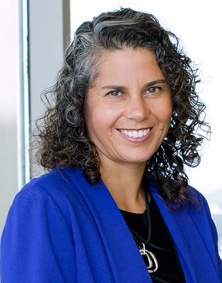
Virginia de Sa is a Professor in the Department of Cognitive Science at the University of California, San Diego. Her research integrates computational modeling, psychophysics, and machine learning to investigate visual and multi-sensory perception, with a focus on understanding how humans learn and perceive through neural mechanisms. Her work emphasizes the synergy between human learning and machine learning, applying insights from both fields to advance understanding of perception. Notable projects include developing brain-computer interface (BCI) systems and analyzing biases in facial expression recognition algorithms. She leads the de Sa Lab, which explores the neural basis of learning through interdisciplinary methods, including EEG analysis and biologically inspired algorithms. Key research directions include improving BCI usability through adaptive spatial filtering, investigating pain assessment via facial and electrophysiological data fusion, and enhancing AI fairness in facial expression analysis. Dr. de Sa has contributed to grants such as the NSF-funded CHS project to enhance BCI reliability and collaborates on initiatives like AI-READI to improve healthcare data practices. Her lab’s BCI division focuses on interpreting EEG data for assistive technologies, while her work on divisive normalization bridges biological insights with artificial neural network design. Ongoing efforts explore zero-shot learning and the generalization of neural models to unseen tasks. Dr. de Sa’s interdisciplinary approach spans neuroscience, computer science, and engineering, with a commitment to advancing both theoretical understanding and practical applications in human-computer interaction.
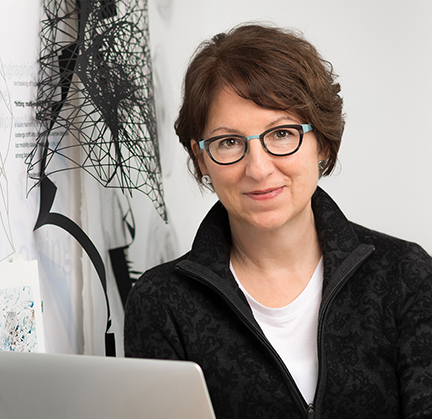
Andrea Wollensak is Professor of Art at Connecticut College, where she has taught since 1993. She is an interdisciplinary artist and designer whose work explores the convergence of place, identity, and history through site-based artworks that combine new media technology with traditional design and fabrication. Her educational background includes a B.F.A. from the University of Michigan and an M.F.A. from Yale University. She has held visiting faculty positions at numerous institutions including the University of Gothenburg, Nova Scotia College of Art and Design, Concordia University, Rhode Island School of Design, and the Estonian Academy of Arts. Wollensak's research focuses on social design and place-based storytelling, employing collaboration with community partners, computer scientists, musicians, poets, and scientists. Her work addresses themes of place-based narratives, environment, and memory through forms including audio/video, interactive installations, data visualization, artist books, and digitally fabricated works. She examines how design can be used as a tool for social impact and civic participation. Her most recent projects include Mapping Your Journey to School (2023), which engages Estonian and Ukrainian refugee students in creative writing workshops; Water Stories: Visual Poetics and Collective Voices (2022), a year-long artist residency at the Anchorage Museum; and Open Waters (2019-2020), an interactive installation examining Arctic environmental change. U.S. Fulbright Scholar in Estonia (2023) Artistic Excellence Award in Digital Art from Connecticut Office of the Arts Artist residency at Hafnarborg Contemporary Art Museum in Iceland (2011) Connecticut Commission on Culture and Tourism Grants in New Media (2010, 2006) IASPIS International Artist Studio Program in Sweden (2007) Rockefeller Study and Conference Center residency (2000) Wollensak has advised numerous students in design and new media projects, often collaborating with community partners. She served as Director of the Ammerman Center for Arts and Technology at Connecticut College from 2014-2020 and currently serves on the Advisory Council of the Winterhouse Institute and the Advisory Board for Digital Media Connecticut. Her teaching emphasizes design as an interdisciplinary practice that prepares students to be creative problem solvers who can use design to create positive social impact. Her work has been exhibited internationally at venues including the Göteborg International Contemporary Art Biennial, Nova Scotia Art Gallery, Brno Design Biennial Moravian Gallery, Center for Visual Art in Denver, Brown University's Granoff Center Gallery, and the Burchfield Penney Arts Center in Buffalo.
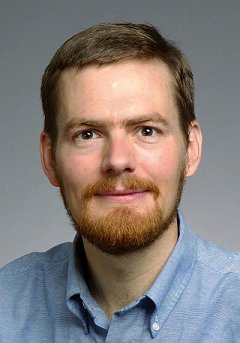
Michael D. Ernst is a Professor in the Computer Science & Engineering department at the University of Washington's College of Engineering. His research aims to make software more reliable, more secure, and easier (and more fun!) to produce. Previously, he was a tenured professor at MIT and a researcher at Microsoft Research. Ernst's primary technical interests are in software engineering, programming languages, type theory, security, program analysis, bug prediction, testing, and verification. His research combines strong theoretical foundations with realistic experimentation, with an eye to changing the way that software developers work. He focuses particularly on programmer productivity and developing practical tools that can be integrated into developers' workflows. Analysis of his recent publications (2018-2025) reveals a continued focus on verification techniques, program analysis, and testing methodologies. His work spans from theoretical foundations of type systems to practical applications of NLP for test generation and LLMs for test oracle creation. A consistent theme is developing lightweight, modular approaches that can be practically applied in real-world development environments. Scientific Awards: ACM Fellow (2014) John Backus Award (2009) NSF CAREER Award (2002) ACM SIGSOFT Impact Paper Award (2013) 8 ACM Distinguished Paper Awards across multiple conferences ECOOP 2011 Best Paper Award Microsoft Academic Search ranked #2 in software engineering research (2013) Ernst has received significant research funding including the NSF CAREER Award, supporting his work on program analysis and verification techniques. His research combines theoretical rigor with practical impact, often resulting in tools that are adopted by the software engineering community. He actively collaborates with researchers across institutions and has served in leadership roles for major conferences in programming languages and software engineering. His research group develops practical tools that address real challenges in software development, with a focus on making verification and analysis techniques more accessible to working developers. Current projects include applying machine learning techniques to software engineering problems while maintaining strong theoretical foundations.
Dr Saeed Afshar serves as a Senior Lecturer at the International Centre for Neuromorphic Systems (ICNS) within Western Sydney University, where he develops advanced sensing and processing systems leveraging neuroscience, machine learning, and circuit design principles for superior performance in dynamic environments. His academic credentials include: BSc (Engineering) from the University of New South Wales (2014) MSc (Engineering) from the University of New South Wales (2016) PhD from Western Sydney University (2020) Research expertise spans: Neuromorphic Systems architecture Machine Learning algorithms for noisy environments Signal Processing innovations Neuroscience-inspired computing Integrated circuit design Computer Vision systems Auditory Processing frameworks His work focuses on creating vision, memory, and auditory systems that outperform conventional computing approaches in real-world conditions. Contact available via s.afshar@westernsydney.edu.au or (02) 9852 5017 at Werrington South campus (Building BA, Room 2.01).
Jonathan Cannon is an Assistant Professor in the Department of Psychology, Neuroscience & Behaviour at McMaster University's Faculty of Science. His research focuses on timing and rhythm in perception and action, with particular interest in timing-related neural dynamics in the basal ganglia, cerebellum, and supplementary motor area. His work combines mathematical modeling with experimental approaches to understand the neural basis of rhythm perception and production. Dr. Cannon's research interests span timing and rhythm perception , neural dynamics , dynamical systems theory , Bayesian cognition , neural oscillations , and autism research . His approach centers on formulating and simulating neurophysiological and cognitive models, drawing on dynamical systems theory and Bayesian cognitive frameworks. His work incorporates psychophysics, EEG experiments, and collaborations with experimentalists to investigate how the brain processes rhythmic information. Analysis of his recent publications reveals a strong focus on the intersection of rhythm perception, motor control, and autism spectrum disorder. His work demonstrates how beat perception co-opts motor neurophysiology, with particular attention to predictive processes in rhythmic cognition. His research shows reduced precision of motor and perceptual rhythmic timing in autistic adults, while also finding intact sequence learning abilities in certain contexts. Dr. Cannon teaches advanced courses including Machine Learning Methods for Brain Modelling and Neural Data Analysis (PSYCH 734), Computational Models in Neuroscience (NEUROSCI 3MN3), and Neuroscience Seminars. His teaching reflects his interdisciplinary approach that bridges mathematics, neuroscience, and cognitive science. Beyond his academic work, Dr. Cannon is an active musician who performs on violin and guitar, particularly in klezmer and folk music contexts. He has also demonstrated entrepreneurial spirit through founding Flying Leap Games and developing the storytelling game 'Wing It,' which successfully crowdfunded and reached numerous retailers.
Timothy Harris is an Affiliated Lecturer at the University of Cambridge's Department of Computer Science and Technology, where he jointly teaches courses on multicore semantics and programming. Currently, he works at OpenAI, focusing on performance optimization for GPU inference of large language models, including the Azure OpenAI Service. Previously, he held roles at Microsoft, AWS, Oracle Labs, and was a faculty member at the University of Cambridge (2000–2004). His research spans distributed systems, runtime systems, operating systems, and high-performance computing, with an emphasis on scalability and performance. He contributed to projects like the Xen hypervisor and the Barrelfish research OS. Key research interests include distributed training of PyTorch models in the ONNX runtime, large-scale storage performance with Amazon S3, and runtime systems for in-memory graph analytics. His work often bridges 'big data' and high-performance computing techniques. Notable contributions include the book Transactional Memory (2010) and the Barrelfish OS, alongside numerous publications in top-tier conferences like SOSP, ASPLOS, and EuroSys. He has served as PC chair for ISMM 2025, VEE 2017, and EuroSys 2015, reflecting his leadership in the systems research community. His awards include a Best Paper Award at PACT 2010. Beyond academia, Harris is an avid hiker, aiming to complete the UK coastline, and maintains a photography portfolio at tlhphotography.uk .
Beth C. Rubin serves as Professor of Education and Professor of Social Studies Education in the Department of Arts and Humanities at Teachers College, Columbia University. Her work centers on youth civic identity formation within contexts marked by historical and contemporary inequalities, with particular focus on post-conflict societies like Guatemala. As Principal Investigator of the Civically Engaged Districts Project, she bridges research and practice through curriculum design and pedagogical innovation. Her educational background includes a Ph.D. in Social and Cultural Studies in Education from the University of California, Berkeley (2001), an M.A.T. in Social Studies Education from Brown University (1992), and a B.A. in Government and Third World Studies from Oberlin College (1989). Rubin's research explores critical intersections of civic learning, historical memory, and citizenship formation, emphasizing ethnographic approaches to understanding how young people navigate belonging in unequal societies. Her scholarship advocates for 'critically relevant civics' that centers youth voice and addresses structural inequities through social design research methodologies. Analysis of her 15 most recent publications reveals consistent focus on post-conflict civic education (particularly Guatemala), youth participatory action research, and decolonizing social studies curricula. Her work increasingly examines how historical memory shapes contemporary citizenship education while addressing urban civic opportunity gaps through teacher education reform. Selected Honors: Fulbright Scholar Award National Academy of Education/Spencer Postdoctoral Fellowship Big Ten Academic Alliance Department Executive Officers Program Fellow Mary Hepburn Lectureship in Social Studies Education Rubin leads multiple funded initiatives including the Civically Engaged Districts Project (Maher Charitable Foundation), Spencer Foundation grants on socially transformative design, and international collaborations with Universidad del Valle, Guatemala. Her service includes co-directing Rutgers GSE's Urban Teaching Fellows Program and advising on the Excellence and Equity in Remote Learning Series. Through the Civically Engaged Districts Project and partnerships with New Brunswick and Edison school districts, Rubin develops practical frameworks for integrating youth civic voice into district-level decision making, creating models for sustainable democratic engagement in education systems.
Ulrich Tallarek serves as Professor of Analytical Chemistry in the Faculty of Chemistry at Philipps University of Marburg, where he has held a W3 professorship since 2011. He also serves on the Board of Directors for the Materials Science Center at the university, a position he has held since 2007. His research group focuses on the fundamental understanding of transport phenomena in porous media with applications spanning chromatography, battery technology, and microfluidic systems. The group maintains strong collaborations with institutions worldwide and secures substantial research funding for advanced computational and experimental work. Professor Tallarek's research interests center on functional porous solids, with specific focus on morphology-transport-performance relationships. His work bridges multiple scales from molecular dynamics simulations of solute behavior in nanopores to macroscopic transport in chromatographic columns and battery electrodes. Key research areas include diffusion in hierarchical porous media, electrokinetic phenomena in microfluidic systems, molecular simulation of chromatographic processes, and advanced characterization of porous materials using tomography and other techniques. His group has pioneered multiscale simulation approaches that connect molecular-level surface chemistry to macroscopic transport properties. The research output demonstrates consistent focus on understanding fundamental transport mechanisms in porous systems, with recent publications emphasizing multiscale simulation techniques, molecular dynamics studies of solvent effects in chromatography, advanced characterization of mesoporous structures, and applications to separation science and energy storage. The work shows strong integration of computational modeling with experimental validation across multiple length scales. 2003: Desty Memorial Prize for Innovation in Separation Science, The Royal Institution of Great Britain, London 2006: Young Scientist Award from DECHEMA e.V. 2011: Named Discussion Leader at the 2011 Gordon Research Conference on Physics & Chemistry of Microfluidics 2011–2012: Chairman of the German Chemical Society (GDCh), Marburg 2013: Finalist, World Technology Awards, for category Environment 2013: Named as one of the 100 most influential analytical scientists in the world (The Analytical Scientist Power List) 2017: Recipient of the Silver Jubilee Medal 2017, The Chromatographic Society, UK Professor Tallarek's research has been supported by numerous grants enabling high-performance computing resources, advanced instrumentation, and international collaborations. His group maintains strong ties with industry partners in separation science and analytical instrumentation. The Tallarek Research Group includes postdoctoral researchers, PhD students, and technical staff working across experimental and computational domains. Current projects focus on molecular simulation of chromatographic processes, advanced characterization of porous battery electrodes, and development of novel separation methodologies. The Tallarek Research Group operates state-of-the-art facilities for computational modeling, including access to high-performance computing resources at Forschungszentrum Jülich. The group also maintains experimental capabilities for chromatographic analysis, materials characterization, and microfluidic device development. Their work on physically reconstructed porous media has established new standards for connecting microstructure to transport properties in complex materials systems.
Professor John Zeleznikow is an Honorary Associate at La Trobe University's Law School, with a distinguished career spanning 49 years across multiple institutions including the University of Edinburgh and Victoria Business School. His research focuses on AI applications in legal decision-making, dispute resolution, and autonomous vehicle technology. He has secured over $8M in research grants and supervised 20 PhD graduates. Key projects include the Split-Up system (used in high-profile divorce cases like Prince Charles and Lady Di) and Family-Winner software, which won an ABC TV innovation award. His work bridges law, technology, and ethics, with publications in leading journals like the Harvard Negotiation Law Review and Artificial Intelligence and Law . Recent research explores AI-driven online dispute resolution (ODR), autonomous vehicle regulation, and the ethical implications of technology in legal systems. He advocates for transparent, user-centric legal tech solutions to enhance access to justice and improve decision-making processes.
Prof. Dr. Heike Bungert is a leading scholar in North American History at the Westfälische Wilhelms-Universität Münster , focusing on ethnic migration, cultural history, and civil religion. Habilitation (2004) and Doctorate (1995) from German institutions Extensive teaching career since 2000, including visiting roles at UC Berkeley and Columbia University Her research bridges: German-American identity formation through festivals and cultural practices Transnational university history and academic networks Civil religion in US patriotic holidays Native American representation in film and collective memory Key article trends: 19th-20th century German migration patterns Academic institutions in transnational contexts Civil religion analysis in political rituals Historiography of indigenous peoples Scientific Honors : Heisenberg Fellowship (DFG, 2005) DAAD and DFG research fellowships Stuart L. Bernath Prize (1995) As a supervisor , she has guided doctoral research on topics like: Russian-American periodicals Symbolic communication in colonial legislatures Evangelical responses to immigration
Diana Tamir is a Professor at Princeton University, where she directs the Princeton Social Neuroscience Lab. She earned her Ph.D. from Harvard University and specializes in the intersection of internal mental processes and external social cognition. Her research investigates: How minds predict others' emotions and mental states The cognitive consequences of self-disclosure and social media use Neural mechanisms of social prediction using fMRI and machine learning Effects of fiction reading on theory of mind Dynamics of spontaneous thought and social bonding Her recent publications (2024-2025) demonstrate strong focus on emotion prediction mechanisms, social interaction dynamics, neural signatures of psychological states, and developmental aspects of social cognition. Methodologically, she employs neuroimaging hyperscanning, ecological momentary assessment, and computational modeling across diverse populations. She currently advises graduate students including Faustine Corbani and Yeaju Diana Kim. Her lab focuses on empirical approaches to understanding how individuals navigate between internal experiences and external social environments.
Joe Paton is a Professor and Principal Investigator at the Champalimaud Neuroscience Programme, Champalimaud Foundation in Lisbon, Portugal. He leads the Paton Lab which focuses on understanding how animals determine which environmental cues are predictive of behaviorally relevant events, known as the credit assignment problem. His research combines behavioral experiments with neurophysiological recordings in rodents to investigate neural mechanisms of time perception and decision making. Dr. Paton's research interests center on interval timing, temporal processing in the brain, and the neural basis of learning. His work particularly examines how the striatum and dopamine systems contribute to time perception and how animals solve the credit assignment problem through statistical inference in the time domain. His lab employs advanced techniques including optogenetics, neural recordings, and computational modeling to address these questions. Analysis of Dr. Paton's recent publications reveals a strong focus on striatal function in timing processes, with particular attention to how neural populations encode temporal information. His work bridges behavioral neuroscience with computational approaches, demonstrating how timing mechanisms influence decision making and learning processes. The research spans multiple levels from cellular mechanisms to behavioral outputs. Midbrain dopamine neurons control judgment of time (2016) Striatal dynamics explain duration judgments (2015) A Scalable Population Code for Time in the Striatum (2015) The Neural Basis of Timing: Distributed Mechanisms for Diverse Functions (2018) Dr. Paton has mentored numerous PhD students and postdoctoral researchers through the INDP (International Neuroscience Doctoral Program) and supervises a diverse team including research technicians, postdocs, and students. His lab has contributed significantly to understanding the neural basis of time perception and its role in learning and decision making. The Paton Lab also develops experimental tools and frameworks like Bonsai for behavioral neuroscience research.
Yuval Noah Harari is a historian, philosopher, and lecturer at the Department of History at the Hebrew University of Jerusalem. Born in Haifa, Israel in 1976, he received his PhD from the University of Oxford in 2002. He is best known as the author of the internationally acclaimed books Sapiens: A Brief History of Humankind (2014), Homo Deus: A Brief History of Tomorrow (2016), 21 Lessons for the 21st Century (2018), Nexus: A Brief History of Information Networks from the Stone Age to Artificial Intelligence , and the Unstoppable Us children's series. Harari's research focuses on macro-historical questions including the relationship between history and biology, the essential difference between Homo sapiens and other animals, justice in history, historical directionality, human happiness throughout history, and the ethical questions raised by science and technology in the 21st century. His work bridges history, biology, philosophy, and economics, taking both macro and micro perspectives to understand not only what happened and why, but also how it felt for individuals. His books have sold over 45 million copies in 65 languages, with Sapiens alone selling 25 million copies since its publication. He is considered one of the world's most influential public intellectuals today. Harari has given keynote speeches at major international forums including the World Economic Forum in Davos and has presented as a digital avatar in a TED talk. Sapiens spent 96 consecutive weeks in the top 3 of the Sunday Times bestseller list Co-founded Sapienship, an international social impact company focused on education and storytelling, with his husband Itzik Yahav Regularly speaks at major international events on topics of technology, history, and the future of humanity Harari's recent work focuses on the challenges of the information age, particularly the crisis of truth and trust in an era of disinformation and artificial intelligence. He explores how humans can navigate the complex ethical questions raised by emerging technologies while maintaining democratic values and human dignity.
Dr. Oscar Meruvia-Pastor is a faculty member in the Department of Computer Science at Memorial University of Newfoundland, within the Faculty of Science. He holds a B.Sc. from ITESM-Monterrey, Mexico, an M.Sc. from the University of Alberta, and a Ph.D. from Otto-von-Guericke Universität Magdeburg, Germany. His research focuses on interactive 3D graphics, non-photorealistic rendering, and biomedical visualization, with applications in telepresence systems, augmented reality (AR), and virtual reality (VR). He has developed tools like OMARC for respiratory condition training and GeNET for gene co-expression network analysis. Dr. Meruvia-Pastor has supervised numerous graduate students and contributed to over 50 publications. His work includes evaluating stereo correspondence methods in AR, robot arm manipulation via depth sensors, and smartphone integration in immersive VR. He has been recognized with awards such as the Best HCI Poster at Graphics Interface 2014 and a semi-finalist poster at SIGGRAPH 2015. He teaches courses in computer science, including computer graphics, multimedia development, and introductory science modules. His research lab focuses on 3D telepresence, medical visualization, and human-centered VR/AR solutions. His academic contributions span software tools for medical imaging analysis, interactive visualization systems, and educational technologies. He actively collaborates with health professionals to advance telemedicine and remote procedural training through AR platforms. His work bridges computer graphics with real-world applications in healthcare, education, and environmental advocacy.
George Palacios, Ph.D., is an Associate Professor of Spanish in the Department of Languages at Clemson University's College of Arts and Humanities. His work focuses on racialization and multiculturalism in Latin American nation-states through an Afro-diasporic lens, examining socio-political mobilizations and cultural expressions reshaping identities across Latin America and the Global South. Education: Ph.D. in Spanish from the University of Pittsburgh (2013); M.A. in Spanish from Purdue University (2004). Courses taught include Hispanic Literary Texts, Latin American Cultural Studies, and Spanish Language Immersion programs. Research Interests: Afro-Latin America, Colombian and Brazilian Literatures, US-Latin American Relations, and Global South Cultural Dynamics. He has published extensively on Afro-Colombian intellectual figures like Manuel Zapata Olivella, earning the 2021 Best Book Award from the Asociación de Colombianistas and the 2022 Clemson University Research Award. Articles and Books: His 2020 monograph Manuel Zapata Olivella (1920-2004) analyzes Zapata Olivella's radical political thought. Recent works critique mestizaje narratives and explore Blackness in colonial contexts. Articles appear in Revista de Estudios Colombianos , PALARA , and Escritos . Awards: Recognized for scholarly excellence in Afro-Latin American studies, including awards highlighting his contributions to decolonial theory and cultural critique. Professional Activities: Maintains an active research profile via Google Scholar (FTvxUjgAAAAJ) and engages in international academic collaborations.