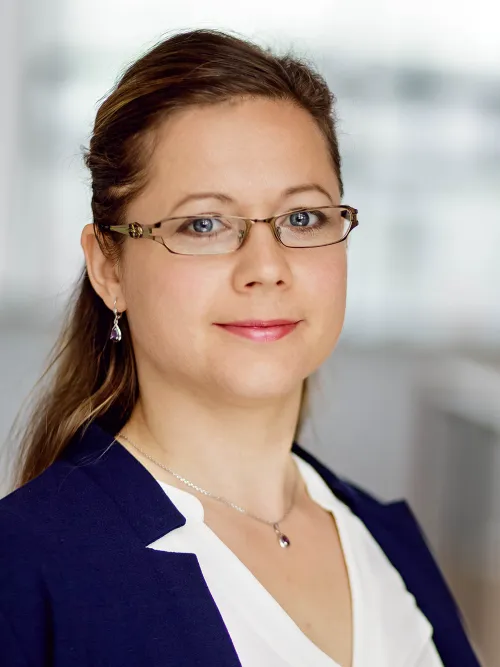
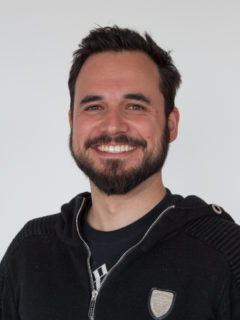
Professor Markku Kulmala (University of Helsinki) is a leading expert in atmospheric and environmental physics. As Academician of Finland and double ERC Advanced Grant holder, he leads the Institute for Atmospheric and Earth System Research (INAR) and ACCC Flagship. With ~1200 publications and a WoS H-index of 124, his work focuses on atmospheric aerosols, climate interactions, and air quality. Academy of Finland grants (2004-2009, 2011-2015) ERC Advanced Grant (2×) ISI Highly Cited Researcher His research team has published 4 groundbreaking studies in Nature and Science , including: Aerosol formation mechanisms Aerosol-cloud-climate interactions Atmosphere-land surface relationships Climate-air quality feedbacks With over 20 PhD/Master's students supervised, recent work includes Arctic aerosol studies ( Elementa 2025), Beijing air quality analysis ( Nature Communications 2025), and climate modeling applications. He has received multiple international awards including the Fuchs Memorial Award and honors from Stockholm and Tartu universities.
Gerlind Große is a Research Professor for Early Childhood Studies at the University of Applied Sciences Potsdam and leads the interdisciplinary PINA Research Laboratory. She is deeply involved in applied and basic research focused on early childhood education, social-emotional development, and pedagogical architecture. As Head of the Master's programme in Early Childhood Studies, she contributes to academic leadership via roles in the Faculty Council and Senate. Her research bridges developmental psychology and educational practice, with projects like BIKA (Participation in Daycare Everyday Life), NAWII (natural science interest in early education), and INSO (inclusive social space development). She emphasizes emotion regulation, language-emotion interplay, and pedagogical interaction quality, yielding publications on emotion vocabulary, analog/digital play, and teacher-child dynamics. Recent publications highlight trends in educational psychology, cognitive development, and social-emotional learning. Collaborative work with teams at the University of Potsdam, Freie Universität Berlin, and international institutions underscores her interdisciplinary approach. Projects often intersect with public policy, such as the Babyhelfer App for parental mental health support and the BeoKiz initiative for daycare documentation. As head of PINA, she integrates research across domains like inclusive schools, peer interaction, and developmental assessment. Funding from the Federal Ministry for Family Affairs and partnerships with institutions like ASH Berlin and the University of Graz reflect her commitment to practice transfer and systemic educational reform.
Ulrich Meyer is a Professor at the Institute for Computer Science at Goethe University Frankfurt. He serves as a prominent researcher in algorithms for big data, with extensive contributions to parallel and external-memory graph algorithms. His work spans theoretical foundations and practical implementations for processing large-scale data sets. Spokesperson of the DFG priority program (SPP 1736) on Algorithms for Big Data in Germany SEA23 Symposium on Experimental Algorithms, Steering Committee Chair ALENEX23 Algorithm Engineering and Experiments, Program Committee Member Professor Meyer's research interests focus on the theoretical and experimental aspects of processing large data sets on advanced computational models. His work particularly emphasizes parallel and external-memory graph algorithms, with recent focus on efficient large-scale network generation according to various stochastic models. His research has produced significant contributions including the parallel Delta-Stepping algorithm (which received the ESA Test of Time Award in 2019) and the first BFS approach with sublinear I/O. He has also explored more specialized topics like energy-efficient sorting (with records in the JouleSort competition 2009/10 and the Germany Land of Ideas Award) and fragile computing (which earned him a best-paper award at ESA 2019). His recent publications demonstrate a strong focus on graph algorithms, network generation, and parallel computing techniques. The research trends show consistent advancement in scalable algorithms for massive graphs, with particular emphasis on efficient sampling methods, shortcutting techniques, and communication-free distributed approaches. His work bridges theoretical computer science with practical engineering considerations for real-world big data applications. ESA Test of Time Award 2019 for Parallel Delta-Stepping algorithm Records in the JouleSort competition 2009/10 Germany Land of Ideas Award Best-paper award at ESA 2019 for fragile computing research Professor Meyer has made substantial contributions to the academic community through his leadership in the DFG priority program on Algorithms for Big Data, which has fostered significant research collaborations across Germany. His extensive publication record in top venues demonstrates sustained research productivity and impact in the algorithms community. While specific grant details aren't provided in the text, his role as spokesperson for a major DFG priority program indicates substantial research funding and leadership responsibilities. His work appears to be conducted within collaborative research environments focused on algorithm engineering and experimental evaluation. His research appears to be conducted within the Institute for Computer Science at Goethe University Frankfurt, likely involving collaborations with other researchers in the Algorithms for Big Data priority program. The extensive list of co-authored publications suggests active participation in research teams focused on parallel algorithms, graph processing, and network generation.
Stefan Wildermann is a Professor at Friedrich-Alexander-Universität Erlangen-Nürnberg (FAU), where he leads the Reconfigurable Computing Group within the Chair of Computer Science 12 (Hardware-Software Co-Design) in the Department of Computer Science. He has maintained continuous research activity at FAU since 2006, progressing from researcher to his current leadership position. Dr. Wildermann earned his Diploma degree in Computer Science from FAU in 2006 and completed his doctorate (Dr.-Ing.) in Computer Science at the same institution in July 2012. His academic career has been entirely rooted at FAU, demonstrating a strong institutional commitment and progression through the ranks. His research spans multiple cutting-edge areas in computer science and engineering, with particular emphasis on reconfigurable systems and hardware-software co-design. Wildermann's work in edge computing explores efficient processing at the network periphery, while his research in organic computing investigates self-organizing systems that can adapt to changing environments. His expertise extends to optimization techniques for embedded systems, applying game theory principles and convex optimization methods to solve complex resource allocation problems. More recently, he has integrated reinforcement learning approaches to enhance system adaptability and performance. His teaching portfolio includes courses on event-driven systems, computer engineering fundamentals, embedded systems, and hardware-software co-design. Analysis of Wildermann's publication record from 2021-2025 reveals a strong focus on hardware acceleration, security, and embedded systems. His work demonstrates consistent evolution from foundational research in reconfigurable architectures toward practical applications in IoT, robotics, and secure computing. A significant portion of his recent work addresses near-data processing using FPGAs for database acceleration, while maintaining parallel research streams in side-channel security analysis and energy-efficient embedded systems design. His publications frequently appear in top-tier conferences including DATE, FPL, ASP-DAC, and HOST, reflecting strong recognition within the computer architecture and embedded systems communities. Wildermann has held significant leadership roles including Head of the Reconfigurable Computing Group since 2015 and previously served as Head of the Self-organizing Systems Group (2012-2015) and Lab Leader of the Automotive Lab within the Embedded Systems Initiative (2016-2020). His research has been consistently funded through multiple projects investigating invasive computing, reconfigurable architectures, and embedded systems design methodologies. Currently based in Room 02.116 at Cauerstr. 11, 91058 Erlangen, Wildermann continues to lead active research in the Hardware-Software Co-Design group, supervising projects that bridge theoretical computer science with practical hardware implementation challenges.
Barbara Penolazzi is an Associate Professor of Clinical Psychology at the University of Trieste's Department of Life Sciences. She serves as a member of the Department's Board, coordinates Course of Study Advice for Psychological Sciences and Techniques, and participates in multiple Doctoral Colleges for Neuroscience and Cognitive Sciences across numerous academic cycles. As the leader of the Clinical Psychology research group, her work focuses on "Typical and atypical development during lifespan" within the Psychology research area. Department Council - Member Course of Study Advice - Coordinator (Psychological Sciences and Techniques) Boards of Studies - Member (Clinical Psychology, Developmental Psychology and Neuropsychology) Doctoral Studies Boards - Member (Neural and Cognitive Sciences across multiple cycles) Professor Penolazzi's research spans clinical psychology, neuropsychology, and psychological well-being with emphasis on emotional intelligence, cognitive processes in various disorders, and brain mechanisms. Her work integrates experimental psychology with clinical applications, particularly using transcranial direct current stimulation to investigate neural mechanisms underlying decision-making, moral cognition, and memory processes. She has made significant contributions to understanding psychological mechanisms in eating disorders, schizophrenia, and addiction through a transdiagnostic lens. Her extensive publication record demonstrates consistent focus on the intersection of cognitive neuroscience and clinical psychology. Recent work examines neural underpinnings of voluntary action, environmental sensitivity as a personality trait, and interventions for fostering emotional intelligence in preadolescence. Her research employs diverse methodologies including neurostimulation techniques, psychometric validation studies, and experimental paradigms to investigate cognitive control mechanisms across various clinical populations. Professor Penolazzi currently serves as Scientific Manager for two significant research projects funded by the Ministry of University and Research: "PROBEN_0000008 - Promotion of the Well-Being of the University Community - PRO-BENE-COMUNE" and "10% Trentin Silvia - 100% MUR". These projects reflect her commitment to applying psychological science to address contemporary mental health challenges within academic communities and beyond. Within the Department of Life Sciences, Professor Penolazzi leads the Clinical Psychology research group that investigates typical and atypical developmental trajectories across the lifespan. Her team employs a multidisciplinary approach combining cognitive neuroscience methods with clinical assessment to understand the mechanisms underlying various psychological conditions and to develop evidence-based interventions.
Dr. Uma Pradhan is an Associate Professor at UCL's Institute of Education (IOE), Faculty of Education and Society, and serves as Deputy Programme Leader for BA Education, Culture, and Society. She also holds the position of Inclusion Co-Lead for the Department of Education, Practice and Society (EPS). At UCL, she is actively involved with the Centre for Education and International Development (CEID) and the Centre for the Study of South Asia and the Indian Ocean World. Prior to her current position, Dr. Pradhan was a Lecturer and Leverhulme Early Career Fellow at the University of Oxford from 2018 to 2022, and then a Lecturer at University College London from 2022 to 2024 before her promotion to Associate Professor in 2024. Dr. Pradhan's research spans multiple interconnected fields including Anthropology, Development Studies, Applied Linguistics, Humanitarian Disasters, Conflict and Peacebuilding, and Educational Technology. Her work particularly focuses on South Asian educational contexts, with extensive research on Nepal's educational landscape. She examines how educational policies intersect with social structures, linguistic diversity, and political transformations, with special attention to marginalized communities and post-disaster educational reconstruction. Her research demonstrates a consistent commitment to addressing educational inequality and exploring how education can serve as a vehicle for social justice. Dr. Pradhan's scholarly output reveals a strong focus on the intersections between language, technology, and education in South Asia. Her recent publications examine how artificial intelligence is being used for indigenous language preservation, the impact of the pandemic on educational systems across South Asia, and the bureaucratic mechanisms that can inadvertently reproduce social inequality through scholarship programs. Her work consistently connects theoretical frameworks with practical implications for educational policy and practice. Leverhulme Early Career Fellow Fellow of Higher Education Academy (FHEA) As an academic leader, Dr. Pradhan supervises research degrees and engages in collaborative projects and consultancy work. Her research aligns with several United Nations Sustainable Development Goals, particularly Quality Education (SDG 4), Reduced Inequalities (SDG 10), Peace, Justice and Strong Institutions (SDG 16), and Partnerships for the Goals (SDG 17). Her position at the intersection of multiple research centers at UCL enables her to foster interdisciplinary collaborations that address complex educational challenges in global contexts.
Dong Li is an Associate Professor at the University of California, Merced , where he directs the Parallel Architecture, System, and Algorithm Lab (PASA) and co-directs the High Performance Computing Systems and Architecture Group . He co-founded Yotta Labs Inc. and previously held research roles at Oak Ridge National Laboratory (2011-2014) and a PhD from Virginia Tech. Research Interests: Dong's work focuses on High performance computing (HPC) Memory heterogeneity and non-volatile memory Systems for machine learning and AI Fault tolerance in large-scale systems His innovations include heterogeneous memory optimization for recommendation models and GNNs, CXL memory integration, and persistent memory debugging tools. Recent Publications highlight advancements in CXL-based inter-node communication Memory tiering for laminography reconstruction ML-guided memory optimization for DLRM and GNN Fault tolerance benchmarks and error analysis Awards & Recognition: NSF CAREER Award (2016) Oracle Research Award (2022) ASPLOS Distinguished Artifact Award (2021) Virginia Tech Early Career Alumni Award (2023) Advising & Funding: Dong has mentored 22 students (8 PhD, 6 Master’s, 8 undergraduates) and secured grants from NSF, NVIDIA, Meta, and national labs (Argonne, Lawrence Berkeley, Lawrence Livermore). Collaborations include Microsoft (DeepSpeed, Intel PMDK), AMD, SK Hynix, and Intel/MICRON hardware donations.
Anna Jon-And is a Researcher and Director of the Center for Cultural Evolution at Stockholm University , affiliated with the Department of Psychology . Her interdisciplinary work bridges linguistics , cognitive science , and cultural evolution , focusing on how sequence representation , language contact , and computational models explain the emergence of human language and its unique properties. Research Interests include: Language evolution through sequence learning and cognitive constraints Contact-induced language change in Portuguese varieties (Angola, Mozambique, Afro-Brazilian communities) Computational modeling of grammatical structure emergence Comparative analysis of pidgins, creoles, and non-contact languages Neurocognitive prerequisites for language and cultural complexity Publications highlight trends in language evolution models , compositional systems , and cross-linguistic complexity cycles . Her work demonstrates how demographic factors and learnability pressures drive linguistic innovation in multilingual settings. The Center for Cultural Evolution at Stockholm University serves as the primary platform for her interdisciplinary research initiatives.
Pamela K. Smith is a Professor of Economics and Management at the Rady School of Management, University of California San Diego. Her research examines power, status, influence, and hierarchical dynamics in social and organizational contexts, with significant contributions to understanding gender representation in workplaces. Education: Ph.D. in Social Psychology, New York University (2004) Dr. Smith's work investigates how power affects cognitive processing, motivation, and interpersonal behavior. She explores how individuals signal and perceive power through language, nonverbal cues, and decision-making patterns. Her research demonstrates that power increases abstract thinking, alters temporal discounting, and influences social judgments like blame attribution. She also examines gender disparities in professional settings, including women's representation at academic conferences. Her 15 most recent publications (2016-2025) reveal consistent focus on power dynamics across multiple domains. Key trends include the relationship between power and prosocial behavior, the role of communication medium in signaling power, and gender-based inequities in academic and organizational hierarchies. Publications appear in top journals including Journal of Personality and Social Psychology and Personality and Social Psychology Bulletin. Scientific Awards: No major awards listed in source material Dr. Smith serves on editorial boards for Journal of Personality and Social Psychology and Social Psychological and Personality Science, having previously held associate editor roles at Personality and Social Psychology Bulletin. While specific grant details aren't provided, her sustained publication record in high-impact journals indicates successful research funding. She mentors graduate students through UCSD's Ph.D. program. Dr. Smith leads an active research laboratory investigating power dynamics in everyday contexts, with recent work examining how power manifests through vocal pitch, visual communication, and decision-making processes. Her lab's findings have practical implications for leadership development and creating equitable organizational structures.
Dr. Avner Ofrath is a Researcher in Modern and Contemporary History at the University of Bremen , specializing in citizenship and public spheres in the Middle East and North Africa. His work bridges colonial history, Mediterranean studies, and urban dynamics. Academic Rank: Researcher Department: Department of Social Sciences Research Focus: He explores the colonial origins of French citizenship in Algeria, resistance to political terminology by local populations, and the dissolution of Mediterranean urban spaces as political arenas in Jerusalem under late Ottoman and British colonial rule. His work integrates multilingual sources (French, Arabic, Judeo-Arabic) and transnational perspectives. Articles & Trends: His publications analyze legal exclusion in colonial contexts, postcolonial Mediterranean identities, and ethical challenges in archival research. Notably, he connects historical migration patterns to modern urban conflicts and critiques Eurocentrism in global history. Grants: Funded by the Mellon Foundation Gerda Henkel Stiftung Society for the Study of French History His work emphasizes interdisciplinary methodologies and decolonial historical frameworks.
Bridget Whearty serves as an Associate Professor in the English, General Literature and Rhetoric department at Binghamton University, where she also holds affiliation with the Center for Medieval and Renaissance Studies. Her academic work spans multiple disciplinary boundaries, connecting literary studies, medieval scholarship, and digital humanities with critical perspectives on information and archival practices. Whearty earned her PhD from Stanford University and completed her BA at the University of Montana. Her educational background informs her interdisciplinary approach that bridges traditional literary scholarship with contemporary digital methodologies and critical theory. Her research interests focus on queer and trans perspectives in medieval literature and material culture, with particular attention to how digital technologies reshape our understanding of medieval manuscripts. She explores how digital humanities projects engage with issues of labor, representation, and erasure in both historical and contemporary contexts. Her work critically examines the intersections between medieval book production, modern digital scholarship, and the politics of archival representation. Whearty's publications reveal a consistent thread connecting medieval manuscript studies with contemporary digital practices, particularly examining how digital projects handle issues of labor, representation, and accessibility. Her work demonstrates how medieval studies can inform contemporary digital humanities practices while simultaneously using digital methodologies to uncover new perspectives on medieval texts and material culture. Her notable awards include the 2023 John Grace Memorial Book Historian in Residence at the University of British Columbia, the 2022 Harpur College Faculty Research Grant, and the 2020 New Chaucer Society Early Career Essay Prize. Additional recognition includes the University of Glasgow Library Visiting Research Fellowship and multiple internal Binghamton University research awards. Whearty has been actively involved in grant-funded research initiatives, particularly through her role as co-Principal Investigator of 'Always Here: a Queer+Trans Global Medieval Sourcebook,' an emerging digital project and open educational resource. Her community engagement includes participation in the Center for Civic Engagement's Community Engaged Teaching Fellows Program. She is the creator of the influential Caswell Test (#CaswellTest), which challenges humanities scholars to engage more rigorously with the work of archivists and librarians when writing about 'the archive.' This framework has gained recognition for addressing critical gaps in how scholars conceptualize archival labor and representation.
Dr Joanne Yoo is a Senior Lecturer in the School of Education within the Faculty of Arts and Social Sciences at the University of Technology Sydney (UTS). She specializes in teacher education with expertise in writing pedagogy, academic literacy, and qualitative research methodologies. Her academic profile demonstrates extensive engagement with pre-service teacher education across primary and secondary programs at UTS, where she has worked intensively in quality teacher education development. Joanne began her career teaching English and ESL to secondary students in South Korea, where she first explored autoethnography and narrative inquiry methodologies. Her educational background in teaching English and ESL formed the foundation for her current research trajectory focused on writing as inquiry and embodied practices in academic contexts. Her research centers on writing as inquiry and embodied practices in academic work, investigating how creative, poetic, and sensory-rich writing approaches can transform research and teaching. She challenges conventional academic writing norms by advocating for methodologies that bridge personal and professional knowledge through lived experience. Her book Evocative Qualitative Inquiry Writing and Research Through Embodiment and the Poetic (2022) provides a comprehensive framework for understanding writing as an aesthetic and embodied practice in academic research. Analysis of her publication record reveals consistent exploration of feminist research methodologies , time and temporality in academia , and the relationship between embodiment and knowledge production . Her work often examines the tensions between institutional demands and authentic academic practice, particularly how writing can serve as a transformative tool for both teachers and researchers navigating contemporary academic pressures. Joanne actively supervises Masters Research and PhD students and has secured significant research funding including 'A day in a life' of a child in Australia and Korea (2019-2026), the Claremont PBL project (2016-2017), and research on the Implementation of the New English K-10 Syllabus (2015-2017). Her collaborative work extends through the UTS Hub School partnership with Sydney primary schools, demonstrating her commitment to bridging theory and practice in teacher education with attention to how creative writing approaches enhance both teacher development and student learning outcomes.
Dr. Christina Haag is a postdoctoral researcher at the Institute for Implementation Science in Health Care , affiliated with the Faculty of Medicine at the University of Zurich . She leads interdisciplinary projects at the intersection of mental health, digital health, and computational linguistics, focusing on chronic illnesses like multiple sclerosis (MS). Her work leverages free text, sensor data, and advanced analysis techniques such as hierarchical modeling and natural language processing (NLP). Doctorate from the Institute of Psychology, University of Zurich Research experience at the MRC Cognition & Brain Sciences Unit, University of Cambridge Her research explores: Daily-life mental and physical health indicators in MS Development of NLP methods for text classification and topic modeling Digital biomarker creation using wearable sensor data Mindfulness interventions for affective executive control Implementation of remote monitoring tools in healthcare Her recent publications highlight trends in applying NLP and machine learning to unstructured health data, analyzing MS activity patterns, and refining interdisciplinary research methodologies. She contributes to DSI communities including AI & Law , Health , and Ethics , and collaborates on projects like BarKA-MS and DSI-Approach . She is a core member of the UZH Digital & Mobile Health Group , working under Prof. Viktor von Wyl.
Sana Bilgrami serves as a Lecturer in the School of Arts and Creative Industries at Edinburgh Napier University, where she teaches introductory and advanced documentary film practice to undergraduate students. An award-winning Pakistani-born filmmaker, her creative and research work interrogates cross-cultural identity through innovative techniques including 8mm film, archival materials, and intimate voice-over narration. She actively bridges academic research with creative practice through international collaborations spanning Scotland and Pakistan. Bilgrami's research centers on the cinematic representation of South Asian women in Scottish cinema, the use of personal voice in documentary filmmaking, and the interplay between historical archives and geographical spaces. Her practice-based approach explores portrait films, essay films, and fiction-documentary crossovers to examine diasporic identity formation. This work consistently addresses themes of cultural heritage, migration, and memory through both scholarly analysis and creative outputs. Recent publications (2020-2024) reveal a cohesive trajectory examining representation politics through interdisciplinary lenses combining film studies, gender theory, and postcolonial critique. Her outputs demonstrate methodological innovation through autoethnographic film practice, collaborative curation, and archival experimentation, with particular emphasis on South Asian diasporic experiences in Scotland. This body of work consistently bridges theoretical frameworks with tangible creative outcomes across film and visual arts. Scientific Awards: Shortlisted for BAFTA Scotland Award (Tree Fellers, 2004) Shortlisted for Satyajit Ray Award (Across the Waters, 2004) Award at Scottish Students on Screen (Under My Skin, 2001) Shortlisted for Saltire Grierson award (Under My Skin, 2001) Best Documentary at Chichester Film Festival (Under My Skin, 2001) Bilgrami has secured significant research funding including a £7010 grant from the Royal Society of Edinburgh (2021-2024) for her project on South Asian women in Scottish cinema, a Creative Scotland development grant for her feature documentary 'The Album', and a 'Connect and Collaborate' grant from the British Council and Creative Scotland for the 'Ecologies of Displacement' international artist residency. While she teaches undergraduate film students, no formal graduate advisees are documented in her current profile. She collaborates extensively through Edinburgh Napier University's Centre for Creative Practice Research and Centre for Child & Family Law and Policy, while maintaining active partnerships with Koel Gallery (Pakistan), Summerhall (Edinburgh), and Art in Healthcare. Her international projects like 'Landscape of Memory' and 'Ecologies of Displacement' demonstrate sustained commitment to building transnational artistic networks focused on displacement, memory, and cultural exchange between South Asian and Scottish communities.
Rainer Winter is a Professor at the Institute for Media and Communication Studies at Alpen-Adria-Universität Klagenfurt. He specializes in Cultural Studies, Media Research, Media Education, and Qualitative Research Sociology. His work bridges critical theory with contemporary media analysis, focusing on mediatization processes, resistance studies, and the societal implications of media narratives.