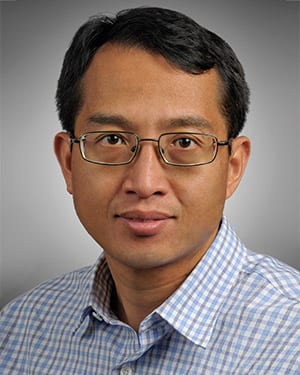
R. Klassen is a Professor in the Department of Mechanical and Materials Engineering at Western University, located in London, Ontario. He holds a Ph.D. from the University of Toronto (1990) and has extensive industry experience as a Scientist/Engineer at Atomic Energy of Canada Ltd. (1990–1999). His research focuses on experimental studies of rate-dependent plasticity, particularly the role of microstructural interfaces (e.g., grain boundaries) in material deformation. Education: Ph.D., Metallurgy and Materials Engineering, University of Toronto (1990) M.Sc., Mechanical Engineering, University of Manitoba (1986) B.Sc., Mechanical Engineering, University of Manitoba (1984) Awards: Dr. Terry Base Memorial Teaching Award (2009, 2013) R. Klassen’s lab is equipped with high-temperature nano/micro-indentation facilities and collaborates with specialized characterization centers like Surface Science Western and the Brockhouse Institute. His research group investigates materials such as zirconium alloys, nickel-based superalloys, and magnesium, focusing on deformation mechanisms, irradiation effects, and high-temperature behavior. Current students include postdoctoral researchers and Ph.D. candidates exploring topics like ion-implanted nickel alloys and irradiated zirconium. His articles emphasize nanomechanical testing, indentation-based stress analysis, and the impact of microstructural features on material performance. Key themes include FCC alloy behavior, flow forming processes, and the mechanical properties of nuclear materials. In teaching, he instructs graduate courses on plasticity and undergraduate courses in materials science and nuclear engineering. His lab also hosts projects like micro-pillar compression and micro-sphere testing, supported by advanced microscopy and diffraction techniques.
Lester Loschky is a full Professor in the Department of Psychological Sciences at Kansas State University's College of Arts and Sciences. His Visual Cognition Laboratory conducts interdisciplinary research combining visual perception studies with machine learning applications, supported by National Science Foundation and Office of Naval Research grants. Current NSF-funded focus on attention measurement in online learning Pioneering work in Scene Perception & Event Comprehension Theory (SPECT) Global collaborations with psychologists, computer scientists, and STEM educators Active graduate student mentorship with 5-year funding packages available His research explores how attention shapes awareness through eye movement tracking in natural scenes, integrating AI methodologies for attention modeling. Key subfields include scene gist recognition, event segmentation, and cognitive load theory applications in educational contexts. Students gain comprehensive research experience from experimental design to publication, with former students holding positions at Washington University, University of Colorado Denver, and U.S. Coast Guard Research. His lab offers both basic science and applied research opportunities with real-world implications in education and human factors.
Dr. David Unbehaun is a post-doctoral researcher at the University of Siegen working within Faculty III Information Systems and New Media. His research focuses on designing, implementing, and evaluating ICT-based systems for active and healthy aging, with particular emphasis on dementia care, cognitive and physical frailty, and age-related diseases. Dr. Unbehaun completed his education in business and public economics at the University of Halle-Wittenberg and Siegen, followed by a PhD in Socio-Informatics focusing on "Designing Assistive Technologies to Engage People with Dementia and their Caregivers." Prior to his academic career, he completed a 3-year apprenticeship in professional nursing in Düsseldorf and worked in various healthcare companies specializing in home and institutional care, where he was responsible for project management, quality management, and developing innovations in the healthcare sector. Dr. Unbehaun's research spans the intersection of human-computer interaction, computer-supported collaborative work, and healthcare technology. His work primarily focuses on developing and evaluating social robotics, augmented reality applications, and interactive systems for elderly care, particularly for people with dementia. He investigates how technology can support physical activity, cognitive capabilities, social interaction, and reminiscence therapy for individuals with cognitive impairments. His approach emphasizes participatory design methodologies, working closely with end-users including people with dementia, their caregivers, healthcare professionals, and care students. His recent publications demonstrate a clear trajectory toward increasingly sophisticated applications of social robotics and immersive technologies in healthcare settings. His work spans from foundational research on technology appropriation in dementia care to applied studies evaluating specific interventions in real-world care environments. A notable trend in his recent work is the expansion from dementia-specific applications to broader healthcare contexts including rehabilitation, sports, and education. Since 2016, Dr. Unbehaun has been involved in numerous national and international health-related projects. His work often involves collaboration with interdisciplinary teams across computer science, healthcare, and social sciences. While specific grant information isn't detailed in the provided text, his extensive publication record spanning multiple years suggests sustained research funding. Dr. Unbehaun is affiliated with the PraxLABS research group at the University of Siegen, which appears to focus on practical applications of socio-informatics in real-world settings. His work is closely connected to the university's Fab Lab Siegen and Social Media Observatories, suggesting engagement with hands-on technology development and community-based research approaches.
Dr Prashant Kumar serves as a Research Fellow at the University of Huddersfield's Department of Engineering within the School of Computing and Engineering. He is an active member of the EPSRC Centre for Innovative Manufacturing in Advanced Metrology (CIMAM) and the Centre for Precision Technologies, currently accepting PhD students for research supervision. His work contributes significantly to Sustainable Development Goals related to industry innovation and infrastructure. His educational background includes: PhD in Engineering (2015) from University of Huddersfield, thesis: 'Design and development of an optical chip interferometer for high precision on-line surface measurement' 5-Year Integrated Master's in Photonics (2010) from Cochin University of Science and Technology, India Research focuses on advanced optical metrology systems with primary expertise in Interferometry , Photonics , and Wavelength Phase Shifting techniques. His work develops miniaturized optical sensors for embedded metrology applications, particularly targeting manufacturing quality control and precision surface measurement. Current research explores chromatic focus variation, freeform optics, and in-situ metrology for electrochemical processes. Analysis of his 15 research outputs (2009-2025) reveals strong concentration in optical engineering methodologies, with recent work (2023-2025) emphasizing freeform optics for aerospace applications, vibration-resistant microscopy, and advanced interferometry techniques for manufacturing. Key publication trends show increasing focus on practical industrial implementation of optical metrology solutions. He actively contributes to academic discourse through conference presentations, with recent talks at euspen and ICOIM events. Current research includes the EPSRC-funded project 'Enhanced wavelength scanning interferometer (WSI) for advanced manufacturing' (2025).
Dr. Lei Zhai is a Professor of Chemistry and Director of the NanoScience Technology Center at the University of Central Florida (UCF). He holds a B.S. in Chemical Engineering from East China University of Science and Technology, M.S. in Chemistry from East Tennessee State University, and a Ph.D. in Chemistry from Carnegie Mellon University (2002), followed by postdoctoral research at MIT. His research focuses on polymer-derived ceramics, nanostructured materials, and functional composites, with applications in energy storage, environmental remediation, and biomedical devices. His work has yielded over 120 peer-reviewed publications and 11 patents, with citations exceeding 19,000. Key Research Areas: Graphene-CNT composites, polyelectrolyte nanostructures, superhydrophobic coatings, and 3D microelectrode arrays Dr. Zhai’s lab develops novel materials for drug delivery, sensors, and sustainable energy systems. Recent work includes graphene dispersion techniques, anti-biofouling coatings, and handheld diagnostic microfluidics. His articles span electrochemical PFAS treatment, exosome isolation, and 4D-printed hydrogels, reflecting interdisciplinary innovation. Awards: NSF CAREER Award (2013), Scialog Fellowship, ACS Orlando Outstanding Chemist (2013) He leads collaborations in nanotechnology education and citizen science initiatives for microplastic tracking. His grants include DOE-EM MSIPP projects and NSF funding. Dr. Zhai oversees the NanoScience Center’s advanced instrumentation, fostering interdisciplinary research in materials science and engineering.
Gwyn Davies is an Associate Professor in the Department of History at Florida International University, where he has served since 2001, rising from Visiting Assistant Professor to his current position. He also held leadership roles as Director of Graduate Studies (2008-2012) and Acting Director (2019). His academic career spans both history and archaeology, with extensive fieldwork across multiple continents focused on Roman military history and ancient siege warfare. Ph.D. in Archaeology, Institute of Archaeology, University College London (2001) M.Res. in Archaeology, Institute of Archaeology, University College London (1996) B.A. in Archaeology, Institute of Archaeology, University College London (1995) LL.M. in International Law, Vrije Universiteit Brussel (1988) LL.B. in Law, University College Wales, Aberystwyth (1984) Professor Davies specializes in ancient history and military history, with particular expertise in Roman siege operations, the Roman army, and imperial security in frontier regions. His research examines how 'siege system' selection was determined and the connotative aspects of siege structures. He has conducted extensive fieldwork in Albania, Britain, France, Israel, Italy, Jordan, Spain, and Turkey, focusing on Roman military installations and their strategic contexts. His work explores the mechanisms of imperial security in upland/desert areas that did not undergo conventional urban-oriented assimilation, including the role of local elites in maintaining hegemonic networks of control. Davies' publications over the past decade reveal a consistent focus on Roman military history, particularly siege warfare and frontier studies. His work combines archaeological evidence with historical analysis to provide new perspectives on Roman military operations, especially in the Eastern Mediterranean. Recent publications examine insurgency and counter-insurgency in Judaea, the landscape of siege, and specific case studies like the sieges of Masada and Machaerus. His research demonstrates how Roman military engineering served both practical and symbolic purposes in imperial expansion and control. 2005 Florida International University Foundation Teaching Excellence Award 1996-1999 British Academy Full Competitive Scholarship for Ph.D. research 1996 Brian Clausen prizewinner (best dissertation on a classical theme) 1995-1996 British Academy Full Competitive Scholarship for M.Res. As an educator, Professor Davies has taught a wide range of courses including Western Civilization, Greek History, Roman Provinces, Roman Britain, the Age of Alexander, and comparative military history courses covering the Age of Imperialism, the Long 19th Century, and both World Wars. He has supervised numerous graduate students through research seminars and directed the History Department's graduate program for several years. His fieldwork has been supported by various academic institutions, and he has served as an evaluator for grants from the Israel Science Foundation and National Science Foundation. He has served on editorial boards and as a referee for multiple academic journals including the Journal of Roman Archaeology and Biblical Archaeology Review. Professor Davies has co-directed significant archaeological field projects, most notably the excavations at the late Roman fort site of Yotvata in Israel's Arava Valley (2003-2007) and at the multi-phase site at Tel Achziv in the western Galilee (2012). These projects involved interdisciplinary teams of archaeologists, historians, and specialists working to uncover and interpret Roman military installations in frontier regions. His work at Yotvata particularly contributed to understanding Roman frontier defenses in desert environments during the late Roman period.
Yun Chiu is a Full Professor and Erik Jonsson Distinguished Professor in the Department of Electrical and Computer Engineering at the University of Texas at Dallas. He is the founding director of the Analog and Mixed-Signal IC Design Lab at the Texas Analog Center of Excellence (TxACE). His research focuses on integrated analog-digital interface ICs, including data converters (ADCs/DACs), RF transceivers, power electronics, and bioelectronic interfaces. Chiu previously held roles at the University of Illinois at Urbana-Champaign and co-founded Formula Microelectronics as CTO. Education: Ph.D. in EECS (University of California, Berkeley), M.S. in EE (UCLA), B.S. in Physics (University of Science and Technology of China). Research Highlights: Specializes in energy-efficient mixed-signal circuits, radiation-tolerant ADCs, and bioelectronic interfaces. His work includes innovations in SAR ADC architectures, noise-shaping techniques, and analog in-memory computing. He has led major programs like the Peacock and Pearl River initiatives. Awards: Jack Kilby Outstanding Paper Award (2004 ISSCC), Best Regular Paper Award (2012 CICC), and multiple student mentorship recognitions. Teaching: Teaches advanced analog IC design, electronic circuits, and data converter courses. Recent courses include EE/CE 2301 (Electrical Network Analysis), EE/CE 3311 (Electronic Circuits), and EECT 7326 (Advanced Analog IC Design). Labs/Teams: Leads the TxACE Analog & Mixed-Signal Lab, focusing on cutting-edge IC design methodologies and collaborations with industry partners.
Stefan Strauf is Professor and Associate Chair for Graduate Studies in Physics at Stevens Institute of Technology. He leads research in semiconductor quantum photonics exploring light-matter interactions at nanoscales using materials including carbon nanotubes, graphene, and transition metal dichalcogenides. Research applications include quantum light sources, nanolasers, spin-photon interfaces, and quantum computing platforms. His laboratory focuses on controlling light-matter coupling through plasmonic and dielectric nanocavities, examining exciton physics in novel material systems. Honors include NSF CAREER Award, Provost Award for Research Excellence, and Harvey N. Davies Memorial Research Award. Funded research totals $7 million from NSF, ARO, and AFOSR. With over 130 publications in journals including Nature Nanotechnology and Nano Letters, his work demonstrates consistent innovation in quantum emitter control and nanophotonic device engineering.
Katarzyna Lecky serves as Surtz Associate Professor in the English Department at Loyola University Chicago, specializing in sixteenth- and seventeenth-century English literature through interdisciplinary lenses of intellectual history, material culture, and spatial theory. Her scholarship investigates how cheap print shaped English national identity via geographical and botanical discourses, positioning ordinary consumers as active participants in commonwealth-building. Her academic foundation includes a B.A. from the University of Notre Dame, M.A. from Boston College, and Ph.D. from the University of Colorado at Boulder. Lecky's research traverses historical cartography, alternative literacies, pre-Linnaean botany, virtue ethics, and archival practices, with particular focus on how spatial politics, sensory experiences, and nativist botanical traditions constructed Englishness in Renaissance public spheres. Her seminal work Pocket Maps and Public Poetry in Renaissance England (Oxford, 2019) establishes how map-poetry constellations fostered civic engagement among everyday readers. Lecky's publication trajectory reveals consistent exploration of naturalization rhetoric, colonial spatial dynamics, and gendered power structures across canonical texts—from Spenser's Irish allegories to Milton's theological innovations. Her forthcoming projects extend this spatial-literary analysis into Mediterranean marriage politics and Cowley's botanical poetics, demonstrating how textual authority diversified through vernacular scientific discourse. Her scholarly excellence has been recognized through major fellowships: ACLS Fellowship Mellon Foundation Fellowship National Endowment for the Humanities Fellowship Renaissance Society of America Fellowship Institute for Research in the Humanities Fellowship (University of Wisconsin-Madison) Folger Shakespeare Library Fellowship Huntington Library Fellowship Newberry Library Fellowship These awards have enabled extensive archival research at premier institutions, supporting her dual-book project tracing England's geographical and botanical imaginaries. While specific student mentorship isn't documented, her digital humanities contributions—particularly 'Humanizing the Interface'—reflect commitment to pedagogical innovation and critical technology engagement within academic communities.
Jeanine Stefanucci is a Professor in the Department of Psychology at the University of Utah's College of Social and Behavioral Science, specializing in spatial cognition and virtual environments. Her research examines how bodily states influence spatial perception and memory. Education includes: Ph.D. in Psychology, University of Virginia (2006) M.S. in Psychology, University of Virginia (2004) B.A. in Psychology & Cognitive Science, University of Virginia (1999) Her research focuses on perception-action relationships in real and virtual environments, with applications in anxiety disorders, STEM education, and environmental design. She investigates how emotion, physiology, and body size modulate spatial cognition across the lifespan. Publications emphasize perceptual fidelity in virtual environments, spatial navigation patterns, and pedagogical strategies in research supervision. Recent work explores GPS impacts on environmental learning and gender differences in wayfinding. Awards and honors: Celebrate U Researcher Award (2019) Superior Teaching Award (2019) Earl Alluisi Award (2014) Humboldt Fellowship (2013) Manages the Visual Perception and Spatial Cognition Research lab, advising graduate students in psychology and computing. Secured multiple NSF grants for collaborative projects on virtual environment design and spatial reasoning development.
Professor Ray Jones MBE is Professor of Health Informatics and Co-Director of the Centre for Health Technology at the University of Plymouth. With a PhD from Glasgow supervised by Tony Hedley, his 40-year career focuses on digital health innovations for vulnerable populations. His research empowers patients through technology access, combats digital inequality in rural/aging communities, and integrates sustainability into healthcare systems. Research interests span: Development of patient-accessible health records and telehealth systems Implementation of companion robots and voice AI in care settings Digital skills training for health professionals through nursing curriculum innovations Cross-generational co-design of XR technologies for health promotion Publication analysis reveals strong focus on extended reality applications (60% of recent works), voice AI systems (20%), and community co-design methods (20%), primarily targeting elderly wellbeing in restricted environments. Key application domains include dementia care, social isolation reduction, and cultural accessibility. Awards and honors: MBE for services to digital health (2021) Inclusion in Universities UK's 'Nation's Lifesavers' (2019) Supervised 28 PhD students across Glasgow and Plymouth. Secured £6M+ funding for EPIC project improving Cornish health innovation. Leads interdisciplinary teams at Centre for Health Technology developing solutions like Amazon Echo implementations in 150 care homes and Digital Health Champions student programs.
Dr. Ning Ge is currently a faculty member at San José State University in the Charles W. Davidson College of Engineering , where he teaches courses in electrical engineering. He holds a Ph.D. in Microelectronics from Nanyang Technological University and is an Executive MBA candidate at the University of Michigan’s Ross School of Business . With over a decade of experience at HP Labs , he has contributed to the development of memristive technologies and holds approximately 170 US-PCT patent family filings. Education: Ph.D. in Microelectronics, Nanyang Technological University (2011–2017) M.Sc. in Integrated Circuit Design, Nanyang Technological University (2003–2006) M.Sc. in Intellectual Property Management, National University of Singapore (2008–2010) B.Eng. in Electrical & Electronic Engineering, Nanyang Technological University (1998–2002) Executive MBA Candidate, University of Michigan, Ross School of Business (2017–2019) Research Interests: Dr. Ge’s research spans microelectronics , memristor-based neuromorphic computing , nanotechnology , and semiconductor device engineering . His work focuses on leveraging memristors for analog computing, neural network acceleration, and low-power memory applications. Publications Overview: His recent publications demonstrate a strong focus on memristor-based computing systems , including analog signal processing, neuromorphic architectures, and resistive memory reliability. These works are published in high-impact journals such as Nature Materials , Advanced Materials , and Scientific Reports . Scientific Awards & Recognition: Senior Member of IEEE Executive Committee Member, IEEE Santa Clara Valley Section Committee Member & Section Chair, Electronic Components and Technology Conference 2018 Industry & Service Roles: In addition to his academic role, Dr. Ge serves as a Master Technologist at HP Labs , where he has led innovation in inkjet technologies and holds a prolific patent portfolio. He is also actively involved in IEEE leadership and peer-review activities for major journals.
Leonidas Doumas is a Senior Lecturer in Psychology at the University of Edinburgh’s School of Philosophy, Psychology and Language Sciences. He holds a PhD in Cognitive and Developmental Psychology from UCLA and has held academic positions at Indiana University and the University of Hawaii before joining Edinburgh in 2013. His research focuses on relational reasoning, analogy, cognitive development, and computational modelling, particularly exploring how distributed systems like neural networks represent and generalize relational concepts. He teaches courses in developmental science, cognitive science, and statistics, and actively supervises PhD students in these areas. Dr. Doumas’s work combines empirical studies with computational models to investigate topics such as cross-domain generalization, relational learning in children and adults, and the role of structured representations in cognition. His research also employs neuroscientific techniques like EEG and TMS to understand cognitive processes. He is a core member of the Edinburgh Cognitive and Neuroethology Lab (CNE) and leads initiatives in immersive virtual reality (VR) for neuropsychological assessment, such as the Virtual Reality Everyday Assessment Lab (VR-EAL). His educational background includes a PhD under John Hummel, Keith Holyoak, and Cathy Sandhofer at UCLA, followed by postdoctoral training in Linda Smith’s lab at Indiana University. His current projects emphasize the intersection of symbolic and connectionist approaches to cognition, with a focus on how structured representations emerge through experience. Research Interests: Relational learning, analogy, cognitive development, computational modelling, neural networks, and VR applications in cognitive science Teaching: Year 1/2 Psychology courses, Cognitive Science, and advanced options on neural networks and induction Advising: Open to PhD/MSc students interested in relational cognition, computational models, or VR applications Publications span topics from neural network limitations in language processing to mechanisms of hierarchical linguistic structure, with a focus on bridging computational and empirical cognitive science.
Professor James C. Gates is a Professorial Fellow (Research) at the University of Southampton's Optoelectronics Research Centre (ORC), specializing in quantum technology engineering and photonic systems. With over 25 years of experience, he leads a research team developing proprietary fabrication techniques including flame hydrolysis glass deposition, air-bearing stabilised laser inscription, and ultra-precision milling. His research focuses on quantum technology manufacturing, particularly photonic and superconducting quantum computing hardware. Key areas include ultra-precision machining of optical structures for quantum systems, integrated photonics for quantum information processing, and non-linear optical devices for quantum applications. His work bridges fundamental research with industrial quantum technology manufacturing challenges. Quantum vacuum cell fabrication Photonic waveguide systems Ultra-precision diamond machining Quantum processor integration Optical manufacturing techniques Quantum sensing hardware His publication portfolio demonstrates significant contributions to quantum hardware manufacturing, with recent work emphasizing sapphire substrate machining for superconducting processors, UV generation in waveguides, and wafer-scale diamond grinding techniques. The research spans quantum computing, communications, and sensing applications. Vice Chancellor's Award (2012) Research group award: Highly Commended (2017) Professor Gates has secured over £100m in research funding as PI and Co-I, including EPSRC projects UPROAR and PURE. He leads the EPSRC Centre for Doctoral Training in Quantum Technology Engineering and serves as Co-I on the EPSRC Hub in Quantum Computing and Simulation. His team actively mentors PhD students and collaborates with defense and commercial partners on quantum technology development. His laboratory maintains a world-class suite of ultra-precision machining technologies, supporting both academic research and commercial quantum technology development. The team specializes in solving manufacturing challenges for quantum computing hardware, particularly in optical accessibility, vacuum integration, and cryogenic compatibility.
Dr. Andrew Van Schaack is a Principal Senior Lecturer in the Department of Human and Organizational Development at Vanderbilt University's Peabody College, and also holds an appointment as Associate Professor of the Practice in the School of Engineering. His dual roles reflect expertise in both educational theory and technological innovation. He has over 19 years of experience at Vanderbilt, teaching courses in technology forecasting, organizational psychology, and instructional design. His research focuses on preparing for technological advancements through actionable strategies and developing evidence-based educational technologies. Notable roles include serving as Associate Dean for Online Programs (2017-2019), leading the redesign of Navy instructor training programs, and consulting for the U.S. Navy on resilience training initiatives. Education: Ph.D. in Instructional Technology from Utah State University (2004) Key Research: Technology forecasting methodologies, AI integration in education, accessibility solutions for STEM Awards: Madison Sarratt Teaching Prize, Fulbright Scholarship, multiple honorary military roles He has advised over 100 undergraduate research projects and holds 12 patents related to smartpen technologies. His work bridges academia and industry through collaborations like the OpenCourseWare support project with MIT and NSF-funded initiatives improving STEM accessibility for visually impaired students.