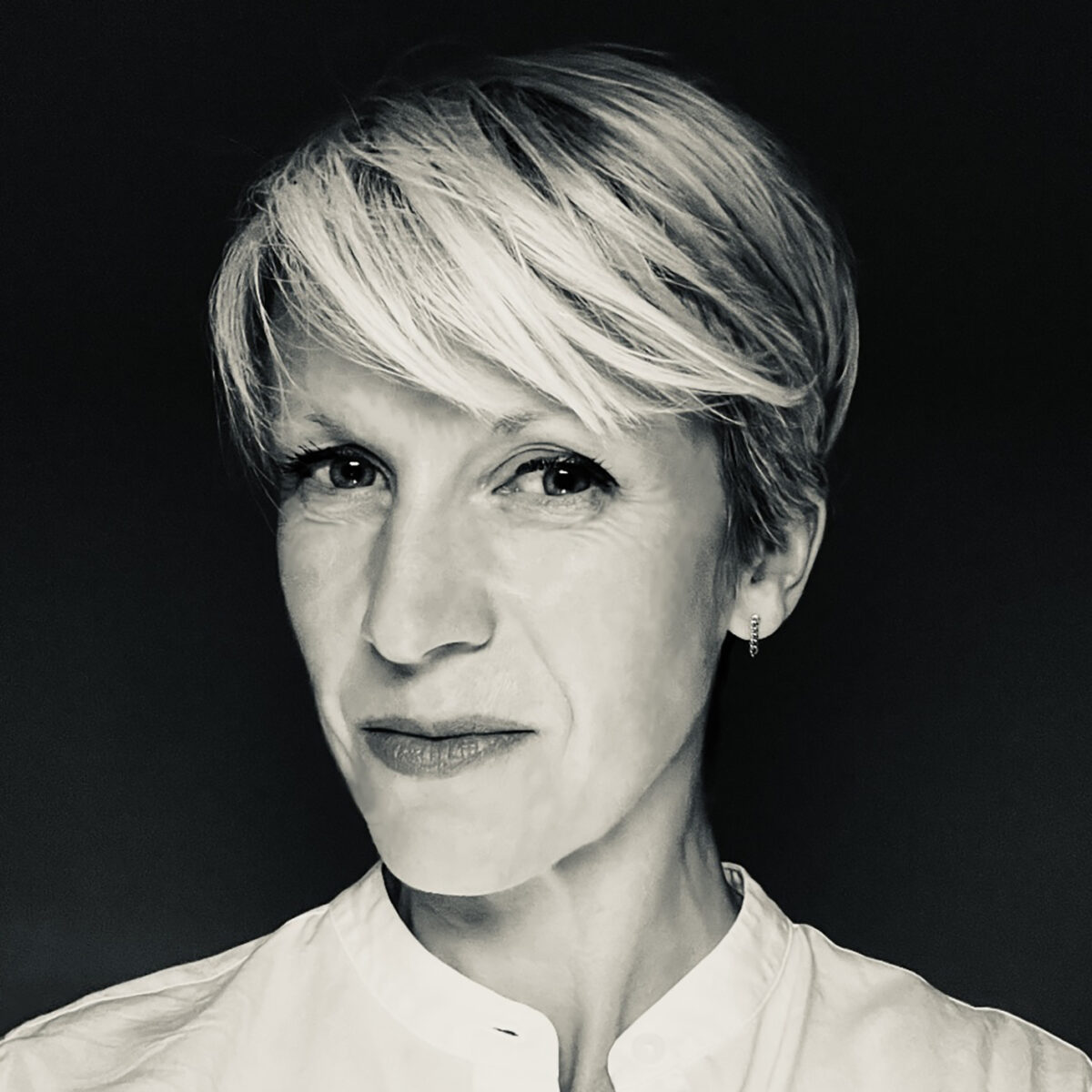
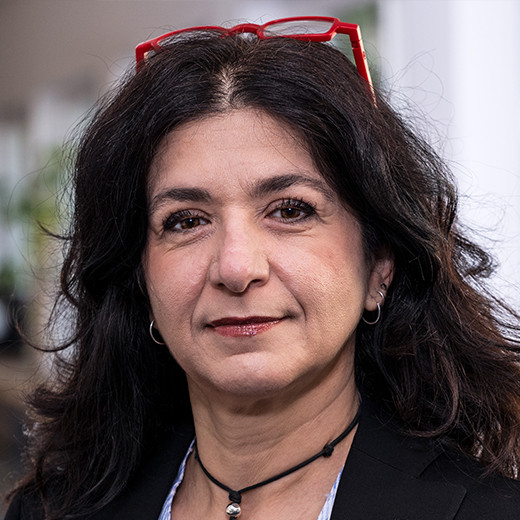
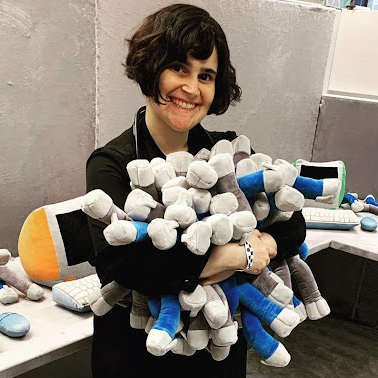
Dr. Jenny Baines is a Senior Lecturer in Filmmaking at the School of Digital Arts , Manchester Metropolitan University. Her practice-led research explores the intersections of 16mm film apparatus , body-space relationships , and performative methodologies through experimental cinema and installation art. Academic credentials include: MFA in Fine Art, Slade School of Fine Art PhD in Filmmaking Practice, Manchester School of Art Research focuses on: Analogue Film Materiality Expanded Cinema Installations Performance-Driven Cinematography Temporal-Spatial Dynamics in Projection Body-Apparatus Interaction Notable trends in recent works (2023-2025) involve physical endurance tests (Traction, Gyration), multi-screen spatial experiments , and material film process interventions . Her practice combines analog film technologies with unrehearsed bodily actions to explore cinematic temporality. Contact: j.baines@mmu.ac.uk | Portfolio
Kate Arrington is a Professor in the Department of Psychology at Lehigh University, internationally recognized for her research on cognitive control and multitasking. She earned her Ph.D. in Cognitive Psychology from Michigan State University in 2002 and completed an NRSA-funded postdoctoral fellowship at Vanderbilt University before joining Lehigh in 2005. Role: Chair of the Department of Psychology Contact: 610.758.4230 | cma205@lehigh.edu | Chandler-Ullmann room 130 Research Interests: Cognitive psychology, cognitive control mechanisms, human multitasking, and applied cognition. She investigates interactions between stimulus-driven and goal-directed processes in task selection and performance, exploring individual and situational variability in cognitive control. Developed the voluntary task switching paradigm for lab-based studies Applied research in intelligent tutoring systems and multimodal learning interfaces Scientific Awards & Leadership: NIH and NSF grant funding for multitasking and cognitive control research Rotating Program Officer, NSF Perception, Action, and Cognition program (2015-17) Chair, Women in Cognitive Science (from 2021) Director, Lehigh’s Institute for Data, Intelligent Systems, and Computation Teaching: Cognitive Psychology, Cognition in Practice and Policy, Research Methods and Statistics.
Professor Angelos Koutsourakis is a Professor in Film and Cultural Studies at the University of Leeds, School of Languages, Cultures and Societies, where he joined in January 2017 as a University Academic Fellow, was promoted to Associate Professor in August 2020, and received his Chair (full Professorship) in March 2024. He is affiliated with the Centre for World Cinemas and Digital Cultures, which serves as the hub for his research and teaching activities. Professor Koutsourakis completed his academic journey with a BA in Theatre Studies at the National and Kapodistrian University of Athens (2004), followed by an MA in Modern Drama and Performance Studies at University College Dublin (2006), and a PhD focusing on film (particularly the Danish auteur Lars von Trier) at the University of Sussex (2012). Between 2011-2012, he worked as a guest scholar at the University of Copenhagen, funded by the Danish Agency for International Education. Prior to joining Leeds, he held postdoctoral fellowships at the Universities of New South Wales and Queensland (2012-2016). His research sits at the interface of film theory, world cinema, modernism, and politics and representation, with particular interests in questions of politics and representation in world cinema and combined and uneven development, early film theory, and the relations between cinema and literary modernism. Professor Koutsourakis has authored three monographs: Kafkaesque Cinema (2024), Rethinking Brechtian Film Theory and Cinema (2018), and Politics as Form in Lars von Trier: A Post-Brechtian Reading (2013), along with co-edited volumes on European cinema and crisis. He has published in leading international journals including Cinema Journal, Screen, Modernism/Modernity, and Film-Philosophy. His recent publications demonstrate a growing engagement with contemporary political concerns through cinematic analysis, particularly focusing on post-fascism, the Anthropocene, and Third Cinema. His work shows a consistent thread connecting historical film theory with urgent contemporary issues, revealing how cinematic forms can illuminate political and philosophical questions of our time. The interdisciplinary nature of his scholarship bridges film studies, political theory, and environmental humanities. Best Book in Film Studies by the Janovics Center Award for Outstanding Humanities Research in Transnational Film and Theatre Studies (2024) for Kafkaesque Cinema Shortlisted for the 2021 Film-Philosophy Annual Article Award for "The Politics of Humour in Kafkaesque Cinema" Shortlisted for the 2018 Film-Philosophy Article Award for "Visualizing the Anthropocene Dialectically" Iran's Book of the Year Award 2021 for the Persian translation of The Cinema of Theo Angelopoulos Professor Koutsourakis has supervised several PhD and Master's students, including Laurence Carr (PhD, 2017-2022), Lauren Molyneux (MAR, 2023), and Prateek (PhD, 2015-2018). He currently supervises Benjamin Brown and Chuxi Yan. His research has been supported by significant grants including an Alexander von Humboldt Fellowship, an AHRC Research Leadership Fellowship titled "The Kafkaesque in World Cinema" (2020-22), and previous postdoctoral fellowships at the Universities of Queensland and New South Wales. As a member of the Centre for World Cinemas and Digital Cultures, Professor Koutsourakis contributes to a vibrant research community focused on global cinematic practices and digital culture. His current work includes a book-length project titled "Third Cinema and the Anthropocene," which examines Third Cinema's anti-extractivist poetics and environmental politics in relation to human-induced climate change.
Dr. Jennifer Parker-Starbuck is a Professor and Head of the Department of Drama, Theatre and Dance at Royal Holloway, University of London. Her research focuses on multimedia performance, cyborg theory, and the intersections of animality, technology, and human experience. She holds a PhD from The Graduate Center, CUNY, and has taught at NYU's Tisch School of the Arts. Parker-Starbuck has been recognized with the ATHE 2014 Outstanding Article Award for her work on War Horse and robotic representations. She currently serves as co-Editor of Theatre Journal and holds editorial roles in PAJ , International Journal of Performance Arts and Digital Media , and Antennae . Her research explores posthumanism, trauma in performance, feminist practices, and the ethical dimensions of non-human entities in artistic creation. Ongoing projects include the AHRC-funded P3R (Performance, Participation, Provenance and Reward in Responsible AI) and CoSTAR, focusing on creative industries and immersive narratives. She has supervised two graduate works and contributed to over 38 scholarly publications. Professional service includes co-founding the ATHE Performance Studies Focus Group and convening TaPRA's Performance and the Body Working Group (2007-2012). Her work aligns with UN SDG 4 (Quality Education) through innovative pedagogical approaches to performance studies.
Arthur P Baddorf is a Senior Research Scientist at the Scanning Tunneling Microscopy Group within the Center for Nanophase Materials Sciences (CNMS) at Oak Ridge National Laboratory (ORNL). With over 35 years of experience in nanoscale materials research, he specializes in surface/interface physics , electron excitations , and quantum material synthesis . Education: B.A. in Math and Physics from Wheaton College (1980), Ph.D. in Physics from University of Pennsylvania (1987) His research focuses on atomic-scale property mapping using advanced microscopy techniques like scanning tunneling microscopy (STM) and atomic force microscopy (AFM) . Key areas include ferroelectric switching , 2D material assembly , and energy transport mechanisms at the nanoscale. Recent publications highlight work on quantum material creation , defect-engineered catalysts , and intercalation dynamics in MXenes . His group operates over 15 high-precision microscopes for atomic-level analysis. Scientific Awards : Fellow of the AVS (2017) Cosslett Award (2008) ORNL Team Accomplishment Award (2006) ORNL Science and Technology Award (2006) He serves on multiple advisory committees including the µAtoms EFRC (2023-present) and the Nanomaterials Editorial Board (2020-present), while also contributing to instrumentation patents related to semiconductor compositions and ferroelectric memory devices.
Letizia Bollini is a Professor at the Faculty of Design and Arts of the Free University of Bozen-Bolzano , specializing in Digital Design . Her work bridges physical and digital realms ("phygital"), focusing on cultural heritage, memory preservation, and user experience. Role : Professor of Digital Design Institution : Free University of Bozen-Bolzano Key Themes : Phygital narratives, cultural heritage ecosystems, digital mortality Research Interests include: Designing multimodal interfaces for cultural heritage Temporal dimensions of digital memory Accessibility in digital typography Geo-referenced storytelling for urban history Gender perspectives in design technology Her scientific contributions span from 2018 to 2024, addressing digital humanities, user experience, and sustainable design practices. Though no explicit awards are listed, her work has been showcased in events like the World Usability Day in Bozen (2023-2024).
Dr. Claire Donnelly is a Research Professor and Lise Meitner Group Leader heading the Spin3D research group at the Max Planck Institute for Chemical Physics of Solids in Dresden, Germany, where she investigates three-dimensional magnetic systems using advanced imaging techniques. She holds a distinguished research position focused on nanoscale magnetism and spintronics. Education & Career Following her MPhys at the University of Oxford, Donnelly completed her PhD at ETH Zurich and Paul Scherrer Institute (2017). Her doctoral work on 3D magnetic systems received multiple honors. She subsequently held postdoctoral positions at ETH Zurich and the University of Cambridge as a Leverhulme Early Career Research Fellow before establishing her independent group at MPI-CPFS in 2021. Research Focus Donnelly specializes in developing cutting-edge X-ray magnetic tomography techniques to visualize 3D magnetization dynamics at the nanoscale. Her work encompasses: Three-dimensional magnetic nanostructures and topological spin textures Advanced imaging methods including X-ray vector nanotomography and soft X-ray laminography Chiral magnetic interactions and domain wall dynamics in complex geometries Her research bridges fundamental magnetism with potential applications in high-density data storage and quantum computing. Publication Trends Donnelly's recent publications demonstrate strong focus on three-dimensional characterization of magnetic systems, with recurring themes: nanoscale topological textures (skyrmions, Bloch points), advanced X-ray tomography techniques, chiral interactions in synthetic antiferromagnets, and curvature effects in magnetic nanostructures. Her work consistently integrates novel imaging methodologies with fundamental physics exploration. Honors APS Richard Greene Dissertation Award Werner Meyer-Ilse Memorial Award ETH Medal for outstanding doctoral thesis SPS Award for Computational Physics L'Oréal-UNESCO For Women in Science Fellowship European Magnetism Association Young Scientist Award Leadership As founder of the Spin3D group, Donnelly leads a research team developing next-generation magnetic imaging techniques. Her group focuses on creating novel approaches to visualize and manipulate 3D magnetic configurations in complex nanomaterials, with ongoing work in nanofabrication of magnetic architectures and time-resolved imaging of magnetization dynamics.
Stephen J. Quigley serves as a Teaching Professor in the Department of English at the University of Pittsburgh's Dietrich School of Arts & Sciences, where he teaches in the Digital Narrative and Interactive Design (DNID) Program. His academic affiliations include Homewood CEC, Pitt Cyber, Remake Learning, and the STEM Coding Lab. Quigley's research centers on digital rhetoric and basic coding education, with particular focus on craft theory applications in digital composition. His work bridges woodworking craftsmanship principles with digital pedagogy, emphasizing scaffolded learning approaches where technical skills inform theoretical development. Key projects include Open Fuego web tools for classroom coding integration and My Nature Study for environmental digital literacy. His publication portfolio demonstrates consistent contributions to digital humanities journals including Kairos , Reflections , and Computers and Composition Online . Recent work analyzes multimodal environmental education frameworks and digital archiving practices, showing strong interdisciplinary connections between rhetoric, computer science, and environmental studies. Quigley actively participates in educational technology initiatives, serving on the Senate Computing Committee and contributing to NSF-funded Computer Science for All (CSforALL) projects. His teaching portfolio spans technical communications, digital composing, usability studies, and project-based design courses that integrate writing with computational thinking.
Taylor Annabell is a postdoctoral researcher at Utrecht University School of Law, affiliated with the Molengraaff Institute for Private Law and the Governing the Digital Society focus area. She contributes to the ERC Starting Grant HUMANads project, collaborating across legal, computer science, and media studies disciplines to examine platform governance and creator economies. PhD from King’s College London MSc in Communication Studies from Auckland University of Technology Former Research Associate at University of Leeds and Sheffield Research Themes : Her work interrogates platform society , focusing on: Platform governance mechanisms Influencer monetization practices Digital memory work through Spotify/Instagram User-agent interactions with algorithmic systems Legal frameworks for platform accountability Discursive constructions in digital spaces Recent Publications : 2025 articles span TikTok monetization ethics, influencer labor rights, memory assemblages, and DSA compliance challenges. Earlier works (2019-2023) analyze postcolonial commemoration, pandemic memory practices, and digital cultural identity. Methodological Expertise : Employs ethnography, narrative inquiry, scroll-back methodology, and policy analysis. Collaborates with multidisciplinary teams across Europe, including ERC-funded researchers and EU Commission consultants.
Patrice Terrier is a Professor of Cognitive Psychology and Ergonomics at Toulouse Jean Jaurès University since 2008, affiliated with the Cognition, Languages, Language, Ergonomics (CLLE) laboratory. He has held significant leadership roles including Head of the 'compatibility between human and artificial systems' axis (2008-2014), Co-head of the 'cognitive ergonomics: memory, aging, rhythms' axis (2014-2016), Deputy Director of the doctoral school of aeronautics and astronautics site (2010-2015), and Scientific Director at the National Research Agency (2014-2017). He was appointed to the National Council of Universities (16th section) from 2012-2015 and has represented UT2J on various steering committees including the Graduate School ANITI and Toulouse Hybridation Education Campus projects. Terrier's research focuses on memory phenomena and consciousness in relation to person-system interaction. His work conceptualizes memory as a set of procedures and operations rather than a storage place, employing frameworks such as the attributive approach to memory, appropriate processing for transfer, and dual conceptions of memory processes. His research spans diverse application contexts including air traffic control, nuclear power operations, human-machine dialogue, internet information retrieval, risk perception, and decision-making problems. He has developed significant expertise in distinguishing between implicit (automatic) and explicit (controlled) memory use and characterizing gist versus verbatim representations. His publication record shows consistent output across cognitive psychology, ergonomics, and human-computer interaction, with recent work focusing on conspiracy theories, truth effects, humor appreciation, and unconscious thought processes in decision making. His research demonstrates strong interdisciplinary connections between cognitive theory and practical applications in complex systems. Terrier has been actively involved in academic governance, serving on the training commission of university life (2018-2022), as vice-president delegated to digital technology development (2019-2022), and as an elected member of the CFVU. He has contributed to numerous research groups including the European Association of Cognitive Ergonomics and has been an associate editor for the International Journal of Human Factors and Ergonomics since 2018. He has supervised 10 doctoral theses since qualifying to direct research in 2006, with his work supported by various research grants through the National Research Agency where he served as a scientific manager. His laboratory work within CLLE focuses on cognition in complex situations, particularly examining how memory processes operate in real-world contexts.
Faith Holland serves as an Adjunct Associate Professor in the Foundation School at Pratt Institute, where she teaches courses related to digital media, new media art, and internet culture. She maintains a parallel career as a professional multimedia artist with exhibitions at prestigious institutions including The Whitney Museum of American Art (New York), NRW Forum (Düsseldorf), Fotografisk Center (Copenhagen), and DAM Gallery (Berlin). Her academic work directly informs and intersects with her artistic practice, creating a cohesive exploration of technology's impact on human experience. Holland's research focuses on the intersection of gender, intimacy, and technology through diverse media including sculpture, performance, video, animated gifs, and net art. Her work employs humor and tenderness to critically examine our embodied relationships with digital technologies. Key areas include feminist technology studies, queer digital spaces, internet pornography critique, and the materiality of digital interfaces. Through projects like 'Improving, Non-Stop' and 'Artist's Statement,' she offers incisive commentary on digital beauty standards and art world rhetoric. Her artistic output reveals evolving interests from early explorations of digital eroticism and internet culture to more recent investigations of artificial intelligence and machine learning systems. Works like 'Artificial Intelligence Forced to Confront Its Own Death' represent innovative approaches where she trains AI models on organic decay processes, creating conceptual frameworks for technology to imagine mortality. This progression demonstrates her sustained engagement with emerging technologies while maintaining consistent critical perspective. Holland has received significant recognition including a 2021 New York State Council on the Arts grant, NYFA Fellowship Finalist status in Digital/Electronic Art, artist residencies at Jamaica Center for Arts and Learning and Harvestworks, and being a finalist for Fotomuseum Winterthur's Post-Photography Prototyping Prize. Her work has been critically acclaimed in major publications including Artforum, The New York Times, The New Yorker, and Hyperallergic. As both an educator and practitioner, Holland occupies a unique position at the intersection of academic discourse and contemporary art practice. Her teaching at Pratt Institute and the School of Visual Arts directly incorporates her professional experience, providing students with insight into the evolving landscape of digital art and technology criticism. She is represented by Microscope Gallery, which has presented her solo exhibitions in New York.
Dr Arabinda Haldar is Associate Professor of Physics at Indian Institute of Technology Hyderabad. His group pursues experimental and theoretical research in magnonics, microwave magnetics and nanomagnetism, with an emphasis on spintronic and post-CMOS information-processing technologies. Education Ph.D. – Indian Institute of Technology Bombay Research Interests The group operates at the intersection of condensed-matter physics , nanotechnology and microwave engineering . Core themes include: Magnonics & Spin-Wave Computing: Propagation and control of magnons in ultra-thin magnetic multilayers, magnonic waveguides and reconfigurable metamaterials for low-power logic and memory. Microwave Magnetics: Self-biased nanomagnets and ferrite-free thin-film devices for on-chip RF components, radars and wireless communication systems. Nanomagnetism & Spin Dynamics: Spin-orbit phenomena (spin Hall effect, spin pumping, spin-orbit torque), skyrmionics, and ultrafast magnetization dynamics probed by FMR, BLS and ST-FMR techniques. Scientific Awards & Recognition Research Excellence Award – IIT Hyderabad (2024) DAE Young Scientist Research Award (2021) IEEE Senior Member recognition (2022) Ramanujan Fellowship – DST, Government of India (2017) Outstanding Reviewer 2019 – IOP Publishing Early Career Research Award – SERB (2017) Advising & Funding Dr Haldar has mentored 15+ PhD students and numerous Masters and project interns. He is principal investigator on SERB-CRG grants for Brillouin light scattering microscopy and sputtering system for skyrmion research , and co-PI on additional CRG-SERB and NIMS-ICGP programs. Recent graduates include Sudeep (DRDO-MoE), Brahmaranjan, Mahathi and Bibekananda Paikaray. Laboratory & Collaborative Networks The Magnonics & Nanomagnetism Laboratory at IITH houses state-of-the-art facilities: broadband FMR (2–18 GHz), micro-focused Brillouin light scattering, spin-torque ferromagnetic resonance (ST-FMR) and nanofabrication clean-room tools. International collaborations span Durham University (Prof A O Adeyeye), NIMS Japan, IISc Bangalore, DMRL Hyderabad and IIT Bombay.
Seung-Hyun Chun is a Professor in the Department of Physics and Astronomy at Sejong University , specializing in the growth of van der Waals materials, low-dimensional physics, and graphene applications in water electrolysis. With a Ph.D. in Physics from Seoul National University (1996), he conducted postdoctoral research at Penn State University (1999–2002) and UIUC (1997–1999). His research focuses on synthesizing graphene directly on insulators, topological insulator growth on amorphous substrates, and heterostructure fabrication techniques for quantum materials. Education : 1996 – Ph.D., Seoul National University 1991 – M.S., Seoul National University 1989 – B.S., Seoul National University Research Highlights : Direct graphene growth on insulators Topological insulator synthesis on amorphous layers Interlayer vibration-driven phase transitions Vertical graphene for X-ray imaging and water splitting Advanced electrocatalysts for hydrogen evolution Key Collaborations : International partnerships in graphene synthesis and topological materials Contributions to 159 research outputs Leadership in the Spin Electronics Laboratory at Sejong University
Vladimir Viktorovich Tabolin is a Professor at the Faculty of Law, Department of Public Law at the National Research University Higher School of Economics (HSE), where he has been working since 2022. With a distinguished career spanning several decades in legal academia and public service, Professor Tabolin has established himself as a leading expert in constitutional and municipal law, with a specialized focus on legal urbanology and urban law. His work bridges theoretical legal scholarship with practical governance challenges faced by cities and municipalities. Professor Tabolin's academic credentials include: Master's degree (2019): Belgorod State National Research University, qualification "Master" in Jurisprudence Doctor of Law (2000): Dissertation on "Organizational and legal foundations of the activities of local government bodies in large cities (urbanized regions)" Specialist degree (1991): Russian Socio-Political Institute, specialty "Theory of Socio-Political Relations", qualification "Political Scientist. Teacher of Socio-Political Disciplines" Specialist degree (1981): Moscow Institute of Civil Aviation Engineers, specialty "Operation of aircraft and engines", qualification "Mechanical engineer" Additional training: "Public-legal aspects of Russian legislation" (2022) and "Basic concepts of artificial intelligence" (2024) at HSE Professor Tabolin's research centers on the innovative field of legal urbanology , which he has pioneered as a distinct scholarly discipline examining the intersection of law and urban development. His work explores constitutional and municipal law frameworks through the lens of urban governance, addressing critical questions about how legal systems can effectively support sustainable urban development. His scholarly contributions span theoretical foundations of urban law, historical evolution of urban legal systems (particularly in Soviet and post-Soviet contexts), contemporary challenges of municipal governance in Russian cities, and the emerging relationship between artificial intelligence and urban legal frameworks. Professor Tabolin's recent publications reveal a clear trajectory toward increasingly interdisciplinary urban legal scholarship. His work has evolved from foundational theoretical texts to more applied research addressing contemporary urban challenges, with particular focus on Soviet urban history, AI applications in legal practice, and innovative governance models for Russian cities. His 2023-2025 publications demonstrate growing engagement with technological sovereignty, rural-urban governance interfaces, and alternative development paradigms. Professor Tabolin's contributions to legal scholarship and public service have been recognized with several prestigious awards: Medal of the Order "For Merit to the Fatherland" 2nd degree (1997) Medal "In Memory of the 850th Anniversary of Moscow" (1997) Jubilee Medal "300 Years of the Russian Fleet" (1996) Gratitude from the Public Chamber of the Russian Federation (2016) Gratitude from the Office of the President of the Russian Federation for Civil Service (2007) Honorary Diploma of the Duma of the Khanty-Mansiysk Autonomous Okrug - Yugra (2023) As a dedicated academic mentor, Professor Tabolin serves as a dissertation advisor, currently supervising Nikolai A. Volkov's research on "Constitutional and legal foundations of the formation of the urban planning law system." He has established himself as a prominent figure in legal academia through his leadership of the scholarly school "Urban Law and Legal Problems of Urbanization" and has received significant research funding, most notably an RFBR grant for the project "Development of scientific foundations of legal urbanology." Professor Tabolin also serves on dissertation councils and as a member of the Scientific Advisory Council of the Public Chamber of the Russian Federation since 2012. Professor Tabolin founded and leads the scholarly school "Urban Law and Legal Problems of Urbanization," which has become a significant center for interdisciplinary urban legal research in Russia. Since March 2023, he has served as Chairman of the Board of the Autonomous Non-Profit Organization "Khanty-Mansiysk Scientific Society," where he leads a legal experiment focused on forming a humanitarian scientific cluster in the city and developing legal constructs for obtaining city status as a humanitarian science city.
Steven Witt is an Associate Professor at the University of Illinois at Urbana-Champaign’s University Library, serving as Head of the International and Area Studies Library. His work spans global studies, Japanese studies, and library science, with a focus on internationalism, information policy, and sustainable development. Research Interests International librarianship and transnational networks Information policy and equity Global sustainability initiatives Historical foundations of library science Academic publishing ethics Publication Trends His recent publications highlight libraries as catalysts for social resilience, the evolution of peer review processes, and the intersection of historical thinking with modern challenges like the 5th Industrial Revolution. Research emphasizes global-local dynamics, cultural preservation, and technological adaptation. Professional Contributions Witt leads efforts in campus internationalization, advocates for digital equity, and explores the role of libraries in post-crisis recovery. His work bridges historical analysis with contemporary policy challenges, particularly in information literacy and NGO information systems.