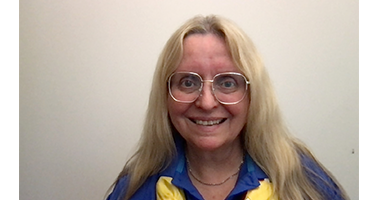
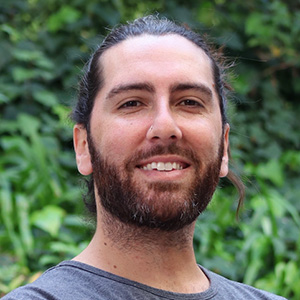
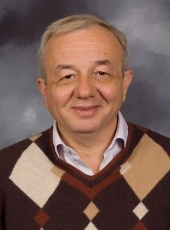
Anne C. Elster is a Professor and Director of the Heterogeneous and Parallel Computing Lab (HPC-Lab) at NTNU's Department of Computer Science, with additional roles as HPC Leader at the Center for Geophysical Forecasting and Senior Research Fellow at the Oden Institute. She holds board positions at NTNU and its Faculty of Information Technology. Her research spans: High-Performance Computing : GPU acceleration, auto-tuning, and heterogeneous systems Machine Learning : Applied to optimization and computational geosciences Parallel Algorithms : For scientific computing and real-time simulations Her recent publications (2021-2024) focus on GPU auto-tuning, quantum-HPC integration, distributed systems, and ML-driven geophysical data analysis, with strong emphasis on performance optimization across architectures. Awards and honors: IEEE Computer Society Distinguished Contributor (2021) IEEE Distinguished Speaker (2019-2022) IEEE Senior Member (2000) She has supervised 100+ master's students, 15+ PhDs, and secured major grants including EU H2020 projects. Current Post Docs focus on HPC acceleration and AI applications. Her HPC-Lab collaborates with CERN, Equinor, and international universities, specializing in GPU-accelerated scientific computing and tools for performance portability.
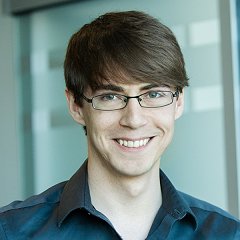
Lévis Thériault serves as a Lecturer in the Department of Computer Engineering and Software Engineering within Polytechnique Montréal's Faculty of Engineering. He is also a member of the Institute for Data Valorization (IVADO), contributing to Montreal's AI research ecosystem. His academic credentials include a B.Eng., DESS from UQAC, M.Sc.A., and PhD coursework at Polytechnique Montréal. His research spans two dynamic domains: artificial intelligence applications in healthcare (notably the Marvin chatbot system for HIV treatment adherence) and innovative educational technologies for engineering education. Recent work focuses on conversational agents for patient self-management, digital learning environments, and active learning methodologies. His publication trend shows a strategic pivot toward health AI since 2020, with multiple presentations at International AIDS Conferences, while maintaining his educational technology research thread. Dr. Thériault actively supervises graduate students across multiple cohorts, with current advisees working on AI-driven clinical tools and educational software. His supervision record includes 14 professional Master's graduates between 2021-2024 and ongoing PhD and research Master's projects. Student theses demonstrate strong industry alignment, with implementations at organizations including Desjardins, Intact Assurance, and Criteo. Teaching responsibilities include core courses in operating systems, discrete structures, and software design, where he implements his research on active learning strategies. His 2020 publication on smartphone-based assessment for large engineering classes exemplifies his practical approach to educational innovation. The May 2022 press coverage of his AI solution for Alloprof's homework help platform highlights real-world impact of his educational technology research.
William J. Bowman is an Assistant Professor in the Department of Computer Science at the University of British Columbia. He focuses on secure and verified compilation, dependently typed programming, and meta-programming systems. His work bridges high-level language design with low-level code generation to maintain correctness and security invariants throughout compilation. Education: PhD in Computer Science from Northeastern University Research spans type-preserving compilation, including: Typed closure conversion for dependently typed languages Allocation-aware type universes Hybrid embedding techniques Secure interoperability via multi-language semantics Recent publications examine: Heap allocation modeling through type universes Flat closure representations WebAssembly extensions with indexed types Control-effect semantics
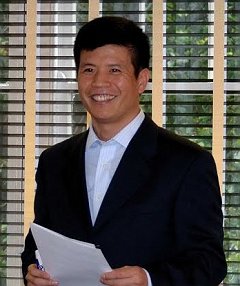
Chen Ding is a Professor and Chair of the Computer Science Department at the University of Rochester, where he leads research in computer memory systems and locality theory. His work focuses on optimizing memory hierarchy performance across computing platforms from handheld devices to supercomputers. Ph.D. from Rice University (2000) M.S. from MTU (1996) B.S. from Beijing University (1994) Professor Ding's research centers on the scientific foundation of computer memory, particularly locality theory and its applications for minimizing data movement - the primary bottleneck in modern computing systems. His work has established that data movement, data reuse, and working set are mathematically related manifestations of the same underlying phenomenon. His research spans parallel program locality, data movement complexity, relational theory of locality, reference affinity, and whole-program locality analysis. His recent publications demonstrate a continued focus on memory system optimization, with particular emphasis on lease caching, symmetric locality modeling, and continuous-time analysis of Zipfian workloads. His work bridges theoretical foundations with practical implementations across CPU/GPU cache modeling, cache sharing optimization, and key-value memory caching systems. NSF CAREER award (2003) DOE Young Investigator Award (2002) Professor Ding has supervised numerous graduate students, including Lavaee who contributed to the "Hardness of data packing" research presented at POPL'16. His work has received consistent funding from NSF and DOE, supporting his research in memory systems and parallel programming. He has served in leadership roles including General Chair for ISMM 2020 and committee positions for major conferences like PLDI and PPoPP. His research group maintains the roclocality.org resource and develops tools like SLO (suggestions of locality optimizations) for analyzing and improving program locality. The group collaborates with industry partners including Microsoft Research, where Ding served as a Visiting Researcher, and academic institutions worldwide.
Dr. Fatma Kürüm Varolgüneş is an Associate Professor at Bingöl University's Faculty of Engineering and Architecture. Her academic background includes a Ph.D. in Architecture from Selçuk University, an M.Sc. from Dicle University, and a B.Sc. from Gazi University-Selçuk University. Her research explores: Sustainable architectural design and ecological building practices Post-disaster reconstruction and housing solutions Thermal tourism facility optimization using QFD-AHP methods Vernacular architecture adaptations in cold climates Indoor environmental quality in traditional buildings Publication analysis reveals strong focus on: Disaster-resilient housing (7 publications) Sustainable tourism development (6 publications) Architectural decision-making methodologies (5 publications) Vernacular building performance (4 publications) She coordinates multiple research projects including: Indoor air quality modeling in traditional housing (BAP-MMF.2020.00.004) Post-disaster housing strategies post-2003 Bingöl earthquake Bingöl University's Regional Development Program in Agriculture
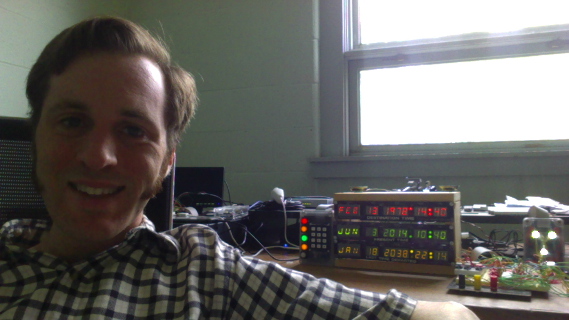
Vincent Weaver is an Associate Professor in the Electrical and Computer Engineering Department at the University of Maine's College of Engineering. He leads the VMW Research Group, focusing on low-level systems research including hardware performance counters, computer architecture, and operating systems. Weaver received his BS in Electrical Engineering from the University of Maryland College Park in December 2000, followed by MS (January 2009) and PhD (May 2010) degrees in Electrical and Computer Engineering from Cornell University. He joined the University of Maine faculty in July 2012 as an Assistant Professor and earned tenure and promotion to Associate Professor in September 2018. His research centers on hardware performance analysis, architectural simulation, and systems programming with emphasis on Linux kernel development and embedded systems. Weaver's work bridges theoretical computer architecture with practical systems implementation, often resulting in open-source tools that advance the field. His publications reveal a consistent focus on performance analysis techniques, code optimization, and security through low-level system understanding. Weaver maintains an active teaching schedule including courses in embedded systems, operating systems, and network engineering. He values students with strong programming skills and encourages open source contributions as part of the learning process. His research group provides hands-on experience with cutting-edge processor architectures and performance analysis tools.
Bryan Donyanavard is an Assistant Professor in the Department of Computer Science at San Diego State University's College of Sciences. His research focuses on self-aware computing systems and cyber-physical systems optimization. Ph.D. in Computer Science from UC Irvine B.S. & M.S. in Computer Engineering from UC Santa Barbara Research interests span self-aware systems, embedded systems, and machine learning applications in resource-constrained environments. Current projects explore runtime optimization for autonomous vehicles and cyber-physical systems management. Recent publications analyze reversible neural network pruning for safety-critical systems, hybrid learning models for edge-cloud networks, and cross-layer optimization for mobile devices. Key trends include machine learning integration with hardware systems and performance maximization in embedded environments. Actively advising graduate and undergraduate researchers, with past advisees working on topics like lane following system optimization, SLAM algorithms, and sensor perception in platooning vehicles. Email: bdonyanavard@sdsu.edu Lab: DRG-Lab LinkedIn: https://linkedin.com/in/bryandony
Matthew Fluet is an Associate Professor and Graduate Program Director in the Department of Computer Science at Rochester Institute of Technology's Golisano College of Computing and Information Sciences. He received his PhD in Computer Science from Cornell University and his BS in Mathematics from Harvey Mudd College. Prior to joining RIT, he was a research assistant professor at the Toyota Technological Institute at Chicago. Dr. Fluet's research focuses on programming languages, with particular emphasis on: Functional programming Compiler construction Program analysis Type systems Parallelism and concurrency His research has resulted in several significant projects including Manticore (a heterogeneous-parallel functional programming language), MaPLe/MPL (a functional language for provably efficient and safe multicore parallelism), and contributions to MLton (a whole-program optimizing Standard ML compiler). His work is supported by multiple National Science Foundation grants. Dr. Fluet has published extensively in top programming languages conferences including ICFP, POPL, PLDI, and PPoPP. His recent work focuses on automatic parallelism management, type-and control-flow analysis, and memory management for parallel systems, demonstrating a consistent research trajectory in making parallel programming safer and more accessible through language design. His notable research grants include: National Science Foundation (CISE Research Infrastructure): $224,329 (2014-2017) National Science Foundation (Software and Hardware Foundations): $236,744 (2014-2018) National Science Foundation: $412,261 (2011-2014) National Science Foundation: $91,867 (2008-2012) Dr. Fluet actively mentors graduate students, currently advising several MS project and thesis students. He teaches courses including Programming Skills (with focus on Rust), Compiler Construction, and Programming Language Concepts. He also serves in leadership roles including as Graduate Program Director for the Computer Science MS program and participates in departmental governance through the CS Curriculum Committee and GCCIS Curriculum Committee. He is an active member of the programming languages community, having served on program committees for major conferences and as Information Director for ACM SIGPLAN (2015-2018), demonstrating his commitment to advancing the field through research, education, and community service.
Marco Vasconcelos is an active researcher at the University of Aveiro, Portugal, where he serves as an Integrated Member of the Cognition Team. With a PhD from the University of Aveiro, he has established himself as a prominent figure in animal cognition and decision-making research, with 95 publications, 9,723 reads, and 1,322 citations to his name. His research spans multiple institutions and collaborations across Europe, particularly with colleagues at the University of Aveiro and international collaborators including Armando Machado, Tiago Monteiro, and Alex Kacelnik. Vasconcelos's primary research focus centers on decision making and rationality, integrating concepts and techniques from operant and developmental psychology, comparative cognition research, optimal foraging theory, and microeconomics. His work examines how animals, particularly pigeons and starlings, make choices between alternatives, modeling how these options are valued and how valuation drives decisions. He employs optimality and learning theory to address valuation, using empirically supported algorithms to translate valuation into choice. His research often involves developing mathematical models of causative processes and testing them through controlled experiments, with particular emphasis on timing mechanisms, suboptimal choice phenomena, and information processing in animal decision making. Analysis of Vasconcelos's recent publications reveals a strong focus on temporal cognition and decision processes in animals. His work consistently explores how timing mechanisms interact with reinforcement structures to shape behavior, with particular attention to midsession reversal tasks, suboptimal choice phenomena, and numerical discrimination. The research demonstrates sophisticated integration of theoretical models from economics with empirical behavioral data, creating a bridge between normative decision theory and descriptive behavioral observations. His 2022-2025 publications show increasing methodological sophistication with variable trial spacings, differential reinforcement probabilities, and advanced modeling approaches. Vasconcelos maintains active collaborations with researchers across multiple institutions, particularly with Armando Machado at the University of Aveiro and Alex Kacelnik at the University of Oxford. His research has been supported through various grants that enable extensive behavioral experimentation with animal subjects. While specific grant details aren't provided in the available text, his consistent publication output across numerous high-impact journals indicates sustained research funding. As part of the Cognition Team at the University of Aveiro, Vasconcelos contributes to a vibrant research environment focused on animal learning and behavior. His work with the team has produced significant insights into how animals process temporal information, make decisions under uncertainty, and develop cognitive representations of numerical quantities. The research group employs sophisticated behavioral paradigms to investigate fundamental questions about the nature of decision processes and cognitive mechanisms in non-human animals.
Soner Onder is a Professor in the Department of Computer Science at Michigan Technological University, with an affiliated appointment in the Electrical and Computer Engineering department. His work focuses on computer architecture, programming languages, and simulation techniques, contributing significantly to processor design and memory systems research. Dr. Onder received his PhD in Computer Science from the University of Pittsburgh in 1999. His academic career has established him as a leading researcher in computer architecture with publications spanning two decades in top-tier conferences. Dr. Onder's research spans multiple areas of computer architecture and compiler design, with emphasis on processor design, memory systems, and compiler optimizations. He has made significant contributions to memory disambiguation techniques, branch prediction mechanisms, and energy-efficient processor designs. His work often bridges hardware and software domains, exploring how compiler techniques can better exploit architectural features. Recent research focuses on memory dependence prediction, recovery mechanisms for mispredictions, and energy-efficient data access patterns, with his "Future Gated Single Assignment Form" representing an innovative approach to program representation that bridges compiler design and architectural support. US Patent 7747993: Methods and systems for ordering instructions using future values (2010) Dr. Onder has advised numerous PhD students to completion, including Scott Pomerville (2024), Gorkem Asilioglu (2020), Omkar Javeri (2020), and Zhaoxiang Jin (2018). His research has been supported by grants including "Statically Controlled Asynchronous Lane Execution (SCALE)" and "Vectorized Instruction Space (VIS)" projects. He developed the FAST (Flexible Architecture Simulation Tool) for architectural research and continues to lead an active research program with publications appearing in top-tier venues through 2018. Dr. Onder leads research in computer architecture with a focus on practical implementations. His FAST simulation tool provides a flexible platform for testing architectural innovations. His work often involves collaboration with both compiler researchers and hardware designers to create holistic solutions to performance bottlenecks in modern processors, demonstrating the interdisciplinary nature of his research that bridges hardware and software concerns in computer system design.