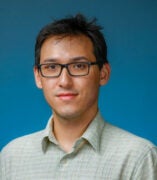
Saman Azhari is an Assistant Professor at the Graduate School of Information Production and Systems , Waseda University, Japan. His research focuses on Nanotechnology , Biosensors , and Reservoir Computing for biomedical and robotic applications. Developed self-sterilizing face masks using enzymatic power generation (2025) Engineered smart contact lenses for wireless cholesterol monitoring and ocular diagnostics (2025, 2024) Innovated CNT/PDMS nanocomposites for haptic sensors and in-sensor computing (2024, 2021) Explored 3D nanomaterial reservoir computing with SWNT/POM networks (2023, 2021) Collaborated on microwave-assisted CNT synthesis from waste materials (2018) His recent publications (2025-2023) emphasize flexible biosensors , atomic switch networks , and energy-efficient AI hardware . Key subfields include piezoresistive pressure sensing , synaptic plasticity in nanoparticle systems , and plant-insertable sucrose monitors . He holds patents for tactile sensing devices and mechanical sensors.
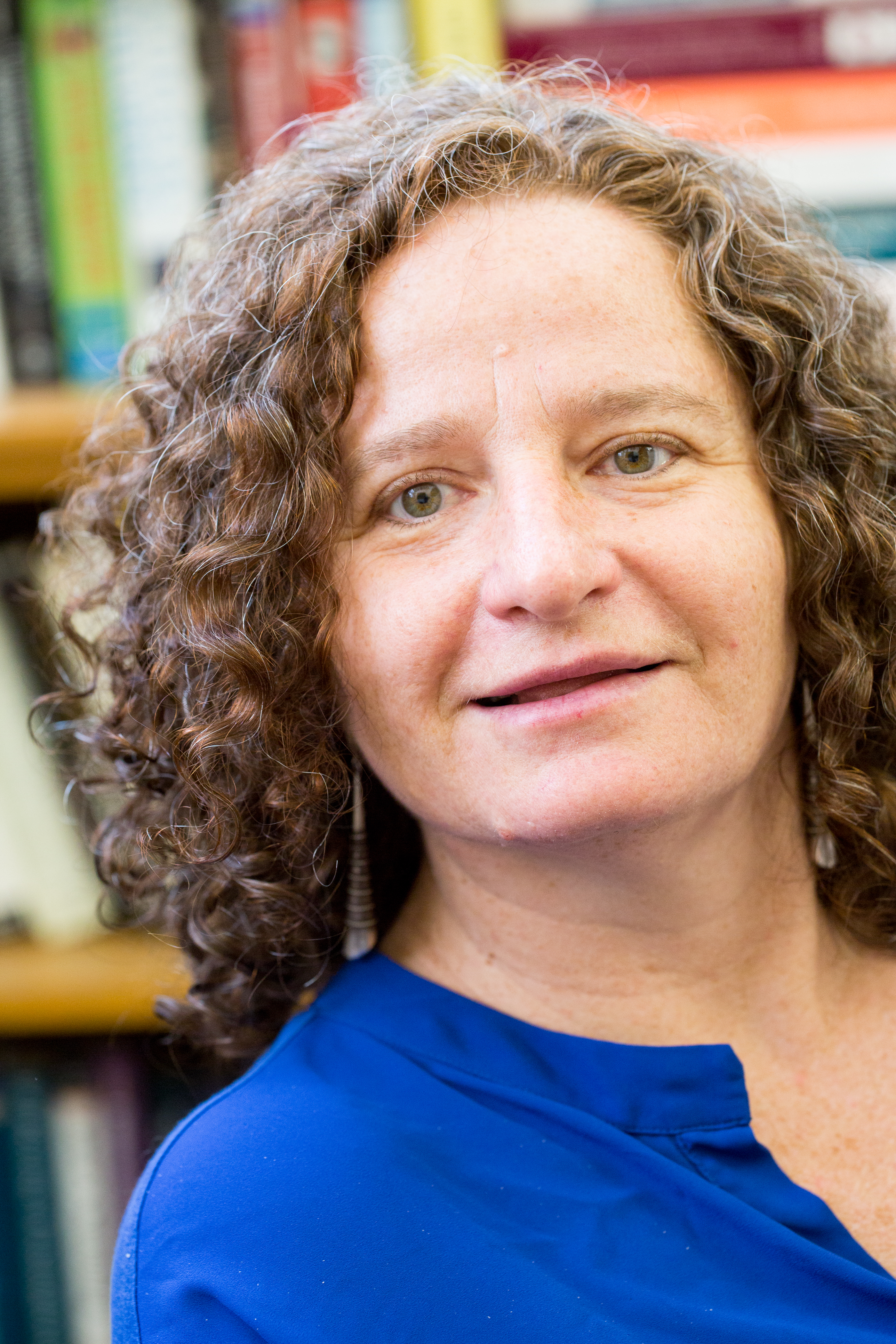
Assoc. Prof. Dr. Mariana Calin is a researcher at the Leibniz Institute for Solid State and Materials Research Dresden (IFW Dresden) in the Department of Chemistry of functional materials. With over 104 journal publications and 72 invited talks worldwide through 2025, she is a recognized expert in metallic biomaterials, particularly focusing on titanium-based alloys for medical applications. Her work bridges fundamental materials science with practical biomedical engineering challenges. Dr. Calin's research focuses on metallic materials for biomedical applications , with particular expertise in low modulus beta-type Ti-based alloys , biomaterials for hard-tissue implant applications , metallic glasses and nanostructured alloys , and ni-free Ti-based shape memory alloys . Her work addresses critical challenges in orthopedic and dental implants, particularly the mismatch between bone and traditional metallic implants, and the problem of implant-associated infections. She develops novel alloys with reduced elastic modulus to prevent stress shielding while incorporating antibacterial elements like gallium and copper. Analysis of Dr. Calin's recent publications (2020-2025) reveals a strong focus on gallium-containing titanium alloys with antibacterial properties, surface modification techniques for improved biocompatibility, and the development of metallic glasses for biomedical applications. Her research shows a clear trend toward creating 'smart' biomaterials that actively prevent infection while maintaining excellent mechanical properties for load-bearing applications. She has pioneered work on beta-type titanium alloys with gallium additions that demonstrate both antibacterial properties and suitable mechanical characteristics for orthopedic implants. Dr. Calin has been actively involved in significant European research projects including BIOREMIA (H2020-MSCA-ITN) - 'BIOfilm-REsistant Materials for hard tissue Implant Applications' and BioTiNet (FP7-MC-ITN) - 'Academic-Industrial Initial Training Network on Innovative Biocompatible Titanium-base Structures for Orthopaedics'. These projects have provided substantial funding for her research and supported numerous early-career researchers. She frequently collaborates with international institutions and industry partners to translate laboratory discoveries into potential clinical applications. At IFW Dresden, Dr. Calin works within the biomaterials research group, collaborating with scientists from various disciplines to develop next-generation metallic biomaterials. Her laboratory focuses on alloy design, processing (including additive manufacturing), comprehensive characterization, and biological testing of novel metallic biomaterials. Recent work has expanded into developing MRI-compatible metallic glasses with ultralow magnetic susceptibility, opening new possibilities for miniaturized implants that won't interfere with medical imaging.
Xiaoyu Zheng is an Adjunct Assistant Professor in the Department of Mathematical Sciences at Kent State University . With a PhD in Mathematics from the University of North Carolina at Chapel Hill (2006), he also holds an M.S. and B.S. in Mathematics from Jilin University (2001, 1999). His research bridges applied mathematics and computational modeling. Research Modeling and simulation of anisotropic fluids Mathematical modeling of elastic devices Recent Publications focus on nematic liquid crystals, nanocomposites, and computational geometry. His work explores shape effects, packing problems, and flow-induced anisotropy, with applications in soft matter and materials science. Grants NSF DMS-0807954 (PI): Mathematics of Anisotropic Electrical Properties NSF DMS-0821071 (CO-PI): High Performance Scientific Computing NSF DMS-1212046 (PI): Vorticity Dynamics in Ordered Systems
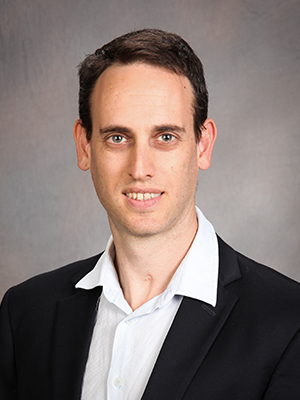
Alex Biryukov is a full professor in Cryptography and Information Security at the University of Luxembourg, affiliated with the Computer Science and Communications Research Unit (CSC) and the Interdisciplinary Centre for Security, Reliability and Trust (SnT). Previously, he served as an associate professor and visiting professor at K.U.Leuven, contributing to European standards (NESSIE) and ECRYPT consortia. His expertise spans applied cryptography, cryptanalysis, lightweight cryptography for IoT, cryptocurrency security, and privacy technologies like Tor and blockchain. Biryukov has held roles as program chair for FSE'07, SAC'10, and INDOCRYPT'15, and is a program committee member for top conferences including CRYPTO and CCS. He leads the FNR CORE project ACRYPT on lightweight cryptography for IoT and contributes to the COST Action IC1403 on cryptanalysis of ubiquitous systems. His teaching focuses on symmetric cryptography, network security, and real-world applications. Biryukov earned his M.Sc. and Ph.D. from the Technion and completed postdoctoral research at the Weizmann Institute under Adi Shamir. Research interests include cryptanalysis of block ciphers (e.g., AES, SIMON, SPECK), cryptocurrency protocols, and privacy-enhancing technologies. He has pioneered attacks on AES variants and contributed to lightweight algorithms like SPARX and Argon2. Biryukov's work bridges theoretical cryptography with practical implementations, addressing security in embedded systems and blockchain.
Ulrich (Uli) Wiesner is the Spencer T. Olin Professor of Engineering in the Department of Materials Science and Engineering at Cornell University's College of Engineering. He has been a faculty member since 1999, starting as a tenured Associate Professor and becoming a Full Professor in 2005. Since 2015, he has co-directed the MSKCC-Cornell Center for Translation of Cancer Nanomedicine (MC2TCN), a National Cancer Institute (NCI)-funded Center for Cancer Nanotechnology Excellence. Ph.D., Physical Chemistry, University of Mainz and Max-Planck-Institute for Polymer Research (1991) Diploma, Chemistry, Johannes Gutenberg University of Mainz (1988) Wiesner’s research lies at the interface of polymer science and inorganic chemistry, focusing on the self-assembly of block copolymers to create multifunctional hybrid nanomaterials. His group pioneers the use of soft matter principles to encode hierarchical structure in inorganic materials, enabling the design of materials with no natural analogues. Key areas include mesoporous oxides and non-oxides for energy applications, and the development of ultrasmall fluorescent core-shell silica and aluminosilicate nanoparticles (C-dots) for bioimaging and nanomedicine. The 15 most recent publications reveal a strong trend toward quantum materials , cancer nanotherapeutics , and super-resolution imaging . His team leverages block copolymer self-assembly to create gyroidal and diamond network nanostructures for superconducting metamaterials, while simultaneously advancing clinical translation of nanoparticles for targeted drug delivery and ferroptosis-based cancer therapy. The integration of soft matter with hard condensed matter is a unifying theme across energy, quantum, and biomedical applications. His scientific awards include: National Academy of Inventors (NAI) Fellow (2024) Ambassadeur pour la Chimie Française, CNRS (2019) Arthur K. Doolittle Award, ACS PMSE (2016) Elected PMSE Fellow, American Chemical Society (2015) National Science Foundation Creativity Award (2008) Mr. & Mrs. Richard F. Tucker’50 Excellence in Teaching Award, Cornell (2005) IBM Faculty Partnership Award (2001) Carl Duisberg Memorial Award, GDCh (1999) Wiesner has secured significant funding from the NCI and other federal agencies to support his interdisciplinary research. His group mentors students across chemistry, materials science, and biomedical engineering, contributing to advances in nanoparticle synthesis , clinical translation , and multifunctional material design . He leads a dynamic research team working at the forefront of cancer nanotechnology and quantum metamaterials , with future work focused on expanding the clinical impact of nanotherapeutics and exploring emergent phenomena in soft-matter-directed quantum systems.
Dr. Jean-Charles Stinville is an Assistant Professor in the Materials Science and Engineering Department at the University of Illinois at Urbana-Champaign (UIUC), where he also holds appointments in the Materials Research Laboratory. Previously, he served as a Specialist (2019-2021) and Associate Specialist (2015-2019) at the University of California Santa Barbara (UCSB). His research focuses on the mechanical and environmental performance of metallic materials for extreme applications, including cryogenic and high-temperature environments. He leads experimental developments in in-situ SEM mechanical characterization and materials informatics. Education: Ph.D., Solid Mechanics, Materials Science and Structures Mechanics (Ecole Nationale Supérieure de Mécanique et Aerotechnique / University of Poitiers, 2010) M.Sc., Materials Science and Mechanical Engineering (ISAE-ENSMA / University of Poitiers, 2006) M.Eng., Aeronautics, Computer Science, Materials Science, and Mechanics (ISAE-ENSMA, 2006) Research Interests: Materials Informatics Cryogenic Materials In-situ Characterization Deformation Processes High-/Low-Temperature Materials Sustainable Metallurgy Recent Research Trends: His work emphasizes high-throughput experimental methods and machine learning to predict material behavior. Recent studies focus on plastic localization in nickel-based superalloys, cryogenic performance, and microstructural heterogeneity analysis. Awards: 2024 National Science Foundation Career Award 2024 Kent D. Peaslee Junior Faculty Award 2024 Stanford/Elsevier World's Top 2% Scientists Teaching: Teaches courses including MSE 529 (Hard Materials), MSE 598 (Materials Informatics), and MSE 443 (Design of Engineering Alloys). Recognized with student excellence awards in 2023 and 2024. Labs/Teams: Leads the Stinville Research Group, focusing on experimental and computational approaches to materials design. Collaborates with UCSB and institutions globally via projects like AdvancedExperiment (YouTube) and ResearchGate.
Dr. Alexander R. Block is an Assistant Professor at the University of Illinois at Chicago (UIC) , specializing in Cryptography and Coding Theory . He focuses on the concrete security and space-efficiency of SNARKs, error-correcting codes , and locally decodable codes . Before UIC, he was a postdoctoral researcher at Georgetown University and University of Maryland , advised by Justin Thaler and Jonathan Katz. His PhD from Purdue University (2022) was supervised by Jeremiah Blocki. His research bridges theoretical and applied aspects, including field-agnostic SNARKs (CRYPTO 2024) with expand-accumulate codes, Fiat-Shamir security analysis of FRI protocols (ASIACRYPT 2023), and memory-hard puzzles in the standard model (SCN 2022). He has contributed to insertion-deletion error codes (CCC 2023) and secure computation with leaky correlations (TCC 2018, CRYPTO 2017). Dr. Block has received multiple scientific awards , including the Emil Stefanov Fellowship (2021) and Purdue Three Minute Thesis Competition Finalist (2022). His teaching includes courses like UIC's CS 505 - Computability and Complexity Theory (Spring 2025), where he emphasizes interactive proofs and zero-knowledge systems . He actively serves on program committees for CRYPTO , EUROCRYPT , and ZKProof Workshop , and has reviewed for leading journals and conferences.
Tal Malkin is a Professor of Computer Science at Columbia University's Fu Foundation School of Engineering and Applied Science, where she directs the Cryptography Lab and previously served as the inaugural chair of the Cybersecurity Center at the Data Science Institute. Her academic journey includes a BS in Math and Computer Science from Bar-Ilan University, an MS in Computer Science from the Weizmann Institute of Science, and a PhD in Computer Science from MIT. Prior to joining Columbia, she worked as a research scientist at AT&T Labs Research. Dr. Malkin's research spans foundational and practical aspects of cryptography, with significant contributions to secure computation, private search, non-malleable codes, leakage and tamper resilient cryptography, and strong public key encryption. Her work increasingly explores connections between cryptography and other fields including complexity theory, information theory, and machine learning. As evidenced by her numerous publications in top-tier venues like Crypto, Eurocrypt, and TCC, her research combines theoretical rigor with practical applications, particularly in privacy-preserving technologies and secure distributed systems. Her publication record reveals a strong focus on cryptographic foundations and security protocols, with recent work addressing challenges in tamper resilience, leakage resistance, and secure multiparty computation. The trend shows increasing integration of cryptographic techniques with machine learning applications, reflecting the growing importance of secure AI systems. Her research has consistently addressed both theoretical limits and practical implementations of cryptographic primitives. IACR fellow NSF CAREER Award Faculty awards from JP Morgan, IBM, and Google Avanessians Diversity Award from the Fu Foundation School of Engineering and Applied Science Presidential Teaching Award at Columbia University Professor Malkin has successfully mentored numerous PhD and MS students, with her current advisees including Marshall Ball, Chengyu Lin, and Negev Shekhel Nosatzki. Her extensive service to the cryptographic community includes chairing major conferences (CRYPTO 2021, CCS 2017, TCC 2016A, ACNS 2015, CT-RSA 2008) and serving on program committees for virtually all major cryptography and security conferences. She chairs the Theory of Cryptography Conference steering committee and has organized numerous workshops including the New York Area Theory Day and New York City Crypto Day. She leads the Columbia Cryptography Lab, which serves as a hub for both theoretical and applied cryptographic research. The lab maintains strong connections with industry partners and regularly publishes in top venues, demonstrating a balanced approach to fundamental research and practical security applications.
Dr. Sharon Guni is an Assistant Professor in the Department of Computer Science & Engineering at Texas A&M University, affiliated with the College of Engineering. She directs the PiStar laboratory, focusing on advancing artificial intelligence (AI) theory and its practical applications, particularly in transportation systems and multi-agent coordination. Her research integrates reinforcement learning, combinatorial optimization, and game theory to address real-world challenges such as traffic congestion and autonomous vehicle management. Ph.D. in Information Systems Engineering, Ben-Gurion University (2015) M.S. in Information Systems Engineering, Ben-Gurion University (2012) B.S. in Information Systems Engineering, Ben-Gurion University (2011) Dr. Guni’s research interests span AI, intelligent transportation systems, reinforcement learning, and multiagent systems. Notable contributions include socially optimal traffic tolling mechanisms, conflict-based search algorithms for multi-agent pathfinding, and agent-based models for epidemiological inference. She has received prestigious awards, including the NSF CAREER Award (2023) and the AAAI Outstanding Paper Award (2016). Her lab’s work on self-optimizing traffic signal controllers has been featured in WIRED Magazine and multiple news outlets. Recent projects include socially optimal non-discriminatory policies for continuous-action games and curriculum generation for reinforcement learning. Awards: Bergmann Memorial Research Award (2024), Wilson Memorial Lecture (2025), AIJ Prominent Paper Award (2020) Grants: NSF CAREER Award, Texas A&M grants supporting traffic optimization and AI research PiStar collaborates on interdisciplinary projects, including autonomous driving demonstrations with Houston high schools and pandemic mitigation strategies via agent-based modeling. The lab hosts a dynamic team of graduate students and researchers advancing AI’s societal impact.
Iftach Haitner is a Professor at Tel Aviv University's School of Computer Science, currently on leave while serving as Principal Researcher at the Stellar Development Foundation. His primary academic affiliation remains with Tel Aviv University where he maintains an active research group and supervises multiple PhD students. His educational background includes a PhD (2008) and Master's degree from the Weizmann Institute of Science under Omer Reingold and Oded Goldreich respectively, and undergraduate studies in Mathematics and Computer Science at Tel Aviv University. His research focuses on Cryptography and Computational Complexity , with significant contributions to coin-flipping protocols, one-way functions, differential privacy, and secure computation. Analysis of his 15 most recent publications reveals consistent focus on foundational cryptographic problems. His work demonstrates strong emphasis on computational entropy concepts (inaccessible entropy, next-block pseudoentropy), protocol security against adaptive adversaries, and tight complexity bounds for cryptographic primitives. The publications span top venues including STOC, FOCS, Crypto, and Eurocrypt, showing sustained high-impact research output. The Kadar Family Award for Outstanding Research (2018) Tel Aviv University Rector's Awards for Excellence in Teaching (2017, 2018) SIAM Outstanding Paper Prize (2011) Intel Israel award for outstanding PhD students (2008) Multiple best paper awards (CRYPTO 2006, ICALP 2006) Haitner has advised numerous PhD students including Noam Mazor, Jad Silbak, and Eliad Tsfadia. His research has been supported by multiple Israel Science Foundation grants (2011-2023), an ERC Starting Grant (2015-2020), and Blavatnik ICRC grants. He also maintains industry connections through roles at Coinbase (2022-2024) and previous consulting positions at Unbound Security and Team8. His professional service includes editorial work for SIAM Journal on Computing and program committee memberships for major cryptography conferences including Crypto, Eurocrypt, and TCC. He co-organizes the Greater Tel Aviv Area Cryptography Seminar and other specialized workshops.
R. Klassen is a Professor in the Department of Mechanical and Materials Engineering at Western University, located in London, Ontario. He holds a Ph.D. from the University of Toronto (1990) and has extensive industry experience as a Scientist/Engineer at Atomic Energy of Canada Ltd. (1990–1999). His research focuses on experimental studies of rate-dependent plasticity, particularly the role of microstructural interfaces (e.g., grain boundaries) in material deformation. Education: Ph.D., Metallurgy and Materials Engineering, University of Toronto (1990) M.Sc., Mechanical Engineering, University of Manitoba (1986) B.Sc., Mechanical Engineering, University of Manitoba (1984) Awards: Dr. Terry Base Memorial Teaching Award (2009, 2013) R. Klassen’s lab is equipped with high-temperature nano/micro-indentation facilities and collaborates with specialized characterization centers like Surface Science Western and the Brockhouse Institute. His research group investigates materials such as zirconium alloys, nickel-based superalloys, and magnesium, focusing on deformation mechanisms, irradiation effects, and high-temperature behavior. Current students include postdoctoral researchers and Ph.D. candidates exploring topics like ion-implanted nickel alloys and irradiated zirconium. His articles emphasize nanomechanical testing, indentation-based stress analysis, and the impact of microstructural features on material performance. Key themes include FCC alloy behavior, flow forming processes, and the mechanical properties of nuclear materials. In teaching, he instructs graduate courses on plasticity and undergraduate courses in materials science and nuclear engineering. His lab also hosts projects like micro-pillar compression and micro-sphere testing, supported by advanced microscopy and diffraction techniques.
Dr. Orlando Auciello is a Professor and Distinguished Chair in Engineering at The University of Texas at Dallas (UTD), affiliated with the Erik Jonsson School of Engineering and Computer Science. His primary appointment is in the Department of Materials Science and Engineering and Bioengineering. He holds adjunct professorships at the University of Colorado-Colorado Springs and Michigan State University. Education: PhD in Physics, National University of Cuyo, Argentina (1976) MSc in Physics, National University of Cuyo, Argentina (1973) Electronic Engineering, National University of Córdoba, Argentina (1964–1970) Research Interests: Auciello directs research on advanced materials including ultrananocrystalline diamond (UNCD), graphene, and oxide thin films. His work spans applications in MEMS/NEMS, medical devices, energy storage, and nanoelectronics. Key projects include UNCD-based coatings for industrial components and implantable medical devices, pioneered through companies like Advanced Diamond Technologies (ADT) and Original Biomedical Implants (OBI). Publications & Impact: He has authored over 500 articles, 20 books, and 20 patents. Recent work focuses on UNCD films' optical, mechanical, and biomedical applications. His 2021 Journal of Materials Science review highlights diamond-based MEMS advances. Awards: Seven R&D 100 Awards 2003 Hispanic Engineering National Achievement Award 2013 Materials Research Society (MRS) President Fellow of AAAS and MRS Advising & Grants: Auciello has advised numerous researchers and led projects funded by national laboratories and industry. His work bridges academia and industry, emphasizing technology commercialization. Labs & Teams: Active in UTD’s materials science and bioengineering labs, focusing on UNCD synthesis, biomedical applications, and energy systems. Collaborates with Argonne National Laboratory and private companies.
Luca Eva Gazdag is a researcher in the Department of Mathematics at the University of Oslo, affiliated with the Faculty of Mathematics and Natural Sciences. Her academic work spans computability theory, operator algebras, and artificial intelligence. She has held research stays at the University of Cambridge (2021–2022) and the University of Victoria (2018). She has been a board member of the Department of Mathematics (2021–present), deputy board member of the Faculty of Mathematics and Natural Sciences (2020), and active in student councils (2015–2018). Education: Bachelor in Mathematics, Informatics, and Technology (University of Oslo, 2014–2017); Master in Mathematics (University of Oslo, 2017–2019) Her research interests focus on applying computability theory to real-world problems and exploring operator algebras, particularly in the context of KMS states and product systems over monoids. She also investigates computational boundaries in AI training algorithms, leveraging her background in deep learning and neural networks. Her recent publications address theoretical frameworks in operator algebras and the SCI hierarchy's implications for machine learning. Awards: Robert and Ella Wenzin scholarship (2020), Niels Henrik Abel Memorial Fund (2020), Abel stipend (2018) Gazdag has taught extensively, including calculus, linear algebra, and programming courses at the University of Oslo. She has held teaching roles such as lecturer, teaching assistant, and exercise session leader since 2015. Her contributions to education include curriculum development and student mentorship through her council memberships. Her research stays and collaborations, particularly at the University of Cambridge, reflect her engagement with international academic networks. She actively participates in departmental governance, contributing to policy decisions and academic strategy.
Daniele Mari is a Full Professor at the École Polytechnique Fédérale de Lausanne (EPFL), affiliated with the School of Basic Sciences (SB), Institute of Physics (IPHYS), and the School of Physics (SPH). He serves as Deputy Director of the Physics School and leads research in mechanical spectroscopy and materials science. His roles include overseeing the Physics Laboratories and Physics Auditoria at EPFL. Ph.D. in Physics, EPFL, 1991 Graduate in Physics, 1986 Research at Massachusetts Institute of Technology (MIT), 1992–1993 Director of R&D at Amysa Yverdon SA, 1993–2004 Senior Scientist (MER) at EPFL, 2011 Adjunct Professor at EPFL, 2022 His research focuses on materials characterization, particularly through mechanical spectroscopy, with applications in shape memory alloys, hardmetals, composites, and refractory materials. His work spans high-temperature mechanical behavior, damping mechanisms, and microstructural evolution. He has contributed to the development of advanced composite and microwave engineering via ACME, a company he founded on the EPFL Science Park. The recent articles reflect a strong emphasis on mechanical spectroscopy applied to functional and structural materials. Key trends include the study of internal friction and elastic modulus in shape memory alloys, high-temperature damping in ceramics and composites, and microstructural analysis of materials under extreme conditions. Research spans nuclear, aerospace, and industrial applications, highlighting a multidisciplinary approach to materials physics. Scientific Awards: Materials Ciba Geigy Prize (for Ph.D. thesis) Daniele Mari has supervised numerous Ph.D. and Master’s theses at EPFL, contributing significantly to student training in experimental physics and materials science. He teaches core physics laboratory courses, including metrology, signal analysis, vacuum, and cryogenics. He has not received explicit mention of external research grants in the provided text, but his long-standing leadership of a research group and editorial role suggest sustained project support. He is a member of the editorial board of the International Journal of Refractory Metals and Hard Materials . He leads the Mechanical Spectroscopy Laboratory at EPFL, accessible via https://www.epfl.ch/labs/mechanical-spectroscopy . The lab focuses on dynamic mechanical analysis, internal friction measurements, and high-temperature material characterization. It supports both academic research and industrial collaboration, particularly in advanced materials development.
Luana Benetti serves as a Research Engineer at the International Iberian Nanotechnology Laboratory (INL), actively contributing to the Spintronics group under the R. Ferreira Research Group since October 2022. Her expertise centers on optimizing nanofabrication processes for high-reliability spintronic nano-devices within the spin dynamics research framework. Her academic foundation includes a PhD in Physics from Brazil's Federal University of Santa Catarina (UFSC), earned in 2016 through collaborative work with INL under the CAPES-INL project. This doctoral research specialized in nanoscillators based on magnetic tunnel junctions using TiW hard masks lithography. Benetti's research spans Spintronics and Nanofabrication , with deep specialization in magnetic tunnel junctions (MTJs), nanopillar optimization, and thin-film structural characterization via XRD/TEM. Her work extends to spin injection/detection in semiconductor substrates and graphene, driving innovations in nanoelectronic device reliability. Cleanroom nanofabrication for spintronic devices Material science characterization techniques Graphene-based spin transport systems Her publication record reveals a clear trajectory toward applied spintronics, with recent works focusing on neuromorphic computing hardware, energy-efficient analog-to-digital conversion, and wireless sensor networks. These contributions highlight interdisciplinary convergence across physics, electrical engineering, and materials science to solve real-world device integration challenges. Benetti has driven critical nanofabrication efforts for European projects and private industry collaborations, notably within the NOVAMAG project funded by FCT. Her technical leadership in device processing supports the Spintronics group's mission to translate fundamental research into functional spin-based technologies, particularly through partnerships with semiconductor companies.