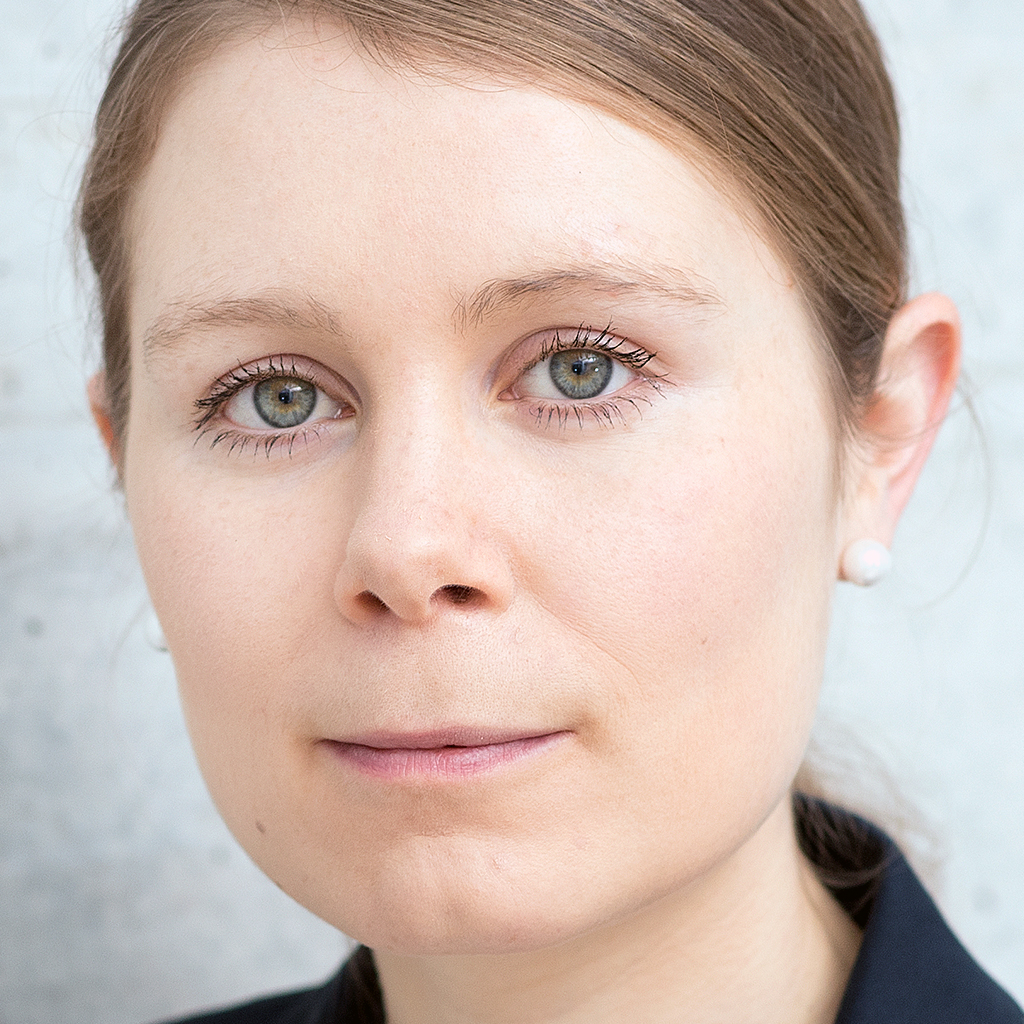
Dr. Christina Haag is a postdoctoral researcher at the Institute for Implementation Science in Health Care , affiliated with the Faculty of Medicine at the University of Zurich . She leads interdisciplinary projects at the intersection of mental health, digital health, and computational linguistics, focusing on chronic illnesses like multiple sclerosis (MS). Her work leverages free text, sensor data, and advanced analysis techniques such as hierarchical modeling and natural language processing (NLP). Doctorate from the Institute of Psychology, University of Zurich Research experience at the MRC Cognition & Brain Sciences Unit, University of Cambridge Her research explores: Daily-life mental and physical health indicators in MS Development of NLP methods for text classification and topic modeling Digital biomarker creation using wearable sensor data Mindfulness interventions for affective executive control Implementation of remote monitoring tools in healthcare Her recent publications highlight trends in applying NLP and machine learning to unstructured health data, analyzing MS activity patterns, and refining interdisciplinary research methodologies. She contributes to DSI communities including AI & Law , Health , and Ethics , and collaborates on projects like BarKA-MS and DSI-Approach . She is a core member of the UZH Digital & Mobile Health Group , working under Prof. Viktor von Wyl.
Prof. Norbert Stefan is a Full Professor at the University of Tübingen's Department of Internal Medicine IV, specializing in clinical and experimental diabetology. His work focuses on metabolic health in obesity, nonalcoholic fatty liver disease (NAFLD), and hepatokine research. Pioneered metabolic phenotyping studies in the Tübingen Lifestyle Intervention Program (TULIP) Conducted seminal NIH/NIDDK research on adiponectin's role in insulin resistance in Pima Indian populations Developed the concept of hepatokines in 2008 with his colleagues His 2025 publications span GLP-1 receptor agonists' effects on liver fibrosis, SGLT2 inhibitors' impact on liver events, and precision medicine approaches for metabolic dysfunction-associated steatotic liver disease. Current research integrates urinary peptidomics, brain insulin action studies, and advanced visceral fat quantification techniques. Scientific Awards Innovation Award of the German Society for University Medicine (2010) Heisenberg-Professorship for Clinical and Experimental Diabetology (2011) Editorial Board Member, The Lancet Diabetes & Endocrinology (2015) Senior Associate Editor, Diabetes (2021) Stefan maintains collaborative networks with Harvard Medical School, Boston Children's Hospital, the NIH, and consortia like SOPHIA IMI EU Consortium and the German Center for Diabetes Research.
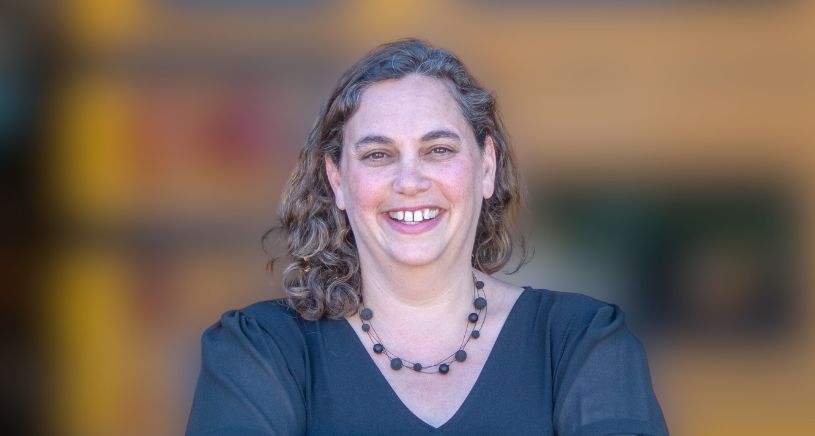
Sara Dubowsky Adar is a Professor of Epidemiology and Global Public Health at the University of Michigan School of Public Health. Her research integrates epidemiology, environmental health, exposure science, and biostatistics to investigate environmental hazards' impacts on human health, with primary focus on air pollution and noise effects on healthy aging. Her educational background includes: ScD in Environmental Epidemiology from Harvard T.H. Chan School of Public Health (2005) MHS in Environmental Health from Johns Hopkins School of Public Health (1998) BS in Environmental Engineering from Massachusetts Institute of Technology (1996) Dr. Adar's research centers on environmental risk factors for aging, particularly examining how living environments influence healthy aging trajectories through cross-disciplinary collaborations with environmental epidemiologists, climatologists, exposure scientists, economists, and demographers. Her work spans air pollution, noise exposure, cardiovascular disease, and intervention strategies to improve health outcomes. Her extensive publication record reveals strong thematic patterns across environmental exposures and neurological/cognitive outcomes, with increasing focus on source-specific particulate matter, dementia pathways, and intervention effectiveness in recent years. The research demonstrates methodological sophistication through large cohort studies, randomized trials, and harmonized international assessments. Professional recognition includes: Sandra A. Daugherty Award for Excellence in Cardiovascular Epidemiology (American Heart Association) Excellence in Teaching Award (University of Michigan School of Public Health) Dr. Adar serves as Associate Editor at Environmental Health Perspectives and previously held leadership roles including Secretary/Treasurer of the International Society for Environmental Epidemiology. Her research group actively develops evidence-based interventions to reduce environmental health hazards while maintaining strong educational commitments to trainees. The Adar Research Group operates within the Department of Epidemiology at Michigan Public Health, focusing on interdisciplinary environmental health research with particular emphasis on vulnerable populations including children, older adults, and communities in low-resource settings globally.
Christian Becker is an Associate Professor in the Department of Dermatology at the University of Münster, where he leads the Becker Research Group focused on "Adaptive and innate T cell Immunity." His work bridges immunology, dermatology, and vascular biology, with particular emphasis on understanding T cell responses in inflammatory conditions and thrombosis. Dr. Becker's research interests include: T cell function and differentiation Myeloid cell differentiation Nanoparticle-mediated tumor therapy Humanized mouse models Regulatory T cells in tissue repair Monocytes in chronic venous insufficiency His recent work has explored how cyclic adenosine monophosphate (cAMP) serves as a signaling messenger in immune regulation, how specialized regulatory T cells control venous blood clot resolution through SPARC, and how nanoparticle-based therapies can be used for melanoma treatment. His research combines molecular immunology with translational approaches to develop novel therapeutic strategies for inflammatory and thrombotic conditions. Dr. Becker has published extensively in high-impact journals including Nature Communications, Blood, and Circulation Research. His publication record demonstrates a consistent focus on the intersection of immunology and vascular biology, particularly examining how T cells and monocytes interact in thrombotic and inflammatory conditions across multiple disease contexts. His laboratory recently relocated from Mainz to Münster, where he continues to expand his research program. Dr. Becker actively mentors doctoral student Doğa Uncuer and master's student Friederike Pauline Neesen, and is seeking additional talented scientists to join his team.
Dean Tantin is a Professor of Microbiology and Immunology at the University of Utah School of Medicine, where his research delves into gene regulation in T cells, stem cells, and cancer. His lab investigates how transcription factors like Oct1, Oct4, and OCA-B control stem-like properties in cells, impacting immunological memory, autoimmunity, and cancer progression. Education: B.S. – University of California, San Diego Ph.D. – University of California, Los Angeles Research Interests: Dr. Tantin’s work centers on understanding how transcription factors regulate cell fate decisions, particularly in T cells and stem cells. His lab explores the roles of Oct1 and Oct4 in pluripotency and differentiation, the function of OCA-B in T cell memory and autoimmunity, and the therapeutic potential of targeting these factors in diseases like multiple sclerosis and type 1 diabetes. A major focus is on how these transcription factors control gene expression programs that endow cells with longevity, self-renewal, and rapid response capabilities. Article Trends: Recent publications highlight a strong emphasis on transcriptional regulation in immune cells, particularly CD4+ T cells, and stem cells. Studies explore how OCA-B and Oct factors influence T cell memory formation, autoimmune responses, and cancer development. The work bridges molecular mechanisms with translational applications, including potential drug targets for autoimmune diseases and cancer. Laboratory and Team: Dr. Tantin leads an active research group at the University of Utah, supported by training grants and core facilities. His lab employs molecular biology, genomics, and in vivo models to dissect transcriptional networks. While specific student names are not listed, his mentorship is evident through his involvement in bioscience PhD programs and collaborative projects.
Vera Benczik serves as Senior Lecturer and Deputy Head of the Department of American Studies at Eötvös Loránd University's School of English and American Studies in Budapest. She is a founding member of the EASPop popular culture research group and maintains active roles in both institutional leadership and scholarly communities. Her academic foundation includes: Studies in English and Assyiriology at Eötvös Loránd University PhD in American Studies (2011) focusing on journey motifs in Ursula K. Le Guin's science fiction Dr. Benczik's research centers on science fiction with specialization in post-apocalyptic narratives and Ursula K. Le Guin's works . She explores intersections of space/place dynamics , gender studies , and environmental themes within speculative fiction, while maintaining parallel expertise in Margaret Atwood's writings and Canadian women's literature. Her current project examines spatial representations in post-apocalyptic science fiction. Her publication trajectory reveals consistent engagement with Hungarian cultural contexts through analyses of local interpretations of American science fiction, particularly regarding apocalyptic themes. The body of work demonstrates evolving focus from Le Guin studies toward contemporary post-apocalyptic discourse with strong environmental humanities dimensions. Her scholarly recognition includes: Fulbright Research Scholarship at Notre Dame University (2017) ESSE Research grant for Liverpool University (2013) CEACS Conference grant (2011) As Deputy Director for Scientific Affairs, Dr. Benczik shapes departmental research direction while leading the EASPop research group. Her academic profile reflects sustained commitment to bridging Hungarian and international scholarship through comparative analyses of science fiction's cultural implications, with particular attention to how apocalyptic narratives function as social commentary in Central European contexts.
Andrew Sabelhaus is an Assistant Professor of Mechanical Engineering at Boston University, focusing on control-oriented approaches to soft and flexible robot locomotion. His work integrates modeling, feedback control, and mechanical design to balance autonomous decision-making with embodied intelligence, enabling safe operation in unstructured environments. His research spans soft robotics , actuator design , and feedback systems , with applications in medical devices, underwater locomotion, and autonomous systems. Recent work emphasizes real-time trajectory generation , control barrier functions , and self-sensing actuators . 2025: Soft Robotics for Cardiac Interventions 2025: Thermoelectric Actuators 2025: Differential Flatness in Motion Planning 2024: CAREER Award in Safe Autonomy Key contributions include Dismech , a discrete geometry-based simulator, and advancements in shape memory alloy artificial muscles . He received his Ph.D. from the University of California, Berkeley.
Gary Fireman, PhD is a Professor in the Department of Psychology at Suffolk University and serves as the Associate Provost for Academic Affairs. He holds a PhD and MA from Long Island University, as well as a BA from the University of Michigan. As a licensed clinical psychologist in Massachusetts, Texas, and New York, he specializes in child, adolescent, and adult therapy, and psychological assessment. PhD, Long Island University MA, Long Island University BA, University of Michigan Dr. Fireman’s research explores the interplay between emotional complexity, social reasoning, and sleep quality, particularly in populations with aggression, peer victimization, or emotional regulation challenges. His work investigates how nightmares, rumination, and prosocial behavior shape cognitive processes and psychological wellbeing. His recent publications focus on sleep disturbances, social exclusion, and emotional regulation in developmental contexts. Key trends include analyzing the bidirectional relationship between social anxiety and sleep, cross-cultural bullying narratives, and the impact of stress on sleep quality during the COVID-19 pandemic. Scientific Awards : Departmental-Level Teaching Award (2014) Dr. Fireman teaches courses such as PSYCH-510-C: Independent Study . He maintains an active clinical and research practice, with ongoing collaborations across interdisciplinary psychology fields. Contact: gfireman@suffolk.edu , 617-305-6368.
Nirvan Tyagi is an Assistant Professor at the University of Washington's Paul G. Allen School of Computer Science & Engineering, specializing in Human-Centered Computing and Software & Hardware Systems. His research focuses on cryptography, security, and privacy, with particular emphasis on building systems that provide users with precise privacy and security guarantees while enabling accountability mechanisms to counter abuse. Dr. Tyagi's research interests span cryptographic protocols that balance user privacy with necessary accountability in online systems. His work explores the tension between sender anonymity and abuse mitigation in encrypted messaging, develops novel verifiable registries using RSA authenticated dictionaries, and creates systems for distributed randomness generation. He is particularly interested in how cryptography can enable new balances between user privacy and user accountability, believing that users should enjoy strong privacy while bad actors can be held accountable for misbehavior. His publications reveal a strong trend toward developing practical cryptographic systems that solve real-world problems in privacy and security. Recent work has focused on zero-knowledge proofs, verifiable computation, and privacy-preserving protocols for distributed systems. His research consistently bridges theoretical cryptography with practical system implementations, as evidenced by the availability of code repositories for many of his publications. Early Career Award (CRYPTO 2020) Dr. Tyagi leads research in the Cryptography Group and Security & Privacy Research Lab at the University of Washington. His work has been published in top-tier venues including CRYPTO, CCS, USENIX Security, and SOSP, demonstrating both theoretical rigor and practical impact. His research has direct applications to real-world systems like encrypted messaging platforms and distributed ledgers.
Victoria Mills is a Senior Lecturer in Victorian Literature and Culture at Birkbeck, University of London, within the School of Creative Arts, Culture and Communication. She serves as Co-Director of the Birkbeck Centre for Nineteenth-Century Studies and Programme Director for the MA in Victorian Studies. Previously, she held a Research Fellowship at Darwin College, Cambridge and a Teaching Fellowship in Nineteenth-Century Literature at King's College, London, following a career in the museum sector at institutions including the Victoria and Albert Museum and The Museum of the Home. Her educational background includes: PhD, University of London MA Victorian Studies, University of London MA Museum Studies, University of Leicester BA (Joint Hons.) Ancient and Modern History, University of Oxford Dr. Mills' research spans the intersection of literature, visual and material cultures, with particular focus on museums, collecting practices, the history of the book, gender and sexuality (especially Victorian masculinities), nineteenth-century classical reception, and the Arts and Crafts Movement. Her work often examines how material objects function within literary texts and how literature engages with visual culture. She has published extensively on nineteenth-century writers including George Eliot, Oscar Wilde, Henry James, and Charles Kingsley, exploring themes of collecting, gender, and visual representation. Her recent publications reveal a consistent focus on material culture approaches to Victorian literature, with increasing attention to gender studies and museum practices. The trajectory of her work shows movement from analyzing specific literary texts to broader cultural studies of collecting practices, museum spaces, and the material conditions of reading and writing in the nineteenth century. Her research demonstrates interdisciplinary engagement with art history, museum studies, gender theory, and book history. Her scientific recognition includes: British Academy Small Research Grant (2024-2026) for 'Art, Labour and Devotion: Uncovering the Victorian Art-Workman' Co-curator of 'Victorian Sentimentality' at Tate Britain (2011) Researcher for 'The Fallen Woman' exhibition at the Foundling Museum (2015) Dr. Mills actively supervises doctoral research and teaches across the BA in English literature and MA in Victorian Studies. Her supervision focuses on nineteenth-century literature and culture related to her research interests, with current doctoral work examining topics like 'Fashioning Victorian Femininity in UK Museums.' She has received research funding including a British Academy Small Grant (2024-2026) for her project on the Victorian art-workman and has co-organized international workshops including 'Mediating History's Materiality' and 'Books in and out of time.' Her grant activity demonstrates strong external funding success and international collaboration. She is actively involved with research centers including the Centre for Nineteenth-Century Studies and the Centre for Museum Cultures, and serves on the steering committees of these institutes. Her professional engagement extends to committee membership with the British Association for Victorian Studies and fellowship in the Higher Education Academy.
Laura R. Bronstein is a distinguished academic and administrator at Binghamton University, serving as Dean of the College of Community and Public Affairs (CCPA), Director of the Institute for Justice & Well-Being, and Founding Director of the Center for Community Schools. She is a founding member of the Department of Social Work and a globally recognized leader in interdisciplinary collaboration, community schools, and aging studies. Her work bridges academia and practice, emphasizing interprofessional teamwork and equity-driven solutions. Dr. Bronstein holds a PhD from Barry University, an MSW from the University at Albany, and a BA from Union College. Her research focuses on collaborative models in social work, school-community partnerships, and aging services. She pioneered the Index of Interdisciplinary Collaboration and authored A Model for Interdisciplinary Collaboration , alongside co-editing key texts like School-linked Services (2016) and A Guide for Interprofessional Collaboration (2018). Her awards include the John A. Hartford Foundation Outstanding Dean in Aging award, Binghamton University’s Lois B. DeFleur Faculty Prize, and the Esther W. Couper Memorial Award. Notably, she was ranked among the top 2% of global scholars in her field by Stanford University in 2023. Her work integrates policy, practice, and research to address systemic challenges in education, healthcare, and aging populations. Bronstein’s contributions extend to grants and initiatives fostering community-university partnerships, particularly in rural and underserved areas. She advocates for telemental health innovations and intergenerational programs to support marginalized families. Her leadership has institutionalized collaborative frameworks across Binghamton’s academic and community outreach programs.
Jared R. Bagley is an Assistant Professor in the Department of Pharmaceutical Sciences at the School of Pharmacy and Pharmaceutical Sciences, Binghamton University, where he joined in 2024. His research focuses on the genetics and neurobiology of substance use disorders through integrated behavioral, neuroscience, genetic, and genomic approaches. His educational background includes the following degrees: Postdoctoral Fellowship at Binghamton University PhD in Neuroscience and Behavior from the University of California, Santa Barbara BA in Psychology from the University of California, Davis Bagley's research spans behavioral pharmacology, addiction neurogenetics, and genomics/transcriptomics. He employs behavioral pharmacology, advanced mouse genetics (Hybrid Mouse Diversity Panel, Collaborative Cross, Diversity Outbred), pharmacogenomics, and physiological neuroscience techniques to identify genetic factors driving addictive behaviors and their neural impacts, with specific focus on cocaine self-administration and nucleus accumbens dopamine transmission. His recent publications (2021-2025) reveal consistent emphasis on genetic architecture of substance use disorders using diverse mouse populations to study cocaine/alcohol addiction. Research integrates behavioral phenotyping with genetic mapping, highlighting polygenic influences and candidate genes (e.g., Neuron Navigator 1) in drug response, reward processing, and cognitive flexibility related to addiction vulnerability. His scientific awards include: NIH K99/R00 Pathway to Independence Career Development Award Carlisle Award, University of California, Santa Barbara (2016) Leading the Search, The Jackson Laboratory (2011) Bagley maintains extensive teaching and mentorship commitments with holistic student development philosophy emphasizing learning, curiosity, creativity, inclusion, and respect. His current NIH-NIDA K99/R00-funded research investigates how polygenic factors and candidate genes affecting cocaine self-administration alter dopamine transmission in the nucleus accumbens. The Bagley lab operates cutting-edge methodologies including fiber photometry, optogenetic fast-scan cyclic voltammetry, and advanced genetic mouse models to dissect neural mechanisms of addiction at molecular, cellular, and circuit levels.
John D. Imig, Ph.D., is a Professor and Chair of the Department of Pharmaceutical Sciences at the University of Arkansas for Medical Sciences (UAMS). He holds a B.A. in Biology from Blackburn College and a Ph.D. in Physiology & Biophysics from the University of Louisville. His research focuses on understanding how fatty acids influence cardiovascular, kidney, and metabolic functions. The Imig laboratory employs advanced techniques such as animal phenotyping, 3-D/organoid cell culturing, drug design, and omics approaches to develop therapies for cardiovascular, renal, and metabolic diseases. Dr. Imig is a Fellow of the American Heart Association and American Physiological Society, and holds memberships in prestigious organizations including the American Association for the Advancement of Science and the American Society of Nephrology. He has received notable awards such as the Arkansas Research Alliance Scholar (2022), Lewis K. Dahl Memorial Lecture (2019), and the American Heart Association Established Investigator (2004). His research emphasizes multi-target drug development for metabolic diseases, renal fibrosis mechanisms, and the role of epoxylipids in hypertension. Recent studies include investigations into chemotherapy-induced kidney and heart damage, dual enzyme inhibitors, and protective agents for organ transplantation. Collaborative efforts in drug design and omics-based approaches drive translational outcomes for clinical applications. Dr. Imig leads a lab renowned for integrative research spanning basic molecular mechanisms to preclinical drug testing. His work bridges academia and industry, addressing unmet clinical needs in cardiovascular and renal therapeutics. Ongoing projects explore novel therapies targeting epoxide pathways and nuclear receptors to combat chronic diseases.
Wenjuan Zhu is an Associate Professor in the Department of Electrical and Computer Engineering, Materials Science and Engineering, and the Micro and Nanotechnology Lab at the University of Illinois at Urbana-Champaign. She holds the W.J. "Jerry" Sanders III - Advanced Micro Devices Inc. Scholar distinction and serves as Associate Head for Graduate Programs. Her research focuses on nanotechnology, ferroelectric materials, and semiconductor devices, particularly in 2D materials and their applications in electronics and reconfigurable logic circuits. Key research areas include van der Waals heterostructures, ferroelectric transistors, and high-temperature electronics. She has received prestigious awards such as the DARPA Young Faculty Award (2020), IBM Faculty Award (2018), and NSF CAREER Award (2017). Her work bridges fundamental materials science with device engineering, advancing next-generation electronic systems. Notable contributions include non-volatile reconfigurable transistors, wafer-scale MoTe₂ growth, and ferroelectric field-effect transistors. Her research emphasizes scalable synthesis methods and industrial applicability of 2D materials. Collaborations span global institutions, reflecting her impact in nanoelectronics and materials innovation.
Erie D. Boorman is an Associate Professor of Psychology at the University of California, Davis, and a core member of the Center for Mind and Brain. His research focuses on the computational and neural mechanisms of learning and decision-making, bridging psychology, neuroscience, artificial intelligence, and behavioral economics. He leads the Learning and Decision Making (LDM) Lab, investigating how the brain constructs predictive models of the environment and uses them for decisions involving rewards, social contexts, and latent states. Education: Ph.D. in Experimental Psychology, University of Oxford (2010) MSc (Distinction) in Neurosciences, University of Oxford (2006) B.A. (Honors) in Psychology, Stanford University (2004) Research Interests: Computational models of learning and decision-making Neural basis of prediction systems (reward, social, and state prediction) Cognitive flexibility and structure learning Role of the hippocampus and prefrontal cortex in decision processes Awards: NSF CAREER Award (2019–present) Wellcome Trust Sir Henry Wellcome Postdoctoral Fellowship (2010–2014) Wellcome Trust Prize Studentship (2005–2010) His work has been supported by grants such as the NSF CAREER and Wellcome Trust Fellowships. Laboratory: The LDM Lab explores how humans form and adapt cognitive maps, leveraging multi-disciplinary approaches to understand neural and behavioral mechanisms underlying decision strategies.