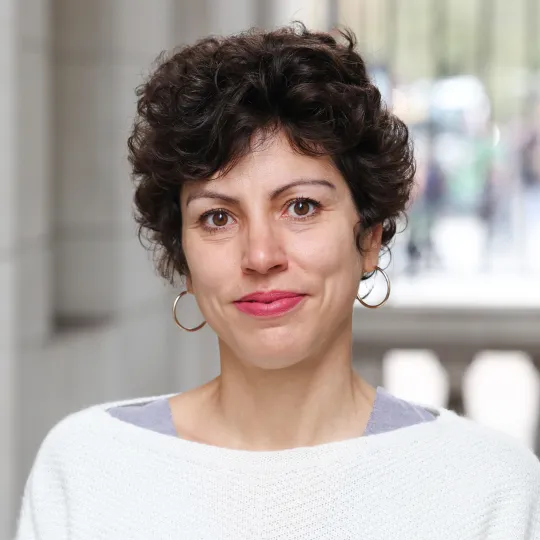
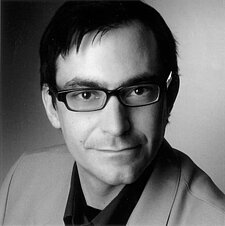
Dr Sara Marzagora is a Senior Lecturer in Comparative Literature at King’s College London’s Languages, Literatures and Cultures department within the Faculty of Arts & Humanities . She joined King’s in 2020 after completing a PhD in Cultural, Literary and Postcolonial Studies at SOAS (2016) and a Senior Research Fellowship at the University of Oxford (2014–2016). Her research focuses on Ethiopian intellectual history, global intellectual frameworks, and anti-colonial methodologies. She has held visiting positions at Northwestern University, Addis Ababa University, and others. Her work interrogates Ethiopian political thought, Amharic literature, and multilingualism in the Global South. Key projects include co-editing National Multilingualism in the Horn of Africa and South Asia (2024) and her monograph The True Meaning of Independence: Ethiopian Intellectuals in a Colonial World (1901–1919) . Her research appears in journals like Journal of African History and Global Intellectual History . Marzagora co-leads King’s research groups including Critical Economic and Political Thought and Empires and Decolonizations Hub . She developed inclusive pedagogical toolkits integrating anti-colonial archives and teaches courses on world literature, pre-1900 African texts, and comparative political thought. Her awards include a 2021 Fellowship of the Higher Education Academy and contributions to projects like the British Academy’s Fontes Historiae Africanae . She is currently a member of the Postcolonial Print Cultures International Research Network.
Ann-Charlotte Palmgren is a University Lecturer in Gender Studies at Åbo Akademi University, affiliated with the Faculty of Arts, Psychology and Theology and the Department of Culture, History and Philosophy. She holds a PhD in Gender Studies (2014) and the title of Docent (2021), equivalent to Associate Professor. Her academic work spans interdisciplinary research at the intersection of feminist urban studies, youth and girlhood studies, internet studies, and methodological innovation. Her research interests include: Feminist urban studies and spatial justice Girlhood and youth temporalities Critical autoethnography and poetic inquiry Qualitative methods and creative academic writing Ethics in ethnographic research Temporalities in literature and environmental crisis Her recent publications (2021–2025) reflect a strong thematic coherence centered on embodiment, temporality, and poetic expression in research. She frequently employs walking interviews, autoethnography, and interdisciplinary methods to explore how young people experience urban and digital spaces. Her work bridges scholarly rigor with poetic and narrative forms, contributing to evolving methodologies in the humanities. Scientific awards received include: Första pristagare i Solveig von Schoultz-tävlingen för dikter (2018) Utmärkt undervisningsförmåga in Gender Studies (2022) Honourable mention for 'Standing still: Walking interviews and poetic spatial inquiry' (2018 Wiley Area Prize) She is actively involved in academic mentoring and supervision, currently serving as main supervisor for three doctoral researchers. She has contributed to university pedagogy through workshops and seminars and plays a leadership role in research, including jury memberships, dissertation evaluations, and hosting academic visitors. Since 2023, she has been editor-in-chief of the journal Finsk Tidskrift , further amplifying her influence in Nordic humanities scholarship. Her research is supported by grants from The Turku Urban Research Programme and Svenska litteratursällskapet i Finland, focusing on girlhood in urban space and temporality in youth culture and environmental questions.
Dr. Sinno Jialin Pan is a leading researcher in machine learning and artificial intelligence at Nanyang Technological University, Singapore. His work focuses on domain adaptation, sentiment analysis, and efficient neural network optimization. Key research areas: Machine Learning, Domain Adaptation, Reinforcement Learning, Sentiment Analysis Recent publications demonstrate expertise in time-series classification (2025) using hierarchical domain adaptation, LLM efficiency (2025) through expert pruning, and graph generation (2024) via spectral diffusion. His work spans both theoretical advancements and practical applications in neural architecture optimization and adversarial learning. Scientific contributions include: 2025: Virtual-label hierarchical domain adaptation 2024: Spectral diffusion for graph generation 2024: Multilingual jailbreak analysis in LLMs Current trends show increasing focus on large language model optimization and robust neural architectures , with applications in fault diagnosis, recommender systems, and misinformation detection.
Paul Outka serves as Associate Professor in the Department of English at the University of Kansas, specializing in 19th Century U.S. literature, literature and science intersections, and critical race theory within American poetic traditions. His research bridges historical analysis with contemporary theoretical frameworks including ecocriticism, trauma studies, and posthumanism. Outka's scholarship critically examines how race, nature, and trauma are represented across American literary history from Transcendentalism to the Harlem Renaissance. His work consistently engages with aesthetic theory while deconstructing scientific narratives in cultural contexts, particularly through posthuman lenses that challenge anthropocentric perspectives. Key contributions include analyzing Whitman's racial ambiguities and exploring pharmacological impacts on memory in trauma discourse. His publication trajectory reveals evolving focus from close readings of canonical poetry toward broader investigations of literature-science intersections and posthuman ecologies. Recurring themes include environmental representation, racial formation in literary history, and the destabilization of human exceptionalism through trauma studies frameworks. Major recognitions include: 2009 ASLE Biennial Prize for Best Book of Ecocriticism (Race and Nature from Transcendentalism to the Harlem Renaissance) University of Maine Trustee Professorship (2007-08) ACLS/Mellon Foundation Fellowship for Junior Faculty (2004-05) University Honors Faculty designation at University of Maine at Farmington (2003-07) University of Virginia Dissertation Fellowship (1999-2000) Outstanding Graduate Teaching Award from UVA English Department (1994-95) While specific current advising activities aren't detailed, Outka's career demonstrates sustained commitment to graduate education through past honors faculty roles and teaching awards. His research has been consistently supported by competitive fellowships including the prestigious ACLS/Mellon award, indicating significant external validation of his scholarly contributions to literary studies and interdisciplinary humanities.
Chih-Ming Wang is a Research Fellow and Professor at Academia Sinica , serving as Deputy Director of the Institute of European and American Studies. He holds a joint appointment as Associate Professor in the International Program in Inter-Asia Cultural Studies at National Chiao-Tung University. Ph.D., Literature Department, University of California, Santa Cruz M.A., Department of Foreign Languages and Comparative Literature, National Taiwan University B.A., Department of Foreign Languages and Literatures, National Tsing Hua University His research bridges American studies and Asian studies through a transborder problematic , examining how literary and cultural exchanges between Asia and the West interact with social change. Key questions include: How do international students' experiences challenge US-centric Asian American studies? How does Taiwan's foreign literature field transform Western theories for local contexts? Recent work focuses on globalization narratives , post-Cold War geopolitics , and imperialism , particularly in relation to China's contemporary global role. He leads a research cluster on 'Chinese Contemporary' at Yang Ming Chiao Tung University's International Center for Cultural Studies, aiming to deconstruct Cold War Orientalist narratives. His 15 most recent publications span moral philosophy anthologies , transnational migration studies , and critical theory translations . Topics include R.F. Kuang's race debates , Ha Jin's immigrant novels , and Cold War legacy analyses , reflecting his expertise in Asian American literature , Inter-Asia Cultural Studies , and postcolonial theory . Scientific Awards : Outstanding Scholar Award (2025-27) Outstanding Research Award (2022-23) Scholarly Monograph Award (2022) Harvard Yenching Fellowship (2020) ASA Yasuo Sakakibara Prize Through editorial roles at journals like Router and Reflexion , he fosters transnational academic collaboration . His work consistently merges knowledge production with social movement dimensions , embodying cultural studies' transformative potential.
Monika Krause is Professor of Sociology at the London School of Economics and Political Science (LSE), specializing in human rights, humanitarianism, knowledge, expertise, social theory, and culture. She serves as Chair of the Culture Section of the American Sociology Association and on the Council of the Section on the Sociology of Human Rights of the ASA. Her research addresses comparative questions about forms of expertise, professions, organizations and fields of practice, with particular focus on humanitarian NGOs, human rights organizations, and knowledge production in the social sciences. Her scholarly work demonstrates a consistent engagement with theoretical innovation in sociology. Her recent publications reveal a trajectory moving from empirical studies of humanitarian organizations toward more foundational questions about sociological methodology, epistemology, and theory-building. She has developed concepts for sociological analysis and seeks to apply insights from a sociology of the social sciences to sociological practice itself. Her work bridges substantive empirical research with theoretical reflection, particularly examining how fields of practice vary across contexts and how sociologists can theorize from neglected cases. Professor Krause's research has been recognized with numerous prestigious awards, including the 2019 Lewis A. Coser Award for Theoretical Agenda Setting in Sociology. Her book Model Cases: On Canonical Research Objects and Sites (2021) examines concrete material research objects behind shared conversations in social sciences and humanities, while her earlier work The Good Project: Humanitarian NGOs and the Fragmentation of Reason (2014) won multiple book prizes for its analysis of humanitarian relief organizations. She has served as an elected member on the Executive Council of the Society for the Advancement of Socio-Economics (SASE) and continues to shape theoretical debates in sociology through editorial work and professional leadership. 2019 Lewis A. Coser Award for Theoretical Agenda Setting in Sociology 2015 BSA Philip Abrams Memorial Prize 2015 Hodgkinson Book Award from Association for Research on Non-profits and the Voluntary Sector 2016 Best Book Award by an International Scholar, American Sociological Association At LSE, Professor Krause convenes courses on Key Concepts: Advanced Social Theory, Seeing like an NGO: Human Rights in Practice, Classical Social Thought, and Modern Social Thought. She is part of the Politics and Human Rights research cluster and has supervised numerous doctoral students. Her research has been supported by fellowships from the Centre for Interdisciplinary Research at the University of Bielefeld and the Helsinki Collegium for Advanced Studies, reflecting the interdisciplinary nature of her work that bridges sociology, political science, and cultural studies.
Asst. Prof. Hilal Öztürk Baydere serves in the Department of Western Languages and Literatures at Karadeniz Technical University's Faculty of Arts and Humanities since 2021, advancing to Assistant Professor in 2024 after beginning her academic career at the university's School of Foreign Languages in 2013. Her institutional trajectory reflects deep integration within Turkey's translation studies community. Her academic foundation includes: Doctorate in Translation Studies (2016-2022) from Istanbul University's Institute of Social Sciences Postgraduate degree in English Translation and Interpretation (2011-2015) from Hacettepe University Undergraduate degree in English Language and Literature (2007-2011) from Hacettepe University Her research centers on Translation Studies with acute focus on machine translation's disruption of literary translation practices. She investigates translator competence evolution in AI-driven environments, creativity preservation in machine-assisted workflows, and historical/cultural dimensions of translation. Her work bridges theoretical linguistics with practical technological applications, particularly examining lexical diversity and stylistic integrity in neural machine translation outputs. Publication analysis reveals three dominant research vectors: (1) Machine translation evaluation frameworks for literary texts (25% of output), (2) Historical/cultural memory representation through translation (33%), and (3) Translator identity and competence in digital ecosystems (42%). Recent work increasingly incorporates large language models while maintaining strong philological grounding in English-Turkish translation contexts. She actively supervises student research on AI translation applications including subtitle translation effectiveness and e-commerce review sentiment analysis. Her TUBITAK-funded doctoral scholarship (2017-2022) and current membership in the European 'Language in the Human-Machine Era' research consortium demonstrate significant grant acquisition and international collaboration. Conference participation spans 8+ annual international symposia since 2017, primarily KTUDELL and NALANS events. Her ongoing projects with the European Cooperation in Science and Technology group indicate future research directions exploring human-AI symbiosis in translation pedagogy and professional practice, particularly regarding creativity metrics and cultural adaptation in neural machine translation systems.
Jeff Dangl is the John N. Couch Professor and an HHMI Investigator at the University of North Carolina at Chapel Hill, where he leads research in the Department of Biology. He has been studying plant-microbe interactions since 1989, focusing on two main areas: the plant immune system and the root microbiome. His laboratory is located in the Genome Sciences Building on UNC's historic campus, which is part of the Research Triangle Park area, a leading hub for biotechnology research. Dr. Dangl's research interests span several interconnected areas of plant-microbe interactions. His work examines how plants recognize pathogens through their two-tiered immune system consisting of extracellular pattern recognition receptors and intracellular NLR receptors. He also investigates how the plant immune system shapes the composition and function of the root microbiome. His lab uses Arabidopsis thaliana as a model system to study these interactions at multiple biological scales, from molecular and structural levels to small mesocosms. The research trends in Dr. Dangl's recent publications indicate a strong focus on understanding the molecular mechanisms of plant immune receptors, particularly NLR proteins and their activation pathways. His work increasingly integrates microbiome research with plant immunology, exploring how commensal microbes interact with and potentially modulate the plant immune system. There's also significant emphasis on the structural and functional aspects of immune receptor complexes, as well as the evolutionary dynamics of plant-pathogen interactions. HHMI Investigator John N. Couch Professor Dr. Dangl leads a diverse research group with members from several countries, emphasizing small team approaches to tackle complex problems in plant-microbe interactions. His students and postdocs benefit from access to multiple inputs about their work through this collaborative environment. His laboratory has developed expertise in genomics, ecological modeling, metabolic modeling, and both forward and reverse genetics to address questions about microbiome assembly and function. The Dangl lab maintains strong connections with the broader scientific community through collaborations and participation in major research initiatives. They work within the rich research environment of the Research Triangle Park, which includes UNC, Duke University, North Carolina State University, the North Carolina Biotechnology Center, and numerous life-science companies.
Prof. Bruce FUDGE is a Full Professor at the University of Geneva within the Department of Mediterranean, Slavic and Oriental Languages and Literatures . His academic work bridges Qur'anic studies and Arabic literature , with a particular focus on the Arabian Nights tradition. He has made significant contributions to understanding scriptural hermeneutics, Islamic identity formation, and cultural symbolism through works like Qur'anic Hermeneutics: al-Tabrisi and the Craft of Commentary (2011) and A Hundred and One Nights (2016). Research Focus : Qur'anic exegesis, medieval Islamic storytelling, and sociocultural symbolism in Middle Eastern traditions Key Publications : The Turban and the Hat (2022) Non Sola Scriptura: Essays on the Qur'an and Islam (2022) Barbe et barbus (2019) His 2025 BSOAS article critiques Stephen J. Shoemaker's historical-critical approach to Quranic origins, while his 2022 Routledge publication explores mimetic representation theories. FUDGE's analysis of beard symbolism (2019) connects ancient Mesopotamian practices to modern ISIS propaganda. He has extensively reviewed works on Islamic civilization, including Robert Irwin's Ibn Khaldun biography (2018) and Shahab Ahmed's Before Orthodoxy (2017). Recent 2023 MLA publication examines teaching methodologies for the Thousand and One Nights , and his 2018 Die Welt des Islams article compares Qur'anic theocentrism with Western tragic traditions. FUDGE's 2008 Brill publication deconstructs al-Rummānī's taḍmīn concept, influencing modern Arabic literary theory.
Emiliano Morreale is a Full Professor at Sapienza University of Rome, where he teaches in the Department of Modern Literature and Culture within the Faculty of Humanities. His academic career spans multiple prestigious Italian institutions, having previously served as a Permanent Researcher at both the University of Turin (2011-2015) and Sapienza University of Rome (2015-2020) before his promotion to Professor. His teaching portfolio includes courses such as Theories and Languages of Cinema, History of Cinema, Literature and Cinema, Italian Cinema Forms and Models, and Cinematic Language. Dr. Morreale earned his undergraduate degree from the University of Pisa (1996/1997) and completed his PhD at the University of Teramo in 2009. His scholarly trajectory demonstrates a consistent focus on Italian cinematic culture, evolving from early research on individual filmmakers to broader cultural and historical analyses of Italian cinema. Morreale's research interests center on Italian cinema history with particular emphasis on popular genres, cultural history, melodrama, and nostalgia. His work explores the intersection of cinema with literature, regional Italian identities, and social history. He has made significant contributions to understanding mafia movies, neorealism, and the relationship between Italian cinema and national identity formation. His research demonstrates how cinematic representations reflect and shape cultural memory, particularly regarding southern Italy and post-war Italian society. His extensive publication record reveals a consistent focus on Italian film history, with particular attention to genre studies, director analyses, and the relationship between cinema and broader cultural phenomena. Morreale's work spans from early cinema to contemporary productions, with a distinctive focus on how Italian cinema has represented social change, regional identities, and historical memory. His recent publications increasingly examine gender representation, transnational reception, and the evolving landscape of Italian cinema in the digital age. Premio 'Maurizio Grande' miglior libro di cinema dell'anno (2006) for 'Mario Soldati. Le carriere di un libertino' Premio 'Lo straniero' (2006) for 'Mario Soldati. Le carriere di un libertino' Premio speciale 'Efebo d'oro' miglior libro di cinema dell'anno (2009) for 'L'invenzione della nostalgia' Premio 'Domenico Meccoli' miglior libro di cinema dell'anno (2015) for 'Il cinema di Claudio Gora' Premio 'Diego Fabbri' dell'Ente dello spettacolo per il miglior libro di cinema dell'anno (2015) for 'Racconti di cinema' (with Mariapaola Pierini) Morreale has secured significant research funding through national and international projects, including the PRIN-funded 'CinCit (International Circulation of Italian Cinema)' and 'F-ACTOR. Forme dell'attorialità mediale contemporanea.' He has directed numerous academic conferences focusing on Italian cinema, including events dedicated to The Leopard, Pietro Germi, neorealism, and Mario Soldati. His institutional leadership extends to serving on editorial boards for major film journals and directing publication series such as 'Quaderni della Cineteca Nazionale.' His research supervision has fostered numerous scholarly collaborations and contributed significantly to the field of Italian film studies. Beyond his university responsibilities, Morreale has held significant roles in Italy's cultural institutions, notably serving as Conservatore at the Cineteca Nazionale (2013-2016). His work bridges academic scholarship with cultural preservation, demonstrating commitment to both theoretical analysis and practical engagement with film heritage. His involvement with the 'Il cinema ritrovato' festival programming committee further illustrates his dedication to film preservation and historical contextualization.
Dr. Kata Szita serves as an Assistant Professor of Multimedia at the School of Communications. Her expertise spans extended reality technologies, human-computer interaction, and the psychological impacts of virtual environments on human behavior and cognition. Her research delves deep into understanding how virtual and augmented reality experiences affect human-to-computer and human-to-human interactions. She investigates the cognitive and neural processes involved when users engage with virtual environments, particularly focusing on the use of avatars and XR-manipulated bodies. Her work also examines social behaviors in virtual spaces and the ethical dilemmas surrounding artificial digital agents and personal data collection in XR environments. Dr. Szita currently leads interdisciplinary and cross-sector research projects aimed at developing accessible and adaptive immersive technologies. Her collaborative efforts extend to studying cognitive processing of realism in mixed reality, virtual identities, and youth behavior in virtual environments. Her research approach combines theoretical frameworks with practical applications, contributing significantly to the understanding of immersive media experiences. Her extensive publication record from 2017-2025 demonstrates a consistent focus on emerging themes in XR research. The articles reveal an evolution from early smartphone-based viewing studies to sophisticated analyses of metaverse environments, presence measurement methodologies, and the psychological impacts of virtual identities. Her work bridges cognitive psychology, media studies, and technology development, establishing her as a leading voice in understanding human experience within digital and virtual contexts.
Prof. Dr. Markus Appel is a Professor and Chair holder at the Human-Computer-Media Institute at the University of Würzburg, specializing in Communication Psychology and New Media. His office is located in Room 02.004 at Campus Hubland Nord, Oswald-Külpe-Weg 82, Würzburg, Germany. Appel's research focuses on communication psychology, narrative transportation theory, social media effects, digital communication, and the psychological aspects of human-computer interaction. His work explores how media narratives influence self-concept, how digital environments shape autobiographical memory, and the psychological responses to emerging technologies like artificial intelligence. He has made significant contributions to understanding stereotype threat, media effects on cognitive processes, and the psychological mechanisms underlying narrative persuasion. His recent publications reveal a strong trend toward examining the psychological implications of artificial intelligence, particularly how people perceive and interact with AI systems. His work spans multiple disciplines including cognitive psychology, social psychology, media psychology, and human-computer interaction. Appel's research often employs experimental methodologies to investigate how digital media shapes human cognition, emotion, and behavior in the 21st century. Appel leads a research team that includes several doctoral researchers and postdoctoral fellows, including Dr. Fabian Hutmacher, Dr. Christoph Mengelkamp, and Dr. Tanja Messingschlager, among others. His work has been published in top-tier journals across multiple disciplines, demonstrating the interdisciplinary nature of his research program.
Dr. Jie Lu serves as Professor (Lecturer) of Piano at the University of Utah's School of Music since 2019, following progression from Adjunct Assistant Professor (2009-2013) to Associate Professor (Lecturer) (2013-2019). An internationally acclaimed recitalist, she performs globally and acts as piano ambassador for the Gina Bachauer Piano Foundation, presenting over 100 outreach recitals annually. Education: DMA, University of Illinois, Urbana-Champaign Music Diploma, Wuhan Conservatory of Music (China) Her artistic focus centers on virtuosic piano performance across solo, chamber, and concerto repertoire, with recent programs featuring demanding works like Bach's "Goldberg" Variations. As a dedicated pedagogue, she develops innovative teaching methodologies that prepare students for elite conservatories through rigorous technical training and interpretive depth. Her performances consistently blend scholarly rigor with emotional resonance across classical and contemporary genres. Artistic Output: Dr. Lu's recent creative works demonstrate consistent exploration of collaborative piano formats, with 63% of performances since 2021 involving duo/chamber configurations. Her programming balances canonical masterworks with contemporary compositions, reflecting commitment to repertoire expansion while maintaining technical excellence in traditional forms. Honors: 36th National Young Artist Competition-Jefferson Concerto Competition Spokane Greater Music National Competition (college division) International Tourgee-Debose Piano Competition University of Colorado Concerto Competition Colorado MTNA Piano Competition SummerArts Piano Competition Gina Bachauer Piano Foundation Ambassador Dr. Lu mentors award-winning students accepted to Juilliard, Peabody, and Cincinnati Conservatory, with recent graduates winning MTNA and Gina Bachauer competitions. Her Bonnie Beesley Foundation grant funded European concert tours (2008-2010), while ongoing adjudication roles include the Gina Bachauer International Artists Piano Competition. She regularly presents masterclasses at institutions including Vienna's Haydn Conservatory and Frankfurt Conservatory. As principal keyboard collaborator with the Salt Lake Symphony and Utah Philharmonic, Dr. Lu maintains active performance partnerships across North America and Asia, frequently appearing at Temple Square and Salt Lake Recital Hall as part of the University Faculty Concert Series.
Veronika Kalmus is a Professor of Sociology at the University of Tartu's Faculty of Social Sciences, Institute of Social Studies since 2015. She has held various academic positions at the University of Tartu since 1991, including Professor of Media Studies (2009-2013) and Associate Professor in Media Studies (2005-2009). She is an internationally recognized scholar with memberships in Academia Europaea and AcademiaNet, and has received numerous awards including the National Research Award in Social Sciences (2022). Her educational background includes a Doctor's Degree in Sociology from the University of Tartu (2003), a Research Master's Degree in Media Studies from the University of Oslo (1998), and additional graduate studies in Sociology at the University of Tartu. She completed her undergraduate studies in Sociology at the University of Tartu (cum laude, 1995). Kalmus's research focuses on social transformation, mediatization, datafication, and platformization in contemporary society, with particular attention to social acceleration, generational dynamics, and children's and young people's digital media use. Her work examines how digital technologies reshape socialization processes, value orientations, and intergenerational relationships. She investigates the formation of media generations, digital skills development, and the social mediation of children's media use in an increasingly datafied world. Her recent publications analyze surveillance experiences across generations, digital skills among European youth, and the impact of digital tools on mental well-being. Her work demonstrates a consistent focus on the intersection of digital technologies, social change, and generational dynamics, with methodological innovations in cross-cultural and intergenerational research. National Research Award in Social Sciences (2022) Membership of Academia Europaea (2019) Membership of AcademiaNet: Leading European Women Scientists (2020) The Badge of Distinction, University of Tartu (2017) Vitols Prize of the American Association of Baltic Studies (2010) Young Scientist Award of the Cultural Foundation of the President of the Republic of Estonia (2008) Professor Kalmus has supervised multiple doctoral students including Signe Opermann, Marit Napp, and Andra Siibak, with several receiving national recognition. She has led significant research projects including the Estonian Science Foundation grant project 'Children and Young People in the Emerging Information and Consumer Society' (2007-2010) and 'Generations and Inter-generational Relationships in the Emerging Information Society' (2011-2015). Her administrative roles include membership in the University of Tartu Senate (2017-present), Director of the PhD study programme in Sociology (2015-present), and founder of the European Media Salon (2021-2024). She leads the international research network EU Kids Online as Estonian project team leader (2007-present) and is actively involved in developing research methodologies for studying digital family life through the PlatFams project. Her work bridges academic research with practical applications for understanding digital transformations in everyday life across generations.
Dr. Haruhiko Goto is a Professor at Waseda University's School of Creative Science and Engineering, Department of Architecture. With a career spanning over four decades, he has served in multiple leadership roles including Executive Vice President and Vice President at Waseda University, and as President of The City Planning Institute of Japan. His work focuses on Urban Design , Regional Development , and Community Engagement through architectural and planning lenses. Education: PhD, MA, and BA in Architecture from Waseda University His research systematically examines environmental cognition and subjective well-being in urban contexts, analyzing how spatial experiences affect social dynamics. Recent studies investigate defensive architecture in public spaces, urban redevelopment of shrines , and post-disaster community reconstruction . His publications demonstrate strong integration between urban environmental psychology and place-based social systems . With over 14 refereed publications and 11 citations, his work addresses contemporary urban challenges including social isolation , work-life design , and cultural landscape preservation . As a leader in his field, he has received multiple planning design awards and contributed to national urban policy discussions. Scientific Awards: City Planning Institute of Japan's 60th Anniversary Commemorative Project Awards (2011) Minister of Land Infrastructure's Land Use Model Award (2010) Good Design Award (2010) Japan Institute of Architects Award (2005) As an academic leader, he has chaired numerous professional organizations including The World Society for Ekistics and The Japan Society of Lifology , and contributed to policy development through committee memberships in Japan Academic Council and Urban Planning Institute of Japan .