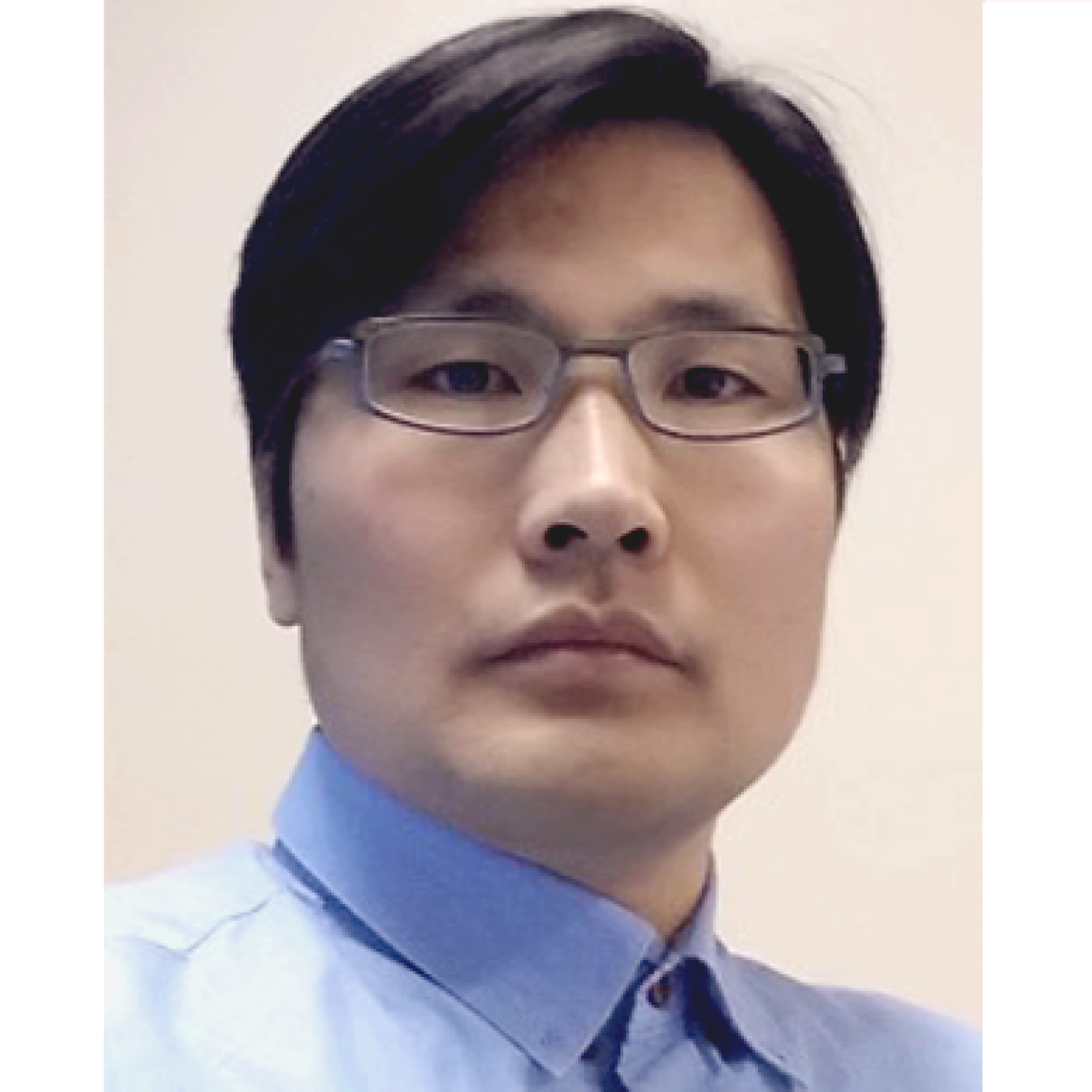
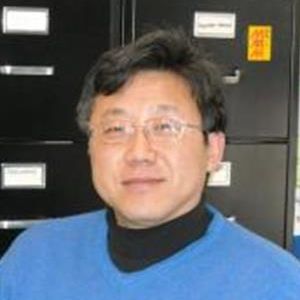
Lei Wang is the F. L. Castleman Associate Professor in Engineering Innovation at the University of Connecticut's School of Engineering, Department of Electrical and Computer Engineering. He holds a PhD from the University of Illinois at Urbana-Champaign (2001), an MS (1996) and BS (1992) from Tsinghua University, China. His research focuses on cyber-physical systems , embedded computing with renewable energy , and nanoscale integrated circuit design . Key areas include microbial fuel cells , memristor-based hardware security , and low-power signal processing architectures . Recent work trends involve Quantum-dot transistor applications for in-memory computing Adaptive LDPC decoder optimization Hardware security leveraging memristor properties Energy-efficient power management systems for underwater sensors Scientific recognition includes National Science Foundation CAREER Award (2010) F. L. Castleman Term Professorship in Engineering Innovation Professional roles encompass editorial and committee positions at IEEE and ACM journals. His work spans interdisciplinary domains in renewable energy integration , VLSI design , and bio-inspired computing systems .
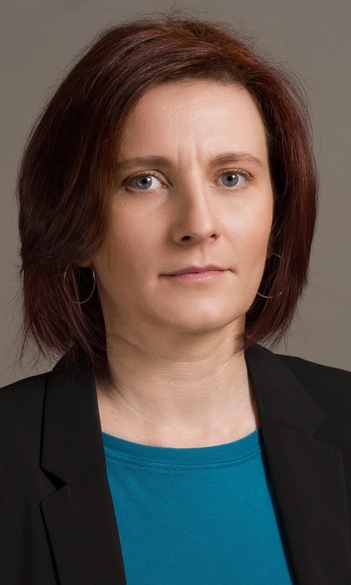
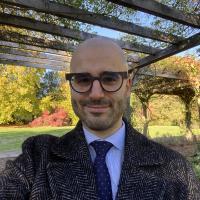
Teréz Vincze is an Assistant Professor at the Department of Film Theory and Film History within the Faculty of Humanities at Eötvös Loránd University (ELTE). She holds additional roles as an habilitated assistant professor and has been teaching at ELTE since 2004. Her work bridges film theory , historical analysis , and gender studies , with a focus on self-reflexive cinema and trauma representation . B.A. in Hungarian Language and Literature (ELTE, 2000) M.A. in Aesthetics (ELTE, 2001) Ph.D. in Aesthetics (ELTE, 2009, summa cum laude) Habilitation in Film Studies (ELTE, 2024) Vincze's research spans European cinema , with particular emphasis on Hungarian and East Asian films , modernist techniques , and cultural memory . Her publications analyze authorship , spatial concepts , and body politics in post-communist and transnational contexts. Key trends in her film analysis include self-reflexivity , trauma phenomenology , and gender representation . Her works examine directors like István Szabó , Ferenc Kósa , and Hong Sang-soo , alongside comparative studies of Bollywood and Taiwanese cinema . She has served as editor for the journal Metropolis since 1999 and as editor-in-chief (2003–2009). Her recent habilitation (2024) solidifies her expertise in film theory and contemporary cinema , with ongoing research into cinematic space and political allegory .
Isaac Kauvar is a Postdoctoral Fellow at the Department of Electrical Engineering, School of Engineering, Stanford University. He holds a B.S. in Engineering Physics specializing in Photonics, an M.S. in Electrical Engineering focusing on Imaging and Optimization, and is currently pursuing a PhD in Electrical Engineering under the co-advisement of Prof. Gordon Wetzstein. Education B.S. Engineering Physics, Stanford M.S. Electrical Engineering, Stanford His research bridges Neuroscience, Photonics, and Computational Modeling to develop advanced imaging and neural activity measurement technologies. Key contributions include optical brain-computer interfaces, light-field microscopy innovations, and neural circuit analysis across species. Recent publications highlight work in cortical imaging, emotional response modeling, and neurotechnology development. His expertise spans optical systems design, neural dynamics analysis, and brain state modulation. Contact: ikauvar@stanford.edu
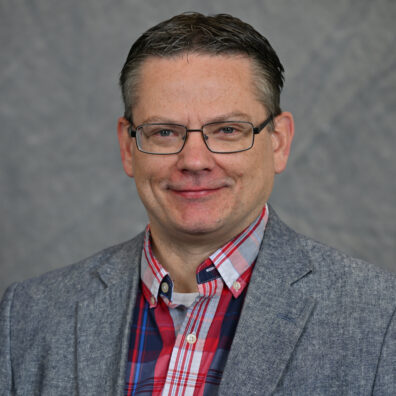
Elif Armbruster, PhD, is Professor of English in the College of Arts & Sciences at Suffolk University , Boston, where she teaches undergraduate and honors courses in American literature, women’s writing, and literary studies. A specialist in American realism (1870-1920) and women’s literary activism, she is the author of the monograph Domestic Biographies: Stowe, Howells, James, and Wharton at Home (Peter Lang, 2011) and editor or contributor to numerous scholarly volumes and classroom editions. Education PhD, American Studies, Boston University MA, American and New England Studies, University of Southern Maine BA, English and French, Haverford and Bryn Mawr Colleges Research Interests Armbruster’s scholarship interrogates the intersections of domestic space, gender, and authorship in late-nineteenth- and early-twentieth-century American literature. Her work on literary activism examines how women writers such as Louisa May Alcott and Harriet Beecher Stowe deployed realism to intervene in social debates on race, labor, and reform. She also explores material culture —houses, objects, and built environments—as narrative devices that illuminate character psychology and national identity. A second vein of research focuses on life writing , particularly autobiography and biography, to recover marginalized women’s voices and re-map the American literary canon. Publications & Current Projects Across essays appearing in Edith Wharton Review , Journal of International Women’s Studies , Legacy , and several edited collections, Armbruster has advanced new readings of canonical and understudied women authors. She is presently completing a monograph entitled Sisters by Design: The Intertwined Lives of Edith Wharton, Minnie Jones, and Beatrix Farrand , which traces the collaborative networks of female creativity in the Gilded Age. Recent and forthcoming articles (2023-2026) extend her archival research into post-Civil War Florida, #MeToo memoir pedagogy, and global receptions of Wharton’s letters. Teaching & Mentorship At Suffolk she offers courses ranging from introductory surveys ( American Literature I & II ; World Literature in English ) to advanced seminars ( Women Writing the American West ; Honor Rebel Girls and Nasty Women ) and the senior honors thesis. She invites students to interrogate nation, gender, and genre through interdisciplinary lenses that incorporate material culture, digital archives, and community-engaged learning. Contact Office: 73 Tremont St., Room 8050, Boston, MA 02108 Email: earmbruster@suffolk.edu Phone: 617-994-6437 Office Hours: Tuesday & Thursday 10:00–11:00 a.m. (in-person or Zoom by appointment)
Carlo Ricciardi is a Full Professor in the Department of Applied Science and Technology (DISAT) at the Polytechnic University of Turin, where he serves as Coordinator of basic subjects for the 2nd year of Engineering and is a member of the Interdepartmental Center CWC - CleanWaterCenter@PoliTo. His research focuses on nanomechanical sensing and memristive nanodevices, with applications spanning biomedical engineering, environmental monitoring, and brain-inspired computing systems. His research interests center on the intersection of nanotechnology and biological systems, particularly in developing bio-inspired nanodevices for sensing applications. Ricciardi's work bridges fundamental nanoscience with practical implementations in memristive devices , nanomechanical sensors , and brain-inspired computing architectures . His research group explores how nanoscale phenomena can be harnessed for biomedical applications, environmental monitoring, and next-generation computing paradigms that mimic neural processing. The recent publications reveal a strong trend toward neuromorphic computing using nanowire networks, with significant work on self-organizing systems that exhibit brain-like computational properties. His research spans multiple disciplines including nanotechnology, materials science, electronics, and biophysics, with a particular emphasis on creating sustainable and efficient computing systems inspired by biological principles. The work often combines experimental fabrication with theoretical modeling to understand complex phenomena at the nanoscale. Young Scientist Award (European Materials Research Society, 2002) Keynote Paper Finalist, Biosensors 2010 (2010) Premio Giovedì Scienza (2012) National Scientific Qualification as Associate Professor Sector 02/B1 (MIUR, 2013) National Scientific Qualification - Second Band - Sector 02/B3 (MIUR, 2013) Ricciardi actively mentors doctoral students and serves on multiple PhD program committees across Physics and Engineering disciplines. He has secured substantial research funding through competitive national and international projects including the EU-funded GreenChips-EDU (2023-2027), NEURONE (2023-2025), and MEMQuD (2021-2024) projects. His collaborations span academia and industry, with partnerships including the University of California Berkeley and various European research institutions. As Principal Investigator of the NaMeS research group, Ricciardi leads investigations into two interconnected research domains: nanomechanical sensing and memristive nanodevices. The group operates specialized laboratories including the CHILAB Laboratory in Chivasso and the Nanoscience Vibrometric Lab, focusing on developing innovative sensor technologies and neuromorphic computing architectures that draw inspiration from biological systems.
Paola Gregory is an Associate Professor in the Department of Architecture and Design at the Polytechnic University of Turin, with significant academic contributions to architectural theory, urban transformation, and the affective dimensions of space. She maintains dual academic affiliations, serving as a member of the Board of the PhD Program in 'Architecture. Theories and Design' at Sapienza University of Rome while continuing her primary appointment at Politecnico di Torino. Her research focuses on the intersection of architecture, human experience, and urban transformation, with particular emphasis on affective spaces, social content in architectural design, and the relationship between embodied cognition and built environments. Gregory examines how emotional and sensory experiences shape our interaction with urban spaces, especially in contexts of regeneration and transformation. Her work bridges architecture with neuroscience, exploring how the body perceives and attributes meaning to environments through embodied cognition. She has conducted significant research on Turin's urban transformations, particularly in the Le Vallette neighborhood and the Vallino railway yard area, examining how de-industrialized spaces transition from Fordist to post-Fordist urban landscapes. Gregory's extensive publication record reveals a consistent trajectory exploring the emotional and experiential dimensions of architecture. Her recent work increasingly integrates neuroscience perspectives with architectural design, examining how spatial configurations affect human cognition and emotion. She has pioneered approaches that consider atmosphere, empathy, and memory as central components in urban design processes, challenging traditional functionalist approaches to space. National Competition of Ideas for Projects for the Redevelopment of Areas for Neighborhood Green Spaces (1987) Publication of works and treatises by the National Research Council, Italy (1998) As an advisor, Gregory has supervised numerous theses exploring innovative intersections between architecture and other disciplines, including the relationship between architecture and neuroscience, and architecture's role in the metaverse. Her teaching spans both undergraduate and doctoral levels, with a consistent focus on integrating social content and human experience into architectural design education. She has coordinated experimental workshops that engage local communities in participatory design processes, such as the 'Qui Abito' project in Turin's Le Vallette neighborhood, which used play practices to reimagine public spaces.
Professor Kevin Kittilstved is a faculty member in the Department of Chemistry at Washington State University. His research focuses on chemically controlling the properties of inorganic materials through colloidal synthesis and advanced spectroscopic techniques. He earned his B.S. in Chemistry from Gonzaga University (2001), Ph.D. from the University of Washington (2006), and completed postdoctoral studies at the University of Washington (2010) and Université de Genève (2006–2010). Research interests include nanocrystal synthesis, semiconductor doping, and electronic structure analysis using techniques like X-ray diffraction and magneto-optical spectroscopy. His work explores applications in energy storage, electronics, and materials design. Key contributions include studies on ZnO nanocrystals, SrTiO3 systems, and molecular nanomagnets. Publications emphasize tunable electronic properties, dopant effects, and nanocrystal design. Advising has prepared students for careers in academia, industry, and engineering. His Kittilstved Lab supports interdisciplinary exploration of functional materials.
Sangtae Ha is an Associate Professor in the Computer Science Department at the University of Colorado Boulder. His research focuses on building practical computer systems spanning multiple disciplines, including machine learning/deep learning systems, networks and distributed systems, internet protocols, wireless networks, video streaming, storage systems, and security. He specializes in creating efficient and scalable solutions for real-world computing challenges. His work emphasizes interdisciplinary approaches, bridging theoretical computer science with practical system design. Key areas of exploration include optimizing neural network execution for edge computing, developing adaptive streaming protocols, and enhancing wireless network performance through novel signal processing and spectrum management techniques. Recent projects include frameworks for semantic offloading in neural networks and reinforcement learning-based cloud scheduling. No scientific awards or notable grants are explicitly mentioned in the provided materials. While no formal advisees are listed, his research team likely involves graduate students and collaborators. No dedicated labs or teams are named, though his work aligns with broader university initiatives in computer systems and networking.
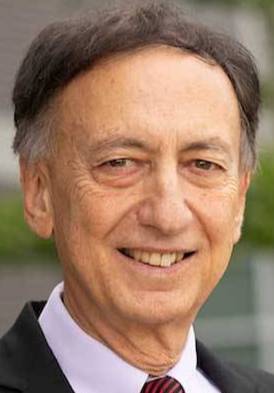
Bahgat G. Sammakia is a Distinguished Professor of Mechanical Engineering and Vice President for Research at Binghamton University (SUNY). He leads multiple research centers including S3IP (a NY State Center of Excellence), the Energy-Smart Electronic Systems (ES2) NSF IUCRC, and CHIRP (Center for Heterogeneous Integration Research in Packaging). His roles also include former interim President of SUNY Polytechnic Institute and former IBM senior technical staff member. Education: B.S. from the University of Alexandria, M.S. and Ph.D. from SUNY Buffalo. Post-doctoral fellowship at the University of Pennsylvania (1982–1983). Research focuses on heat transfer , electronics packaging , data center thermal management , and heterogeneous integration . He pioneered cooling solutions for high-density electronics and data centers, emphasizing energy efficiency and thermal reliability. Award highlights include the 2020 Heat Transfer Memorial Art Award (ASME), Fellowships in the National Academy of Inventors (2016), IEEE (2013), and ASME (1997). He holds 21 U.S. patents and over 250 peer-reviewed publications. Leadership in S3IP and CHIRP drives innovation in microelectronics and advanced packaging. His work bridges academic research with industry applications, addressing global challenges in semiconductor cooling and energy-smart systems.
Thivya KANDAPPU is an Assistant Professor at the School of Computing and Information Systems, Singapore Management University (SMU). Her research focuses on mobile and wearable computing systems for human cognition monitoring, memory modeling, and technology-enhanced learning. Education: PhD in Computer Science, University of New South Wales (2014) Research Interests span: Human-Centric Wearable Systems Cognitive State Analysis Event-Based Vision & Sensing Privacy in Pervasive Systems Health & Wellbeing Applications Smart City Mobility Analytics Selected Publications demonstrate expertise in eye tracking, cognitive monitoring, and privacy-preserving wearables, with recent work appearing in NeurIPS and ACM IMWUT. Research Grants include projects funded by MOE and A*STAR on cognitive dynamics, privacy-aware systems, and multimodal travel analytics. Professional Service involves organizing AutoMLPerSys 2025, and serving on TPCs for ACM MobiSys 25, IEEE PerCom 25, and ICDCN 25.
Dr. Liam Berriman is an Associate Professor in Childhood and Youth Studies at the University of Sussex, affiliated with the Department of Social Work & Social Care and the School of Education and Social Work. He serves as Director of the Centre for Innovation and Research in Childhood and Youth (CIRCY), one of the University's twelve 'Centres of Excellence.' Previously, he held roles in the Sussex Humanities Lab, including Lecturer in Digital Social Science and lead of the Digital Society strand. His research focuses on digital and datafied societies' impact on children and youth, including wellbeing, data landscapes, and participatory practices. He co-edits the journal Children & Society and leads projects funded by Nuffield and GambleAware, addressing topics like children's data rights, financial precarity, and gambling-related content exposure. His research interests include children's digital practices, data governance, and participatory methodologies. Notable projects include a book on 'Children Under the Data Gaze' exploring historical data practices. He volunteers as a safeguarding governor for a local primary school. Supervision interests span digital technology's role in childhood, including social media, mental health, and innovative methods. Current students focus on topics like behavior-tracking apps and youth digital learning. Recent publications (2023–2025) highlight collaborative research frameworks, ethical challenges in digital research, and cross-cultural moral landscapes in youth digital practices. His work bridges sociology, digital humanities, and social policy, emphasizing interdisciplinary approaches to child-centered studies. Awards: No specific awards listed. Grants/Projects: Nuffield Foundation projects (2021–2026, 2023–2025) GambleAware project (2024–2025) Labs/Teams: CIRCY, Sussex Humanities Lab
John Q. Xiao is the UNIDEL Professor of Physics & Astronomy at the University of Delaware's College of Arts & Sciences. His research focuses on spintronic devices, magnetism in nanostructured materials, metamaterials, and high-frequency magnetic materials. He is affiliated with the Physics & Astronomy department and has contributed to groundbreaking work on magnetic tunnel junctions, magnon dynamics, and terahertz spintronic systems. Xiao's work integrates experimental and theoretical approaches, often involving advanced characterization techniques like thin-film deposition and time-resolved spectroscopy. Research Areas: Spintronics, Magnetism, Metamaterials, Nanostructured Composites Affiliations: UNIDEL Professor role emphasizing interdisciplinary research His studies explore phenomena such as spin-polarized transport, ultrafast demagnetization, and magnon-photon interactions. Recent projects include developing flexible magnetic composites for microwave absorption and investigating quantum effects in layered materials like Fe5GeTe2. Xiao collaborates on projects involving advanced materials for high-frequency electronics and quantum sensing applications. Xiao’s publications span topics from topological insulators to nanomaterial synthesis, with a focus on practical applications in energy-efficient devices and electromagnetic systems. His work is supported by grants addressing spin-orbit torques, magnonics, and novel 2D materials.
Dr Carlos Iglesias-Crespo serves as a Stipendiary Lecturer in Spanish at Hertford College and St Peter's College, University of Oxford. His research focuses on the literary, cultural, and intellectual history of the early modern Hispanic world , with particular emphasis on intersections between medical, rhetorical, theological, and political theories of memory within Petrarchan poetry traditions. Education: Universidad de Extremadura (Classics/Spanish Philology), University of Cambridge (MPhil/PhD in Spanish) Previous Affiliation: Affiliated Lecturer at Cambridge Using a transhistorical approach , he investigates embodied cognition and bodily representations in literature. His work connects Aristotle's theories with Viktor Shklovsky's formalism, analyzing poets like Juan Boscán, Fernando de Herrera, and Juan de Jáuregui. Research outputs include peer-reviewed articles on topics ranging from Garcilaso's sonnets to Giulio Camillo's memory theater. Recent publications examine cognitive poetics, rhetorical synthesis, and the translatio imperii et studii in early modern Spanish texts. Scientific support includes grants from: "La Caixa" Foundation Arts and Humanities Research Council (AHRC) Cambridge Trust He teaches preliminary and final honors school papers at Oxford, covering medieval/modern languages, and contributes to academic editing as co-editor of key volumes on Iberoamerican corporeal history and global Spanish poetry.
Pamela Souza is a Professor in the Department of Communication Sciences & Disorders at Northwestern University's School of Communication. She holds secondary appointments in Linguistics and Otolaryngology-Head and Neck Surgery. Her research focuses on auditory and cognitive factors influencing hearing aid outcomes, particularly in aging populations. She is affiliated with the Hearing Aid Laboratory and is a Fellow of prominent organizations like the Acoustical Society of America and the American Speech-Language-Hearing Association. Dr. Souza earned her PhD in Audiology from Syracuse University. Her clinical interests include severe hearing loss management, tinnitus, and hearing assistive technologies. She has led NIH-funded projects investigating hearing aid signal processing and cognitive-auditory interactions. Notable contributions include developing the Spectral Correlation Index and advancing remote hearing aid assessment methods. Her research spans 30+ years, with over 100 peer-reviewed articles. Key themes include speech recognition in complex environments, working memory effects on hearing aid performance, and individualized treatment approaches. She has pioneered studies on reverberation and noise reduction technologies, emphasizing real-world acoustic challenges. Dr. Souza's grants include NIH R01 awards for studying hearing aid outcomes and compression dynamics. She has advised multiple trainees and collaborates internationally on projects like the E-LOSPHERES initiative. Her lab develops tools like the Portable Automated Rapid Testing (PART) system for auditory research.
Sergio Montoya is a researcher at the University of California, San Diego's Center for Memory and Recording Research (CMRR), where he has worked since 2021. Previously, he conducted research at the Naval Information Warfare Center Pacific from 2017 to 2021, focusing on spintronics, cryogenic devices, and electromagnetic packaging. Montoya earned his Ph.D. in Electrical Engineering from UCSD in 2016, specializing in chiral magnetic phases and hybrid skyrmions. Current Position: Scholar, CMRR, UC San Diego Past Affiliation: Naval Information Warfare Center Pacific Education: Ph.D. in Electrical Engineering (UCSD, 2016) His research spans topological phases in nanostructured materials , spintronics , secure magnetic storage erasure , and superconducting sensing . Key techniques include X-ray/neutron scattering and thin-film magnetism studies. Recent publications (2016-2022) focus on skyrmion dynamics, magnetic phase transitions, and metamaterials, with applications in secure data storage and advanced sensing. Articles appear in Phys. Rev. B , Nature Comm. , and ACS Nano . Scientific Awards: U.S. DoD SMART Scholarship Montoya's work addresses fundamental challenges in magnetic storage, spintronic device stability, and novel material phases. His collaborations span institutions like Stanford and Lawrence Berkeley National Laboratory.