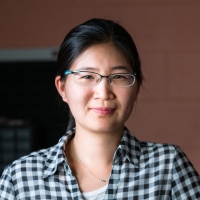
Vivienne Sze is a Professor at MIT's Department of Electrical Engineering and Computer Science (EECS), part of the School of Engineering. Her research focuses on energy-efficient computing systems for machine learning, computer vision, and video compression, with applications in autonomous systems, healthcare, and IoT. She leads projects integrating algorithmic innovations with hardware design to achieve low-power solutions for embedded and mobile devices. Her work has been recognized through prestigious awards, including the Primetime Engineering Emmy Award for co-developing the HEVC video compression standard and multiple faculty awards from tech giants like Google and Qualcomm. She co-authored the book *Efficient Processing of Deep Neural Networks*, emphasizing practical hardware-software co-design strategies. Research Interests: Energy-Efficient Machine Learning Accelerators Video Coding and Compression Standards Embedded Systems and Mobile Computing Processing-in-Memory (PIM) Architectures AI for Health Monitoring and Digital Health Sustainability in AI Infrastructure Publications highlight trends in: Optimizing DNNs for edge devices Innovations in entropy coding and CABAC Memory-efficient Gaussian-based algorithms Energy-aware design for photonic computing Awards include IEEE conference best paper awards and industry recognitions for her contributions to video coding and hardware acceleration. Her lab's collaborative efforts span academia and industry, aiming to bridge theoretical research with real-world deployable systems.
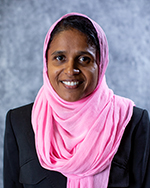
Sheheeda Mariam Manakkadu is an Associate Professor in the Department of Computer Science at Southern Illinois University Carbondale. She teaches graduate courses in Data Structures, Object-Oriented Programming, Data Mining, Text Mining, and Cloud Architecture, along with undergraduate courses in Operating Systems and Data Analytics. Ph.D., Computer Engineering M.E., Biomedical Engineering Her research spans robotics, data analytics, and parallel computing. Key areas include adaptive control of robotic manipulators, big data processing via MapReduce, IoT resource allocation, and computational bioinformatics for protein networks. Recent publications focus on neuro-sliding mode control, cloud architecture, and scalable recommender systems. She actively participates in academic service as a committee member for graduate courses and the IEEE Erie Section. Her work integrates machine learning, optimization algorithms, and distributed systems across diverse domains.
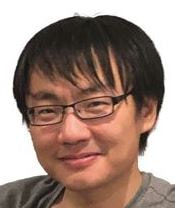
Xiaojun Ruan is an Associate Professor in the Department of Computer Science at California State University, East Bay. He holds a Ph.D. in Computer Science from Auburn University (2011) and a B.E. in Computer Science and Technology from Shandong University (2005). His primary research focuses on energy-efficient systems, cloud computing optimization, storage systems, and security-aware resource management. He has extensive experience in thermal modeling, parallel I/O performance, and distributed deep learning frameworks. Dr. Ruan’s work emphasizes balancing energy efficiency, reliability, and performance in storage and cloud environments. Notable projects include DuoFS (hybrid storage system), energy-aware VM allocation strategies, and securing cloud infrastructure against co-residence attacks. His research bridges hardware-software co-design principles with practical system optimizations. His publications span topics from NVMe SSD performance optimization to text augmentation for spam detection, reflecting a blend of storage systems and machine learning applications. He has actively contributed to improving Shuffle I/O in big data processing, thermal management in clusters, and secure virtualization techniques. Dr. Ruan collaborates on interdisciplinary projects involving distributed computing, cybersecurity, and real-time systems. His lab focuses on deploying energy-efficient solutions while maintaining robust reliability, evidenced by over 50 peer-reviewed articles and ongoing contributions to academic conferences.
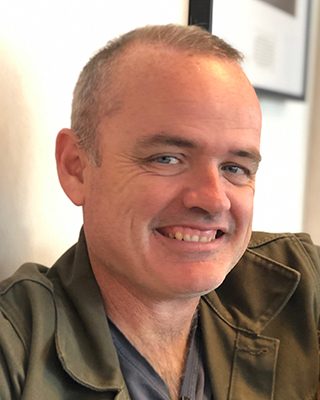
Aleksandar Jevremović is a Full Professor at the Faculty of Informatics and Computing, Singidunum University (Belgrade, Serbia), and holds multiple academic and professional roles. He is the Serbian representative at the UNESCO IFIP Technical Committee on Human-Computer Interaction since 2018. He has served as Vice-Dean of his faculty (2015–2018) and held visiting professorships at institutions like Ss. Cyril and Methodius University (North Macedonia) and Tallinn University (Estonia). His research focuses on cybersecurity, IoT, AI, and e-learning innovation. Education and Affiliations: External Researcher at the Mathematical Institute of the Serbian Academy of Sciences and Arts Visiting Scholar at Cyprus Interaction Lab (Cyprus University of Technology) Alumni/Postdoc Researcher at Tallinn University's HCI Group Member of IEEE and the Informatics Association of Serbia Research Interests: Jevremović’s work spans cybersecurity (e.g., intrusion detection, secure IoT protocols), human-computer interaction (HCI), AI-driven education tools, and neurotechnological applications like EEG-based assessment systems. He emphasizes practical solutions for digital safety, such as children’s online protection and cryptographic key generation from biometric data. Grants and Projects: Member of the External Advisory Committee for the EU-funded ONTOCHAIN project (2022–2023) Mentor for training schools like AAPELE Training School and NET4Age-Friendly initiatives Trainer in IoT, cybersecurity, and health promotion programs across Europe Labs and Teams: He collaborates with interdisciplinary teams on projects like CASPER (Children Agents for Secure and Privacy Enhanced Reaction) and led the development of WIDE, a collaborative web development education platform.
Rakesh Kumar is an Associate Professor in the Department of Computer Science (IDI) at the Norwegian University of Science and Technology (NTNU) , affiliated with the Computer Architecture Lab (CAL) within the Faculty of Information Technology and Electrical Engineering . Prior to joining NTNU, he held postdoctoral and research associate positions at Uppsala University and the University of Edinburgh, and interned at Intel Barcelona Research Center. Research Interests include improving large-scale datacenter efficiency through microarchitecture and memory system optimizations, hardware/software co-designed processors, dynamic code translation, vectorization, and serverless function execution. His work explores ready-aware instruction scheduling, branch prediction organization, and address translation mechanisms. Scientific Contributions span publications at top-tier conferences like MICRO (2024, 2023, 2018, 2016) HPCA (2020, 2019, 2023, 2022) ASPLOS (2018) DATE (2019, 2021) Journal articles appear in ACM Transactions on Computer Systems and IEEE Computer Architecture Letters . Awards include Intel Spontaneous Level II/Excellence Award (2014) Best Presentation Award at HiPC-SS08 (2008) Best Paper Award at National Conference on High Computing Technologies (2008) Distinguished Artifact Award at MICRO 2023 PhD Supervision involves advising students like Roman Kaspar Brunner, Elias Orrem, and Truls Asheim on topics spanning microarchitecture, vector units, and runahead execution policies.
Joakim Jaldén is a Professor at the Division of Information Science and Engineering, School of Electrical Engineering and Computer Science (EECS), KTH Royal Institute of Technology. He holds a Ph.D. in Electrical Engineering from KTH (2007) and completed post-doctoral studies at Vienna University of Technology (2007-2009). With affiliations at Stanford University and ETH Zürich, his academic journey reflects global expertise. 2002: M.Sc. in Electrical Engineering, KTH 2007: Ph.D. in Electrical Engineering, KTH 2007-2009: Post-Doctoral Researcher, Vienna University of Technology Jaldén's research spans Signal Processing , Wireless Communications , and Biomedical Data Analysis . He pioneered MIMO communications and later developed ELISpot/FluoroSpot analysis algorithms commercialized by Mabtech AB. His work on cell migration tracking (IEEE ISBI 2012) and distributed optimization (ECO-PANDA method) demonstrates interdisciplinary impact. Key publication trends include Hidden Markov Models for DNA sequencing, Reinforcement Learning in communication systems, and Low-Complexity Beamforming for MU-MIMO networks. His 2024 work on mmWave MIMO beam coherence showcases continued leadership in wireless channel modeling. Scientific recognition includes: IEEE Signal Processing Society 2006 Young Author Best Paper Award Ingvar Carlsson Career Award 2009 (Swedish Foundation for Strategic Research) IEEE ISBI 2012 Best Paper Award Bitplane Awards (2013-2015) for cell tracking challenges As Program Director of KTH's 5-year Electrical Engineering Degree Program (CELTE) since 2016 and Vice-Chair of EECS Faculty Board , Jaldén leads academic initiatives. His collaborations with industry (e.g., Mabtech AB) and roles as examiner for advanced courses in communication systems highlight his educational impact.
Mark Oskin is an Adjunct Professor at the School of Computer Science and Engineering , University of Washington , focusing on Software & Hardware Systems . He leads the Sampa Group and collaborates on projects like HammerBlade and BlackParrot. University: University of Washington School: School of Computer Science and Engineering Department: Department of Electrical & Computer Engineering His research spans Computer Architecture , Parallel Computing , and Graph Processing , with additional expertise in Quantum Computing , Open Source Hardware , and Distributed Shared Memory . Ongoing work includes custom manycore devices for graph execution and open-source RISC-V designs. Past projects like Grappa and WaveScalar advanced distributed memory and dataflow execution. Recent publications include BlackParrot: An Agile Open Source RISC-V Multicore for Accelerator SoCs (IEEE Micro 2020) and Perceptual Compression of Video Storage and Processing Systems (SoCC 2019), reflecting trends in hardware-software co-design, quantum systems, and energy-efficient video processing. Best Paper Award , USENIX ATC 2015 IEEE Micro Top Picks , 2009 Mark has advised numerous students, including Amrita Mazumdar (IoT video compression startup), Brandon Lucia (CMU), and Steve Swanson (UC San Diego). He co-founded Corensic, a startup exploring deterministic multithreaded execution.
Jeremiah M. Blocki is an Associate Professor in the Department of Computer Science at Purdue University. His research focuses on cryptography, usable privacy and security, and authentication protocols. He joined Purdue in Fall 2016, previously completing his PhD at Carnegie Mellon University and a postdoc at Microsoft Research New England. Education: PhD in Computer Science, Carnegie Mellon University, 2014 Bachelor of Science in Computer Science, Carnegie Mellon University, 2009 Research Interests: Dr. Blocki’s work emphasizes applying theoretical computer science to practical security challenges, including password management, memory-hard functions, and differential privacy. His recent projects include developing distribution-aware password throttling and analyzing the post-quantum security of cryptographic algorithms. Publications: His research spans cryptographic protocols, security mechanisms, and privacy-preserving algorithms. Notable contributions include advancements in memory-hard functions (e.g., CRYPTO 2016, 2019) and differential privacy techniques (e.g., ITCS 2025). Recent work explores the intersection of cryptography with quantum computing and sublinear-time algorithms. Awards: NSF CAREER Award (2021) Purdue Seed for Success Award (2019) Allen Newell Award for Excellence in Undergraduate Research (2009) Advising & Grants: Supervised multiple PhD students and postdocs. Key grants include the NSF CAREER award ($591k) and a $10.7M HACCLE project (IARPA) for secure multi-party computation. Labs/Teams: Co-leads the HACCLE project, focusing on high-assurance cryptographic languages and environments. Active in Purdue’s CERIAS security initiatives.
Fan Yao is an Associate Professor in the Department of Electrical and Computer Engineering at the University of Central Florida's College of Engineering and Computer Science. She received her Ph.D. in Computer Engineering from The George Washington University in 2018 and currently leads the Computer Architecture and Systems Research (CASR) lab. Her research focuses on the intersection of computer architecture, security, and machine learning, with particular emphasis on hardware-based security vulnerabilities and defenses. Dr. Yao's research interests span computer architecture, hardware and system security, AI security, energy-efficient computing, and cloud computing. Her work addresses critical security challenges in modern computing systems, particularly focusing on microarchitecture attacks, hardware-based model tampering in deep learning systems, and information leakage threats in emerging non-volatile memory systems. She has developed innovative defense mechanisms against cache timing channels, branch predictor vulnerabilities, and GPU-based side channels. Her recent publications demonstrate a strong focus on AI security (particularly Deep Neural Network vulnerabilities), hardware security (including cache and branch predictor attacks), and secure memory architectures. The research shows an evolution from traditional computer architecture topics toward the security implications of AI hardware and emerging memory technologies, with increasing emphasis on practical attacks and defenses in real-world systems. NSF GW I-Corps Site Grant Award, 2018 Best Dissertation Award, GWU, 2018 The Norris & Betty Hekimian Engineering Endowment Fellowship, GWU, 2017 Top Picks in Hardware and Embedded Security, 2019 NSF CAREER project award, 2024 Dr. Yao currently leads multiple NSF-funded research projects including 'Understanding and Taming Deterministic Model Bit Flip Attacks in Deep Neural Networks' (NSF SaTC, 2020-2023), 'Towards Secure-By-Design Integration of Emerging Non-Volatile Memory in Future System' (NSF CNS, 2020-2023), and 'Architecting Secure-by-Design Memristor-Based Memories' (NSF CNS, 2019-2022). She has successfully mentored numerous PhD students, many of whom appear as first authors on top-tier conference publications, demonstrating her commitment to graduate education and research mentorship. As the leader of the CASR lab, Dr. Yao oversees a vibrant research group focused on building secure-by-design, efficient, and advanced future systems through novel techniques spanning hardware, computer architecture, and systems. The lab actively publishes at top computer architecture and security conferences including ISCA, MICRO, HPCA, IEEE S&P, and USENIX Security, with multiple papers accepted to these venues annually. The group has developed several influential tools and frameworks for security analysis, including proof-of-concept code for BranchSpec exploits that has been widely cited in the hardware security community.
Dr. Dipanwita Thakur serves as Assistant Professor at the Department of Computer Engineering, Modeling, Electronics and Systems (DIMES) at the University of Calabria, Italy since July 2023. She is an active member of the European Cooperation in Science & Technology (COST Action CA22104) focusing on cybersecurity and serves in the IEEE Future Networks Working Group for Artificial Intelligence/Machine Learning. Previously, she held a 15-year Assistant Professor position at Banasthali University, Rajasthan, and has industry experience at TechMahindra and C-DAC. Education: Ph.D. in Smart Healthcare from West Bengal University of Technology, Kolkata M.Tech. in Software Engineering from Banasthali Vidyapith MCA from NIELIT, Government of India B.Sc. from University of Calcutta Her research pioneers Green Artificial Intelligence with emphasis on energy-efficient federated learning and smart healthcare applications. She develops privacy-preserving human activity recognition systems using multimodal data fusion, focusing on performance evaluation and environmental sustainability. Her work bridges theoretical machine learning with practical healthcare solutions, optimizing AI systems for reduced carbon footprint while maintaining clinical efficacy through hardware-algorithm co-design and quantization techniques. Recent publications reveal a strong trajectory toward sustainable AI, with increasing focus on energy-aware federated learning frameworks, multimodal medical segmentation, and non-IID data handling. Her work consistently addresses the critical balance between model accuracy, convergence speed, and energy consumption across edge devices, with growing emphasis on quantization techniques and hardware-algorithm co-design for real-world deployment. Scientific Awards: Elevated to IEEE Senior Member (2024) Dr. B.C. Roy Memorial Scholarship for outstanding 10th Board results (1992) Student Science Seminar Award by West Bengal Government (1990) Dr. Thakur actively mentors students as evidenced by her congratulations to advisee Farwa for paper acceptances. She serves as Associate Editor for Information Fusion (Elsevier) and IEEE Sensors Journal, and holds editorial roles at Scientific Reports. Her research is advanced through COST Action CA22104 and IEEE working groups, though specific grant details aren't listed in the source material. She has organized key workshops including Green-Aware AI 2024 and Green Federated Learning at IJCNN 2025. She leads research within the MONAI community on data quality and federated learning, and contributes to IEEE IoT and Future Networks initiatives. Her work with the COST Action CA22104 Behavioral Next Generation in Wireless Networks connects cybersecurity with sustainable AI development, while her Missouri S&T visiting scholar position focuses on energy optimization for federated learning systems.
Pejman Lotfi-Kamran is an Associate Professor at the School of Computer Science, Institute for Research in Fundamental Sciences (IPM), Tehran, where he also serves as the head of the school and director of Turin Cloud Services. His research focuses on computer architecture, systems, approximate computing, and cloud computing, with an emphasis on performance and energy efficiency for big-data applications. His educational background includes: Ph.D. in Computer Science, EPFL (2013) M.Sc. in Electrical and Computer Engineering, University of Tehran (2005) B.Sc. in Electrical and Computer Engineering, University of Tehran (2002) Lotfi-Kamran's research spans computer architecture innovations, including data and instruction prefetching, networks-on-chip, coherence protocols, and many-core processor design. He has pioneered work on scale-out processors, neural acceleration for GPUs, and approximate computing frameworks. His publications appear in top venues such as ISCA, HPCA, MICRO, and IEEE/ACM journals. His recent articles reflect a strong trend in improving system performance through intelligent prefetching, efficient NoC designs, and energy-aware architectures. Key themes include reducing frontend bottlenecks, optimizing cache behavior, and enhancing data delivery in large-scale systems. His work often combines cross-stack insights with hardware-software co-design for real-world impact. Scientific awards and recognitions include: 2017 CADS Best Paper Award 2016 Young Faculty Award from Iran's National Elites Foundation 2012-2013 Intel Ph.D. Fellowship 2012 and 2011 HiPEAC Paper Awards 2011 HPCA Best Student Paper Finalist Multiple academic honors from University of Tehran He has advised several graduate students including Paria Darbani, Ali Ansari, Mohammad Bakhshalipour, and Farid Samandi, many of whom have co-authored significant papers. His teaching spans institutions like Sharif University of Technology, Iran University of Science and Technology, and EPFL, covering advanced computer architecture and multiprocessor systems. He has led research projects such as AxBench and CloudSuite on Simics, and contributed to national initiatives like Iran’s National Grid. He is actively involved in tool development and continues to shape research in next-generation computing systems. He leads the Turin Cloud Services initiative at IPM and is deeply engaged in both theoretical and applied aspects of computer systems research, with ongoing work in neural acceleration, approximate computing, and scalable architectures.
Yale N. Patt serves as Professor of Electrical and Computer Engineering, holding the Ernest Cockrell, Jr. Centennial Chair in Engineering and recognized as a University Distinguished Teaching Professor at The University of Texas at Austin's Cockrell School of Engineering. His academic career spans decades with continuous teaching activity through Fall 2024 and Spring 2025 semesters. Professor Patt's research focuses on computer architecture and high-performance computing systems, specifically targeting innovations five to ten years beyond current industry capabilities. His philosophy emphasizes producing foundational knowledge for future technology development while educating students who will design tomorrow's computing systems. His work spans computer architecture, systems and networking, with particular focus on high performance substrate and microarchitecture design. His research group HPS (High Performance Systems) has made significant contributions to memory systems, branch prediction, and parallel computing architectures. Professor Patt's publications reveal consistent focus on fundamental computer architecture challenges, particularly addressing memory systems, branch prediction mechanisms, and performance optimization techniques that enable future computing systems. His work bridges theoretical innovation with practical application requirements. His exceptional contributions have been recognized with numerous prestigious awards: 2014 - Member, National Academy of Engineering 1996 - IEEE/ACM Eckert-Mauchly Award 2016 - Benjamin Franklin Medal, Franklin Institute 2000 - ACM Karl V. Karlstrom Outstanding Educator Award 1995 - IEEE Emanuel R. Piore Award 2013 - IEEE Harry H. Goode Award 1999 - IEEE Wallace W. McDowell Award 2011 - IEEE B. Ramakrishna Rau Award 2005 - IEEE Charles Babbage Award 2017 - Friar Centennial Teaching Fellowship (the highest teaching award at UT Austin, with recognition as the only Engineering professor to win it in the last 25 years) Professor Patt has mentored numerous PhD students throughout his career and co-authored the influential textbook 'Introduction to Computing Systems: From Bits and Gates to C and Beyond' (3rd edition, 2019). His teaching philosophy emphasizes deep understanding of computing fundamentals, reflected in his 'Ten Commandments for good teaching.' He has developed foundational courses including EE460N (Computer Architecture), EE306, and EE382N.19 (Microarchitecture), with teaching records dating back to at least 2000. He leads the High Performance Systems research group, which continues to advance computer architecture research while training the next generation of computer engineers. Workshops celebrating his 75th birthday in 2014 ('Yale@75') and 80th birthday in 2019 ('Yale:80-in-2019') demonstrate the global respect he has earned in the computer architecture community.
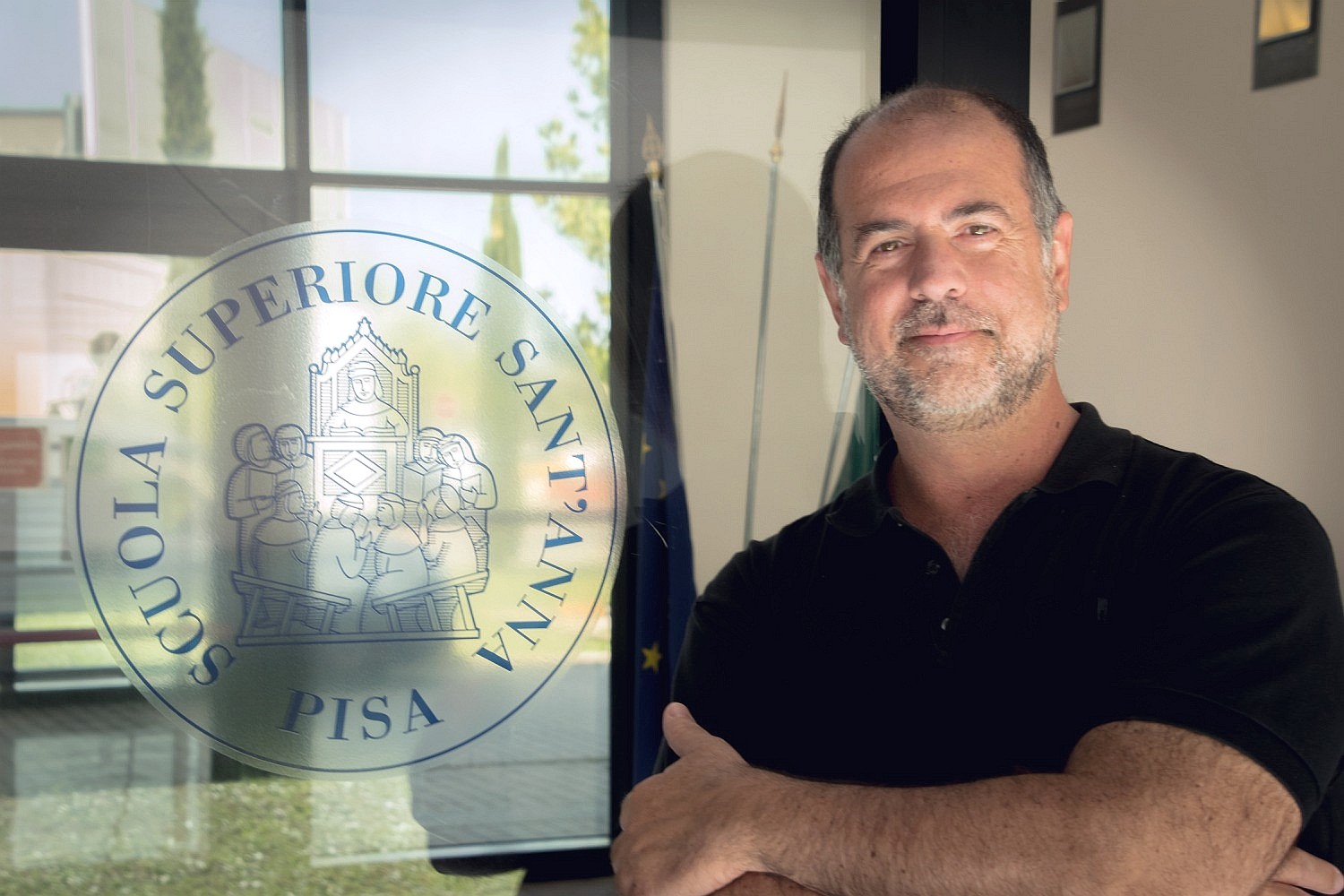
Giorgio C. Buttazzo is a Full Professor of Computer Engineering at the Scuola Superiore Sant'Anna in Pisa, Italy, and founder/director of the RETIS Lab. His career includes roles at the University of Pavia and co-founding Evidence s.r.l. (a real-time embedded systems company). He holds an IEEE Fellowship (2012) and the IEEE TC RTS Outstanding Technical Contributions Award (2013). Education: Electronic Engineering (University of Pisa, 1985), Master in Computer Science (University of Pennsylvania, 1987), PhD in Computer Engineering (Scuola Superiore Sant'Anna, 1991). Affiliations: TeCIP Institute, RETIS Lab, and leadership roles in IEEE Technical Committees. Research focuses on real-time systems, robotics, and AI integration. He has authored 10 books, over 300 papers, and pioneered frameworks like the ERIKA/SHARK kernels. Current projects include RETICULATE, OPERAND, and NANCY (5G networks). Teaching includes Real-Time Systems, Neural Networks, and Jazz Guitar Improvisation. Advised over 150 master and PhD students. Active in conferences like ECRTS, RTSS, and RTAS.
Hongxin Hu is a Professor and Associate Chair in the Department of Computer Science and Engineering at the University at Buffalo, State University of New York (SUNY). His research spans security, networking, and machine learning, with publications across top conferences including security (S&P, CCS, USENIX Security, and NDSS), networking (SIGCOMM and NSDI), machine learning (NeurIPS, ICML, and EMNLP), and human-computer interaction (CHI and CSCW). His work has been funded by NSF (SaTC, CNS, IIS, OAC, SOC), USDOT, VMware, Amazon, Google, and Dell. Dr. Hu earned his PhD in Computer Science and Engineering from Arizona State University in 2012. His academic journey has led him to become a prominent researcher in cybersecurity with a strong publication record and significant research impact. Dr. Hu's research interests encompass a wide range of topics at the intersection of security, networking, and artificial intelligence. His work focuses on Emerging Network Technologies and Security (5G/Future-G, NFV, SDN, Edge computing), Machine Learning for Security and Privacy , Security and Privacy in IoT and Cyber-Physical Systems , and AI for Social Good (addressing online abuse, unsafe children's games, and cyberbullying). His interdisciplinary approach has enabled him to tackle complex security challenges through innovative solutions that combine networking expertise with machine learning techniques. His recent publications demonstrate a strong trend toward applying large language models and advanced machine learning techniques to security challenges, particularly in content moderation, vulnerability detection, and privacy protection. The research spans multiple domains including voice assistant security, IoT security, network security, and social media safety, showing a consistent pattern of addressing real-world security problems with cutting-edge technical approaches. IEEE Big Data Security Senior Research Award (2025) ACM SACMAT Test-of-Time Award (2024) NSF CAREER Award (2019) Multiple Best Paper Awards from ACM ASIACCS (2022), ACSAC (2020), IEEE ICC (2020), and ACM SIGCSE (2018) Amazon Faculty Research Award (2022) First Place Award in ACM SIGCOMM 2018 Student Research Competition Dr. Hu has successfully advised multiple PhD students, including Nishant Vishwamitra who joined UT San Antonio as a tenure-track Assistant Professor. His research has been generously funded by major agencies and industry partners. As an active member of the academic community, he serves as Associate Editor for IEEE Transactions on Dependable and Secure Computing and Computers & Security, and has held numerous leadership roles in major security conferences including TPC Co-Chair for ASONAM 2025 and IWSPA 2024/2025. Dr. Hu leads a vibrant research group that has produced significant contributions in network security function virtualization, intrusion detection systems, and privacy-preserving technologies. Current projects include developing LLM-assisted vulnerability detection systems, defenses against jailbreak attacks on large language models, and security mechanisms for emerging networking technologies. His team's work on IoT security, voice assistant applications, and online content moderation has received wide recognition and press coverage.
Nectarios Koziris is a Professor at the Department of Computer Science , National Technical University of Athens (NTUA) , and former Dean of the School of Electrical and Computer Engineering . His research focuses on Parallel and Distributed Systems , Computer Architecture , and Cloud Computing . Key Research Themes: Compiler-OS-Architecture Interaction, Datacenter Hyperconvergence, Sparse Matrix Optimization, Quantum Computing, FPGA Virtualization Leadership: Founder of ~okeanos (Europe's largest public Cloud IaaS), Co-founder of GFOSS , Member of IEEE Computer Society Greece, Advisor to Arrikto Inc. His work has led to over 180 publications with 5800+ citations (h-index 33) , including two Best Paper Awards (IPDPS 2001, CCGRID 2013) and Intel Recognition (2015). He has supervised 12 PhD students and participated in 15+ EU projects as coordinator or consortium partner. Scientific Leadership: Program Co-Chair for Europar 2012 , Organizer for IPDPS , ICPP , SC conferences, and active member in Cloud Computing Expert Groups for the European Commission.