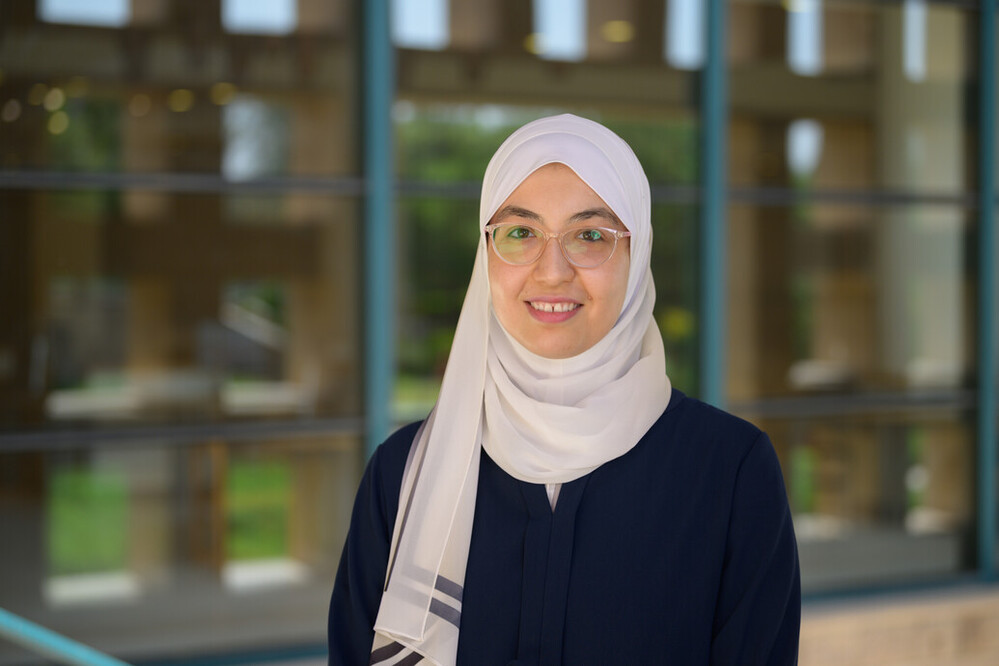
Dr. Lucy Natarajan is an Associate Professor at the Bartlett School of Planning, University College London . She specializes in participatory urban planning, social infrastructure, and crisis response, with a focus on integrating community knowledge into policy. Her work spans public, private, and charitable sectors, and she leads UCL’s Health Citizenship research cluster.
Javier Verdu Mula is a Professor at the Departament d'Arquitectura de Computadors (Universitat Politècnica de Catalunya - UPC) and a key researcher at the CRAAX - Centre de Recerca d'Arquitectures Avançades de Xarxes . His work focuses on computer architecture, parallel processing, and networking systems. Fields of Research include RISC-V virtualization, multithreaded processor optimization, and performance analysis of stateful networking applications. Scientific Awards include the BDigital Global Congress (2015) and Wayra Barcelona (2012) recognitions. Collaborations span institutions like Barcelona Supercomputing Center and researchers such as Manuel Alejandro Pajuelo, Mateo Valero Cortes, and Mario Nemirovsky. His recent publications address RISC-V hypervisor extensions, deep packet processing in parallel architectures, and statistical thread assignment models. He also holds patents in hardware virtualization and resource control systems.
Kate Arrington is a Professor in the Department of Psychology at Lehigh University, internationally recognized for her research on cognitive control and multitasking. She earned her Ph.D. in Cognitive Psychology from Michigan State University in 2002 and completed an NRSA-funded postdoctoral fellowship at Vanderbilt University before joining Lehigh in 2005. Role: Chair of the Department of Psychology Contact: 610.758.4230 | cma205@lehigh.edu | Chandler-Ullmann room 130 Research Interests: Cognitive psychology, cognitive control mechanisms, human multitasking, and applied cognition. She investigates interactions between stimulus-driven and goal-directed processes in task selection and performance, exploring individual and situational variability in cognitive control. Developed the voluntary task switching paradigm for lab-based studies Applied research in intelligent tutoring systems and multimodal learning interfaces Scientific Awards & Leadership: NIH and NSF grant funding for multitasking and cognitive control research Rotating Program Officer, NSF Perception, Action, and Cognition program (2015-17) Chair, Women in Cognitive Science (from 2021) Director, Lehigh’s Institute for Data, Intelligent Systems, and Computation Teaching: Cognitive Psychology, Cognition in Practice and Policy, Research Methods and Statistics.
Charles Reiss is an Assistant Professor in the Computer Science Department at the University of Virginia, focusing on teaching and research in computer systems and education. He holds a PhD from UC Berkeley (2016) and has a strong background in computer architecture and distributed systems. His research interests include computer science education methodologies, cloud computing, and systems optimization. Education: B.S. Computer Science (Georgia Tech, 2008), M.S. Computer Science (UC Berkeley, 2011), Ph.D. Computer Science (UC Berkeley, 2016). Teaching: Reiss has taught courses such as CS 3130 (Computer Systems and Organization), CS 3330 (Computer Architecture), and CS 4630 (Defense Against the Dark Arts). His courses emphasize hands-on learning with tools like HCLRS, an educational hardware description language. Awards: Winner of the SoCC 2021 Test of Time Award for work on Google cloud trace analysis. Contributions: Developed educational software like HCLRS and CPU cache exercises. Active in curriculum design for computer systems and security education.
Enrique Javier Díez Gutiérrez is a prominent academic researcher and education policy analyst focusing on critical educational reforms, public vs. private education dynamics, and the intersection of pedagogy with democratic and social justice principles. His work critiques neoliberal educational policies, the commercialization of educational systems, and the influence of religious institutions in public funding. Collaborating with educators and advocacy groups like 'For Another Educational Policy' and 'Uni-Digna,' he emphasizes equitable access to quality education and the role of schools in fostering democratic citizenship. Key research interests include: the dangers of far-right educational centralization, the ethical implications of vocational training privatization, and the necessity of addressing Spain's post-Franquismo historical memory in curricula. He consistently advocates for public education as a cornerstone of social cohesion and criticizes corporate and religious encroachment into educational infrastructure. His articles frequently analyze policy failures in teacher training, the commodification of educational services, and the need for pedagogical methodologies that prioritize student well-being over standardized metrics. Collaborations with scholars like Francisco Imbernón and Loles Dolz highlight his network within progressive educational advocacy circles.
Sergio G. Golombek serves as Visiting Professor of Pediatrics at SUNY Downstate Health Sciences University, where he joined in December 2021. He holds dual leadership roles as Director of the Neonatal-Perinatal Medicine Fellowship Program and Interim Medical Director for the NICU at University Hospital at Downstate. Board certified in pediatrics and neonatal-perinatal medicine, Dr. Golombek is a Diplomat of the American Board of Pediatrics and Fellow of the American Academy of Pediatrics (FAAP). His educational foundation includes: Medical Degree: University of Buenos Aires, Argentina Internship & Residency: R. Blank Memorial Hospital for Children, Des Moines, IA Fellowship: The Children's Mercy Hospital, Kansas City, MO Dr. Golombek's research centers on neonatal pulmonology and persistent pulmonary hypertension of the newborn (PPHN) , with pioneering work in family-centered NICU care including 24/7 parental access implementation. His Latin American initiatives through SIBEN focus on improving newborn and maternal health via education and volunteerism. With over 200 publications, he has led multicenter trials since 1996 including NHLBI studies on inhaled nitric oxide and ventilation strategies for preterm infants. Analysis of his 2017-2023 publications reveals dominant themes in clinical guideline development through SIBEN, emphasizing evidence-based protocols for mechanical ventilation, neonatal sepsis, patent ductus arteriosus management, and high-risk infant follow-up. His work consistently integrates family perspectives and addresses resource-limited settings across Latin America. Professional recognition includes: Fellow of the American Academy of Pediatrics (FAAP) Diplomat, American Board of Pediatrics, Neonatal-Perinatal Medicine As Fellowship Program Director, Dr. Golombek mentors neonatal-perinatal medicine trainees while leading the NICU team at University Hospital. His grant portfolio includes site-PI roles for NHLBI's inhaled nitric oxide study and NEWNO trial, alongside continuous NIH-funded multicenter research since 1996. His volunteer work in Latin America establishes educational frameworks for family-centered care implementation. Dr. Golombek leads SUNY Downstate's NICU operations and the Sociedad Iberoamericana de Neonatología (SIBEN), which develops clinical consensus guidelines and educational resources adopted across 20+ Latin American countries.
Dina G. Mahmoud is an Assistant Professor at the Department of Computer Science and Engineering at The American University in Cairo (AUC). She earned her Ph.D. in Computer and Communication Sciences from EPFL, Lausanne, Switzerland (2019-2024), where she was a CYD Fellow and collaborated with Dr. Mirjana Stojilović and Dr. Vincent Lenders. Her academic activities include teaching Digital Design, Computer Organization, and Applied Data Structures at AUC. Ph.D. (2019-2024): School of Computer and Communication Sciences, EPFL B.Sc. (2014-2019): Electronics and Communications Engineering with minor in Mathematics, AUC Her research focuses on heterogeneous computing systems , emphasizing security and reliability at the hardware and electrical levels . She investigates fault injection attacks in FPGA systems, particularly in multitenant cloud environments, and has demonstrated the first FPGA-to-CPU fault-injection exploit. Recent publications highlight trends in FPGA security , including power-wasting attacks, hardware Trojans, undervolting exploits, and fault tolerance mechanisms. Her work bridges hardware-software co-design , cloud security , and reconfigurable computing . CYD Fellow (first doctoral recipient) Google Generation Scholarship (2022, EMEA) IC Doctoral Fellowship at EPFL She has served as Head/Teaching Assistant at EPFL for courses like Computer Architecture and Information, Calcul, Communication, and as Head Undergraduate Teaching Assistant at AUC for Digital Logic Design. She contributes to the technical program committee of IEEE Industrial Electronics Society’s ETFA conference.
Prof. Dr. Petra Jansen holds the Chair of Sports Science at the University of Regensburg's Faculty of Humanities since 2008. She leads a research group focused on sports psychology, cognitive development, and mindfulness interventions. Her educational background includes a Habilitation in General Psychology (Heinrich Heine University Düsseldorf, 2005) and a PhD in Cognitive Psychology (Gerhard Mercator University Duisburg, 1999). Her research explores the intersection of movement, cognition, and emotion, with emphasis on: Mental rotation abilities and embodied cognition Mindfulness applications in sports and education Sustainable consumption behaviors and character strengths Developmental psychology across lifespan Gender differences in spatial cognition Recent publications (2024-2025) demonstrate strong trends in mindfulness interventions, sustainability psychology, and advanced methodologies in mental rotation studies. Work frequently employs virtual reality, implicit attitude measurements, and cross-cultural validations, with emerging focus on developmental applications in children and adolescents. As principal investigator, she oversees multiple projects including studies on embodied cognition, mindfulness curricula, and sport-specific psychological interventions. She mentors doctoral candidates and coordinates the university's doctoral committee (Chair 2012-2021). Additional roles include mindfulness teacher certification and dance therapy qualifications enhancing her interdisciplinary approach.
David Hildenbrand is a Researcher at the Department of Informatics , Technical University of Munich , specializing in Memory Management and Virtualization Techniques for operating systems. His work focuses on hypervisors , virtual machine memory dynamics , and hardware virtualization . His research interests include: Dynamic Resizing of VM Memory Paravirtualization Interfaces Operating System Support for Emerging Architectures Binary Optimization His recent publications address memory allocation inefficiencies in virtualized environments. He holds a Master of Science in Computer Science from TUM (2019) and is pursuing his PhD externally at the Chair of Computer Architecture and Parallel Systems.
Dr. Chernova Irina Viktorivna is an Associate Professor at Zaporizhzhia Polytechnic National University's Faculty of Business Technologies and Economics, Department of Business and Management. With a Candidate of Philological Sciences degree (1999) and Master's in Architecture (2021), her expertise bridges Ukrainian cultural history with modern business communication. Specializes in Management Psychology , Public Relations , and Corporate Branding Developed 120+ scientific works including 3 Web of Science/Scopus publications Led international educational projects with Prometheus and DVV International Her research examines: Branding and Digital Marketing strategies Communication Systems in post-conflict management Historical Preservation in urban development Recent publications analyze: Ukraine's national image in global economics Ukrainian business communication challenges Psychopedagogical motivation frameworks
Tsichlas Kostas serves as an Associate Professor in the Department of Computer Engineering and Informatics at the University of Patras, Greece, within the Division of Applications and Foundations of Computer Science. His research spans fundamental and applied computing domains with active involvement in the ML@Cloud laboratory. His expertise centers on algorithmic innovation across multiple dimensions: Memory-optimized algorithms for primary/secondary storage systems Distributed environment data structures and computational geometry Physics-informed computing and complex network analysis Specialized domains including alphanumeric and graph algorithms Recent publication trends (2022-2025) demonstrate concentrated research in historical graph management systems, temporal network analysis, and physics-computing intersections. Key contributions include vertex-centric partitioning strategies, temporal community detection frameworks, and machine learning applications for energy data motif discovery. He maintains active laboratory affiliations with the LARGE-SCALE CLOUD DATA MACHINE LEARNING WORKSHOP (ML@Cloud lab), Combinatorial Algorithms Laboratory, and Distributed Systems and Telematics Laboratory, contributing to Greece's computational research infrastructure.
Dr. Justin Jin is a Professor at the DeGroote School of Business, McMaster University , and serves as Director of the CPA Ontario Centre for Accounting Research in Regulatory Reporting within the Department of Accounting and Financial Management. His research interests include: Societal implications of accounting practices Public policy and accounting Corporate governance Political uncertainty in finance Bank transparency and financial literacy Anti-corruption and poverty mitigation Recent publications analyze corporate social responsibility, leadership vacuums, environmental impacts of political decisions, and financial reporting transparency, reflecting interdisciplinary intersections of accounting, economics, and policy studies. As a full-time faculty member, Dr. Jin contributes to academic leadership while maintaining an active research agenda in financial and regulatory domains.
Tomás A. Palma is an Assistant Professor at the School of Psychology, University of Lisbon. His research focuses on social cognition, specifically how social categories like race, gender, and age influence face recognition, metamemory, and stereotype formation. He has contributed to understanding the cross-race recognition deficit (CRD) and strategies to mitigate its effects. Research Themes: Cross-Race Recognition Deficit, Metacognitive Awareness, Social Categorization, Stereotyping Dynamics Key Collaborations: James Correll, Luís Garcia-Marques Recent publications explore CRD mechanisms, eye gaze patterns, and the application of large language models to behavioral science predictions. His work also addresses hiring discrimination, stereotype plasticity, and cultural variations in gender perception. While no specific awards or student mentorship details are mentioned, his teaching includes advanced psychology research methods and statistics.
Amin Rahimian is an Assistant Professor at the University of Pittsburgh , affiliated with the Swanson School of Engineering and leading the Sociotechnical Systems Research Laboratory . He is also associated with the Intelligent Systems Program and the Institute for Cyber Law, Policy, and Security . PhD in Electrical and Systems Engineering (University of Pennsylvania) Master’s in Statistics (Wharton School) His research spans networks, data, and decision sciences , focusing on robust autonomy , control of large-scale networked systems , satellite constellations , and decision support in mission-critical applications . His work bridges applied probability, statistics, algorithms, and decision/game theory to address challenges in online social networks, public health, e-commerce, cyberinfrastructure, and warfare . Recent publications highlight his expertise in differential privacy, network resilience, and social contagion dynamics. Awards include the Meta Foundational Integrity Research Award (2023) and Pitt Cyber Accelerator Grant (2022) . He has served on program committees for conferences like ACM Economics and Computation and IISE Annual Conference.
Stephen C. Adolph is the Stuart Mudd Professor of Biology at Harvey Mudd College. He is affiliated with the Department of Biology and actively engages in teaching and research. His primary roles include directing undergraduate research and collaborating with institutions like Claremont McKenna College. Education: B.S., Stanford University (Biological Sciences) M.S., Stanford University (Biological Sciences) Ph.D., University of Washington (Zoology) Dr. Adolph’s research focuses on the physiological, evolutionary, and behavioral ecology of lizards. His lab investigates topics such as stochastic population dynamics in Xantusia lizards, optimal foraging in arboreal lizards, physiological ecology of lizard eggs, and thermal performance curves. Past projects include tuatara conservation, tarantula locomotion, and lizard thermal biology. The articles of Dr. Adolph span thermal biology, ecological modeling, evolutionary adaptation, and statistical methodology. His work often integrates mathematical approaches with empirical data, emphasizing interdisciplinary research in ecology and physiology. Dr. Adolph collaborates with researchers like Lars Schmitz (Claremont McKenna College) on lizard ecology. He has mentored undergraduate researchers such as Arman Khasru and Callie Dawson, with publications frequently involving student co-authors.