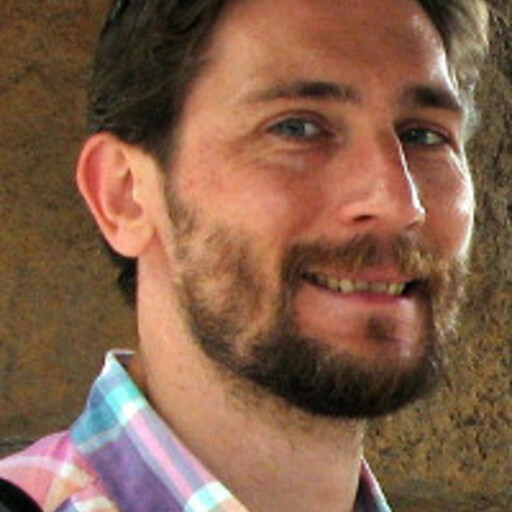
Panagiotis Hadjidoukas is an Associate Professor and Head of the Laboratory for Computing at the Computer Engineering and Informatics Department, University of Patras, within the School of Engineering. His work focuses on high-performance computing systems and parallel programming models. His research spans parallel and distributed computing , runtime support for parallel programming models , and automation of AI/ML workloads . Key contributions include developing the torc runtime system for task parallelism and pioneering work in extreme-scale scientific simulations. His interests bridge theoretical computer science with practical applications in scientific computing and AI acceleration. Notable achievements include the ACM Gordon Bell Prize Winner (2013) for 11 PFLOP/s cloud cavitation simulations and Finalist (2015) for in-silico lab-on-a-chip microfluidics. His software tools ( torc_lite , torcpy ) enable efficient parallelism across diverse architectures. Doctor of Philosophy (2003), University of Patras Master of Science (2001), University of Patras Diploma in Computer Engineering (1998), University of Patras As Head of the Laboratory for Computing, he leads infrastructure development while maintaining active research collaborations with IBM Research and ETH Zurich. His teaching portfolio includes graduate courses on high-performance computing for data sciences and parallel processing principles.
Sharon Meraz is an Associate Professor at the University of Illinois at Chicago (UIC), specializing in political communication and networked journalism. Her work bridges mass media theory with digital technologies, examining how social media shapes political engagement and activism. She holds a PhD in Journalism from the University of Texas at Austin. Education PhD in Journalism, University of Texas at Austin Research Interests Meraz explores the intersection of social media and political discourse through methodologies like social network analysis, natural language processing, and big data visualization. Her work investigates phenomena such as network agenda setting, viral content dynamics, and the role of digital platforms in political mobilization during elections and social movements. Recent Research Trends Her publications analyze partisan exposure in political blogs, rumor propagation in digital spaces, and the role of Twitter in shaping political discourse during events like the Arab Spring and U.S. elections. She emphasizes theoretical innovations like networked framing and memetics in media studies. Teaching Courses include social network theories, media effects, and seminars on social media and political communication.
Dr. Magdalena Zabielska is an Assistant Professor at the Faculty of English, Adam Mickiewicz University (UAM) in Poznań, Poland. She earned her M.A. (2006) and Ph.D. (2010) in English from Poznań, specializing in sociolinguistics and discourse analysis. Her primary research explores medical communication, cross-cultural healthcare interactions, and digital discourse, with ongoing projects on migrant patient experiences and pandemic-related language. Research Focus: Zabielska investigates how language shapes healthcare experiences, analyzing professional medical texts, online patient forums, and crisis communication. Her work bridges sociolinguistics with applied contexts like migration medicine and public health messaging, employing methods from discourse analysis to thematic interpretation. Recent Publications: Her 2022-2024 articles reveal concentrated work on pandemic discourse, war narratives in digital media, and structural analysis of medical genres. Trends include heightened focus on marginalized voices (migrants, patients) and cross-cultural institutional communication. Awards & Projects: Rector's Awards for teaching excellence (2014) and research (2015, 2018) Principal Investigator for two major projects: 1) Communication challenges for foreign patients in Poznań (NSC-funded, 2020-2021); 2) COVID-19 discourse in medical vs. public spheres (AMU-funded, 2020-2021) Collaborations & Service: She co-organizes international conferences (e.g., COMET 2025), reviews for linguistics journals, and partners with researchers like Kiełkiewicz-Janowiak on medical discourse studies. Her teaching covers academic writing, healthcare communication, and sociolinguistics.
Dr. Dirk Sudholt is a Full Professor at the University of Passau and a Visiting Professor at the University of Sheffield. He holds a Ph.D. from Technische Universität Dortmund and has held postdoctoral positions at the International Computer Science Institute (ICSI) in Berkeley and the University of Birmingham. His research focuses on randomized algorithms, algorithmic analysis, and combinatorial optimization, with expertise in the theoretical analysis of bio-inspired search heuristics like evolutionary algorithms and ant colony optimization. His work emphasizes rigorous runtime analysis to understand algorithmic performance and design principles. Education: PhD in Computer Science, Technische Universität Dortmund (2008) Diploma in Computer Science, Technische Universität Dortmund (2004) Research Interests: Runtime analysis of evolutionary algorithms Algorithmic design for multimodal optimization Noise robustness in metaheuristics Parallel and distributed evolutionary computation Grants: SAGE: Speed of Adaptation in Population Genetics and Evolutionary Computation (EU FP7, 2014–2016) Teaching: University of Passau: Courses on algorithms, evolutionary computation, and randomized algorithms
Roland Meyer is a DIZH Bridge Professor for Digital Cultures and the Arts at the University of Zurich and Zurich University of the Arts (ZHdK) since July 2024. His work critically examines contemporary networked image cultures, focusing on algorithmic image processing, forensic practices, synthetic media aesthetics, and virtual image archives in the context of platform capitalism. PhD in Media and Art History (Karlsruhe Academy of Art and Design, 2017) Former research positions at Ruhr University Bochum, Humboldt University Berlin, and BTU Cottbus-Senftenberg His research spans: History of operative images AI-driven image synthesis Surveillance technologies Virtual archival systems Roland's publications and lectures analyze how digital platforms reshape visual epistemology, with recent work on Platform realism Synthetic media economies Forensic image practices DALL-E and Sora AI systems He organizes interdisciplinary symposia like As We May See (UZH) and Images Under Suspicion (Essen), and contributes to debates on AI's political visual implications through interviews with major media outlets.
Luke Mathieson is a Senior Lecturer and Deputy Head of School (Teaching and Learning) in the School of Computer Science at the University of Technology Sydney. His academic career spans theoretical computer science with a focus on computational complexity and its applications. Dr. Mathieson's educational background includes a PhD in Theoretical Computer Science from Durham University, a Masters and Postgraduate Diploma in Higher Education from Macquarie University, and dual Bachelor's degrees in Computer Science (Honors) and Science (Chemistry) from the University of Newcastle Australia. His research interests are centered on parameterized complexity and its applications, extending to various areas of complexity theory, algorithmics, quantum computing, graph theory, and related mathematics. A major theme of his research is the complexity of graph editing problems, a topic in which he specializes. His recent work bridges theoretical complexity with practical applications in AI education, network science, and quantum computing. Dr. Mathieson has taught an extensive range of computer science subjects, particularly focusing on the theory of computation, computational complexity, and algorithmics. At UTS, he teaches or has taught subjects including Data Structures and Algorithms, Applications Programming, Computing Science Studio, Theory of Computing Science, Programming, and Advanced Algorithms. He serves as the Course Director for the Bachelor of Science in Information Technology suite of degree programs and the Course Coordinator for the IT Core. Senior Lecturer, University of Technology Sydney, School of Computer Science (2022-present) Lecturer, University of Technology Sydney, School of Computer Science (2021-2022) Scholarly Teaching Fellow, University of Technology Sydney, School of Computer Science (2017-2021) Research Associate, University of Newcastle Australia, Centre for Information Based Medicine (2014-2017) Adjunct Lecturer, Macquarie University, Department of Computer Science (2014) Postdoctoral Fellow, Macquarie University, Department of Computer Science (2011-2013) Research Associate, University of Newcastle Australia, School of Electrical Engineering and Computer Science (2010-2011) His research demonstrates consistent productivity across theoretical computer science with notable contributions to parameterized complexity and network controllability. Recent publications show an expanding scope incorporating quantum computing applications and educational technology innovations. The QB-suite: a framework for quantum algorithm design and benchmarking (2024-2027) National Industry PhD Program: Improving biosecurity through livestock history recording (2024-2028) Random Number Generation and Analytics for Client Understanding (2018-2019) He maintains active research collaborations across multiple institutions and is affiliated with the Faculty Centre for Quantum Software and Information (QSI) at UTS, reflecting his growing involvement in quantum computing research.
Dr. Vahid Rafe is Lecturer and co-program lead for Computer Science at Goldsmiths, University of London. His research focuses on search-based software engineering and blockchain technology, with additional expertise in formal verification and model transformation. Research integrates artificial intelligence with software engineering practices including automated testing techniques, bug localization, and formal verification. Recent work applies machine learning to software quality assurance, combinatorial testing optimization, and blockchain security analysis. Publications demonstrate consistent innovation in AI-enhanced software engineering methods, particularly hybrid algorithms for test generation and deep learning approaches for software maintenance. Recent work addresses security vulnerabilities in cryptographic systems.
Dr. Merve Uzuner is an Assistant Professor in the Department of Industrial Engineering at the Faculty of Engineering, Başkent University. She maintains an active research and teaching profile with significant contributions to simulation, optimization, and reliability engineering. Her research focuses on several critical areas: Simulation and modeling of complex production systems Optimization techniques including genetic and memetic algorithms Reliability engineering and system availability analysis Fuzzy logic applications in manufacturing environments Redundancy allocation problems with repairable components Dr. Uzuner's scholarly work demonstrates a consistent pattern of applying advanced analytical methods to solve real-world industrial problems. Her publications reveal a strong emphasis on combining simulation techniques with optimization algorithms to enhance system performance and reliability. She frequently addresses challenges related to uncertainty in production systems through fuzzy logic approaches. Her research has been published in reputable journals including the Journal of the Faculty of Engineering and Architecture of Gazi University, European Journal of Industrial Engineering, and Journal of Turkish Operations Management, as well as numerous conference proceedings from the Operations Research and Industrial Engineering National Congress. As an educator, Dr. Uzuner teaches core industrial engineering courses such as Introduction to Probability and Statistics, Simulation, Simulation Languages, and Statistical Analysis. Her teaching schedule shows active engagement with students across multiple courses including END 320, END 422, END 450, END 513, and END 588, demonstrating her commitment to both undergraduate and graduate education.
BEZOUI Madani is a Researcher-Lecturer at CESI, affiliated with the 'Engineering and Numerical Tools' research team. He holds a PhD in Operational Research from the University of Science and Technology Houari Boumediène (2019), with a focus on multi-objective programming in portfolio optimization. His academic roles include serving as a pedagogical tutor for FISA training courses and heading the 'Data Sciences' program for 5th-year Computer Science Engineers at CESI. His research interests center on Industry 4.0/5.0, optimization of complex systems, machine learning, IoT/BIM technologies, and scheduling. Notable work includes integrating human-centricity and sustainability into digital twin models and advancing hybrid metaheuristics for multi-objective manufacturing optimization. Recent publications (2021–2024) address preference-driven optimization methods, tabu search algorithms, and IoT network vulnerability detection. He has authored a book on Euclidean graph boundaries and contributed to frameworks for flexible job shop scheduling. His ongoing research focuses on decision-maker preference integration in dynamic scheduling under Industry 5.0 contexts. Advising and grants: No specific advising roles or grants mentioned in the CV. His educational activities emphasize pedagogical leadership in data science and operational research. Labs/teams: Active member of CESI’s Engineering and Numerical Tools group, collaborating on IoT, digital twins, and optimization projects.
Dr. Jacob Foster is a Professor of Sociology at the University of California, Los Angeles (UCLA). He is a founding co-Director of the Diverse Intelligences Summer Institute and an External Professor at the Santa Fe Institute. His research focuses on computational sociology, cultural evolution, and the intersection of cognition, culture, and computation. He holds a BS in Physics from Duke University and a PhD in Physics from the University of Calgary, with postdoctoral training at the University of Chicago. His work integrates computational methods with qualitative insights to study collective intelligence, the dynamics of ideas, and the co-construction of culture and cognition. Notable contributions include applying machine learning to analyze cultural meanings in text and modeling the evolution of scientific ideas. He has published in top journals like Science , American Sociological Review , and Proceedings of the National Academy of Sciences . Key awards include the NeurIPS 2021 Best Paper Award and the 2016 Star-Nelkin Paper Award. His research has been supported by the Institute for Advanced Study and the Santa Fe Institute. He is currently writing a book on knowledge as an emergent property of complex adaptive systems and leads initiatives to foster interdisciplinary collaboration in the study of intelligence.
Francis Heylighen is a Research Professor at the Free University of Brussels (Vrije Universiteit Brussel), where he directs the transdisciplinary Center Leo Apostel and leads the Evolution, Complexity and Cognition research group. He is also affiliated with the Department of History, Art and Philosophy (HARP), teaching courses such as Complexity and Evolution , Mind, Brain & Body , and Effective Thinking to philosophy students. His work spans cybernetics, complex systems theory, and the concept of the Global Brain , integrating insights from physics, computer science, and philosophy. Research Focus: Emergence of intelligent organization through self-organization, stigmergy, and distributed cognition Key Projects: Principia Cybernetica Project, Global Brain Institute, and computational models of collective intelligence Contributions: Coined the mathematical foundations of the Global Brain concept, developed Challenge Propagation theory for distributed intelligence, and advanced Chemical Organization Theory for modeling autopoietic systems His publications (over 200) and Google Scholar citations (14,000+ with H-index 59) reflect his interdisciplinary impact across evolutionary systems, philosophy of technology, and complexity science. He has received biographical listings in Who's Who and a 2015 Outstanding Technology Contribution Award from the Web Intelligence Consortium.
Dr. Qiang Fu is a Senior Lecturer at RMIT University's School of Computing Technologies, specializing in Cloud, Networked Systems, and Security. He holds a PhD from The University of Queensland and is actively involved in industry collaborations. His research focuses on Internet and Cloud-based systems, including Content Delivery Networks (CDNs), data centre design, Cyber-Physical Systems (CPS)/IoT, virtualization, and SDN/NFV. Recent work emphasizes network telemetry, fault detection, and IoT workflow optimization. He has published extensively in top-tier journals and conferences like IEEE Transactions and IFIP NOMS. Dr. Fu supervises PhD/Master students in areas such as network security, cloud computing, and IoT. His projects are often industry-funded and address real-world challenges like network scalability and blockchain integration. He is open to supervising students in these domains through RMIT's scholarship programs.
Paweł Myszkowski is a Professor at Wrocław University of Science and Technology, affiliated with the Department of Artificial Intelligence within the Faculty of Computer Science and Management. He is a key member of the Metaheuristics Team and actively contributes to research in evolutionary computation, multi-objective optimization, and scheduling algorithms. His research focuses on evolutionary algorithms , metaheuristics , and multi-objective optimization , particularly applied to the Multi-Skill Resource-Constrained Project Scheduling Problem (MS-RCPSP). He has developed hybrid algorithms combining differential evolution, greedy methods, and ant colony optimization. His work includes the creation of benchmark datasets (iMOPSE) and quality measures for optimization algorithms. The recent publications show a strong trend in algorithmic innovation for complex scheduling and design automation , with applications in architectural design and financial modeling. His work bridges theoretical optimization and practical implementation in software systems. Golden Badge of Wrocław University of Science and Technology He supervises diploma theses and collaborates extensively with researchers such as Maciej Laszczyk and Marek Skowroński. He has contributed to the development of tools and benchmarks that support reproducibility and comparative evaluation in computational intelligence research. He is involved in research projects on dark-box optimization, multi-criteria optimization for classifiers, and application-aware network optimization, indicating an ongoing active research agenda.
Shengcai Liu is an Assistant Professor in the Department of Computer Science and Engineering at the Southern University of Science and Technology (SUSTech). Holding a PhD in Engineering, he has established himself as a researcher with over 10 publications as first or corresponding author in top artificial intelligence conferences and journals. His academic journey includes research positions at Singapore's Agency for Science, Technology and Research (A*STAR) before joining SUSTech's faculty. Education: PhD in Computer Science and Engineering, University of Science and Technology of China (2014-2020) Bachelor's in Computer Science and Engineering, University of Science and Technology of China (2010-2014) Dr. Liu's research centers on automatic algorithm design and evolutionary approaches to machine learning. He investigates how AI systems can autonomously construct efficient algorithms for complex optimization problems while maintaining robustness and reliability. His work bridges theoretical foundations with practical applications in combinatorial optimization, adversarial machine learning, and large language model development, with particular focus on making algorithm design processes more systematic and effective. His publication record demonstrates a clear trajectory from foundational work on algorithm portfolios to sophisticated integration of evolutionary methods with large language models. Recent work shows increasing focus on textual adversarial attacks, combinatorial optimization, and leveraging large language models as optimization tools themselves. This progression reflects both theoretical depth and practical relevance to current AI challenges. Professional Activities: Project Leader for Huawei-funded research on combinatorial optimization solvers (CNY 400,000) Member of IEEE, IEEE CIS, and AAAI Reviewer for top journals including TPAMI, TEVC, TCYB Conference reviewer for NeurIPS, ICML, AAAI, IJCAI Dr. Liu maintains active research collaborations through the Artificial Intelligence RAMS Technology Innovation Laboratory at SUSTech, where his team focuses on developing next-generation automatic machine learning systems with applications in optimization and security domains.
Associate Professor David J Paul is a computational scientist at the University of New England's School of Science and Technology within the Faculty of Science, Agriculture, Business and Law. With expertise spanning computer science, distributed systems, and applied technology, he has established himself as a multidisciplinary researcher bridging computer science with agriculture, sports science, and healthcare domains. His work consistently focuses on practical technology applications that address real-world challenges while maintaining data privacy and security. Dr. Paul earned his Bachelor's degrees in Mathematics and Computer Science from the University of Newcastle in 2004, followed by Honours in Computer Science in 2005, and completed his PhD titled "Deliberate Cooperation in Service-Oriented Environments: Dynamic Transactional Workflows for Web Services" in 2012. Prior to joining UNE in 2015, he worked at the Schizophrenia Research Institute from 2005-2015 and collaborated with the Health Behaviour Research Group starting in 2014. His research interests span networks and distributed systems (including Internet and Cloud computing), security and privacy, computer science education, sports science, agriculture, and e-Health. Dr. Paul has demonstrated particular strength in developing systems that integrate multiple disparate datasets while maintaining privacy, as evidenced by his work on the Australian Schizophrenia Research Bank and agricultural applications like ASKBILL and RamSelect. His recent work shows increasing focus on cybersecurity applications for SMEs, women's sports analytics, and precision agriculture technologies. Dr. Paul has secured multiple research grants including University of New England SABL Teaching & Learning Grants (2023), an Australian Council of Deans of ICT grant (2022-2023), SheepCRC projects (2015-2016), and a NeCTAR grant (2012). His extensive publication record demonstrates consistent productivity across both theoretical computer science and applied domains. School of Science and Technology Teaching Award (2017) for Computer Science curriculum redesign School of Science and Technology Development Award for COSC110 introductory programming unit With over 20 research students supervised across PhD, Master's, and Honours programs, Dr. Paul has established himself as a dedicated mentor. His current research portfolio spans cybersecurity for SMEs, precision agriculture technologies, sports analytics (particularly women's rugby league), and advanced cryptographic techniques. His work on QuON, ASKBILL, and RamSelect demonstrates his ability to create practical technological solutions that address specific industry challenges while maintaining rigorous academic standards.