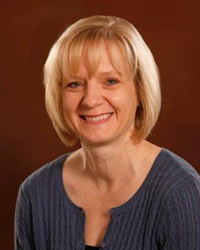
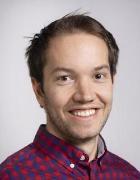
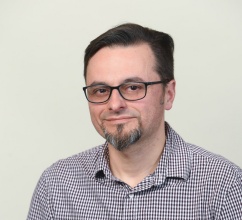
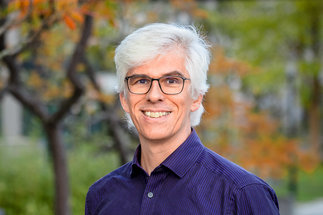
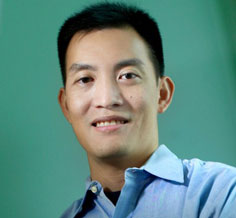
Zheng Guo is a Professor in the Department of Biological and Chemical Engineering at Aarhus University, specializing in interdisciplinary research at the interface of biocatalysis, materials chemistry, and sustainable chemical engineering. His work focuses on advancing enzymatic processes for environmental remediation, lipid engineering, and functional material design. Key research areas include biocatalytic degradation of pollutants (e.g., PFAS, synthetic dyes), development of enzyme-based optoelectronic devices, and innovative lipid synthesis strategies. He leads several high-impact projects such as the ACTPAC initiative for plastic waste valorization and the HyProfuel program for sustainable aviation fuel research. Collaborations span academic and industrial partners to address challenges in circular economy and green chemistry. Current Projects : Assessing lipid nutritional value in cultivated meat (LipCellMeat, 2025-2026) C1-to-Cn biopathway development for autotrophic yeast (2023-2027) Hydroprocessing sustainable aviation fuels (HyProfuel, 2022-2026) Publications highlight breakthroughs in enzymatic catalysis, nanomaterial synthesis, and bio-inspired optoelectronics. His team’s work frequently appears in top-tier journals like Advanced Science , ACS Synthetic Biology , and Journal of Agricultural and Food Chemistry . Guo actively mentors graduate researchers and has pioneered methodologies for industrial biotechnology applications, with a strong emphasis on translating fundamental discoveries into scalable industrial solutions.
Cynthia Damer is a Professor in the Department of Biology within the College of Science and Engineering. Her research and teaching are centered on cell and molecular biology, with a focus on the model organism Dictyostelium discoideum . She teaches courses including Introductory Biology, Cell Biology, Biotechnology, Scientific Writing & Communication, and Light Microscopy. Research Interests: Dr. Damer's work investigates the function of copine proteins—calcium-dependent membrane-binding proteins—in cellular processes such as adhesion, chemotaxis, organelle regulation, and signal transduction. Her lab uses genetic, imaging, and biochemical approaches to understand how these proteins regulate membrane dynamics and cytoskeletal organization in Dictyostelium . The recent publications highlight a consistent research trajectory focused on the role of Copine A in actin interaction, adhesion, contractile vacuole function, and cAMP-mediated translocation. These studies contribute to broader understanding of calcium signaling and membrane trafficking in eukaryotic cells. Scientific Awards: No awards listed in the provided text. Advising and Grants: Dr. Damer mentors a research team involving multiple students and collaborators, as evidenced by co-authorships on recent publications. While specific grant funding is not mentioned, her sustained research output suggests active external support. She integrates research with education through advanced courses and lab-based inquiry. Labs and Teams: Dr. Damer leads a research laboratory focused on Dictyostelium cell biology, where students and researchers investigate copine protein function using molecular genetics and high-resolution microscopy techniques.
Prof. Jan Torgersen is a Professor of Materials Science at the TUM School of Engineering and Design , Technical University of Munich. His research focuses on advanced materials, additive manufacturing, electrochemical systems, and biomedical applications. He leads projects exploring novel material synthesis techniques, corrosion-resistant coatings, and energy storage solutions. Key research areas include: - Design of architected carbon materials for fuel cells and energy storage - Development of bio-inspired materials for biomedical devices - Computational modeling of material failure and microstructural behavior - Solar energy systems and high-concentration photovoltaics - Atomic layer deposition (ALD) for thin film applications Recent work highlights: - Innovations in gas diffusion layer optimization for PEM fuel cells - Biomimetic designs enhancing mass transport in electrochemical systems - Corrosion mitigation strategies for biomedical implants - Breakthroughs in ultra-thin ALD membrane fabrication His interdisciplinary research bridges materials science with engineering applications, addressing challenges in sustainability, energy efficiency, and healthcare technologies.
Christian Blouin is a Professor and Associate Dean, Academic in the Faculty of Computer Science at Dalhousie University. His interdisciplinary research bridges computer science and molecular biology, with a strong focus on bioinformatics and computational biophysics. Education: Ph.D. in Computer Science, Dalhousie University (2001) B.Sc. in Computer Science, Université Laval (1997) His research interests lie at the intersection of algorithms, phylogenetics, protein evolution, and molecular modeling. He develops computational methods to analyze protein structure evolution, multiple sequence alignments, and phylogenetic tree reconstruction. His work integrates high-performance computing and statistical mechanics to model biophysical properties of proteins, particularly in conformational dynamics and electrostatic interactions. The most recent publications reveal a consistent trend in developing algorithmic solutions for biological problems—especially in text mining for biological events, phylogenetic distance computation, and 3D mapping of evolutionary data. His work emphasizes automation, accuracy, and scalability in bioinformatics pipelines. Scientific Awards and Honors: TULA Fellow Dr. Blouin has secured significant research funding from NSERC, the TULA Foundation, and the CFI. His research group has contributed to tools like GenGIS for geospatial genomics and libcov for bioinformatics programming. He has advised students such as Haibin Liu and Vlado Keselj, who have co-authored key publications in text mining and phylogenetics. His lab integrates algorithm development with biological validation, aiming to bridge computational innovation with real-world biological insights.
Max Planck Institute of Molecular Plant PhysiologyGermany
Dr. Joachim Kopka is a Research Group Leader at the Max Planck Institute of Molecular Plant Physiology in Potsdam, Germany, where he heads the Applied Metabolome Analysis group. His research focuses on developing cutting-edge technologies for metabolome and fluxome analysis, particularly GC-EI-TOF-MS-based metabolite profiling and stable isotope labeling techniques. He investigates plant physiological responses to environmental stimuli, with emphasis on root metabolism and stress adaptation mechanisms. Kopka completed his Staatsexamen (1988) and PhD (1992) at Wilhelms University of Münster, followed by postdoctoral research in the USA and Germany. He co-founded Metanomics GmbH before joining MPI-MP in 1996, where he established his research group in 2001. He received his Habilitation from the University of Potsdam in 2009. His research integrates metabolomics, isotope labeling, and computational biology to study: Metabolic plasticity in response to environmental changes Development of GC-MS and data analysis pipelines (e.g., TagFinder software) In vivo stable isotope labeling for flux phenotyping Plant-microbe interactions and stress physiology Kopka's recent publications demonstrate strong emphasis on metabolic adaptations to abiotic stresses (drought, cold), plant-microbiome interactions, and advanced analytical methodologies. His work frequently combines metabolomics with proteomics and transcriptomics to unravel complex plant physiological processes. He leads infrastructure development for metabolome analysis and maintains collaborative projects across plant science disciplines. His group contributes to public resources like the Golm Metabolome Database (GMD), facilitating metabolite identification and data sharing in the scientific community.
Stanislav Jabinski is a Postdoc at the Leibniz Institute for Baltic Sea Research (IOW) in Rostock, Germany, where he works in the Research Group Microbial Plankton and Fungal Ecology under Dr. Isabell Klawonn. His research focuses on paleoenvironmental reconstruction and microbial ecology using biomarker and stable isotope analyses. Ph.D. in Ecosystem Biology and Ecology, University of South Bohemia (2024) M.Sc. in International Marine Geosciences, University of Bremen (2019) B.Sc. in Geosciences, University of Bremen (2016) His expertise spans microbial membrane biomarker analysis, stable isotope probing (SIP), and method development for ultra-high-resolution mass spectrometry (GC-FID/MS/IRMS, LC-QToF-MS, FTICR-MS). He investigates carbon turnover mechanisms in soil and aquatic ecosystems, integrating δ¹³C and δ²H isotopes to quantify microbial and fungal activity. Jabinski’s publications highlight applications of SIP in fungal metabolism, paleovegetation reconstruction, and soil organic matter dynamics. His work bridges analytical chemistry, biogeochemistry, and microbial ecology, emphasizing lipid biomarker innovation. He is affiliated with the Microbial Plankton and Fungal Ecology working group at IOW, collaborating on biogeochemical cycles and ecosystem fluxes.
Ileana M. Cristea is the Henry L. Hillman Professor of Molecular Biology and an Associate Professor in the Department of Molecular Biology at Princeton University. She serves as the Director of Graduate Studies and leads the Cristea Lab, which focuses on the interplay between virology and proteomics. Her research aims to understand cellular defense mechanisms against viruses and viral strategies for immune evasion. Dr. Cristea's research interests lie at the interface of virology, proteomics, and molecular biology. Her lab investigates dynamic host-virus interactions, including protein-protein and protein-nucleic acid interactions during infection, DNA sensing in the nucleus, innate immune responses to herpesviruses, the role of deacetylases (HDACs and SIRTs) in viral infections, and global remodeling of cellular organelles. She develops and applies advanced proteomic tools integrated with genomics, microscopy, and bioinformatics to study these processes. Her recent publications demonstrate a strong focus on herpesviruses and human cytomegalovirus (HCMV), exploring mechanisms of viral immune evasion, host defense via DNA sensors like IFI16, organelle remodeling, and targeted proteomic assays. The research leverages cutting-edge mass spectrometry and multi-omics approaches to uncover fundamental biological insights with therapeutic implications. Her scientific achievements have been recognized with several awards: Bordoli Prize, British Mass Spectrometry Society (2001) NIDA Avant-Garde Director Pioneer Award (2008) Human Frontiers Science Program Young Investigator Award (2009) Early Career Award in Mass Spectrometry, ACS NJ Section (2011) American Society for Mass Spectrometry Research Award (2012) Molecular & Cellular Proteomics Lectureship (2013) Mallinckrodt Scholar Award (2015) Dr. Cristea is actively involved in mentoring and education. She advises PhD students, including Ji Woo Park. She is a head instructor for the summer Proteomics Course at Cold Spring Harbor Laboratory and has taught workshops at major conferences (ASMS, HUPO). She holds leadership roles in professional organizations, serving on the Executive Board of US-HUPO and chairing the Infectious Disease initiative of HUPO World. She also serves on the editorial boards of several high-impact journals, including Molecular & Cellular Proteomics , Proteomics , and Journal of Proteome Research . The Cristea Lab operates as a multidisciplinary research team, fostering collaborations with groups worldwide. Their work is supported by partnerships with organizations like the CHDI Foundation (Huntington's disease) and the Paul G. Allen Family Foundation (organelle remodeling). The lab continues to develop innovative proteomic and computational tools, such as machine-learning pipelines for predicting protein interactions.
Derek S. Tan is a tenured Professor and Chair of the Chemical Biology Program at the Sloan Kettering Institute, Memorial Sloan Kettering Cancer Center (MSK). He also holds the Eugene W. Kettering Chair and is a Tri-Institutional Professor at Weill Cornell Medicine and The Rockefeller University. He directs the Tri-Institutional PhD Program in Chemical Biology since 2012. Education: BS in Chemistry from Stanford University (1995) PhD in Chemistry from Harvard University (2000) Tan's research focuses on diversity-oriented synthesis and rational drug design to develop chemical probes for cancer and infectious disease research. His work leverages natural product insights to address challenges in small-molecule discovery, including antibiotic development for Mycobacterium tuberculosis and Yersinia pestis , and novel methodologies for synthesizing complex molecular architectures. The lab's 15 most recent publications highlight advancements in chemical biology methodologies (e.g., ubiquitin probes, adenylation enzyme inhibitors), antibiotic development (targeting Gram-negative bacteria, tuberculosis), and structural innovations in macrocycle synthesis. These works reflect interdisciplinary collaborations and translational applications in both oncology and microbiology. Scientific Awards: Louise and Allston Boyer Young Investigator Award (2010) Dean's Award for Excellence in Teaching (2013) As an advisor, Tan has mentored over 30 graduate students, postdoctoral fellows, and research assistants in his lab. His Tri-Institutional Program fosters multidisciplinary training, while his lab affiliations span the Center for Experimental Therapeutics and Gerstner Sloan Kettering Graduate School. Labs & Collaborations: Sloan Kettering Institute Chemical Biology Program Tri-Institutional PhD Program in Chemical Biology Collaborations with Luis Quadri (Cornell), Paul Hergenrother, and others
Professor Anthony O'Neill at Newcastle University is a leading researcher in semiconductor device physics, optogenetic neuroprosthetics, and strained silicon engineering. His work spans silicon carbide MOSFETs, graphene fabrication, and implantable neural interfaces, with a focus on improving device performance through material science innovations. Semiconductor Device Physics Optogenetic Neuroprosthetics Strained Silicon Technology Micromachining Processes Advanced Material Characterization His 15 most recent publications (2018-2024) demonstrate expertise in: 4H-SiC MOSFET optimization Nitridation techniques Implantable neuroprosthetic systems Molecular dynamics simulations for silicon processing High-κ dielectrics in microelectronics Flexible electrode arrays
Professor Gil Lee holds the Stokes Full Professor of Physical Chemistry position at the University College Dublin, School of Chemistry . With a B.S. and Ph.D. in Chemical Engineering from Purdue University and University of Minnesota respectively, he transitioned to academia after postdoctoral research at the American Society of Engineering Education and a research engineer role at the Naval Research Laboratory. His career spans associate professorship at Purdue University (2000-2008) and adjunct roles, showcasing a trajectory marked by innovation in biomagnetic technologies . Education B.S. Chemical Engineering, Purdue University (1987) Ph.D. Chemical Engineering, University of Minnesota (1992) Postdoctoral Fellow, American Society of Engineering Education (1995) Executive Education Global EMBA, TRIUM (2016) His research is driven by three key areas : Bionanomaterials : Development of superparamagnetic microparticles for biological separations, drug delivery, and hyperthermia therapy. Techniques include iron-gold nanorods and self-assembled iron oxide nanoparticles with controlled surface chemistry. Single-Molecule Force Analysis : Pioneering work in atomic force microscopy (AFM) for quantitative force measurements, including streptavidin-biotin bond lifetime studies and magnetic tweezers for parallel ligand-receptor analysis. Biosensing & In Vitro Diagnostics : Innovations in immunomagnetic cell separation, magnetophoretic sensing, and microfluidic devices for rapid pathogen detection and cancer diagnostics. His scientific awards include the Stokes Chair (2008), E.T.S. Walton Fellowship (2006), and multiple Edison Patent Awards. He has received grants for projects in cancer diagnostics and microfluidic technologies . His teaching activities focus on advanced physical chemistry modules, emphasizing kinetics and thermodynamics, with roles as module coordinator since 2014.
Mario Annunziato is a Researcher in Mathematics at the Department of Physics, University of Salerno, since 2004. His work focuses on numerical methods for stochastic processes and optimal control. Institution: University of Salerno Department: Department of Physics Academic Rank: Researcher Research Interests include numerical solutions of PDEs and integral equations for stochastic processes, probability density function optimization, and modeling random phenomena. His work addresses positivity, monotonicity, and conservation in discrete PDFs. Article Trends span stochastic control frameworks, computational finance, biophysics applications, and numerical methods for jump-diffusion processes. Key topics involve Fokker-Planck equations, Hamilton-Jacobi-Bellman formulations, and splitting methods. Advising and Grants include teaching Numerical Analysis until 2013 and securing funding from the University of Salerno's FARB program, INdAM-GNCS, and the European Science Foundation's OPTPDE grants. He participated in the STRIKE Marie Curie ITN network. Labs & Teams : Collaborated with Prof. Alfio Borzì at Würzburg University and contributed to open-source tools like MATLAB Central File Exchange for PDP solvers.
Dr. Silviya Boycheva is a researcher in the Department of Thermal and Nuclear Power Engineering at the Technical University of Sofia, Bulgaria. Her work bridges energy systems engineering and sustainable materials development, focusing on environmental and energy challenges through innovative technological solutions. Research Interests: Her primary research areas include carbon capture using waste-derived adsorbents, utilization of coal fly ash in catalytic applications, development of 3D-printed catalysts for green chemistry, and optimization of proton exchange membrane fuel cells. She is deeply engaged in transforming industrial byproducts into functional materials for clean energy and environmental remediation. Publication Trends: Recent publications (2024–2025) highlight her focus on sustainable catalytic processes for producing γ-valerolactone—a renewable platform chemical—from levulinic acid using fly ash-based Ni-Cu zeolites. She also investigates advanced flow field designs in hydrogen fuel cells to improve efficiency and performance. These efforts reflect a strong commitment to circular economy principles and low-carbon energy technologies. Scientific Collaborations: She frequently collaborates with researchers such as Margarita Popova, Boian Mladenov, and Daniela Kovacheva, indicating active participation in interdisciplinary research teams. Advising and Grants: While no formal advisees or grant details are mentioned in the provided text, her consistent publication output suggests involvement in funded research projects and potential mentorship roles within her department. Laboratories and Research Groups: Although not explicitly stated, her work implies affiliation with laboratories focused on thermal systems, catalysis, and sustainable energy at the Technical University of Sofia, likely contributing to national and international efforts in clean energy innovation.
Frank Würthner is a Professor at Julius-Maximilians-Universität Würzburg, Germany, where he leads the Chair of Organic Chemistry II and directs the Center for Nanosystems Chemistry (CNC). His research focuses on designing functional dyes and developing supramolecular methodologies for creating advanced organic nanomaterials with applications in optoelectronics, photovoltaics, photocatalysis, and biomedical systems. Research interests span: Supramolecular engineering of π-conjugated systems Functional dye chemistry and self-assembly Nanoscale architectures for energy conversion Photocatalytic water splitting systems Organic electronic and photonic materials Host-guest systems for photophysical modulation Recent publications (2019-2025) demonstrate strong focus on exciton engineering, carbon nanomaterials development, supramolecular polymerization control, and advanced optoelectronic materials. Key trends include systematic exploration of dye aggregates, nanographene systems, energy transfer mechanisms, and applications in light-emitting devices and solar energy conversion. Major scientific recognition includes: ERC Advanced Grant (awarded twice) Leads the Würthner Group with extensive research facilities for synthesis, spectroscopy, microscopy, and device fabrication. The group collaborates internationally through initiatives like the International Research Training Group 2991 with IISER Thiruvananthapuram on supramolecular functional materials.
Prof. Dr. Susanne Gebhard is a Full Professor of Molecular Biotechnology at the Institute for Molecular Physiology , Johannes Gutenberg University (JGU) Mainz, Germany, since 2023. Her career spans international institutions, including postdoctoral work in New Zealand and the UK, and a permanent research and teaching position at the University of Bath. She focuses on bacterial physiology, particularly antibiotic resistance mechanisms and microbially induced calcite precipitation for sustainable biotechnology applications. Education: Abitur (1996), University Degree (2003), PhD in Microbiology (2006, University of Otago, New Zealand), Habilitation (2014) Research Interests: Her work bridges two major themes: Antibiotic Resistance : Investigating how bacteria detect antibiotics and regulate resistance pathways, with implications for novel therapeutic strategies. Microbial Biomineralization : Exploring bacterial mineralization processes to reduce cement usage in construction, addressing CO 2 emissions through Solibacillus silvestris and related species. Publications & Collaborations highlight her expertise in Bacillus subtilis , Pseudomonas , and Neisseria systems, alongside contributions to journals like Nature Communications , Cell Reports , and Environmental Microbiology . She frequently collaborates with labs in Oxford, Cologne, and Australia. Scientific Engagement includes: Senior Editor for the Microbiology journal Deputy Spokesperson for the 'Regulation' specialist group of the Association for General and Applied Microbiology Active participation in international conferences and EMBO workshops Lab & Leadership : She leads the Gebhard Lab at JGU Mainz, mentoring students and postdocs while emphasizing interdisciplinary collaboration. Her hobbies include horseback riding, gardening, and exploring the intersection of science and sustainability.
Dr Evina Katsou is a Visiting Professor in the Department of Mechanical and Aerospace Engineering within the College of Engineering, Design and Physical Sciences at Brunel University London. She serves as Course Director for the Water Engineering MSc program and leads the Water & Environmental Engineering research group with 20 researchers. Dr Katsou's educational background includes a PhD in 'Wastewater Treatment with the Use of Membranes' (2008-2011), an MSc in Water Resources Science & Technology (2006-2008), and an MEng in Chemical Engineering (2000-2005), all from the National Technical University of Athens (NTUA), Greece. Her research program focuses on three interconnected areas: (1) Sustainable resource recovery from wastewater and safe reuse; (2) Data analytics, knowledge discovery and process modelling; and (3) Circularity & sustainability measurement and assessment. Dr Katsou has developed innovative approaches for biological nutrient removal from wastewater, including partial nitrification/denitrification and complete autotrophic nitrogen removal processes. Her work integrates advanced data analytics methods such as multivariate statistics, clustering techniques, machine learning algorithms, and artificial neural networks to identify complex relationships between process variables, particularly for measuring GHG emissions in water treatment systems. Dr Katsou has authored 98 journal publications (h-index: 27) and 12 book chapters with over 100 presentations, and holds a patent on biopolymers recovery. Her recent publications demonstrate a strong focus on circular economy applications in water systems, nature-based solutions for urban environments, and resource recovery technologies. The research trends show increasing integration of data-driven decision support systems with environmental sustainability metrics, particularly in the water-energy-food nexus domain. Chartered Chemical Engineer (Greece) HEA Fellow (FHEA) of the Higher Education Academy Mentor in the APEX (Academic Practice & Professional Excellence Framework) scheme Member of management group of the Royal Academy of Engineering (RAE) Visiting Professors Scheme Co-leader of Circular Economy VLT in Water Europe Leader of SMART WATER Working Group in ICT4Water Cluster-EC Member of ISO standards drafting team on Circular Economy Dr Katsou has successfully supervised 16 PhD students to completion and currently supervises several ongoing doctoral projects. She has secured substantial research funding as Principal Investigator on 11 national and international projects including RESILEX Horizon Europe, SYMBIOREM Horizon Europe, BORECER Horizon Europe, HYDROUSA H2020, and WATER-MINING H2020. Her industrial consulting portfolio includes significant contracts with leading UK water industry partners such as Affinity Water, Arup, Severn Trent, and Anglian Water, with projects ranging from carbon footprint assessment to corrosion mitigation and process optimization. She leads the Transformation Tools group of the Cost Action on Circular Cities, co-leads the Circular Water VLT of Water Europe, and co-leads the SMART-WATER group of the ICT4Water Cluster-EC. Dr Katsou is also a member of the drafting team for new ISO standards on Circular Economy (Measuring and Assessing Circularity - ISO5902).