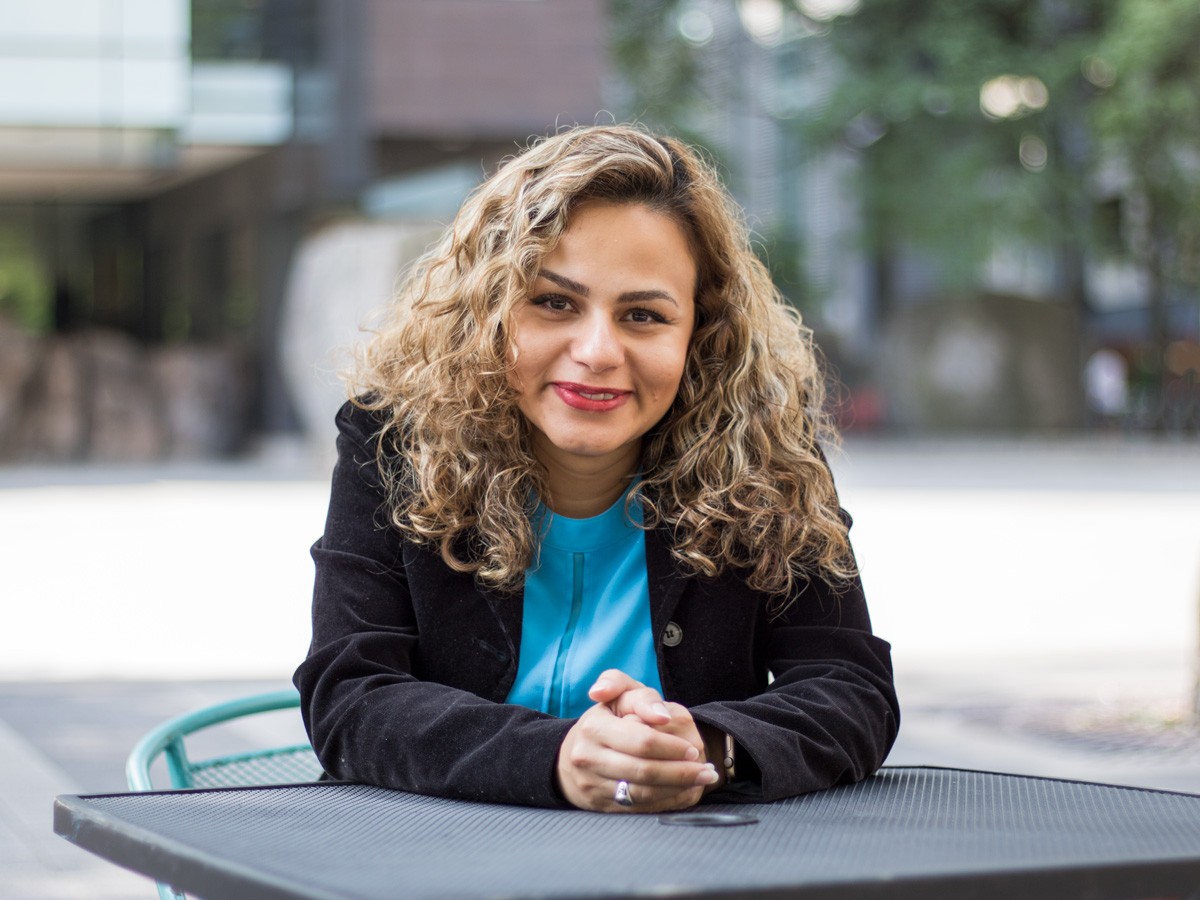
Sriram Subramaniam is a Professor in the Department of Biochemistry and Molecular Biology at the University of British Columbia (UBC) and holds the Gobind Khorana Canada Excellence Research Chair in Precision Cancer Drug Design. His research leverages cryo-electron microscopy (cryo-EM) to advance structural biology and drug design, focusing on protein dynamics and therapeutic target identification. Education: PhD in Physical Chemistry (1987) from Stanford University; MSc in Chemistry (1981) from Indian Institute of Technology, Kanpur. Subramaniam's interdisciplinary work combines cryo-EM with computational tools and molecular biology to study protein structures at atomic resolution. His lab has pioneered cryo-EM applications in precision medicine, including mapping small molecule drugs on patient-specific cancer mutants. Recent publications (2024-2022) highlight his contributions to understanding SARS-CoV-2 immune evasion, structural mechanisms of ATPases, and AI integration in structural biology. His research spans viral entry mechanisms, CRISPR systems, and neurodegenerative disease pathways. Scientific Awards: Gobind Khorana Canada Excellence Research Chair NIH Director’s Award for Scientific Excellence Fellow of the Biophysical Society Breakthrough Prize nomination Based at the Djavad Mowafaghian Center for Brain Health, Subramaniam leads the Program in Cryo-EM Guided Drug Design, contributing to over 177 peer-reviewed publications with a career h-index of 58 and citations exceeding 12,340.
Steven Rogak is a Professor in the Department of Mechanical Engineering at the University of British Columbia's Faculty of Applied Science. He holds a P.Eng. license and degrees including a B.A.Sc. in Mechanical Engineering from UBC, and M.Sc. and Ph.D. from Caltech. P.Eng., University of British Columbia B.A.Sc., University of British Columbia M.Sc., Ph.D., California Institute of Technology His research focuses on aerosol science, particularly solid nanoparticles from combustion processes, their climate and health impacts, and mitigation strategies. Key areas include: Soot morphology and transport properties Engine emission reduction via fuel injectors Indoor air filtration systems Membrane-based energy exchangers Atmospheric particulate analysis The 15 most recent articles span experimental and theoretical studies on soot characterization, membrane technologies, and aerosol dynamics, with applications in climate modeling, healthcare ventilation, and sustainable materials. Collaborations include Westport Innovations and interdisciplinary teams. Rogak leads the Aerosol Laboratory at UBC, where he applies fluid mechanics and heat transfer fundamentals to address environmental and health challenges. He emphasizes experimental rigor and welcomes graduate students with expertise in these areas.
Dr. Michael J. Katz is a Professor in the Department of Chemistry at Memorial University in St. John's, Newfoundland and Labrador, Canada. He leads an active research group focused on porous materials, particularly metal-organic frameworks (MOFs), with applications in gas storage, chemical separation, and catalysis. His work is well-recognized in the field of materials chemistry, with numerous publications in high-impact journals spanning from 2005 to 2025. Dr. Katz's primary research interests lie in the synthesis, properties, and applications of porous materials. His work specifically focuses on: Metal-Organic Frameworks (MOFs) design and synthesis Gas storage technologies, particularly low-pressure methane storage Chemical separation processes including removal of harmful molecules from air Catalysis using porous materials Adsorption properties of various porous frameworks Environmental applications of porous materials Analysis of Dr. Katz's publication record from 2017-2025 reveals a strong emphasis on zirconium-based MOFs, particularly the UiO-66 family. His research spans fundamental characterization techniques like NMR spectroscopy to practical applications in carbon capture, gas separation, and environmental remediation. A notable trend is the increasing focus on real-world implementation of MOFs, including biochar-based materials for CO 2 capture and frameworks for air pollutant removal such as nitrous acid. His work demonstrates a progression from fundamental materials science toward practical environmental applications. Dr. Katz actively supervises graduate students and postdoctoral researchers in his research group. His laboratory at Memorial University is equipped for the synthesis and characterization of novel porous materials, with particular expertise in metal-organic framework development. His research is supported by various grants that enable the exploration of structure-property relationships in porous materials and their practical applications.
Robert Andrews is a Professor in the Department of Civil & Mineral Engineering at the University of Toronto, affiliated with the Faculty of Applied Science and Engineering. He is a core member of the Drinking Water Research Group (DWRG), a multi-university consortium established in 1998 focused on advancing drinking water treatment technologies. His research expertise includes Disinfection and advanced oxidation processes Inactivation of emerging pathogens Control of disinfection by-products Membrane filtration systems Water reuse and compliance strategies Andrews has held the NSERC Senior Industrial Research Chair in Drinking Water Research since 2007 and serves on advisory councils for organizations like Health Canada and the Ontario Ministry of Environment. In 2022, he received the Dr. Albert E Berry Medal for his contributions to environmental engineering. He collaborates with industry partners to address challenges such as pharmaceutical removal in water and alternative disinfectant applications. His work directly influences regulatory frameworks, including Ontario’s disinfection guidelines.
Ken Oakes is an Associate Professor in the Biology Department at Cape Breton University (CBU) and holds the Industrial Research Chair in Environmental Remediation. He specializes in environmental toxicology, nanotechnology, and aquatic ecosystems. With a Ph.D. from the University of Guelph and postdoctoral training at the University of Waterloo, his research focuses on reactive oxygen species, water treatment, and pollution mitigation. He has over 60 peer-reviewed publications and supervised numerous graduate/undergraduate theses. Key research areas include photocatalytic water treatment using TiO₂ composites, surface-enhanced Raman spectroscopy (SERS) for contaminant detection, and transdermal drug delivery via polymeric microneedles. His work addresses industrial effluent impacts on marine ecosystems and sustainable antifouling technologies. Recent studies investigate nanomaterials for environmental remediation and biomedical applications. Dr. Oakes has contributed to projects assessing pulp mill effluent effects on coastal ecosystems, copper-based Fenton chemistry for biofilm removal, and uranium extraction from water. His lab develops innovative solutions for environmental challenges, combining engineering, chemistry, and biology disciplines. Funding sources include industrial partnerships and academic grants focused on clean technologies.
Huiyan Li, PhD, P.Eng., is an Associate Professor in the Department of Biomedical Engineering at the University of Guelph. Her research focuses on developing micro/nanoscale biosensors and lab-on-a-chip technologies for cancer diagnostics and personalized medicine. Dr. Li holds a Ph.D. in Biomedical Engineering from McGill University and completed postdoctoral training at Harvard Medical School/Massachusetts General Hospital. Her multidisciplinary research integrates biosensing, micro/nanofabrication, bio-optics/electronics, and computational tools to study cancer molecular complexity. Current openings exist for M.A.Sc. students interested in biosensing research. Key research areas include extracellular vesicle analysis, multiplexed immunoassays, magnetic/nanoparticle-enhanced bioassays, and graphene-based biomedical sensors. Recent work emphasizes point-of-care diagnostics and enhanced protein detection via novel material integration. Teaching responsibilities include ENGG 6301 (Advanced Micro/Nano Biotechnology) and undergraduate courses in bio-instrumentation and biomedical signal processing. Her work spans biomaterials classification, microfluidic systems, and antimicrobial nanocomposite development. Research outputs emphasize scalable microarray formats, EV-based biomarker discovery, and sensor sensitivity enhancement through nanomaterial innovations. Current projects address EV concentration measurement, 3D antibody microarrays, and magnetic-responsive hydrogel discs for bioassay improvements.
Dr. Beata Gorczyca is a Professor in the Department of Civil Engineering at the University of Manitoba, affiliated with the Price Faculty of Engineering. Her research focuses on potable water treatment, with expertise in solid/liquid separation, chlorine disinfection by-products control, and fractal analysis of materials. She leads a research group collaborating with Canadian water utilities like Portage la Prairie and Pembina Valley Water Co-op. Education: PhD in Chemical Engineering (2000, University of Toronto), M.Sc. in Civil Engineering (1992, University of Toronto), B.Sc. in Geological Engineering (1986, AGH University, Poland). Active roles: Member of the Particle Specialist Group at the International Water Association, keynote speaker at conferences. Research interests include water purification processes, membrane filtration, and bioremediation. Her work addresses challenges in high-DOC and high-hardness water treatment, with contributions to nanofiltration fouling mechanisms and microbial remediation solutions. She has supervised numerous graduate students and is involved in advancing water treatment technologies through interdisciplinary collaborations.
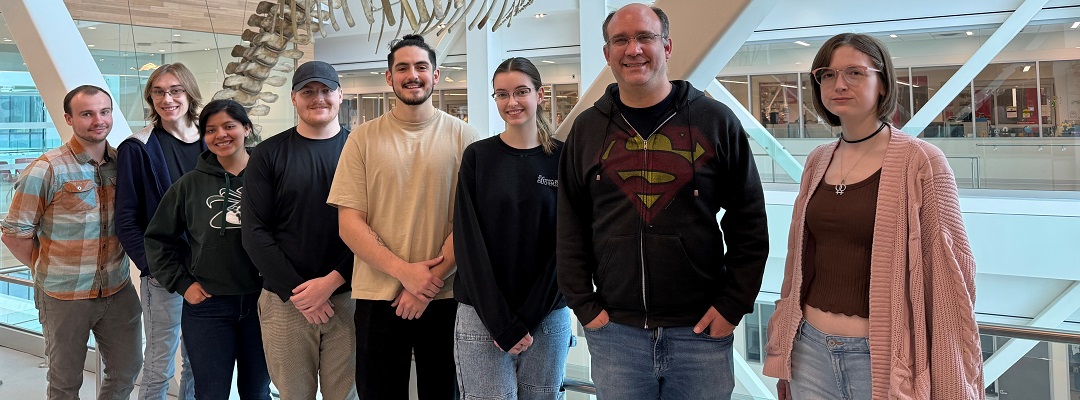
Mita Dasog is an Associate Professor and Izaak Walton Killam Memorial Research Chair in the Department of Chemistry within the Faculty of Science at Dalhousie University. Her research focuses on engineering nanomaterials for sustainable energy and environmental solutions. Her educational background includes: BSc from the University of Saskatchewan PhD from the University of Alberta Postdoctoral Fellowship at the California Institute of Technology The Dasog Research Group pioneers solid-state synthesis of functional nanomaterials, specializing in photocatalysts , electrocatalysts , porous structures , and plasmonic systems . Their work deciphers reaction mechanisms to optimize materials for hydrogen production , solar desalination , water purification , and chemical sensing , bridging fundamental chemistry with real-world applications. Analysis of her 2018-2021 publications reveals dominant themes in nanomaterial design for renewable energy , particularly silicon-based photocatalysts for hydrogen generation, transition metal nitrides for solar evaporation, and biochar-derived electrocatalysts. Her work consistently integrates materials chemistry , nanofabrication , and sustainability metrics across energy and environmental domains. Major recognitions include: Member of the Royal Society of Canada College (2021) Izaak Walton Killam Research Chair (2021) Global Young Academy Membership (2020) Nova Scotia Emerging Professional Award (2020) President’s Emerging Investigator Award (2019) Dr. Dasog mentors a dynamic team including postdoc Harshitha Rajashekhar, graduate students (Emma, Fay, Miranda, Kogie, Sarrah, Dreenan, Blaine), and honors student Mark. Her trainees have secured prestigious awards like the Gerry Dauphinee Scholarship and CIC Best Poster Prize, supported by competitive grants enabling cutting-edge nanomaterials research. The research group operates from Chemistry Building Labs 436/438 at Dalhousie, maintaining collaborative partnerships focused on scalable nanomaterial solutions for global energy and water challenges.
Catherine Mulligan is a Distinguished Research Professor in the Department of Building, Civil, and Environmental Engineering at Concordia University, where she also serves as Director of the Concordia Institute for Water, Energy and Sustainable Systems. She was previously the Concordia Research Chair in Geoenvironmental Sustainability (Tier I) until 2021, having held this prestigious research chair since 2002 (initially as Tier II). Dr. Mulligan earned her B.Eng. and M.Eng. degrees in chemical engineering from McGill University, followed by a Ph.D. specializing in geoenvironmental engineering, also from McGill University. After 16 years working at McGill University and in industry (including positions at the Biotechnology Research Institute of the National Research Council and SNC Research Corp.), she joined Concordia University in 1999 as an Assistant Professor, was promoted to Associate Professor in 2002, and to full Professor in 2008. Her research spans multiple critical areas of environmental engineering with a focus on contamination remediation. She specializes in surfactant-enhanced washing and flushing of contaminated soils and sediments, treatment of metal-contaminated media, bioremediation techniques, and various wastewater treatment methods. Her work includes biosurfactant applications, in-situ sediment remediation, anaerobic treatment processes, membrane technologies for water treatment, and energy generation through pressure-reduced osmosis. She has developed sustainability indicators and focuses on practical applications of environmental engineering solutions. Analysis of her recent publications (2023-2025) reveals a continued leadership in environmental engineering with particular emphasis on nanotechnology applications for oil spill cleanup in sensitive coastal regions, advanced membrane technologies for water treatment and energy generation, microbially induced calcite precipitation for mining waste remediation, sustainable resource recovery approaches from waste batteries, and innovative techniques for eutrophic lake restoration. Her research demonstrates a consistent focus on practical, sustainable solutions to environmental contamination problems across diverse settings. Dr. Mulligan's scientific contributions have been recognized with numerous prestigious awards including Fellowship in the Royal Society of Canada, Canadian Academy of Engineering, Engineering Institute of Canada, and the Canadian Society for Civil Engineering. She has received the RSC Miroslaw Romanowski Medal, the Geoenvironmental Award, the A.G. Stermac Award of the CGS, and the John B. Sterling Medal of the EIC. Her Concordia-specific honors include the Provost Circle of Distinction, Concordia Sustainability Champion, and the Petro Canada Young Innovator Award (awarded twice). With over 40 years of research experience across government, industrial, and academic environments, Dr. Mulligan has supervised to completion more than 75 graduate students in Civil Engineering (MASc and PhD programs). Her research has attracted significant funding, including a $1,643,700 NSERC CREATE grant for the Institute in Water, Energy and Sustainability, which represents the first Concordia project to receive funding through this program. She has authored more than 140 refereed papers, holds three patents, and has made substantial editorial contributions as Section Editor for the Journal of Environmental Engineering, Chief Editor for Waste (MDPI), and serves on multiple other editorial boards. As Director of the Concordia Institute for Water, Energy and Sustainable Systems, Dr. Mulligan leads an interdisciplinary team focused on training students in sustainable development practices and advancing research into innovative solutions for water, energy, and resource conservation challenges. The institute represents a significant hub for environmental research and education at Concordia University.
David Latulippe is a Professor in the Department of Chemical Engineering at McMaster University. He joined McMaster in 2012 after postdoctoral work at Cornell University and a PhD at Penn State University, focusing on membrane filtration for DNA purification. His industrial experience includes roles at ZENON Environmental (now GE Water) in hollow-fiber membrane design for water treatment. Research interests include Membrane science and technology Bioprocessing of therapeutic viruses Microscale systems for biological applications Environmental engineering solutions for water treatment Current projects involve collaborations with industry partners like Ceapro and Aevitas, and the development of a biomanufacturing automation lab with Sartorius. Recent publications highlight advancements in Nanofiltration and microfiltration for viral vectors Conductive membranes for electrochemical applications Microfluidic systems for DNA analysis Environmental monitoring of biocides and microplastics Scientific recognition includes the Young Membrane Scientist Award (2014). Teaching activities focus on Fluid Mechanics (CHEMENG 2O04) and Industrial Separation Processes (CHEMENG 4M03).
Marina Freire-Gormaly is an Assistant Professor in the Mechanical Engineering Department at York University's Lassonde School of Engineering. Her research focuses on renewable energy-powered water treatment systems, machine learning for smart design, advanced manufacturing, and sustainable engineering solutions for remote communities. She holds a PhD and M.A.Sc. from the University of Toronto, specializing in carbon capture and storage technologies. She has worked on nuclear energy projects at Ontario Power Generation and contributed to World Bank sustainability assessments. She currently chairs the Canadian Society of Mechanical Engineers' Student and Young Professional Affairs committee. Education: PhD in Mechanical Engineering, University of Toronto M.A.Sc. in Mechanical Engineering, University of Toronto Research Interests: She pioneers solar-powered reverse osmosis systems, energy recovery mechanisms, and IoT-driven smart systems. Her lab explores nanotechnology applications in environmental sustainability, including carbon capture and aquatic remediation. She integrates machine learning for optimizing energy-water nexus challenges in off-grid regions. Key Contributions: Developed models for membrane fouling in desalination systems, advanced pore network characterization for geologic CO2 storage, and designed automated renewable energy systems. Her work bridges engineering innovation with global sustainability goals. Grants & Collaborations: Engages with industries like Honda Canada and Trane Canada on sustainability initiatives. Supervises graduate students in emerging areas like nanobubble technology and direct air capture systems. Lab Activities: The Freire-Gormaly Lab focuses on clean energy-water systems, with current projects involving nano-technology for space applications (Canadian Space Agency collaboration) and life cycle assessments of carbon storage technologies.
Dr. Hadis Zarrin is an Associate Professor in the Department of Chemical Engineering at Toronto Metropolitan University. Her research focuses on multifunctional nanoengineered materials for clean energy storage, environmental remediation, and wearable biosensors. PhD, University of Waterloo (2014) MSc, Iran University of Science and Technology (2008) BSc, Azad University (2004) Dr. Zarrin’s research spans Clean Energy Storage and Conversion , leveraging 2D nanomaterials (e.g., MXene, hBN, rGO) to advance Hydrogen Production , Fuel Cells , Supercapacitors , and Water Treatment . Her work integrates Nanotechnology with Electrochemistry to develop Smart Coatings and Flexible Electronics . Her recent publications (2024–2025) highlight innovations in MXene-hBN composites for energy devices, self-healing coatings , and environmental remediation via nanofibers. These studies emphasize scalable solutions for hydrogen generation , thermal management , and biomedical sensors . NSERC Alexander Graham Bell Canada Graduate Scholarship (2012–2014) Waterloo Institute of Nanotechnology Fellowship (2012–2014) Waterloo President Graduate Scholarship (2012–2014) As a mentor, Dr. Zarrin encourages students to embrace creativity and risk in problem-solving. She leads the Nano-Engineering Laboratory for Energy and Environmental Technologies , fostering interdisciplinary innovation.
Dr. Sohrab Zendehboudi is an Equinor Chair Professor and research lead in the Department of Chemical and Process Engineering at Memorial University's Faculty of Engineering and Applied Science. His work focuses on energy and environmental challenges through experimental and modeling approaches. He has over 15 years of experience across academia and industry in Iran, Kuwait, the U.S., and Canada. He holds a PhD in Chemical Engineering (specializing in transport phenomena) from the University of Waterloo. Research interests include carbon capture, utilization, and sequestration (CCUS), renewable energy systems, process systems engineering, and advanced wastewater treatment. He leads a large research team addressing theoretical and practical challenges in energy sustainability and environmental protection. Key achievements include the 2023 Lectureship Award. His publications span topics like hydrogen production, CO2 storage, solar energy systems, and novel adsorbent materials. He actively seeks graduate students and researchers skilled in experimental work, numerical modeling, and machine learning for energy applications. Education: PhD in Chemical Engineering (University of Waterloo) Key Areas: CO2 Management, Bioenergy, Adsorption Technologies Labs/Teams: Large interdisciplinary research group Grants: Focus on renewable energy and sustainability projects
Professor F. Handan Tezel is a Full Professor of Chemical and Biological Engineering at the University of Ottawa since 1988, with promotions to Associate Professor (1993) and Full Professor (2003). She holds a Ph.D. and M.Sc.E. from the University of New Brunswick (1986, 1981) and a B.Sc. from Worcester Polytechnic Institute (1979). Her research focuses on adsorption-based technologies for energy storage, CO₂ capture, membrane development, and sustainable materials. She has collaborated with industries like Air Products and Chemicals Inc., Axens, and international institutions. Her professional activities include roles such as Director of Conferences for the Canadian Society of Chemical Engineering and membership in the International Adsorption Society Executive Board. Awards include the John V. Marsh Teaching Award (2010), FCIC (2016), and FEIC (2017). She has also held part-time academic roles at institutions like Ecole des Mines de Nantes (France) and Tianjin University (China). Research interests span thermal energy storage, adsorption separations, and biofuel production. Current projects include landfill gas recovery, inorganic adsorbent membranes, and CO₂-to-fuel conversion. She supervises graduate students in these areas and actively engages with industry partnerships.
Majid Bahrami is a Professor and Graduate Student Supervisor in the School of Mechatronic Systems Engineering at Simon Fraser University (SFU) , part of the Faculty of Applied Sciences . He holds the Tier 1 Canada Research Chair in Alternative Energy Conversion Systems and is a Fellow of ASME and Fellow of CAE . His research focuses on sustainable thermodynamic energy systems, waste-heat utilization, energy storage, and advanced thermal technologies. Education: - Ph.D., University of Waterloo, Canada (2004) - M.Sc., Amir Kabir University of Technology, Iran (1995) - B.Sc., Sharif University of Technology, Iran (1992) Research Interests: - Sorption-based thermal energy storage and heat pumps - Waste-heat recovery systems - Multiscale transport phenomena in functional materials - Biomimetic heat transfer enhancement - Advanced materials for energy applications Recent Contributions: - Developed novel sorption heat exchangers and graphite-based heat sinks. - Pioneered atmospheric water harvesting technologies (HAWGen system). - Authored over 150 peer-reviewed articles and holds multiple patents. - Collaborates with industries like Watergenics and AFCC . Awards & Recognition: - Canada’s Clean50 (2016, 2017) - Innovate BC Award (2018) - RBC Award (2024) - Inducted into Canadian Academy of Engineering (2019) Lab & Teams: - Lab for Alternative Energy Conversion (LAEC) : Focuses on sustainable energy systems. - Supervised over 50 graduate students, many securing academic and industry roles. - Active in NSERC CREATE HyTEM and Hybrid Thermal Electric Microgrid initiatives.