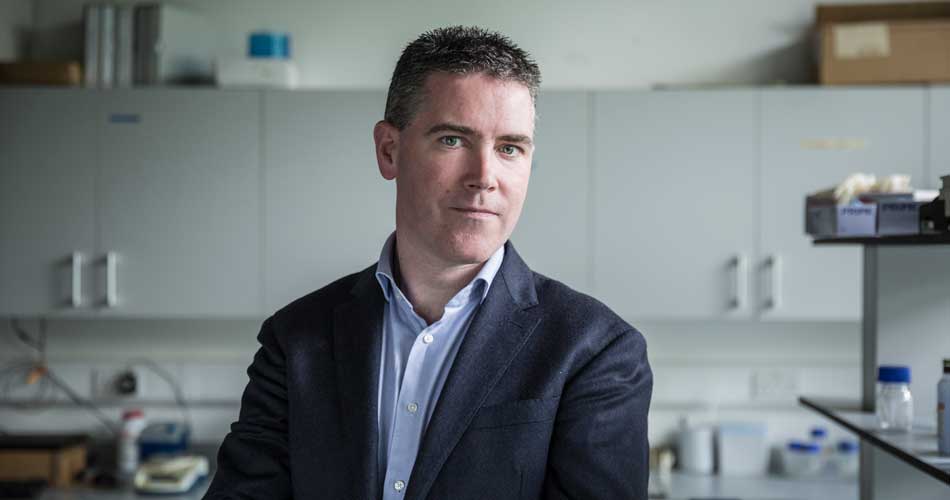
Professor Jonathan Howse holds the Polymer Engineering chair at the University of Sheffield within the School of Chemical, Materials and Biological Engineering and Department of Chemical and Biological Engineering . He obtained his Chemistry BSc, MSc in Analytical Science (University of Hull), and PhD in Reflectivity studies of non-critical interfaces in binary liquid mixtures (University of Sheffield, 1999). 1999-2001: Postdoctoral research at TU-Berlin/Hahn-Meitner-Institute 2001-2007: Postdoctoral research with Professors Tony Ryan (Chemistry) and Richard Jones (Physics) at Sheffield 2007-: Lecturer → Professor in Chemical & Biological Engineering His research focuses on nanoscale propulsion systems , spin-coating dynamics , and polymer blend phase separation with applications in block copolymer self-assembly and neutron reflectivity techniques . Key technologies include stroboscopic microscopy , neutron scattering , and colloidal synthesis . Recent work examines roll-to-roll coating optimization , electrodialysis flow maldistribution , and deep learning analysis of polymer/graphene microstructures . He explores pH-responsive nanoswimmers , electrochemical actuation , and self-assembled Janus colloids through interdisciplinary collaborations. Professor Howse's laboratory develops synthetic microswimmers and process monitoring systems with expertise in thin film fabrication , polymer brush interactions , and in situ characterization techniques . His team investigates applications in energy systems , biomaterials , and soft robotics .
Maria Florencia Sánchez is a molecular imaging researcher leading the Transmembrane Signaling Lab at the European Institute for Molecular Imaging (EIMI) , affiliated with the University of Münster , Germany. She holds a doctorate in natural sciences (Dr. rer. nat.) and focuses on the molecular mechanisms of transmembrane signaling, receptor dynamics, and GPCR activation. Her research spans transmembrane signaling , GPCR dynamics , lipid bilayer systems , and receptor confinement . Through advanced imaging and biophysical techniques, she investigates how spatial organization and confinement influence receptor behavior and signaling outcomes, particularly in the context of neuropeptide and amyloid-beta signaling. Her publications reveal a consistent focus on ligand-independent GPCR signaling , receptor clustering , and membrane microdomains . These works bridge molecular biophysics and cell biology, offering insights into how membrane organization modulates signal transduction. She is actively engaged in research with no indication of retirement or departure from her current institution. Her lab is part of a larger collaborative network within EIMI, contributing to both fundamental science and translational imaging applications.
Joe Mmbaga serves as a Teaching Professor in the Department of Chemical and Materials Engineering within the University of Alberta's Faculty of Engineering. He actively teaches core undergraduate chemical engineering courses across multiple academic terms. His research and teaching expertise centers on fundamental chemical engineering principles with emerging applications in data-driven methodologies: Fluid dynamics of Newtonian and non-Newtonian systems Equilibrium-stage separation processes including distillation and membrane technologies Integration of machine learning for process optimization and analytics Chemical plant design with safety and economic considerations Professor Mmbaga's instructional focus bridges traditional engineering theory with modern computational approaches, particularly evident in his development of courses like Process Data Analytics and Machine Learning that incorporate deep learning and statistical modeling for industrial process improvement.
Professor Eoin Casey is a distinguished academic at University College Dublin's College of Engineering and Architecture, where he serves in the School of Chemical and Bioprocess Engineering. His career has been dedicated to advancing sustainable wastewater treatment technologies, with a particular focus on energy efficiency and environmental impact reduction. Professor Casey leads groundbreaking research that bridges academic inquiry with practical industrial applications through collaborations with spin-out companies. Professor Casey's primary research interests center around Membrane Aerated Biofilm Reactor (MABR) technology, which represents a paradigm shift in wastewater treatment. His work explores biofilm dynamics, energy optimization in treatment processes, membrane technology applications, and sustainable engineering solutions for water management. His research group investigates how bacterial biofilms function within MABR systems, examining both the fundamental science and practical implementation challenges. This research spans environmental engineering, chemical engineering, and sustainable technology development, with significant implications for global water and energy conservation efforts. The articles published by Professor Casey and his research group demonstrate a consistent focus on optimizing wastewater treatment processes while reducing energy consumption. Recent publications reveal an expanding scope that now includes data-driven modeling, continuous biomanufacturing, and integration of water treatment facilities into broader energy systems. His work shows a clear trajectory from fundamental biofilm research toward practical implementation of energy-efficient systems that address climate change challenges. The research increasingly incorporates advanced modeling techniques, process optimization, and consideration of the energy-water nexus. Professor Casey's research has generated significant commercial and environmental impact through the spin-out company OxyMem, founded in 2013 with support from NovaUCD. While specific personal awards aren't detailed in the provided text, his work has contributed to OxyMem receiving notable recognition including the 2014 Irish Times Innovation Award, the US Imagine H2O 2015 Infrastructure Challenge award, and a Knowledge Transfer Ireland 2015 Impact Award. OxyMem was also named in the prestigious Global Cleantech 100 in 2016 and 2017. Professor Casey's research group has secured substantial funding from Science Foundation Ireland and Enterprise Ireland to develop and scale MABR technology. His work has progressed from laboratory experiments to full-scale implementation at wastewater treatment plants, demonstrating energy savings of up to 75% compared to conventional treatment methods. The commercial deployment of this technology in countries including the United States, Singapore, Brazil, Spain, and Japan represents significant international impact. His research group continues to collaborate with OxyMem on further development and optimization of the technology. The research led by Professor Casey operates through specialized laboratories focused on membrane technology, biofilm reactors, and sustainable water treatment. His team has successfully demonstrated the scalability of MABR technology from laboratory settings to full-scale wastewater treatment plants, most notably in a demonstration plant near Birmingham, UK. The research infrastructure supports both fundamental investigations of biofilm mechanics and practical engineering development of commercial systems.
Fulvia Chiampo is a Tenured Associate Professor at the Polytechnic University of Turin in the Department of Applied Science and Technology (DISAT) . She holds an academic position in the ICH-02/A - Chemical Plants sector under Area 0009 - Industrial and Information Engineering . Scientific Manager for Departmental Agreements on Environmental Engineering Contract Manager for collaborations with public institutions (2018-2021) Coordinator in PhD programs (SISTEMI DI PRODUZIONE & DESIGN INDUSTRIALE, INGEGNERIA CHIMICA) Her research focuses on Bioremediation , Landfill Gas , and Wastewater Treatment , with particular expertise in environmental applications of geophysics and chemical engineering. She has contributed to projects related to sustainable industrial development and soil remediation monitoring through geophysical methods. Recent publications highlight her work on hybrid artificial neural network models for diesel fuel spill remediation, pollutant speciation analysis in hydrocarbon-contaminated soils, and optimization of ultrafiltration processes in food technology. She also explores sustainable solutions for tannery industries and geophysical monitoring of landfill leachate injection. Teaching activities span multiple academic years (2025/26–2019/20), covering courses in: Environmental Processes and Technologies Food Industry Processes Unit Operations in Chemical Engineering Industrial Chemistry Transport Phenomena She participates in international research projects such as: GEOPEACE (2024-2027): War on Geohazards in Georgia BIOLEAR (2010-2014): Biogas enhancement in waste landfills TERSID (2011-2015): Resource-saving in industrial development
Chayan Dutta is an Assistant Professor in the Department of Chemistry at Georgia State University since 2022. Previously, he worked as a Post-Doctoral Research Associate at Rice University (2018–2022). His educational background includes a Ph.D. in Chemistry (2017) from the University of Southern California , an M.Sc. in Chemistry (2011) from Indian Institute of Technology Kanpur , and a B.Sc. in Chemistry (2009) from Presidency College, University of Calcutta . Ph.D. Chemistry, 2017, University of Southern California M.Sc. Chemistry, 2011, Indian Institute of Technology Kanpur B.Sc. Chemistry, 2009, Presidency College, University of Calcutta The Dutta Research Lab employs single-molecule optical microscopy , superresolution imaging , and vibrational spectroscopy (e.g., sum-frequency generation ) to study nanoscale molecular behavior in complex systems. Key research themes include: Mass transport dynamics in heterogeneous environments Biomolecule-surface interactions at interfaces Molecular orientation and hydrogen bonding in confined systems Environmental impacts of nanoplastics on biological membranes His work bridges analytical chemistry , materials science , and biophysical chemistry , with applications in environmental safety and advanced separation technologies. Recent publications highlight collaborations with Rice University and Georgia State University , focusing on single-molecule insights into nanoparticle transport, protein adsorption, and interfacial water behavior. Contact: cdutta@gsu.edu | Lab: cduttalab.com
Gopinath Tata, PhD, is an Assistant Professor in the Department of Biophysics at the Medical College of Wisconsin (MCW). His research focuses on advanced nuclear magnetic resonance (NMR) spectroscopy techniques, including solution-state and solid-state NMR, to study membrane proteins, lipids, and their interactions. He specializes in developing innovative methods for structural analysis and applying AI and quantum computing to enhance NMR applications. Education: PhD in Biochemistry, Molecular Biology and Biophysics, Indian Institute of Science, Bangalore, India (2007) MSc, University of Hyderabad, India (2001) Postdoctoral Fellow in Biochemistry, Molecular Biology and Biophysics, University of Minnesota (2007–2010) Research Interests: Solution and solid-state NMR spectroscopy Membrane protein structural biology Quantum computing applications in NMR Molecular dynamics simulations Pharmaceutical drug analysis Development of novel NMR hardware and pulse sequences Recent Research Trends: Dr. Tata’s articles emphasize structural elucidation of membrane proteins (e.g., bacterial outer membrane proteins, SERCA complexes) using cutting-edge NMR techniques. His work bridges traditional biophysics with emerging fields like quantum computing and AI-driven data analysis. Labs and Collaborations: His lab integrates interdisciplinary approaches to advance NMR methodology, with collaborations focusing on membrane protein dynamics and disease-related protein mutations.
Einar Fridjonsson is Associate Professor in Chemical Engineering at the University of Western Australia's School of Engineering. He serves as Graduate Research Coordinator and Vice Director of the BonnEconLab. PhD in Chemical Engineering Research Associate at University of Cambridge MRRC Specializes in low-field NMR applications Research focuses on nuclear magnetic resonance techniques for engineering challenges including multiphase flow measurement, membrane processes for water treatment, hydrogen storage technologies, and mining materials characterization. Recent publications analyze bauxite residue properties, crude oil emulsion destabilization, hydrogen conversion kinetics, and extraterrestrial regolith characterization. Work demonstrates consistent application of NMR methods to industrial and energy challenges. No scientific awards are documented in available materials. As Graduate Research Coordinator, Dr. Fridjonsson oversees doctoral projects. Research receives support from ARC, Future Energy Exports CRC, and industry partners including King Abdullah University. Laboratory capabilities include specialized NMR equipment for flow measurement and materials analysis, with research teams focused on energy and resource engineering applications.
Dr. James Xiao is an Adjunct Research Fellow in the Department of Chemical Engineering at The University of Western Australia's School of Engineering. His research primarily focuses on the fundamentals of adsorption science and adsorptive separation processes with applications in natural gas processing, carbon capture, and hydrogen purification. His research interests include: Pressure swing adsorption processes Nitrogen rejection from methane Carbon dioxide capture technologies Helium separation and recovery Hydrogen purification Zeolite synthesis from mining byproducts Biogas upgrading to renewable natural gas Dr. Xiao has secured over $2.8 million in research funding since 2016, with $1.4 million as Lead Chief Investigator and another $1.4 million as Co-Chief Investigator. His current projects focus on low-cost separation technology for hydrogen and helium recovery, membrane and adsorption technology for helium production, and biogas upgrading processes. He contributes significantly to teaching as Lecturer and Coordinator for: Gas Processing Technologies Gas Processing 2: Treatment & LNG Production Chemical Engineering Design Project Engineering Research Project supervision Dr. Xiao champions blended learning methodologies, incorporating educational videos and practical exercises to enhance students' understanding of chemical engineering principles and their real-world applications.
Andrzej Antczak is a Professor and Head of the Department of Wood Science and Wood Preservation at the Institute of Wood Sciences and Furniture, Warsaw University of Life Sciences - SGGW. His research focuses on wood chemistry, bioenergy production, and environmental impacts on plant materials. With 112 publications and 20 promoted theses, his work spans forestry, materials science, and biotechnology. Key areas include lignocellulosic biomass pretreatment, enzymatic hydrolysis optimization, and the effects of urban pollution on wood composition. His research highlights the interplay between wood structure and environmental factors, with studies on Scots pine, poplar, and other species. Antczak has contributed to advancements in bioethanol production through innovative pretreatment methods and characterization of lignin and cellulose properties. He has also explored applications of bacterial cellulose and agricultural waste valorization. Notable achievements include 12 scientific awards and a h-index of 14 (Web of Science). His advising spans 20 doctoral candidates, emphasizing interdisciplinary approaches to wood science challenges. Antczak collaborates with international teams and utilizes cutting-edge analytical techniques like SEC and XRF spectrometry in his research.
Zishu Cao is an Assistant Professor in the Department of Chemical Engineering at the University of Texas at Tyler. He holds a PhD and MS in Chemical Engineering from the University of Cincinnati and a BS in Environmental Science from Lanzhou University (China). His research focuses on nano-engineering of microporous materials, particularly zeolites, for applications in membranes, catalysis, and environmental remediation. Key projects include developing nanosheet laminated membranes for energy-efficient separations and hierarchical adsorbents for wastewater treatment and biofuel recovery. Education: PhD, Chemical Engineering, University of Cincinnati MS, Chemical Engineering, University of Cincinnati BS, Environmental Science, Lanzhou University (China) Research interests span the synthesis and application of nanostructured materials, with emphasis on zeolite-based membranes for desalination, lithium recovery, and carbon capture. His work integrates structural elucidation, growth mechanism studies, and industrial scalability to address challenges in renewable energy, chemical production, and environmental sustainability. Awards include the 2022 Rising STARs Award from the University of Texas System and multiple recognitions from the University of Cincinnati. His publications focus on advanced separation technologies, with recent work highlighted in Membranes , Journal of Membrane Science , and Science Advances . Labs/Teams: Active in the University of Texas at Tyler’s Chemical Engineering Department, leading projects on nanomaterials synthesis and membrane engineering. Collaborates with industry partners on scalable separation solutions.
Prof. Dr. Tilo Hühn is a Professor at the ZHAW School of Life Sciences and Facility Management, Zurich University of Applied Sciences. His research focuses on cocoa processing, chocolate production, flavor chemistry, and enzymology. He leads and collaborates on projects such as 'Cocoa in Numbers' and 'Remote sensing for grape ripeness analysis.' Key contributions include optimizing cocoa extraction methods, analyzing aroma formation in chocolate, and developing novel postharvest treatments for cocoa beans. His work bridges food science, agricultural technology, and innovation in food processing. He has authored numerous peer-reviewed articles, patents, and conference contributions, emphasizing practical applications in the food industry. Awards and grants are not explicitly mentioned, but his extensive publications and patents highlight his impactful research. He collaborates widely with institutions and industry partners, contributing to both academic and industrial advancements. Education: Not explicitly detailed in the provided text. Research interests include cocoa biochemistry, flavor development in chocolate, and sustainable food processing techniques. His recent articles explore topics like polyphenol extraction, moisture effects on cocoa compounds, and alternative fermentation methods. Patents filed include innovations in chocolate production and cocoa processing technologies. He actively engages in interdisciplinary projects, such as using remote sensing for agricultural optimization and plant cell culture applications in food. His work often involves collaboration with teams in flavor chemistry, food engineering, and agricultural science. Notable projects include decoding fine flavor properties of dark chocolates and investigating cocoa pulp's influence on bean aroma. Future research directions likely involve further optimizing cocoa processing methods and advancing sustainable food technologies.
Michael Harasek serves as an Associate Professor at TU Wien's Faculty of Technical Chemistry, leading research in the Department of Thermal Process Engineering and Simulation (E166-02). His work focuses on sustainable process engineering solutions through advanced simulation techniques and experimental validation. His research spans multiple critical areas of modern chemical engineering including thermal process optimization, biorefinery systems, hydrogen production technologies, and membrane separation processes. Key focus areas include computational fluid dynamics (CFD) applications, carbon capture and utilization pathways, and sustainable bioprocessing for circular economy applications. His laboratory investigates both fundamental material properties and full-scale industrial process implementations. Analysis of his recent publications reveals strong emphasis on lignin valorization, biogas upgrading, and membrane-based separation technologies for biorefinery streams. His work demonstrates integration of experimental validation with advanced simulation techniques across multiple scales - from molecular characterization to full plant simulation. As Principal Investigator, Harasek leads multiple COMET-funded research initiatives including the CHASE Center for Chemical Systems Engineering and the K1MET Competence Center. His research portfolio includes projects on Power-to-Gas technologies, biorefinery optimization, and innovative tunnel oven development. Professor Harasek supervises numerous graduate students working on thesis projects related to hydrogen production, membrane technologies, biogas processing, and sustainable chemical engineering solutions. His research group maintains strong industry connections through collaborative projects with industrial partners in the energy and chemical sectors.
Urs Gasser is a Senior Scientist at the Paul Scherrer Institute (PSI) in Switzerland, working within the Laboratory for Neutron Scattering and Imaging. His research focuses on experimental physics with emphasis on soft condensed matter systems, utilizing advanced scattering techniques to investigate fundamental properties of soft materials. His educational background includes undergraduate studies in physics at ETH Zurich (1990-1995), PhD studies at ETH Zurich and PSI (1995-1999), postdoctoral research at Harvard University (1999-2001), research assistant position at University of Konstanz (2002-2005), and habilitation in Experimental Physics at University of Konstanz (2016). Gasser's research centers on soft condensed matter physics, particularly the behavior of polymers and colloidal suspensions where constituent interactions depend on size, surface properties, geometrical shape, and solvent characteristics. His work explores crystal nucleation in colloidal systems, interactions of soft colloidal particles, phase behavior of magnetic/non-magnetic colloid mixtures, and morphology of grafted copolymer membranes for fuel cells. He primarily employs small-angle neutron and X-ray scattering, light scattering, and optical microscopy as investigative tools. Analysis of his recent publications reveals a consistent focus on microgel systems, with particular attention to counterion effects, deswelling phenomena, mechanical properties, and phase behavior. His work bridges fundamental soft matter physics with practical applications in energy materials, particularly fuel cell membranes. The publications demonstrate expertise in advanced scattering techniques to probe nanoscale structures and dynamics in soft materials. Gasser has been a Senior Scientist at PSI's Laboratory for Neutron Scattering since 2005, with previous research appointments at Adolphe Merkle Institute (University of Fribourg), University of Konstanz, and Harvard University. His research program connects fundamental soft matter physics with practical applications in energy technology, particularly through investigations of polymer membranes for fuel cells.
Ngoc Anh Nguyen is a Research Scientist at the Applied Research Institute of the University of Illinois. Their work focuses on advanced polymer materials with emphasis on sustainability and innovative fabrication techniques. Research Interests: Stimuli responsive polymers and sustainable composites Polymer additive manufacturing (melt-spinning, solution-spinning, fused-deposition modeling) Thin film fabrication and reactive extrusion processes Phase change materials with enhanced thermal properties Microporous fiber manufacturing for separation applications Recent Publications demonstrate expertise in polymer crystallization mechanics, biomass dissolution technologies, and multi-functional material design. Notable works include studies on lignin-based composites and ionic liquid processing for fiber regeneration. Editorial Roles: Editor of Polymers (2024→) Editor of Advances in Polymer Technology (2020→)