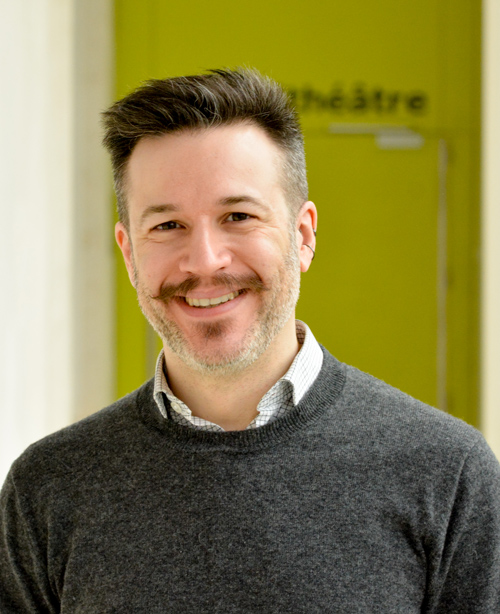
José Eduardo Villalobos Graillet is an Assistant Professor of Spanish at Idaho State University , specializing in Modern Peninsular Literature and Culture with a focus on visual culture (film and television) . He previously held a position as Spanish Instructor at Wilfrid Laurier University in the Department of Languages and Literatures. Research Areas : Spanish Film Studies, Spanish Medieval Literature, Latin American and Caribbean Studies, Teaching Spanish as a Foreign Language, Visual Culture, and Critical Pedagogy. His scholarly work examines film and television adaptations of 'La Celestina' , analyzing censorship dynamics across Francoist Spain, the Democratic Transition, and contemporary Spain. He also contributes to Spanish pedagogy , developing technological tools like Lang-8 for written expression and culturally immersive teaching units on topics such as winter festivals and Caribbean music. His publications span both critical academic analysis and methodological innovations for language instruction. Key Themes in Publications : Adaptation fidelity, political censorship, intercultural pedagogy, and the role of digital platforms in language learning.
Kirsten Yri is an Associate Professor of Musicology at Wilfrid Laurier University, serving as Chair of Music Promotions and Appointments, and Coordinator for Music History, Theory, and Critical Analysis. She also oversees the Master of Music: Collaboration, Curation, and Creative Performance program. Her research focuses on medievalism in contemporary music and popular culture, the early music revival of the 20th century, and representations of gender in opera and music within colonial/postcolonial contexts. Yri’s research interests include analyzing how medieval themes are reinterpreted in modern contexts (e.g., film, heavy metal, and stage productions), examining the ideological underpinnings of early music revival movements, and exploring the intersection of music with gender, nationalism, and global cultural politics. Her work often critiques Western-centric narratives and highlights marginalized voices in music history. Her publications span articles in journals and edited volumes, with a focus on composers like Carl Orff and Hildegard of Bingen, as well as groups like Corvus Corax and Anonymous 4. She has contributed to interdisciplinary projects such as The Oxford Handbook of Music and Medievalism (2020). While no scientific awards are cited, her work is widely recognized in musicology and cultural studies. Yri’s teaching and research emphasize collaborative, interdisciplinary approaches to music history, blending academic rigor with creative curation. She speaks English, Swedish, and German, enhancing her ability to engage with international scholarly resources and communities.
Lorenzo DiTommaso serves as Professor in the Department of Religions and Cultures at Concordia University, Montreal, where he has progressed from Assistant Professor (2004) to full Professor (2013), including service as Department Chair. His academic home encompasses Jewish Studies and Christianity programs, with biennial teaching of the graduate religion and popular culture seminar. Ph.D. in Religious Studies, McMaster University (2002) Postdoctoral Fellow, Yale University Divinity School (2001-03) NEH Postdoctoral Fellow, Center for Medieval and Renaissance Studies, Saint Louis University (2003-04) DiTommaso's research constitutes a comprehensive exploration of apocalyptic speculation across temporal and cultural boundaries, from ancient Near Eastern traditions to contemporary digital media. His work uniquely bridges textual scholarship on biblical apocrypha and medieval manuscripts with cutting-edge analysis of apocalyptic expression in video games, anime, and popular music. The intellectual scope spans apocalyptic historiography , manuscript studies , apocalyptic and millenarian movements , and religion in contemporary media , with distinctive expertise in Japanese cultural intersections. His methodological approach combines rigorous textual analysis with interdisciplinary cultural theory, particularly examining how apocalyptic frameworks shape human responses to crisis across historical periods. Analysis of his recent publications reveals a pronounced shift toward contemporary apocalyptic manifestations, with nearly half of his 2021-2024 output focusing on digital media, video games, and modern cultural phenomena. Simultaneously, he maintains deep engagement with medieval manuscript traditions and early Jewish-Christian apocalyptic literature, demonstrating remarkable versatility across historical periods. The thematic through-line remains apocalyptic determinism versus human agency , examined through diverse lenses from ancient prophecy to interactive gaming environments. Bibliographical Society of America - Pine Tree Foundation Fellowship in Hispanic Bibliography (2019) Nicky Carpenter Fellow in Manuscript Studies Marilyn Hollinshead Visiting Scholar (2023) Research Fellow at Herzog August Bibliothek (2024) DiTommaso has supervised over 20 graduate students since 2019 across diverse apocalyptic topics including disability studies in biblical interpretation, Satanism in virtual communities, and environmental apocalypse in radical movements. His research has been continuously supported by four major SSHRC grants (2004-07, 2007-11, 2011-16, 2018-24), supplemented by specialized fellowships at premier manuscript repositories including the Vatican Film Library, Herzog August Bibliothek, and special collections at Michigan State and Minnesota universities. He co-organizes the biennial 'Through a Glass Darkly' Symposium on Apocalyptic with Colin McAllister, now in its eighth year, rotating between Colorado Springs and Montreal. The 'Through a Glass Darkly' symposium serves as his primary collaborative platform, fostering international scholarly exchange on apocalyptic themes. He maintains active research partnerships with institutions including the Enoch Seminar and Azrieli Institute for Israel Studies, while leveraging special collections access at major libraries for manuscript-based projects. Current work on apocalyptic comic art involves collaboration with special collections at Michigan State and Minnesota universities, demonstrating his commitment to bridging traditional textual scholarship with contemporary cultural analysis.
Paul Cohen is an Associate Professor of History at the University of Toronto, serving as MA Coordinator and interim Associate Chair of the Graduate Program. He holds cross-appointments with the Centre for the Study of France and the Francophone World, which he currently directs. A historian of early modern France, his research focuses on nation-state formation, linguistic history, and colonial empires. Cohen earned his PhD from Princeton University and previously taught at Université Paris-8. His work bridges historical scholarship with contemporary issues, including higher education reform in France, postwar economic planning, and the cultural politics of food and wine. His major publications explore the evolution of French as a national language and the linguistic dynamics of French colonial spaces in North America and the maritime world. Education: PhD in History from Princeton University. Research Interests: Cohen’s interdisciplinary research spans the social history of languages, the creation of national identity, and empire studies. He examines how linguistic diversity was managed in early modern France and its colonies, analyzing documents ranging from legal records to travelogues. His current projects include a study of linguistic mediation in French North America and the global maritime linguistic cultures of the 17th-18th centuries. He also engages with contemporary debates on Francophone cultural policies and the role of history in modern French society. Advising & Grants: While no current students are listed, Cohen has advised numerous graduate students through his role as MA Coordinator. His grants and institutional leadership include directing the Centre for the Study of France, fostering collaborative research on Francophone cultural and political dynamics. Labs/Teams: Leads the Centre for the Study of France and the Francophone World, a hub for interdisciplinary scholarship on French and Francophone cultures, history, and contemporary issues.
Shafique N. Virani is an Associate Professor of Islamic Studies at the University of Toronto's Faculty of Arts and Science. He has previously served on the faculties of Harvard University, Zayed University, and the University of Toronto in senior leadership roles, including founding director of the Centre for South Asian Civilizations. His research spans Islamic history, Shi'ism, Quranic studies, and Muslim literatures across Arabic, Persian, and South Asian languages, with particular emphasis on Ismaili and Ithna-'ashari Shi'ism, Bhakti traditions, and esoteric doctrines. He has received over $6 million in grants and awards from global institutions. PhD, Harvard University MA, McGill University BA (Joint Honors with Excellence), McGill University Virani's research explores the survival of Ismaili communities through persecution, the role of taqiyyah (dissimulation), the interplay between Islamic philosophy and Sufism, and the development of devotional literature in South Asia. His work bridges historical analysis with contemporary applications, examining how religious minorities maintain identity while navigating hostile environments. The recovery of lost manuscripts and the evolution of poetic forms like the mathnawi are recurring themes in his scholarship. His recent publications (2020-2023) focus on Nizari Ismaili self-perception post-Mongol invasions, Persian manuscript cultures, and comparative studies between Ismaili and mainstream Islamic thought. Earlier works (2003-2015) laid foundational groundwork on Isma'ili cosmology and pedagogical traditions. Award highlights include: OCUFA Teaching Award American Academy of Religion's highest pedagogical honor United Nations recognition for knowledge advancement Farabi International Award Foundation for Iranian Studies accolades Virani leads the "Virani Dream Team," Canada's largest humanities research group focused on integrating teaching and research to address global challenges. He has consulted for UNESCO, Cirque du Soleil, and Google, and appeared in Hollywood's Downsizing as an academic authority.
Dr. Shamma Boyarin is an Assistant Professor in the English Department at the University of Victoria, also affiliated with Religious Studies and Medieval Studies programs. He holds a PhD in Comparative Literature from the University of California, Berkeley. His research spans medieval Hebrew and Arabic literature, biblical studies, and the intersection of medieval thought with contemporary popular culture, particularly heavy metal music and white supremacist ideologies. Education: BA in Comparative Literature, University of California, Berkeley PhD in Comparative Literature (Arabic, Hebrew, English), University of California, Berkeley Research focuses on medieval Iberian and Near Eastern literatures, comparative studies between Hebrew and Arabic traditions, and the religious underpinnings of antisemitism. Recent work explores the 'metal medievalism' phenomenon, linking medieval themes to heavy metal music. He has organized conferences on Metal Studies at UVic. Publications emphasize interdisciplinary approaches, connecting medieval texts to modern cultural expressions. No awards explicitly noted in provided materials. He has advised no listed students and no grants highlighted. Active in organizing academic events, such as conferences on Metal Studies, showcasing his engagement with transdisciplinary scholarship.
Jeremy W. Johnston is a part-time Adjunct Lecturer in History at Redeemer University, specializing in American History, Western Civilization, and Classical Studies. He holds an M.Ed. (2017), B.Ed. (2002), and BA (2001) from the University of Western Ontario. His teaching includes courses like A World at War: The Turbulent 20th Century and History of the US: From Colony to Superpower . Education: M.Ed. (2017), Curriculum and Pedagogy, University of Western Ontario B.Ed. (2002), English and History, University of Western Ontario BA (Honours) (2001), English and History, University of Western Ontario Jeremy’s research spans interdisciplinary fields including Christianity and the arts, Anglo-Saxon/Medieval literature, and 20th-century Christian thinkers like C.S. Lewis and J.R.R. Tolkien. His recent publications focus on literary analysis, theological aesthetics, and educational philosophy, with a particular emphasis on Christian cultural engagement. His scientific awards include the Teaching Excellence Award (2002) and multiple academic honors from the University of Western Ontario (1998-1999). He has authored three books and served as an arts columnist for Barnabas magazine over a decade.
Dr. Andrew LiVecchi is an adjunct professor in the Core Studies department at Redeemer University and works as a part-time professor at Sheridan College , teaching courses in writing, literature, and mythology. His academic journey includes a Ph.D. in English from Western University, an M.A. in English from Brock University, and a dual B.A. in History and English from Brock University. Ph.D. (2020), English, Western University M.A. (2014), English, Brock University B.A. (2013), History and English, Brock University Research Interests : Medievalism, chivalry, and Arthurian legend. His work explores intersections between medieval narratives and modern cultural formations, particularly in the context of masculinity and imperialism. Creative pursuits include musical composition and short fiction writing. Publication Trends : LiVecchi's research output combines academic rigor with creative engagement. His dissertation examines Malory’s chivalric medievalism, while his short story "The Kelpie" reflects his interest in mythological storytelling traditions adapted for contemporary audiences. Scientific Awards : Western University Doctoral Excellence Research Award SSHRC Doctoral Fellowship (2014-2018) Teaching & Advising : Currently teaching Western Culture & Tradition I (HUM-110) and Western Culture & Tradition II (HUM-120) at Redeemer University, LiVecchi contributes to foundational humanities education while maintaining additional teaching roles at Sheridan College.
Dominic Marner serves as Associate Professor of Medieval Art and Architecture in the School of Fine Art and Music at the University of Guelph. His academic trajectory includes a Ph.D. in World Art Studies from the University of East Anglia (UK), followed by teaching appointments at the University of Edinburgh and University College Dublin, and postdoctoral fellowships at the University of East Anglia, Trinity College Dublin, and the University of Cambridge. His research program centers on Medieval European Art and Architecture, Museum Studies, Visual Literacy, and critical examinations of Art and Colonialism. He investigates historical artistic practices through contemporary theoretical frameworks, particularly focusing on postcolonial perspectives and institutional critique in museum contexts. Professor Marner's recent publications demonstrate a strategic expansion from medieval studies into global museum practices and decolonial discourse, while maintaining rigorous engagement with visual analysis methodologies across temporal and geographical boundaries. His scientific recognition includes: Social Science and Humanities Research Council grant Getty Trust fellowship British Academy fellowship These prestigious awards have enabled extensive archival research and cross-institutional collaborations, significantly advancing scholarship in art historical methodology and museum studies through sustained funding for primary source investigation and international scholarly exchange.
Elizaveta Miller is an Assistant Professor and Area Coordinator (Early Music & Harpsichord) at McGill University's Schulich School of Music. She specializes in historical keyboard instruments, including harpsichord, fortepiano, clavichord, and organ, with a repertoire spanning six centuries of music. Previously, she held a 9-year teaching position at the Moscow State Conservatory's historical instruments department before leaving Russia in March 2022 in solidarity with Ukraine. Her performances include collaborations with renowned conductors such as Václav Luks and Reinhard Goebel, and appearances at festivals like Bruges MA Festival and Beethovenfest Bonn. She is a recipient of the 2013 Bruges Musica Antiqua Competition first prize. Her research and performance interests focus on Early Music, historical performance practices, and interdisciplinary connections between historical and contemporary music.
Dr. Stefano Muneroni is an Associate Professor in the Department of Drama at the University of Alberta's Faculty of Arts. He holds a PhD in Theatre History and Performance Studies from the University of Pittsburgh, alongside advanced degrees in Italian Literature and Interpreting. His career spans roles as Full Professor (effective July 2025), Associate Professor (2015–2025), and prior positions at Carnegie Mellon University and University of Pittsburgh. He has taught at the University of Alberta's School in Cortona, Italy, and led theatre programs in Syracuse, Italy. His research focuses on Jesuit theatre, migration narratives in performance, and intercultural translation. Notable works include Hermenegildo and the Jesuits: Staging Sainthood in the Early Modern Period (2017) and Play Analysis: The Dramaturgical Turn (2014). He has secured grants like SSHRC Insight Development and Alberta Research awards, and his scholarship spans 50+ articles, translations, and book chapters. Muneroni’s theatre credits include dramaturgical roles in over 30 productions, from Blood Wedding to Plastic: The Musical . He has organized panels on postcolonialism, migration, and performance studies, and supervised 14+ graduate students. His work bridges academic and public spheres through translation projects (e.g., Sforza Pallavicino’s Ermenegildo Martire ) and community engagement initiatives.
Luke Hathaway is an Assistant Professor of English Language & Literature at Saint Mary’s University (Halifax, Nova Scotia), specializing in creative writing pedagogy, classical literature, and the intersections between poetry and liturgical practice. His teaching spans creative writing, ancient literature, and interdisciplinary courses cross-listed with Ancient Studies, Women and Gender Studies, and Atlantic Canada Studies. He is also a core member of the queer artistic ensemble ANIMA and co-founder of the Fractal Arts Collective, collaborating on immersive operas and experimental theatre works like Eurydice Fragments and Navré de ton dart . Hathaway’s research explores the transformative potential of artistic collaboration, voice embodiment in performance, and queer reinterpretations of early music sources. His poetry has received international acclaim, including a New York Times 'Best Book' designation for Years, Months, and Days and Times Literary Supplement praise for The Affirmations . Education & Affiliations No formal education details provided in texts, though his work demonstrates deep engagement with medieval/early modern texts. Current institutional affiliations include: Saint Mary’s University English Department Amadeus Choir's Choral Composition Lab (mentorship role) ANIMA ensemble (co-creative director) re:naissance opera (collaborative projects) Research Interests Central to Hathaway’s work is the exploration of transitional spaces in art—both literal (e.g., liminal performance spaces) and metaphorical (e.g., gender transition narratives). He investigates how poetry and music can create ‘emergent properties’ through collaboration, particularly in: Liturgy as poetic form Voice embodiment in choral performance Early music sources’ queer reinterpretation Hybrid creative-critical pedagogy Recent Creative Outputs Recent projects include the immersive opera Eurydice Fragments (2024) and the song-cycle The Sign of Jonas (2024), both blending medieval motifs with contemporary queer aesthetics. His 2023 collection Membra Jesu nostri explores liturgical devotion through modernist verse forms. Awards & Honors 2x Arc Poetry Confederation Prize (2009, 2022) Hamilton Arts Award for Writing (2015) Bryan Prince Bookseller Award (2012) Grants & Collaborations Has secured funding for collaborative projects through: re:naissance opera (operatic commissions) DaPoPo Theatre (masque productions) Thirtyminutes art collective (audio-visual albums) His pedagogical approach emphasizes ‘makerly’ creativity, integrating scholarly research with hands-on artistic production. Labs & Teams Primary artistic collaborative units include: ANIMA : Produces queer reinterpretations of early music Fractal Arts Collective : Focuses on interdisciplinary performance art
Professor Jennifer Bain holds a position in Musicology at the Fountain School of Performing Arts, Dalhousie University, with a cross-appointment in Gender and Women's Studies. Her work bridges historical and modern scholarship, focusing on medieval musical traditions and their contemporary interpretations. Education: Bachelor of Music (BMus) from Wilfrid Laurier University Master of Arts (MA) from McGill University Doctor of Philosophy (PhD) from Stony Brook University Research Interests: Professor Bain’s research explores the secular music of Guillaume de Machaut, medieval music theory, digital chant analysis, and the 19th-20th-century revival of Hildegard of Bingen. She emphasizes the role of women in music composition and production, particularly in medieval contexts. Her interdisciplinary approach integrates digital humanities, chant studies, and music historiography. Publications Trends: Her recent articles highlight digital methodologies applied to medieval music, such as MEI encoding and optical music recognition. She also examines the cultural and historical reception of Hildegard, underscoring her legacy and modern reinterpretations. Collaborative editing projects, including work on Florilegium and Music Theory Online , reflect her leadership in academic publishing. Awards & Grants: Recipient of the 2020 Sheila K. Piercey Award for Performing Arts Educators Elected to the Royal Society of Canada’s College of New Artists, Scholars, and Scientists (2016) Principal Investigator of multiple SSHRC grants, including a Partnership Grant (2023–2030) funding digital chant research Her grants emphasize collaborative, technology-driven approaches to medieval music preservation and analysis. Advising & Grants: While no advisees are listed, her roles as editor and grant PI indicate significant contributions to mentoring through editorial projects and research initiatives. Her grants also support interdisciplinary teams working on chant transmission and early music notation. Labs & Teams: Bain leads projects in digital musicology, collaborating with institutions like the Digital Research Alliance. Her work often involves cross-disciplinary teams focused on technology’s role in musicological research, such as the MEI encoding collaboration with Behrendt, Fujinaga, and others.
Enrique Fernandez is a Professor of Spanish at the Faculty of Arts , University of Manitoba , Canada. With a PhD in Spanish Literature from Princeton University (1998) and MA degrees from University of Calgary (1994) and Universidad de Oviedo (1984), his career spans four decades of research, teaching, and digital humanities innovation. His research focuses on La Celestina studies, early modern gender/death intersections, and medical humanities. He co-founded the Celestina Visual digital archive and directs the Death and Gender in Early Modernity project. Key publications include The Image of Celestina (2023) and Anxieties of Interiority and Dissection in Early Modern Spain (2015), the latter winning MLA's Katherine Singer Kovacs Prize. Recent work explores Baroque reliquaries, automata, and digital methodologies for analyzing early modern visual culture. His articles demonstrate chronological expertise from 15th-century illuminated manuscripts to 21st-century cinematic adaptations, with recurring themes of bodily representation, gender performativity, and transatlantic cultural exchange. Award highlights: MLA Katherine Singer Kovacs Prize (2016) Canadian Association of Hispanists' Best Book Award (2016) University of Manitoba Merit Awards (2014, 2006) As founding president of Círculo de Estudios de la Literatura Picaresca y Celestinesca (CELPYC) and former Canadian Association of Hispanists president, he bridges academic research with public engagement through digital exhibitions and educational software development.
Prof. Jean-Sébastien SAUVÉ is a Professor at the University of Montreal's School of Library and Information Science (Faculty of Arts and Sciences). He holds advanced degrees in Art History (McGill), Architectural History (Karlsruhe), and Information Science (Montreal). His research focuses on cultural metadata, library architecture, Indigenous heritage preservation (e.g., Nipakanatik digital library collaboration with Minwashin), and fanzine collections in academic settings. He teaches courses on digital metadata and library space design. PhD: Architectural History (University of Karlsruhe, Germany) Postdoc: Urban Heritage Studies (UQAM) Master's in Library Science (University of Montreal) Research interests span architectural history (Gothic cathedrals, Quebec Jesuit architecture) and contemporary library spaces. Major projects include: Design of Indigenous digital libraries Fanzine collection development Architectural co-creation between librarians/architects Recent work examines functional library space design and digital musicology tools. Active in strategic initiatives bridging academic/professional LIS sectors. Key grants include CRSH-funded projects on silo-breaking research collaboration and library space usability studies. Supervised over 10 graduate students in heritage documentation and LIS innovation. Labs/teams: Member of CRIHN (Humanities Digital Lab) and CCÉAE (German Studies Centre). Active in international research networks on architectural history and digital library development.