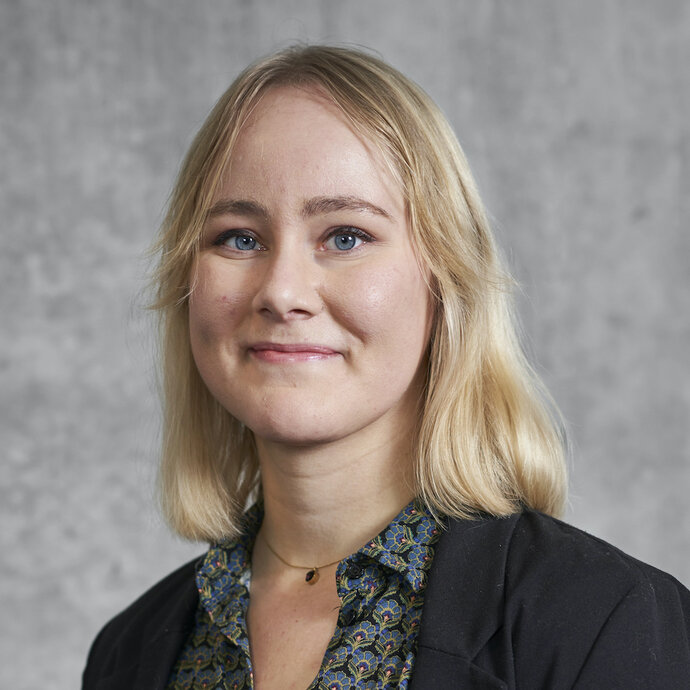
Mattias Lundberg is a Professor at the Department of Musicology, Faculty of Arts, Uppsala University, specializing in historical composition techniques, liturgical music, progressive rock, and North-European music history. He teaches at all academic levels with a focus on music analysis, music theory, and historical topics, while supervising PhD students. Lundberg has broadcast approximately 400 radio programs about music on Swedish Radio P2 and has realized numerous new performances, recordings, and reconstructions of historically significant repertoire. Lundberg's academic journey includes: Born in Tjärstad, Östergötland, in 1976 Completed secondary school at Linköping Cathedral School in 1995 Earned vocational organist certificate (Kantorsexamen) in 1999 Received B.A. with first class honours in Music, Latin and History of Art in 2002 Completed Ph.D. in Musicology at the University of Liverpool in 2007 Achieved associate professor (Docent) status in 2013 Appointed Professor at Uppsala University in 2015 Lundberg's research spans multiple interconnected domains within musicology, with particular emphasis on historical liturgical practices, compositional techniques across different eras, and the intersection of music with cultural and religious history. His work on Swedish liturgical music sources (SweLiMuS) represents a significant contribution to understanding musical practices in Lutheran contexts. Notably, Lundberg bridges historical scholarship with contemporary relevance through projects examining progressive rock's compositional structures and through his extensive media work making music history accessible to broader audiences. His research methodology often combines archival investigation with performance practice, resulting in both scholarly publications and reconstructed performances of historically significant but previously unperformed works. Lundberg's recent publications demonstrate consistent focus on Scandinavian liturgical music history, Reformation-era musical practices, and historical composition techniques. His scholarly output reveals a distinctive approach that connects textual analysis with musical practice, often examining how theological concepts shaped musical expression in historical contexts. The interdisciplinary nature of his work is evident in publications spanning musicology, theology, cultural history, and ritual studies, reflecting his comprehensive understanding of music as embedded in broader social and religious frameworks. Lundberg has received numerous prestigious honors and awards: Honorary member, Östgöta Nation, Uppsala (2024) Awarded H.M. The King's Medal of the 8th size on Seraphim Order Ribbon (2023) Swedish Radio Prize for the music history series "Den svenska musikhistorien" Second prize in Prix Europa (European Radio- and TV Awards) in Potsdam (2019) Elected member of the Swedish Royal Academy of Music (2019) Elected member of Young Academy of Sweden (2015) Elected member of the Royal Society of the Humanities at Uppsala (2020) Elected member of the Royal Society of Arts and Sciences of Uppsala (2020) As a dedicated educator and researcher, Lundberg supervises PhD students and has secured significant research funding for multiple projects. His current research includes "Sonic Continuity as Perceived Tradition in the Liturgical Music of the Swedish Reformation" (funded by The Bank of Sweden Tercentenary Foundation, 2024-2026), building upon his previous work "SweLiMuS" (2019-2021) which focused on analysis, cataloguing, and digitization of Swedish liturgical music sources from 1520-1820. Earlier, he led "Cultural and Social Reverberations of the Music of a Lutheran State Church" (funded by the Swedish Research Council, 2014-2018). Lundberg also serves as a management committee member for the European Cooperation in Science and Technology (COST) Action EarlyMuse. While Lundberg does not appear to lead a specific laboratory, his work involves collaborative research teams focused on liturgical music sources, historical performance practice, and digital humanities approaches to musicology. His leadership of the SweLiMuS project involved coordinating interdisciplinary teams for cataloging, analysis, and digitization of historical music manuscripts. Lundberg's work with the Swedish working group of Répertoire international des sources musicales (2006-2011) also demonstrates his capacity for building and leading scholarly collaborations focused on musicological source research.