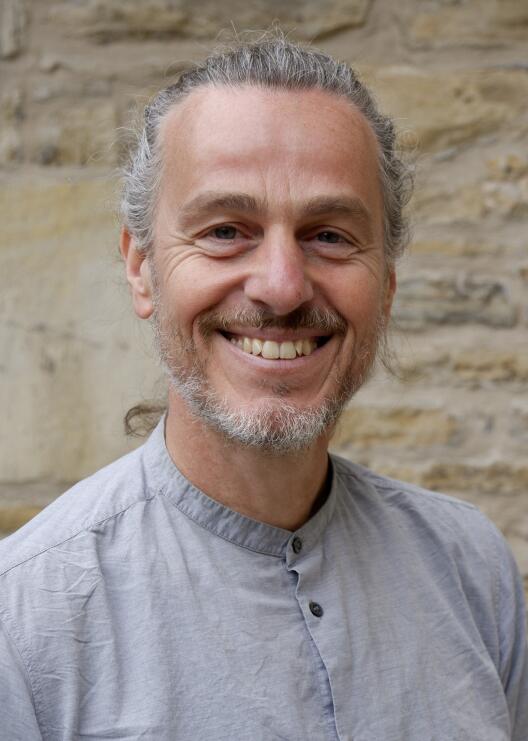
Albrecht Fuess is a Professor of Islamic Studies at Philipps University of Marburg since 2010, specializing in Middle Eastern History (13th–17th centuries), Mamluk socio-cultural dynamics, and contemporary European Islamic discourses. His research spans historical continuity in Ottoman-Mamluk-Safavid interactions, Islamic youth cultures, and Mediterranean geopolitics. Research Focus: Medieval Islamic history, Transottomanica mobility studies, Islam in Europe, and cultural integration of Muslim migrants. Awards: Le Studium Fellowship (2007–2009) at Université de Tours. His publications emphasize military-economy interplay, legitimacy through religious narratives, and resource management in empires, with a focus on Mamluk and Ottoman transformations. He has advised on doctoral projects covering topics like Islamic welfare, Arabic ʾAmālī literature, and Cypriot-Ottoman relations. Leadership: Co-coordinator of Transottomanica (DFG-SPP 1981), member of ANR and DAAD committees, and liaison professor for the German National Academic Foundation. Editorial Roles: Co-editor of 'Transottomanica' and 'Muslim Worlds' series, and advisory board member for journals in Cairo, Paris, and Leuven.
Prof. Stefan Rohdewald is a Professor of East and South-Eastern European History at the University of Leipzig since 2020. Previously, he held positions at Justus Liebig University Giessen (2013-2020), University of Passau (2003-2012), and University of Zurich (1998-2001). His research focuses on transregional histories, religious memory, and intercultural communication in Eastern Europe and the Ottoman sphere. Key roles include coordinating DFG’s Transottomanica program and leading the GiZo partnership with University of Zagreb. Education: PhD (2004, University of Zurich), Habilitation (2012, University of Passau). Research interests span memorial discourses, Ottoman-Europe relations, and sport history. Major projects include studies on Serbo-Bulgarian religious figures and transottoman mobility dynamics. He chairs conferences on minority politics and Ottoman Europe, contributing to over 70 peer-reviewed publications. Award-winning publications include Götter der Nationen (2014) and Vlad der Pfähler (2017). His work bridges Eastern European, Ottoman, and transnational histories through innovative methodological frameworks.
Rhenish Friedrich Wilhelm University of BonnGermany
Stephan Conermann serves as Professor of Islamic Studies and Dean of the Faculty of Arts and Humanities at the University of Bonn, where he has held continuous academic appointments since 2003. His institutional leadership includes directorship of the Annemarie Schimmel Kolleg (2010-2022), Bonn Center for Transcultural Narratology, and significant administrative roles culminating in his current deanship since 2023. Academic Background: Doctorate in Oriental Philology/Islamic Studies (Kiel University, 1996, magna cum laude) Magisterstudium in Asian History, Oriental and Slavic Philology (Kiel University, 1992) Conermann's research examines pre-modern Islamic societies through narrative strategies in historiography, with specialized focus on Mamluk Sultanate governance (1250-1517), Delhi Sultanate/Mughal transitions, and Transottomanica mobility dynamics. His work uniquely connects asymmetrical dependencies (particularly slavery systems), power structures, and global entanglements across South Asia, Middle East, and Eastern Europe. His extensive publication portfolio shows consistent thematic evolution toward comparative frameworks analyzing slavery beyond Eurocentric models, narrative construction of power across cultures, and mobility as historical catalyst. Recent scholarship increasingly integrates transcultural methodology with digital humanities approaches. Academic Leadership: Supervised 290+ theses (59 PhD, 96 Magister, 47 Master, 88 Bachelor) Acquired ~9 million euros in third-party funding (DFG, BMBF, DAAD) Editor of 15+ publication series including Mamluk Studies and Dependency and Slavery Studies Conermann directs the Bonn Center for Transcultural Narratology and co-leads the EXC 2036 'Beyond Slavery and Freedom' cluster, fostering interdisciplinary research on pre-modern dependency systems through international collaborations across Europe, Asia, and the Americas.
Hakan Özkan is a Privatdozent and Research Associate at the Institute of Arabic and Islamic Studies, Department of Middle Eastern Studies, University of Münster, where he has been working since 2007 in various capacities. He was awarded his Venia Legendi (Habilitation) in November 2019 for Arabic and Islamic Studies with his thesis 'History of Eastern Zajal – Dialectal Arabic Verse Poetry from the East of the Arab World.' His academic background includes a Franco-German doctorate completed in 2006 from Université de Provence and University of Cologne, supervised by Claude Audebert and Monika Gronke, with external reviewers including Wolfhart P. Heinrichs from Harvard University. His educational background includes: 2019: Venia Legendi for Arabic and Islamic Studies, University of Münster 2002-2006: Franco-German Doctorate in Arabic Studies and Narratology (Université de Provence and University of Cologne) 1995-2000: Master of Arts in Islamic Studies, Oriental Languages and Literatures (University of Cologne) 2000-2001: Course program in Modern Standard Arabic and Syrian-Lebanese dialect at Institut Français d'Etudes Arabes de Damas Özkan's research focuses on premodern Arabic dialect poetry, particularly zajal and muwashshaḥ forms, narratology, prosimeter literature, socio-literary history, and diachronic dialectology. His interdisciplinary approach bridges linguistic analysis with literary criticism, examining how dialectal forms evolved within Arabic literary traditions across different historical periods and geographical regions. He has conducted extensive field research in Arab countries including Syria, Egypt, Lebanon, Tunisia, and Morocco, with particular emphasis on the historical development of poetic forms from the Mamluk through Ottoman periods. His publication history demonstrates consistent scholarly contributions to Arabic literary studies, with his 2020 monograph 'History of Eastern Zajal' representing a landmark study in the field. His recent work has expanded to include analyses of religious poetry praising the Prophet Muhammad in zajal form, wine poetry in Arabic literary traditions, and the integration of dialects into Arabic language teaching methodologies. His scholarly output spans monographs, critical editions, encyclopedia entries, journal articles, and book chapters across multiple languages including German, English, French, and Turkish. Among his academic recognitions: 2018: Second place on shortlist for W2 Professorship for Arabic Language and Translation Science, University of Leipzig 2008: Offered Junior Professorship at American University in Cairo (declined) 2007: Second place on shortlist for maître de conférence position at University of Nancy 2007: Official Qualification from National University Council (CNU) for positions as maître de conférence at French universities Özkan has served on numerous academic committees, including appointment committees for professorships in Sinology and Arabic and Islamic Studies at the University of Münster. He has been a juror for the Sheikh Hamad Award for Translation and International Understanding in Doha and has served on the steering committee for the 'Translation for Dialogue' program of the Anna Lindh Foundation. His editorial work includes reviewing for Mamluk Studies Review, Die Welt des Islams, and Middle Eastern Literatures since 2012. His scholarly activities extend to linguistic fieldwork on Pontic Greek dialects in Turkey and organizing significant academic conferences including 'The Race Course of Literature – An-Nawāǧī and His Contemporaries' in 2018 at the University of Münster. His multilingual capabilities (Arabic, Turkish, German, French, English, Persian, Ottoman Turkish, and knowledge of Modern Greek) enable his comparative work across multiple linguistic and cultural traditions in the Mediterranean region.
Mahmoud Abdallah is a Researcher at the Center for Islamic Theology , University of Tübingen, where he has worked since 2020. His career includes roles as Senior Scientist at the University of Innsbruck (2019–2020), Project Leader at ZITh (2016–2019), and Post-Doc researcher (2013–2018). He also held guest lectures at Marmara University (2017) and served as an Arabic Editor (2012–2013). Education : PhD in Comparative Linguistics (2012, Heinrich Heine University Düsseldorf), Master’s summa cum laude (2002, University of Minia), State Examination (1998, Al-Azhar University). Research Interests focus on Islamic Theology , Pastoral Care , Interreligious Dialogue , and Religious Institutions in Pluralistic Societies . He explores hermeneutics in Islamic counseling, Ḥisba in public order, and Umma dynamics in multicultural contexts. Recent Publications (2014–2022) analyze Qur’anic ambiguity , interfaith education , religious responses to crises (e.g., pandemic pastoral care), and Islamic social ethics . Key themes include Abrahamic unity , contextual theology , and religious hermeneutics . Scientific Awards : Master’s degree with summa cum laude distinction (University of Minia, 2002). Advising & Projects : Co-editor of Grundlagen muslimischer Seelsorge (2020) and Theologie des Zusammenlebens series (2017–2022). Led the 2016 project Scientific Education and Social Responsibility (Baden-Württemberg Ministry). Currently working on books about Prophetic Hermeneutics (2023) and Religious Transformations in Crisis (2022). Committee Memberships : Member of the German Islam Conference (since 2018), Scientific Advisory Boards at Zukunftsforum Islam e.V. (since 2017), and the DAVO (German Working Group on the Middle East, since 2009).
Armin Bergmeier serves as Managing Director of the Institute of Art History at the University of Leipzig, where he holds a substitute professorship for European and Global Medieval Art History (W3). Previously, he served as substitute professor for Late Antique and Byzantine Art History at Ludwig Maximilian University of Munich. His academic career includes positions at various prestigious institutions including the Center for Anatolian Civilizations in Istanbul and the German Study Center in Venice. Education: Habilitation in Art History, University of Leipzig (2023) PhD (summa cum laude), Ludwig Maximilian University of Munich (2011-2015) Magister, Humboldt University of Berlin (2003-2010) Bergmeier specializes in the art and architecture of medieval Europe, the Mediterranean, and the Middle East, with particular focus on transcultural phenomena and cultural heritage from late antiquity to the early modern period. His research critically examines traditional categories of eras and cultures through the lens of spolia (reused architectural elements) in Byzantine Empire, Venice, and Seljuk Anatolia. He investigates how processes of repurposing artifacts connect to identity formation across cultural boundaries, challenging modern divisions of culture along nation-state lines. His publications demonstrate a consistent focus on spolia, cultural heritage, and transcultural connections in medieval art. His recent works examine the visual construction of shared historical narratives through reused materials, particularly in Venice, Byzantium, and Seljuk Anatolia. His research reveals how medieval societies engaged with their past through material culture, often creating connections across political and cultural boundaries that challenge modern nationalist interpretations of history. Scientific Awards: Hans-Janssen-Preis (2018) Heisenberg Program admission by DFG (2025) Bergmeier has supervised numerous students through seminars on spolia and medieval material culture, including the notable "Reuse and Repurpose" podcast series created with students in 2021. His research has been supported by fellowships from Fulbright, Dumbarton Oaks, and the Andrew W. Mellon Foundation. He leads the Institute of Art History at Leipzig University and coordinates international research projects including the Museum Survey of the Archaeological Museum Akşehir, Turkey, and "The Pastiche Past" project focusing on continuity in the premodern Mediterranean.
Stefan Rohdewald is a Professor of East and Southeast European History at the University of Leipzig since 2020. His research focuses on the historical entanglements between Eastern Europe and the Middle East, emphasizing transconfessionalism, urban history, and memory discourses. Education: Studied and completed his doctorate at the University of Zurich (2004), habilitation at Passau (2005–2012). Affiliations: Past professor at Giessen (2013–2020), research associate in Passau (2003–2012), and Max Planck scholarship for doctoral research. Research interests span Transottoman studies, examining mobility dynamics between Eastern Europe, the Ottoman Empire, and Persia. He leads the DFG priority program Transottomanica (2017–2023) and contributes to decolonial and transimperial frameworks in Ukrainian history. Recent publications include analyses of geopolitical imaginaries, edited handbooks on the Black Sea region, and studies on Ottoman-Europe knowledge exchange. His work critiques national historiographies and explores multiculturality in Habsburg Bosnia-Herzegovina.
Dr. Juliette Calvarin is a researcher at the Institute for Art and Visual History (HU Berlin) since July 2021. She earned her BA in European and North-American history from Yale University (2013) and her PhD in Art History from Harvard University (2021), supervised by Jeffrey Hamburger and Evelin Wetter (Abegg-Stiftung). Her research focuses on East-Central Europe in the late Middle Ages, medieval textiles, liturgical symbolism, and material culture reuse. Supervised dissertation: Ornamenta Sacerdotum: Marian Chasubles for Priestly Bodies in pre-Hussite Prague Current role: Researcher in the Bildkulturen des Mittelalters group led by Prof. Kathrin Müller Her publications address topics like bishops’ rings, altarpieces, and textile semiotics, with fellowships from Munich’s Zentralinstitut für Kunstgeschichte and Mainz’s Institut für europäische Geschichte. She explores how liturgical objects shape clerical identity and medieval theological discourse.
Dr. Jenny Benham is a Reader in Medieval History and Co-director of the Centre for Medieval Studies at Cardiff University. Her research focuses on medieval diplomacy, international law, and espionage, with a particular emphasis on treaty negotiations and legal practices. She holds fellowships from the Royal Historical Society and the Higher Education Academy. Education: BA, MA, and PhD in Medieval History from the University of East Anglia. Professional roles include project officer for the AHRC-funded 'Early English Laws' and Research Associate at the University of Copenhagen's Centre for Studies of Legal Culture. Research interests span medieval international law, espionage networks, and the role of treaties in conflict resolution. Notable works include International Law in Europe, 700-1200 (2022) and Peacemaking in the Middle Ages (2011). Awards include a Leverhulme Trust Research Fellowship (2023-24) and a Senior Fellowship at the Freiburg Institute for Advanced Studies (2024-25). She leads collaborative projects like 'Little Birds: Spies and Espionage in the Medieval World' and the international 'Voices of Law' network. Grants and collaborations include funding from the Leverhulme Trust and partnerships with institutions in Scandinavia and the Netherlands. Her current projects explore medieval espionage and the legal frameworks of early medieval diplomacy.
Wiebke Kirleis is Professor for Environmental Archaeology and Archaeobotany at the Institute for Pre- and Protohistory, Faculty of Arts and Humanities, Christian-Albrechts-Universität zu Kiel (CAU). She has held this position since May 2014 and was previously a junior professor at the same university from 2008 to 2014. She is actively involved in major interdisciplinary research projects, including the Cluster of Excellence ROOTS and the Collaborative Research Centre 1266 'Scales of Transformation', where she serves as co-speaker and technical platform speaker. PhD in Natural Sciences, University of Göttingen (2002) Diploma in Biology, University of Göttingen (1998) Studies in Botany, Anthropology, and Environmental History, University of Göttingen (1990–1998) Wiebke Kirleis' research centers on the interaction between humans and plants during the late Pleistocene and Holocene, with a focus on plant economy, domestication, agricultural development, and landscape transformation. Her work explores how wild and cultivated plants were used for nutrition, ritual, and technical purposes, and how agricultural innovations such as ploughing and manuring impacted Central European landscapes. She has a strong geographical focus on Northern and Central Germany, Southeastern Europe, the Near and Middle East, and Southeast and East Asia, particularly Indonesia. Her methodological expertise includes archaeobotany (analysis of charred and waterlogged plant remains), palynology (pollen and spore analysis from sediment cores), and anthracology (study of charcoal remains). Her recent research includes studies on broomcorn millet diffusion, early farming in Scandinavia and Russia, and plant use in Bronze Age settlements across Europe and Turkey. She leads and collaborates on numerous interdisciplinary projects, emphasizing the integration of botanical data into broader archaeological narratives. Her publications reflect a consistent trend in environmental archaeology, focusing on plant domestication, agricultural transitions, and human-induced landscape change. Keywords across her recent work include archaeobotany, palynology, Neolithic and Bronze Age subsistence, and environmental reconstruction. Her research spans subfields such as food security, cultural transmission of plant use, early monumentality, and socio-economic aspects of prehistoric agriculture. Board member, Cluster of Excellence ROOTS Co-speaker, CRC 1266 'Scales of Transformation' Speaker, ROOTS Technical Platform Board member, Johanna-Mestorf-Akademie Chair, Scientific Advisory Board, Dithmarschen Stone Age Park (since 2023) Full member, German Archaeological Institute (DAI) Elected member, Commission for Archaeology of Non-European Cultures (KAAK) Wiebke Kirleis has supervised numerous research projects funded by the DFG and other agencies, including the Graduate School 'Human Development in Landscapes'. She has advised students and collaborated internationally with institutions in Italy, Norway, Indonesia, and Australia. Her leadership roles in academic self-administration include serving on planning, budget, and equality committees at CAU Kiel. She is committed to science communication, having launched the digital exhibition 'Alles bleibt anders' and produced educational films on archaeobotany. She is also involved in mentoring female postdocs through the via:mento program. She leads the archaeobotanical component in the 'Superfood' module of the SFB 1266 digital exhibition and is actively involved in the ROOTS Cluster’s Subcluster 'Dietary ROOTS'. Her lab and research team operate within the Institute for Pre- and Protohistory, contributing to the university’s strong focus on interdisciplinary landscape archaeology.
Dr. Martin Illert serves as an Adjunct Professor (Apl. Prof.) at the Martin Luther University Halle-Wittenberg's Faculty of Theology, specifically within the Seminar for Eastern Church Studies. His academic journey includes a Doctorate (1997) and Habilitation (2015) in Eastern Church Studies, focusing on theological dialogues between the Evangelical Church in Germany (EKD) and Orthodox Patriarchates since 1959. He has held teaching positions since 2014 and became a Privatdozent in 2016. Additionally, he was appointed an Adjunct Professor at the Lviv Theological Academy in 2016. Current roles include Programme Executive for the Faith and Order Commission at the World Council of Churches (Geneva) and teaching at the Ecumenical Institute Bossey since August 2024. Prior roles include leadership at the EKD's Department for Orthodoxy and Ecumenism (2012–2019) and editorial work for the Ecumenical Review (2014–2019). Research interests encompass Eastern Christian theology, ecumenical dialogues, patristics, and church history with a focus on Balkan and Slavic religious contexts. Major works include studies on John Chrysostom, Bogomilism, and bilateral Orthodox-Protestant dialogues. His awards include the Priest’s Cross from the Ethiopian and Serbian Orthodox Churches (2016), the Gold Medal from Yerevan State University (2017), and the Ehrenplakette from Arad University (2023). He has contributed to academic projects like the "Bogomilism in History and the Present" initiative funded by Bulgaria's Ministry of Education. Publications span monographs, edited volumes, and over 100 articles in journals like ThLZ , Eastern Church Studies , and Revista Teologia . Key projects include co-editing the Eastern Church Identities series and serving on editorial boards for theological journals.
Max Planck Institute for the History of ScienceGermany
Yehuda Halper is an Associate Professor in the Department of Jewish Philosophy at Bar Ilan University, specializing in medieval philosophical intersections between Greek, Arabic, Hebrew, and Latin traditions across Europe, North Africa, and the Middle East. His research focuses on Aristotelian dialectics, the reception of Platonic ideas in Jewish thought, and the adaptation of philosophical methods within religious frameworks. Schneeweiss Chair in Jewish Philosophy and Ethics Director of Israel Science Foundation project 'Hebrew Traditions of Aristotelian Dialectics' Co-organizer of Israel Institute for Advanced Studies research group Research Interests: Halper examines how medieval Jewish and Islamic thinkers engaged with classical philosophy, particularly through translation traditions, dialectical disputations, and the integration of empirical knowledge into scholastic frameworks. His work addresses metaphysical skepticism, the role of allegory in scripture, and the dialectical training of medieval scholars. Scientific Awards: Goldstein-Goren Book Award (2021) for Jewish Socratic Questions in an Age without Plato Alon Fellowship (2016) for outstanding young researchers Publications Trends: Halper's recent works analyze medieval Hebrew adaptations of Aristotelian logic, Zeno's paradoxes in scholastic contexts, and the dialectical structures in philosophical-religious debates. His scholarship spans textual analysis, conceptual frameworks, and cross-cultural intellectual transmission. Academic Leadership: Currently directs ISF-funded research on Aristotelian dialectics in Hebrew traditions and holds a named chair at Bar Ilan University.
Prof. Dr. Eileen Eckmeier serves as Director of the Institute for Ecosystem Research at Christian-Albrechts-University of Kiel and holds a W3 Professorship in Geoarchaeology and Environmental Risks. She concurrently acts as Co-spokesperson of the ROOTS Cluster of Excellence (since October 2023), Spokesperson of the ROOTS subcluster "Socio-Environmental Hazards," Vice President of DEUQUA (German Quaternary Association), and Board member of multiple academic organizations including the Soil and Archaeology Working Group of the German Soil Science Society. Her educational background includes a Dr. sc. nat. from the University of Zurich (2007) with award from the Faculty of Mathematics and Natural Sciences for her dissertation "Detecting prehistoric fire-based farming using biogeochemical markers," and a Diploma in Geography from the University of Cologne (2002) with minors in Soil Science, Prehistory and Early History, and History. Eckmeier's research centers on soil geography and geoarchaeology , particularly human-environment relationships during the Holocene where soils serve as both resources and archives of human activity. Her work investigates changes in soil properties due to land use and climate change across spatial and temporal scales, with geographical focus spanning European and Asian loess/steppe landscapes (Central Europe, Middle East, Mongolia), North Frisian Islands, the Alps, and African savannahs. She employs interdisciplinary approaches combining soil science, archaeology, and paleoenvironmental reconstruction. Analysis of her 15 most recent publications reveals strong emphasis on paleoenvironmental reconstruction through soil archives , with significant contributions to understanding prehistoric agriculture, loess-paleosol sequences, and human impacts on landscapes. Key thematic clusters include Neolithic fertilization practices, ridge and furrow cultivation systems, wildfire impacts on soils, and tectonic-landscape-human interactions in critical regions like the Kenya Rift and European loess belts. Award from Faculty of Mathematics and Natural Sciences, University of Zurich As Director of the Institute for Ecosystem Research and Co-spokesperson of the ROOTS Cluster of Excellence, Eckmeier leads major research initiatives examining societal, environmental, and cultural change. Her leadership extends to the Scientific Advisory Board of the Stone Age Park Dithmarschen and multiple institutional boards focused on Quaternary research and soil-archaeology integration. Current projects investigate socio-environmental hazards through the ROOTS framework while maintaining active fieldwork in diverse global landscapes from European loess regions to African savannahs. Eckmeier directs research teams within the Institute for Ecosystem Research's Geoarchaeology and Environmental Risks group, coordinating work across multiple specialized units including Geobotany, Environmental History and Archives, Applied Ecology and Paleoecology, and Technical Platform teams. Her ROOTS Cluster leadership integrates these efforts into a comprehensive framework examining human responses to environmental change over millennia.
Prof. Dr. Tanja Pommerening is a leading scholar at the Institute for the History of Pharmacy and Medicine, Philipps University of Marburg. With a unique interdisciplinary background bridging Egyptology, Pharmaceutical Sciences, and Cultural History, she holds a W3 Professorship since 2020 and has made significant contributions across multiple academic domains. Universitätsprofessorin für Geschichte der Pharmazie und Medizin (2020–Present) Initiatorin des DFG-GRK 1876 (2013–2020) Sprecherin des Marburger Gespräche zur Alten Heilkunde (2020–Present) Her research focuses on the intersection of ancient scientific texts , medical practices , and cultural knowledge systems in Egypt and the ancient Near East. She has pioneered work on: Archaeometry of funerary substances Transdisciplinary analysis of medical metrology Decolonization of academic collections Comparative pharmacology across Egyptian and Chinese traditions Recent publications reveal her expertise in mummification practices , ancient metrology , and knowledge transmission through edited volumes on bodily concepts (2025), cosmos-body connections (2024), and knowledge systems (2019). Her work appears in journals like PLoS ONE and Zeitschrift für Phytotherapie . Scientific recognition includes: Dalberg Prize (2005) Jerry Stannard Memorial Award (2005) Académie internationale d’histoire de la pharmacie (2022) Active in editorial roles as Area Editor for the UCLA Encyclopedia of Egyptology and co-editor of multiple academic series, she continues to shape the field through her leadership in projects like AESOH (2023–2027) and ArchaeoScent (2023–2025).
Prof. Dr. Konrad Hirschler is a leading historian of the medieval Middle East at the University of Hamburg . He holds affiliations with the Cluster of Excellence 'Understanding Written Artefacts' , the Centre for the Study of Manuscript Cultures , and the Asia and Africa Institute . His work bridges social history, literary studies, and manuscript analysis. Research Focus: Manuscript materiality, library history, historiography, Crusader-era cross-cultural diplomacy, and provenance studies. Notable Projects: Analysis of the Ashrafiya Library Catalogue , Qubbat al-khazna depository, and the Jazzār Library Project . His research on medieval Arabic reading practices and manuscript circulation has redefined understanding of pre-Ottoman book culture through works like The Written Word in the Medieval Arabic Lands (BSMES Prize) and Medieval Damascus: Plurality in an Arabic Library (Best Book on Medieval Middle East). He explores how non-elite groups engaged with written culture and how scribes recycled manuscripts. Scientific Awards: British Society for Middle Eastern Studies Book Prize (2012) Best Book on the Medieval Middle East (2017) Shortlisted for British-Kuwait Friendship Association Book Prize Advising & Grants: Hirschler welcomes MA and PhD students studying medieval Middle Eastern topics. His research is funded by the Deutsche Forschungsgemeinschaft (Germany's Excellence Strategy) and the British Academy . Labs & Collaborations: He contributes to the Qubbat al-khazna corpus analysis and co-edits volumes with international scholars. His work integrates digital humanities via the Ashrafiya Library Database .